
These free printable number tracing worksheets give preschool and kindergarten children ten pages of practice writing the numbers 1 to 10. Each page shows one large hollow numeral to trace, a panel of dots beside it showing how many that number is, and then two ruled lines of grey numerals to trace and copy.
The dots are what make this pack different from most tracing sheets. A child can trace the shape of a 7 all afternoon without ever learning that it means seven of something. Putting the matching dots right next to the numeral, on every page, keeps the symbol and the quantity attached to each other while the hand does its work.
- What Is in This Free Number Tracing Worksheet Pack
- The 10 Number Tracing Worksheets
- Worksheet 1 – Trace the Number 1
- Worksheet 2 – Trace the Number 2
- Worksheet 3 – Trace the Number 3
- Worksheet 4 – Trace the Number 4
- Worksheet 5 – Trace the Number 5
- Worksheet 6 – Trace the Number 6
- Worksheet 7 – Trace the Number 7
- Worksheet 8 – Trace the Number 8
- Worksheet 9 – Trace the Number 9
- Worksheet 10 – Trace the Number 10
- Why the Dashed Line Down the Middle Matters
- When Children Are Ready for These Worksheets
- How to Use These Worksheets
- Three Things to Watch For
- Printing Tips
- Frequently Asked Questions
- More Free Number Worksheets
What Is in This Free Number Tracing Worksheet Pack
- Ten printable worksheets, one number on each page, from 1 to 10.
- A large hollow numeral to trace first, with plenty of room for a wobbly line.
- A panel of dots beside the numeral showing the matching quantity.
- Two ruled lines of grey numerals to trace, with a dashed guide line down the middle.
- Space at the end of each line to write the numeral without a guide.
- A separate PDF for every number – no sign-up, no email address, no cost.
The 10 Number Tracing Worksheets
Work through them in order the first time. After that, a page a day in any order is plenty.
Worksheet 1 – Trace the Number 1
A single straight stroke, and the easiest numeral to write. One dot sits beside it, which is the whole quantity idea in its simplest form.
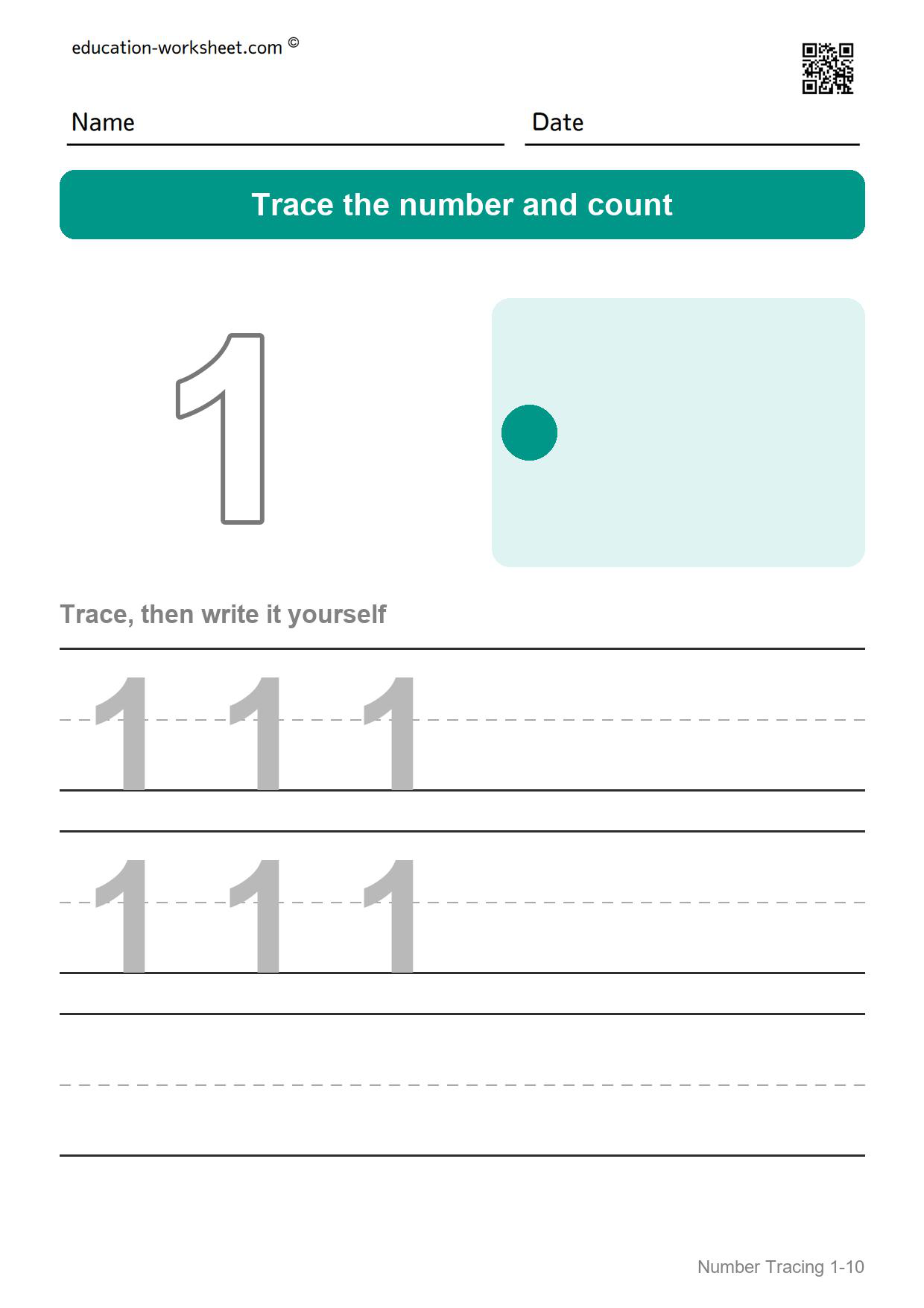
Worksheet 2 – Trace the Number 2
A curve, then a straight line along the bottom. Children often start the curve at the wrong end – it begins at the top left.
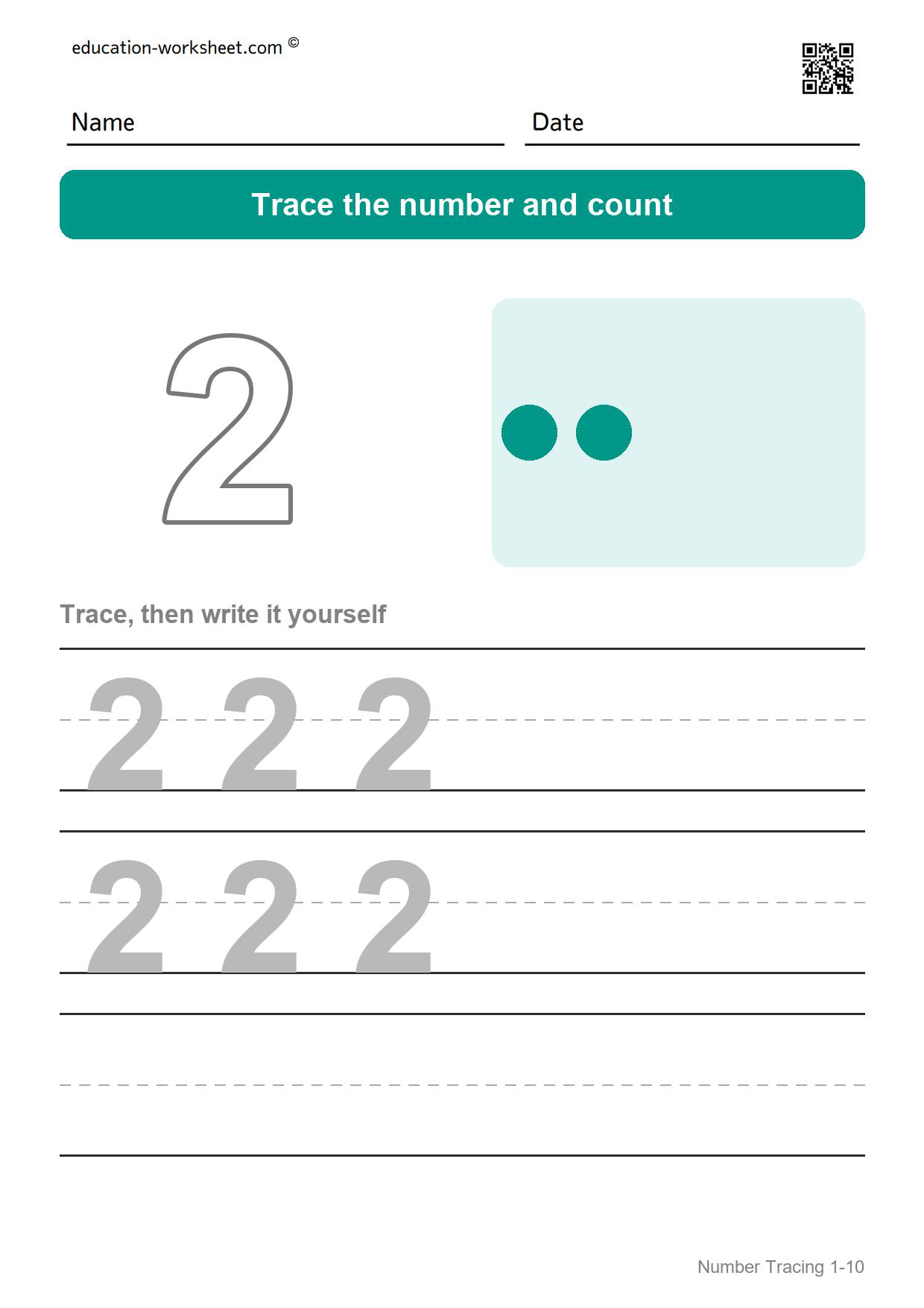
Worksheet 3 – Trace the Number 3
Two curves stacked. The commonest early mistake is drawing it back to front, which is completely normal and not worth correcting sharply.
Worksheet 4 – Trace the Number 4
The only numeral in the set that needs the pencil lifted. Children who try to do it in one stroke usually end up with a shape that is hard to read.
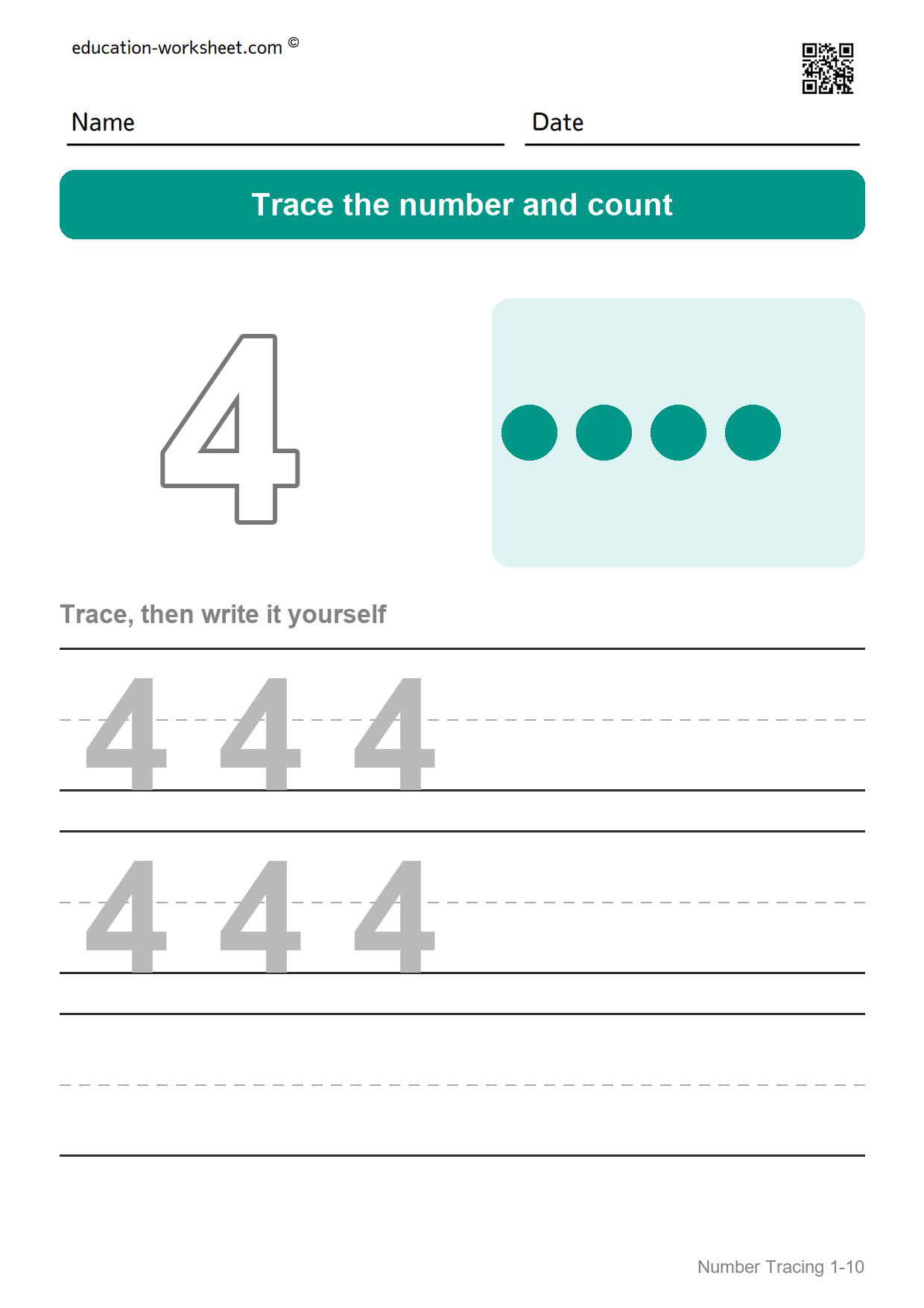
Worksheet 5 – Trace the Number 5
Straight down, round, then a hat across the top. The hat is added last, which surprises most children the first time.
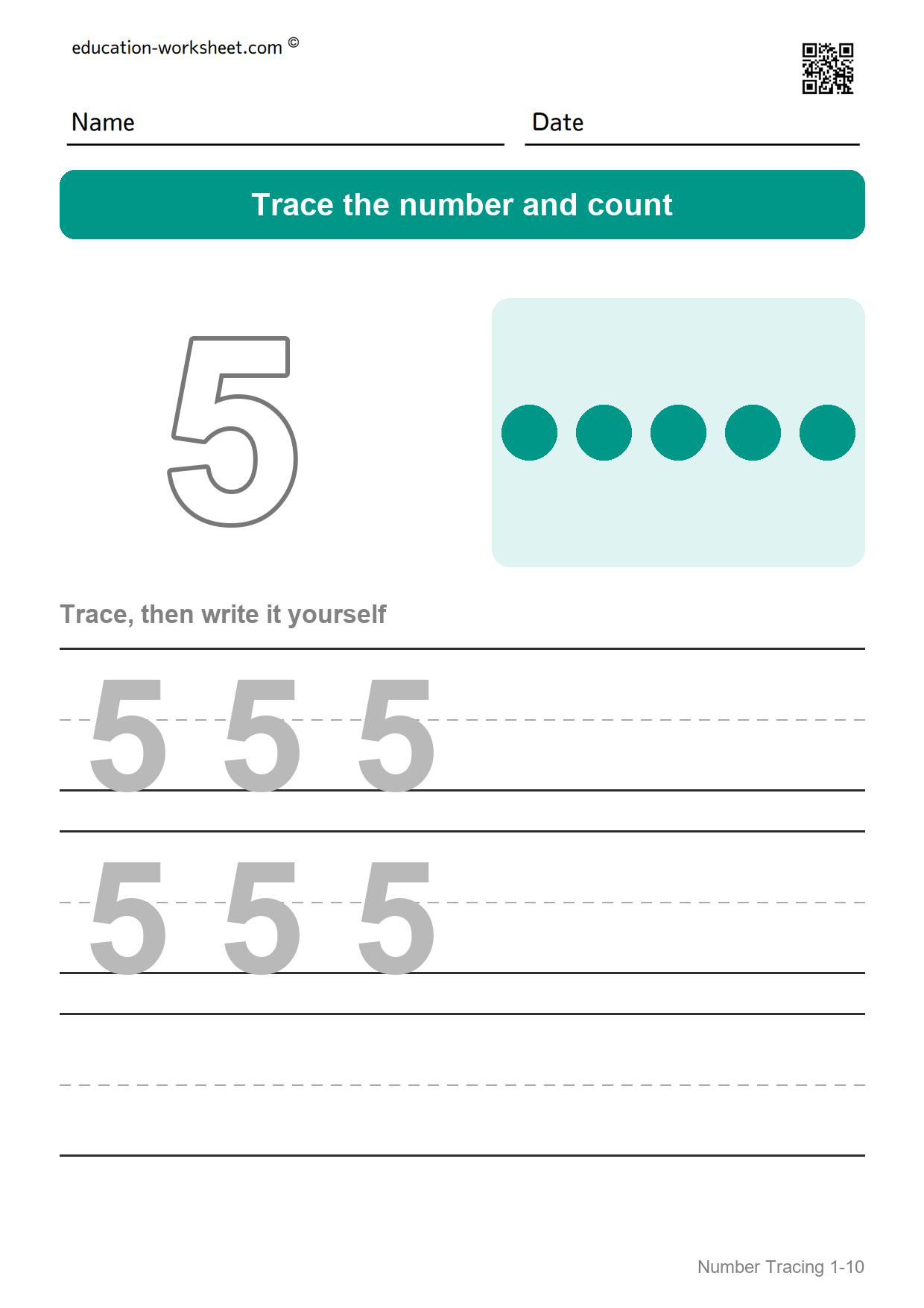
Worksheet 6 – Trace the Number 6
A curve that closes into a loop at the bottom. Six and nine are the pair children most often confuse, and doing them on separate pages helps.
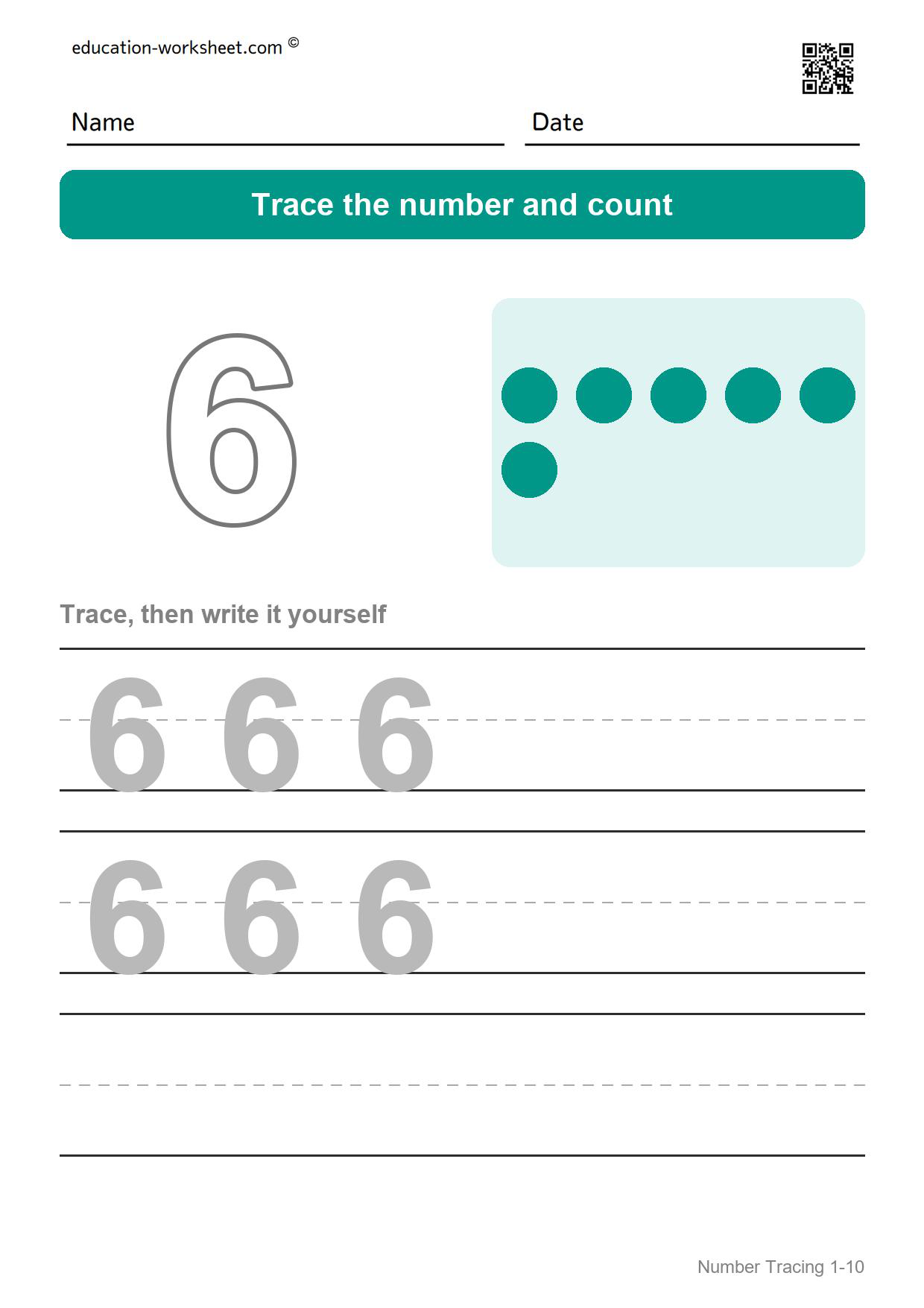
Worksheet 7 – Trace the Number 7
Two straight lines. Whether to add the crossbar is a matter of local custom – American schools usually leave it off.
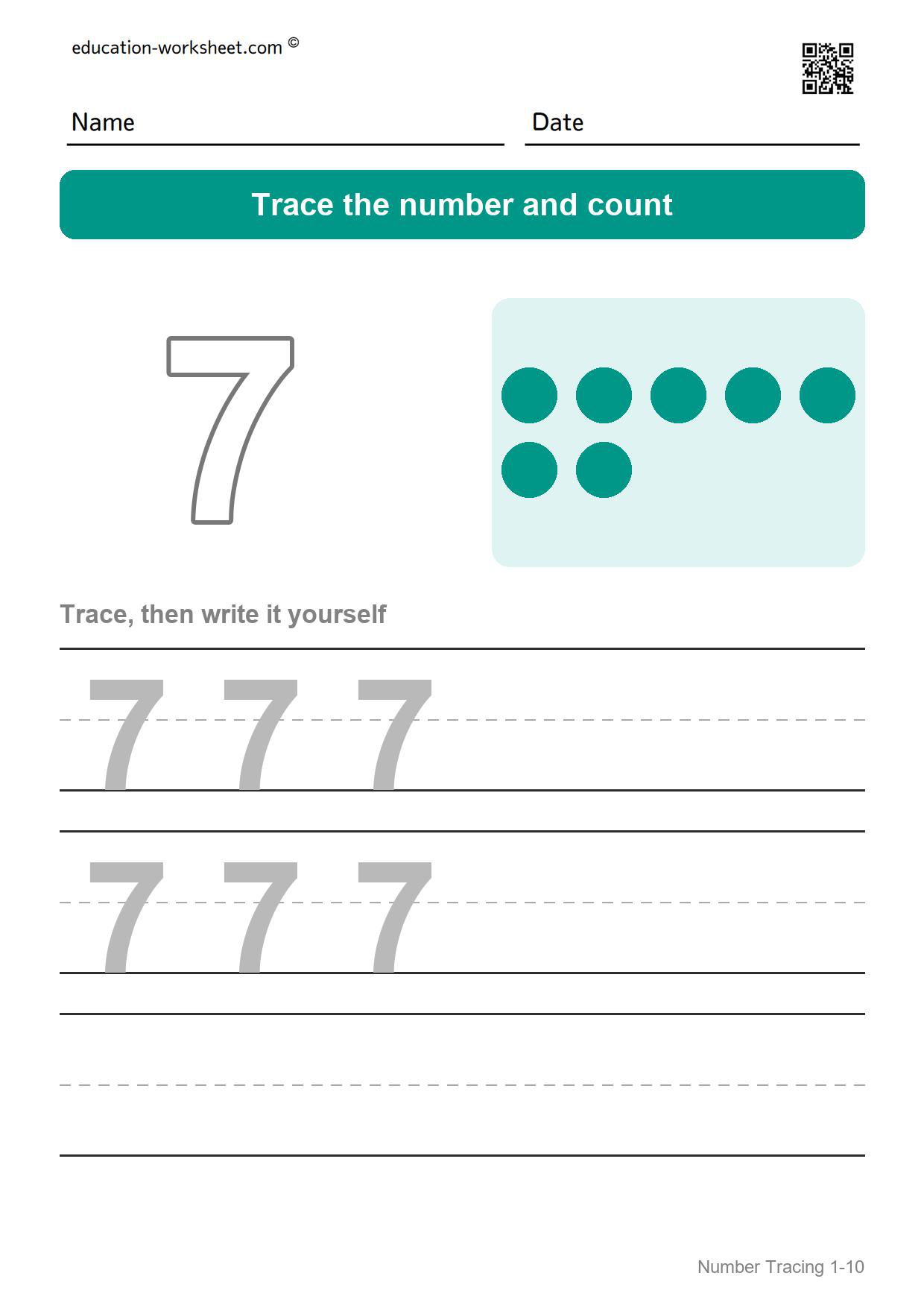
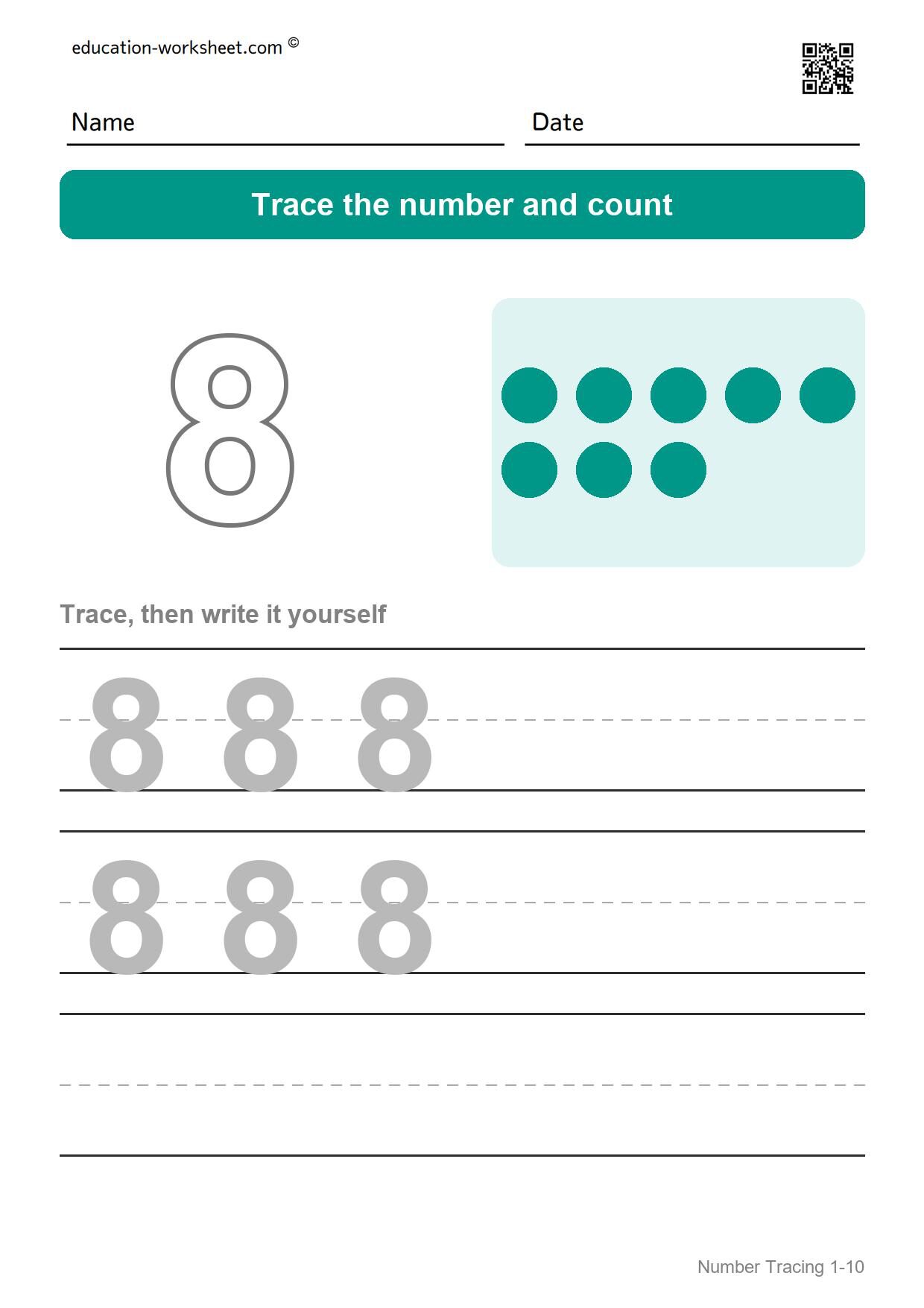
Worksheet 8 – Trace the Number 8
Traditionally one continuous snake-like stroke, though drawing two stacked circles is perfectly acceptable at this age and far easier.
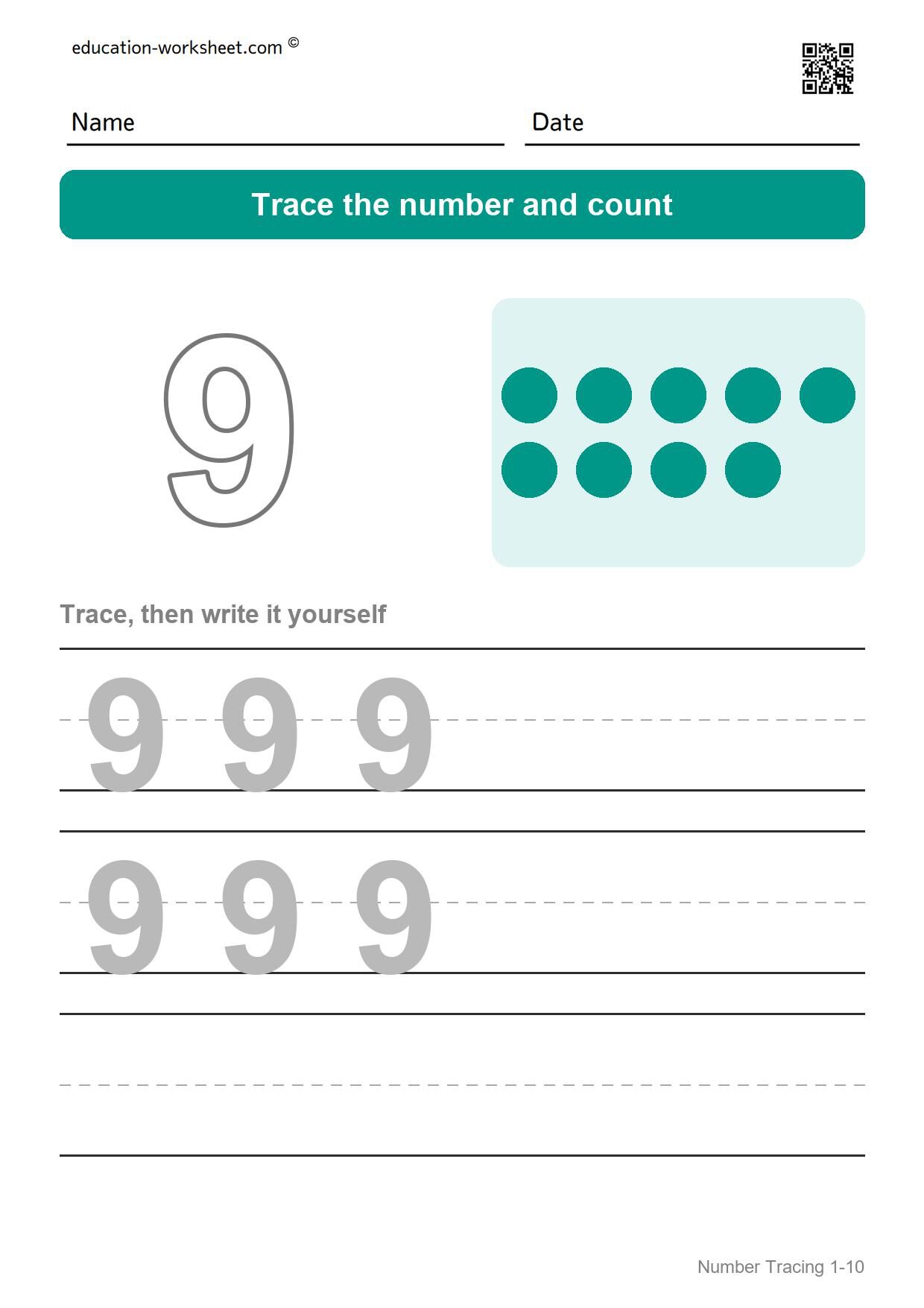
Worksheet 9 – Trace the Number 9
A loop at the top and a straight line down. Compare it with six directly if your child keeps swapping them.
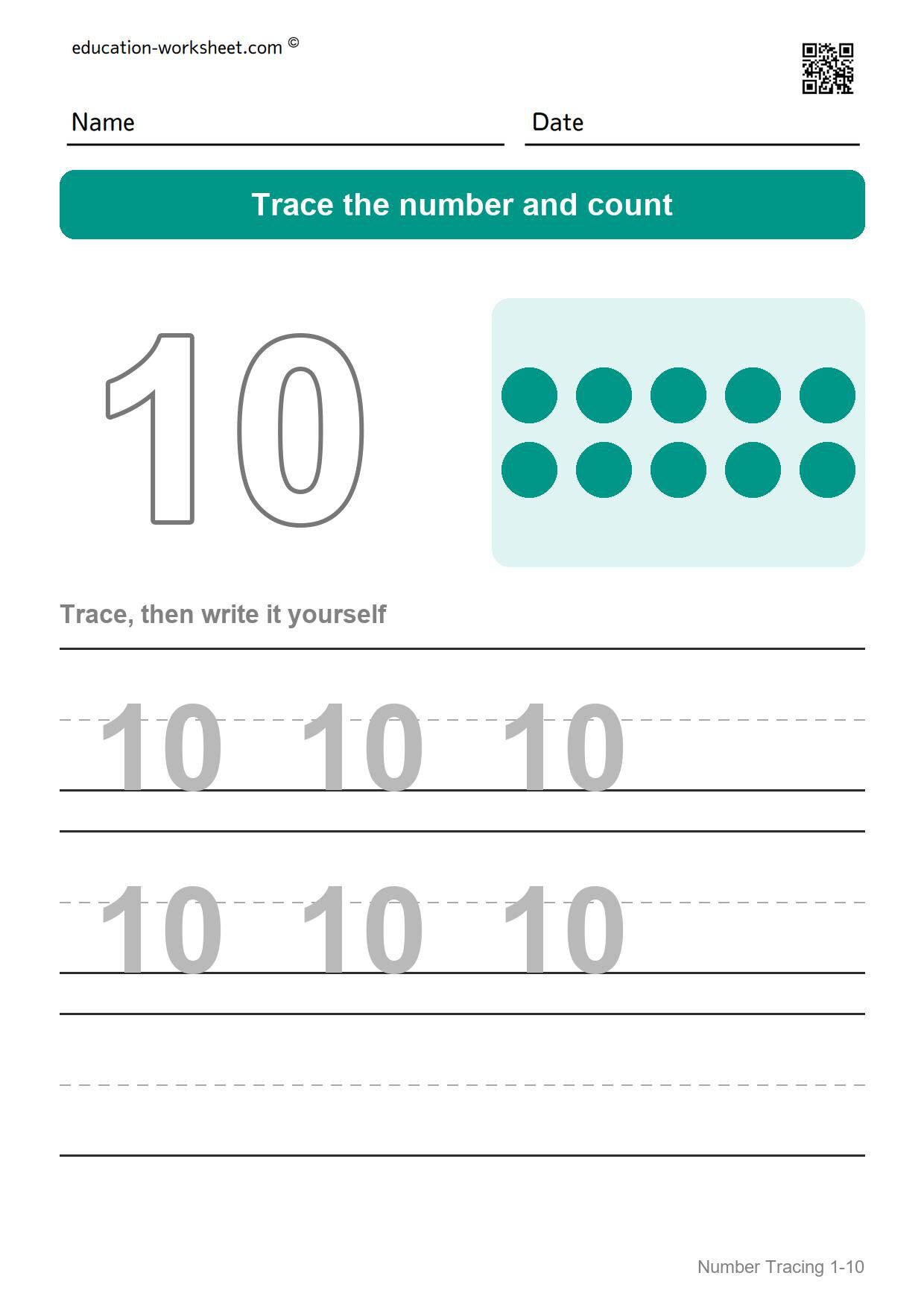
Worksheet 10 – Trace the Number 10
The first number that needs two symbols. Worth pausing on: ten is not a new squiggle to learn but a one and a zero side by side, and that idea carries all the way to a hundred.
Why the Dashed Line Down the Middle Matters
The ruled lines on the lower half of each page have a dashed line running between them. It is not decoration. Numerals in early handwriting practice are written to a consistent height, and the dashed line tells a child where the middle of that height is – which is why a 3 sits in the top half and a 5 crosses the middle.
If your child ignores the lines completely at first, leave it. Getting the shape roughly right matters more than sitting it on a line, and the lines become useful only once the shape is reliable.
When Children Are Ready for These Worksheets
These pages suit children from about four to six years old. A child should be able to hold a pencil and make a deliberate mark, and ideally be able to count to ten out loud – though the dots will help with that too.
In American classrooms this is the kindergarten standard on writing numbers: writing the numerals 0 to 20 and using them to represent how many objects there are (Common Core K.CC.A.3). The dot panel on each page is the second half of that standard, which plain tracing sheets usually leave out.
How to Use These Worksheets
- Print one page and count the dots together before any tracing starts.
- Trace the large hollow numeral slowly, with a finger first if your child is very young.
- Say the number out loud each time it is traced. Saying and writing together is what fixes it.
- Work along the ruled lines, and stop when concentration goes rather than when the line ends.
- Come back to the dots at the end and ask how many there were.
Three Things to Watch For
Numbers written back to front
Reversed 3s, 5s, 7s and 9s are normal up to about seven years old and are not a sign of a problem. The hollow outline gives a starting point and a direction, which fixes most reversals without anyone having to mention them.
Tracing without counting
A child can complete the whole page beautifully and still not connect the 6 with six things. Asking “how many dots?” once per page is enough to keep the two joined up.
Starting the stroke at the bottom
Most numerals start at the top. A child who starts from the bottom will still produce a recognisable number, but the habit gets harder to change later, so it is worth watching the pencil rather than only the result.
Printing Tips
- Choose Actual size or Fit to page so the shapes keep their proportions.
- Each page fills one sheet and works on both US Letter and A4 paper.
- Slip a page into a plastic wallet and use a dry-wipe pen to reuse it with more than one child.
Frequently Asked Questions
What age are these number tracing worksheets for?
About four to six years old – preschool, pre-K and kindergarten.
Should I correct a backwards number?
Not sharply. Point at the hollow numeral at the top of the page and trace it together again. Reversals fade on their own well into the early school years.
Does my child need to count before starting?
It helps, but the dots on each page teach the counting alongside the writing.
Is there a page for zero?
No – this pack runs from 1 to 10. Zero is easier to teach once the other numerals are familiar.
Do I need to sign up to download these?
No. Every PDF downloads immediately, with no account, no email address and no cost.
Can I use these in my classroom?
Yes, they are free to print for home and classroom use. Please do not sell them or re-host the files elsewhere.
More Free Number Worksheets
- Free Counting 1 to 10 Worksheets – Count and Write
- Free Learn the Numbers 1 to 10 Worksheets – Ten Frames and Tracing
- Free Number Words Worksheets – Match Numbers 1 to 10
- Free Missing Numbers Worksheets 1-20 for Kindergarten
- Free Ten Frame Worksheets – Count to 10
- Free Connect the Numbers in a Circle Worksheets – Number Order