Free Digraph Worksheets for Kindergarten – sh, ch, th and wh
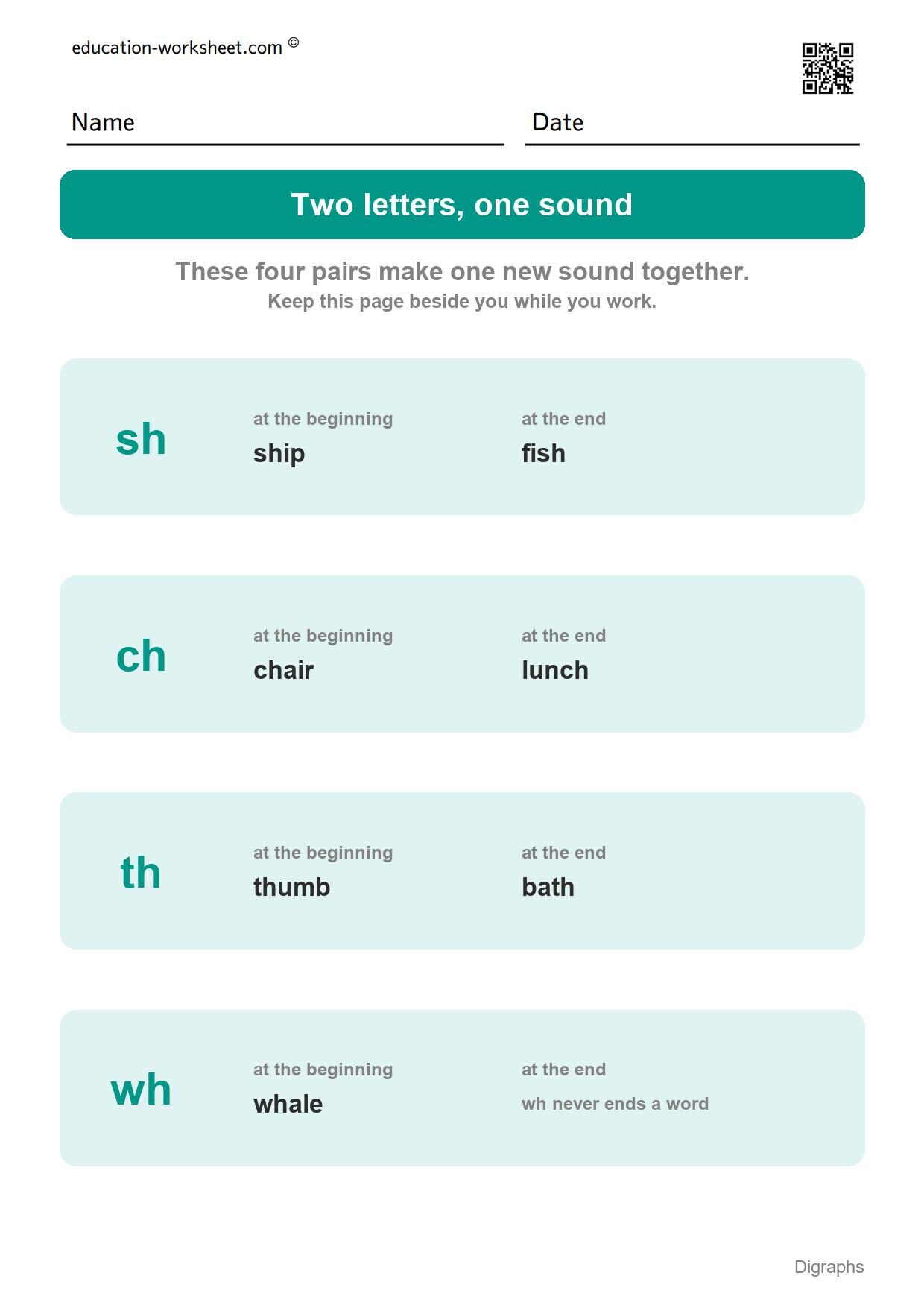
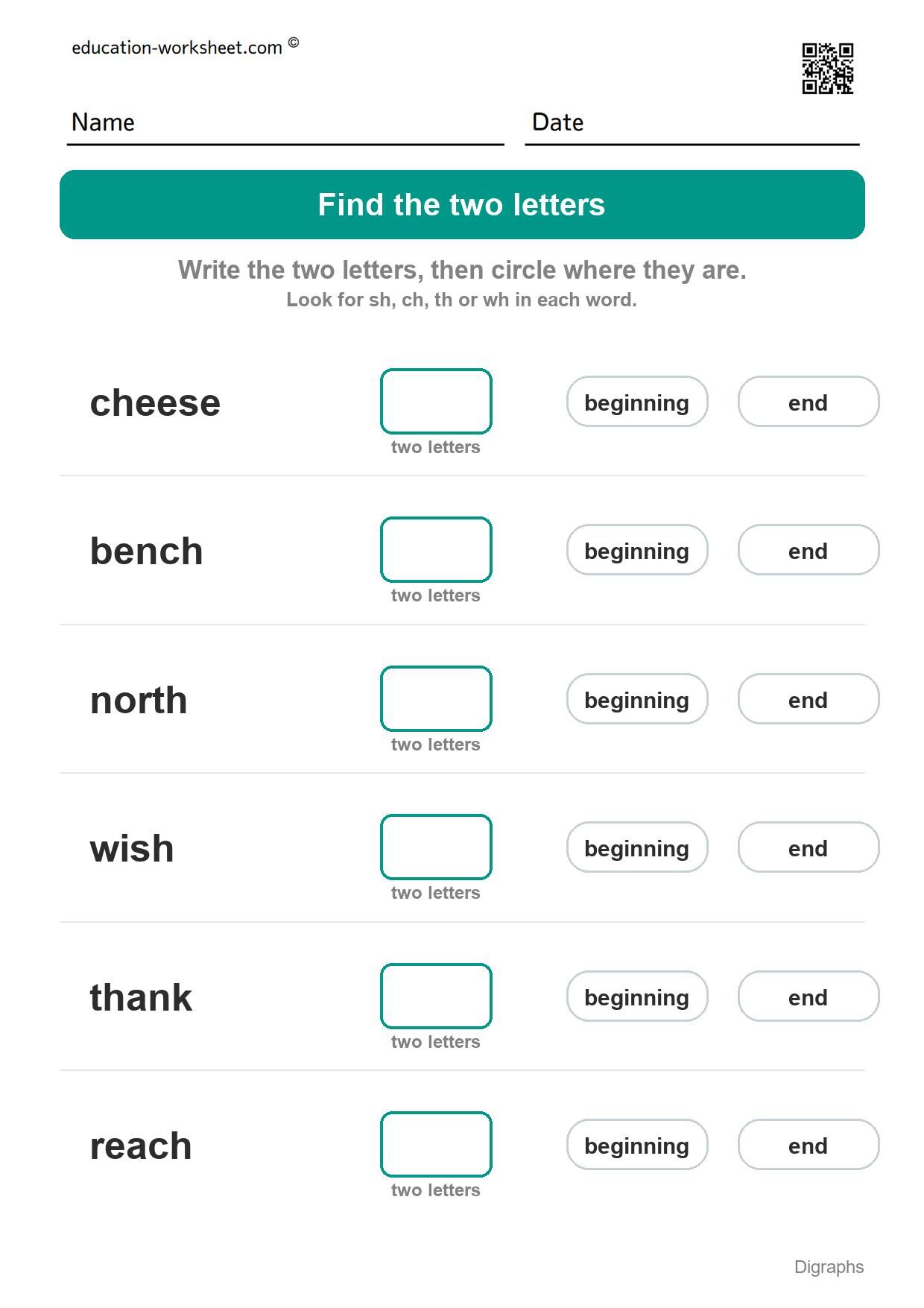
These free printable digraph worksheets help kindergarten and first grade children read the letter pairs that make one single sound. A digraph is not the same as a blend: in a blend like bl or gr you can still hear both letters, but in sh, ch, th and wh the two letters make one brand new sound. The first page is a chart with the four digraphs and example words, and children keep it beside them while they work. On each of the ten worksheet pages there are six words, and for every word children write the two letters they can find and then circle whether those letters are at the beginning or at the end. Noticing where a digraph sits is what stops children sounding out sh as s and h. Every word is one children already say, and no word contains two digraphs, so there is always one clear answer. The last page is an answer key. Just download, print, and read!
Digraph chart – sh, ch, th and wh
Find the digraph (Set 1)
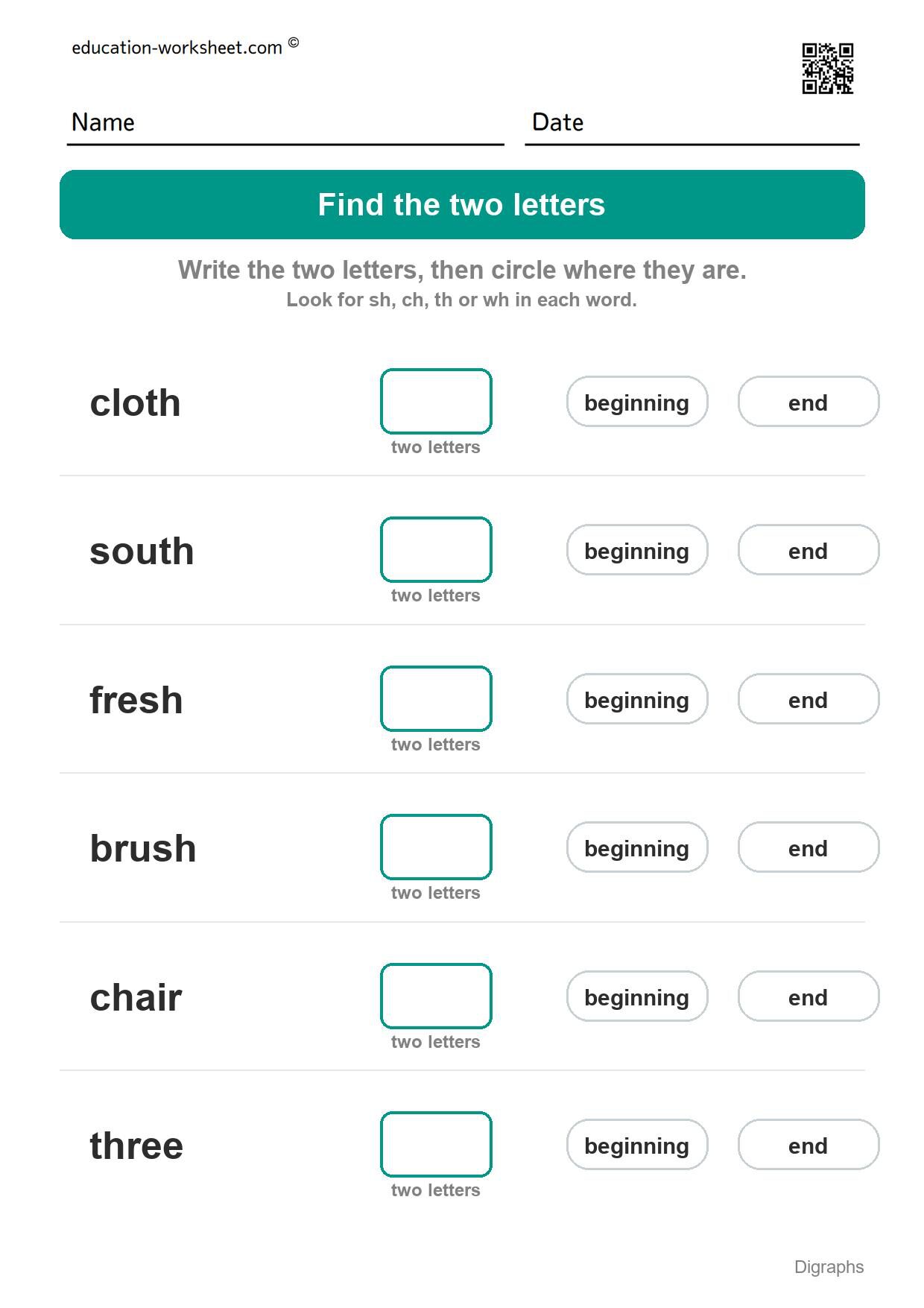
Find the digraph (Set 2)
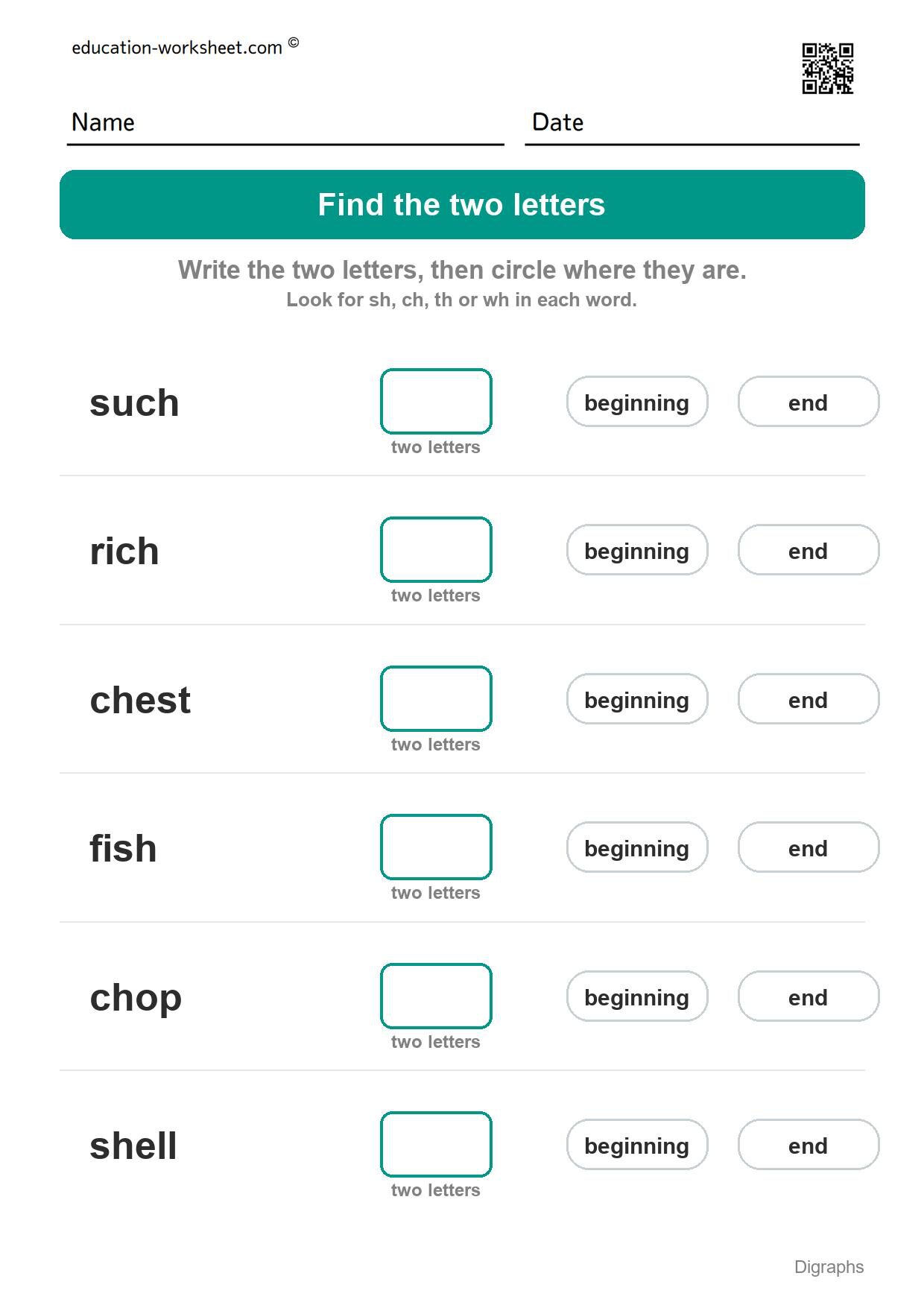
Find the digraph (Set 3)
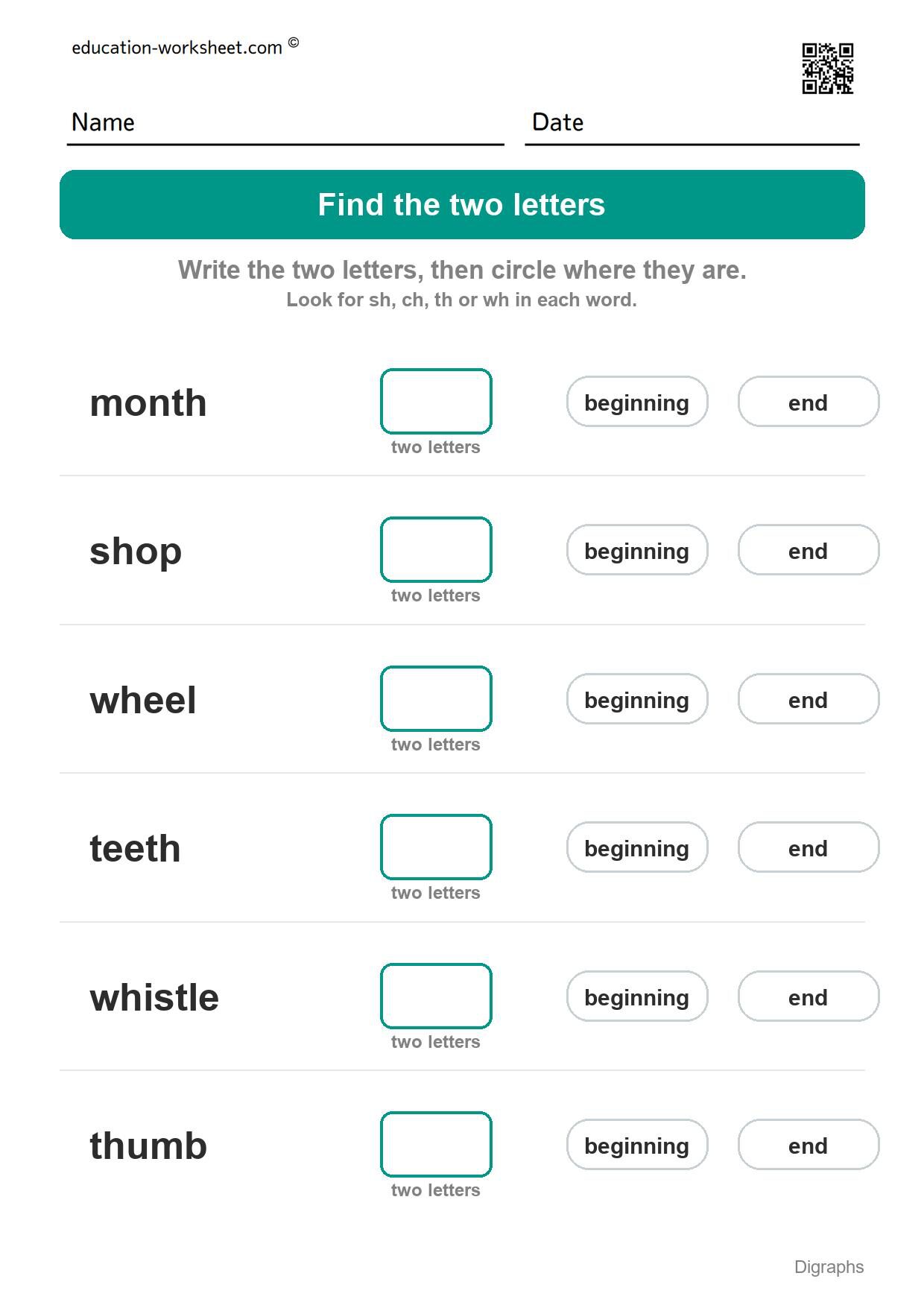
Find the digraph (Set 4)
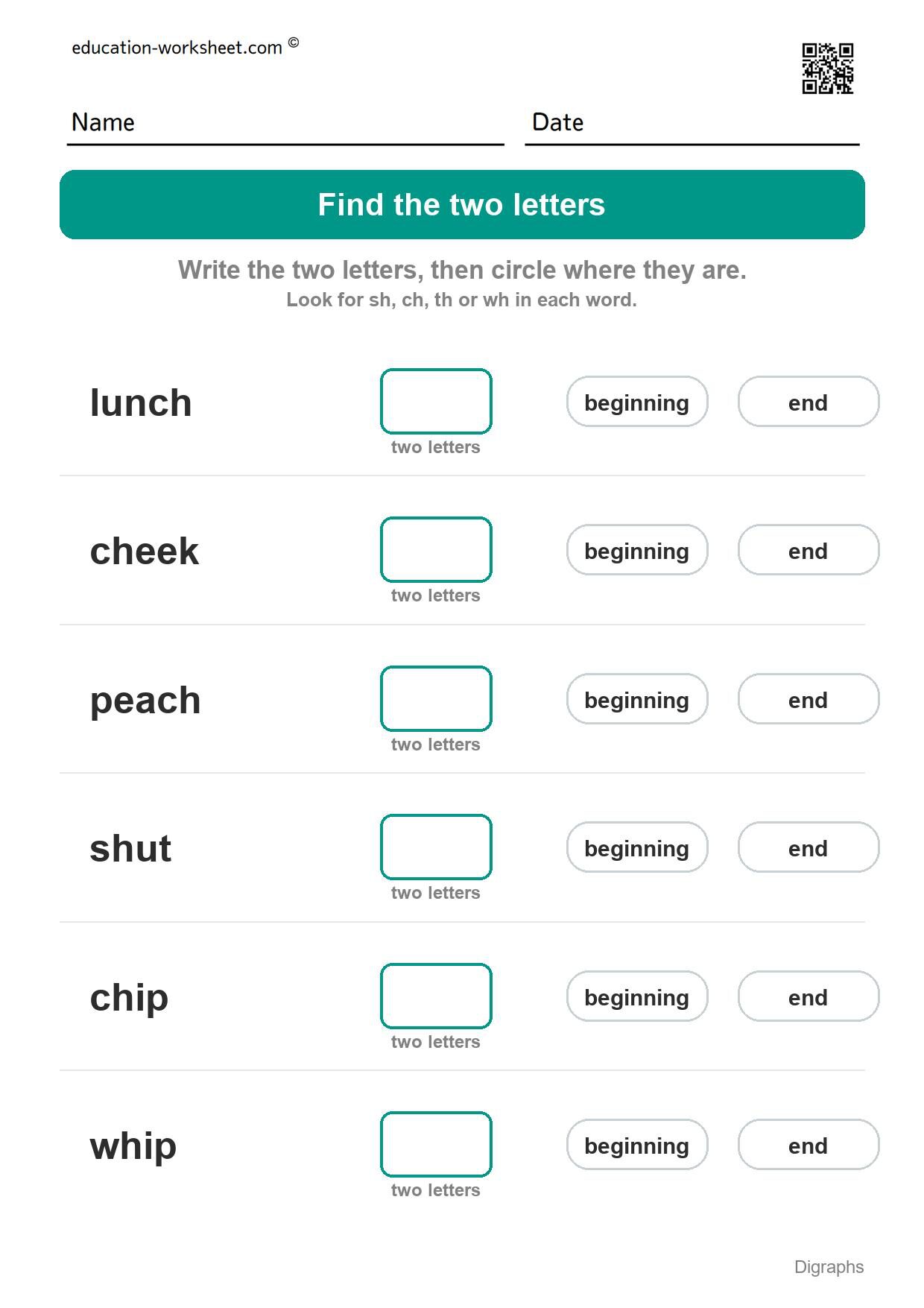
Find the digraph (Set 5)
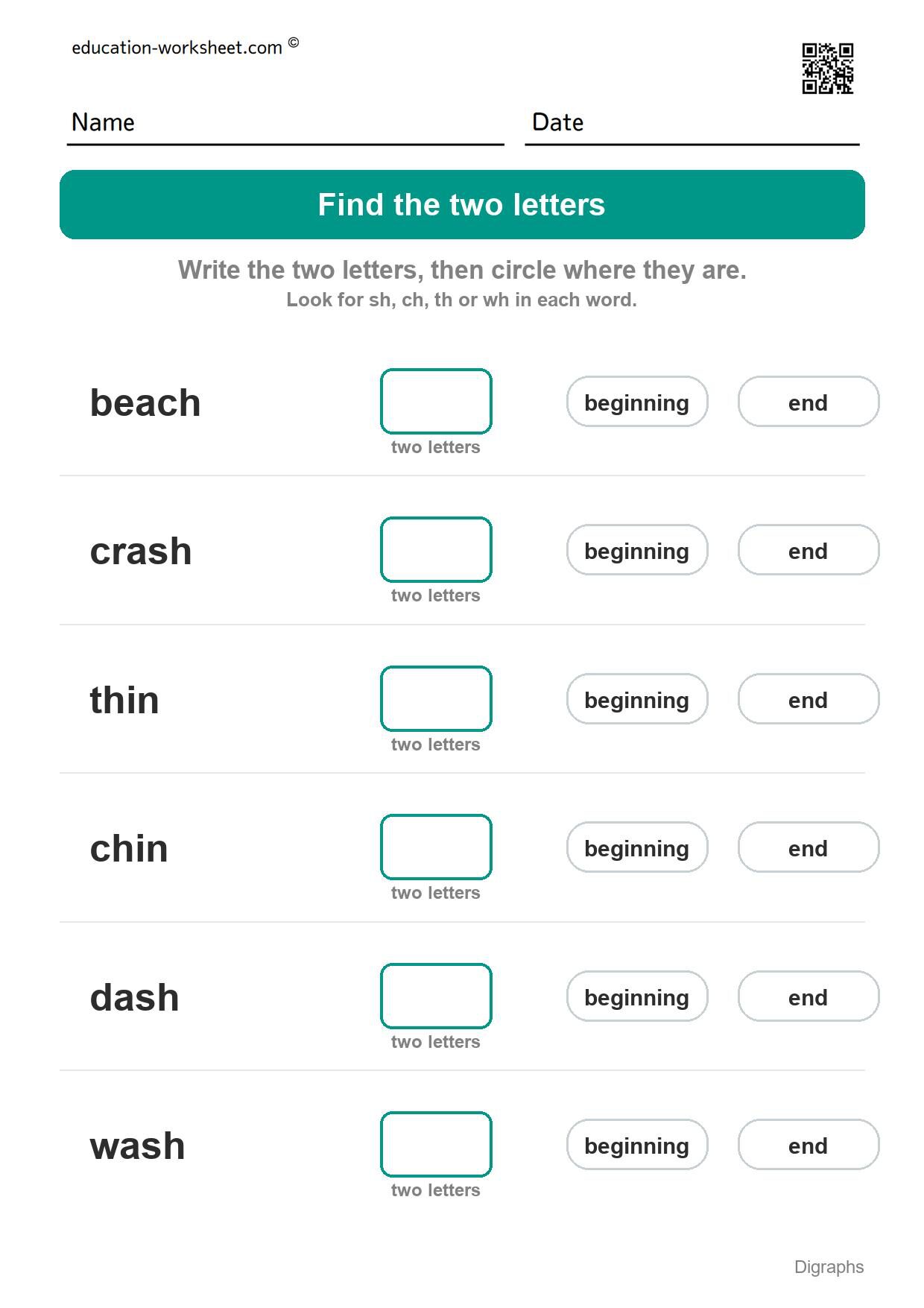
Find the digraph (Set 6)
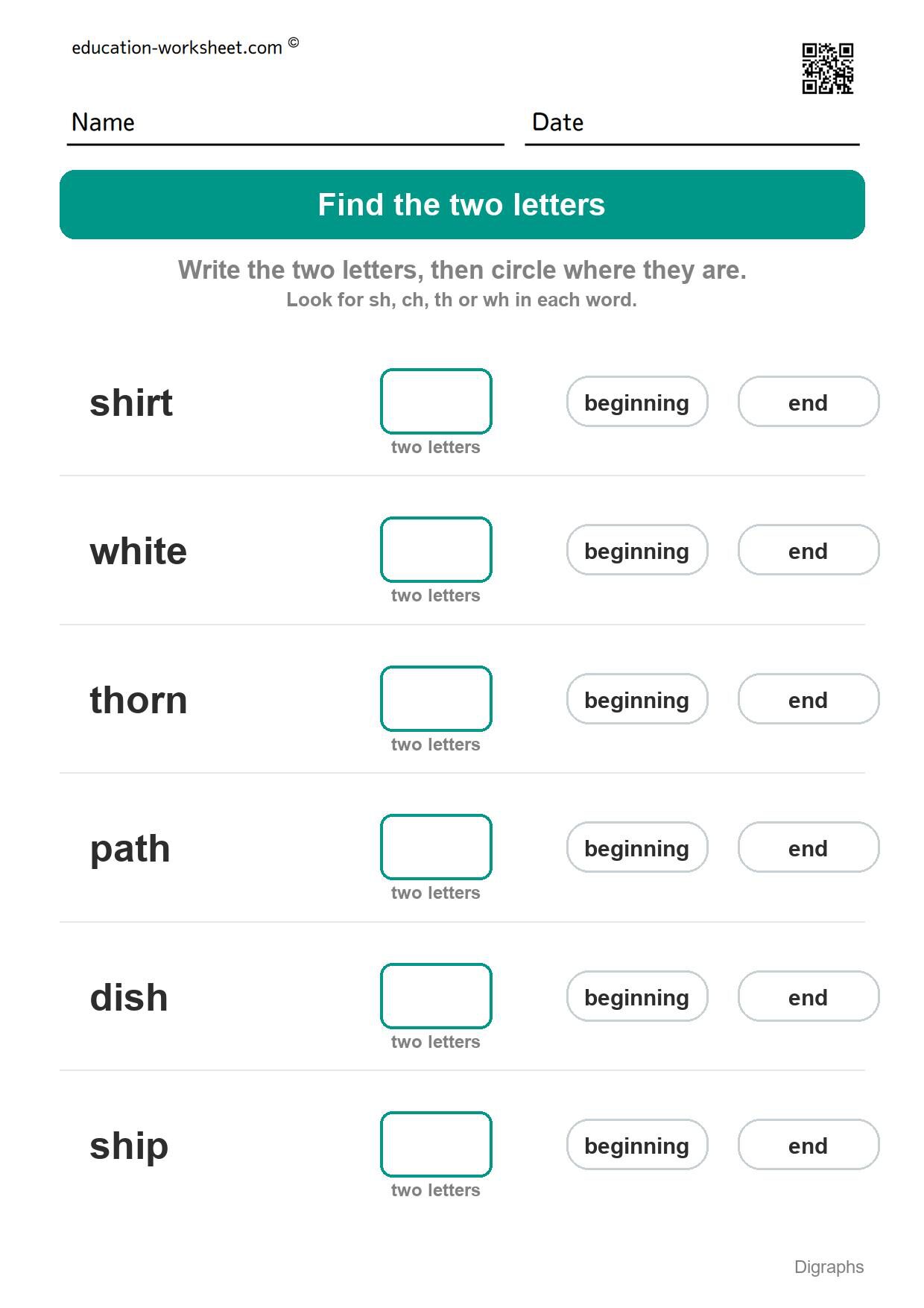
Find the digraph (Set 7)
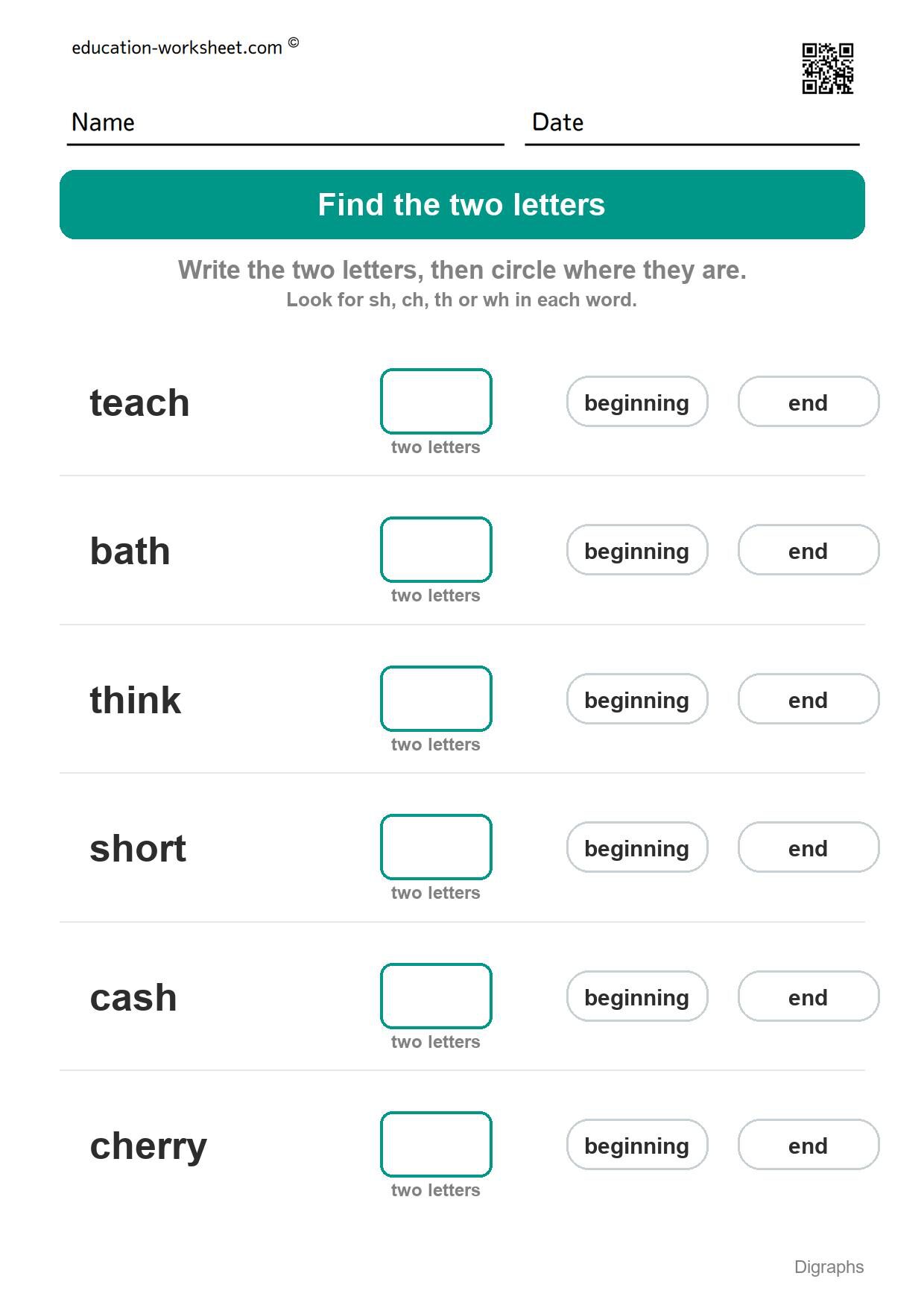
Find the digraph (Set 8)
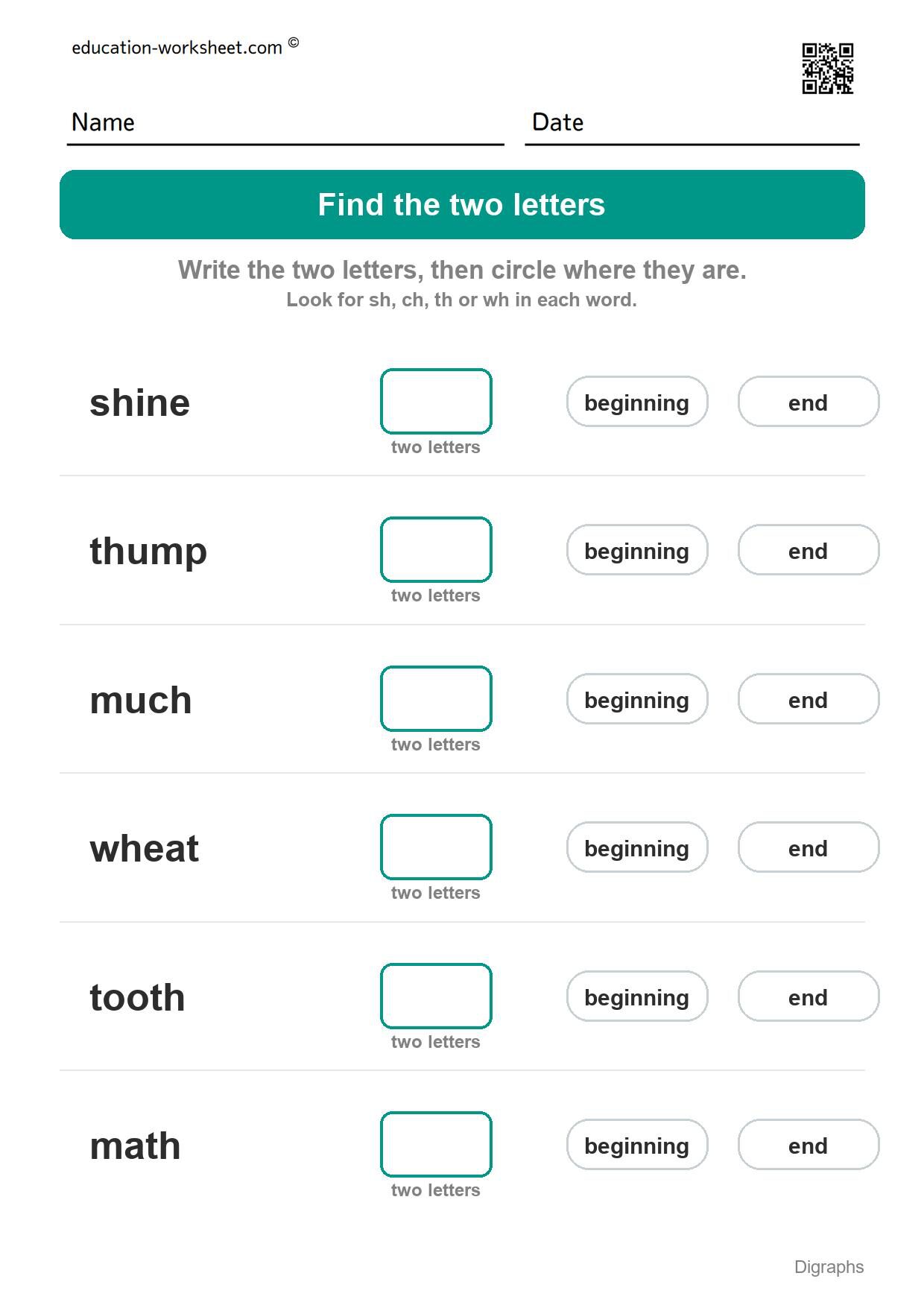
Find the digraph (Set 9)
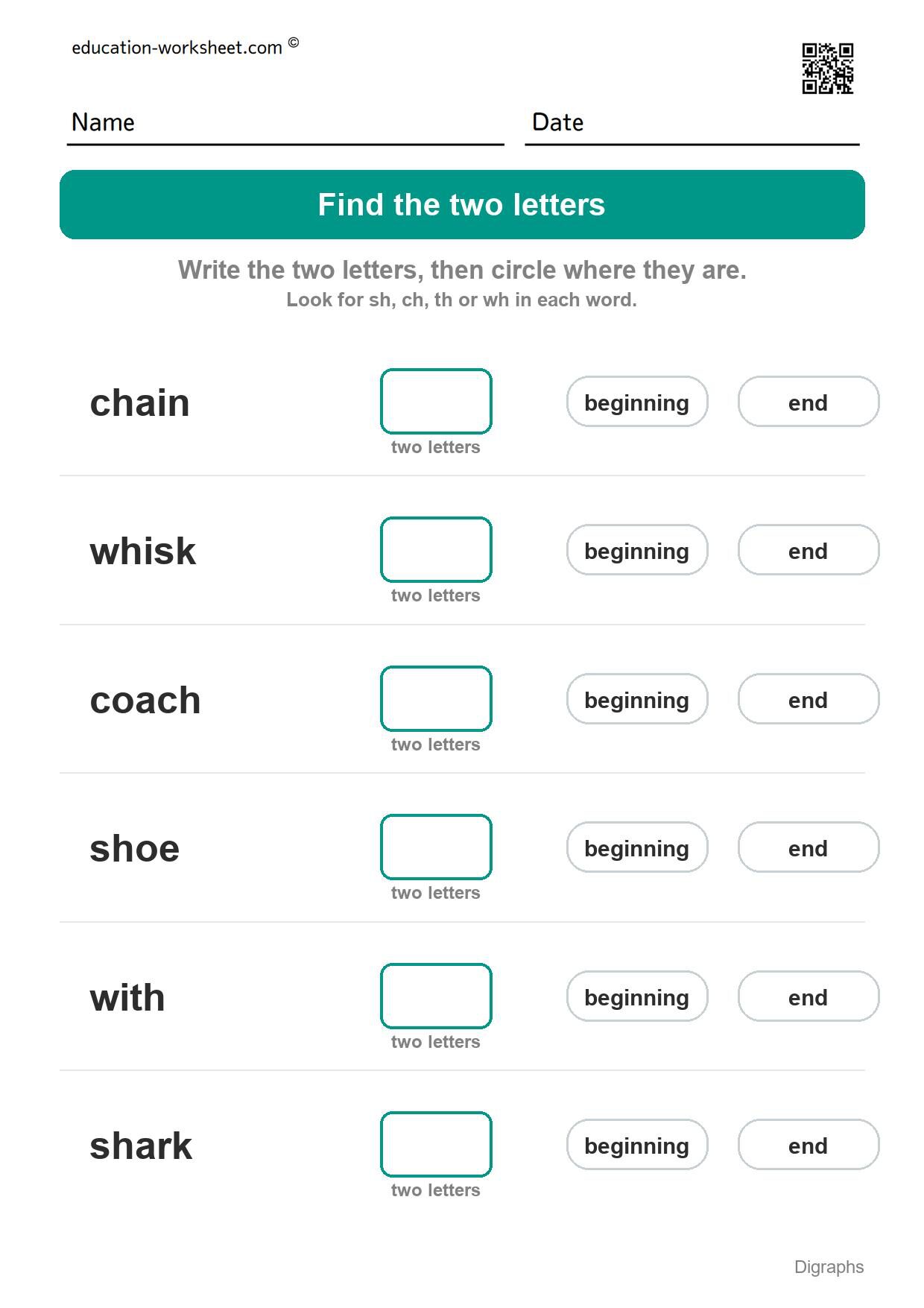
Find the digraph (Set 10)
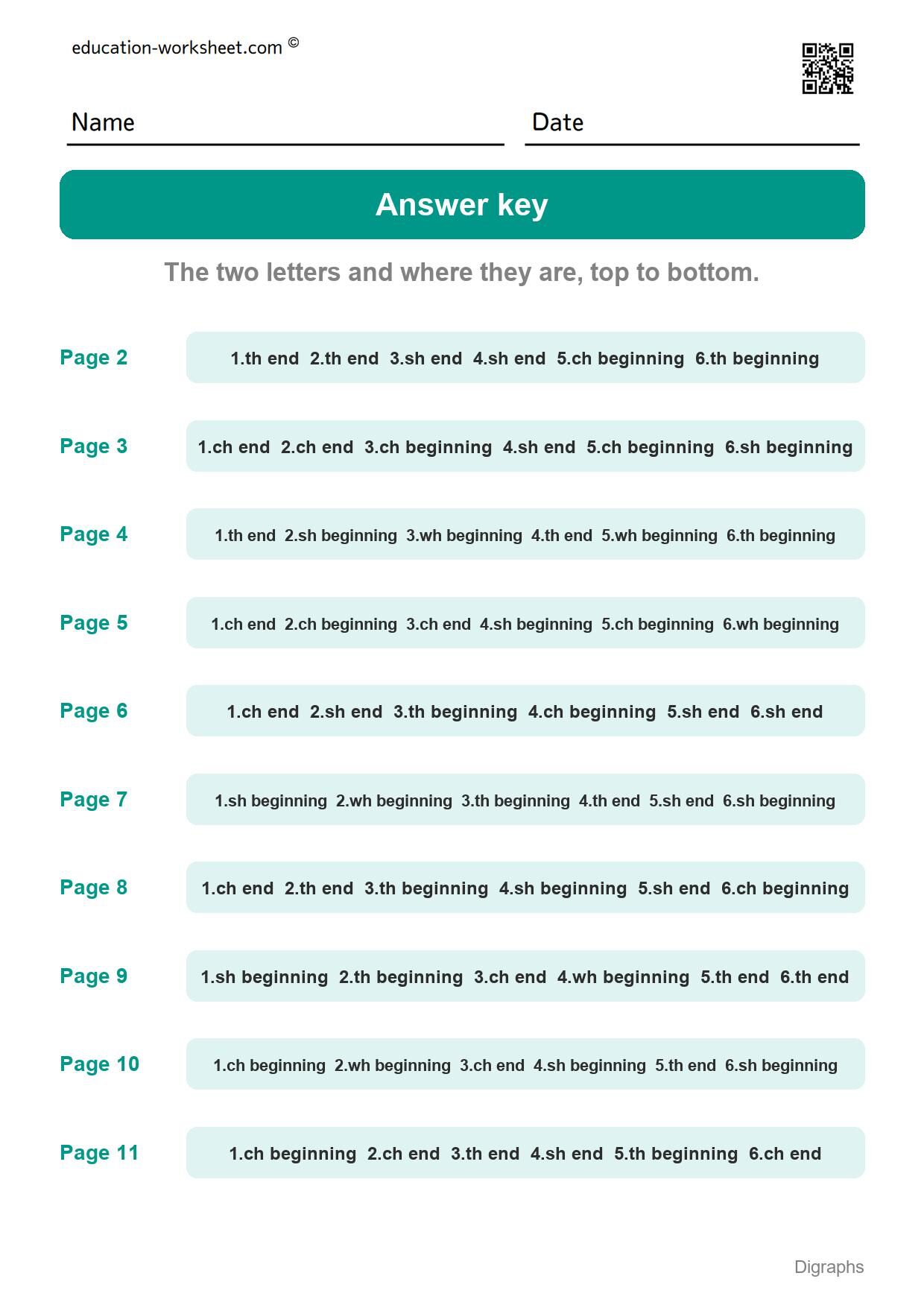
Answer key – all 10 pages
Teaching sh, ch, th and wh: what to say and what to expect
A digraph is two letters that stop being two sounds and become one. That single idea is the whole lesson, and it is the first time a child meets it. Until now every letter has had its own sound, so a beginning reader looking at ship quite reasonably tries s-h-i-p, four sounds, and gets nowhere. Once a child accepts that sh is one sound wearing two letters, a large number of very common words open up at once.
What your child is actually learning
First grade phonics asks children to know the sounds for common consonant digraphs, and the four on these pages are the ones that do the most work in English. sh is the quiet, steady sound in ship and fish. ch is the sharper sound in chin and lunch. th is the one children find hardest, because it is really two sounds: the soft one in thin and the buzzing one in this. wh begins most of our question words, which makes it worth knowing early even though many speakers now say it exactly like w.
How to work through these pages
Say the sound, not the letter names. When you help, make the sound itself — “shhh” rather than “ess-aitch” — because the letter names actively get in the way here. Cover the rest of the word with your finger, uncover the digraph first, then let the rest follow. If a page is going slowly, read the words aloud yourself and let your child point to the matching picture. Hearing the sound correctly has to come before writing it.
The mistakes to expect
- Sounding out both letters separately: s-h-o-p instead of sh-o-p. This is the main one, and it is a sign the child is still reading letter by letter.
- Swapping ch and sh. Chip and ship are genuinely close, and a child who mixes them up is listening carefully rather than carelessly.
- Expecting th to sound the same every time. It does not, and no rule predicts which one you get. Say both out loud and let your child feel the buzz in the throat on this that is missing on thin.
- Writing wh as plain w. In most accents these now sound identical, so this one is spelling knowledge rather than listening.
What to teach next
The natural next step is consonant blends, and the contrast between the two is worth making out loud. In a digraph the two letters make one new sound; in a blend such as bl or st you still hear both letters, just quickly. Children who meet both ideas close together tend to sort them out faster than children who meet them months apart. After blends, silent e is the usual next unit.
Questions parents ask
Is a digraph the same as a blend?
No, and this is the distinction that matters most. A digraph makes one brand new sound, so sh is not s followed by h. A blend keeps both sounds and simply runs them together, so in stop you really can hear the s and the t.
My child can say the sounds but cannot write them. Is that normal?
Yes. Hearing and saying a sound comes first, then reading it, then writing it, and the gap between them can be weeks. Keep going with the reading pages and treat the writing as the part that will catch up.
What about ph, ck and ng?
They are digraphs too, and children usually meet them a little later. Once the four on these pages are secure the idea transfers quickly, because the child already accepts that two letters can share one sound.