- Free Antonyms Worksheets for Grade 1 – Opposite Words
- Antonyms (start here)
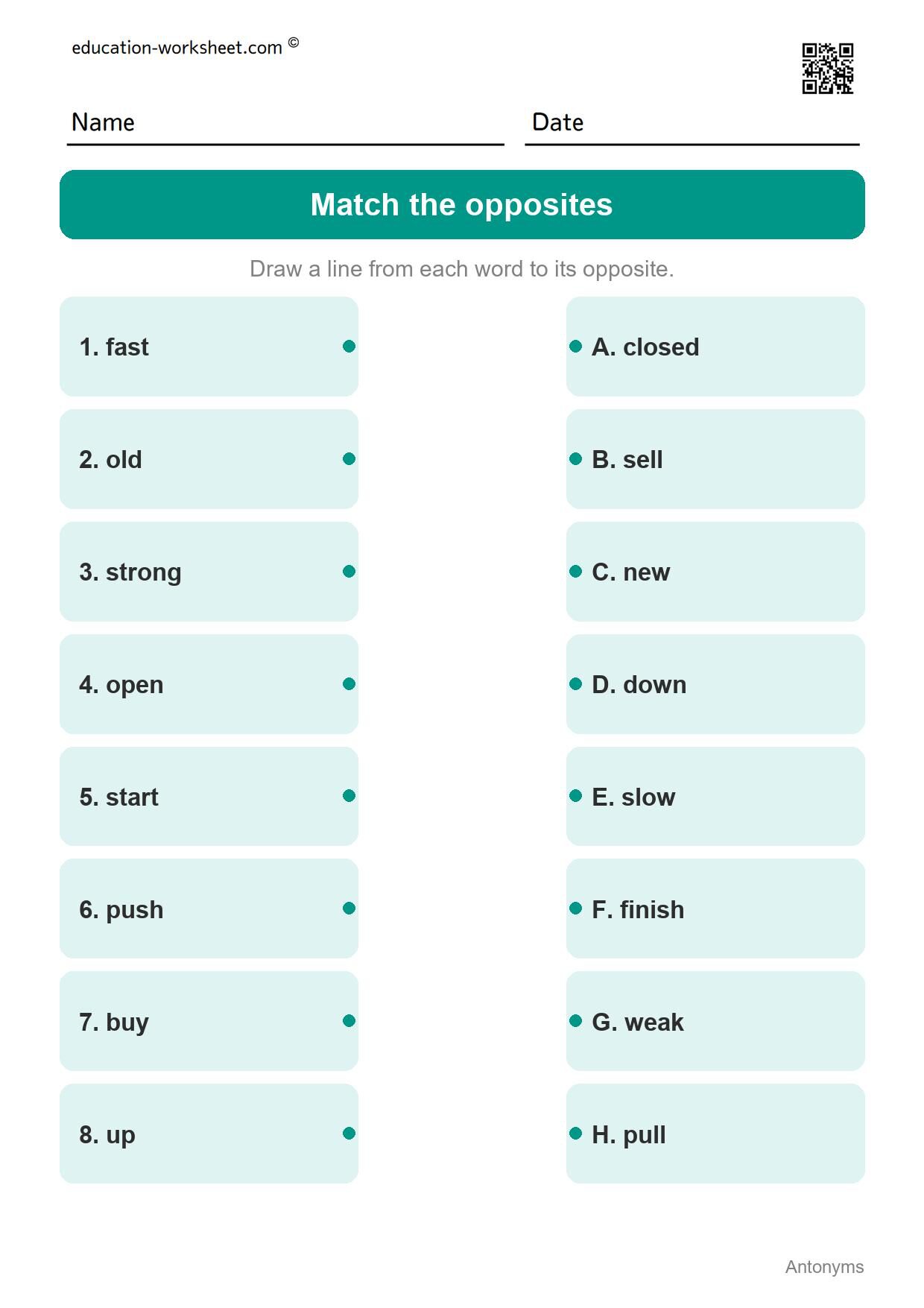
- Match the opposites – Size and Amount (Set 1)
- Choose the opposite – Size and Amount (Set 2)
- Write the opposite – Size and Amount (Set 3)
- Finish the sentence – Size and Amount (Set 4)
- Match the opposites – Feelings and Weather (Set 5)
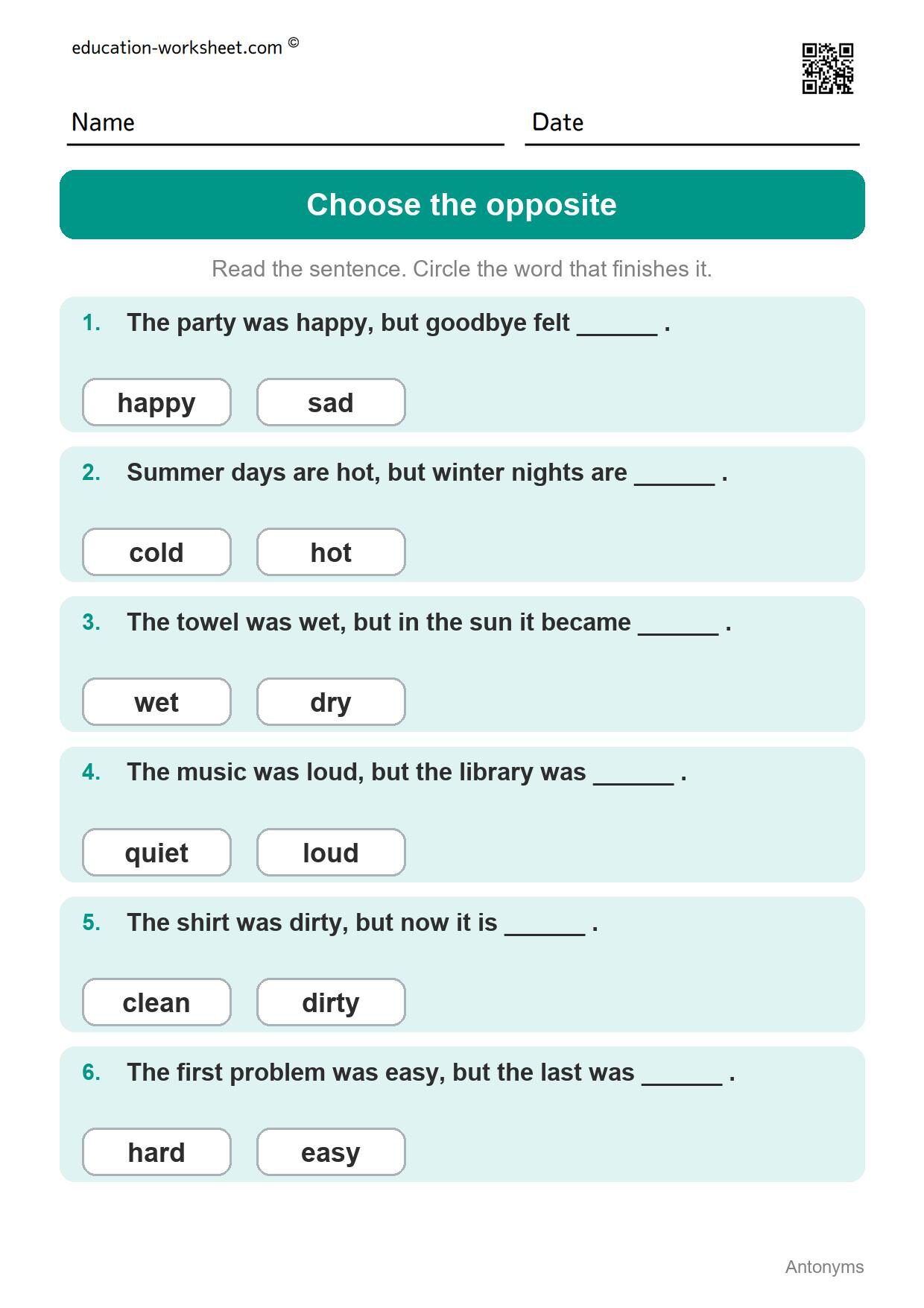
- Choose the opposite – Feelings and Weather (Set 6)
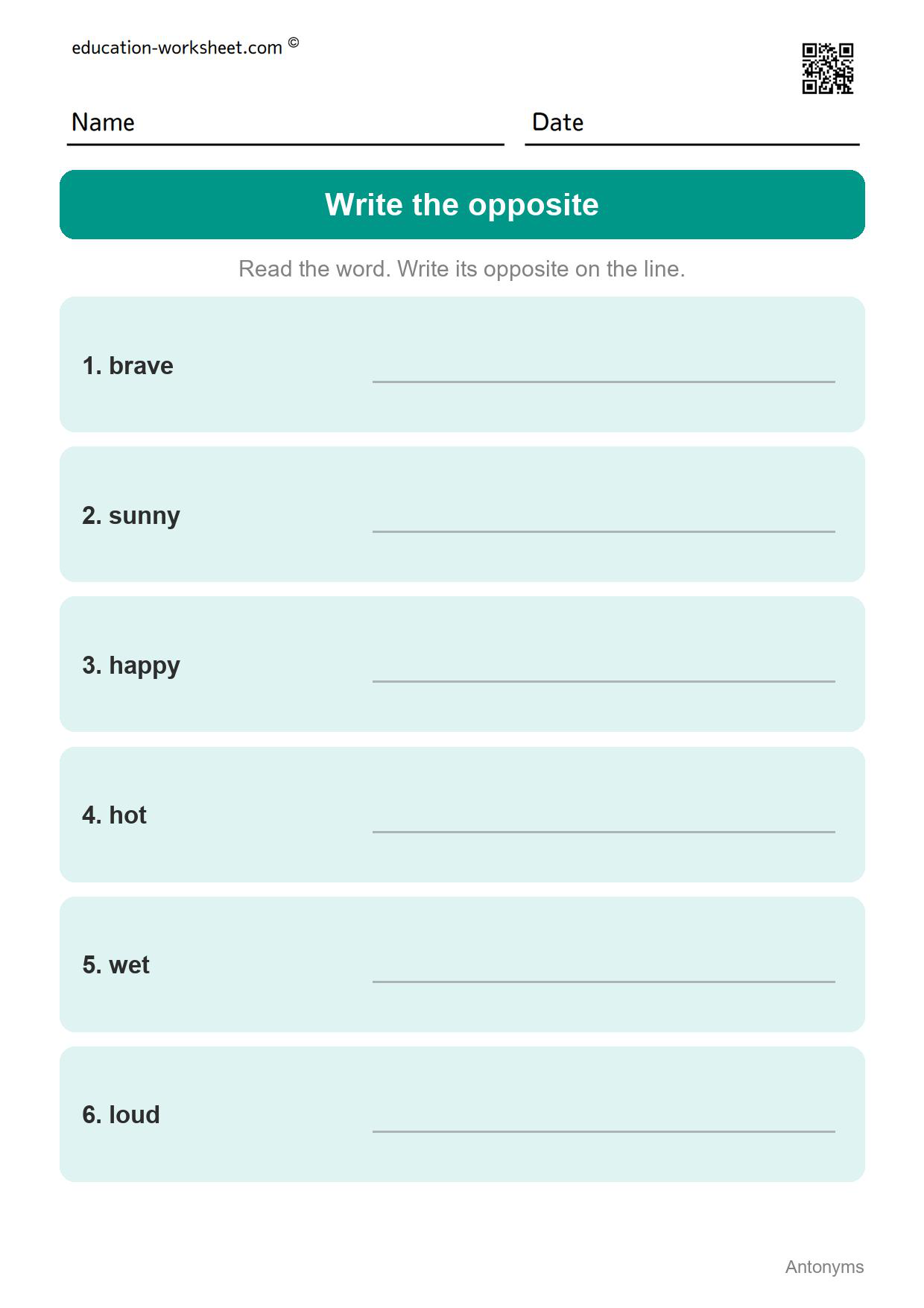
- Write the opposite – Feelings and Weather (Set 7)
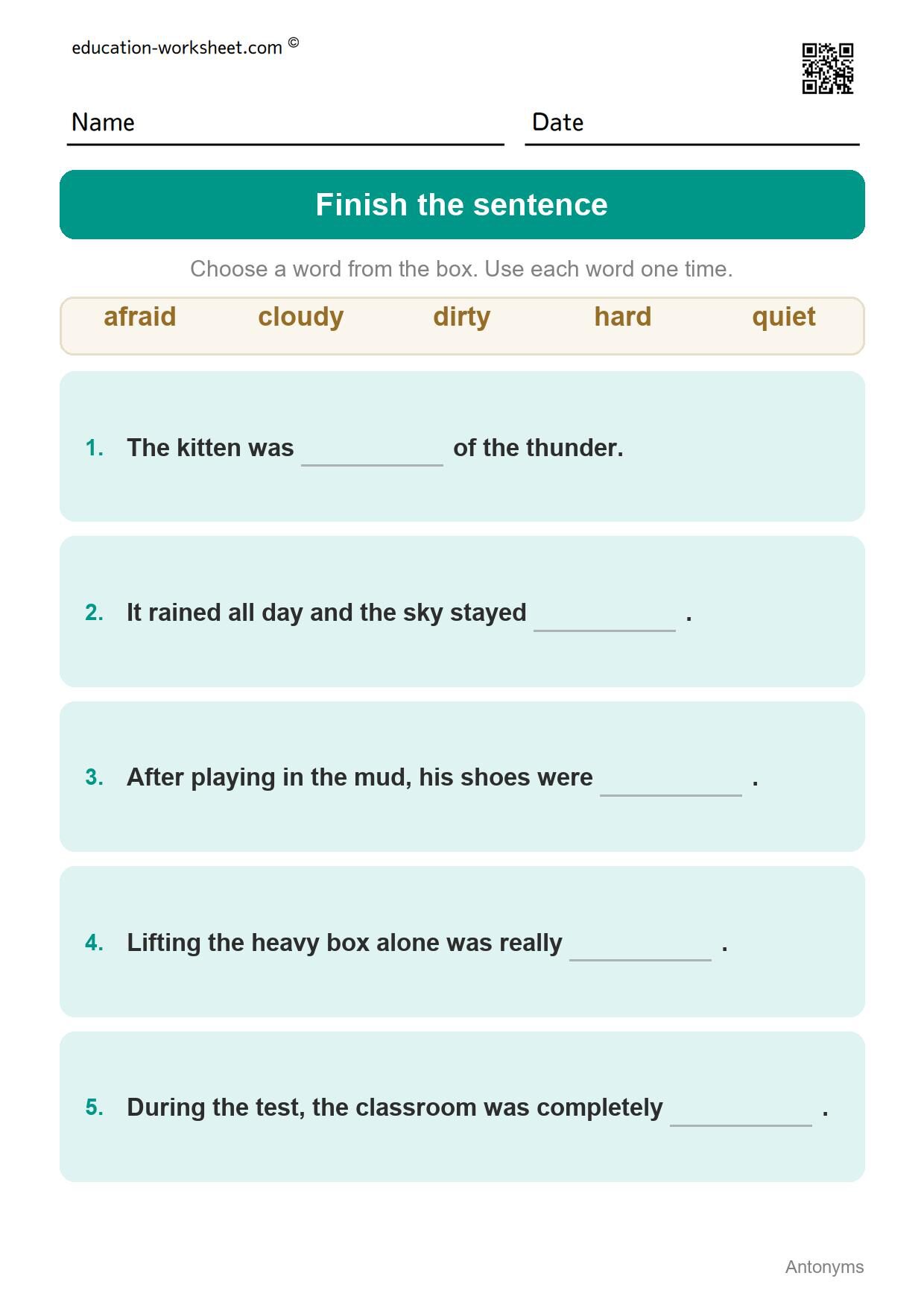
- Finish the sentence – Feelings and Weather (Set 8)
- Match the opposites – Speed and Action (Set 9)
- Choose the opposite – Speed and Action (Set 10)
- Write the opposite – Speed and Action (Set 11)
- Finish the sentence – Speed and Action (Set 12)
- Answer key
- Antonyms: teaching opposites when a word has more than one
Free Antonyms Worksheets for Grade 1 – Opposite Words
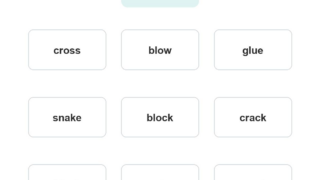
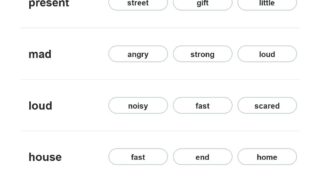
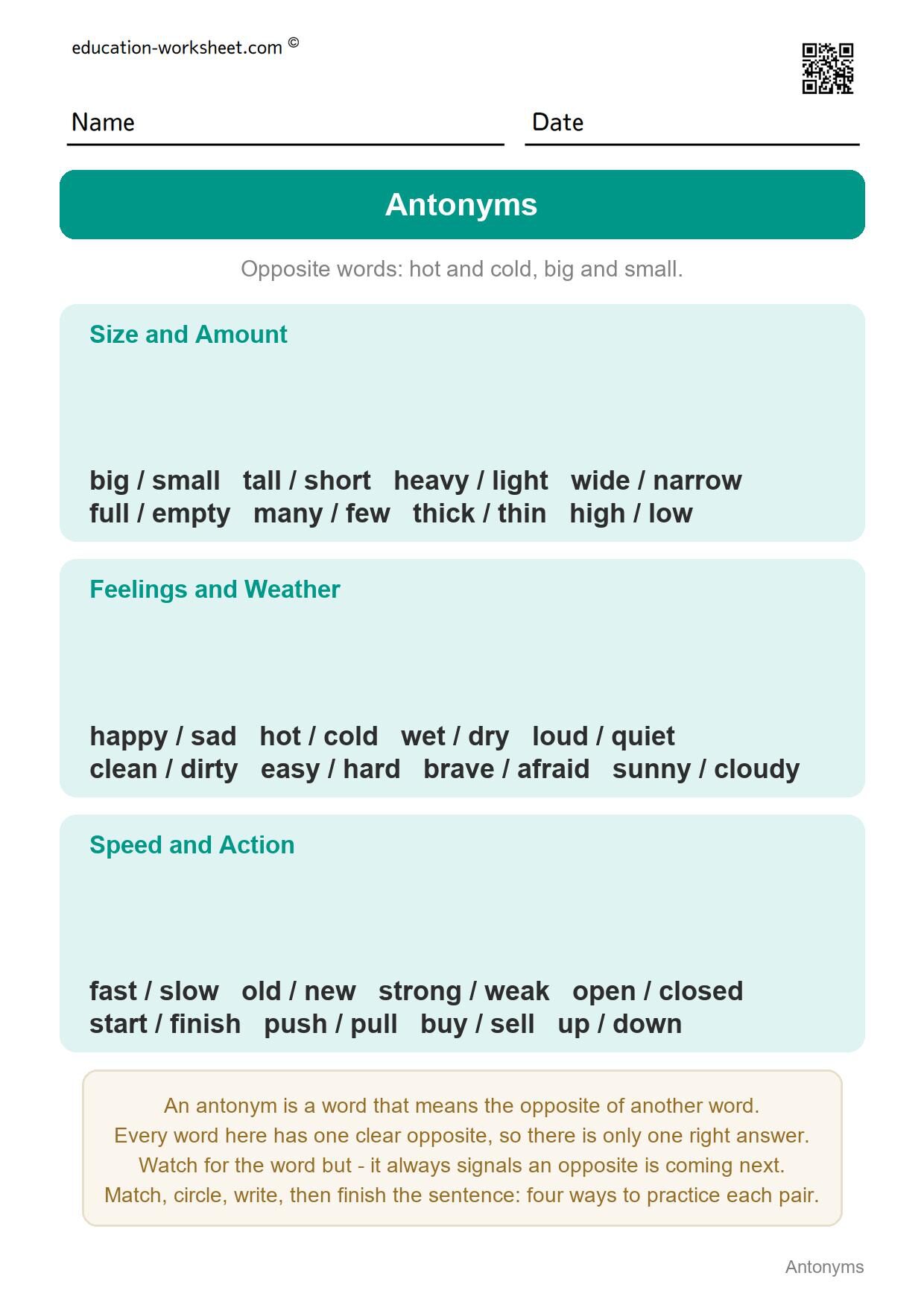
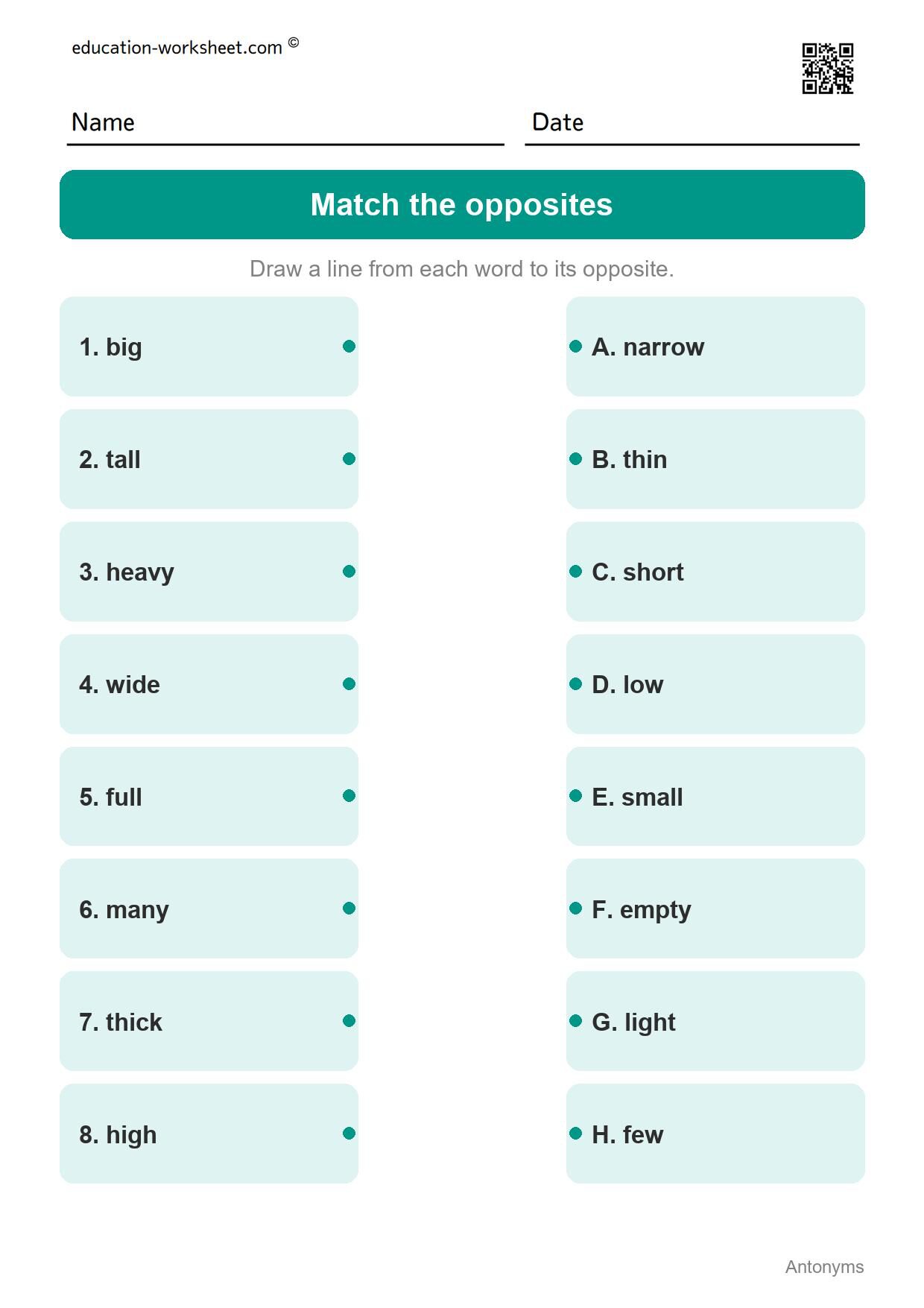
These free printable antonym worksheets give first grade children practice with opposite words, the natural partner to our synonyms set. The pages move through three groups of everyday word pairs: size and amount words like big and small, feelings and weather words like happy and sad, and speed and action words like fast and slow. Each group is practiced four ways: draw a line to match a word to its opposite, circle the correct opposite in a sentence, write the opposite of a single word, and choose the right word from a box to finish a sentence. Every word here has exactly one common opposite, so there is never more than one right answer, and the sentences that ask children to choose always use a word like but or however to make the opposite the only word that fits. The last page is an answer key for all twelve pages. Just download, print, and get matching!
Antonyms (start here)
Match the opposites – Size and Amount (Set 1)
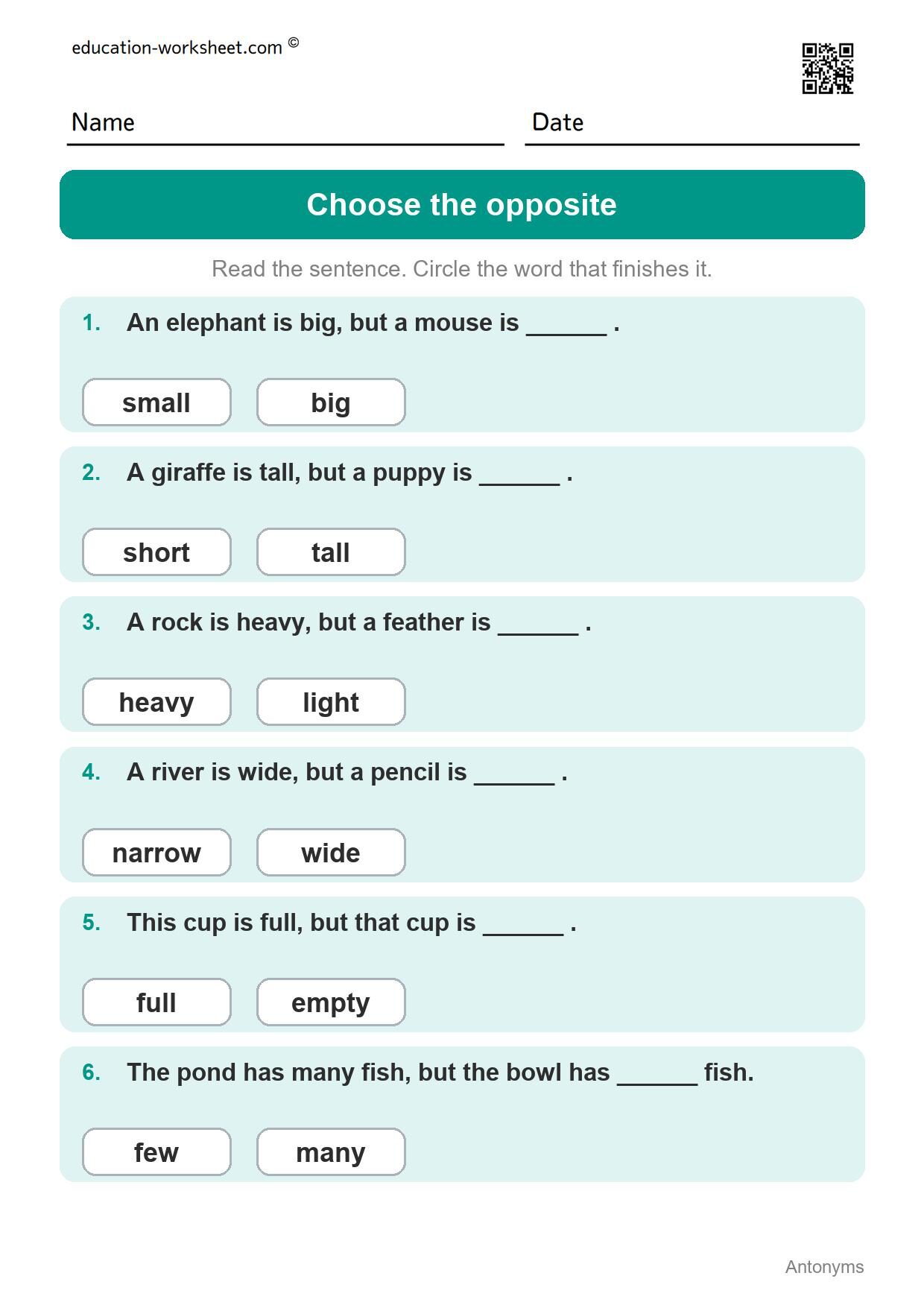
Choose the opposite – Size and Amount (Set 2)
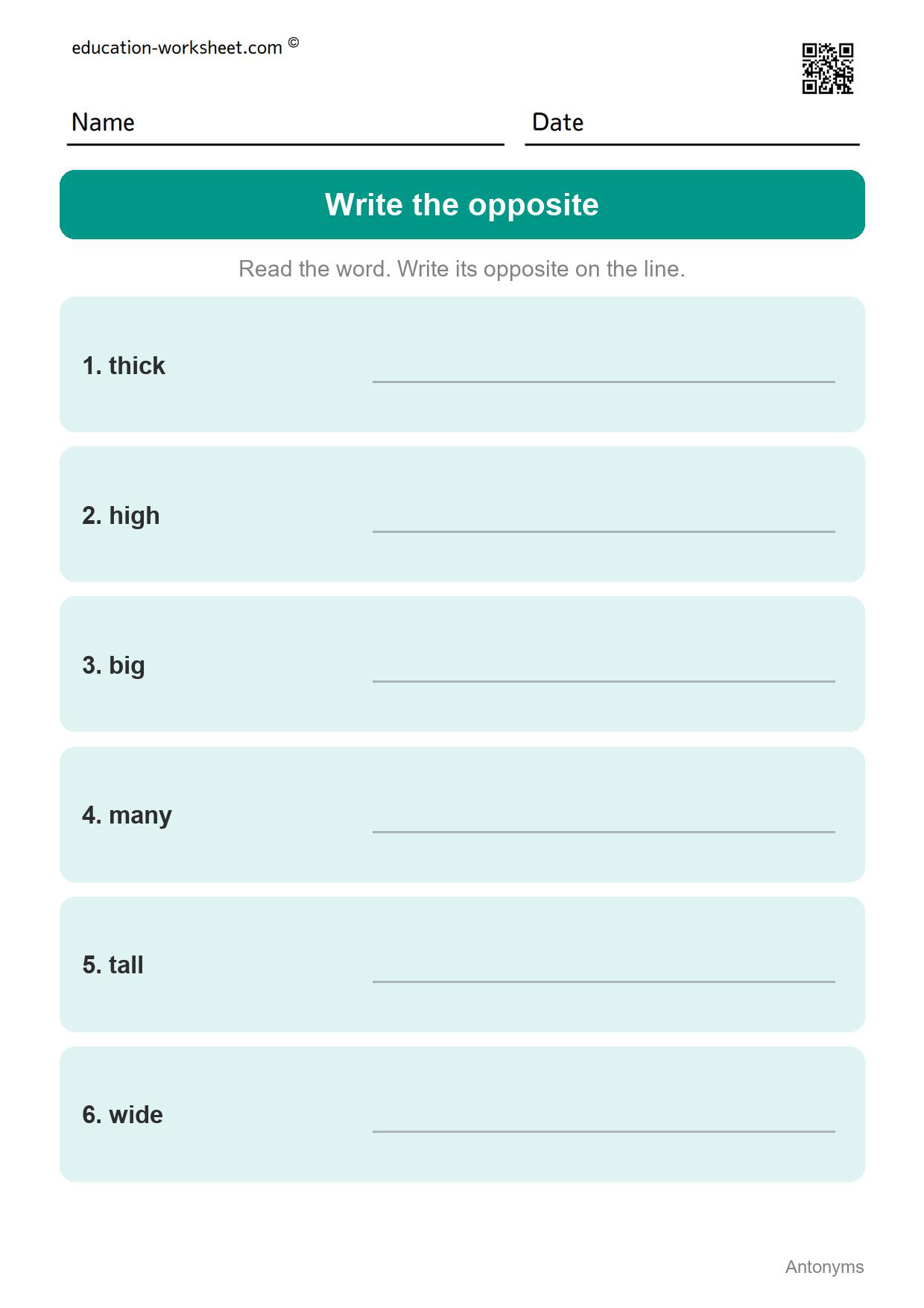
Write the opposite – Size and Amount (Set 3)
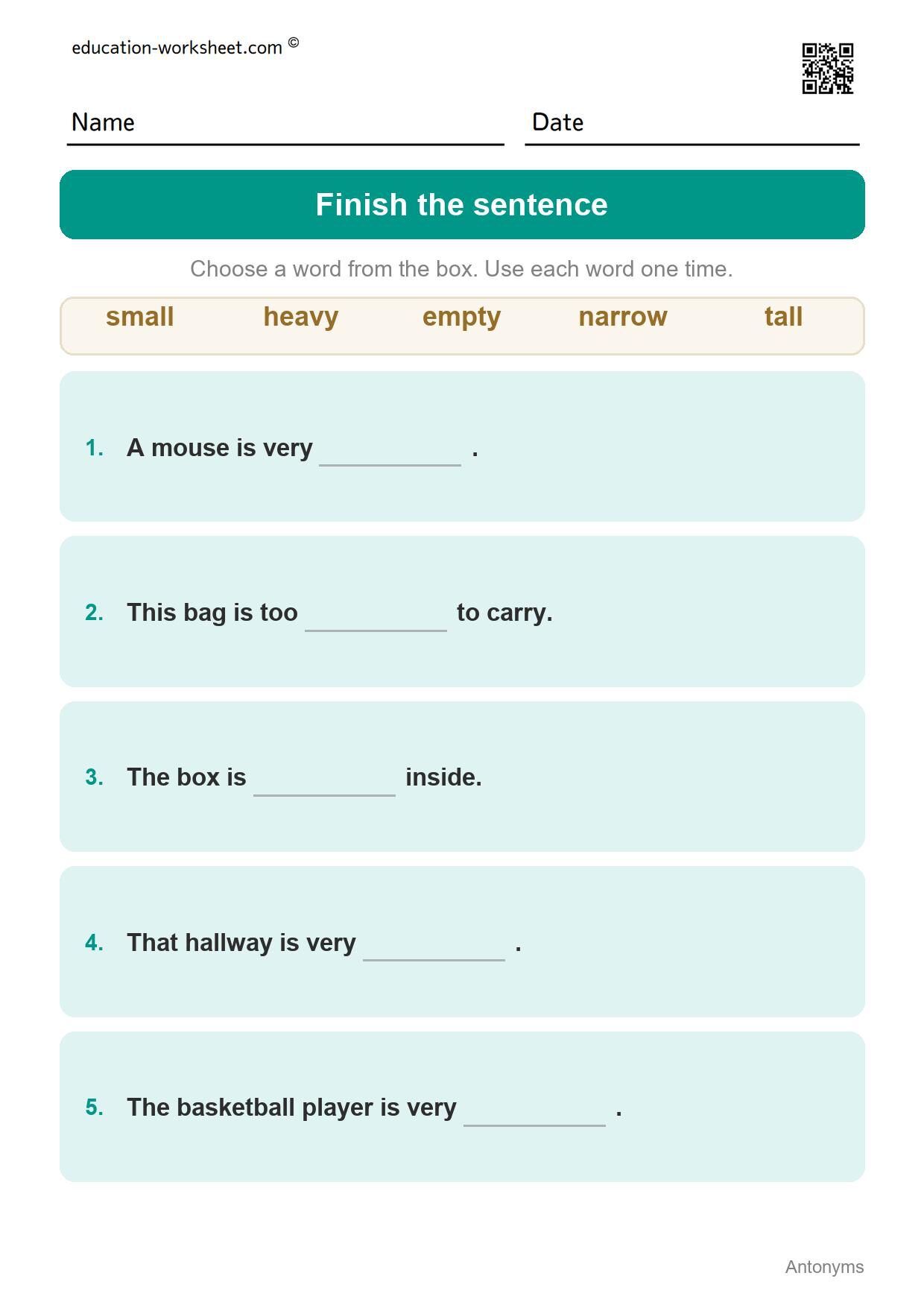
Finish the sentence – Size and Amount (Set 4)
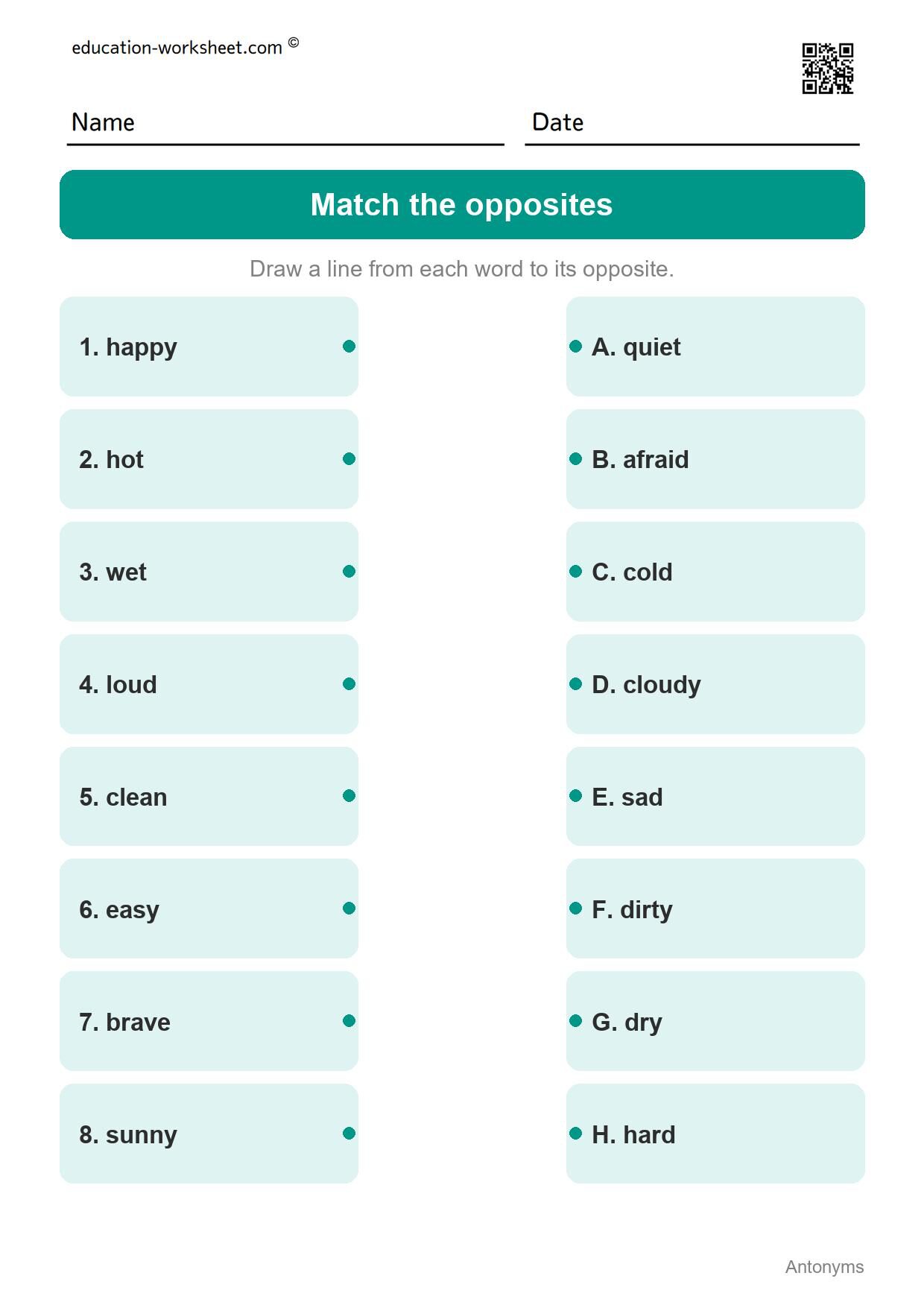
Match the opposites – Feelings and Weather (Set 5)
Choose the opposite – Feelings and Weather (Set 6)
Write the opposite – Feelings and Weather (Set 7)
Finish the sentence – Feelings and Weather (Set 8)
Match the opposites – Speed and Action (Set 9)
Choose the opposite – Speed and Action (Set 10)
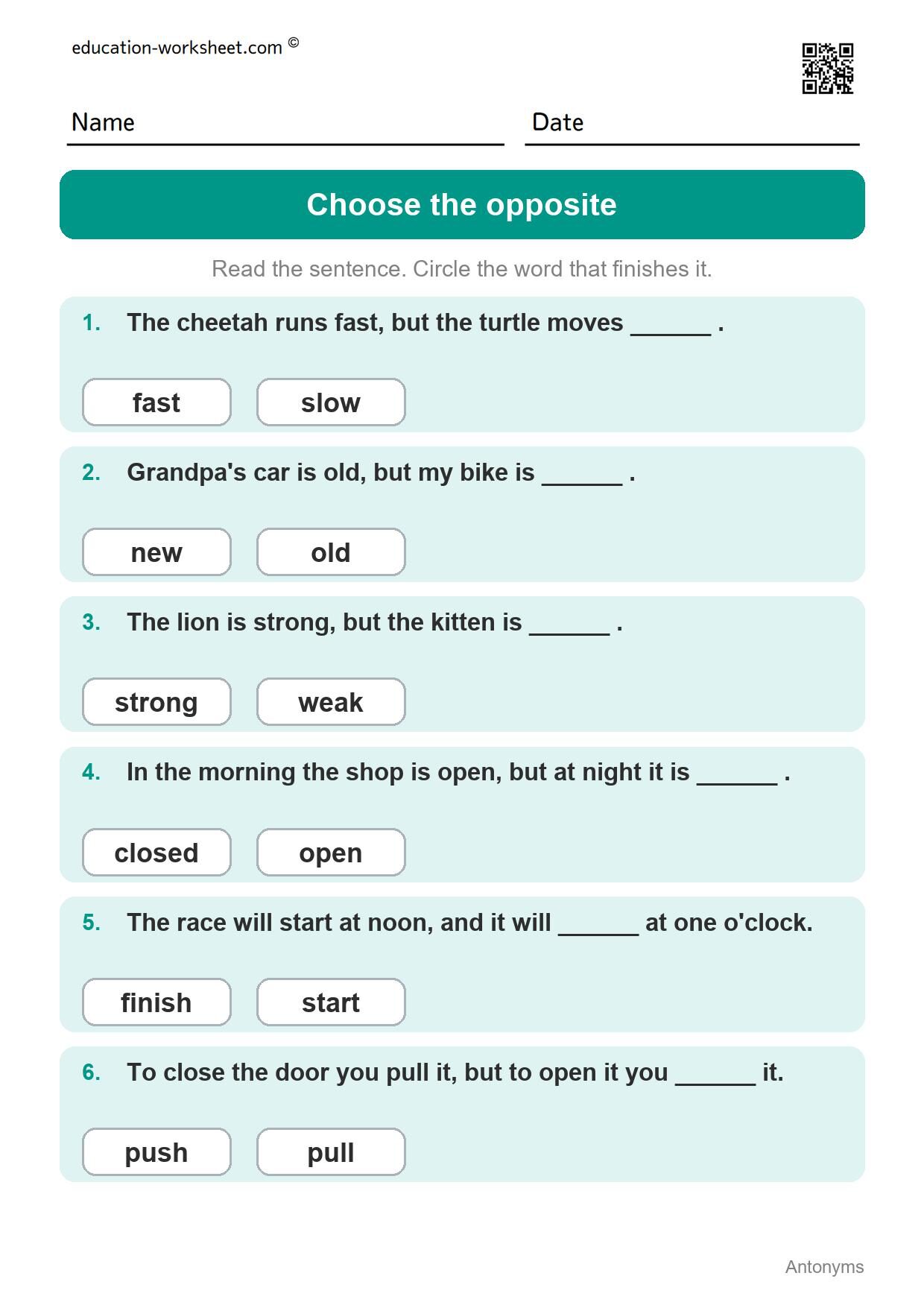
Write the opposite – Speed and Action (Set 11)
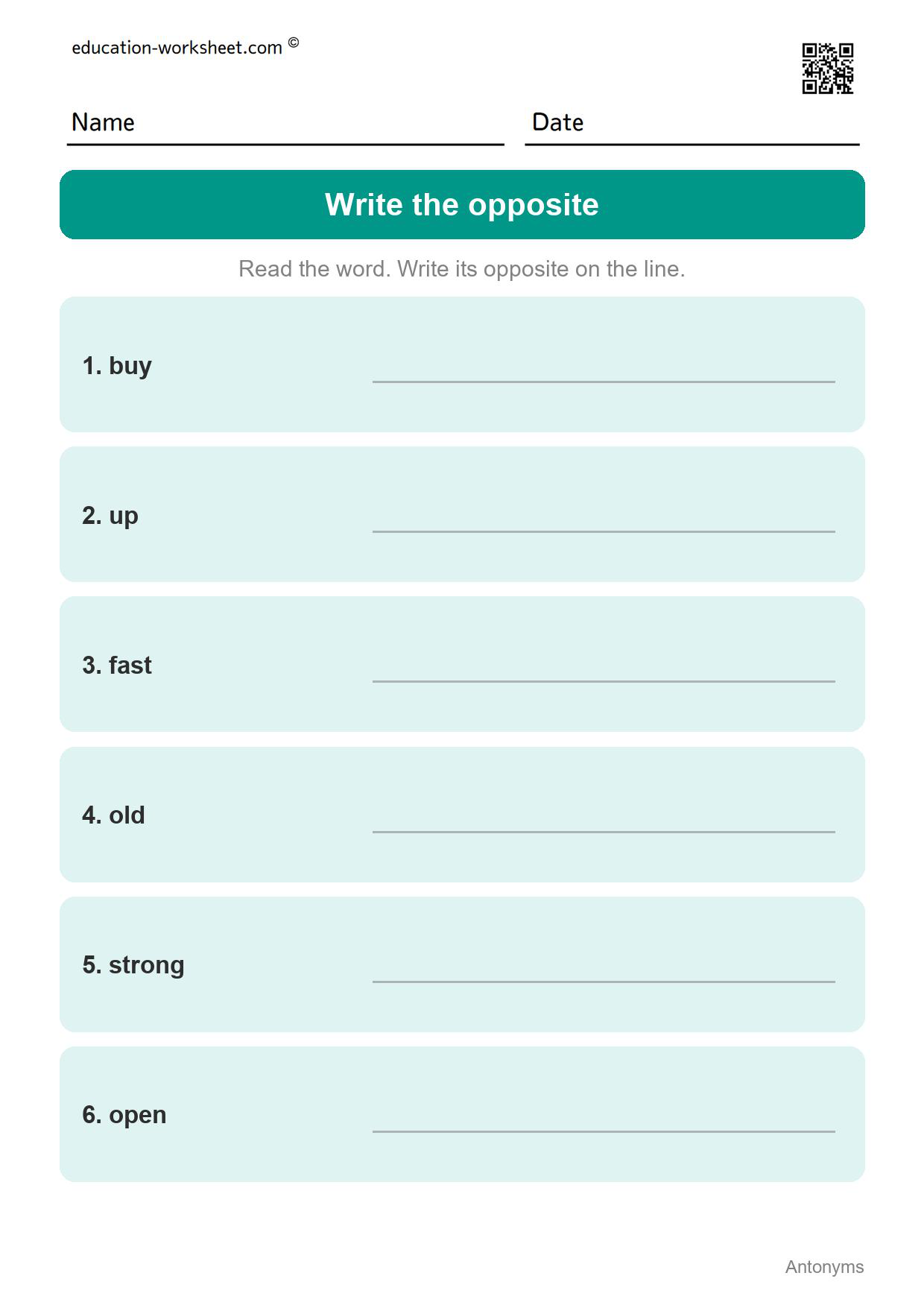
Finish the sentence – Speed and Action (Set 12)
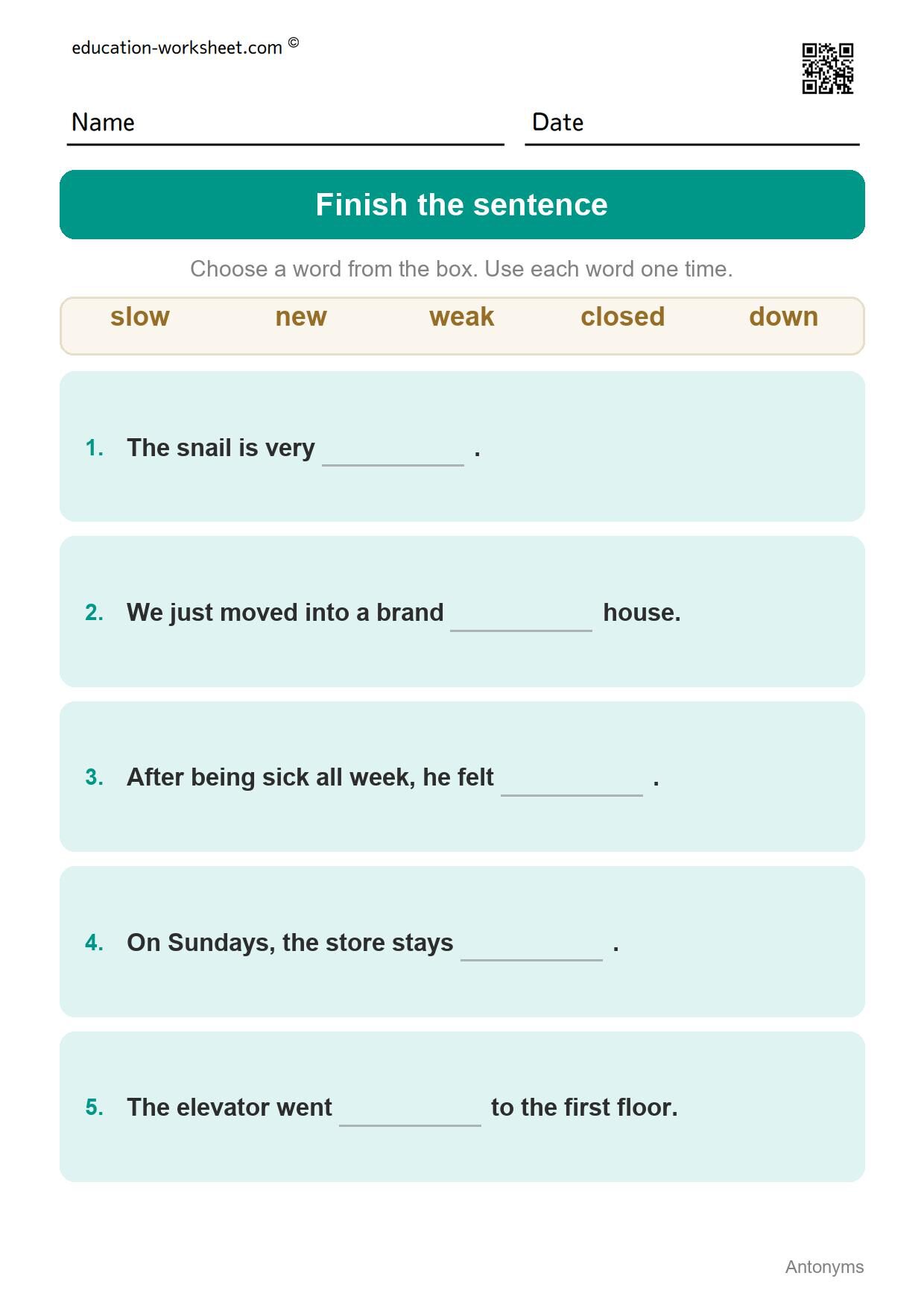
Answer key
Antonyms: teaching opposites when a word has more than one
An antonym is a word that means the opposite of another, such as hot and cold. Young children usually understand opposites long before they can name them, because opposites are how the physical world arrives: big and small, up and down, wet and dry. The job here is to attach the vocabulary to something they already know.
What your child is actually learning
Beyond the word pairs themselves, this is early work on how words relate to one another, which is what first grade vocabulary standards are reaching for. It also sharpens precision. A child who knows that the opposite of full is empty has a firmer grip on what full means, because the boundary of a word is part of its meaning.
How to work through these pages
Use a contrast sentence with the word but in the middle, because that is how opposites actually appear in real language: the elephant is big, but the mouse is small. Teaching children to notice but as a signal that something opposite is coming is a reading comprehension skill in its own right, and it will keep paying off long after the word pairs are learned. Acting the pairs out also works well for physical ones such as open and shut, or push and pull.
The mistakes to expect
- Offering a word that is merely different rather than opposite: saying the opposite of red is blue. Colours have no opposites, and saying so is a useful lesson in itself.
- Words with more than one possible opposite. Old is the opposite of both new and young, depending on whether you are talking about a coat or a person.
- Adding not instead of finding a word: not happy rather than sad. Accept it as correct in meaning, then ask for the single word.
- Reversing a pair the child knows well and losing track: knowing that the opposite of big is small, but hesitating when asked the opposite of small.
What to teach next
If synonyms have not been covered, they are the natural pair to this unit. From there, describing words in sentences let children use both sets actively rather than just matching them, and sorting words into groups extends the same idea of how vocabulary is organised.
Questions parents ask
Do all words have an opposite?
No, and this is worth saying plainly. Nouns such as table and dog have none. Opposites belong mostly to describing words, directions and some verbs.
Is the opposite of a word ever more than one word?
Often, yes. The opposite of hot could be cold, cool or freezing depending on how strong you want to be. Any sensible answer deserves credit here.
What is the difference between an antonym and a negative?
A negative adds not and leaves the original word in place; an antonym is a different word entirely. Both express the opposite idea, but only one grows a child’s vocabulary.