
- Free Vowel Teams Worksheets for Grade 1 – Long Vowel Sounds
- Vowel teams (start here)
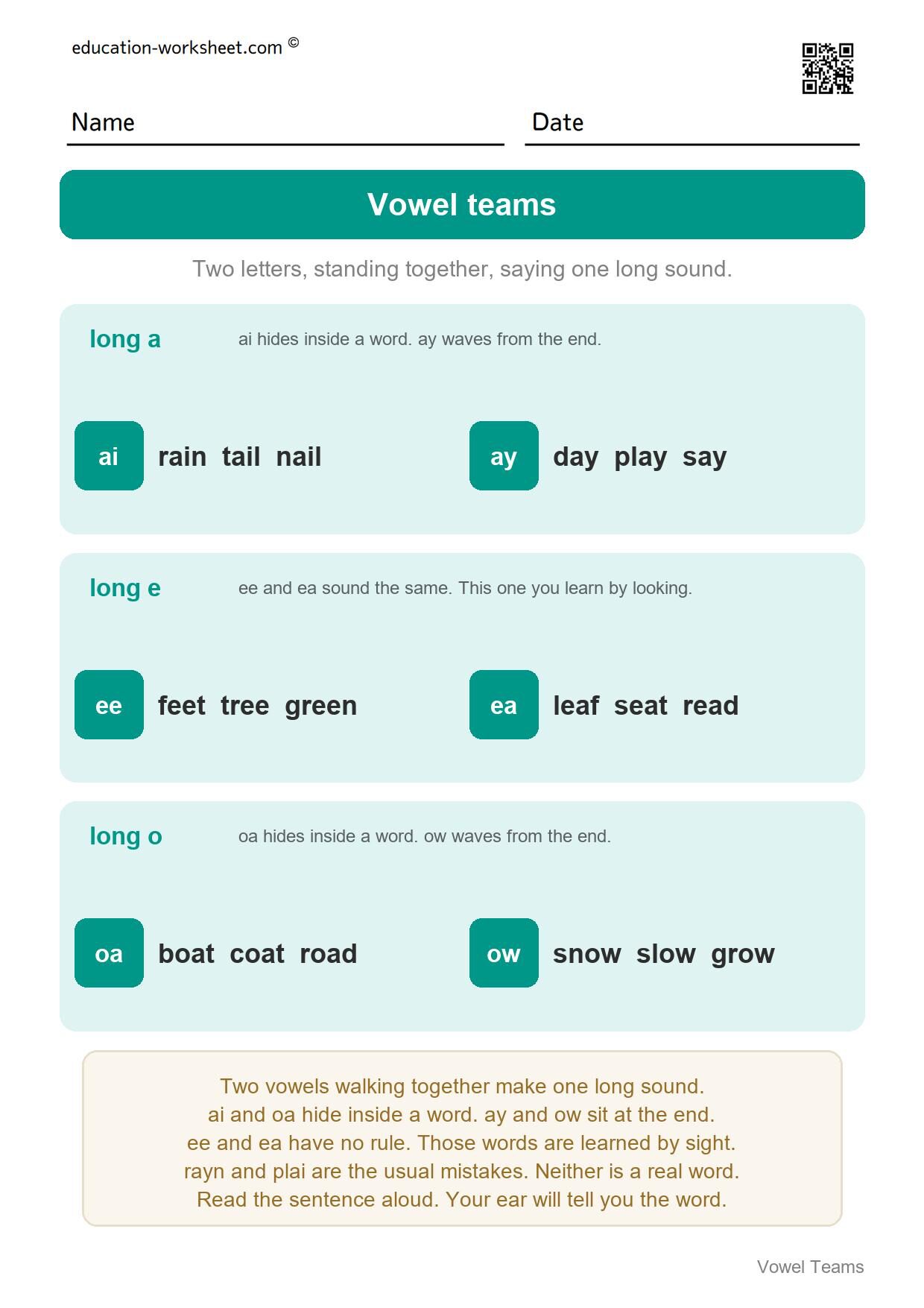
- Sort long a words – ai and ay (Set 1)
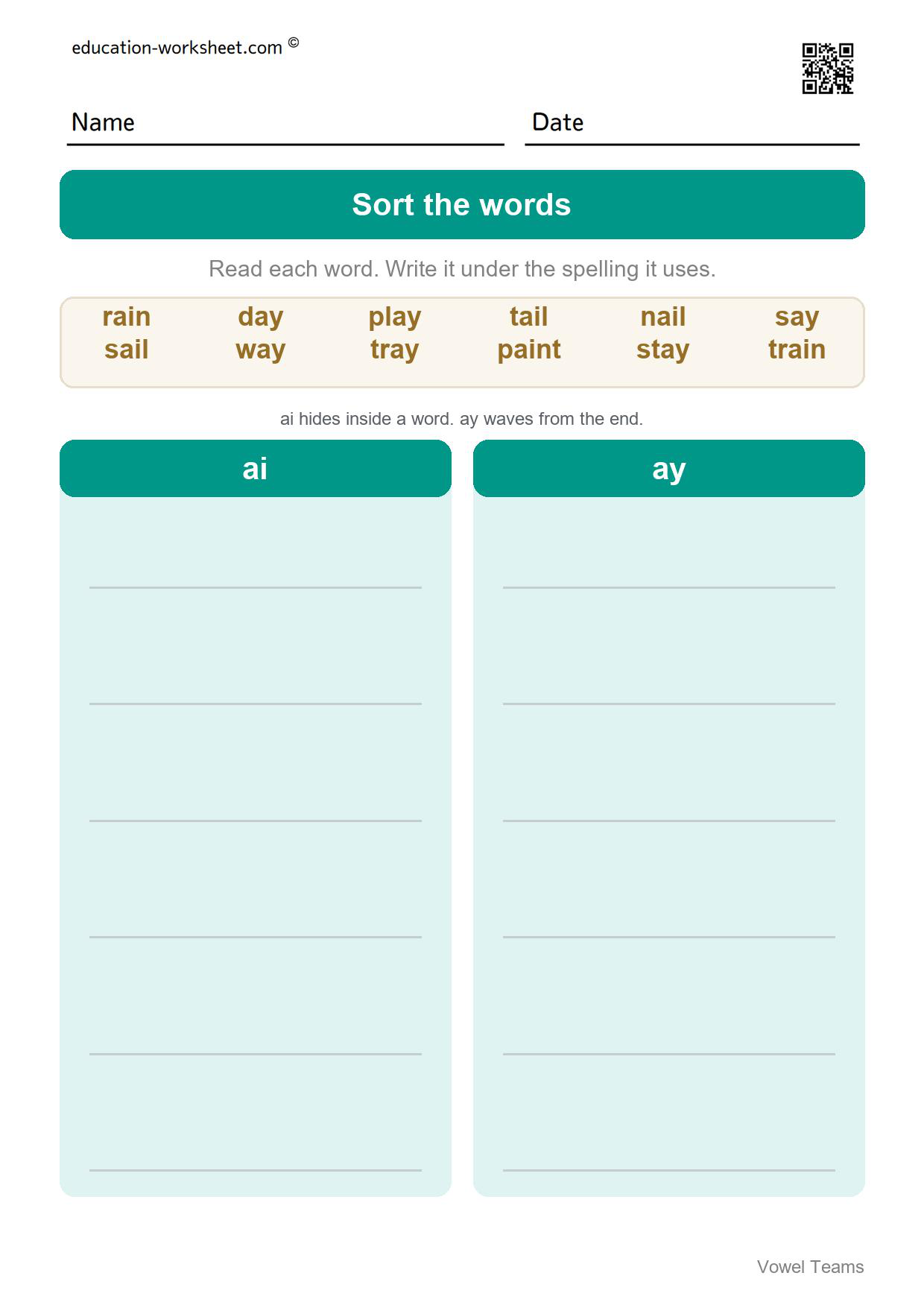
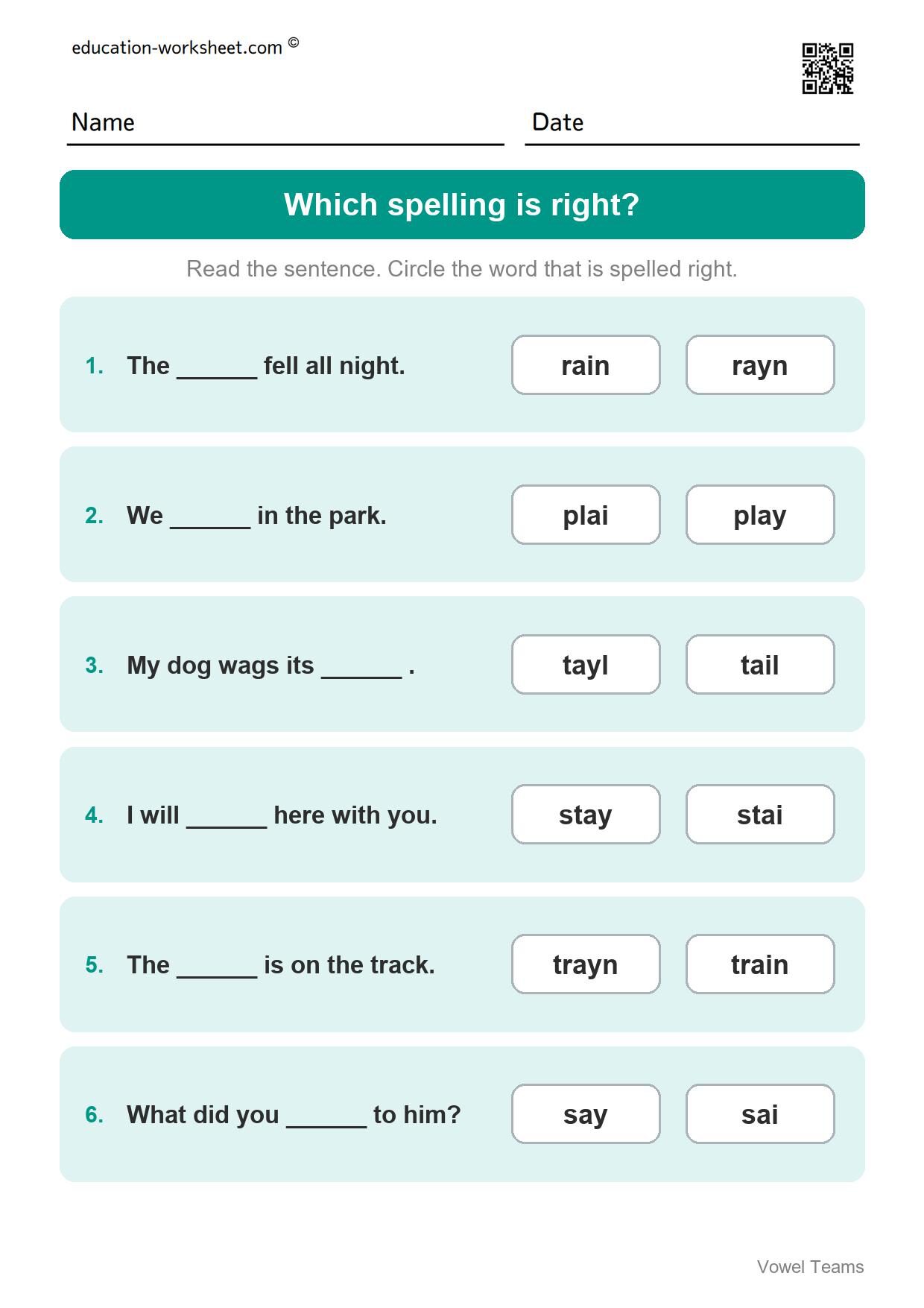
- Which spelling is right? long a (Set 2)
- Finish the word – ai or ay (Set 3)
- Finish the sentence – long a words (Set 4)
- Sort long e words – ee and ea (Set 5)
- Which spelling is right? long e (Set 6)
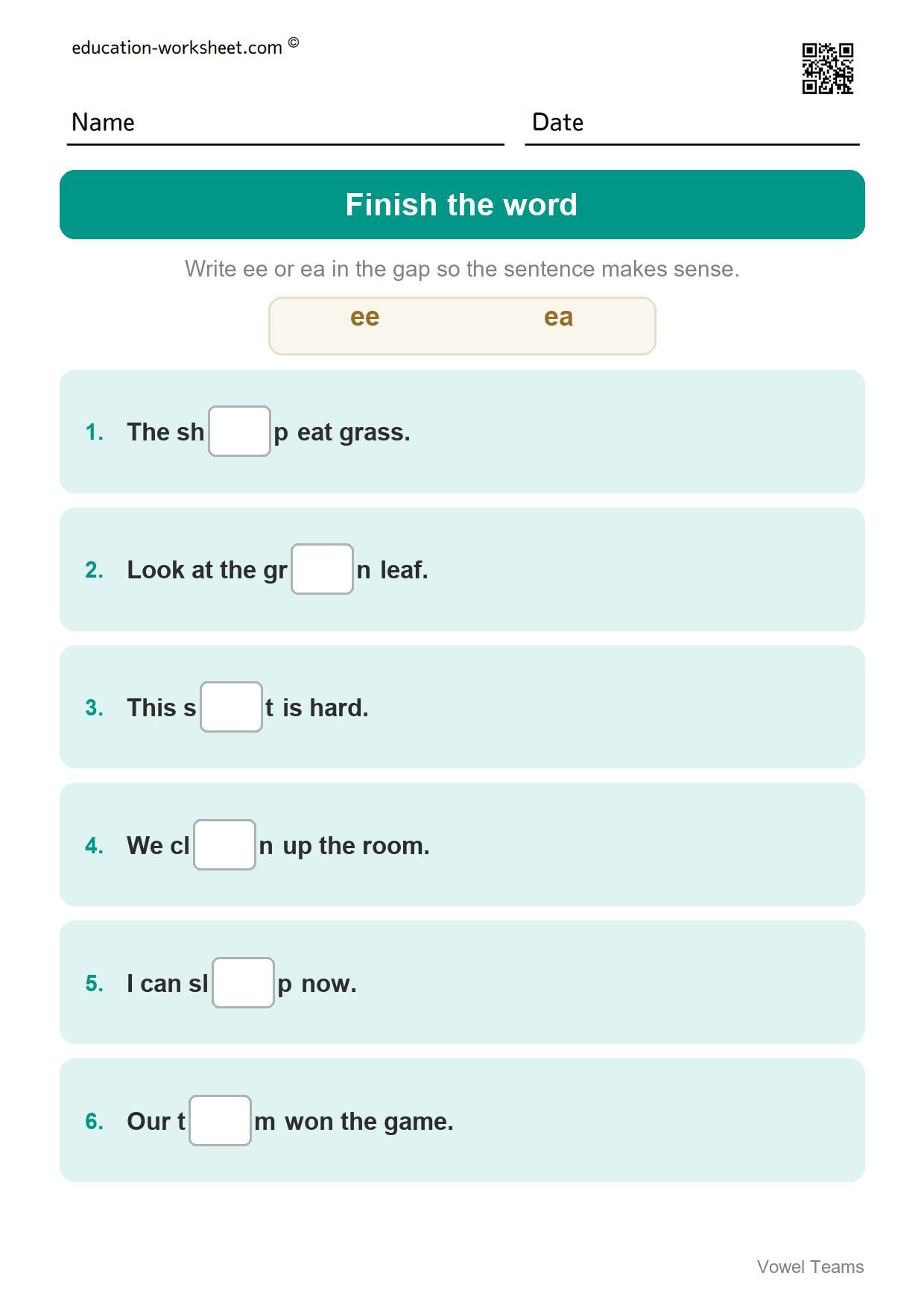
- Finish the word – ee or ea (Set 7)
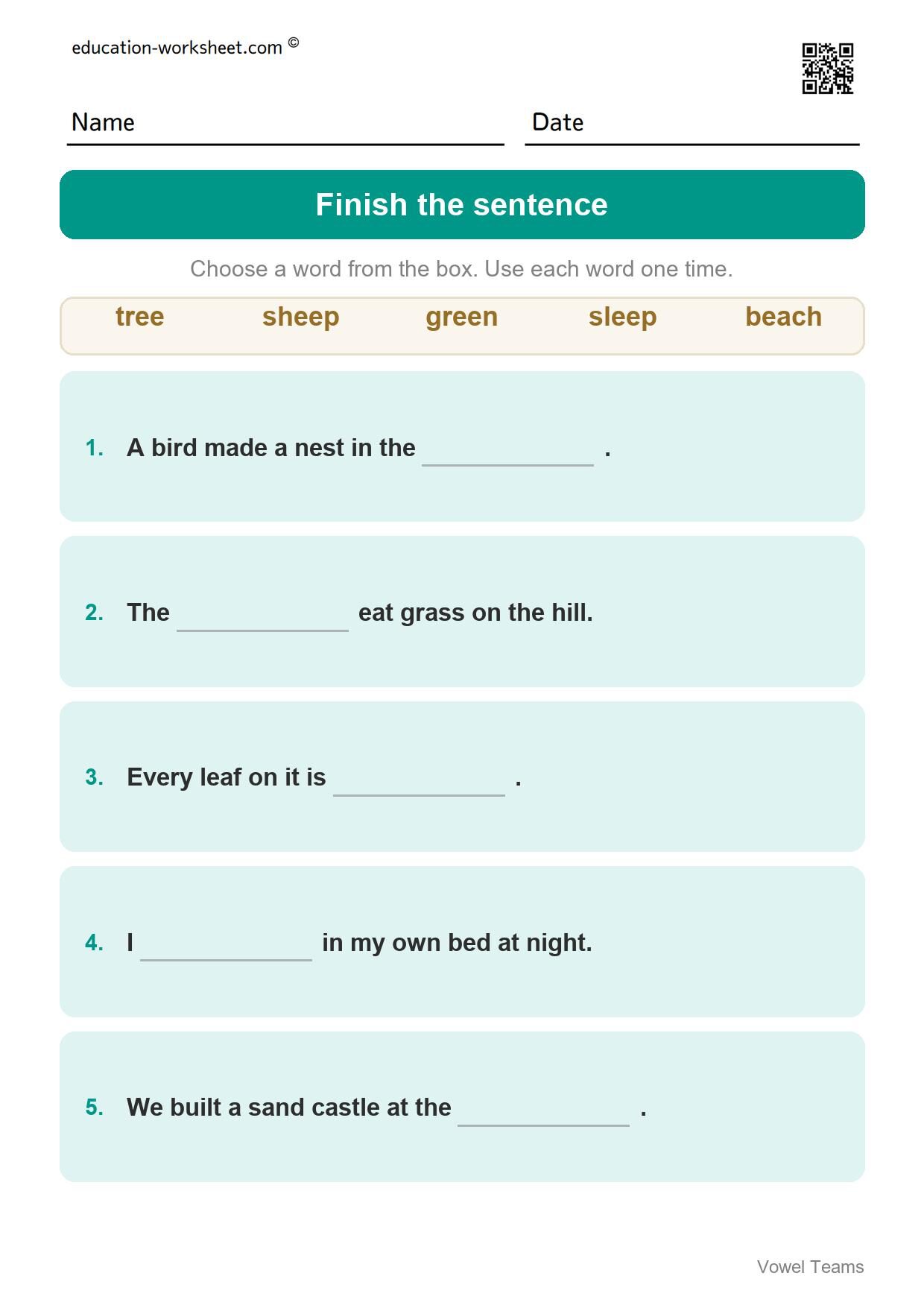
- Finish the sentence – long e words (Set 8)
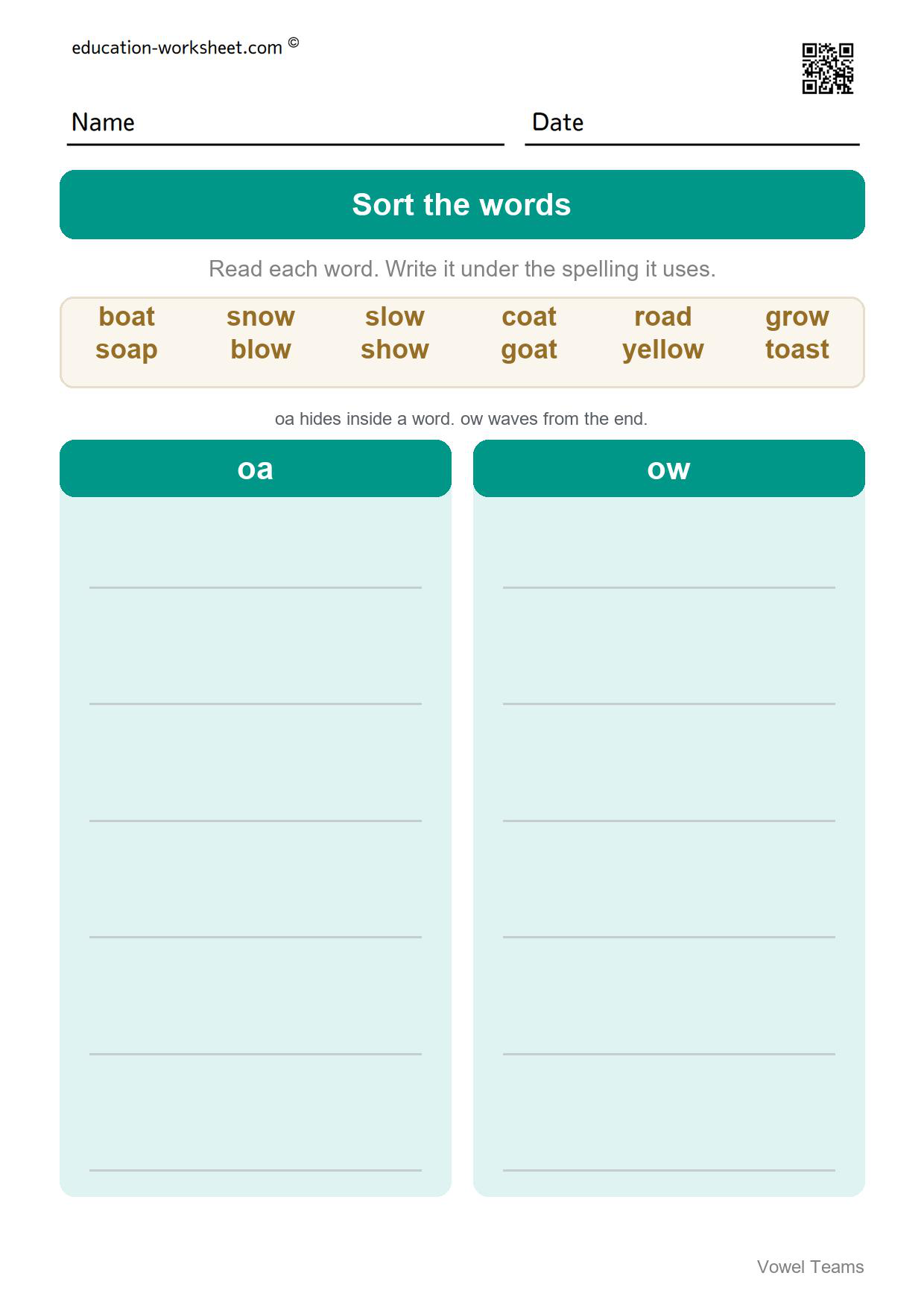
- Sort long o words – oa and ow (Set 9)
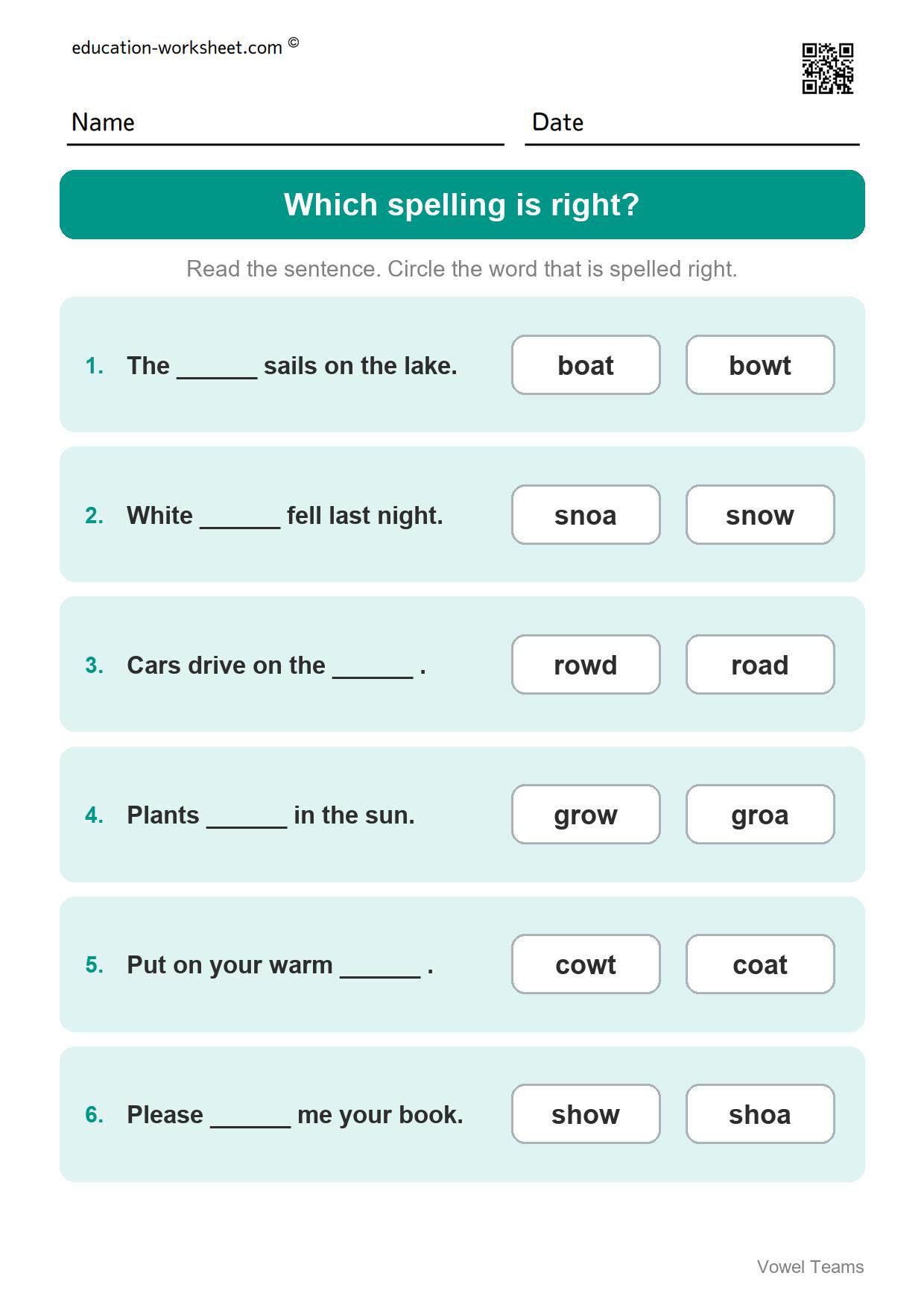
- Which spelling is right? long o (Set 10)
- Finish the word – oa or ow (Set 11)
- Finish the sentence – long o words (Set 12)
- Answer key
- Teaching vowel teams: one sound, two spellings, no rule
- What your child is actually learning
- How to work through these pages
- The mistakes to expect
- What to teach next
- Questions parents ask
- Why do books say two vowels go walking and the first one does the talking?
- Should my child memorise which words take ea and which take ee?
- My child spells these wrongly but reads them fine. Is that a problem?
- More free worksheets
Free Vowel Teams Worksheets for Grade 1 – Long Vowel Sounds
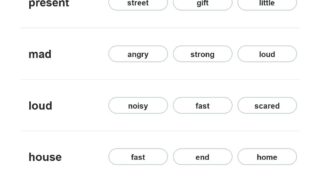
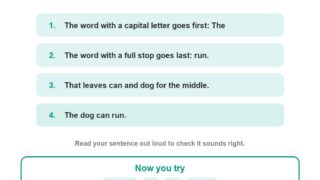
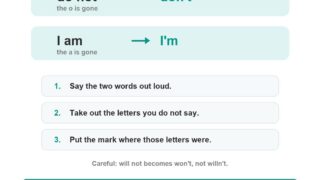
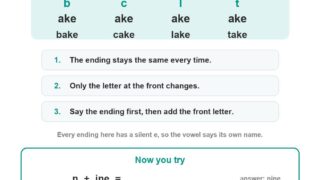
These free printable vowel team worksheets fill the half of first grade phonics that our silent e sets leave out. The standard asks children to know both the final e and the common vowel team conventions for long vowel sounds, and vowel teams are the harder half, because the same sound can be spelled two ways. The set works through three sounds, four pages each: long a spelled ai or ay, long e spelled ee or ea, and long o spelled oa or ow. Every round starts by sorting twelve words into the two spellings, then asks the child to pick the correctly spelled word in a sentence, then to write the missing pair of letters into a word, and finally to choose words from a box to finish five sentences. The difficulty this set is really about is which spelling to use, so the wrong choices are always letter strings that do not exist in English, such as rayn and plai. Pairs where both spellings are real words, like read and reed or meat and meet, are deliberately kept out, because a child who picked the other one would not actually be wrong. Where a real rule exists it is stated plainly, that ai and oa hide inside a word while ay and ow sit at the end, and where no rule exists, as with ee and ea, the worksheet says so instead of pretending. The last sheet is an answer key for all twelve pages. Just download, print, and read them aloud!
Vowel teams (start here)
Sort long a words – ai and ay (Set 1)
Which spelling is right? long a (Set 2)
Finish the word – ai or ay (Set 3)
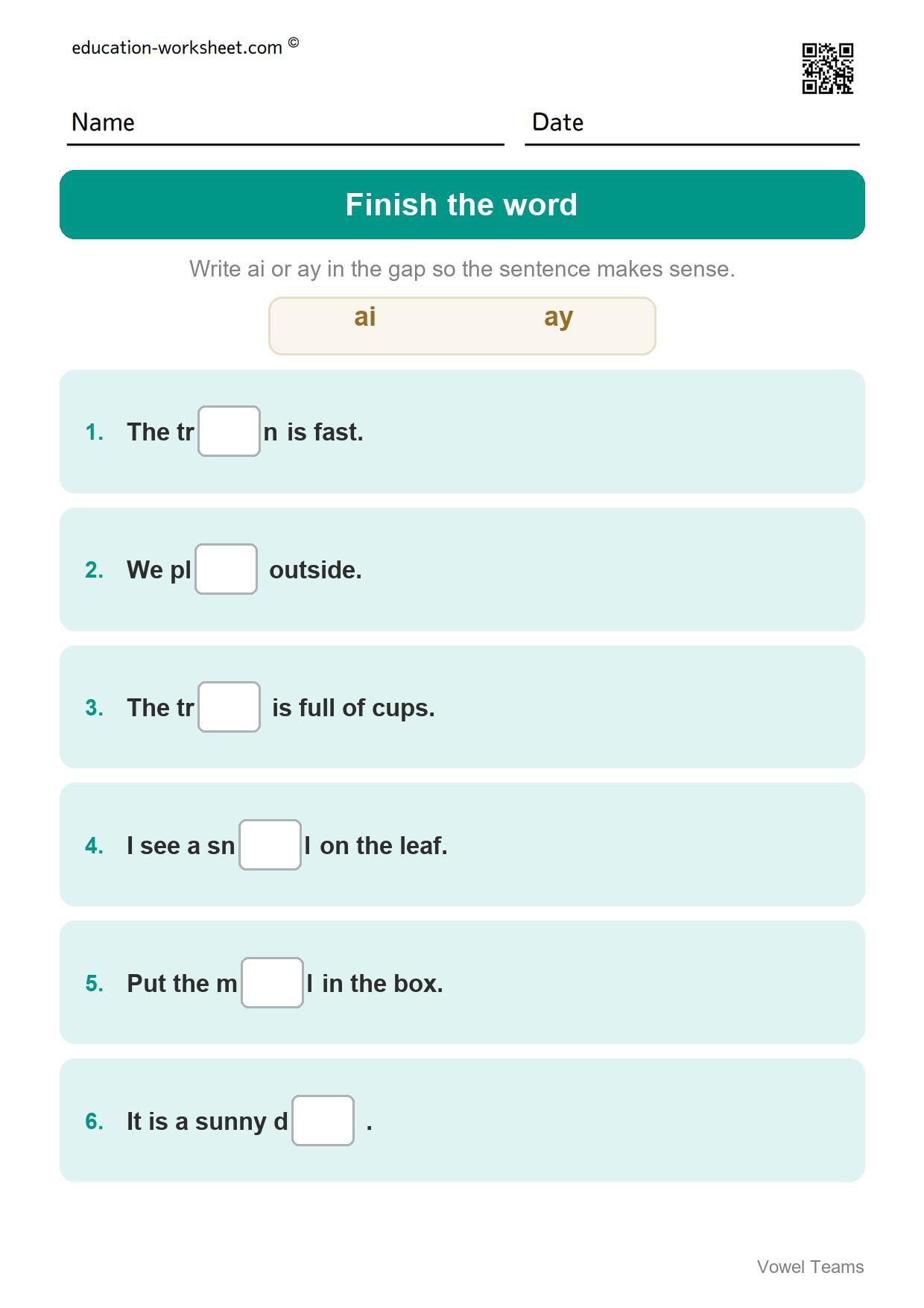
Finish the sentence – long a words (Set 4)
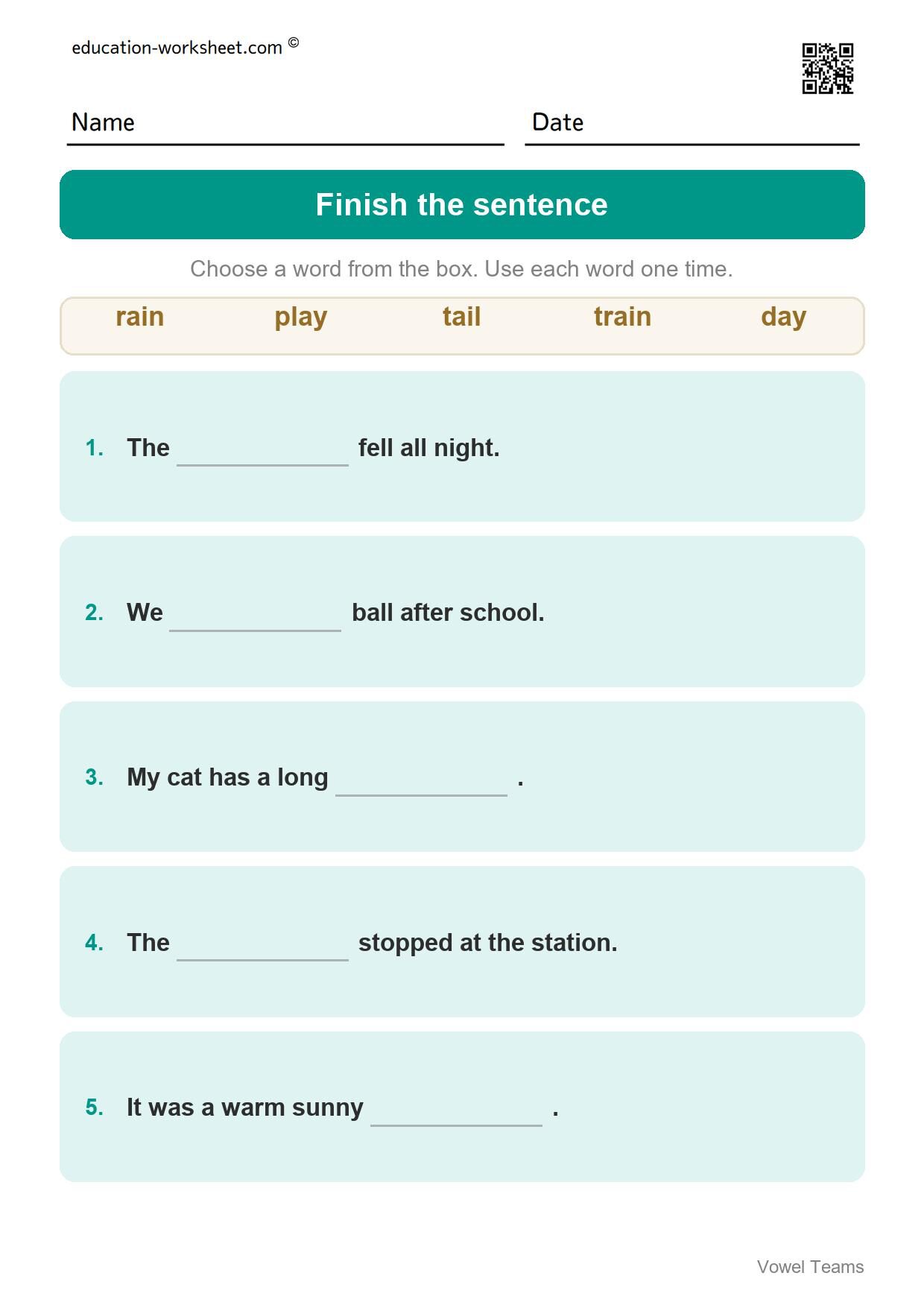
Sort long e words – ee and ea (Set 5)
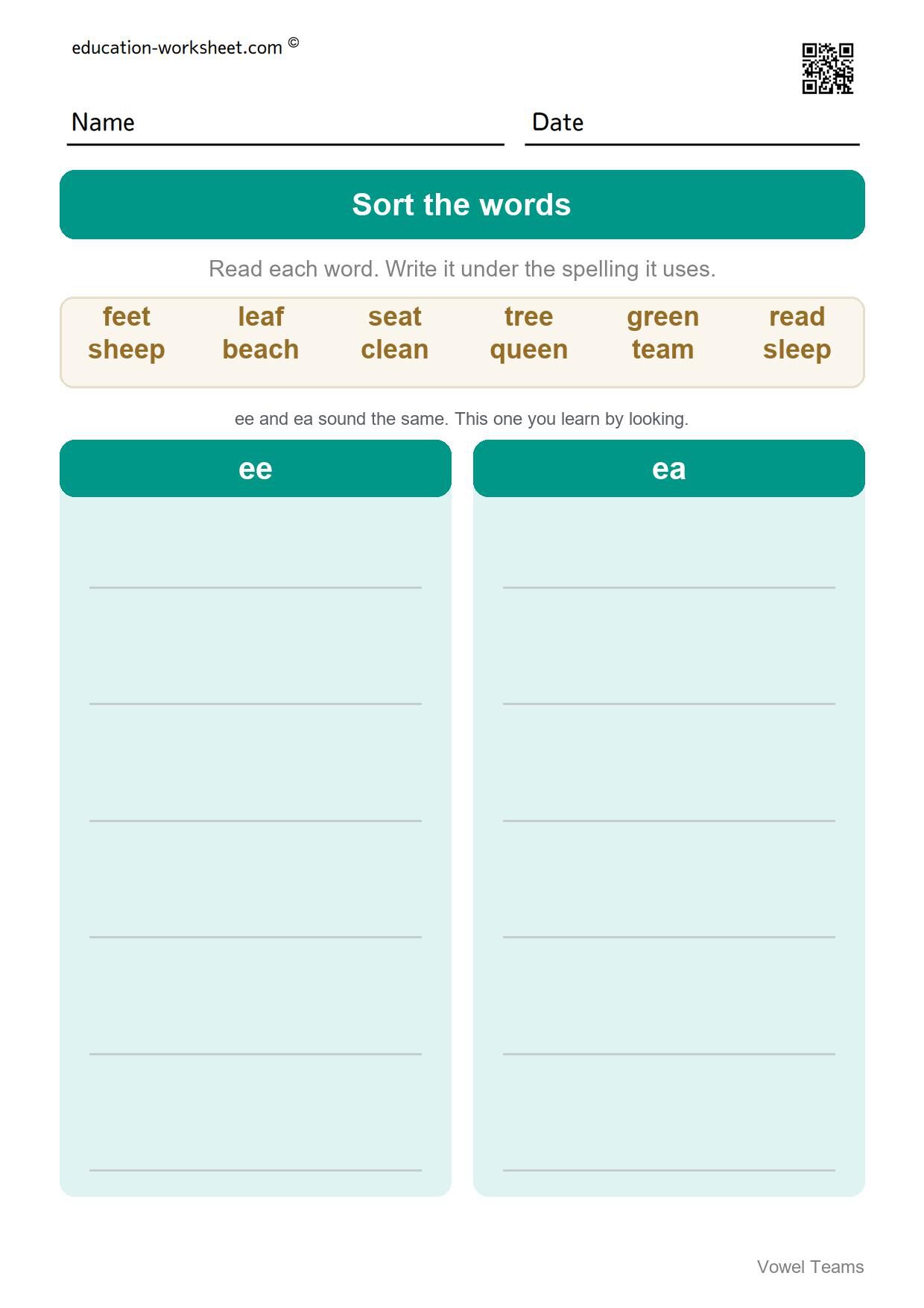
Which spelling is right? long e (Set 6)
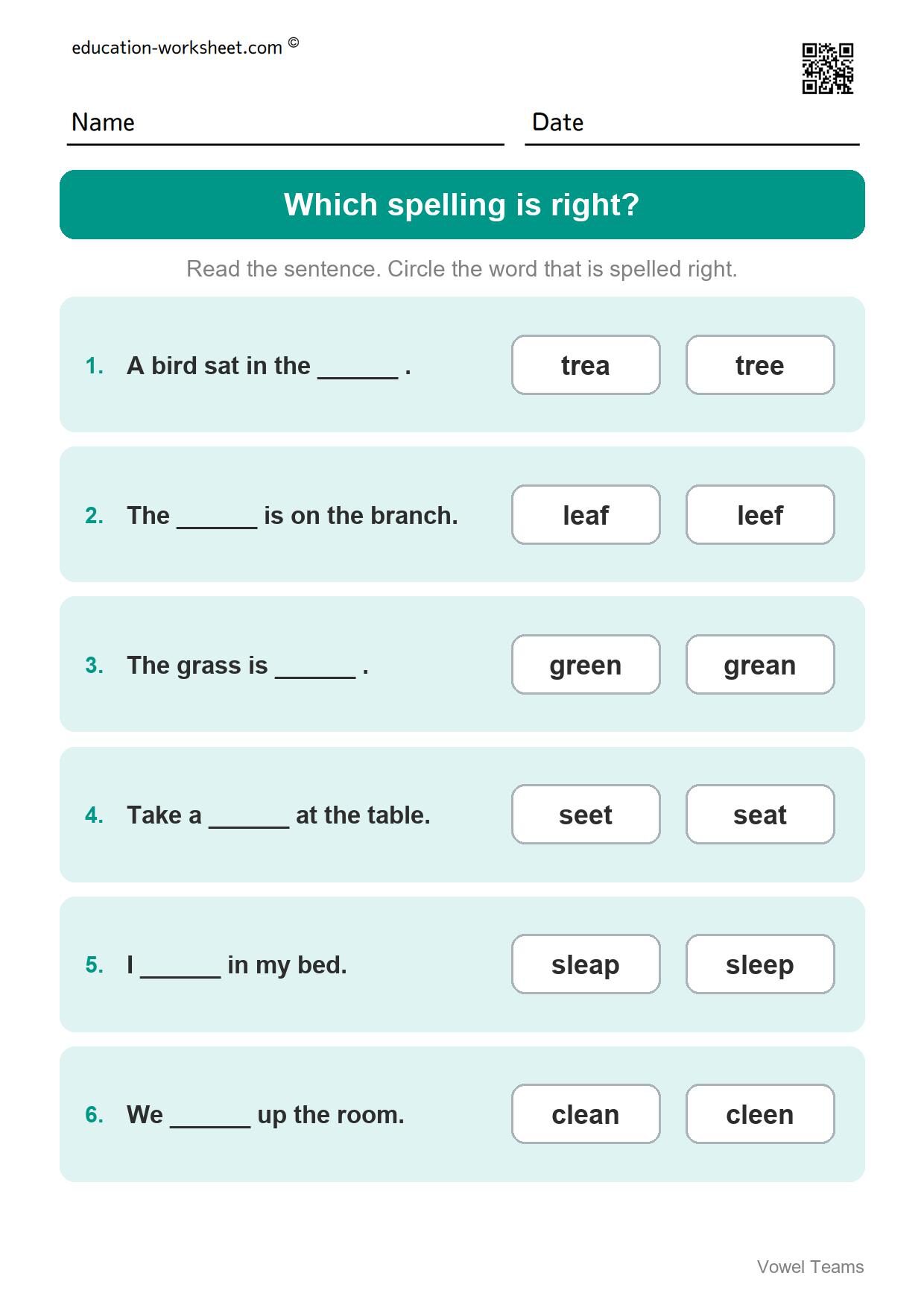
Finish the word – ee or ea (Set 7)
Finish the sentence – long e words (Set 8)
Sort long o words – oa and ow (Set 9)
Which spelling is right? long o (Set 10)
Finish the word – oa or ow (Set 11)
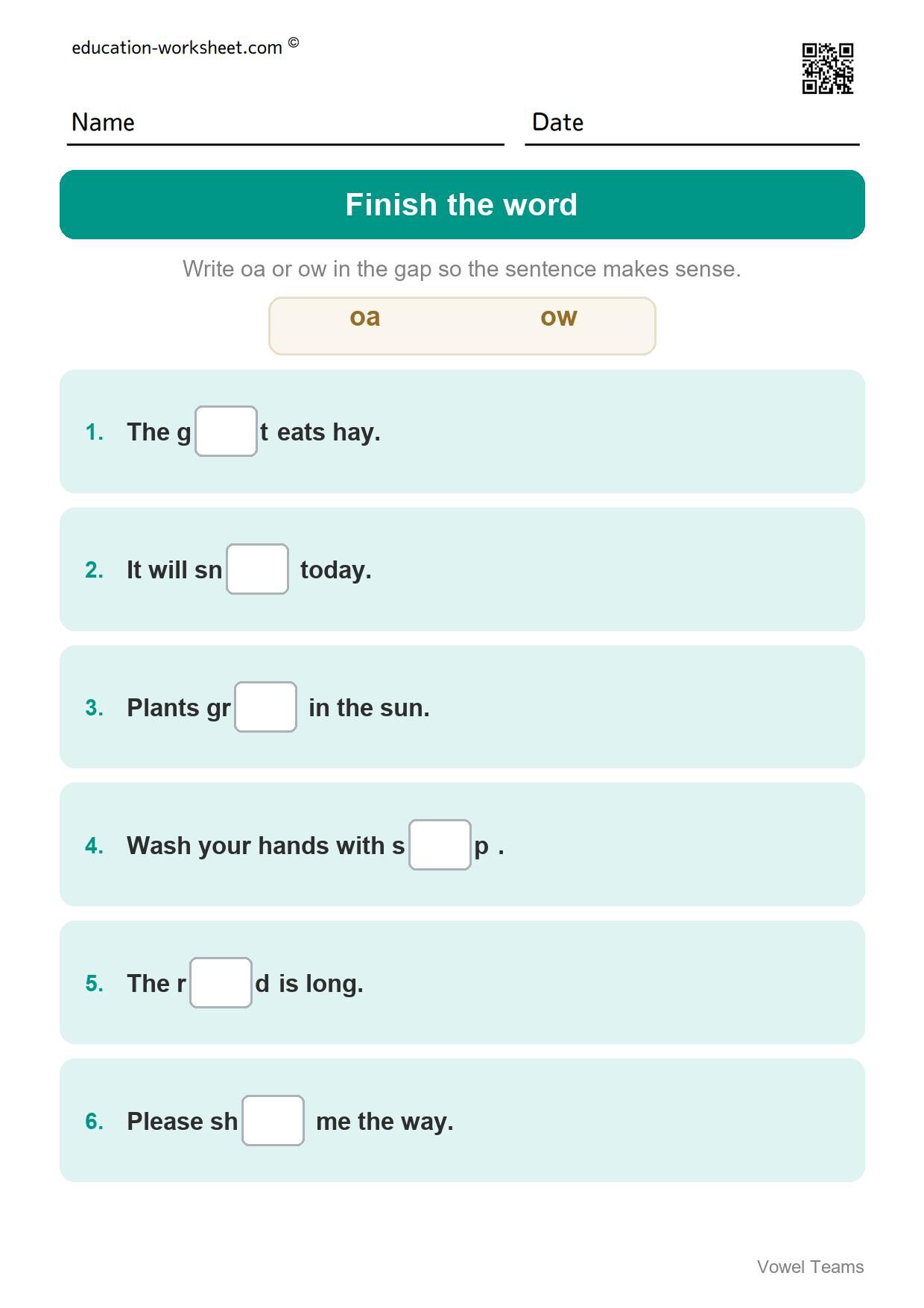
Finish the sentence – long o words (Set 12)
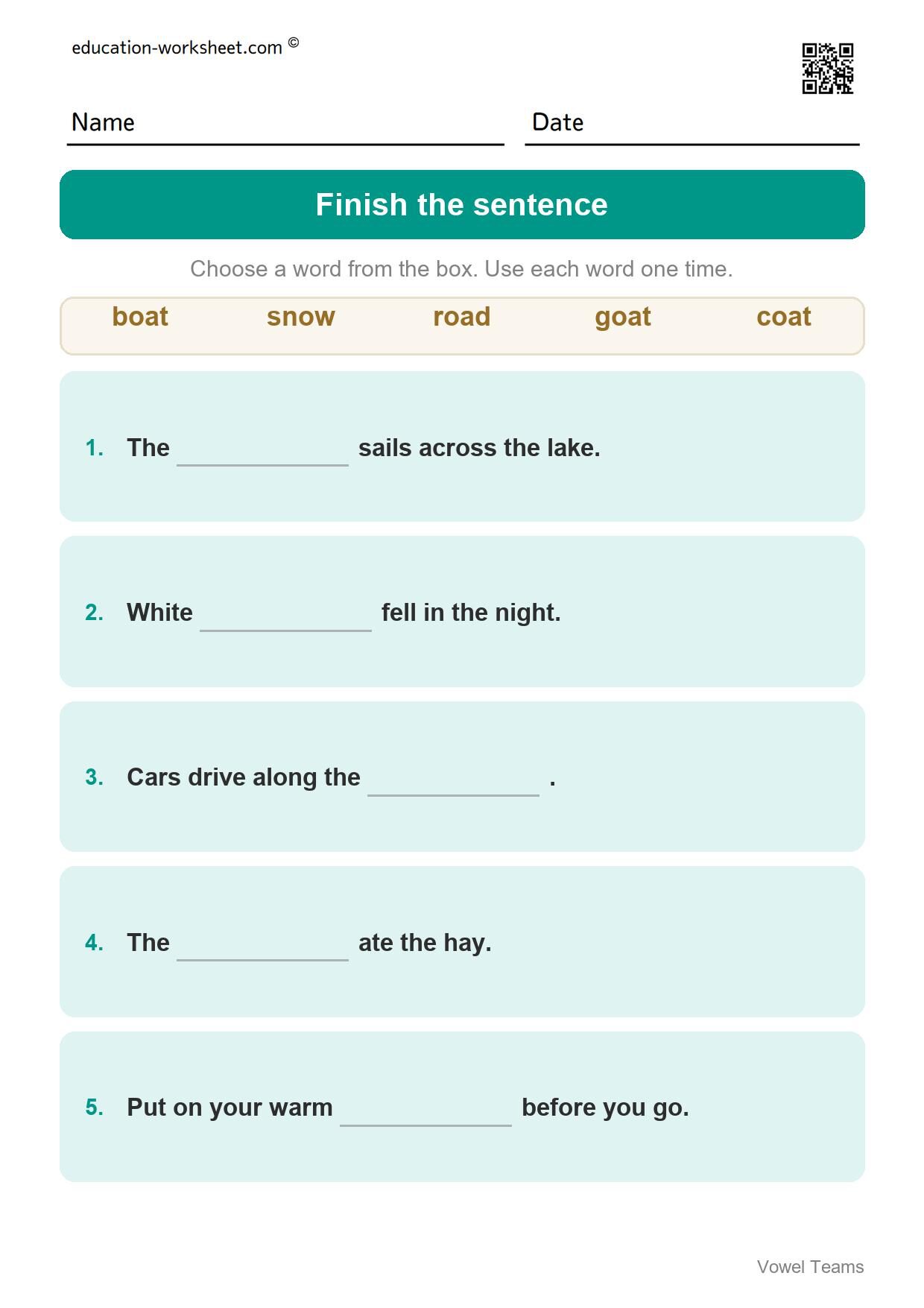
Answer key
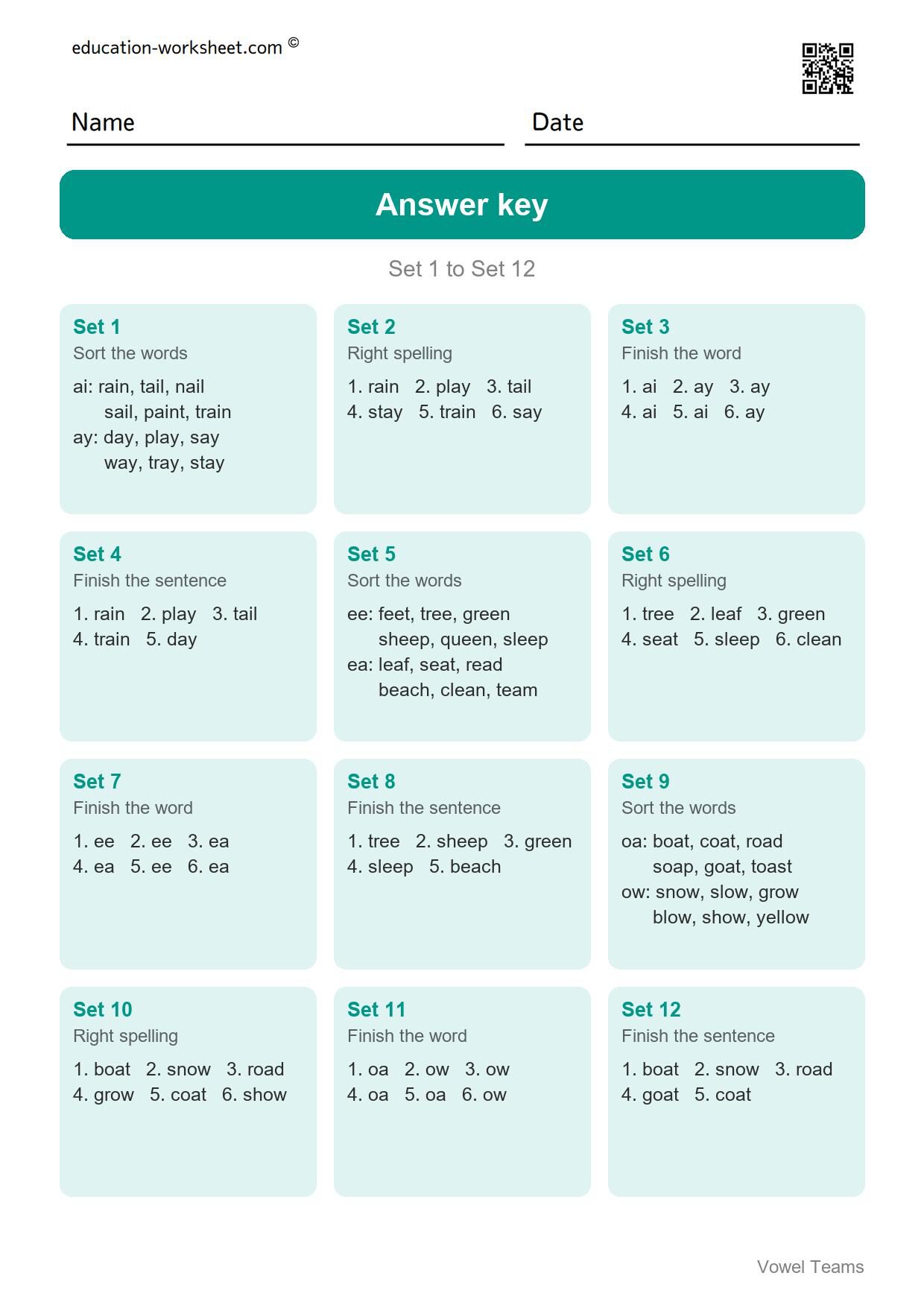
Teaching vowel teams: one sound, two spellings, no rule
Vowel teams are the half of long vowel spelling that silent e does not cover, and they are harder for one specific reason: the same sound can be written more than one way. A child who has learned that ai says long a will write rayn for rain, and that is not a careless error. It is the rule being applied correctly to a word that happens to use the other spelling.
What your child is actually learning
These pages work through three sounds. Long a is written ai or ay, long e is written ee or ea, and long o is written oa or ow. For two of those three there is a real rule worth teaching: ai and oa hide inside a word, while ay and ow sit at the end. Rain and day, boat and snow. For long e there is no rule at all, and saying so honestly saves a great deal of frustration.
How to work through these pages
Teach the position rule explicitly for ai/ay and oa/ow, and test it by asking where the letters sit rather than what they sound like. For ee and ea, switch approach entirely: these are words to be recognised by sight, so read them, cover them, write them, and check. Trying to reason out whether beach takes ea or ee will get your child nowhere, because the answer is simply that it does.
The mistakes to expect
- Choosing the right sound but the wrong spelling: rayn, plai, snoa. This is the central difficulty of the whole unit.
- Trying to apply logic to ee and ea. There is none. Move these to sight practice as soon as you see the child hunting for a reason.
- Reading both vowels separately, so boat becomes bo-at. Remind the child that the two letters share one sound, as digraphs did with consonants.
- Mixing up ow the vowel team with ow the sound in cow. Both exist, and this one has to be settled by whether the word makes sense in the sentence.
What to teach next
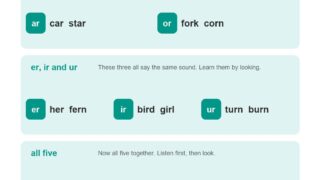
R-controlled vowels are the usual next unit, and they finish the set of vowel patterns a first grader needs. They bring back the same difficulty in a new form: er, ir and ur are three spellings for one single sound, with no rule to separate them, exactly as ee and ea are here.
Questions parents ask
Why do books say two vowels go walking and the first one does the talking?
It is a memorable rhyme that is right often enough to be useful and wrong often enough to mislead. It works for rain and boat; it fails for bread, said and you. Use it as a hint rather than a rule.
Should my child memorise which words take ea and which take ee?
For the common ones, yes, in the same way as sight words. There is no shortcut, and pretending otherwise makes children distrust the phonics they have learned.
My child spells these wrongly but reads them fine. Is that a problem?
No. Reading a vowel team only requires knowing the sound; spelling one requires choosing between spellings that sound identical. Reading is expected to run ahead here, sometimes by a year.