- Free Sentence Building Worksheets for Kindergarten – Word Order
- How to build a sentence – where to start and stop
- Build the sentence (Set 1)
- Build the sentence (Set 2)
- Build the sentence (Set 3)
- Build the sentence (Set 4)
- Build the sentence (Set 5)
- Build the sentence (Set 6)
- Build the sentence (Set 7)
- Build the sentence (Set 8)
- Build the sentence (Set 9)
- Build the sentence (Set 10)
- Answer key – all 10 pages
- Sentence building: why word order carries the meaning
- What your child is actually learning
- How to work through these pages
- The mistakes to expect
- What to teach next
- Questions parents ask
- How long should a first grader’s sentence be?
- Should I correct every mistake in my child’s writing?
- My child can build sentences here but writes very little on their own. Why?
- More free worksheets
Free Sentence Building Worksheets for Kindergarten – Word Order
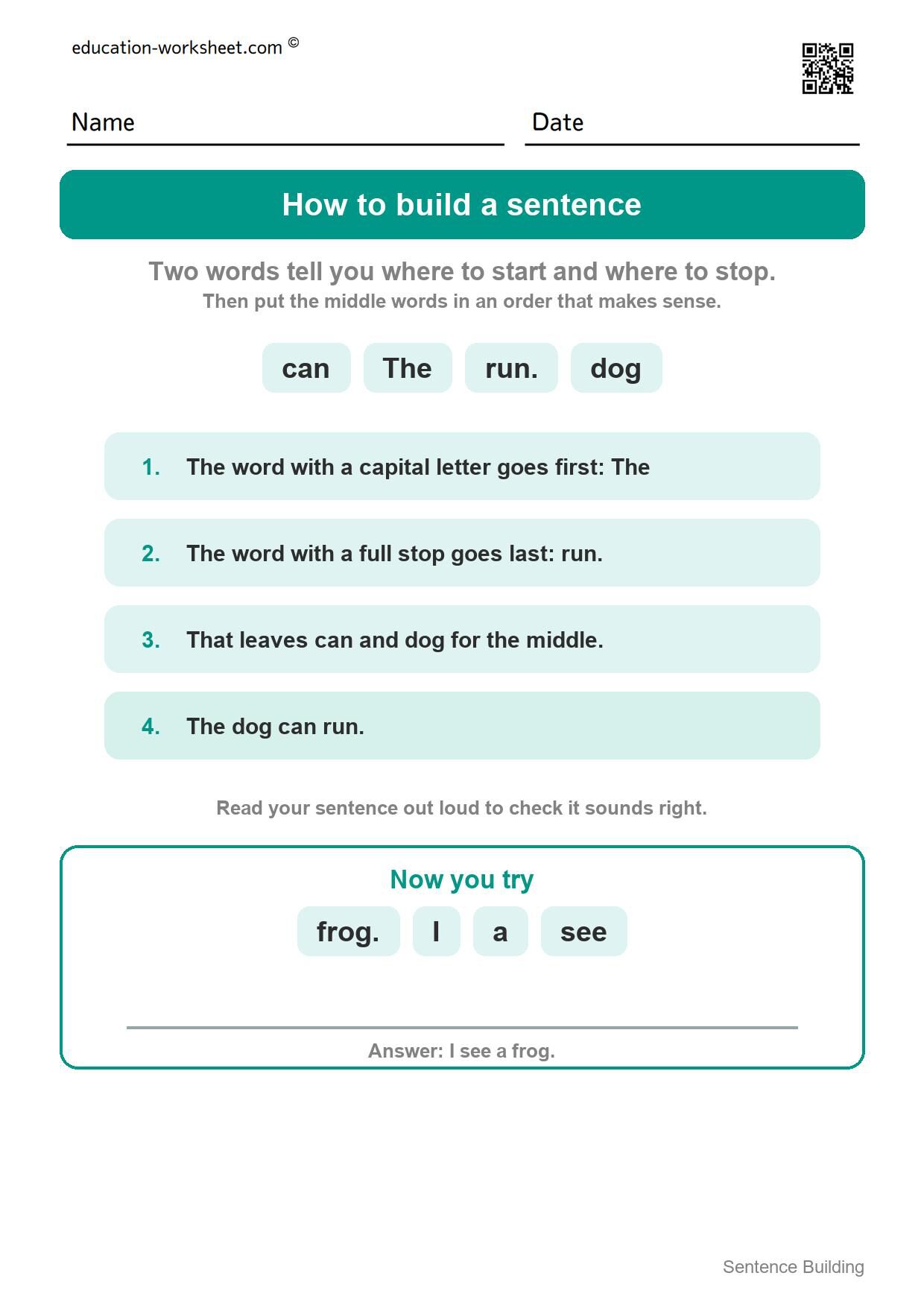
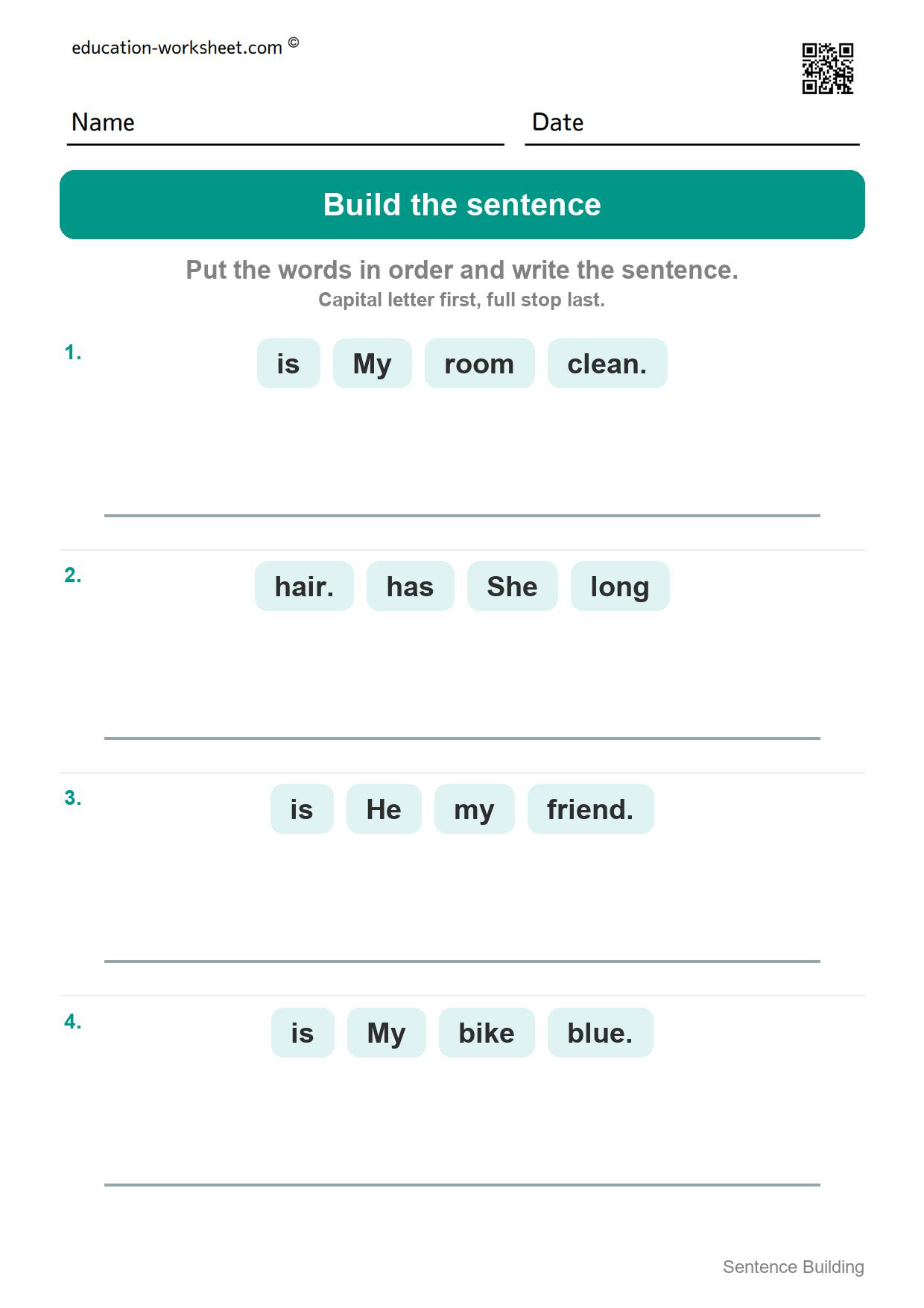
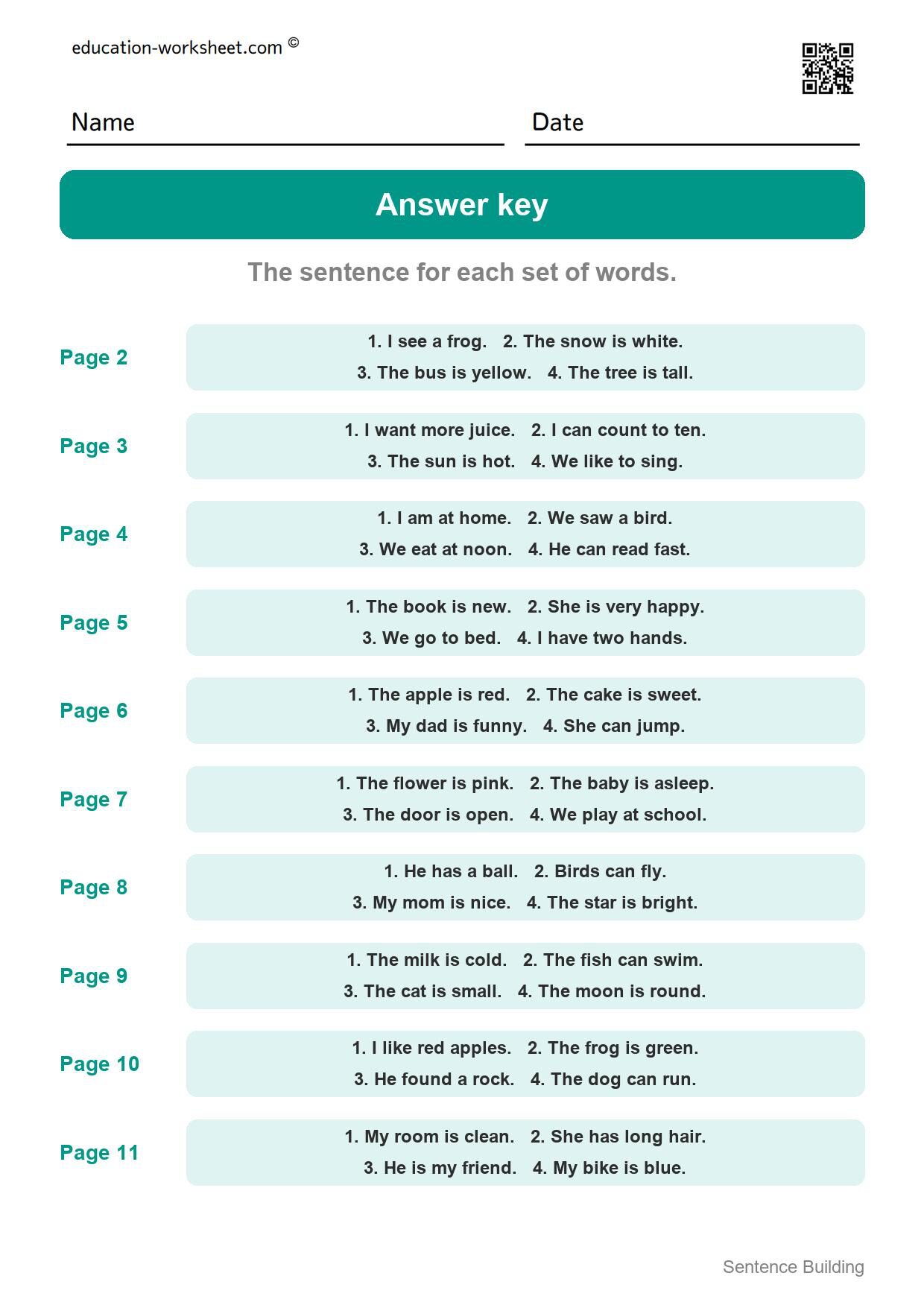
These free printable sentence building worksheets take kindergarten and first grade children from reading single words to writing a whole sentence. Each question gives the words of a short sentence in the wrong order, and children work out the right order and write the sentence on the line. Two clues make it possible: the word that starts with a capital letter goes first, and the word with the full stop goes last, so only the middle words are left to sort out. The first page walks through an example step by step. Sentences where the words could be arranged more than one way, such as the cat sees the dog, are deliberately left out, because the dog sees the cat would be just as correct and a child would have no way of knowing which was wanted. Every sentence here has one right order. There are forty sentences across the ten pages and the last page is an answer key. Just download, print, and build!
How to build a sentence – where to start and stop
Build the sentence (Set 1)
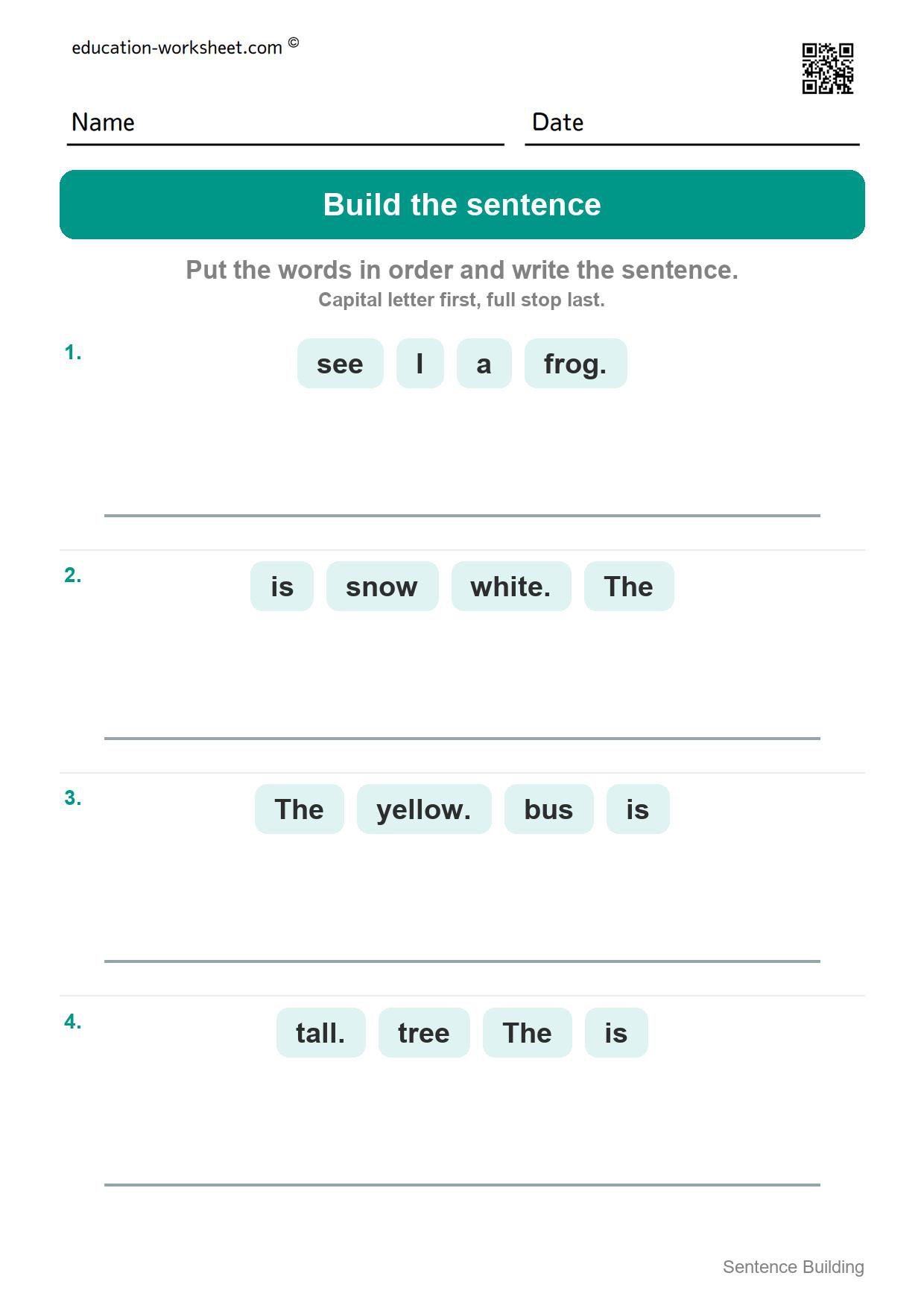
Build the sentence (Set 2)
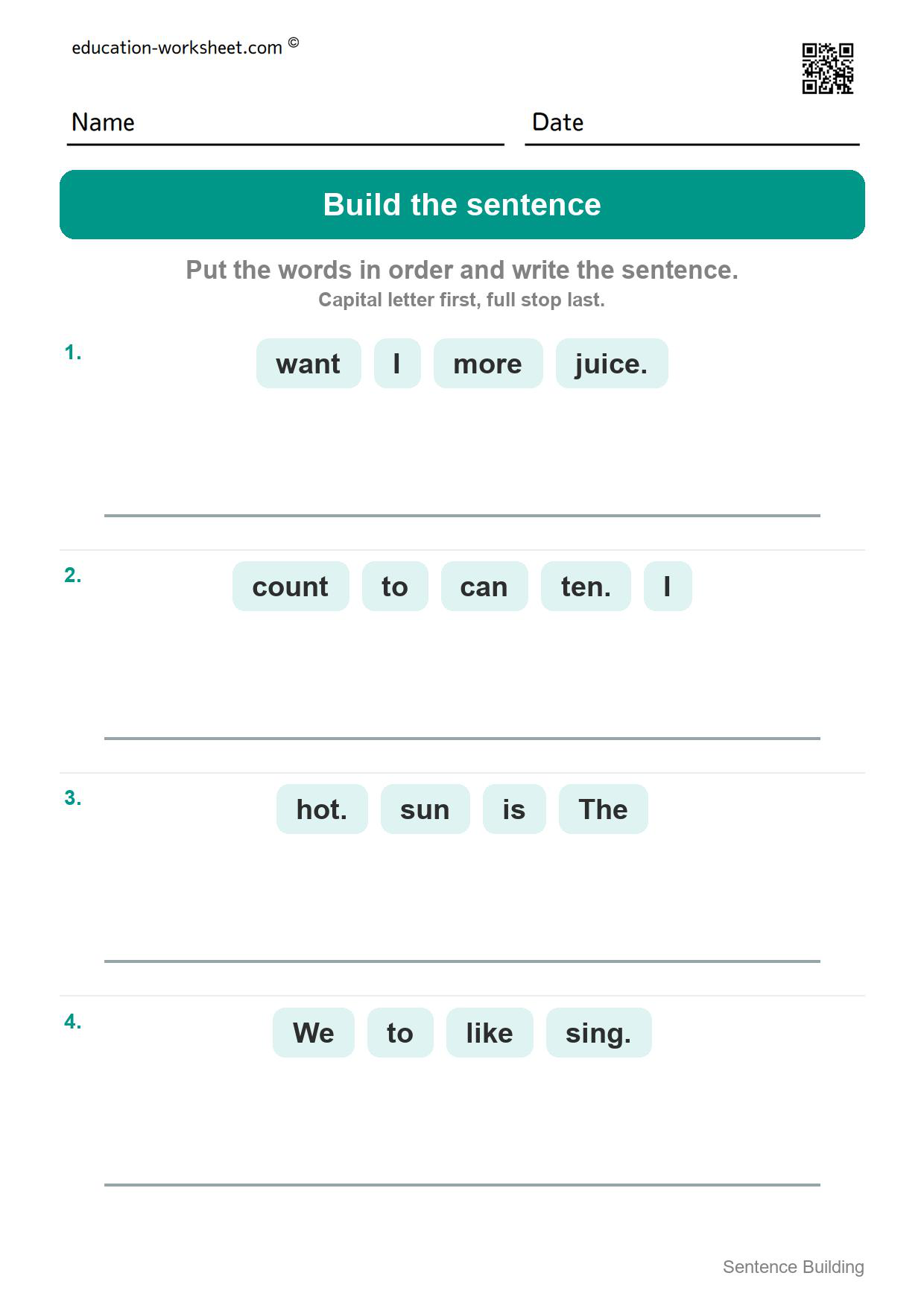
Build the sentence (Set 3)
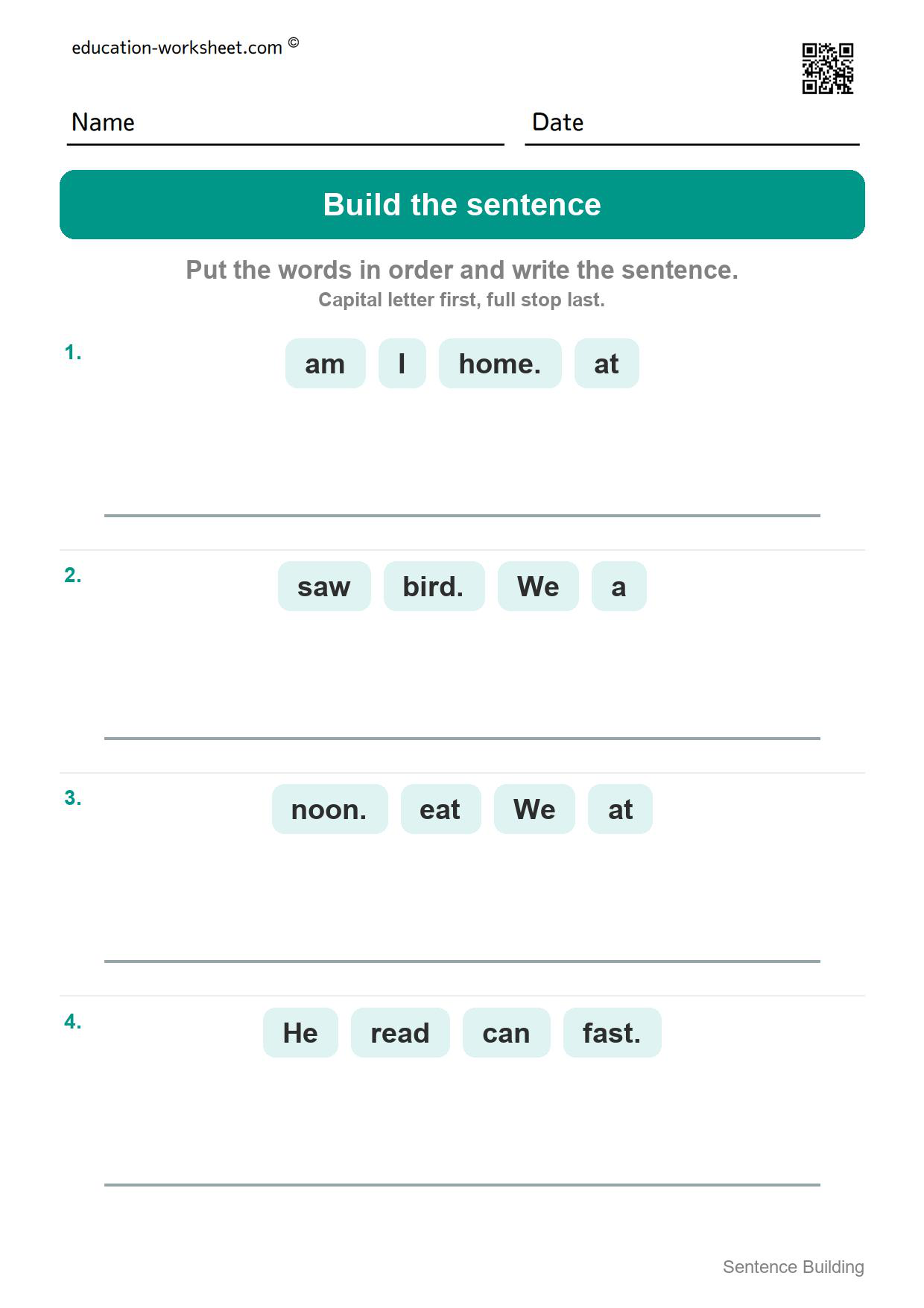
Build the sentence (Set 4)
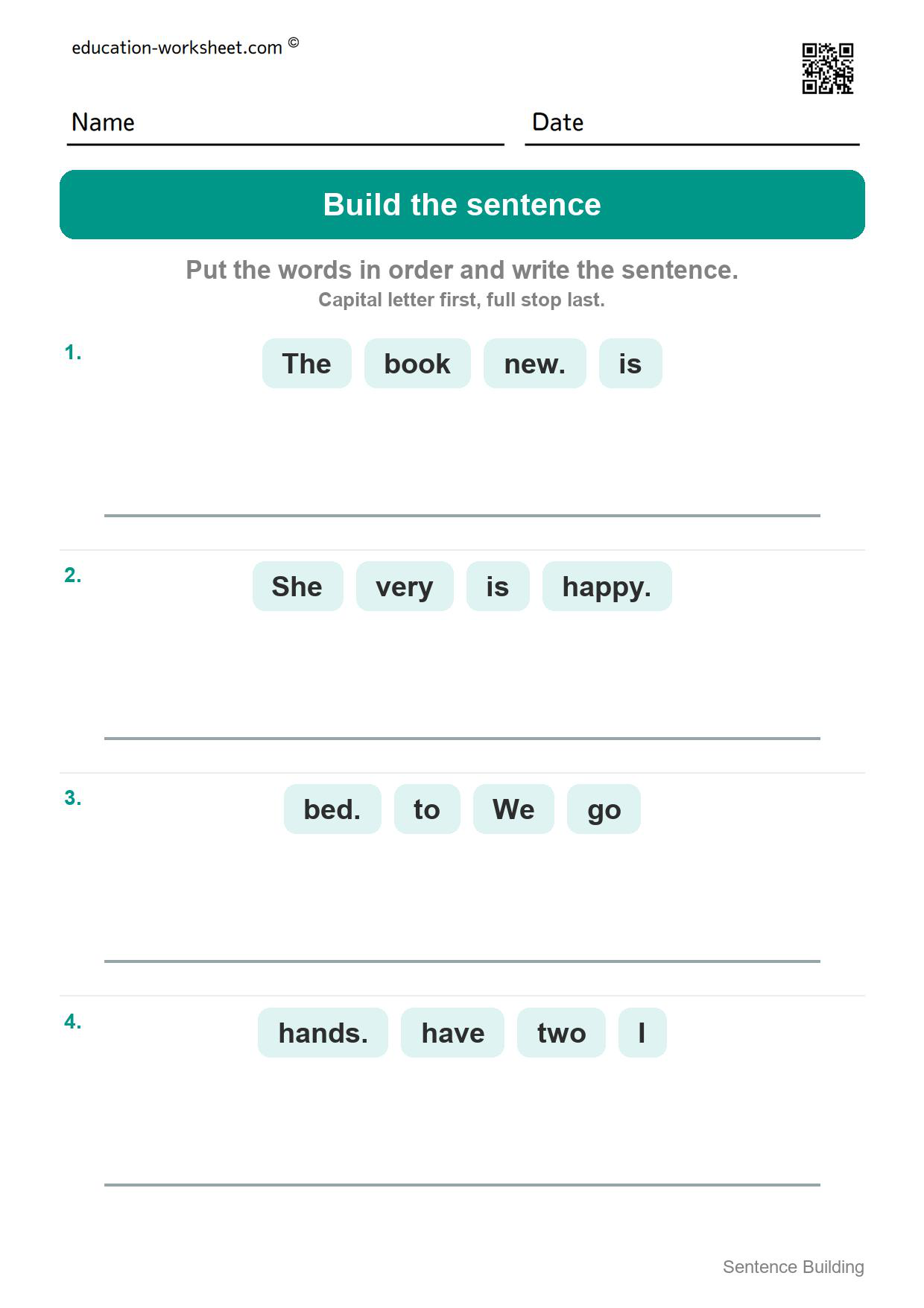
Build the sentence (Set 5)
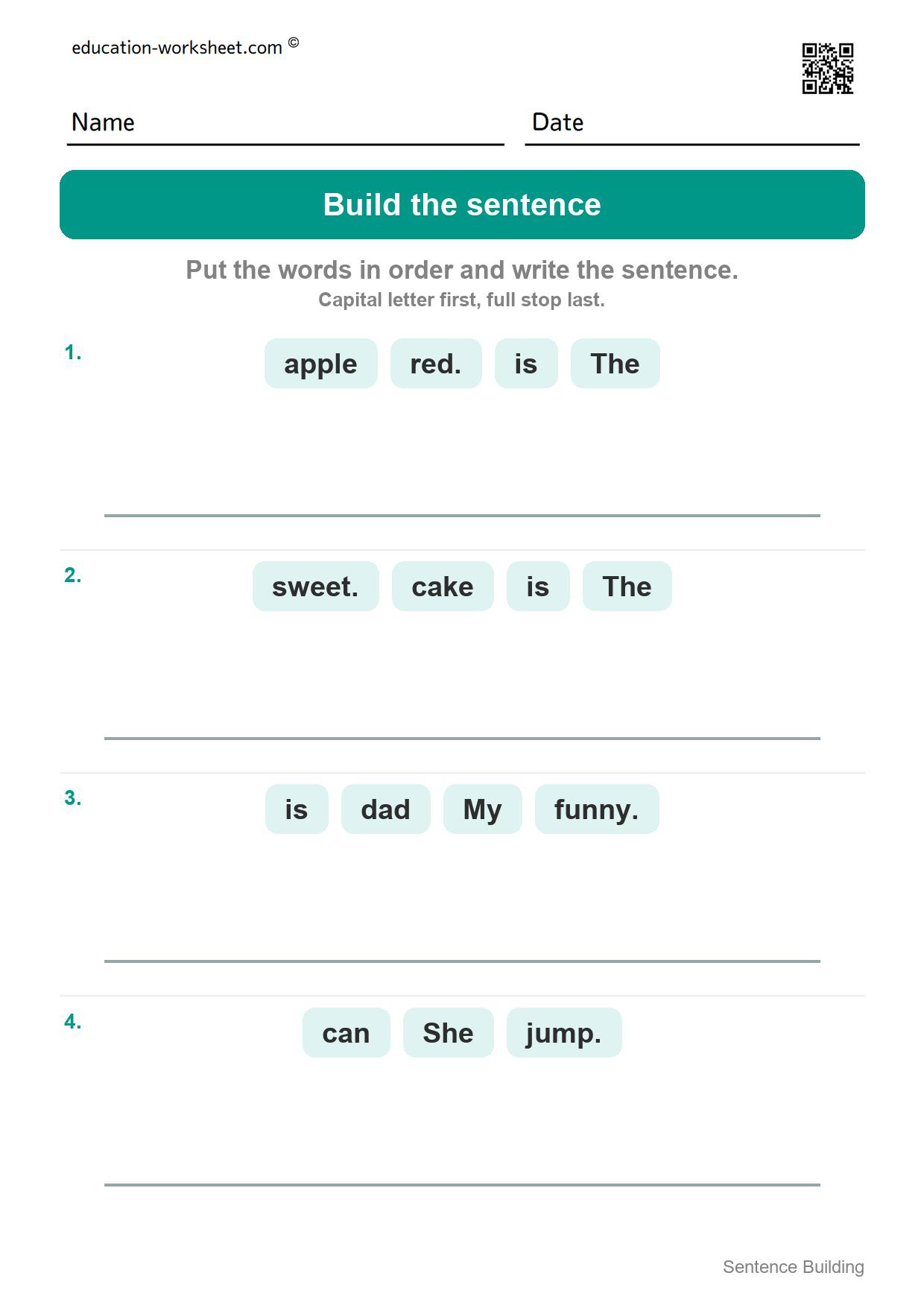
Build the sentence (Set 6)
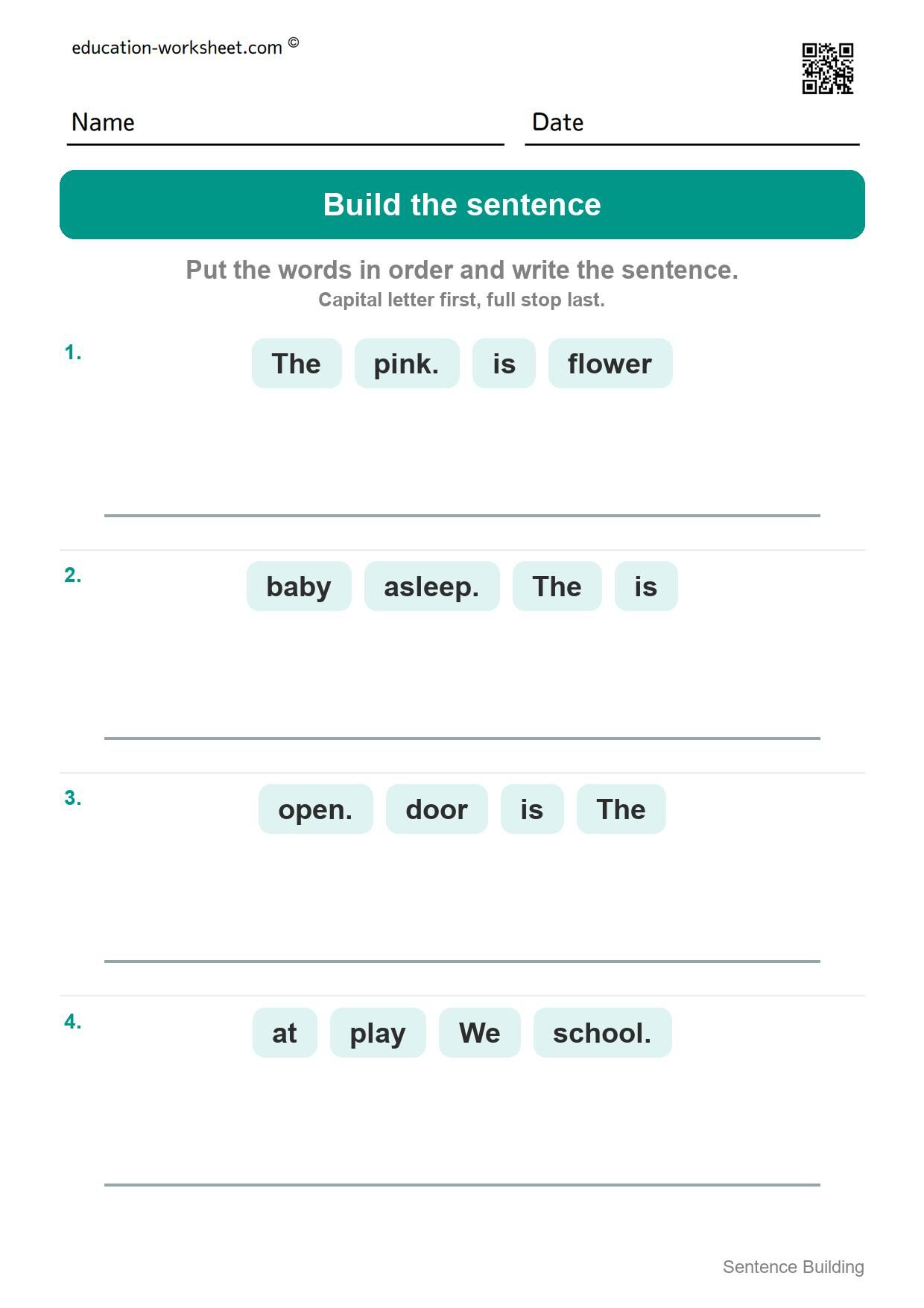
Build the sentence (Set 7)
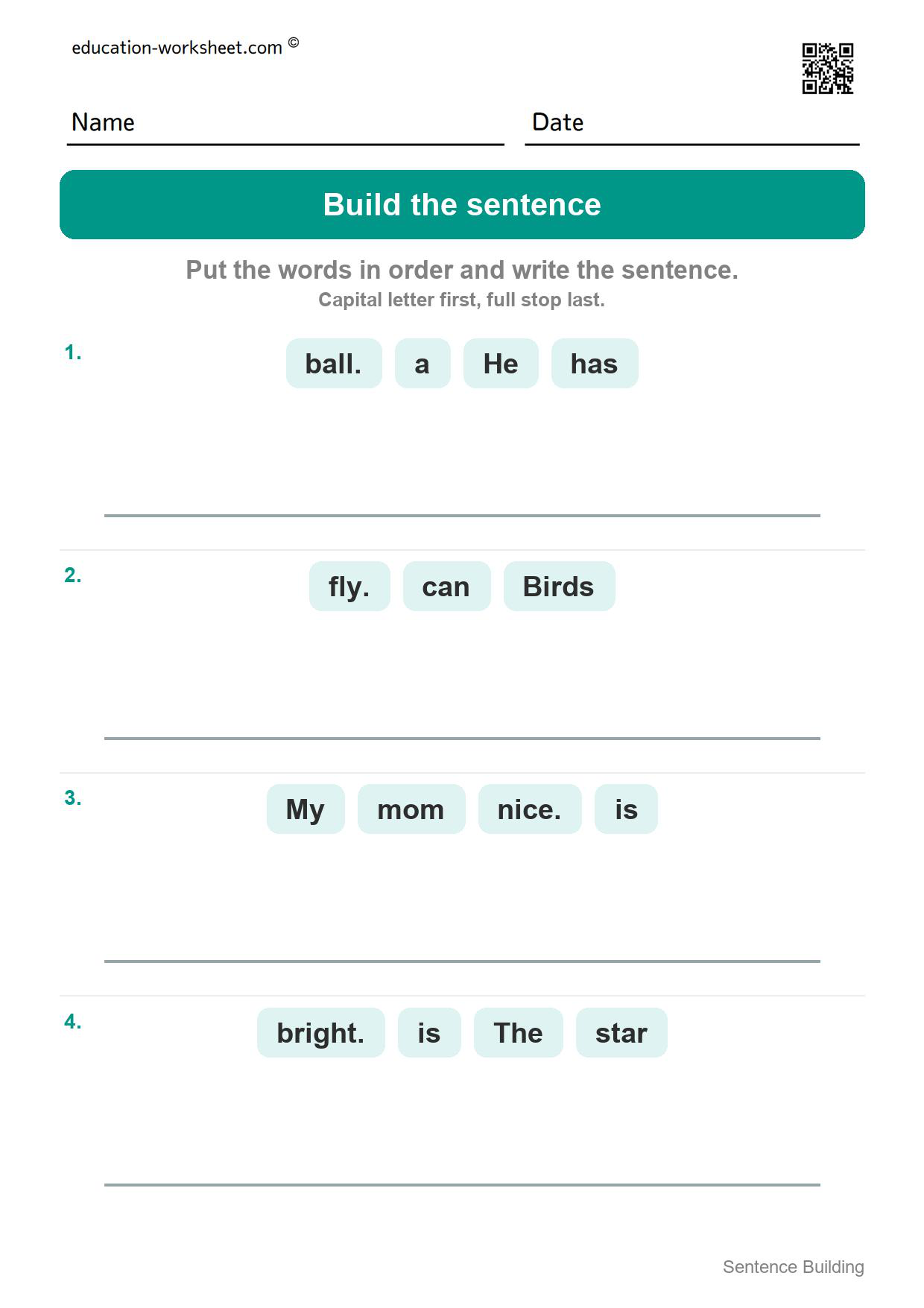
Build the sentence (Set 8)
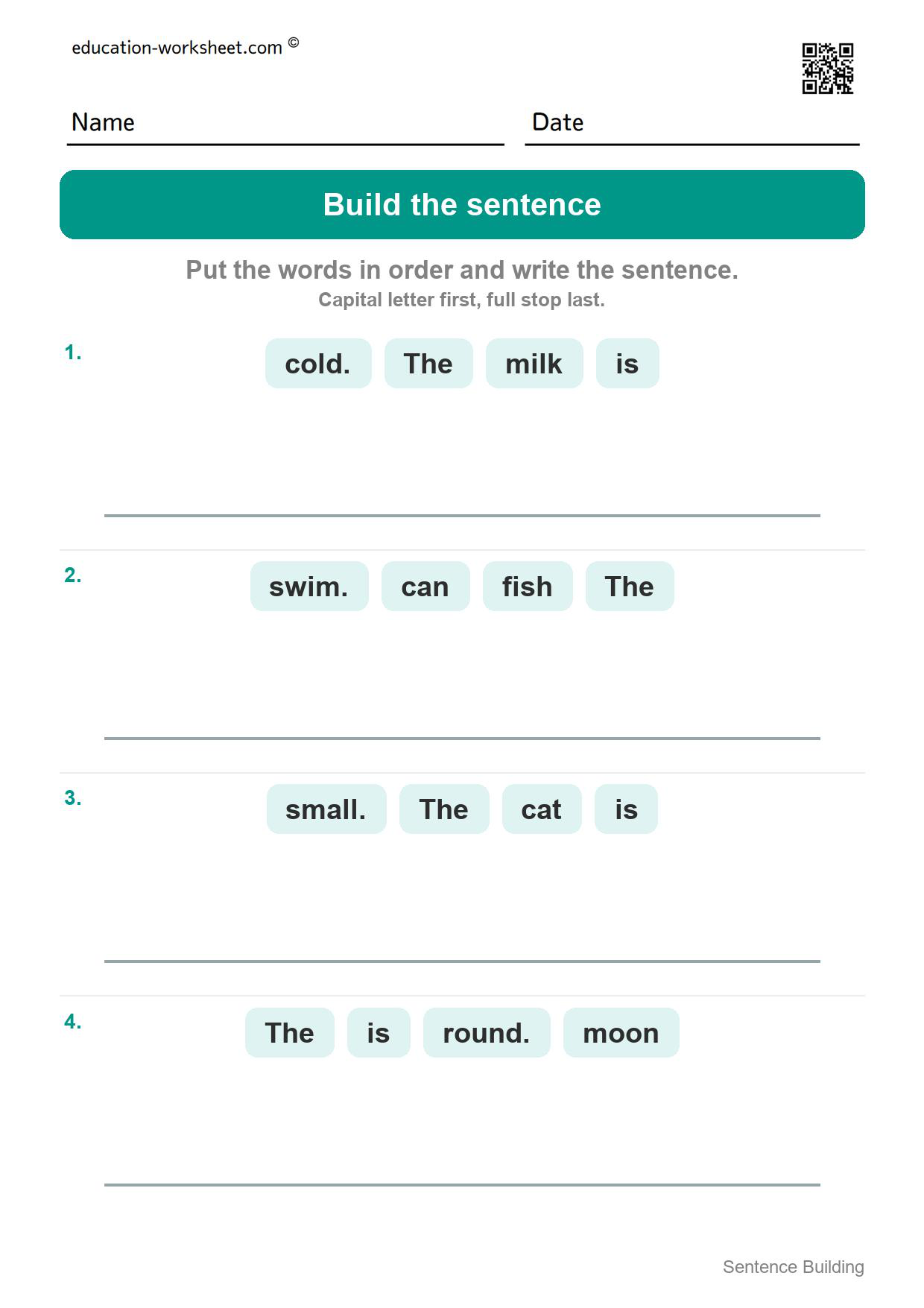
Build the sentence (Set 9)
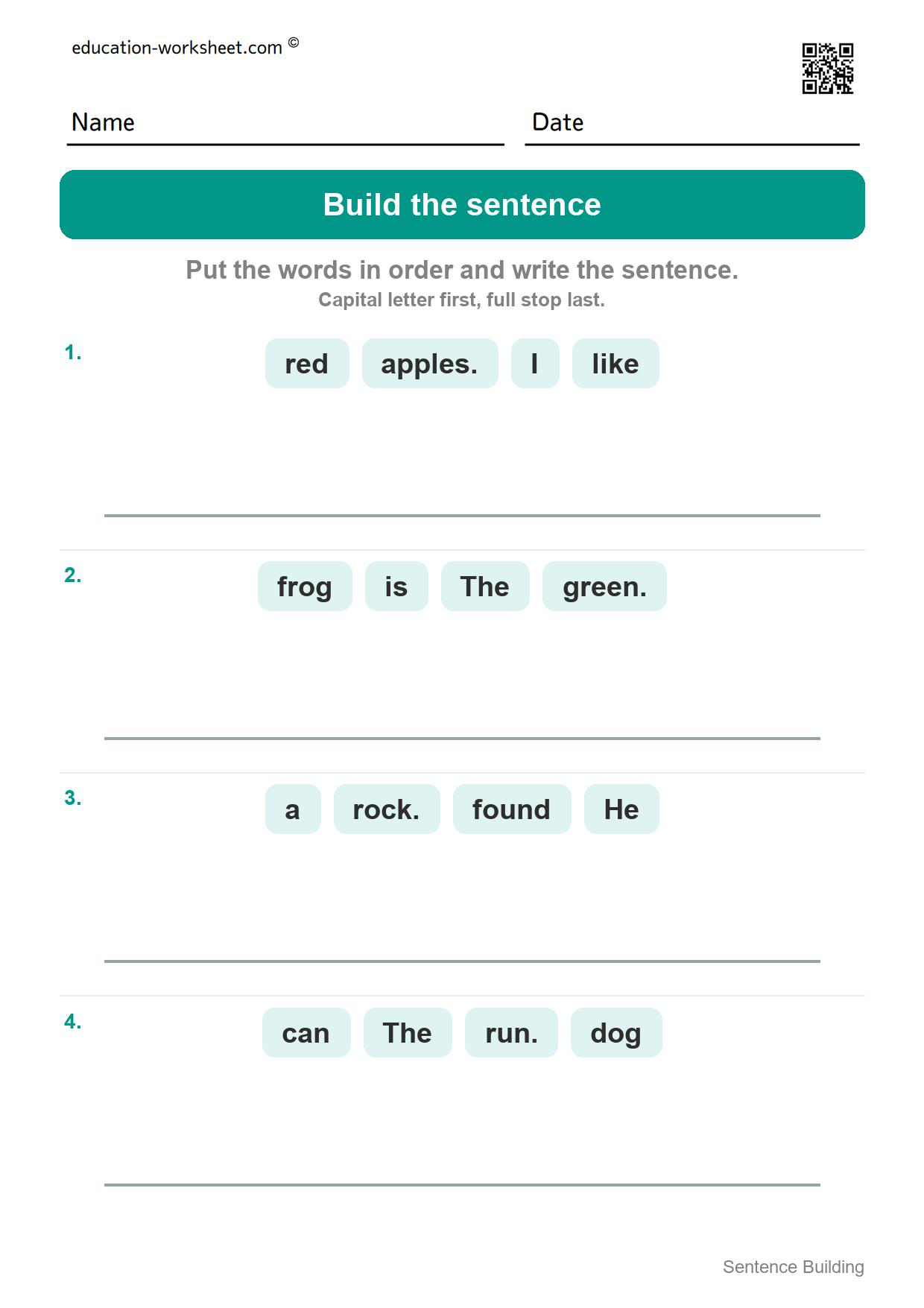
Build the sentence (Set 10)
Answer key – all 10 pages
Sentence building: why word order carries the meaning
English relies on word order more than most languages. The dog chased the cat and the cat chased the dog use identical words and mean opposite things, and nothing but the order tells you which is which. Putting scrambled words back into order is how children discover that the arrangement itself is carrying meaning.
What your child is actually learning
Two things are being built at once. The first is grammatical: a sentence needs somebody or something, and needs something happening. The second is mechanical: a sentence starts with a capital letter and ends with a full stop, a question mark or an exclamation mark. First grade standards ask for both, and children who have only been asked for the second tend to produce neatly punctuated fragments.
How to work through these pages
Have your child read the finished sentence out loud before writing anything down. The ear catches word order errors that the eye slides over, and a sentence that sounds wrong usually is. Then check the two mechanical points separately: is there a capital at the front, and is there a mark at the end? Making that a fixed two-part check turns it into a habit rather than something you have to remind them about each time.
The mistakes to expect
- Producing a string of words that is not a sentence, such as the big red dog. Ask what the dog is doing; the missing part is almost always the verb.
- Starting with the object: The ball threw the boy. Reading it aloud usually prompts a laugh and a correction.
- Forgetting the capital letter, the full stop, or both. This lasts longer than parents expect and responds to routine rather than explanation.
- Writing one enormous sentence joined by and repeatedly. Ask where they would take a breath, and put a full stop there.
What to teach next
Once sentences hold together, contractions and plural nouns fit naturally, because both show up inside sentences and can now be practised in context rather than in isolation. Expanding a plain sentence by adding one describing word is another good next step, and it prepares the way for adjective work.
Questions parents ask
How long should a first grader’s sentence be?
Long enough to hold a subject and a verb, and short enough to stay under control. Four to eight words is typical. Length is not the goal; a complete short sentence beats a long tangled one.
Should I correct every mistake in my child’s writing?
No. Pick one thing at a time. If capital letters are the focus this week, mark those and let the spelling go. Correcting everything at once tends to stop children writing altogether.
My child can build sentences here but writes very little on their own. Why?
These pages supply the words, so the only task is arranging them. Writing independently means choosing the words as well, which is a much bigger job. Try giving a first few words as a starter and letting your child finish the sentence.