- Free Synonyms Worksheets for Kindergarten – Same Meaning Words
- Synonyms: more than one word for the same idea
- What your child is actually learning
- How to work through these pages
- The mistakes to expect
- What to teach next
- Questions parents ask
- Is a thesaurus useful at this age?
- How many synonyms should my child know for a word?
- My child matches these correctly but never uses the new words. What helps?
- More free worksheets
Free Synonyms Worksheets for Kindergarten – Same Meaning Words
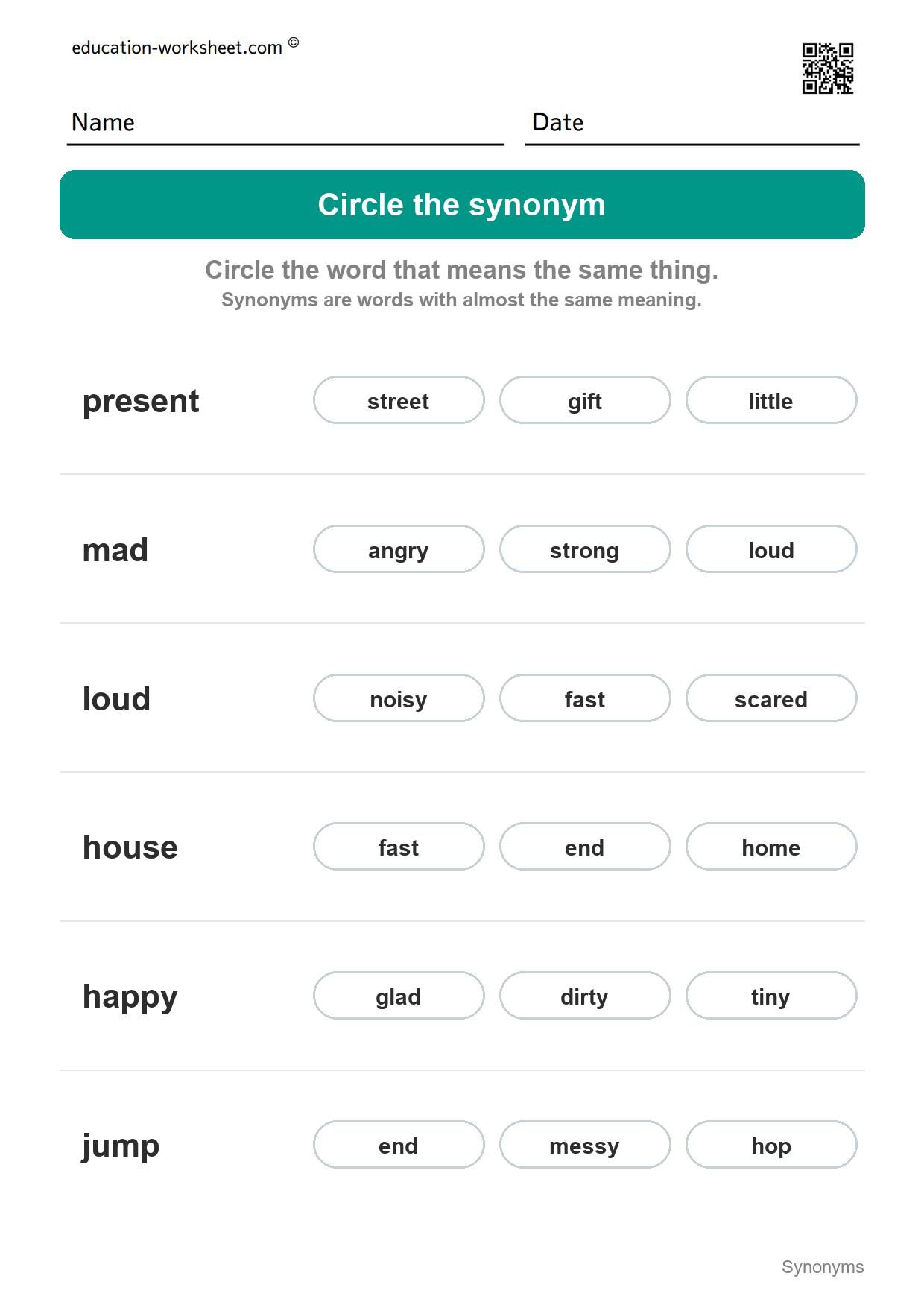
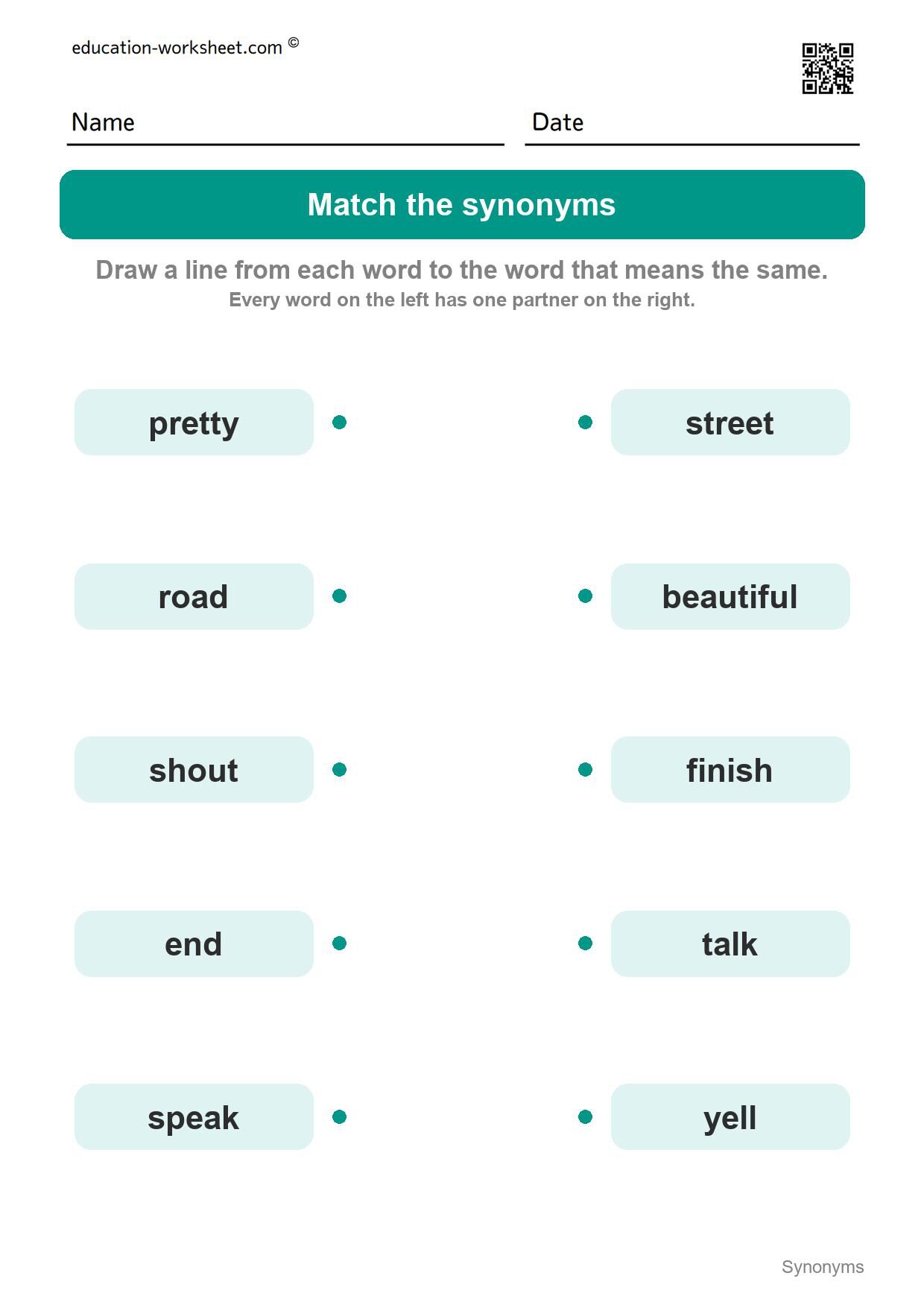
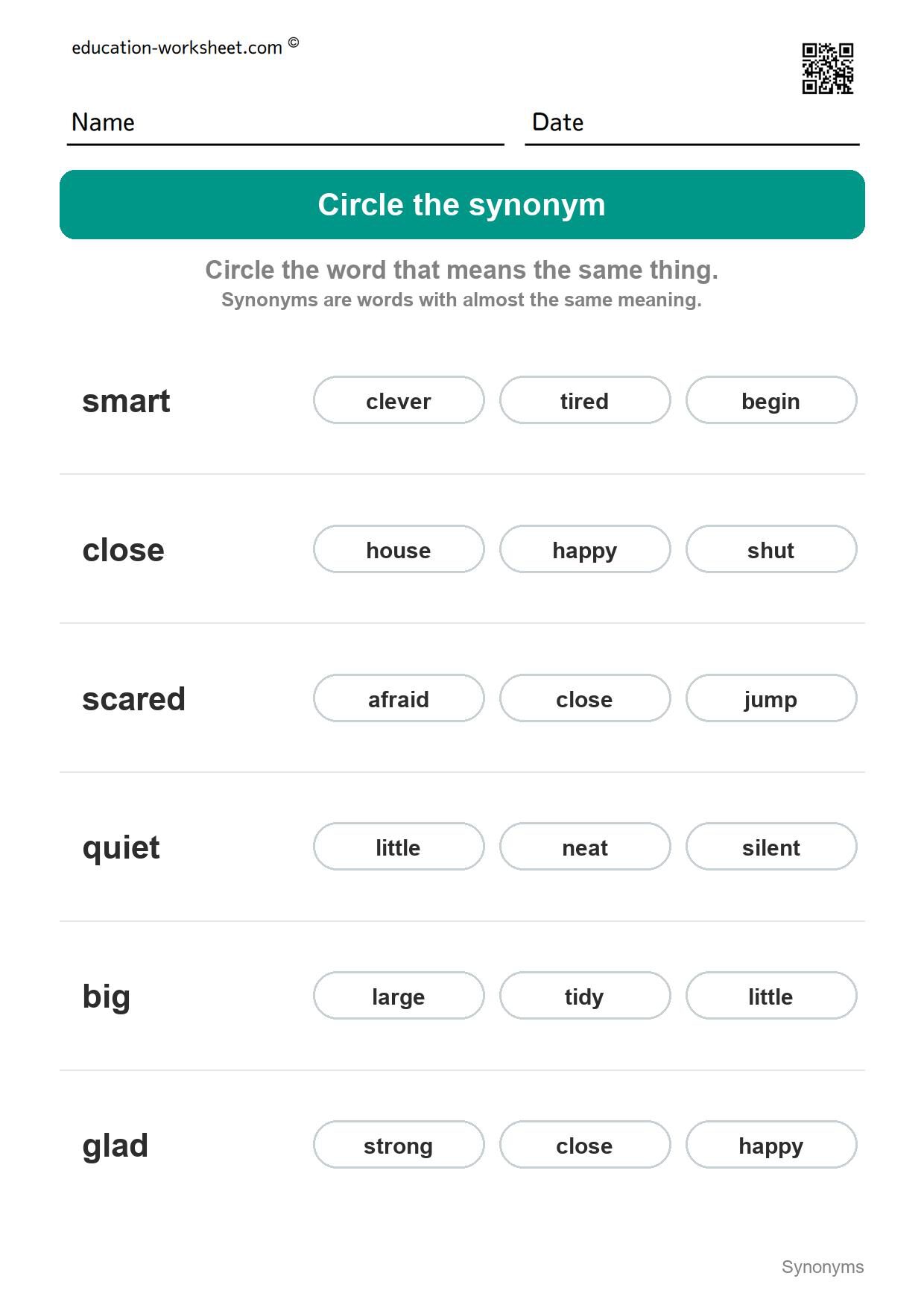
These free printable synonyms worksheets help kindergarten and first grade children learn words that mean almost the same thing, such as big and large or happy and glad. The pages alternate between two tasks so children are not doing the same thing ten times: on half of them children circle the synonym from three choices, and on the other half they draw a line from each word on the left to its matching word on the right. Learning synonyms builds vocabulary and helps children notice that more than one word can describe the same idea. Words with a broad or unclear meaning, where several answers could seem right, are deliberately left out of this set. Every word here has exactly one matching partner. The last page is an answer key. Just download, print, and match!
Circle the synonym (Set 1)
Match the synonyms (Set 2)
Circle the synonym (Set 3)
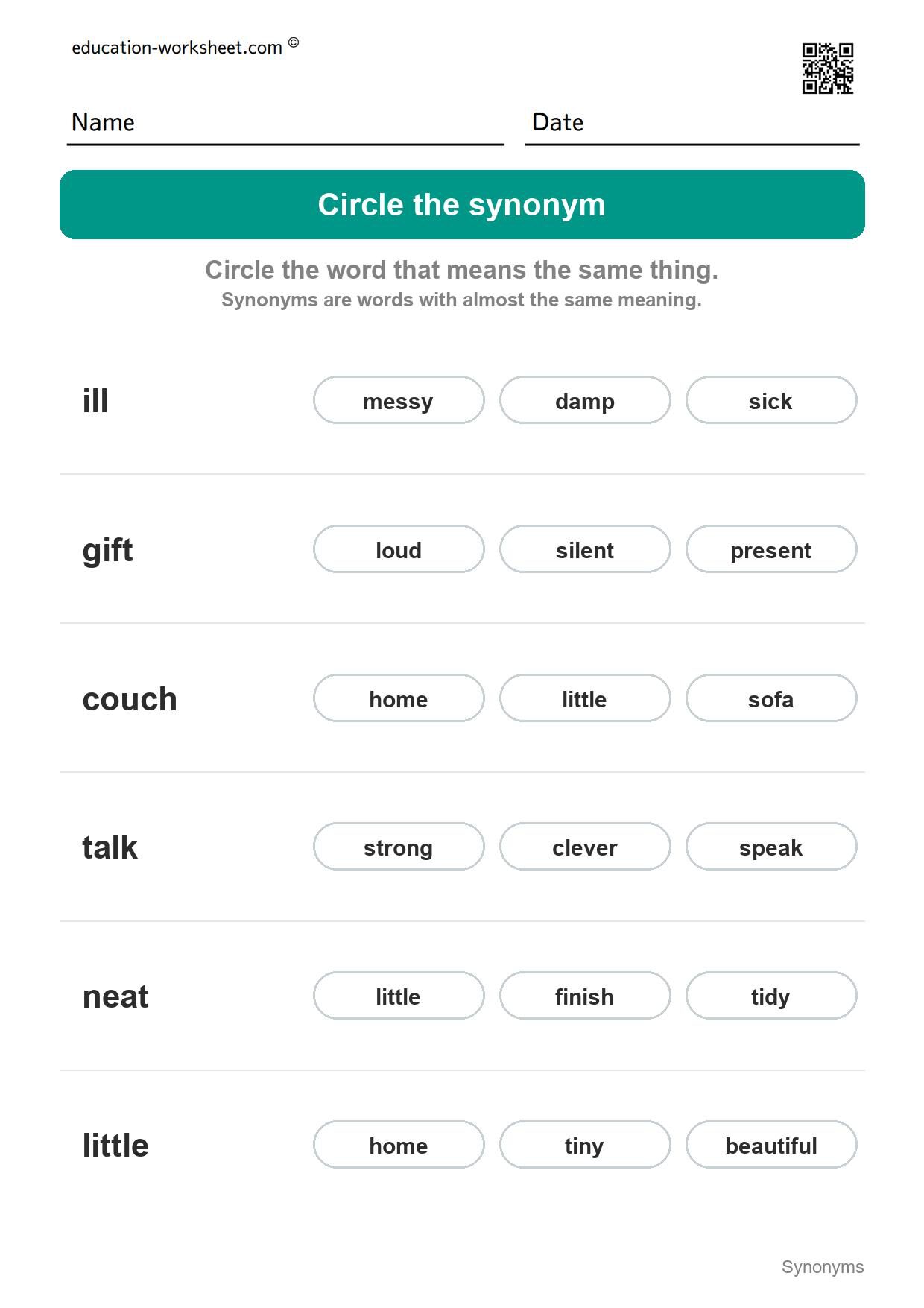
Match the synonyms (Set 4)
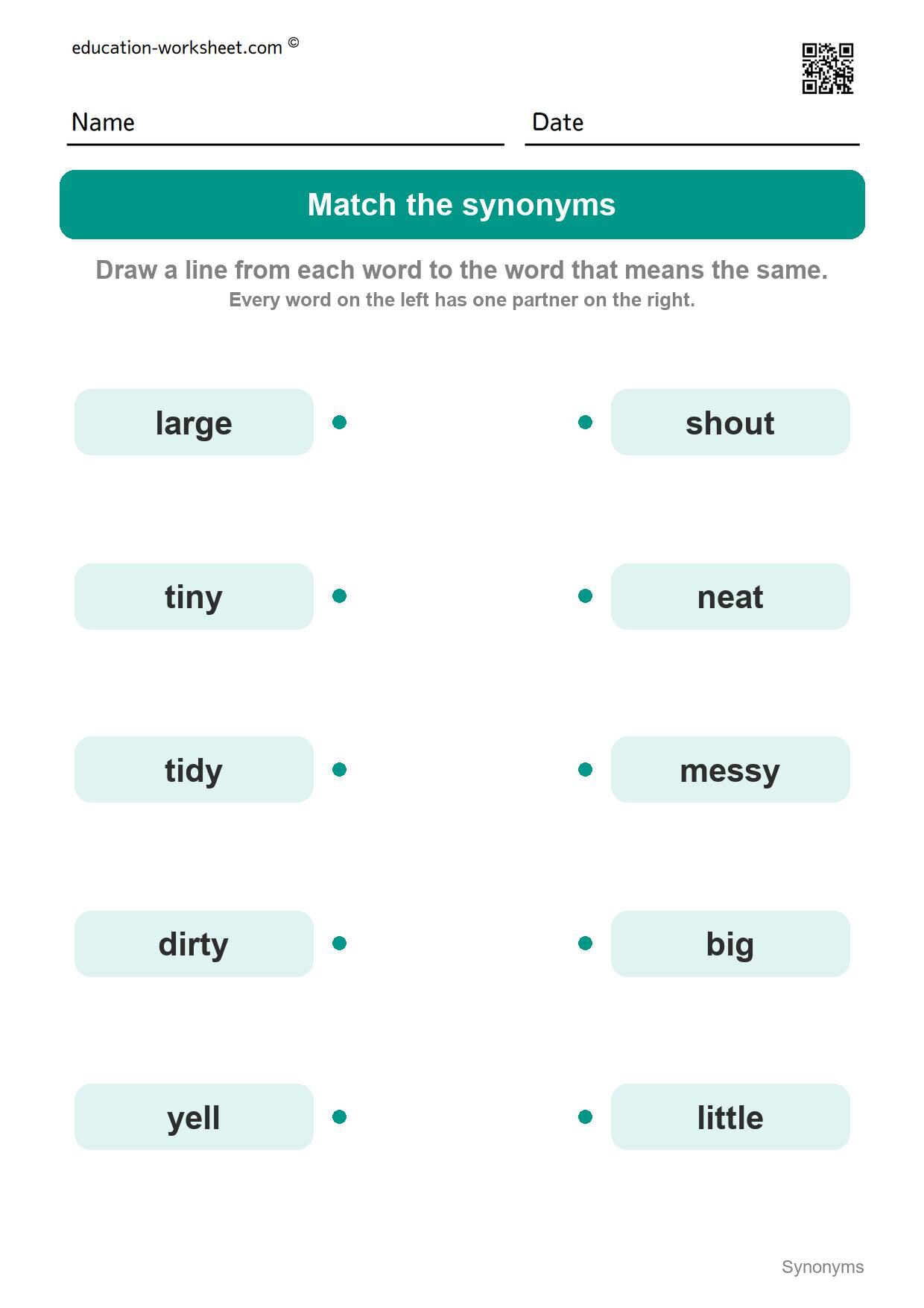
Circle the synonym (Set 5)
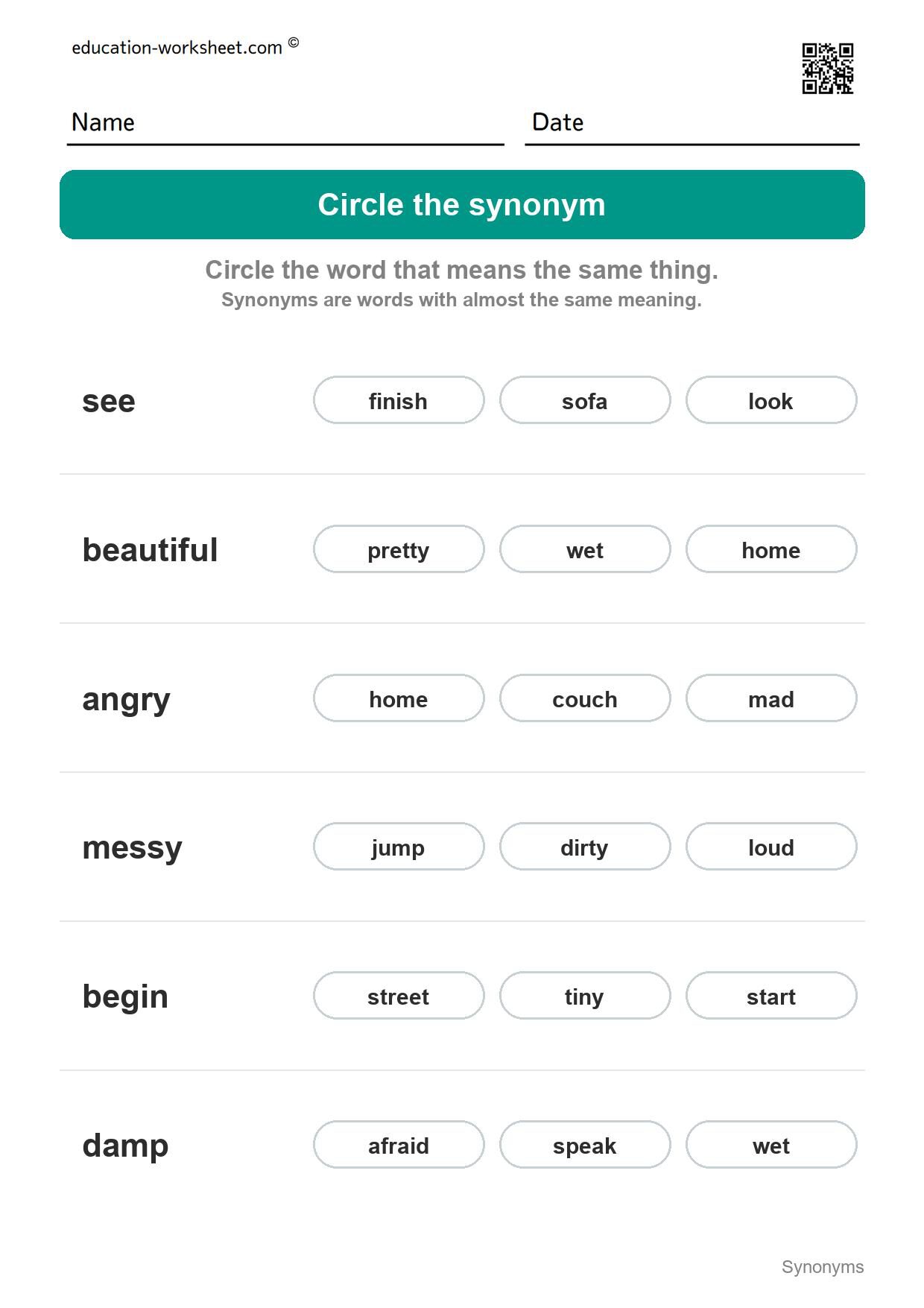
Match the synonyms (Set 6)
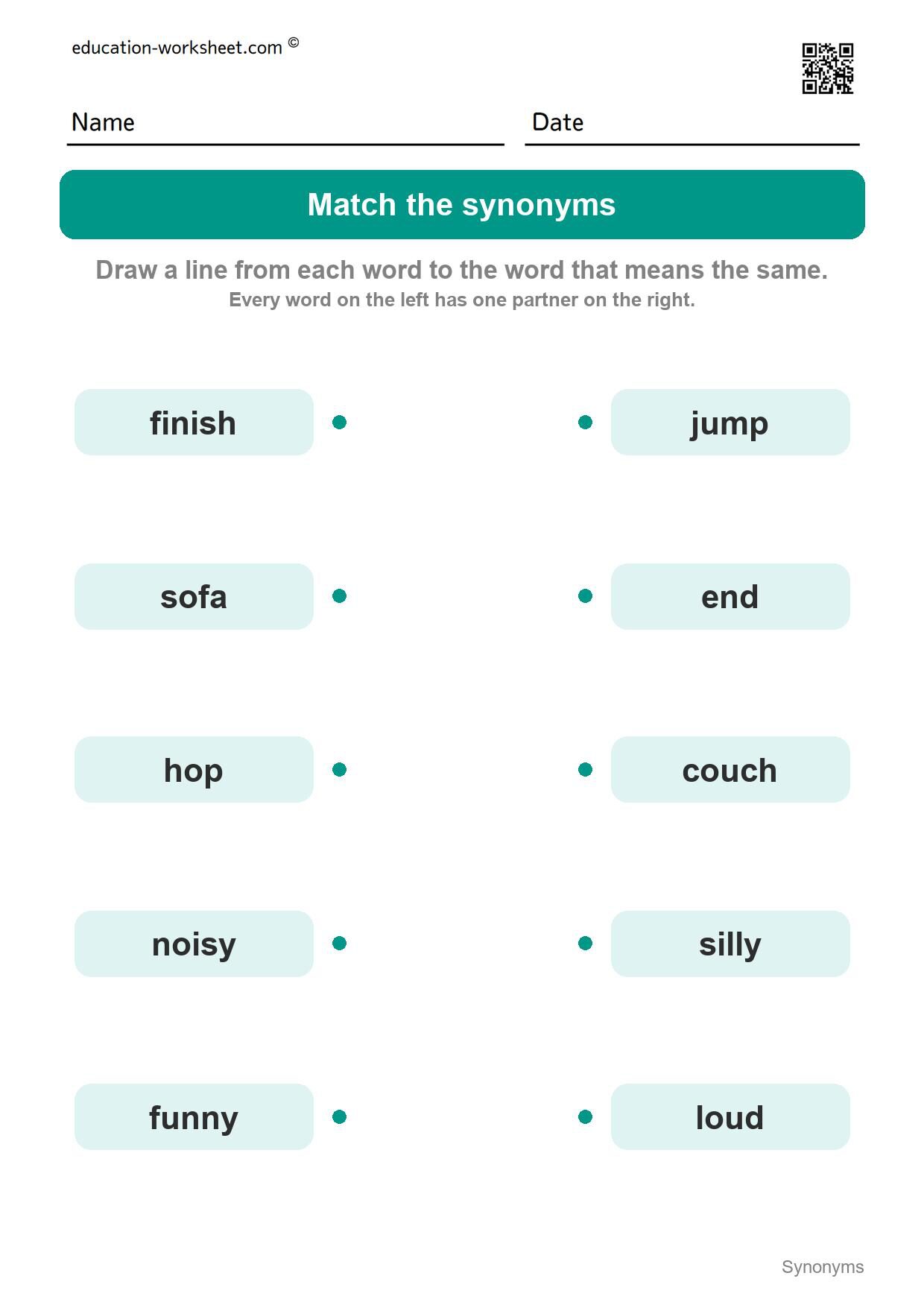
Circle the synonym (Set 7)
Match the synonyms (Set 8)
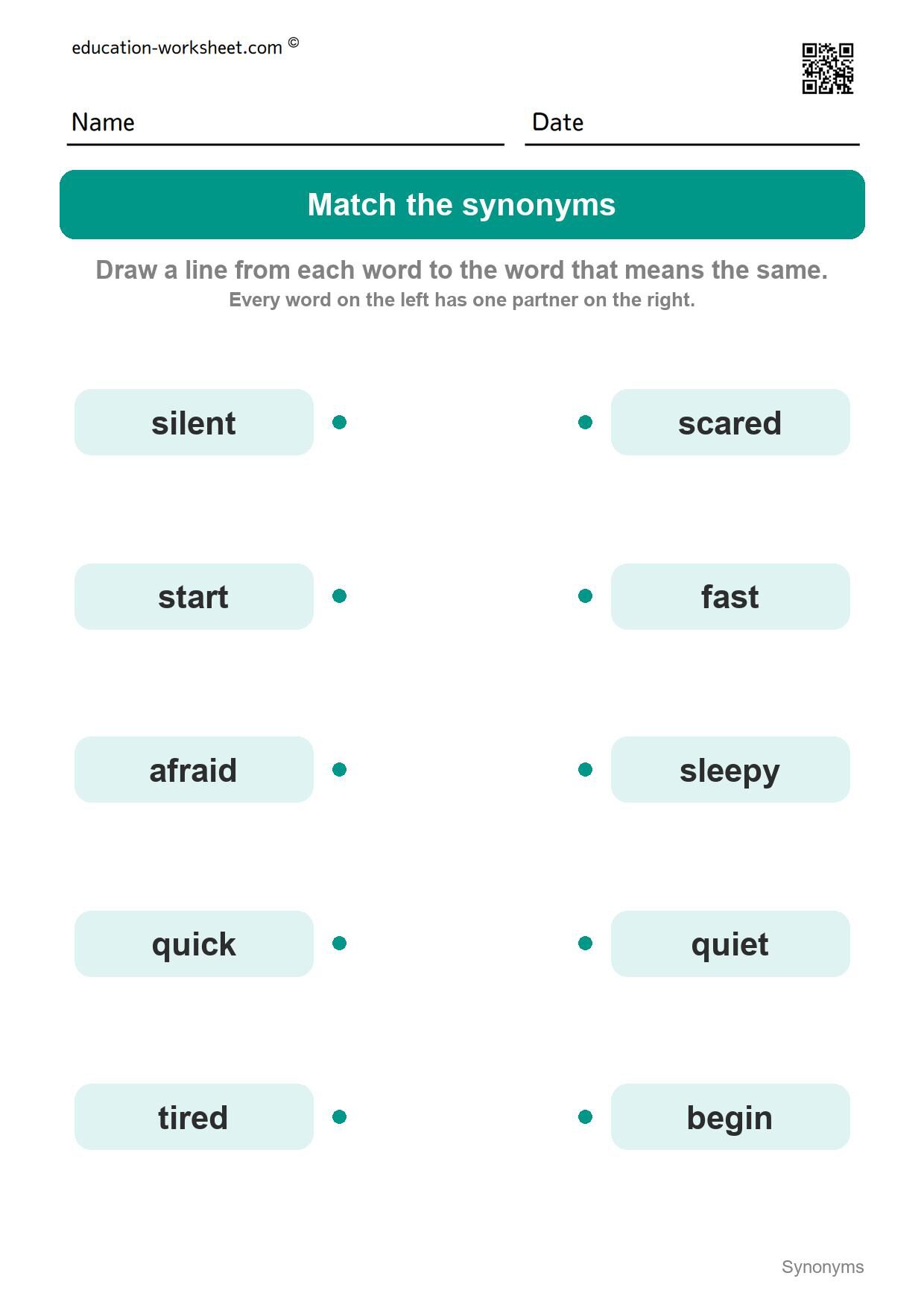
Circle the synonym (Set 9)
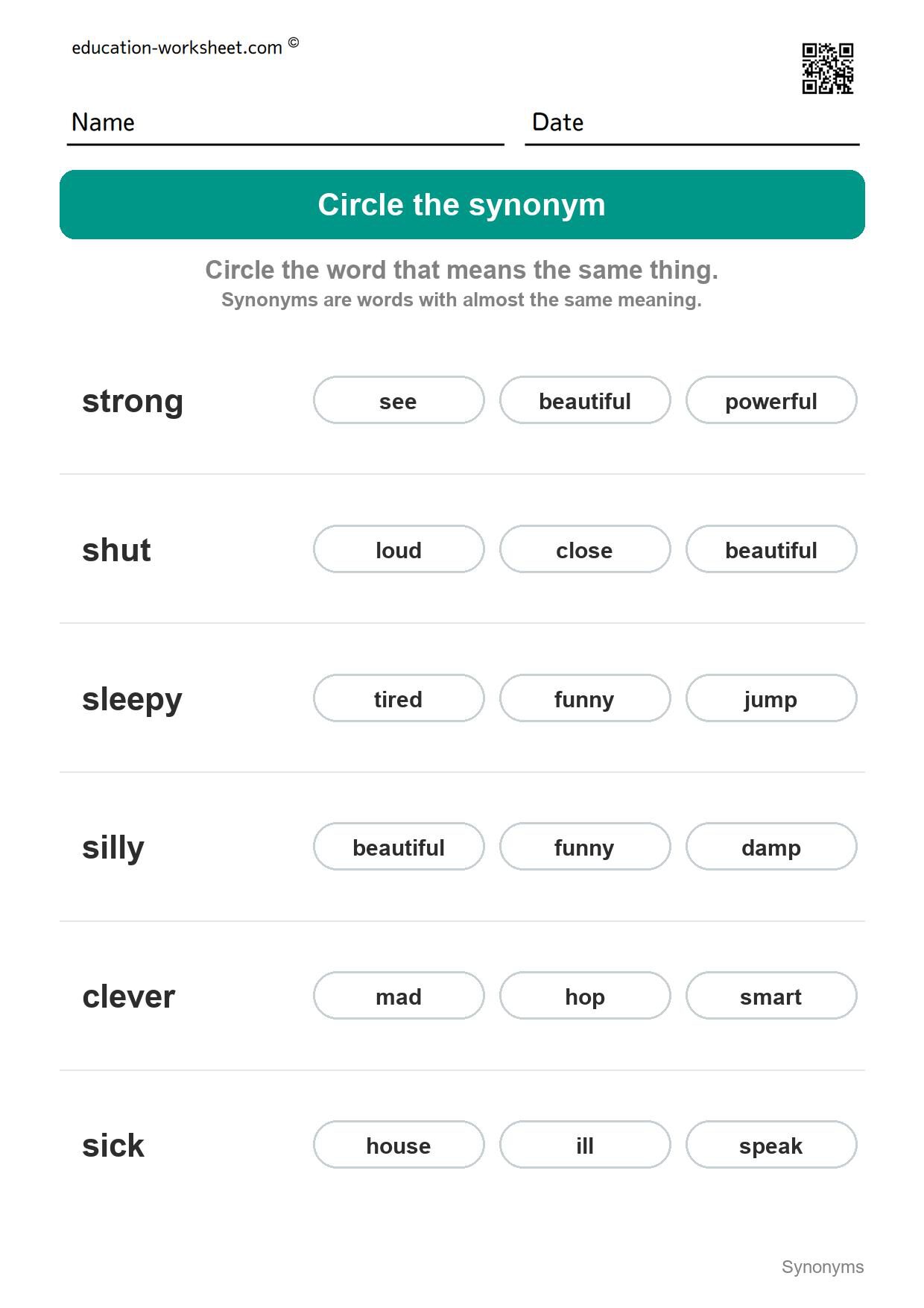
Match the synonyms (Set 10)
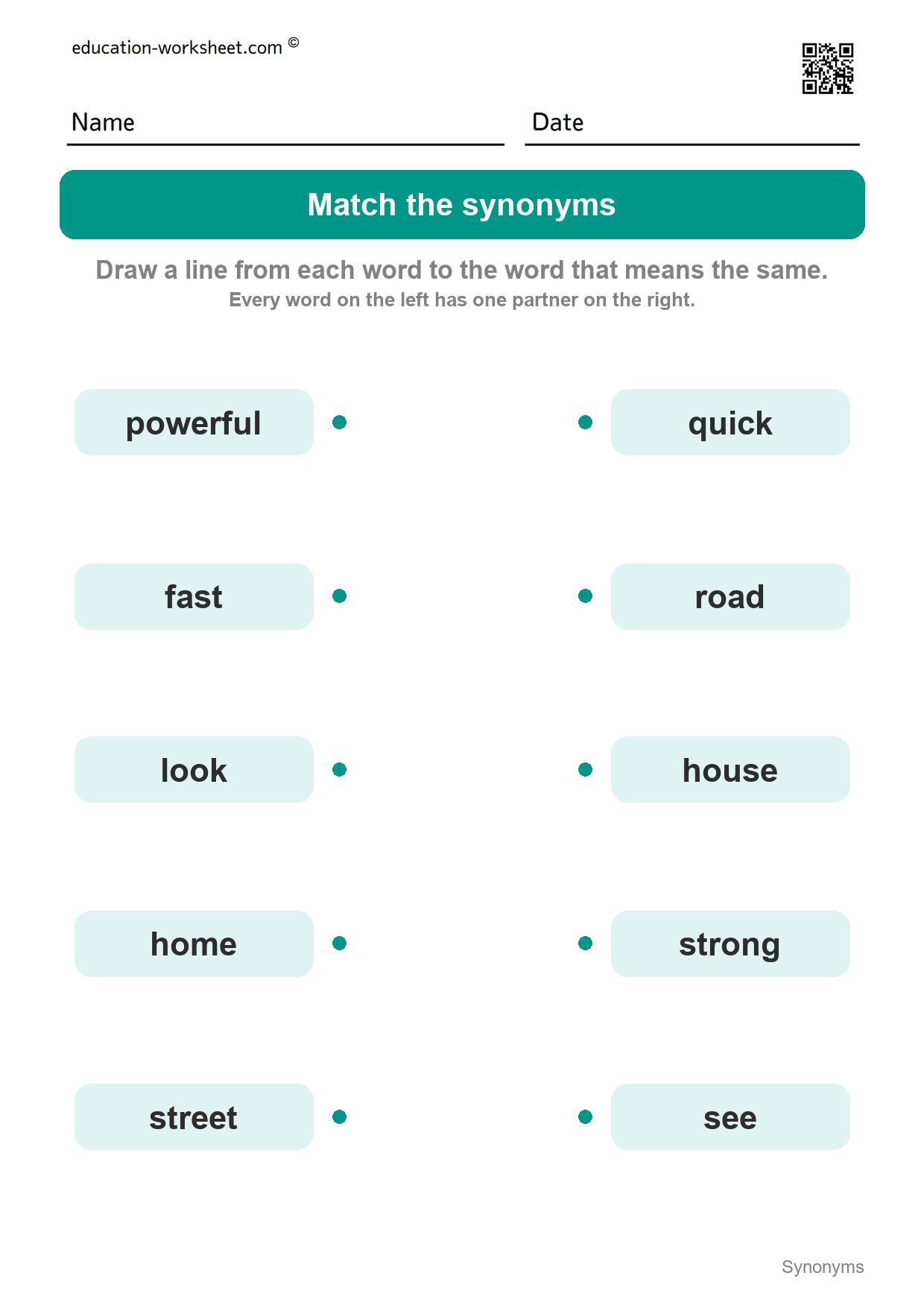
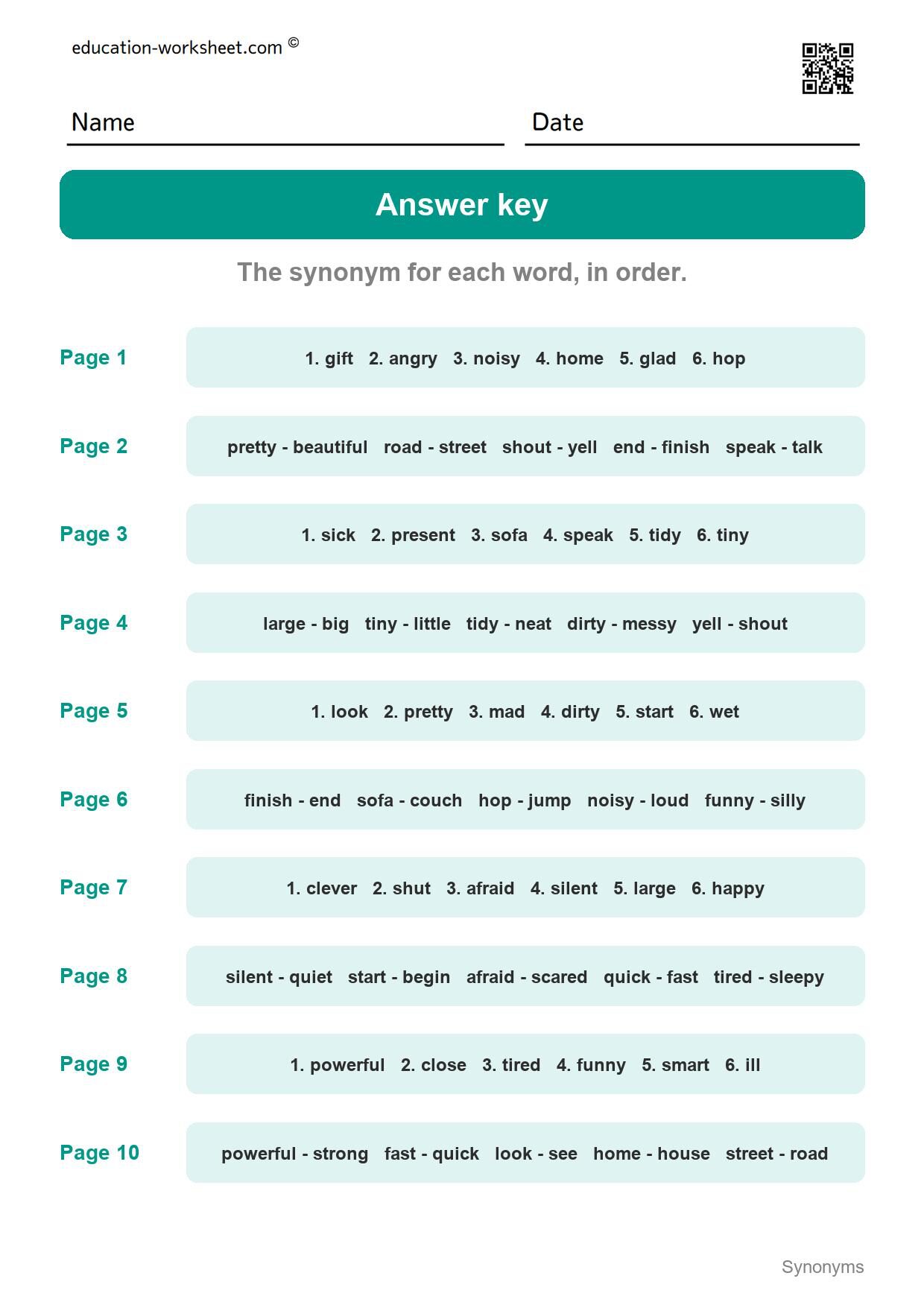
Answer key – all 10 pages
Synonyms: more than one word for the same idea
A synonym is a word that means nearly the same as another, such as big and large. The word nearly is doing real work in that sentence. Synonyms are rarely identical, and part of what a child is learning here is that English gives you several words for one idea so that you can choose the one that fits best.
What your child is actually learning
This is vocabulary work rather than phonics, and it does two jobs. It gives children more words to use in their own writing, which is the quickest way out of sentences where everything is good, nice or big. It also builds a habit that pays off in reading: when an unfamiliar word appears, a child who thinks in synonyms asks what familiar word it might be standing in for, rather than stopping at it.
How to work through these pages
After each matched pair, use both words in a sentence out loud. The box is big, the box is large. This confirms the match and, more usefully, sometimes reveals that the two are not quite interchangeable, which is worth noticing rather than hiding. A good follow-up game is to take a plain sentence your child has written and swap one word for a stronger synonym: the dog was big becomes the dog was enormous.
The mistakes to expect
- Assuming synonyms are perfectly interchangeable. Big and huge are close, but only one of them is dramatic. Degree is part of the meaning.
- Matching by category instead of meaning, pairing dog with cat because both are animals. Ask whether one word could replace the other in a sentence.
- Guessing from the look of a word. Quick and quiet start alike and mean nothing like each other.
- Struggling with words that have several meanings. Light as the opposite of heavy and light as the opposite of dark need separate treatment.
What to teach next
Antonyms are the obvious partner, and doing them close together helps, because a child who can say how two words are alike is well placed to say how two words are opposite. After that, sorting words into categories and using describing words in sentences both build on the same vocabulary foundations.
Questions parents ask
Is a thesaurus useful at this age?
A children’s picture thesaurus can be, used together rather than alone. An adult thesaurus is not, because it offers words a first grader cannot yet judge the meaning of and leads to sentences that do not quite work.
How many synonyms should my child know for a word?
Two or three that they can genuinely use beats ten they can only recite. The test is whether the word turns up in their own speech or writing.
My child matches these correctly but never uses the new words. What helps?
Use them yourself, out loud, in ordinary conversation. Vocabulary moves into a child’s own speech mainly by hearing it used naturally, not by being tested on it.