- Free Thirds Worksheets for Kindergarten – Three Equal Parts
- How to use this worksheet
- Circle the equal thirds (Set 1)
- Circle the equal thirds (Set 2)
- Circle the equal thirds (Set 3)
- Circle the equal thirds (Set 4)
- Circle the equal thirds (Set 5)
- Circle the equal thirds (Set 6)
- Circle the equal thirds (Set 7)
- Circle the equal thirds (Set 8)
- Circle the equal thirds (Set 9)
- Circle the equal thirds (Set 10)
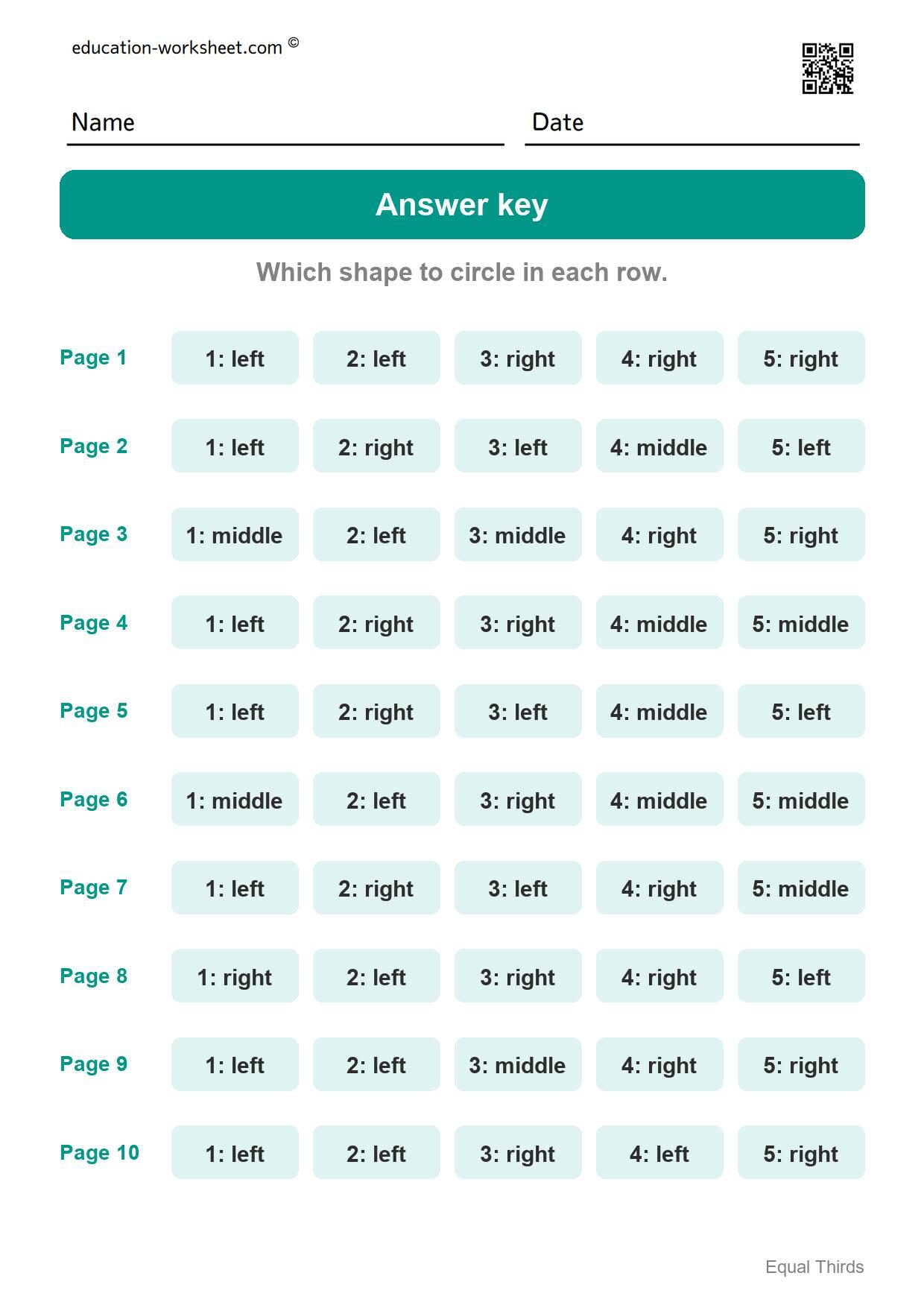
- Answer key – all 10 pages
- Thirds: the fraction you cannot make by folding in half
Free Thirds Worksheets for Kindergarten – Three Equal Parts
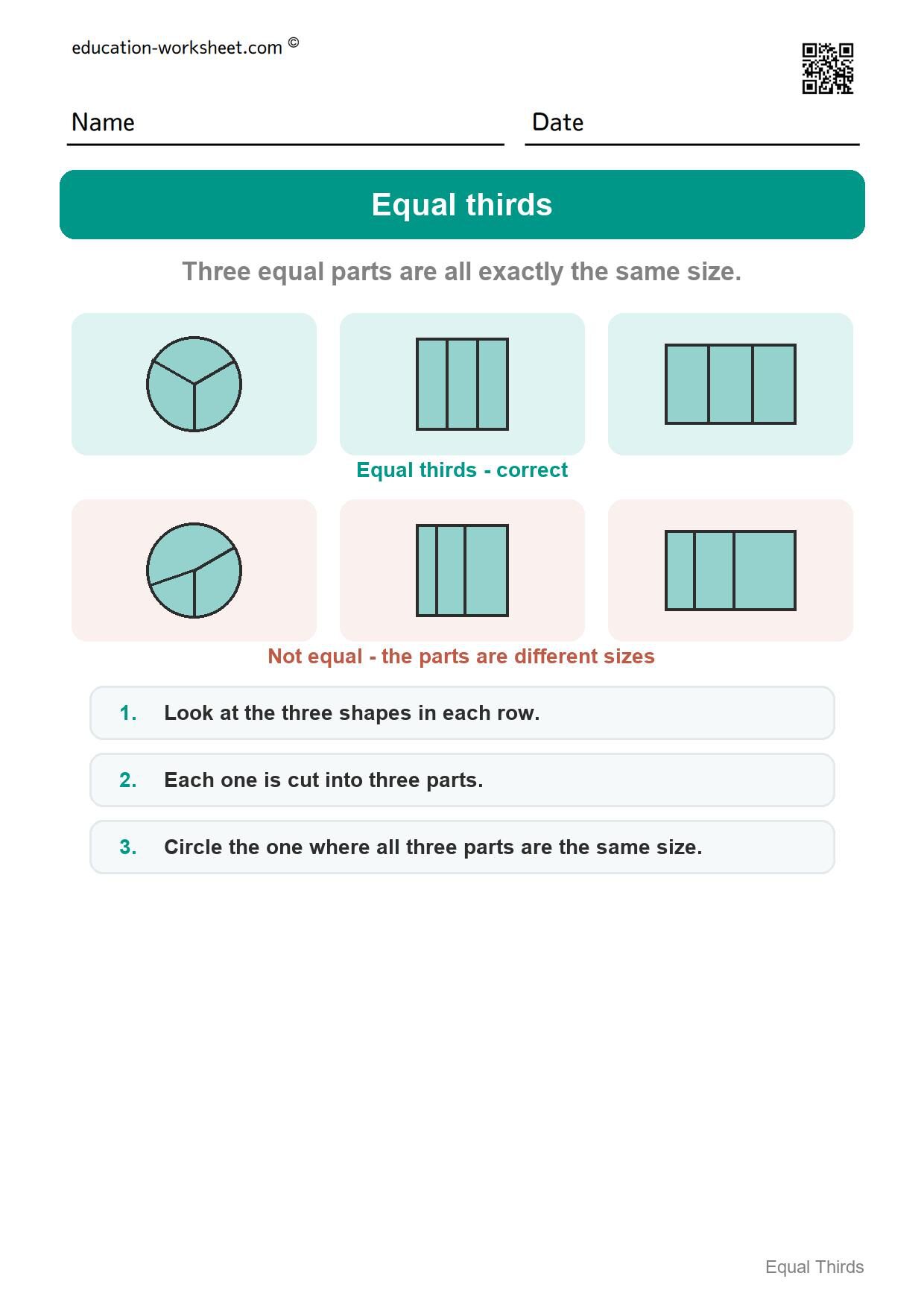
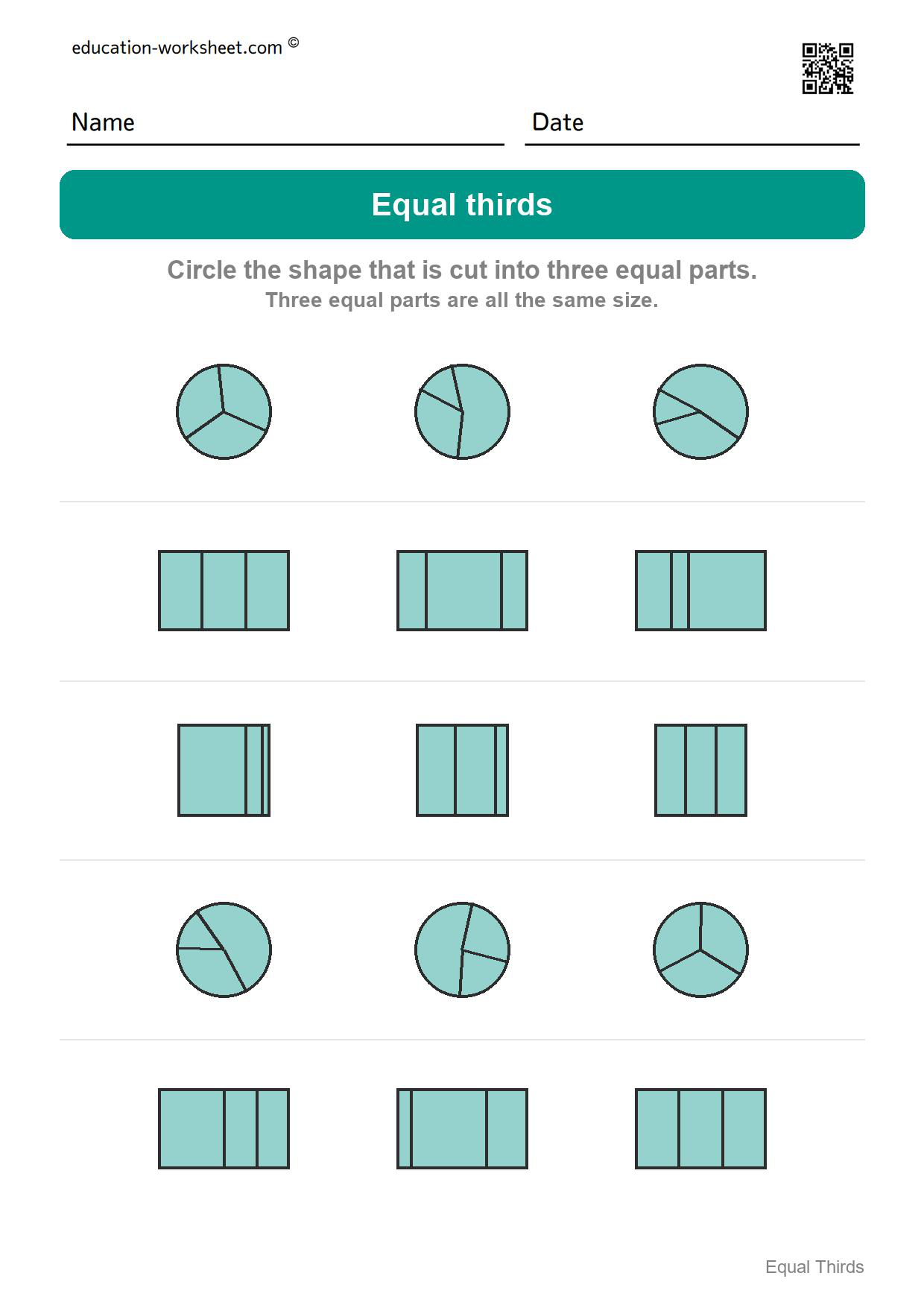
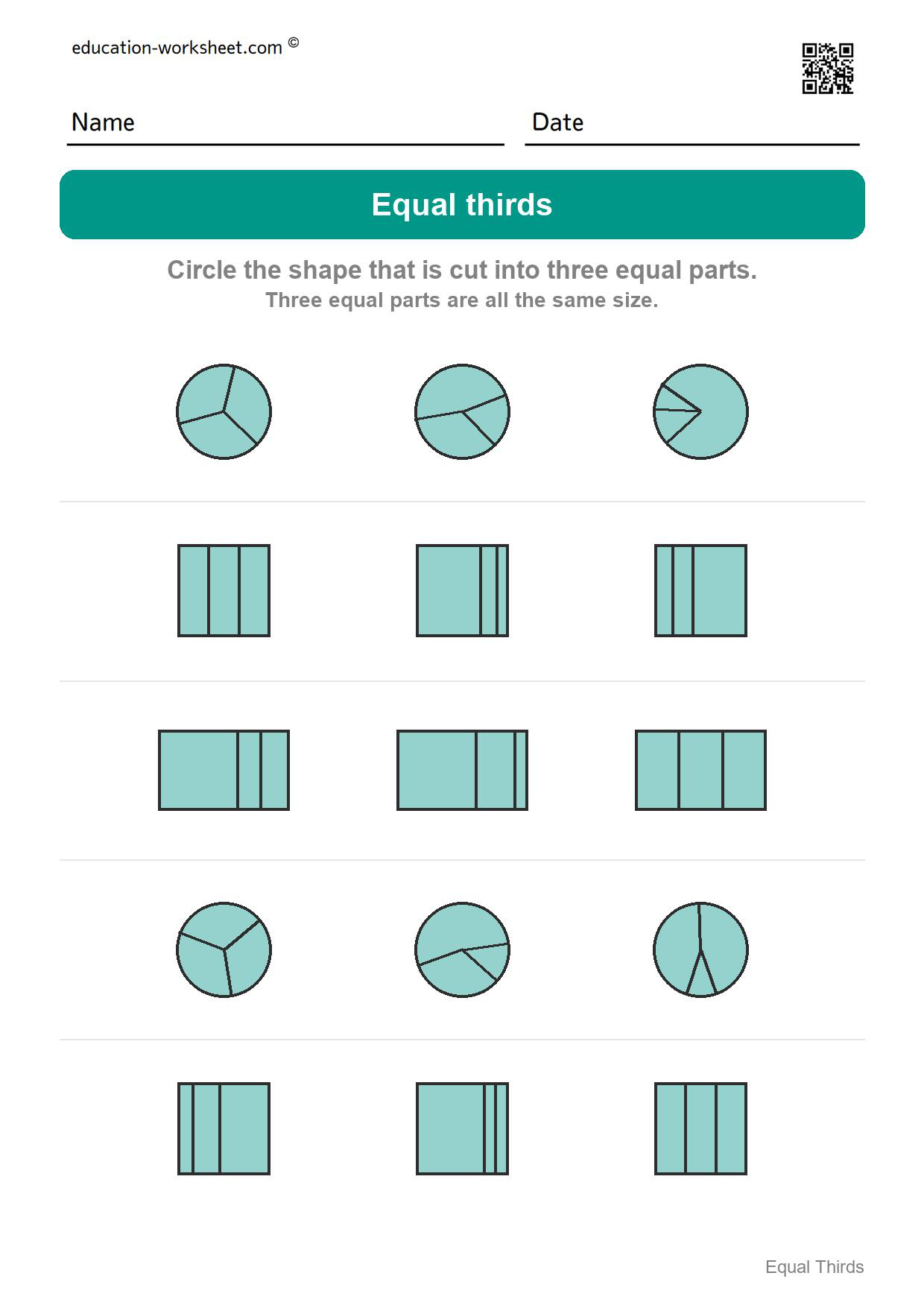
These free printable thirds worksheets help kindergarten and first grade children learn about three equal parts, the step that comes right after halves and fourths. In each row a shape is cut into three parts in three different ways, and kids circle the one where all three parts are exactly the same size. Circles are cut like a pie into three equal wedges, and squares and rectangles are cut into three equal strips, so children compare both kinds of equal parts. The first page explains and shows correct versus incorrect examples, and the final page is an answer key. Just download, print, and find the thirds!
How to use this worksheet
Circle the equal thirds (Set 1)
Circle the equal thirds (Set 2)
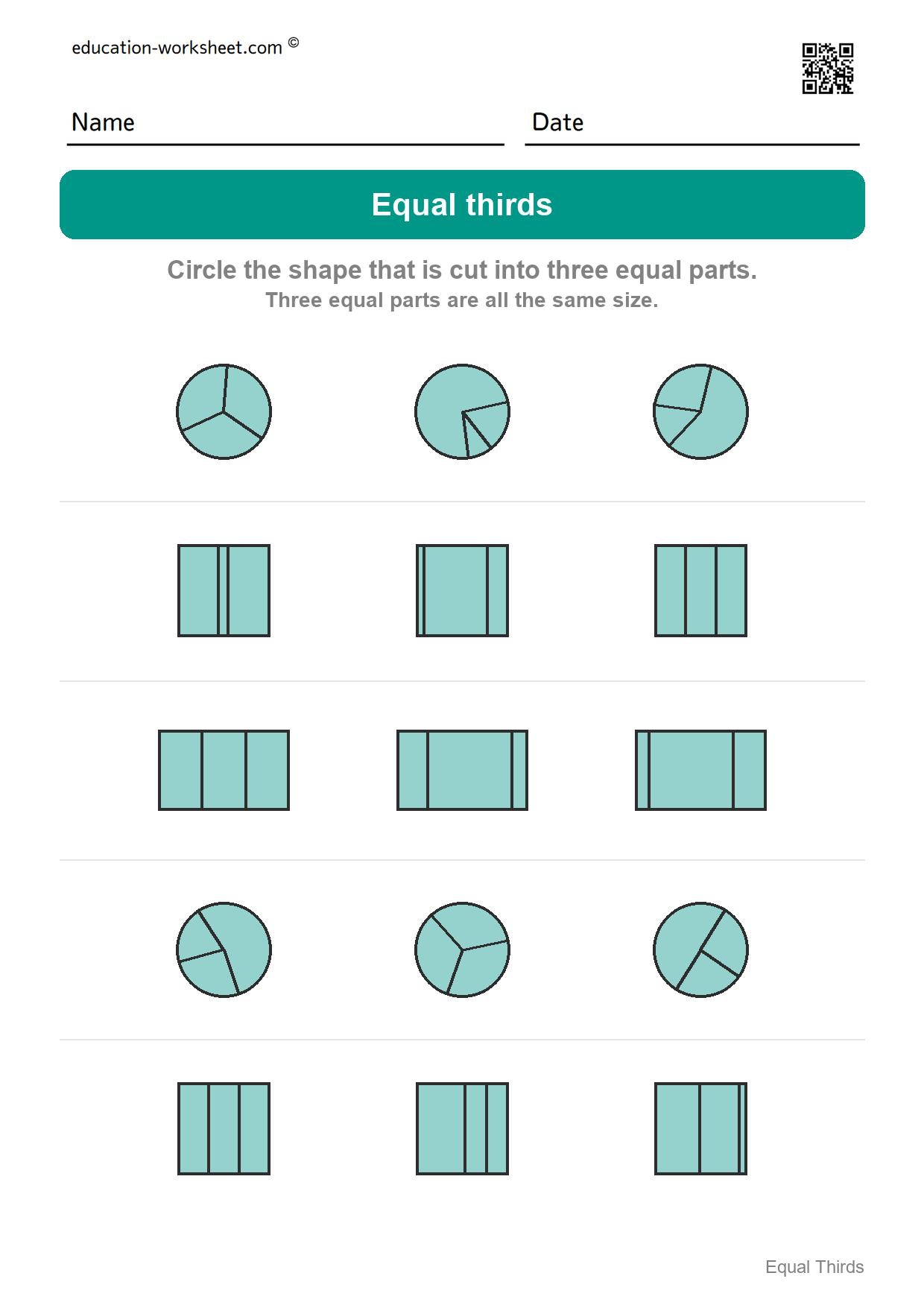
Circle the equal thirds (Set 3)
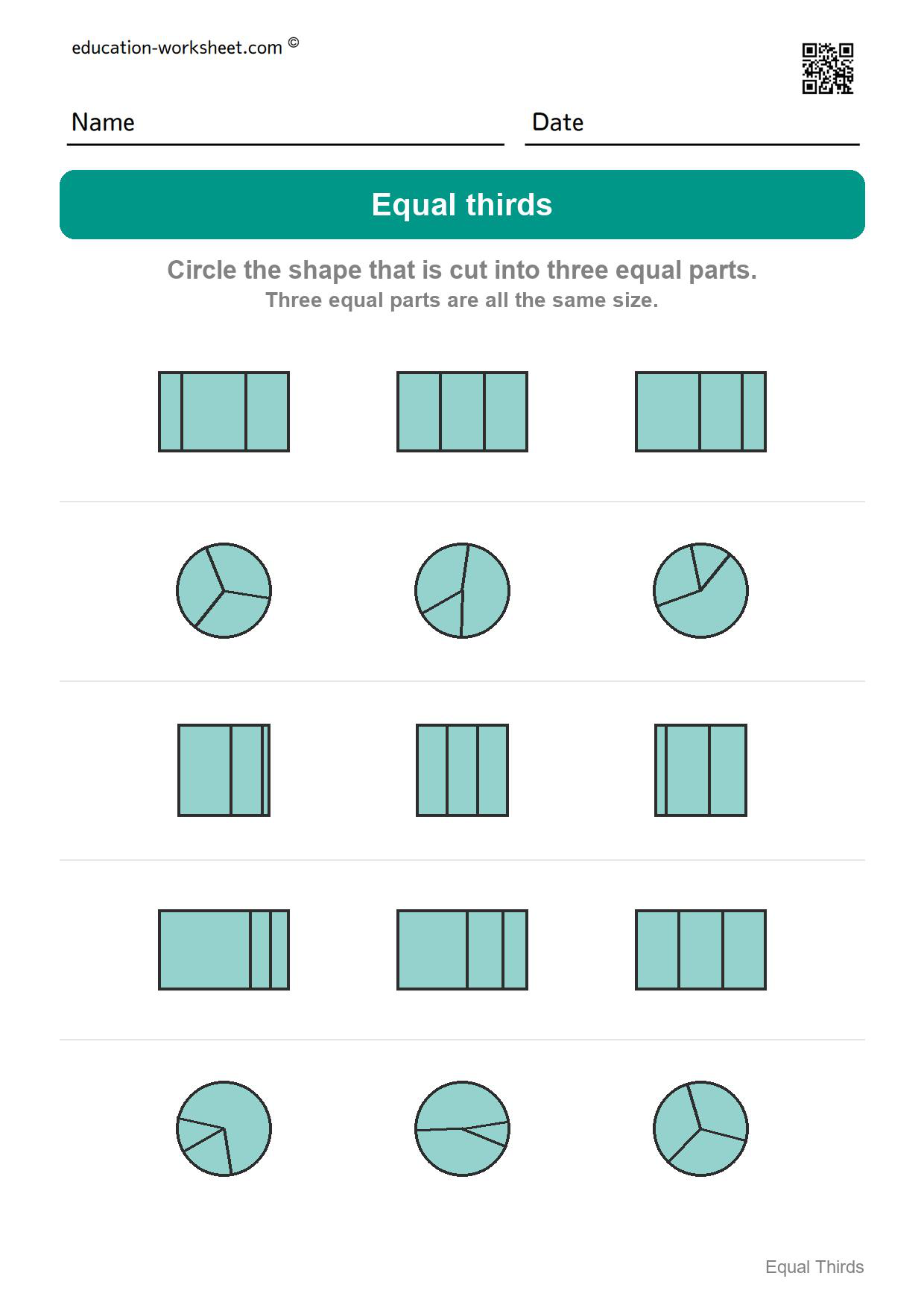
Circle the equal thirds (Set 4)
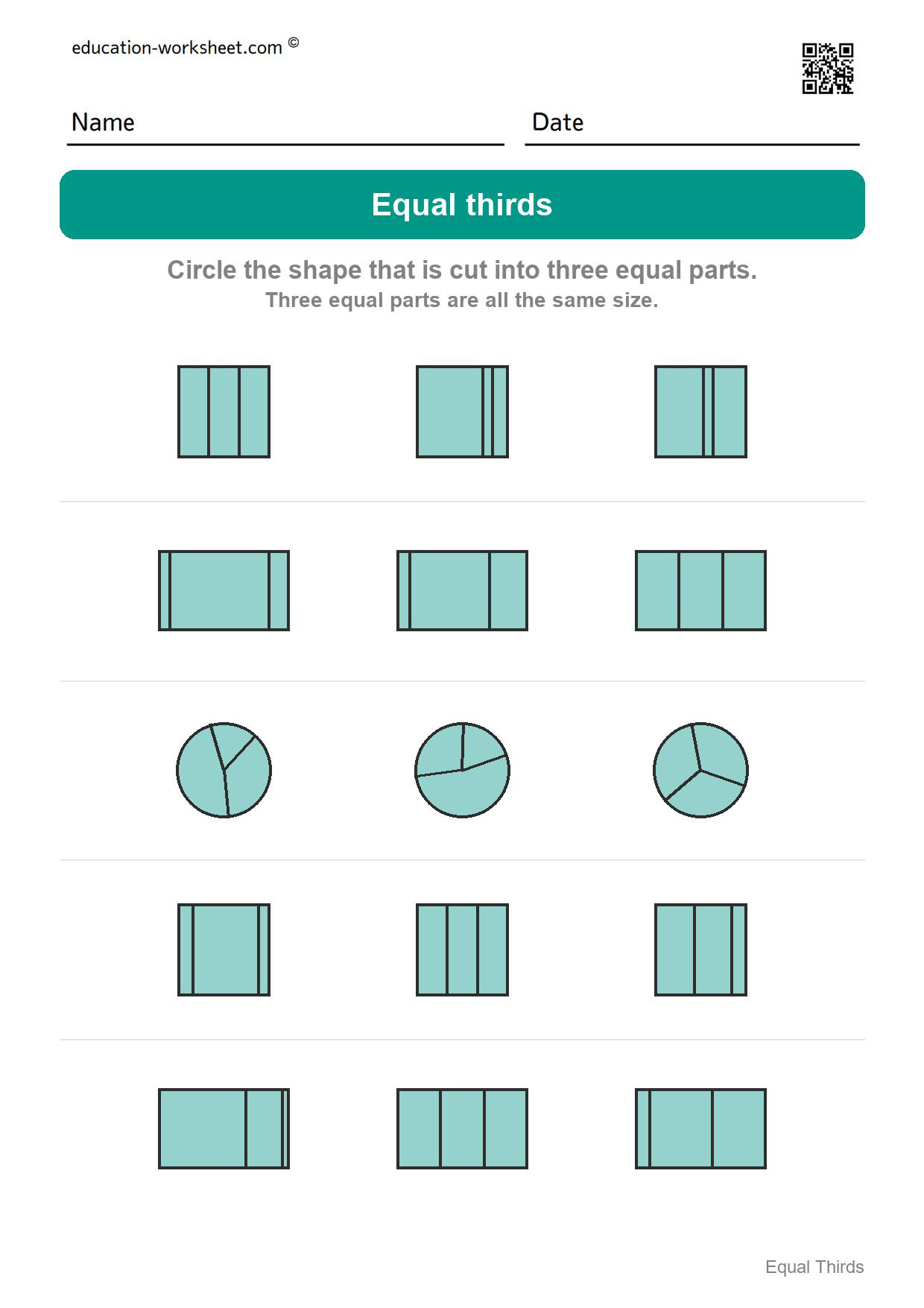
Circle the equal thirds (Set 5)
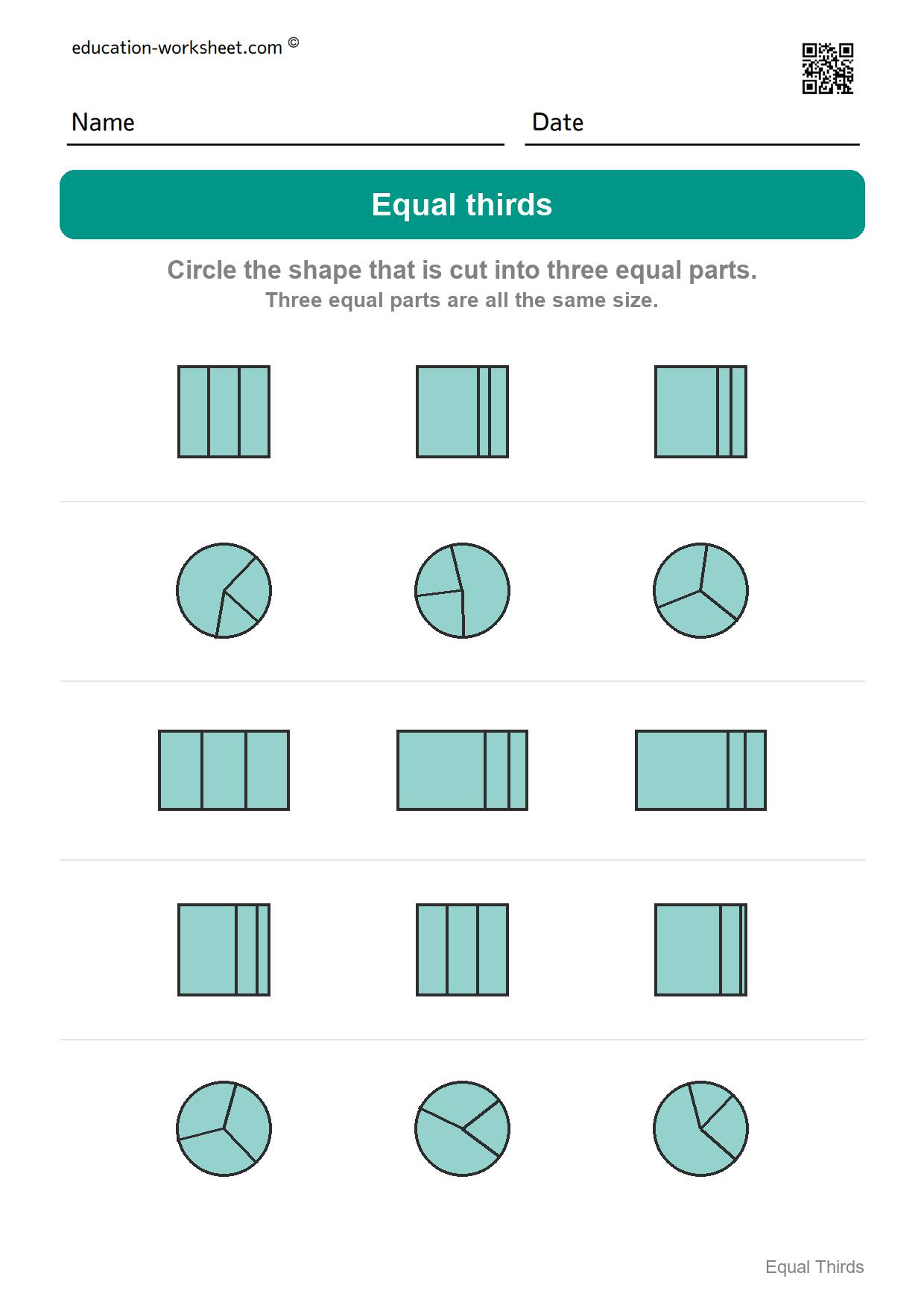
Circle the equal thirds (Set 6)
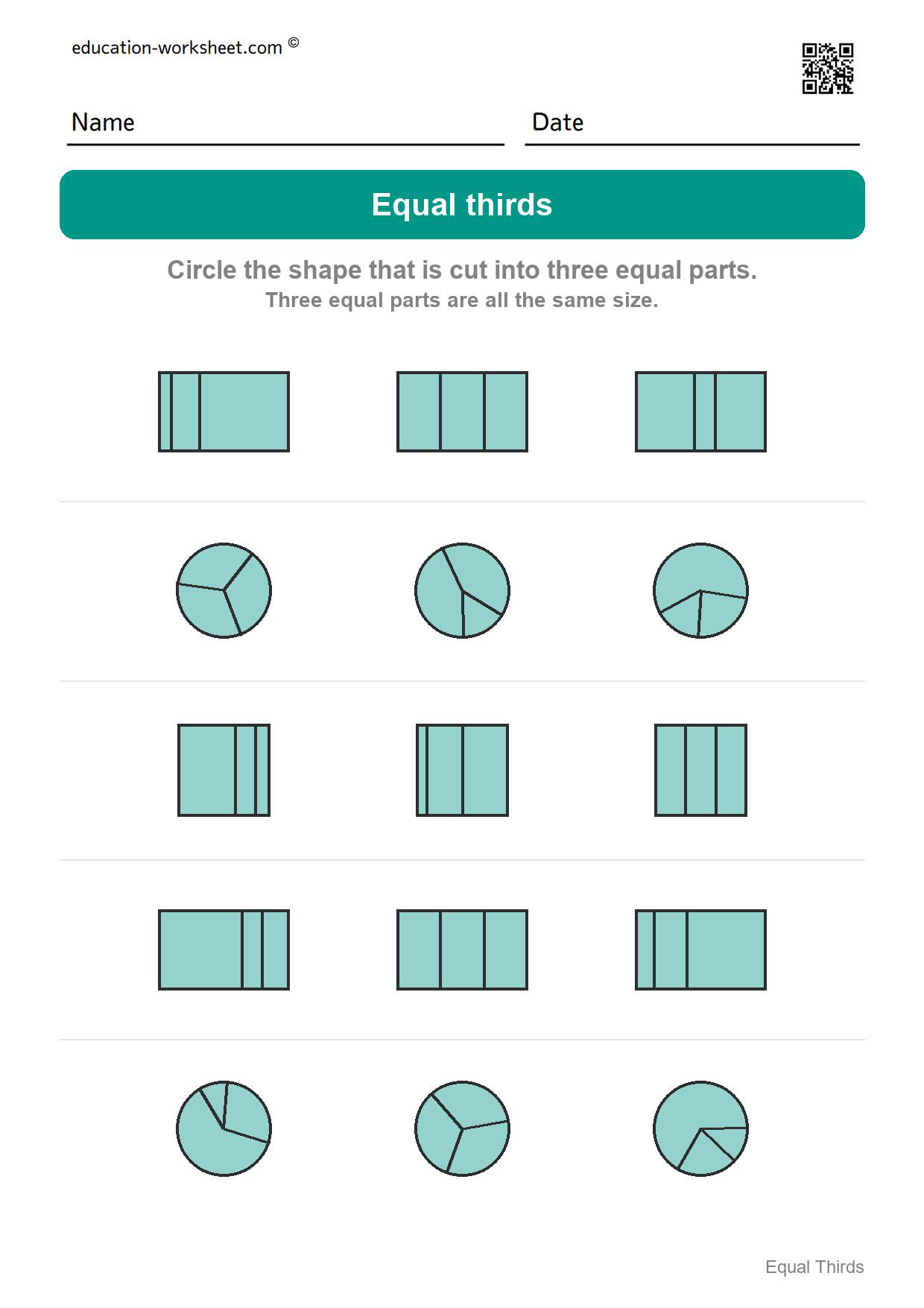
Circle the equal thirds (Set 7)
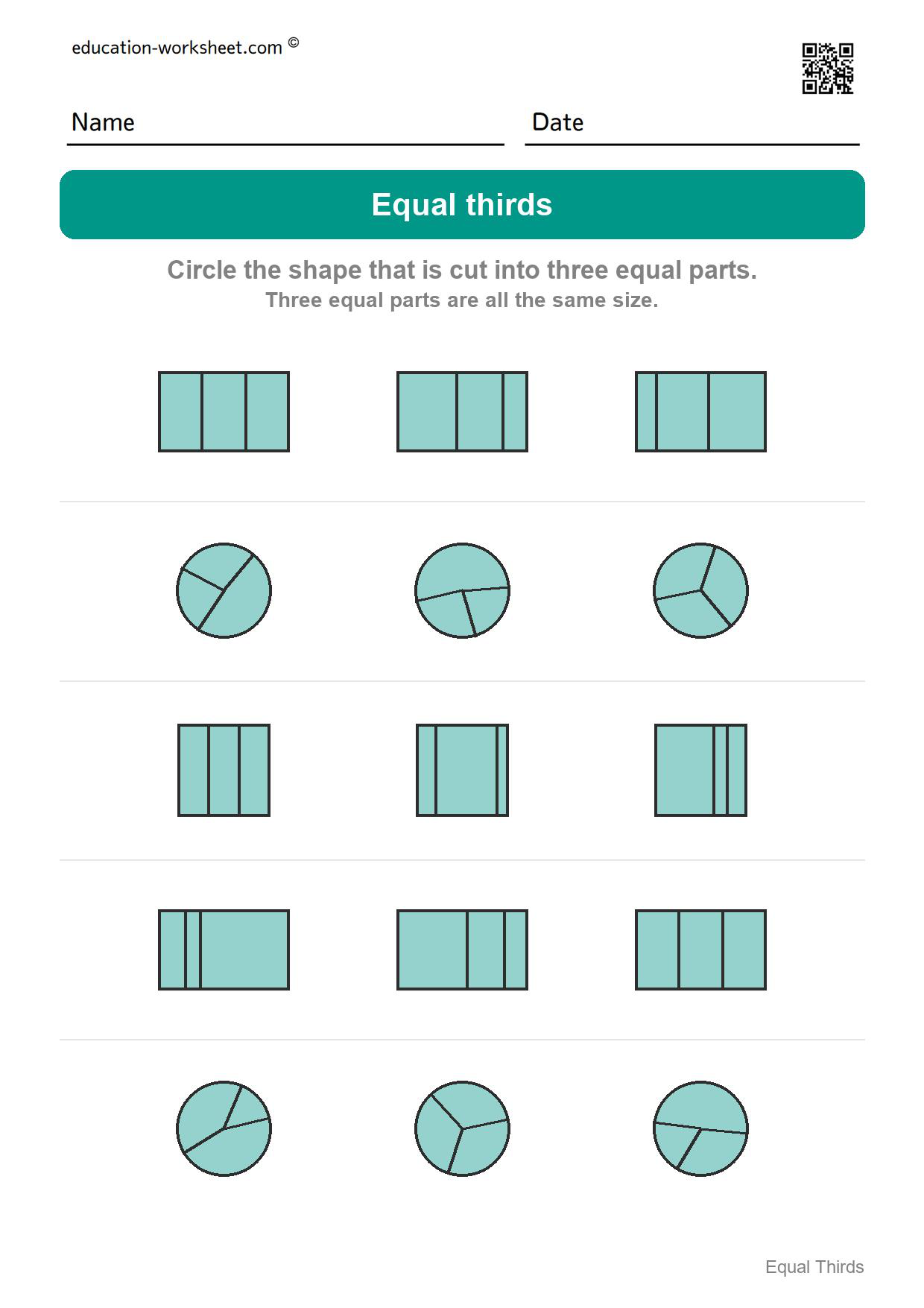
Circle the equal thirds (Set 8)
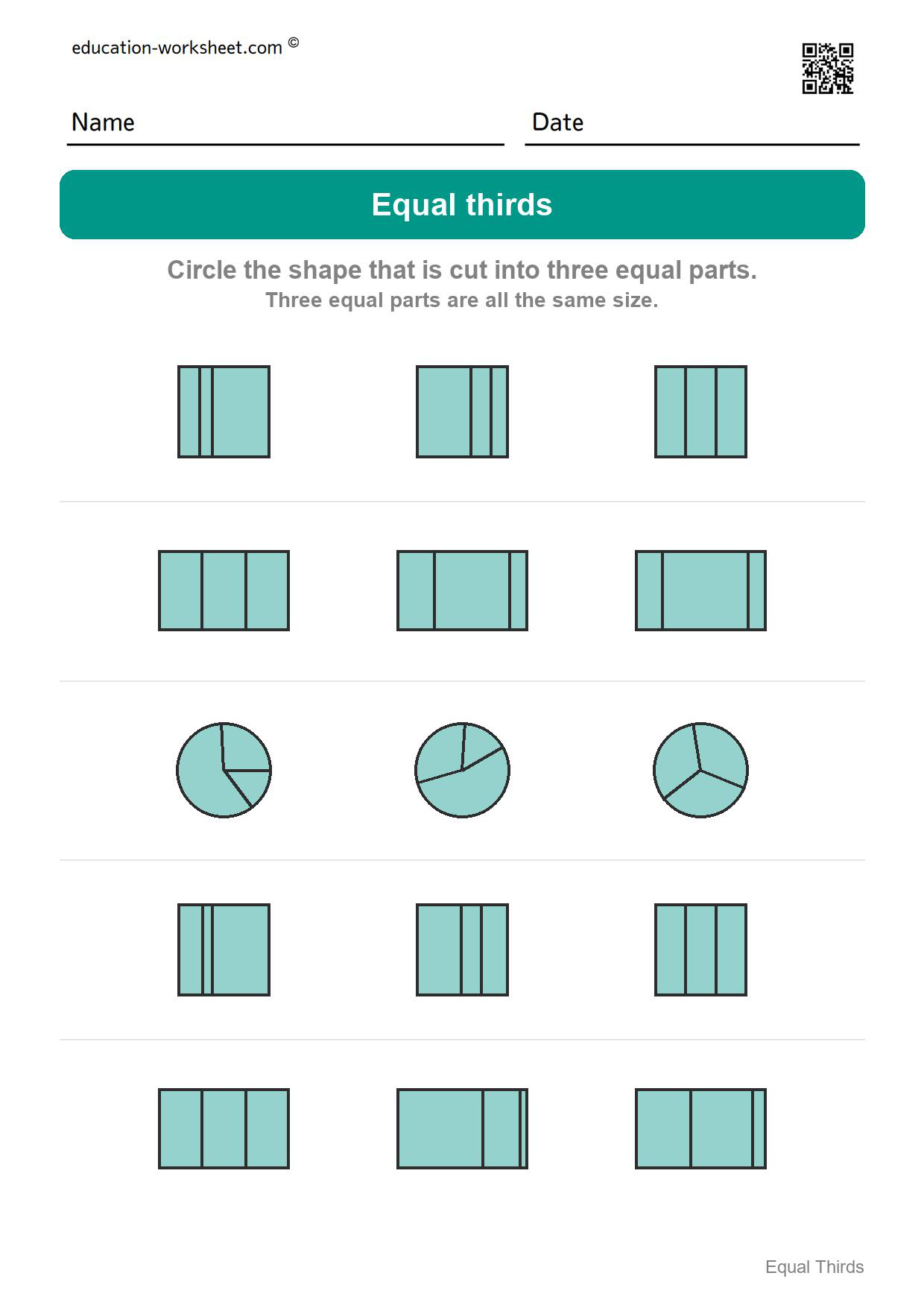
Circle the equal thirds (Set 9)
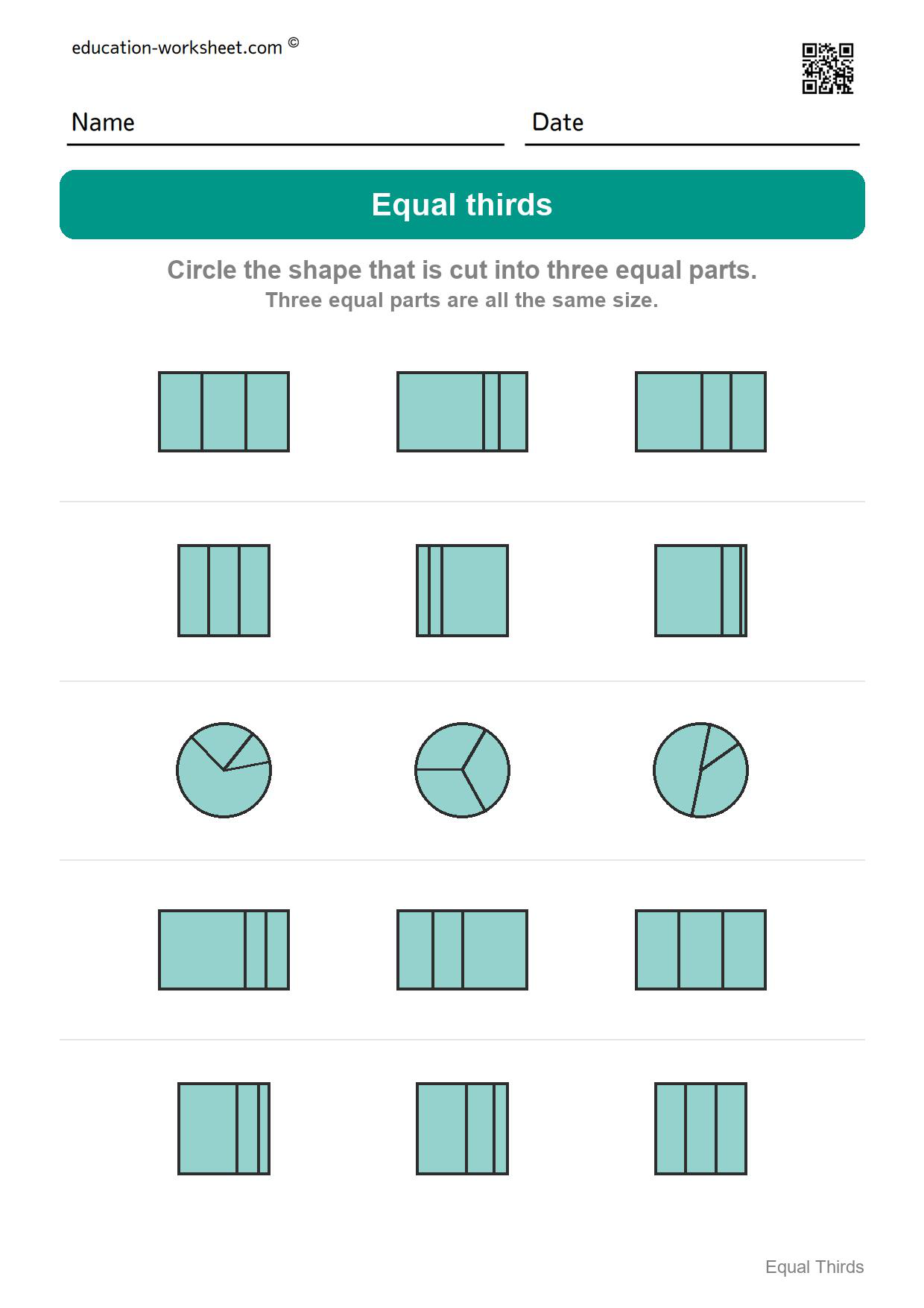
Circle the equal thirds (Set 10)
Answer key – all 10 pages
Thirds: the fraction you cannot make by folding in half
Halves and fourths can both be made by folding, which is why children take to them quickly. Thirds cannot. There is no fold that produces three equal parts, so a child has to judge where the divisions go, and that makes thirds the first fraction requiring real estimation.
What your child is actually learning
Thirds extend the equal shares idea past the doubling that halves and fourths rely on. They also break a pattern children have quietly assumed: that fractions are made by cutting in half repeatedly. Meeting a fraction that does not fit that pattern is what turns “halving” into the more general idea of “equal parts of a whole.”
How to work through these pages
Start with objects that come in threes naturally, because judging thirds on a blank shape is difficult. A sandwich shared between three people, a chocolate bar with three sections, a strip of paper marked into three. When a child does estimate the divisions themselves, get them to check by comparing the pieces rather than by measuring, since the question is whether the parts are equal, not what size they are.
The mistakes to expect
- Making one part obviously larger, usually the middle one, and not noticing.
- Trying to fold in half first and getting stuck. Say plainly that folding will not work here.
- Thinking thirds are bigger than fourths but smaller than halves without being able to say why. The reason is worth drawing: the same whole, cut three ways and four ways, side by side.
- Counting three lines rather than three parts. Two cuts make three pieces, and children often draw three cuts.
What to teach next
Comparing halves, thirds and fourths of the same shape is the natural consolidation, and it is where the counter-intuitive rule finally settles: the more parts, the smaller each one. Beyond that, sharing a group of objects equally between three people connects fractions to division.
Questions parents ask
Are thirds part of the first grade standard?
The core standard names halves and fourths. Thirds are commonly included as extension work, and they are worth doing because they prevent the assumption that fractions are always made by halving.
Why does my child find thirds so much harder?
Because there is no folding shortcut and because three is an awkward number to estimate by eye. This is a genuine step up in difficulty rather than a sign of a problem.
Should we use rulers to make them exact?
Not yet. The aim is the idea of equal parts, not precise measurement. Comparing pieces by eye and by placing them side by side is the right level here.