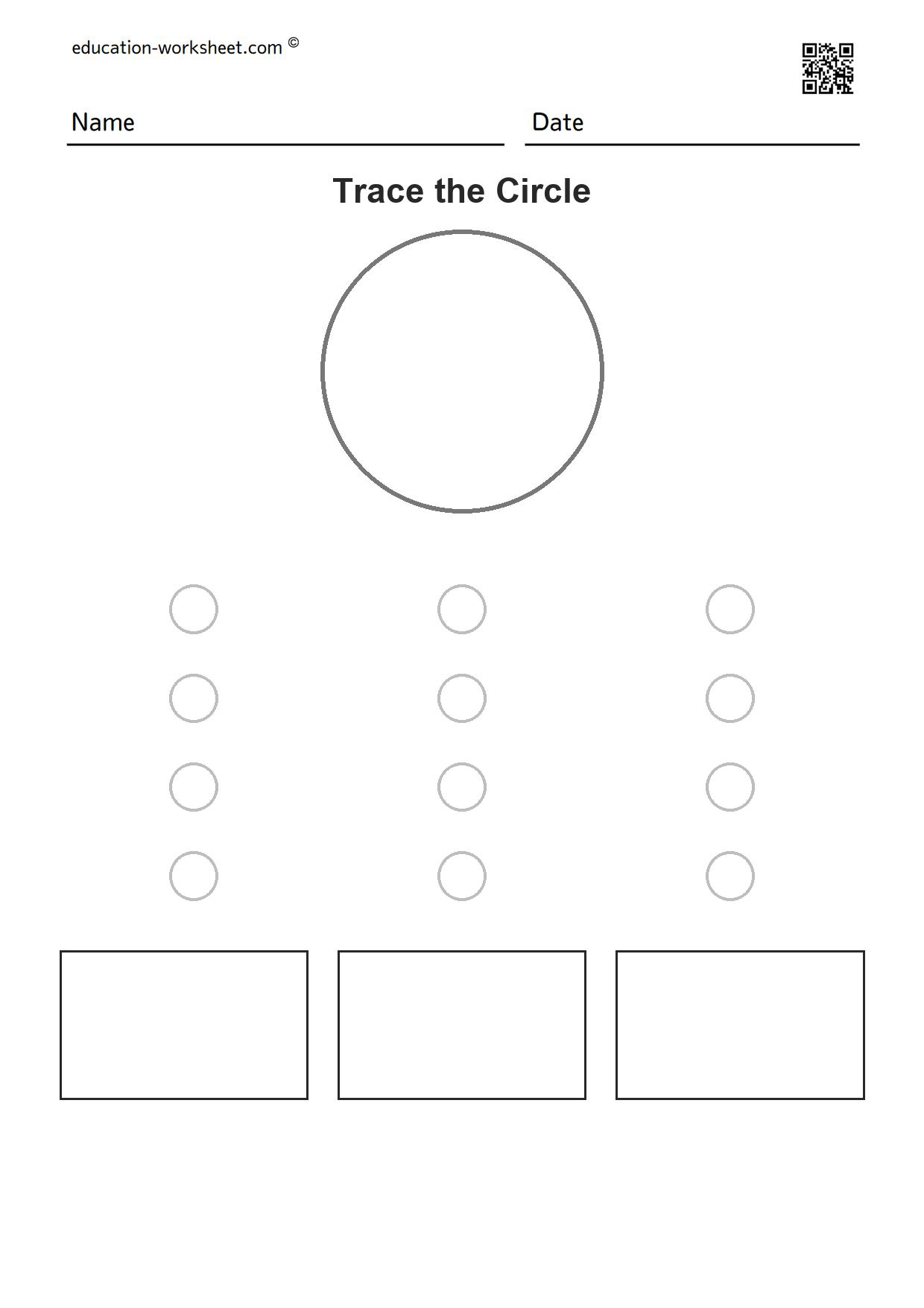
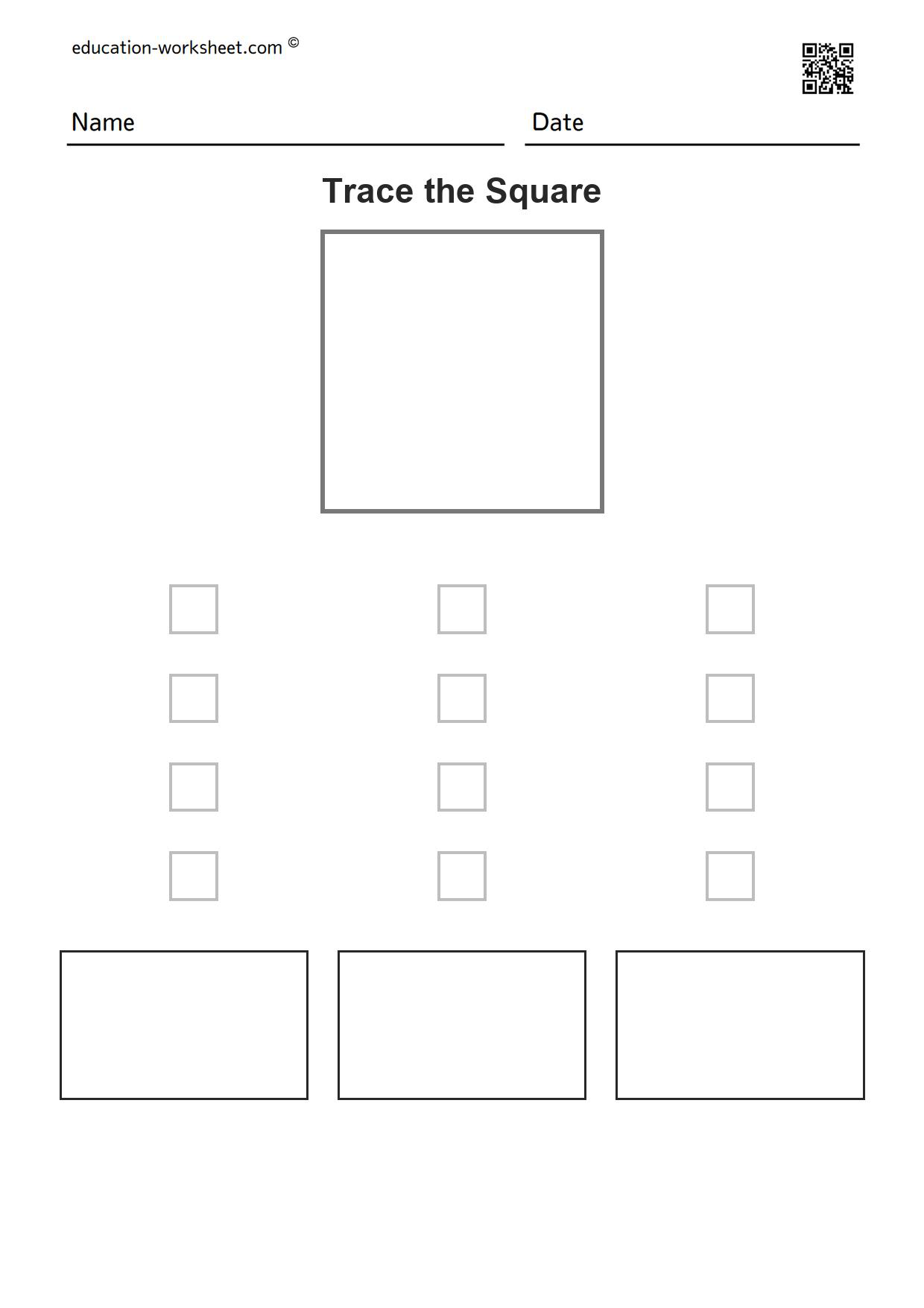
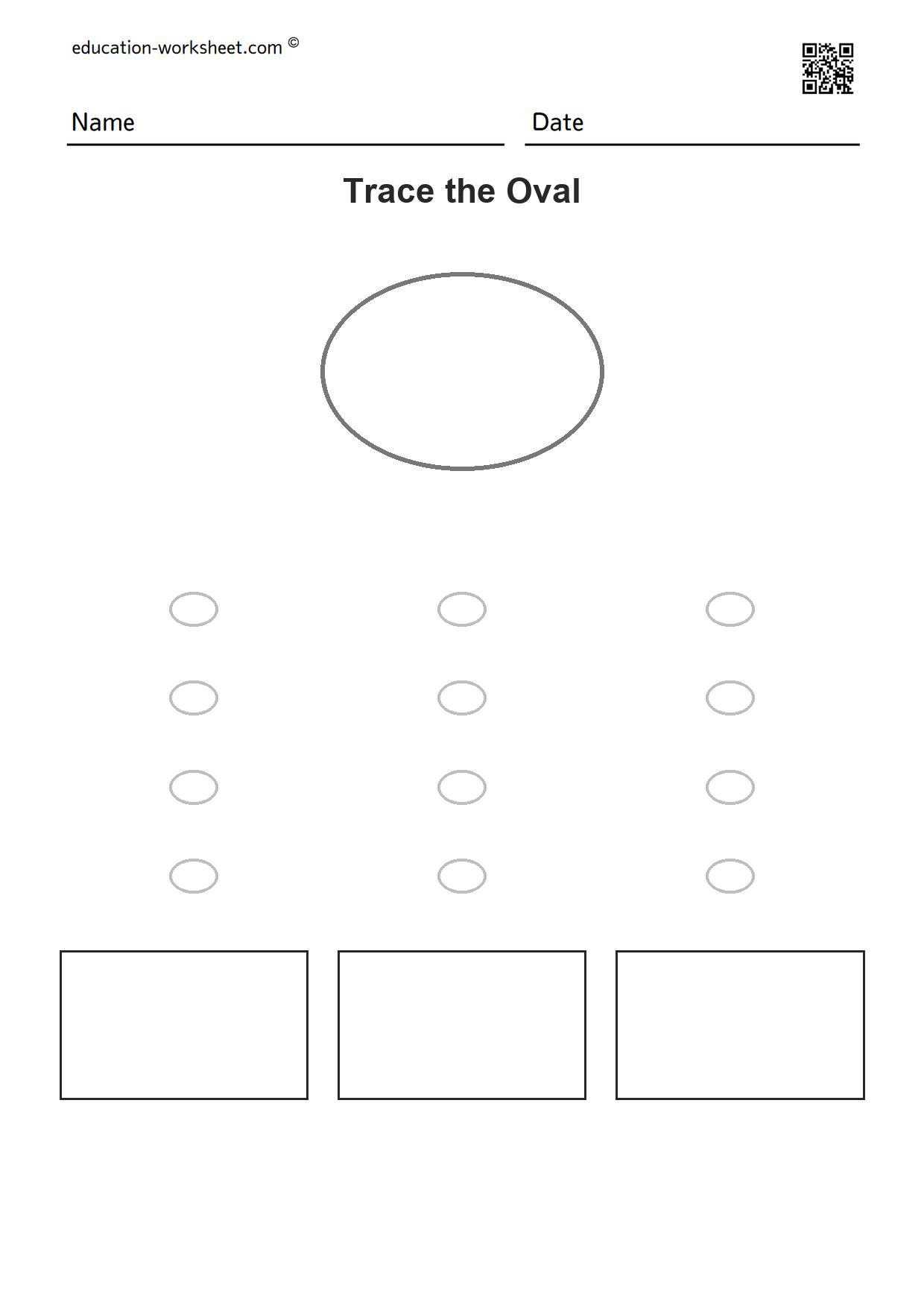
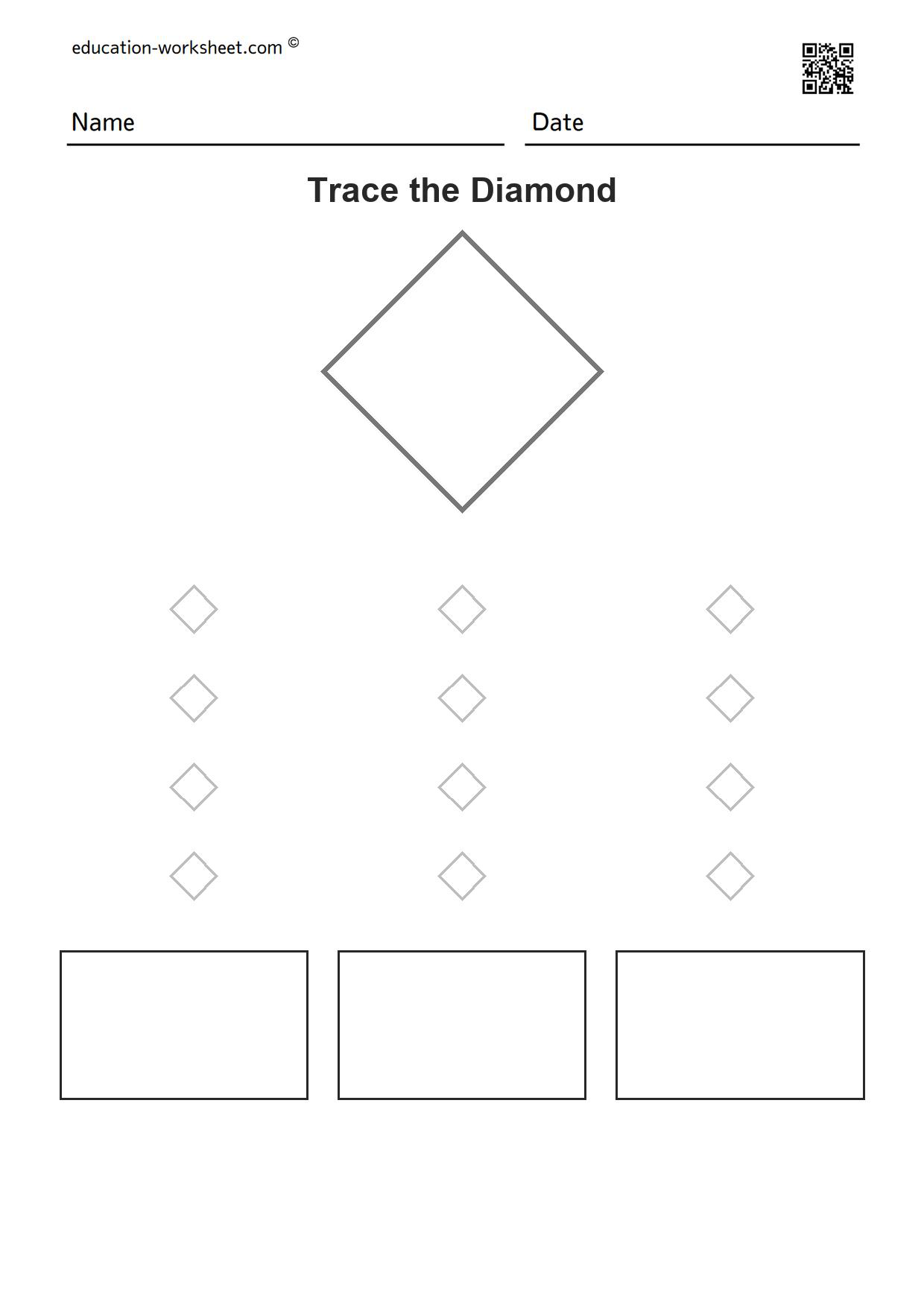
These free printable shape tracing worksheets give preschool children eight pages of practice, one shape on each page. Every page is built the same way: a large outline to trace first, then twelve small versions of the same shape to trace, and finally three empty boxes to draw the shape freehand with nothing to follow.
That last row of empty boxes is the part that matters. Tracing alone is pleasant and easy, and a child can do a great deal of it without ever learning to produce the shape themselves. Asking for three unaided attempts at the end of every page turns a tracing exercise into a drawing one, and it shows you straight away whether the shape has been learned or merely followed.
What Is in This Free Shape Tracing Worksheet Pack
- Eight printable worksheets: circle, square, triangle, rectangle, star, heart, oval and diamond.
- One large outline at the top of each page to trace first.
- Twelve small shapes to trace, arranged in a grid.
- Three blank boxes at the bottom for drawing the shape without help.
- Black and white throughout, so the pages cost almost nothing to print.
- A separate PDF for every shape – no sign-up, no email address, no cost.
The 8 Shape Tracing Worksheets
The shapes get harder down the list. There is no need to work through them in order, but starting with the circle and square is the usual route.
Worksheet 1 – Trace the Circle
A closed curve with no corners at all. Children usually find the circle easiest to trace and hardest to draw well freehand, because there is no straight edge to steady the pencil against.
Worksheet 2 – Trace the Square
Four straight sides the same length and four square corners. The corners are the work here: most children round them off on the first few attempts.
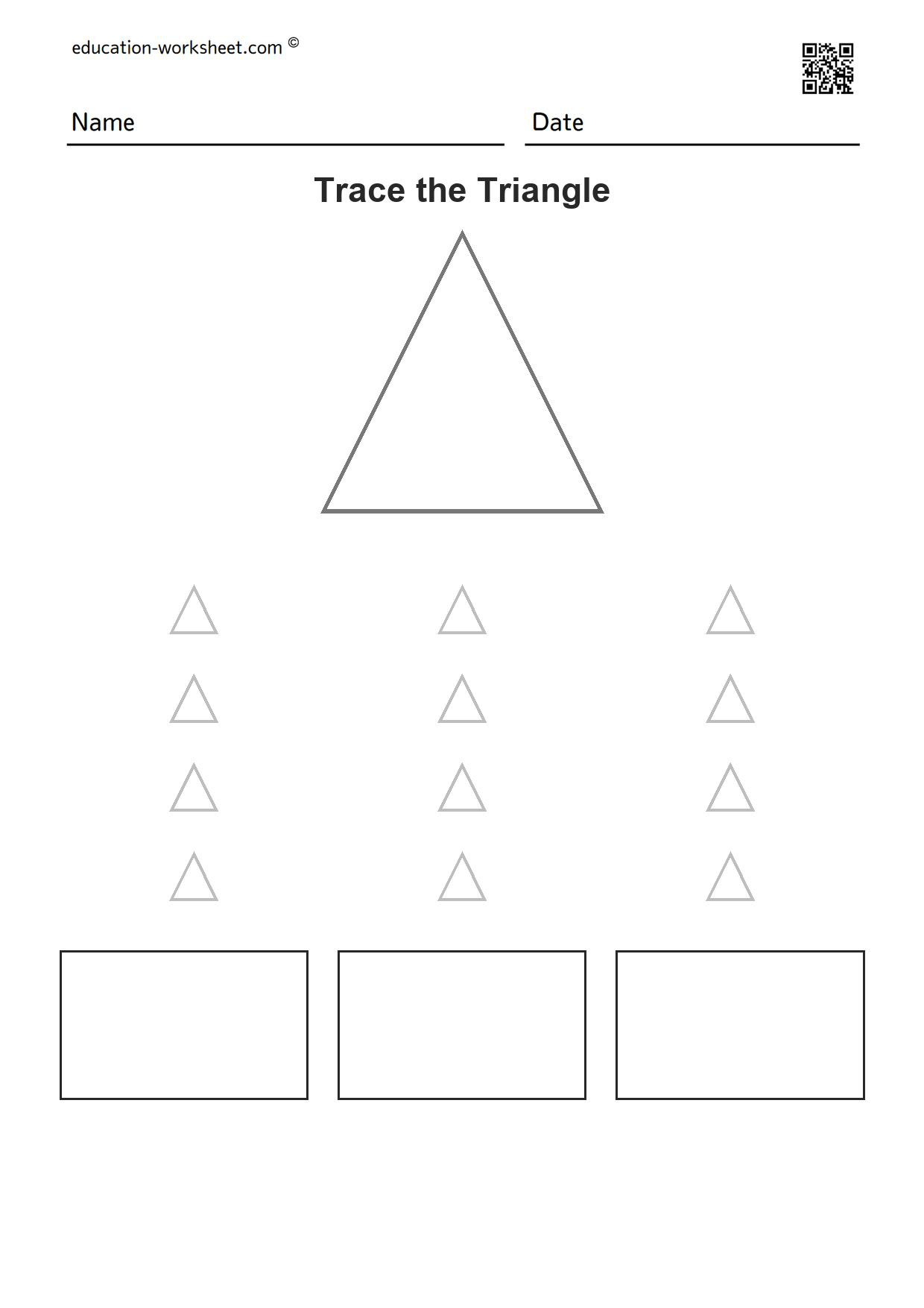
Worksheet 3 – Trace the Triangle
Three straight sides and three corners. Watch for children who lift the pencil at every corner – that is fine at first, but joining two sides in one movement is the goal.
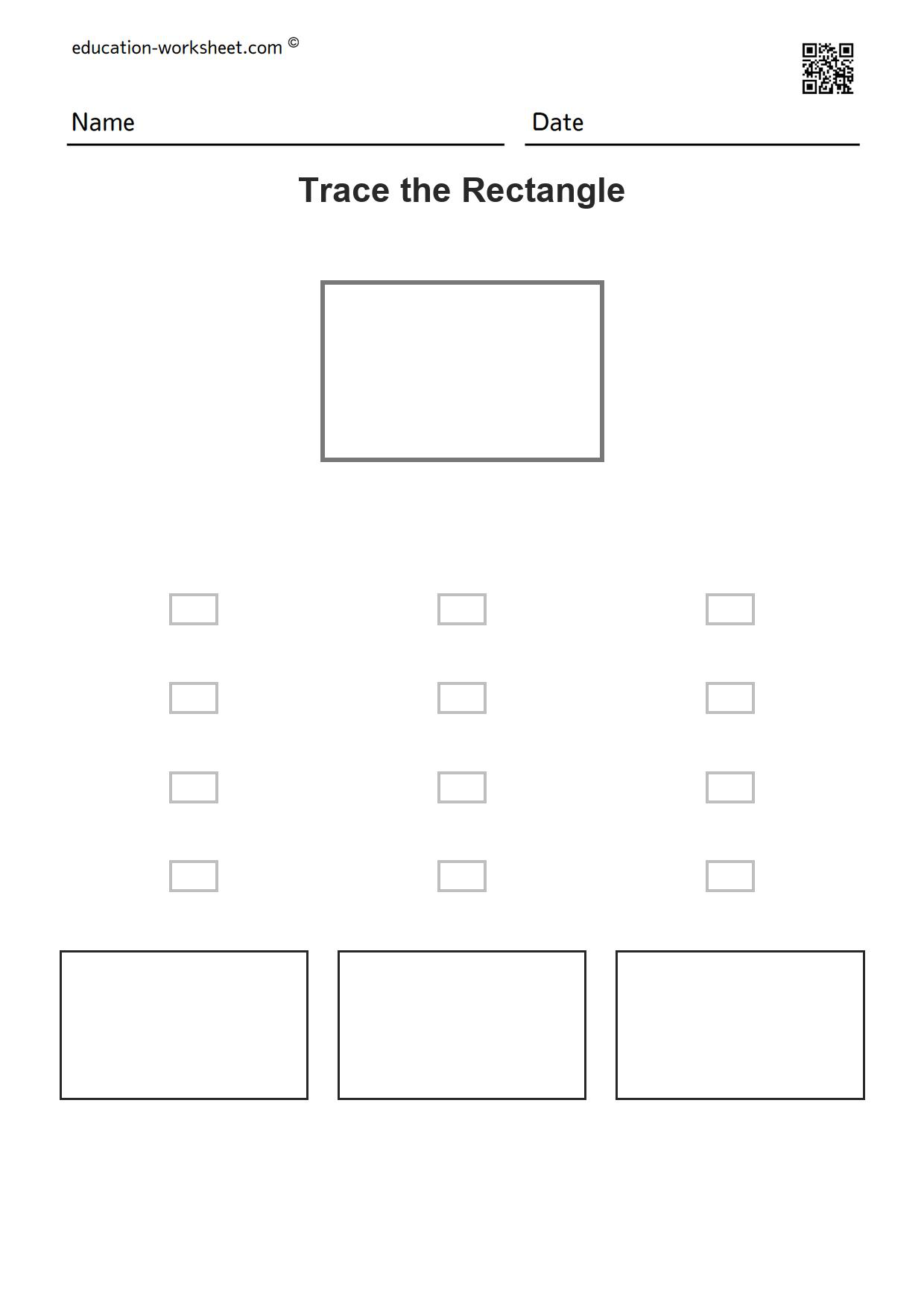
Worksheet 4 – Trace the Rectangle
Four corners again, but two long sides and two short ones. Drawing it right after the square makes the difference obvious without anyone having to explain it.
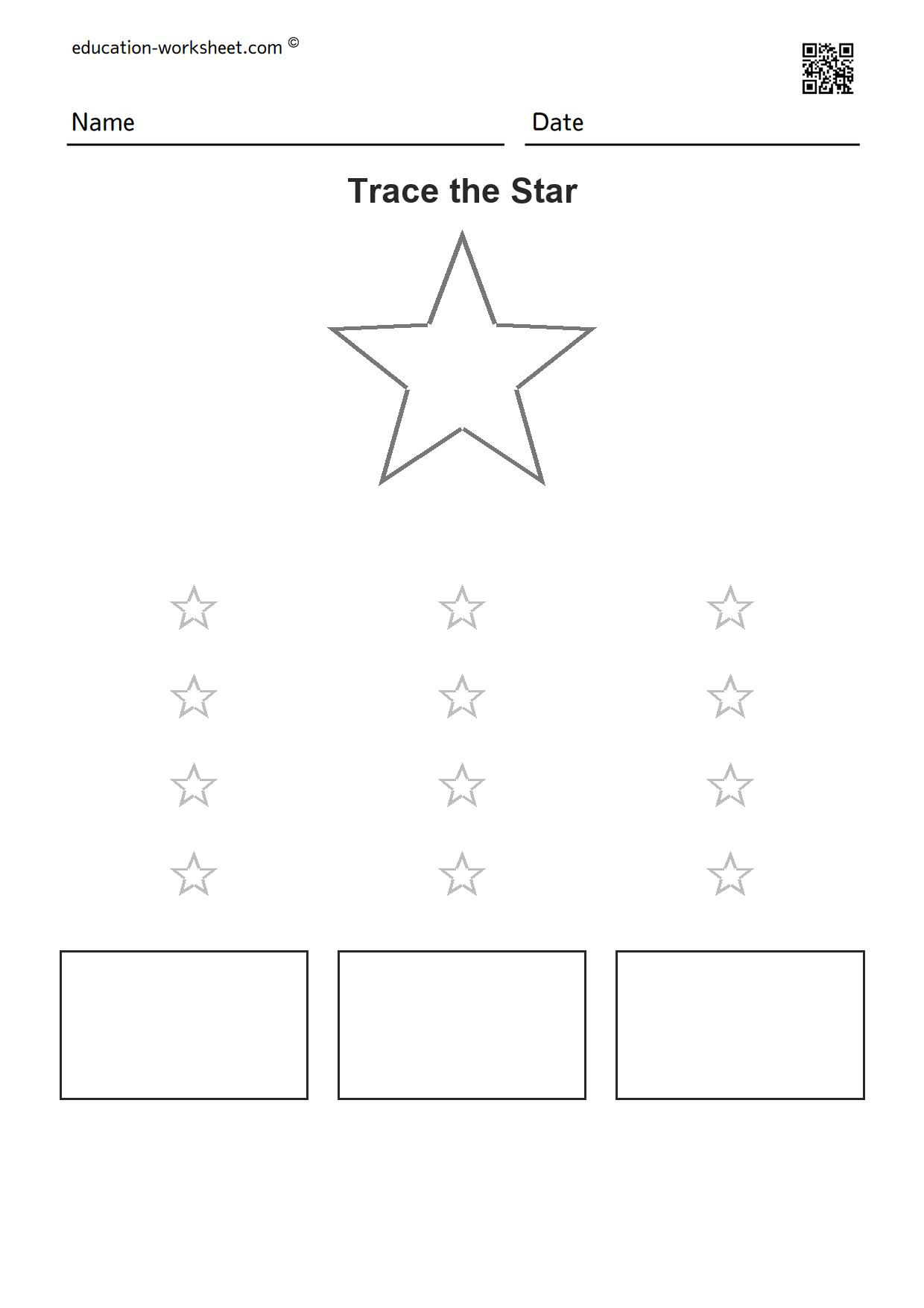
Worksheet 5 – Trace the Star
The hardest shape in the pack, with ten corners and a change of direction at every one. Expect messy results and praise the attempt rather than the outcome.
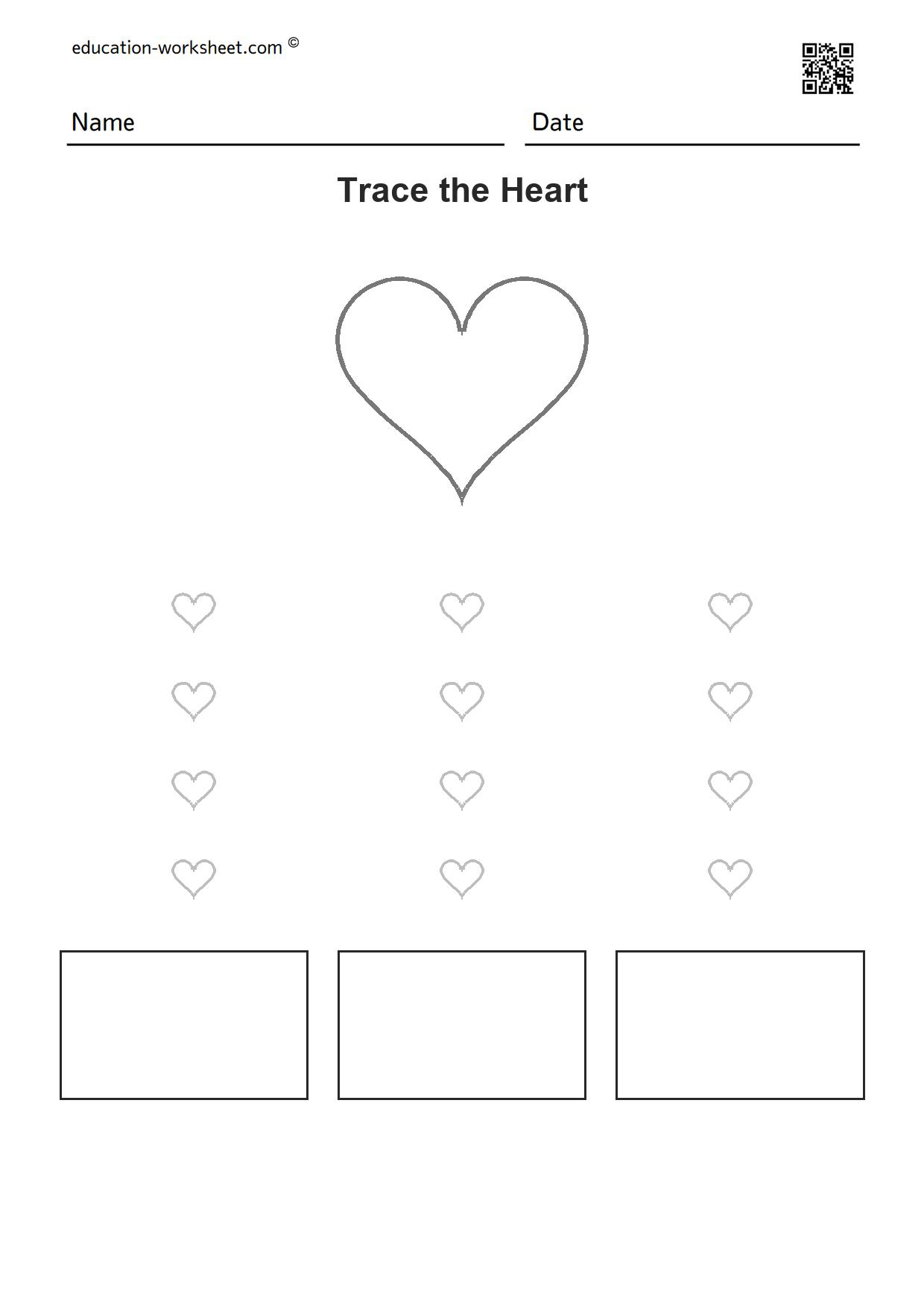
Worksheet 6 – Trace the Heart
Two curves and one point. It is the first shape here that is not a plain geometric figure, and children are usually keen to get it right because they already care about it.
Worksheet 7 – Trace the Oval
A stretched circle. Putting it after the circle lets a child feel the difference in their hand rather than having it described to them.
Worksheet 8 – Trace the Diamond
A square stood on its corner – formally a rhombus. Slanted straight lines are surprisingly hard for a young hand, which is why this one comes last.
Why Tracing Shapes Before Letters
Every letter of the alphabet is built from the same handful of movements: a straight line, a curve, a corner, a slant. A child who can draw a square has the movements for E, F, H, L and T. One who can draw a circle has the beginnings of a, c, e, o and s. Shapes are simply a friendlier place to practise those movements, because nobody minds if a triangle comes out lopsided.
There is a second reason to start here. A child tracing a letter is trying to do two things at once – control the pencil and remember which letter it is. Shapes remove the second job entirely, so all the effort goes into the hand.
When Children Are Ready for These Worksheets
These pages suit children from about three to five years old. A child needs to be able to hold a pencil or crayon and make a deliberate mark; nothing else. Start with the circle, the square and the triangle, and leave the star and diamond until the others are comfortable.
In American classrooms this sits alongside the kindergarten geometry standards on naming and drawing shapes, including drawing shapes from memory rather than copying them (Common Core K.G.A.2 and K.G.B.5). The three blank boxes on each page are exactly that part of the standard.
How to Use These Worksheets
- Print one page on ordinary paper and say the shape’s name out loud together.
- Trace the large outline first, slowly, with a finger before a pencil if your child is very young.
- Work through the twelve small shapes. Stopping halfway is fine.
- Do the three blank boxes last, and do not help. A wobbly unaided triangle is worth more than a perfect traced one.
- Find the shape somewhere in the room afterwards – a clock, a window, a slice of pizza. That is what fixes the name.
Three Things to Watch For
Tracing beautifully but freezing at the blank boxes
Very common, and not a problem. It simply means the shape is not yet in the child’s head. Go back to the large outline, trace it once more together, then cover it and try again.
Rounding off the corners
Squares and triangles come out with soft corners for months. Saying “stop – turn – go” at each corner while your child draws helps more than any amount of correcting afterwards.
An awkward pencil grip
Worth noticing now, while the work is easy and low-stakes. A shorter crayon or a golf pencil encourages a proper grip on its own, without anyone having to nag about it.
Printing Tips
- Choose Actual size or Fit to page so the shapes keep their proportions.
- Each page fills one sheet and works on both US Letter and A4 paper.
- Slip a page into a plastic wallet and use a dry-wipe pen to reuse it with more than one child.
- Greyscale printing works, though the colors do some of the teaching on these pages.
Frequently Asked Questions
What age are these shape tracing worksheets for?
About three to five years old – toddlers, preschool and pre-K.
Which shapes are included?
Circle, square, triangle, rectangle, star, heart, oval and diamond – eight pages in all.
Should my child do the blank boxes every time?
Yes if they will. Drawing the shape unaided is the part that actually teaches it; tracing alone is practice for the hand.
Do I need to sign up to download these?
No. Every PDF downloads immediately, with no account and no cost.
Can I use these in my classroom?
Yes, they are free to print for home and classroom use. Please do not sell them or re-host the files elsewhere.
More Free Shape and Tracing Worksheets
- Free Shape Recognition Worksheets – Circle the Shapes
- Free Shape Tracing Worksheets for Preschool and Kindergarten
- Free Pattern Worksheets for Kindergarten – What Comes Next
- Free Line Tracing Worksheets for Preschool and Kindergarten
- Free 2D Shapes Worksheets – Count Sides and Corners
- Free Shape Words Worksheets – Read and Write Shape Names