- Free Numbers to 100 Worksheets for Grade 1 – Hundred Chart
- Numbers to 100 (start here)
- Hundred chart (Set 1)
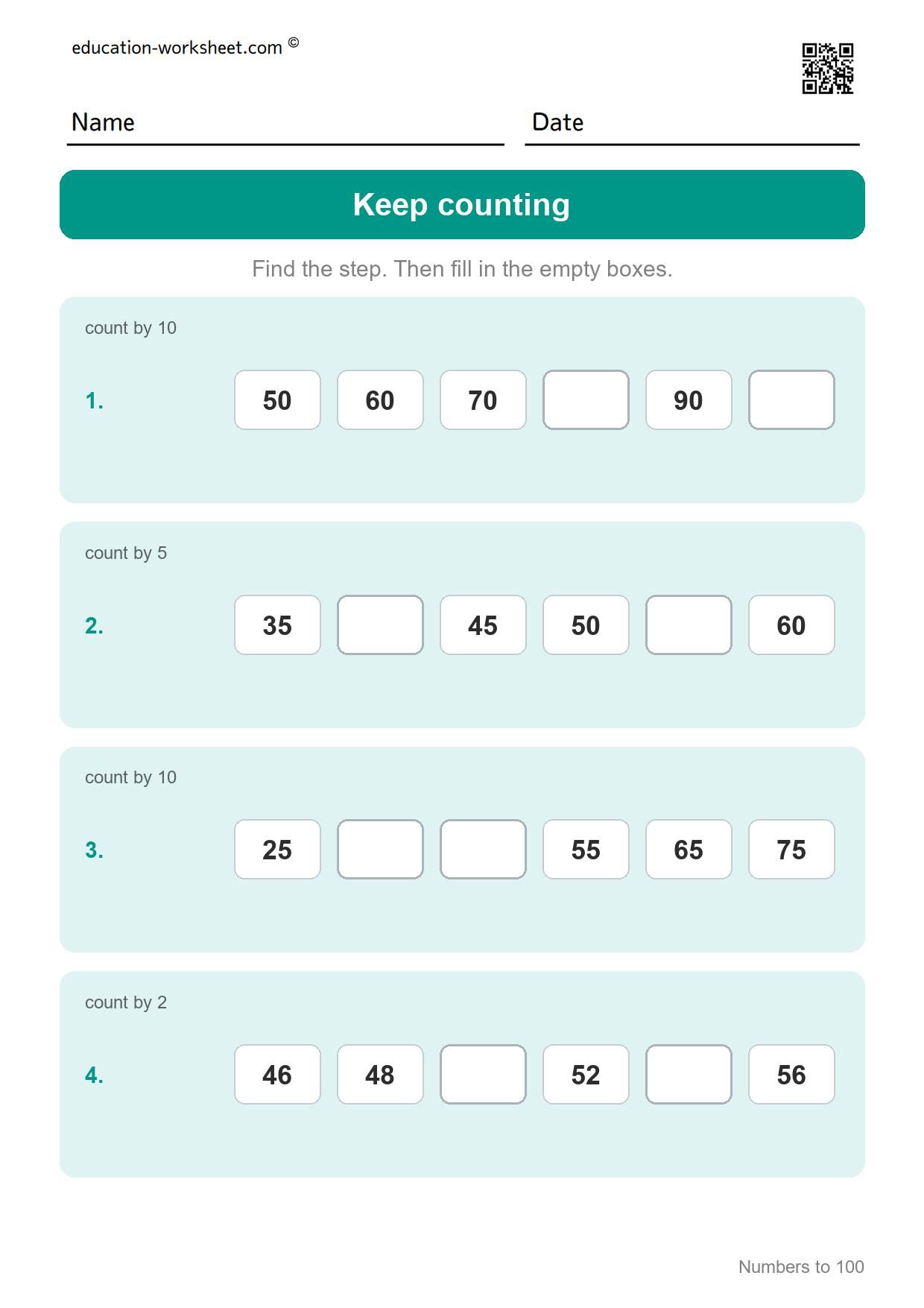
- Keep counting (Set 2)
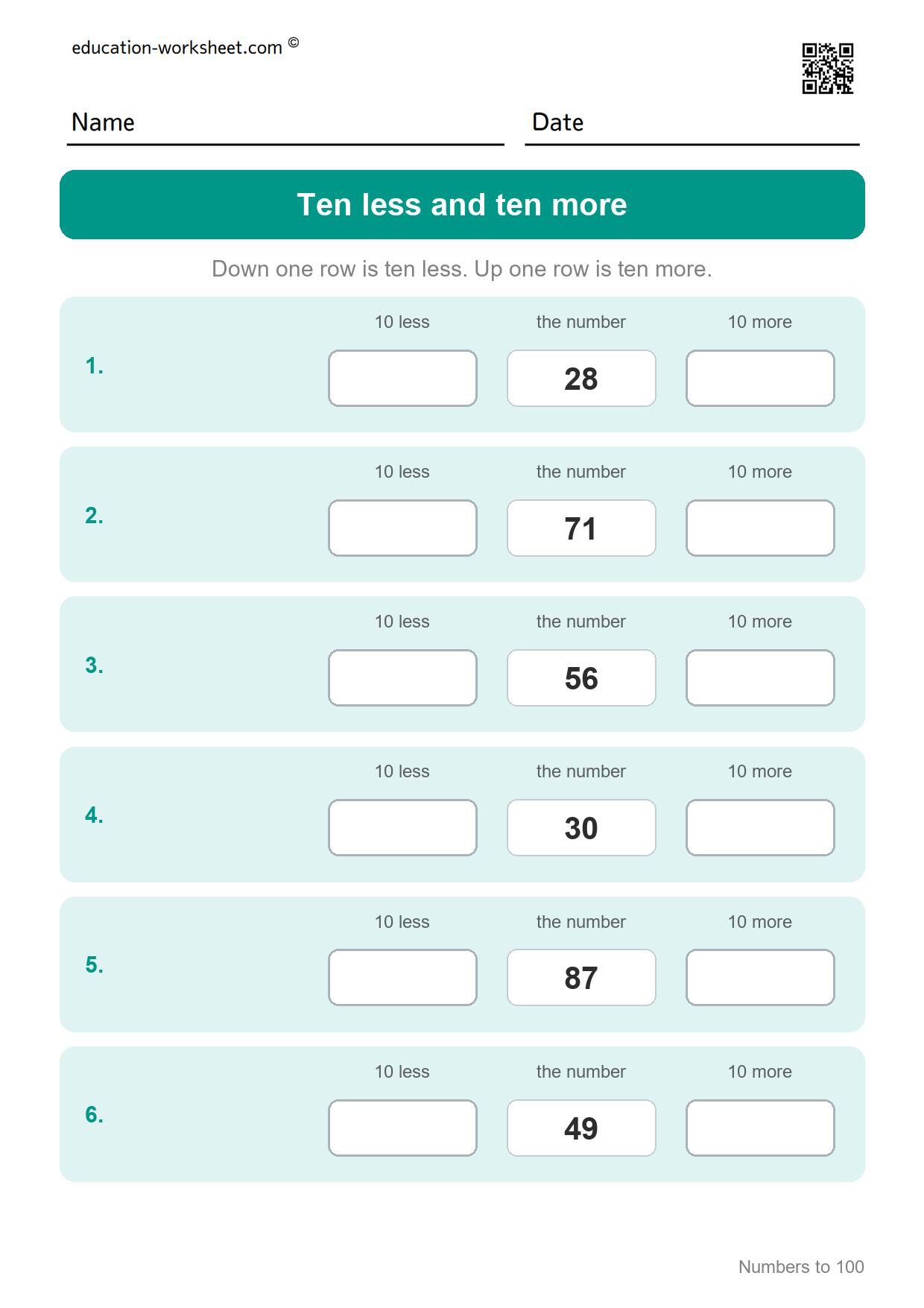
- Ten less and ten more (Set 3)
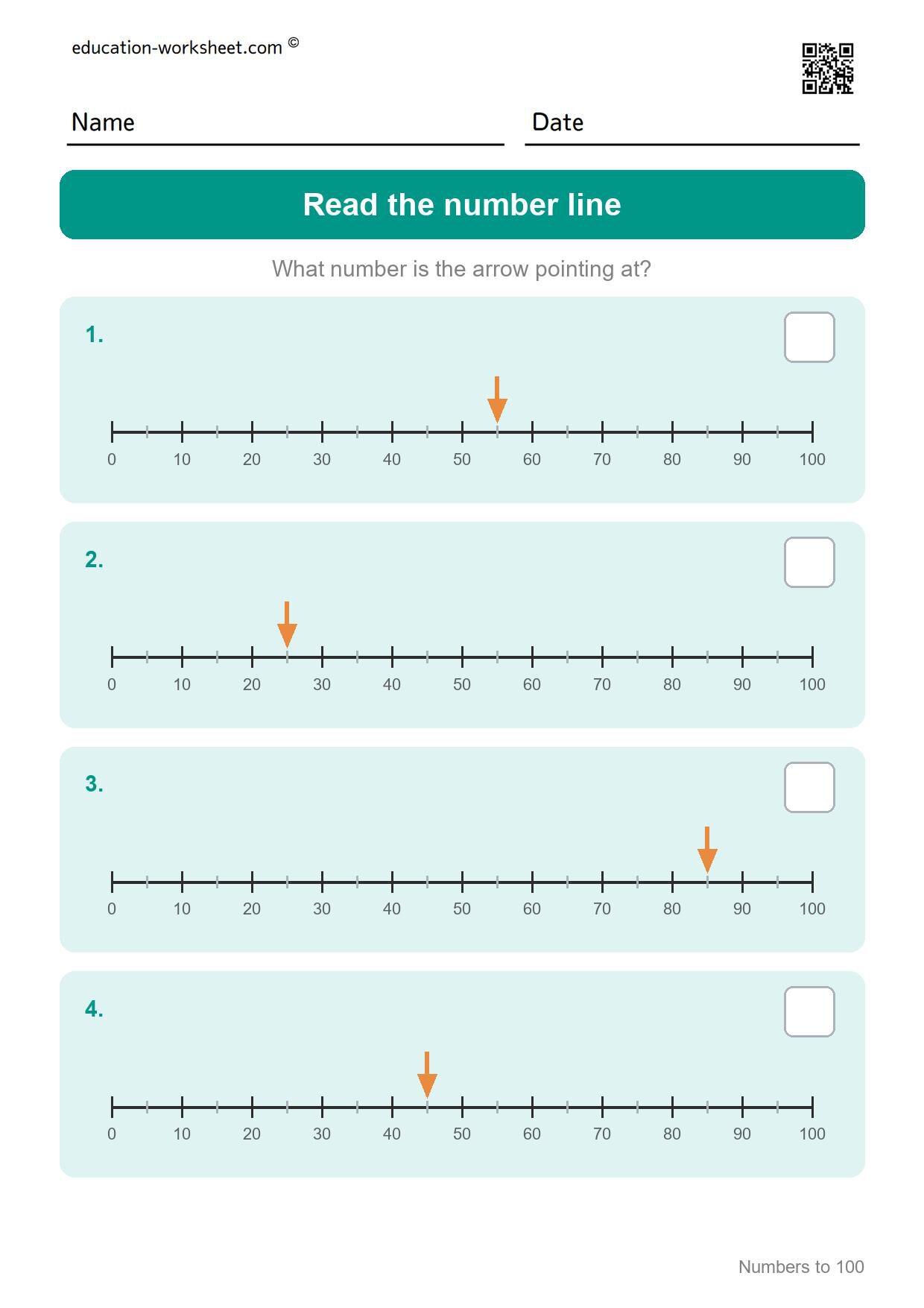
- Read the number line (Set 4)
- Hundred chart (Set 5)
- Keep counting (Set 6)
- Ten less and ten more (Set 7)
- Read the number line (Set 8)
- Hundred chart (Set 9)
- Keep counting (Set 10)
- Ten less and ten more (Set 11)
- Read the number line (Set 12)
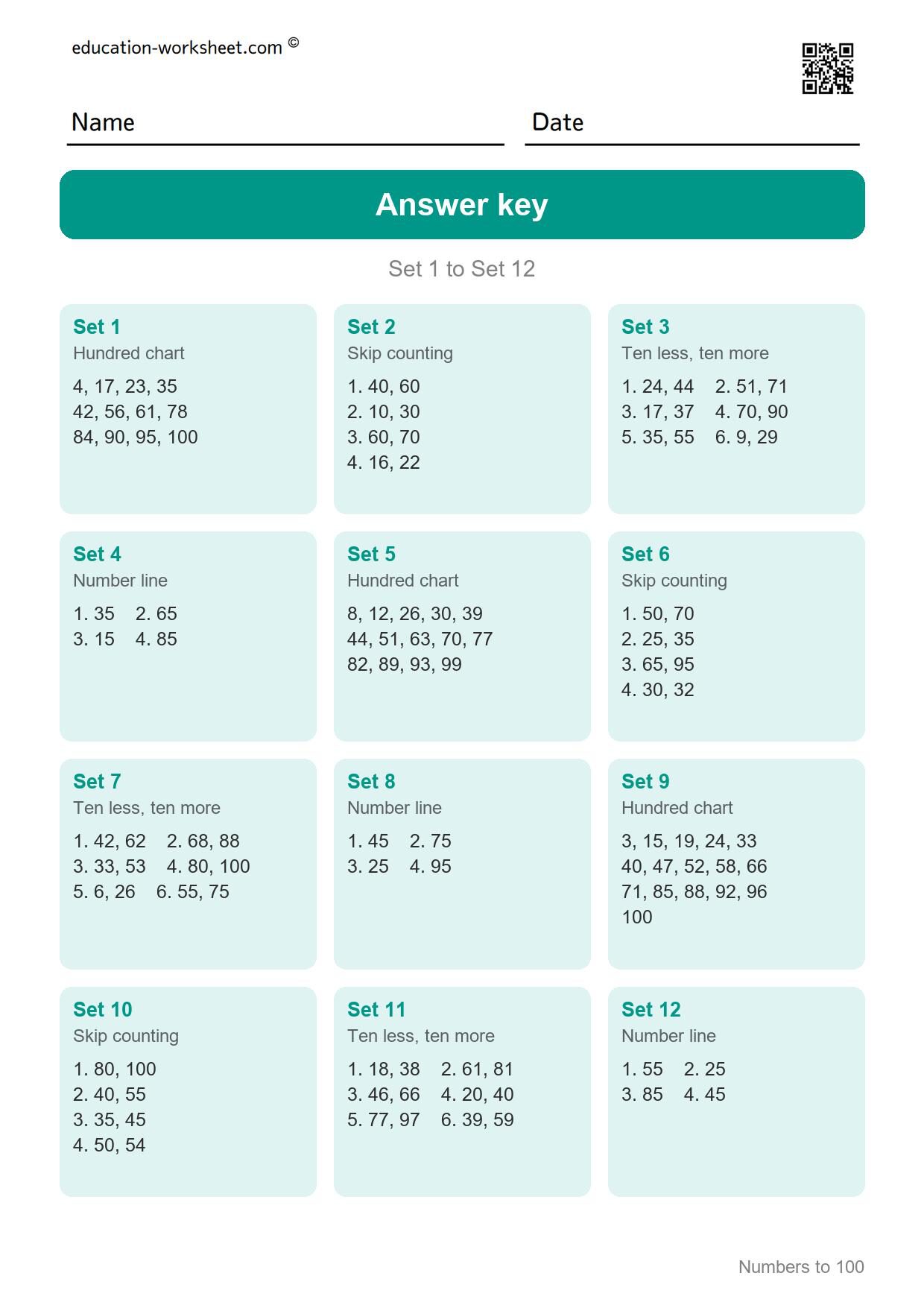
- Answer key
- Numbers to 100: reading a hundred chart the way it is built
- What your child is actually learning
- How to work through these pages
- The mistakes to expect
- What to teach next
- Questions parents ask
- Should my child be able to count to 100 by heart?
- Why does the chart go to 100 when the standard says 120?
- My child can count on but cannot add ten quickly. What helps?
- More free worksheets
Free Numbers to 100 Worksheets for Grade 1 – Hundred Chart
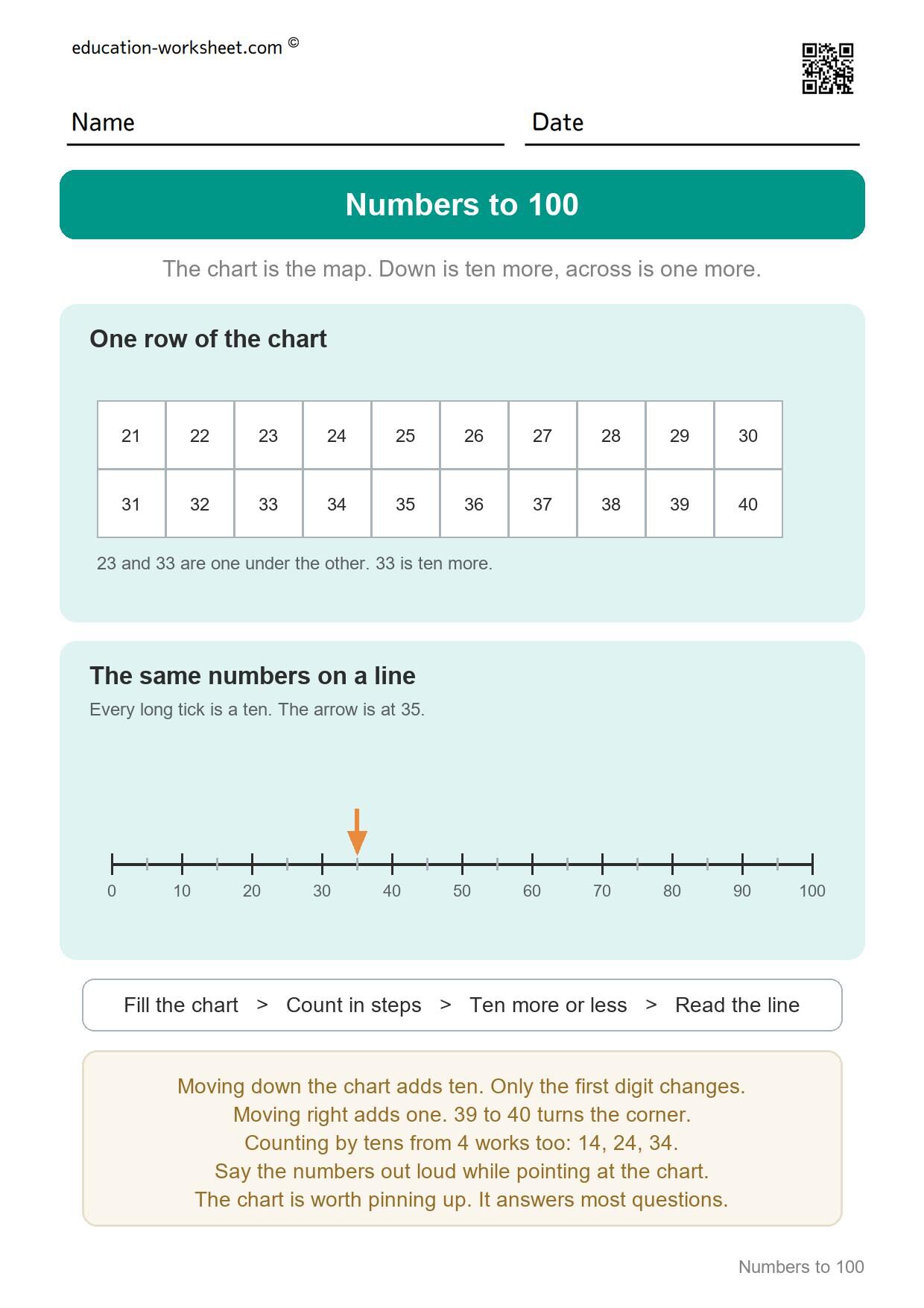
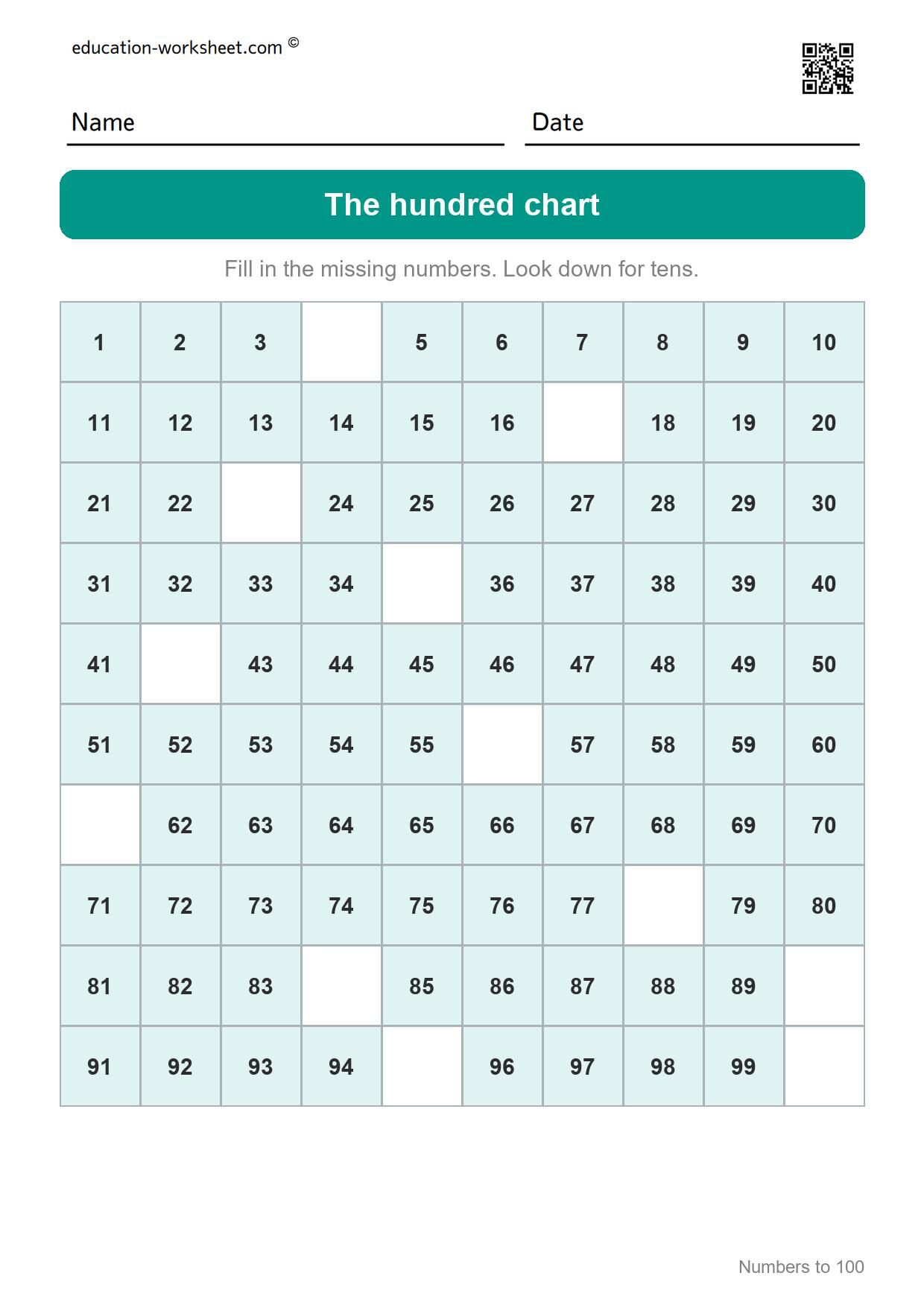
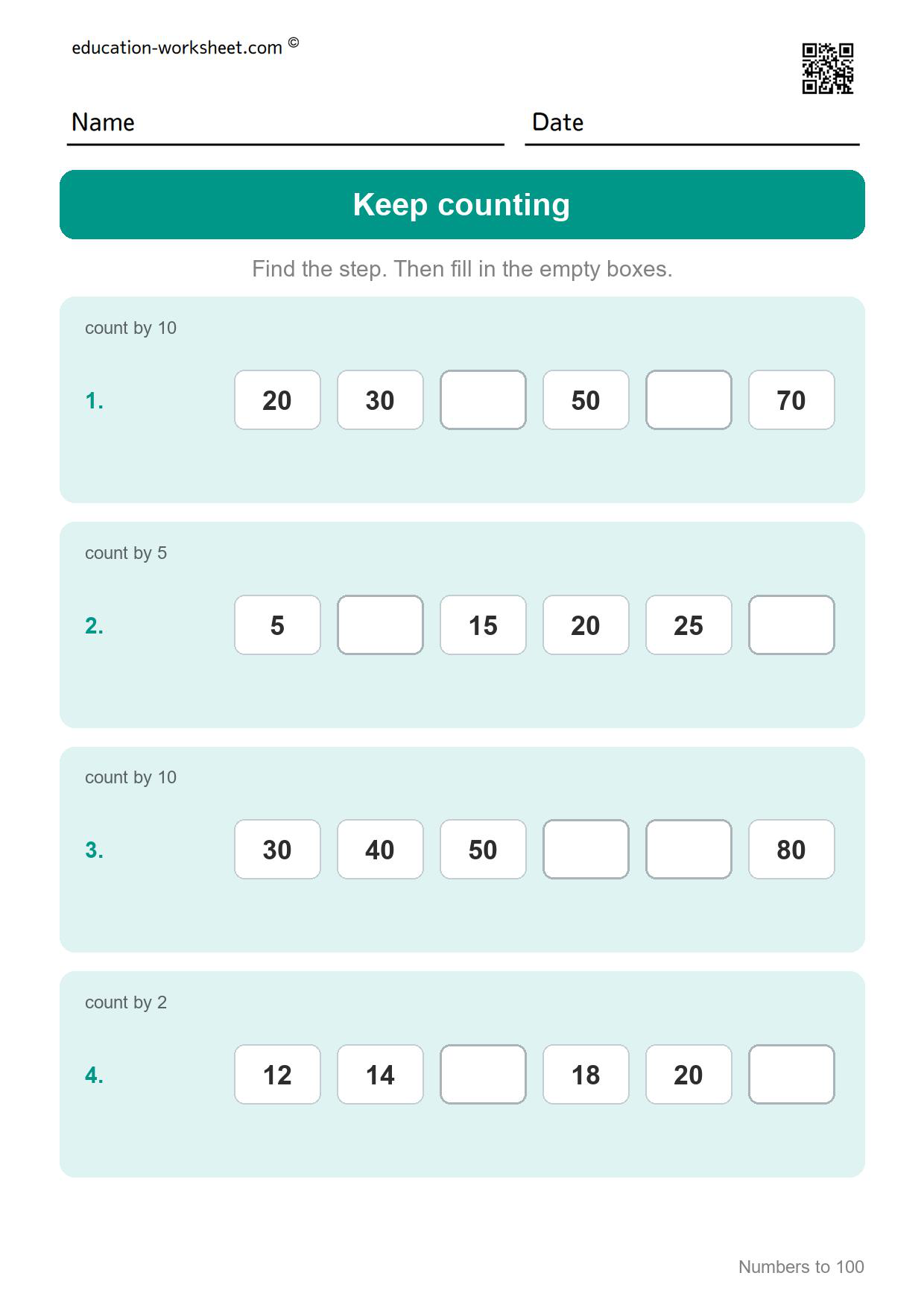
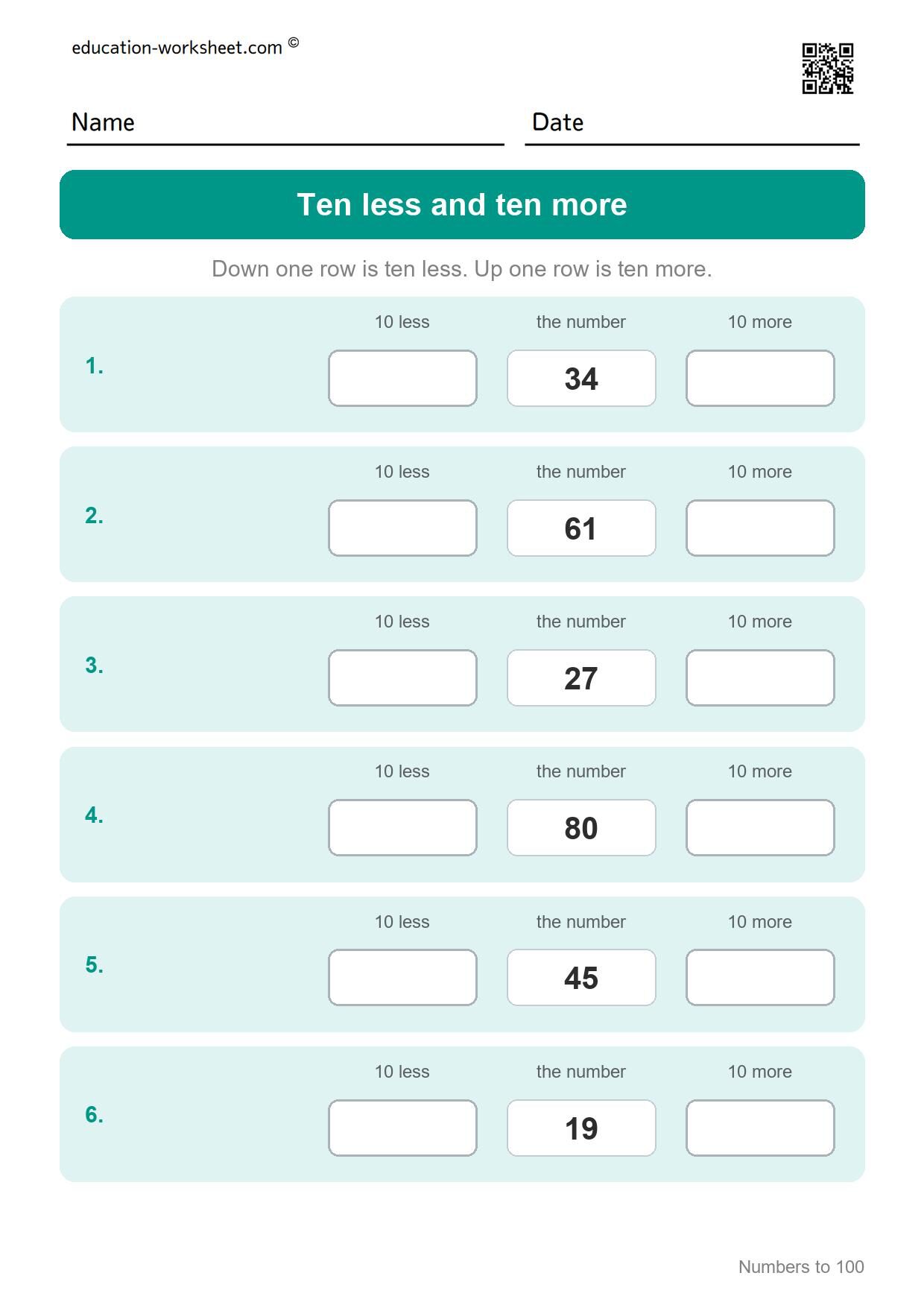
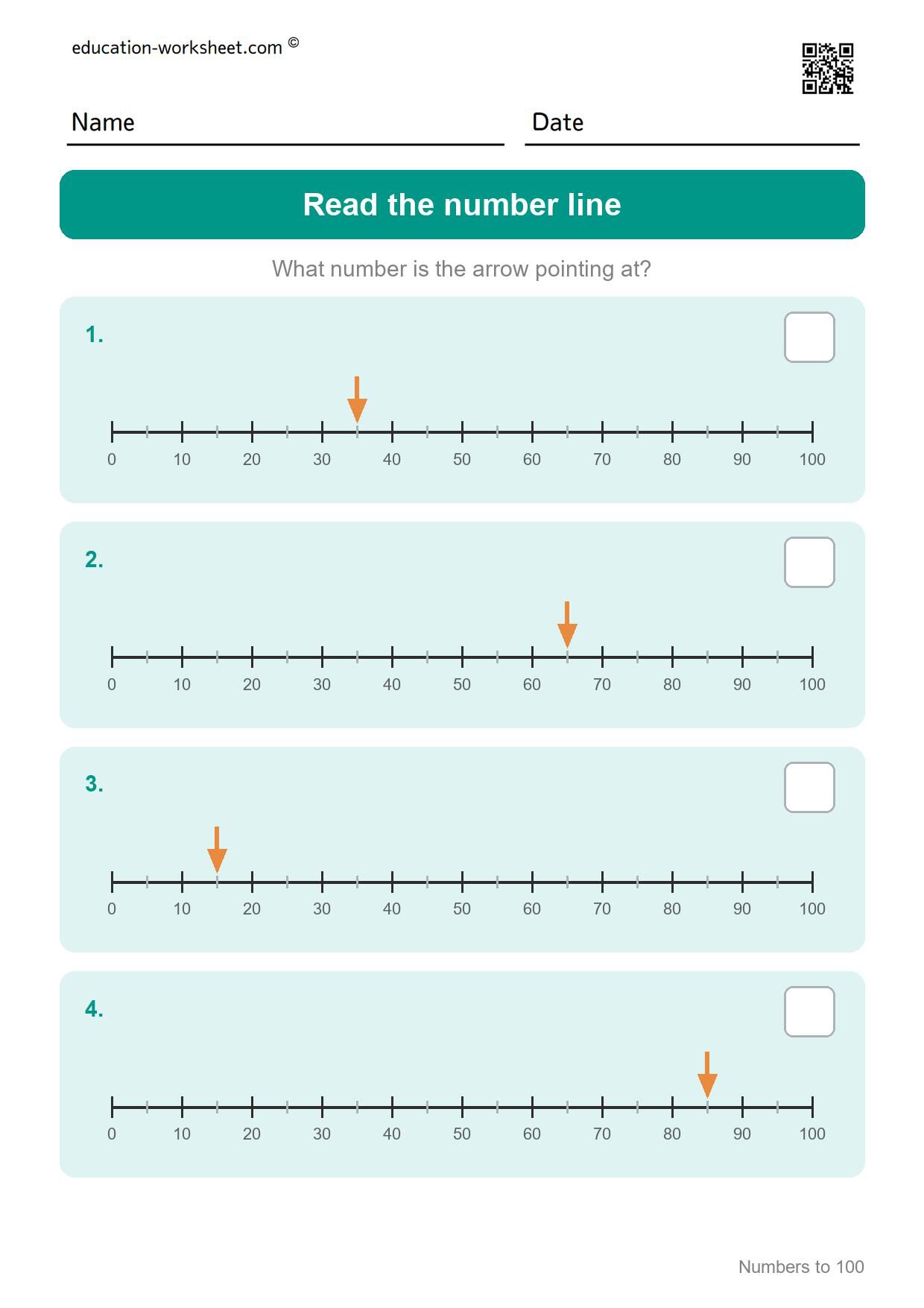
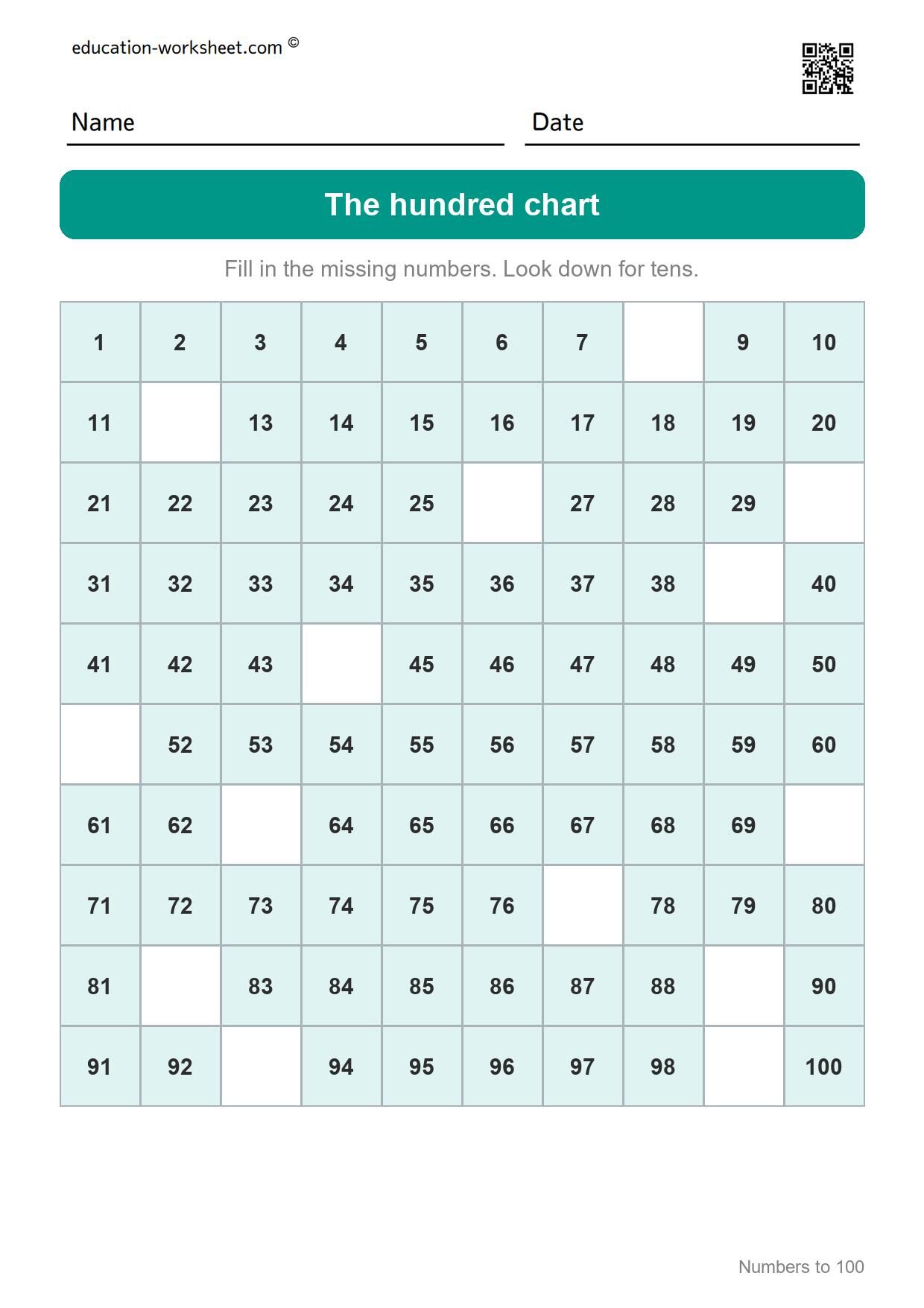
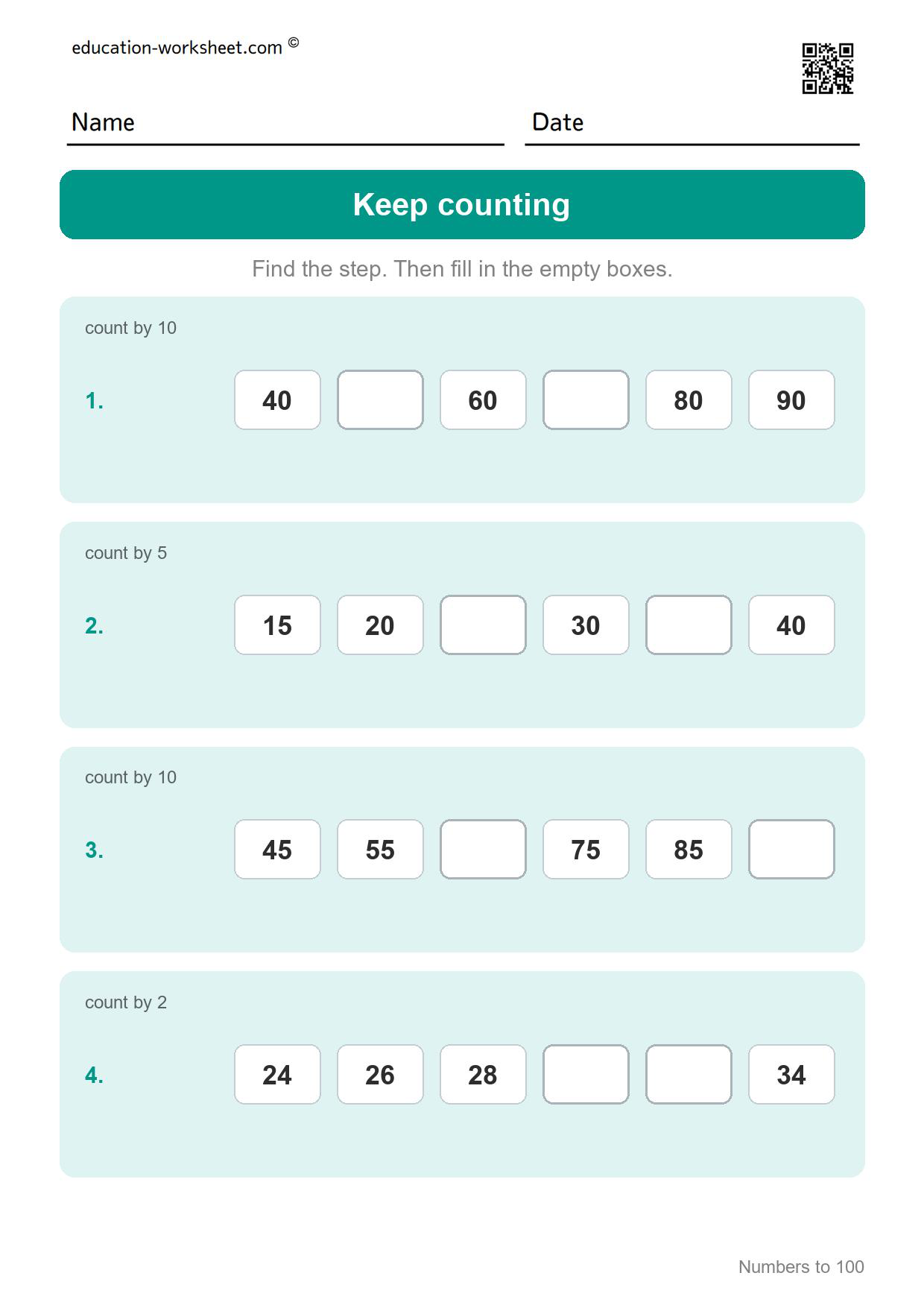
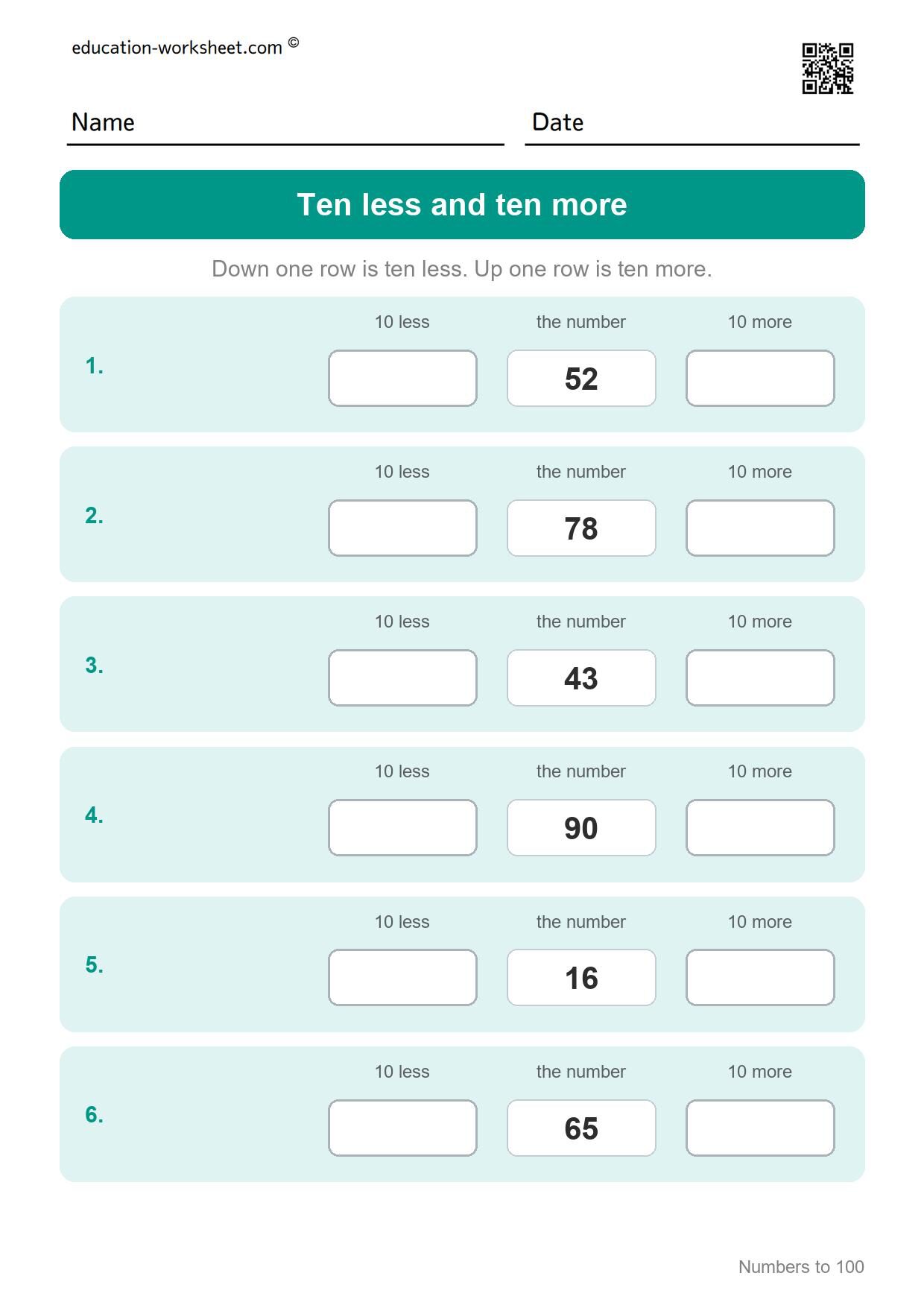
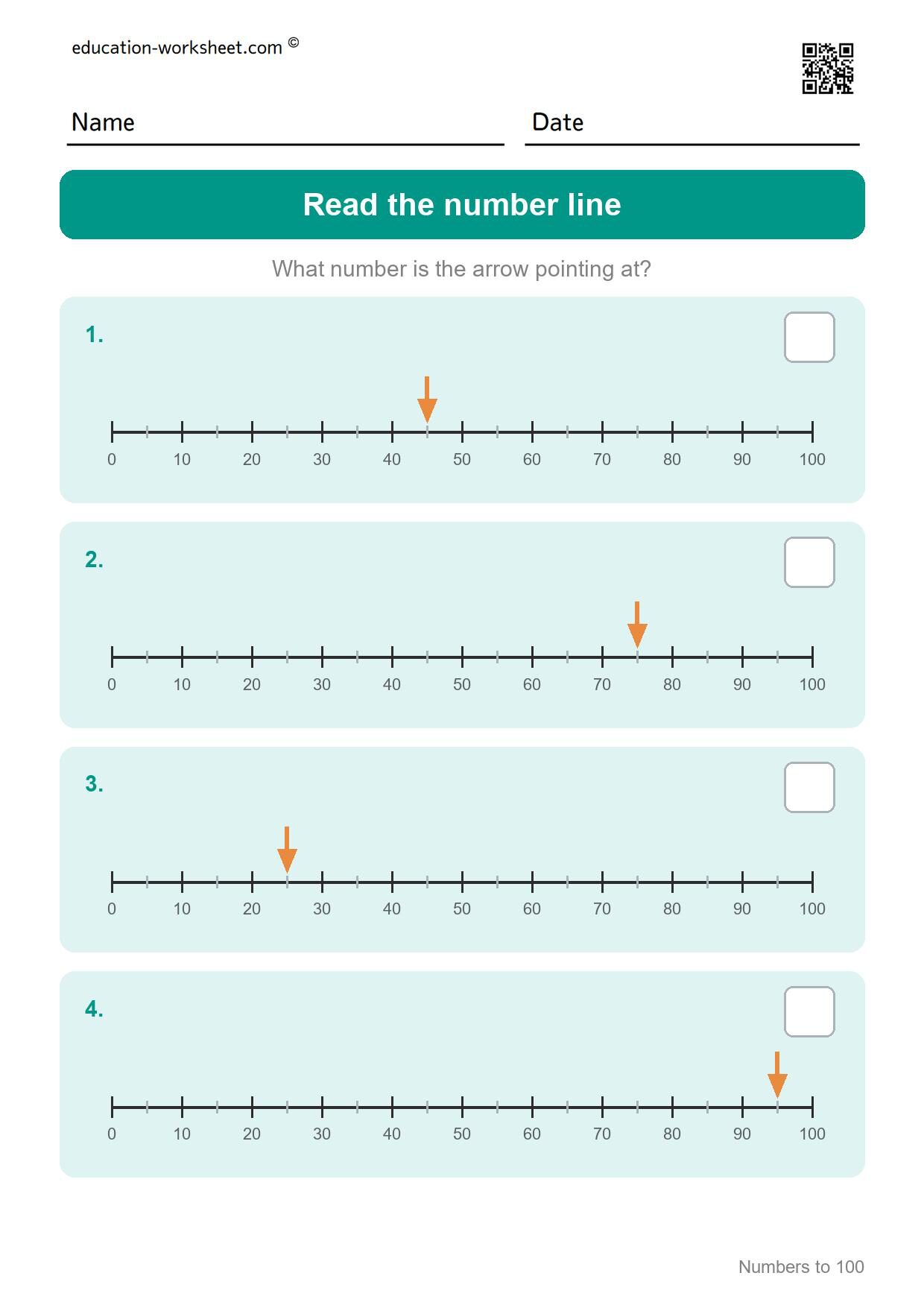
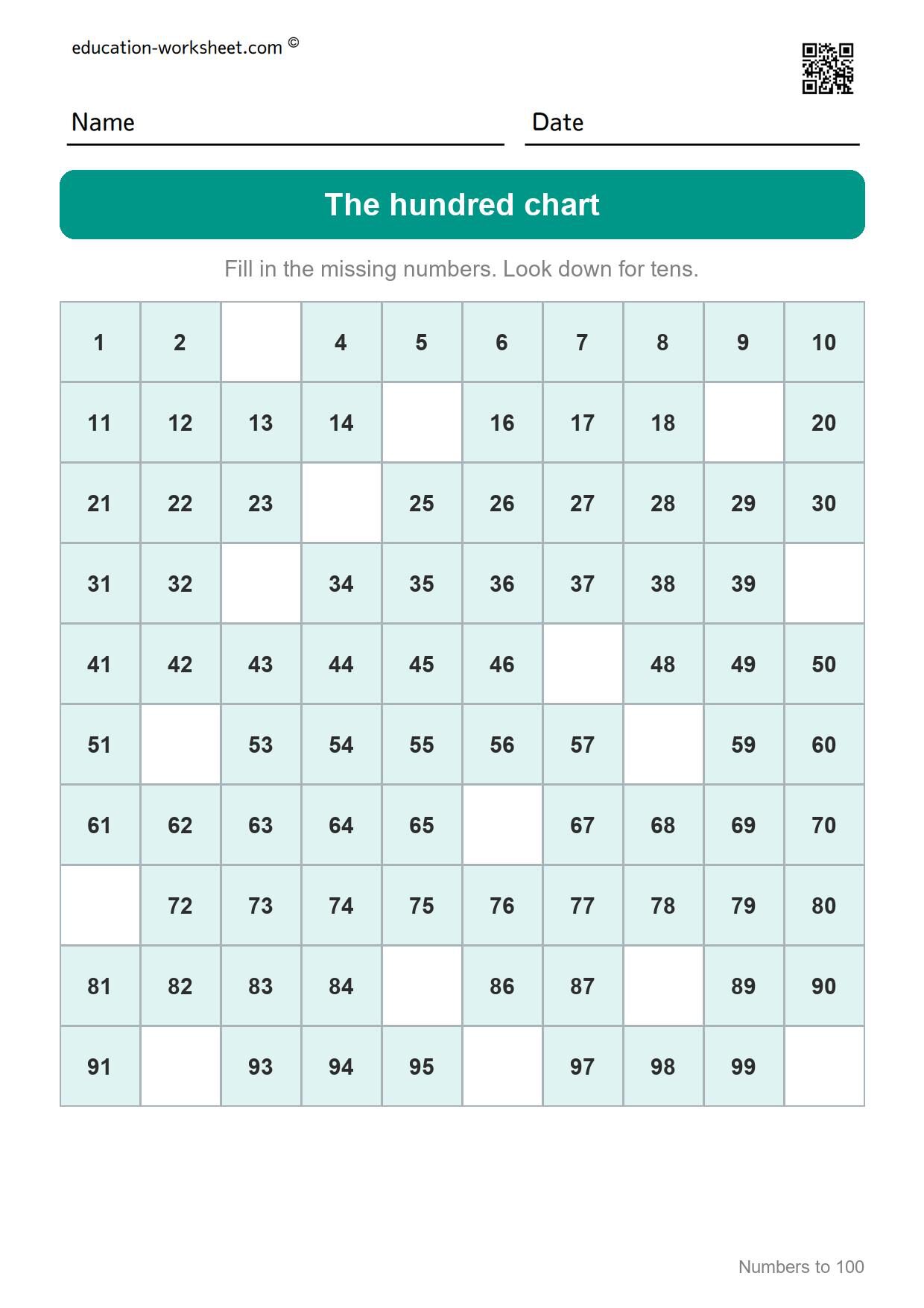
These free printable numbers to 100 worksheets give first graders the one picture that makes large numbers make sense: the hundred chart. Kindergarten stops at twenty, and a child who only knows how to count one at a time has no way of seeing that fifty seven sits ten below forty seven. On the chart that fact is visible, so the pages are built around it. Three full hundred charts with missing numbers come first, with the gaps getting harder each time; then chains that continue a count in steps of two, five and ten; then a table where the child writes the number that is ten less and ten more; and finally a number line marked in fives where an arrow points at a number to read off. Every task is the same idea seen from a different angle, so a child who gets stuck on one page has three other ways in. The notes on the first sheet point out the two moves that matter: going down the chart adds ten and changes only the first digit, going right adds one. The last sheet is an answer key for all twelve pages. Just download, print, and pin the chart up somewhere!
Numbers to 100 (start here)
Hundred chart (Set 1)
Keep counting (Set 2)
Ten less and ten more (Set 3)
Read the number line (Set 4)
Hundred chart (Set 5)
Keep counting (Set 6)
Ten less and ten more (Set 7)
Read the number line (Set 8)
Hundred chart (Set 9)
Keep counting (Set 10)
Ten less and ten more (Set 11)
Read the number line (Set 12)
Answer key
Numbers to 100: reading a hundred chart the way it is built
A hundred chart looks like a list of numbers and is really a picture of how our number system is put together. Every row is a ten. Moving one square right adds one; moving one square down adds ten. Once a child sees that, the chart stops being something to recite and becomes something to calculate with.
What your child is actually learning
First grade asks children to count to 120 and to understand that a two-digit number is made of tens and ones. The chart makes both concrete. It also exposes the place where English is unhelpful: in most of the number system the tens are said first, as in fifty-three, but the teen numbers reverse it, so fourteen says the four before the ten. Almost every reversal error a child makes traces back to this.
How to work through these pages
Use the chart as a tool rather than a poster. Ask your child to put a finger on 34 and jump down one square, then say what happened to the number. Do it again from a different starting point until they say “it goes up by ten” without prompting. Filling in missing squares is more useful than reading the full chart aloud, because a gap forces the child to use the structure instead of the sequence.
The mistakes to expect
- Reading 47 as “four seven” rather than forty-seven. This shows the digits are being read as separate symbols rather than as tens and ones.
- Teen number reversals: writing 41 for fourteen. Extremely common in first grade and traceable to the way the words are said.
- Getting stuck at the end of a row. A child who says “…58, 59” and then pauses is relying on the count rather than the structure.
- Confusing 13 and 30, or 15 and 50, which sound alike when spoken quickly. Say them slowly and exaggerate the ending.
What to teach next
Comparing two-digit numbers is the natural follow-up, since it depends entirely on reading the tens digit first. After that comes adding and subtracting ten mentally, which is simply the down-and-up movement on the chart done without the chart.
Questions parents ask
Should my child be able to count to 100 by heart?
Counting to 100 is expected, but reciting it is the easy part. Understanding that 62 is six tens and two ones matters far more, and a child can often recite long before they understand.
Why does the chart go to 100 when the standard says 120?
Because 100 fits neatly into ten rows and shows the pattern most clearly. Once the pattern is secure, continuing past 100 is easy, and the numbers past a hundred are usually met straight afterwards.
My child can count on but cannot add ten quickly. What helps?
Practise the down-a-row movement on the chart until it is automatic, then cover the chart and ask the same questions. Adding ten without counting is one of the most useful skills of the whole year.