
- Free Near Doubles Worksheets for Kindergarten – Doubles Plus One
- How doubles plus one works
- Use the double you know (Set 1)
- Use the double you know (Set 2)
- Use the double you know (Set 3)
- Use the double you know (Set 4)
- Use the double you know (Set 5)
- Near doubles (Set 6)
- Near doubles (Set 7)
- Near doubles (Set 8)
- Near doubles (Set 9)
- Near doubles (Set 10)
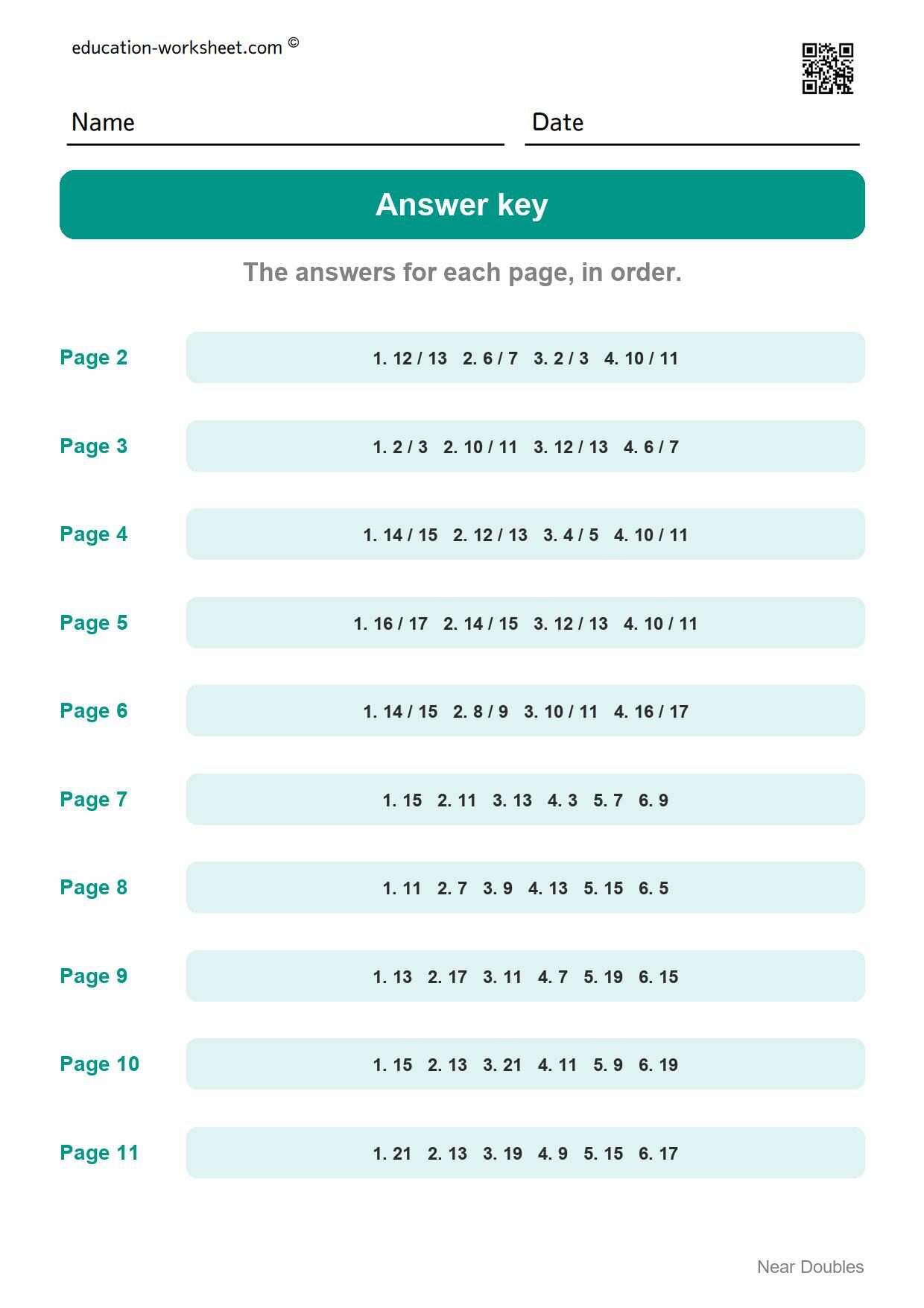
- Answer key – all 10 pages
- Near doubles: using a fact you know to reach one you do not
Free Near Doubles Worksheets for Kindergarten – Doubles Plus One
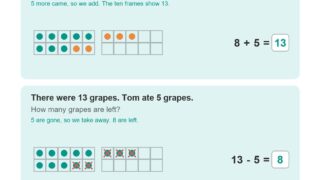
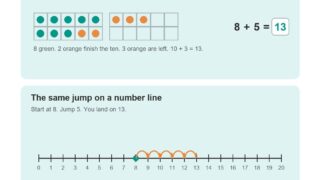
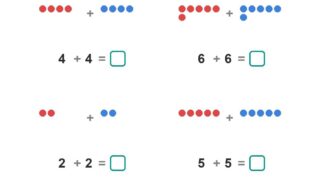
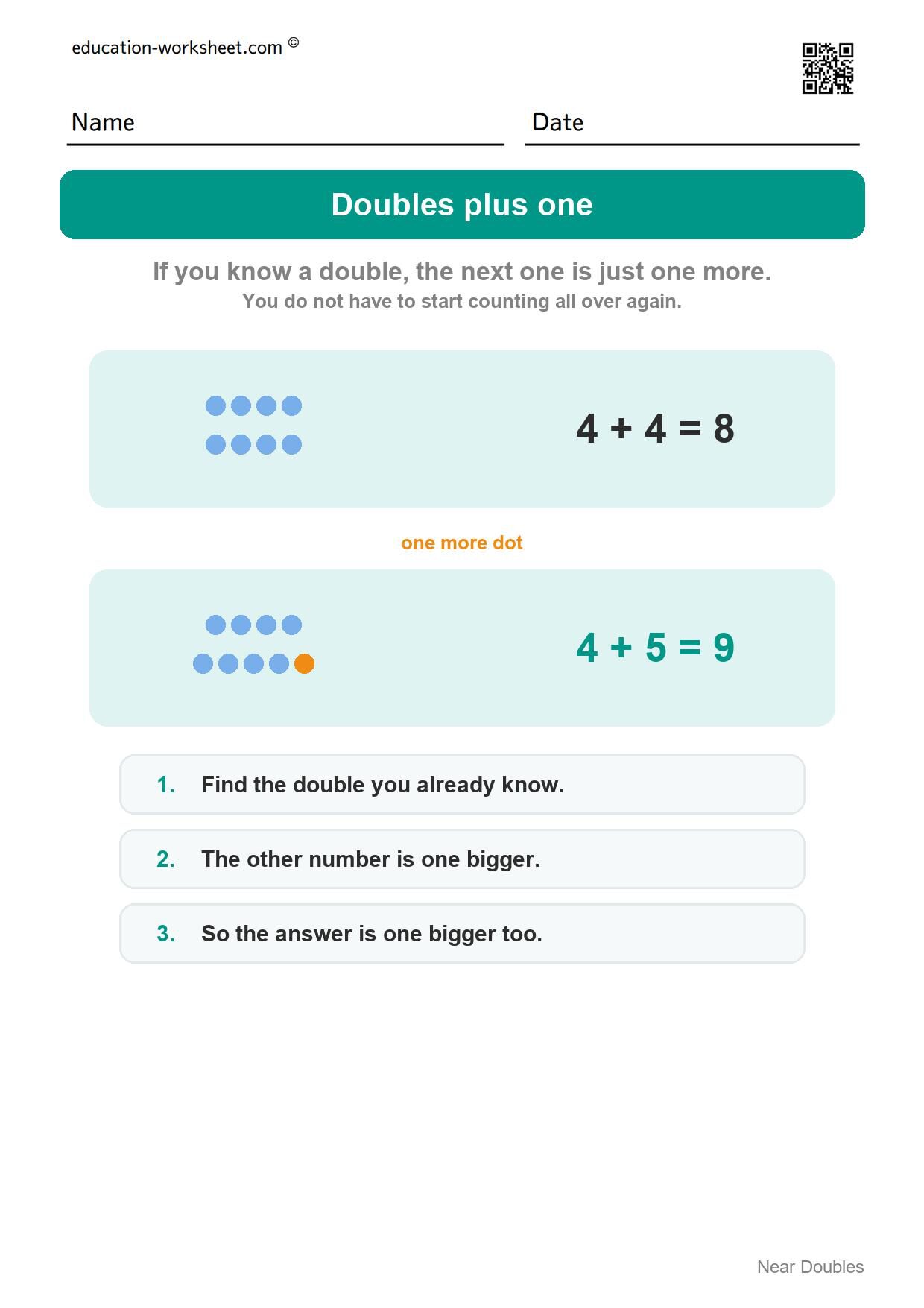
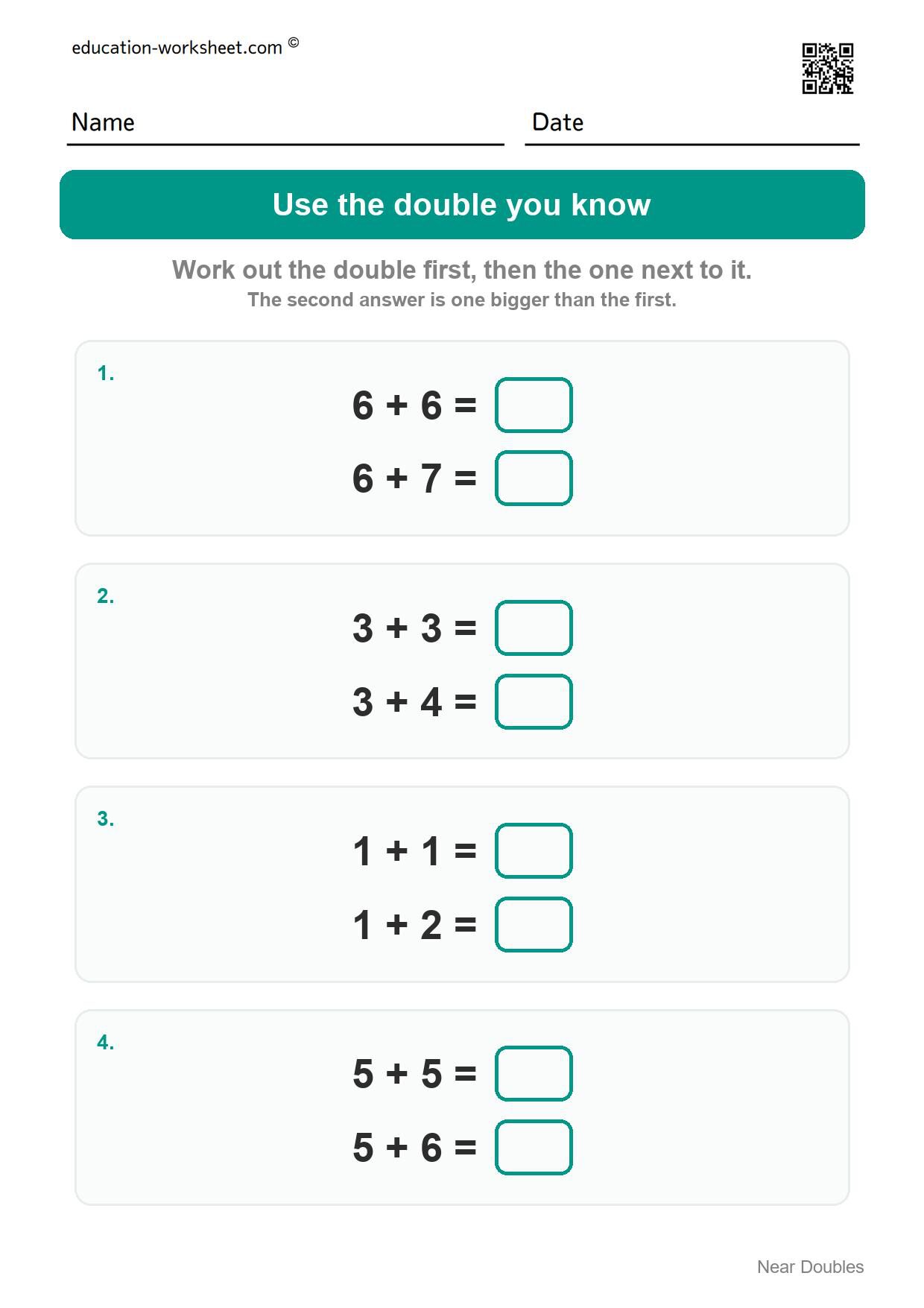
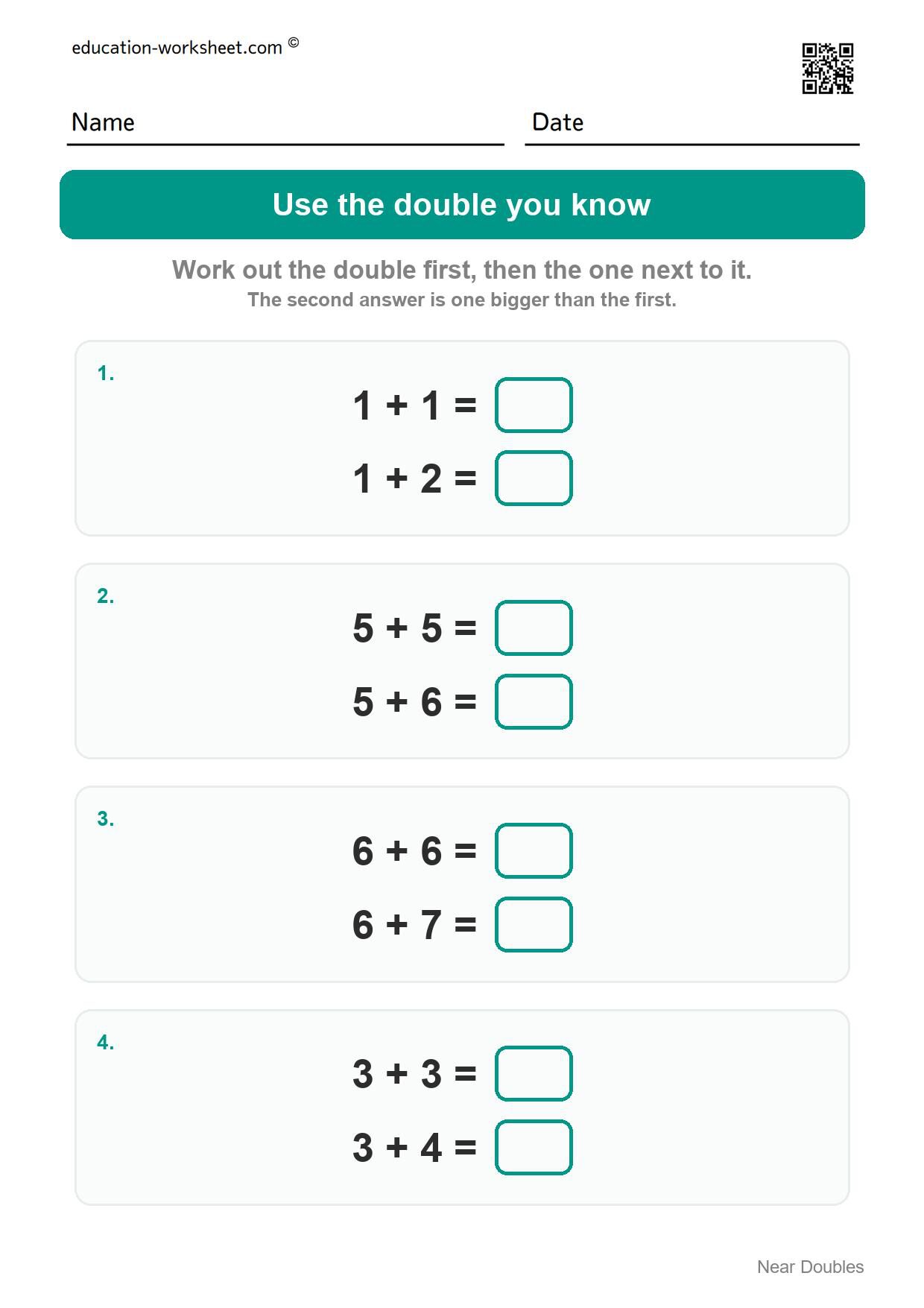
These free printable near doubles worksheets teach kindergarten and first grade children a shortcut that confident mathematicians use all the time: if you already know that 4 plus 4 is 8, then 4 plus 5 must be 9, because one of the numbers went up by one. Children who only count on their fingers work out every sum from scratch, and this is the first strategy that lets them lean on a fact they already have instead. The first five pages show the double and the near double one under the other so children can see the link, and the last five give the near double on its own once the idea has settled. The first page explains it with dots, with the extra dot in a different colour so it is easy to see where the one more comes from. This follows on from our doubles worksheets. The last page is an answer key. Just download, print, and add!
How doubles plus one works
Use the double you know (Set 1)
Use the double you know (Set 2)
Use the double you know (Set 3)
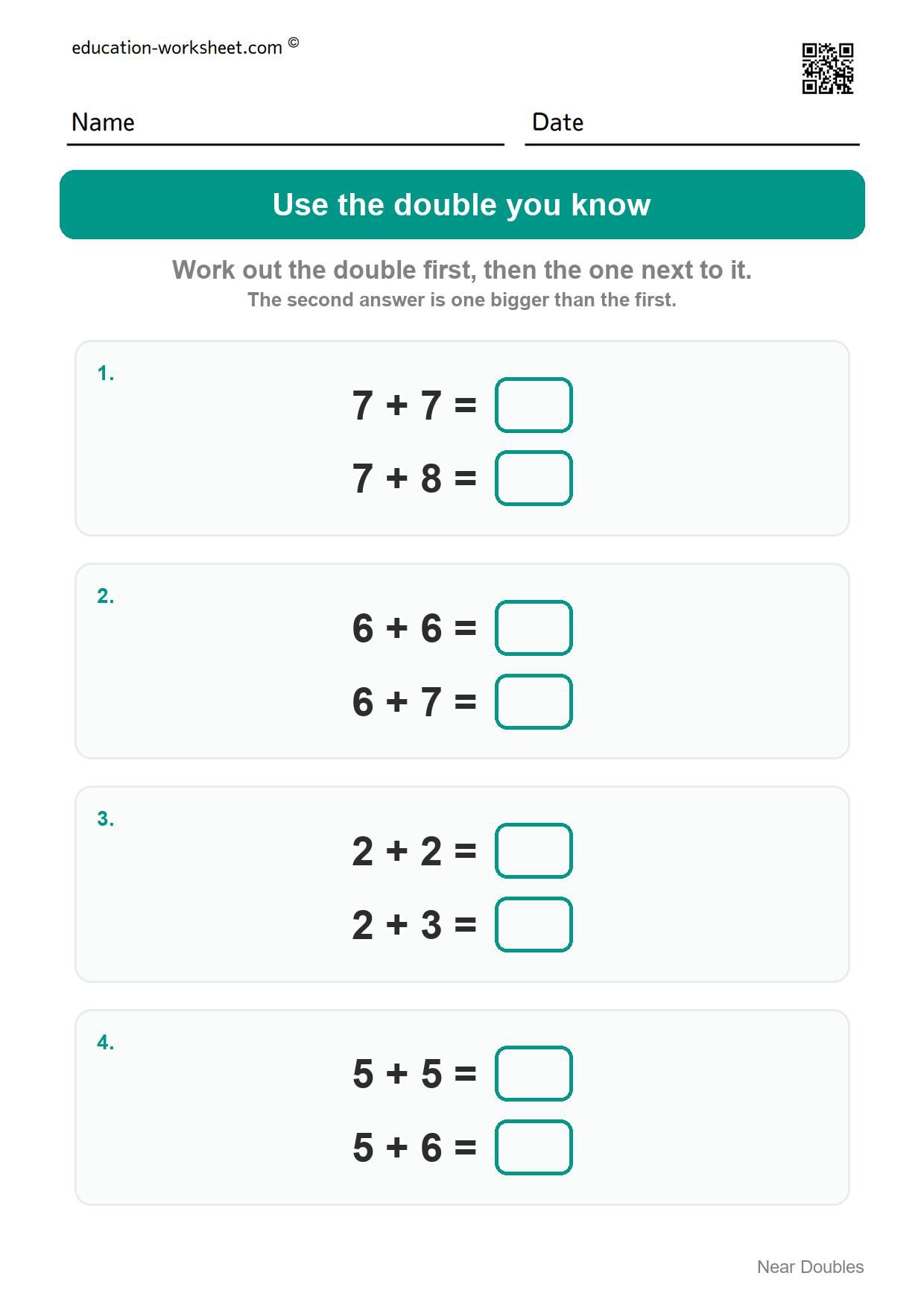
Use the double you know (Set 4)
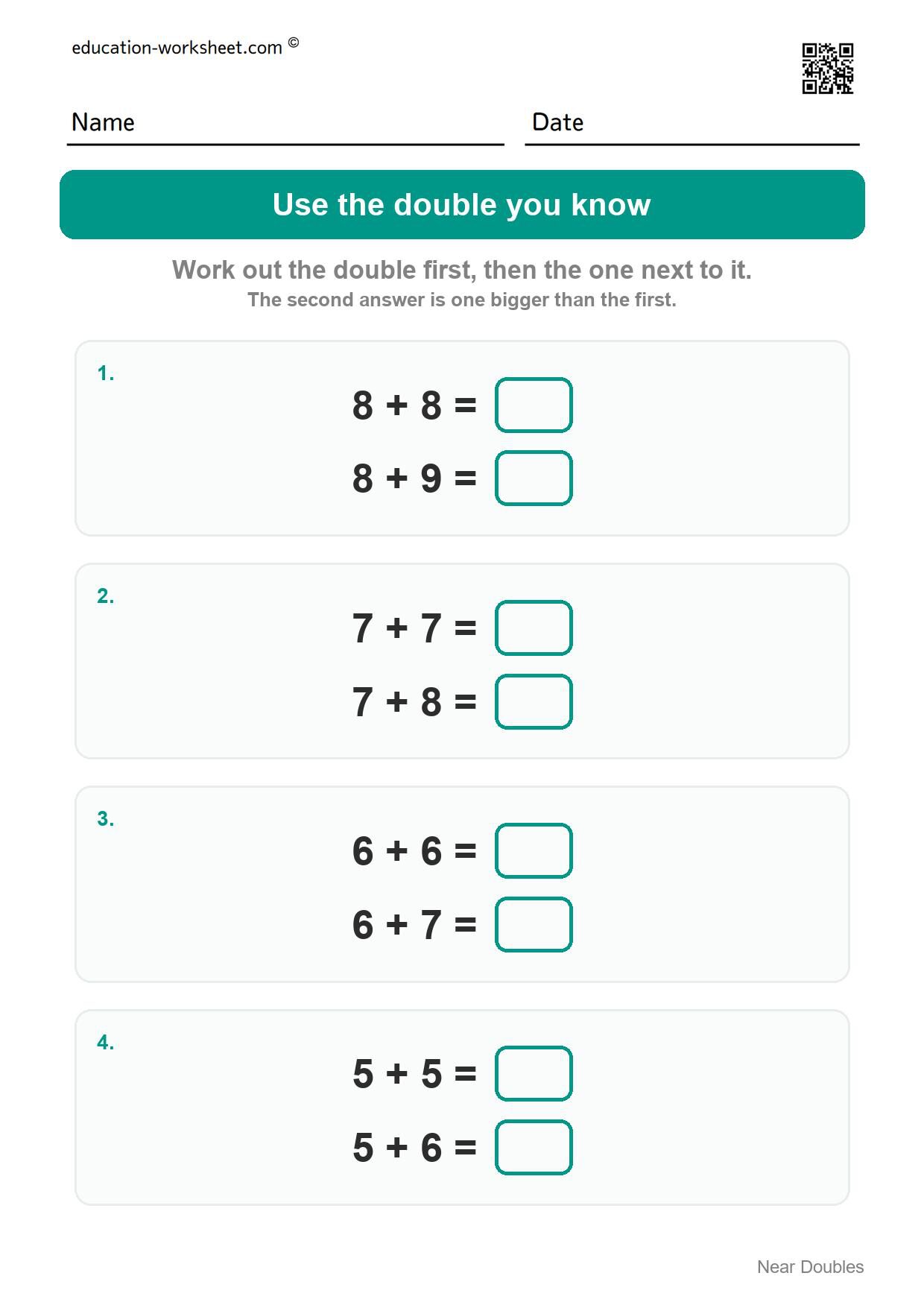
Use the double you know (Set 5)
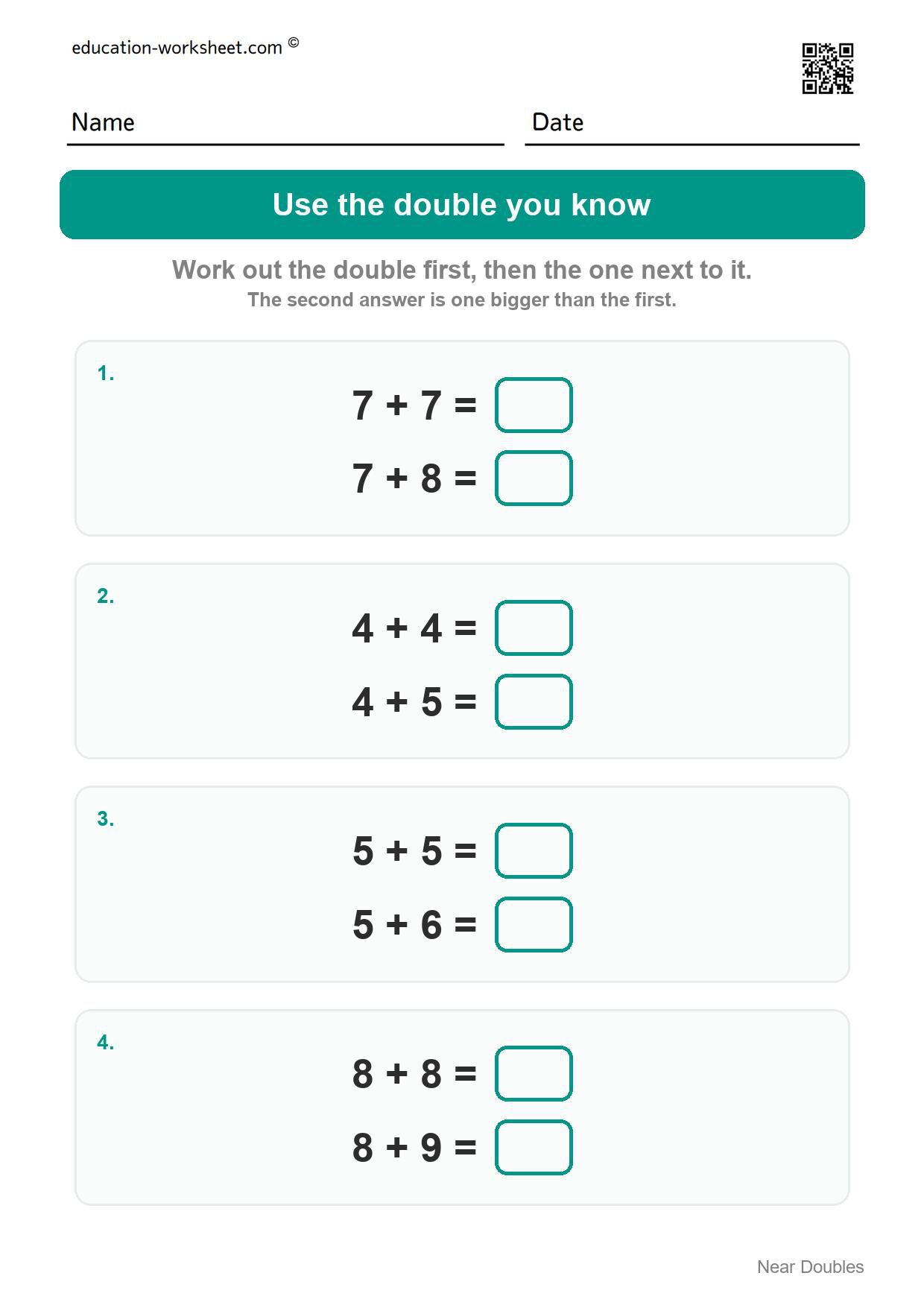
Near doubles (Set 6)
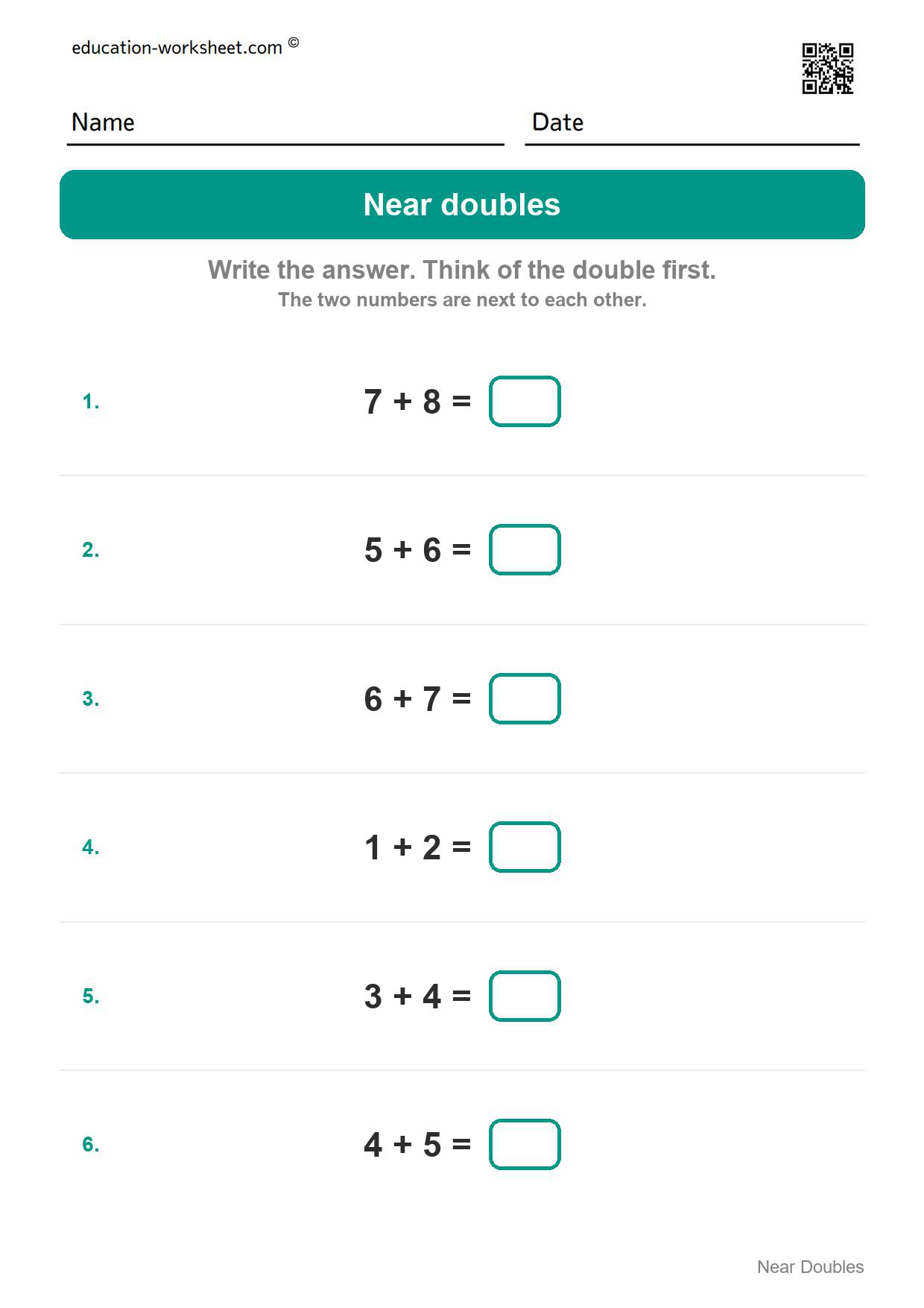
Near doubles (Set 7)
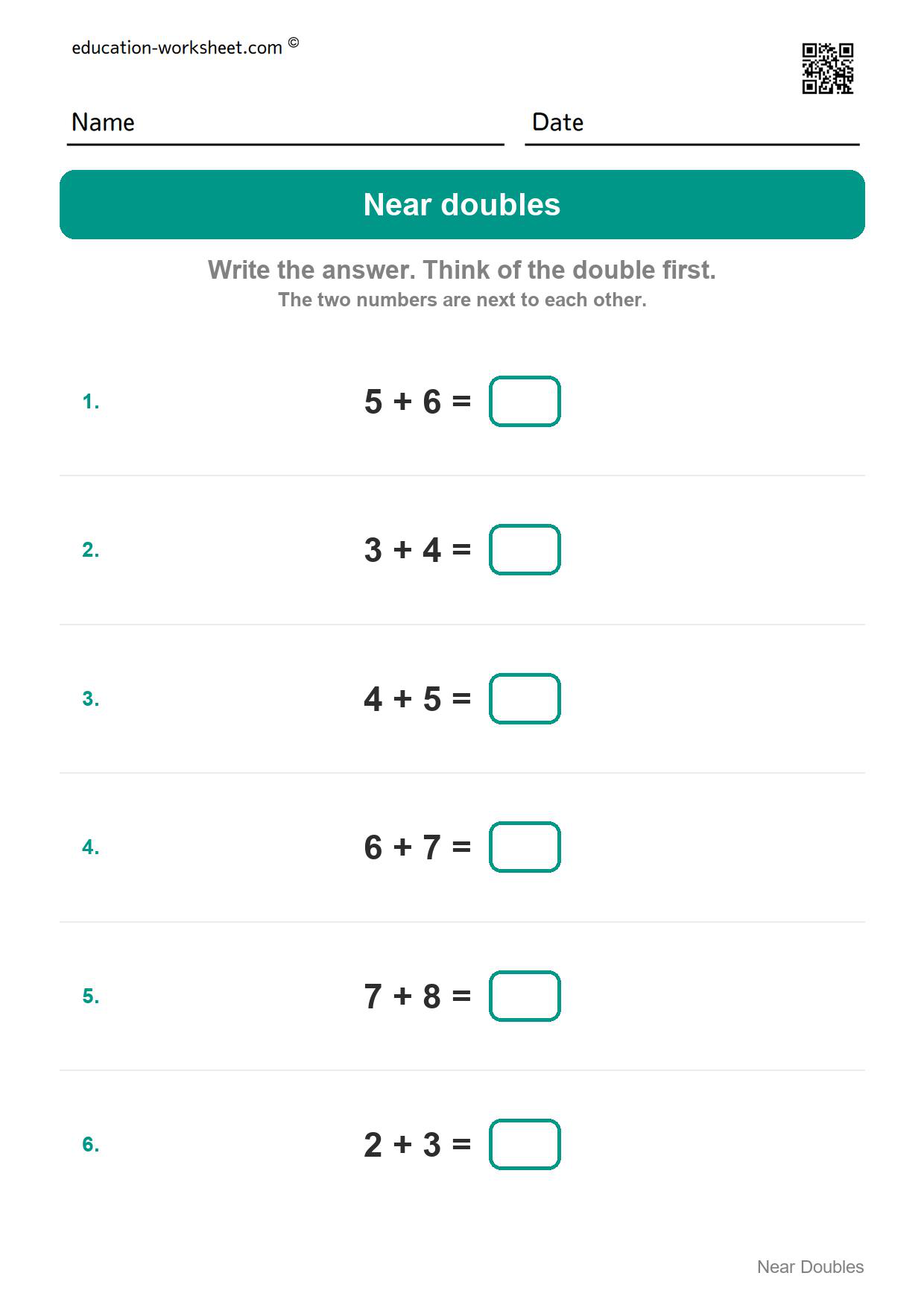
Near doubles (Set 8)
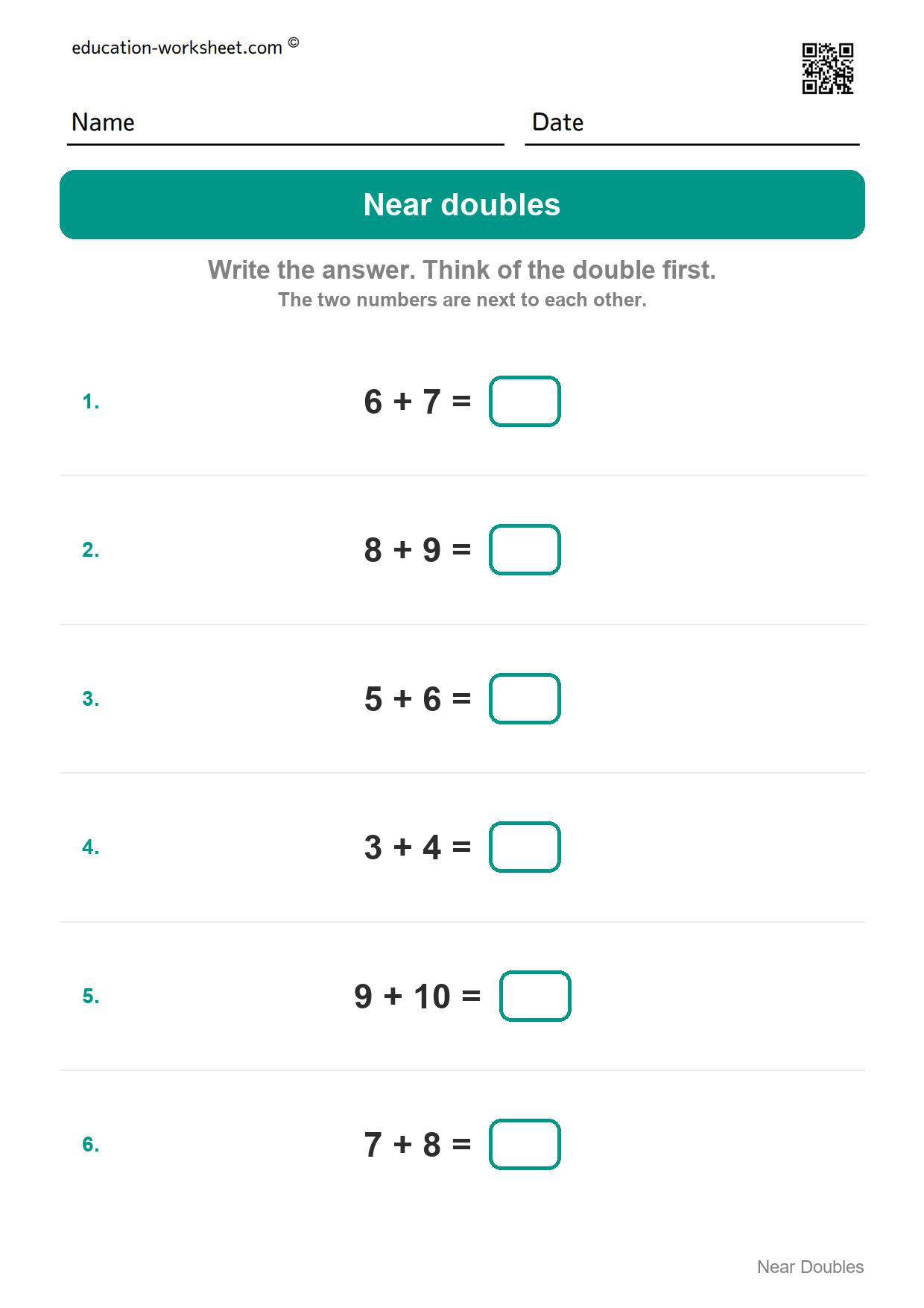
Near doubles (Set 9)
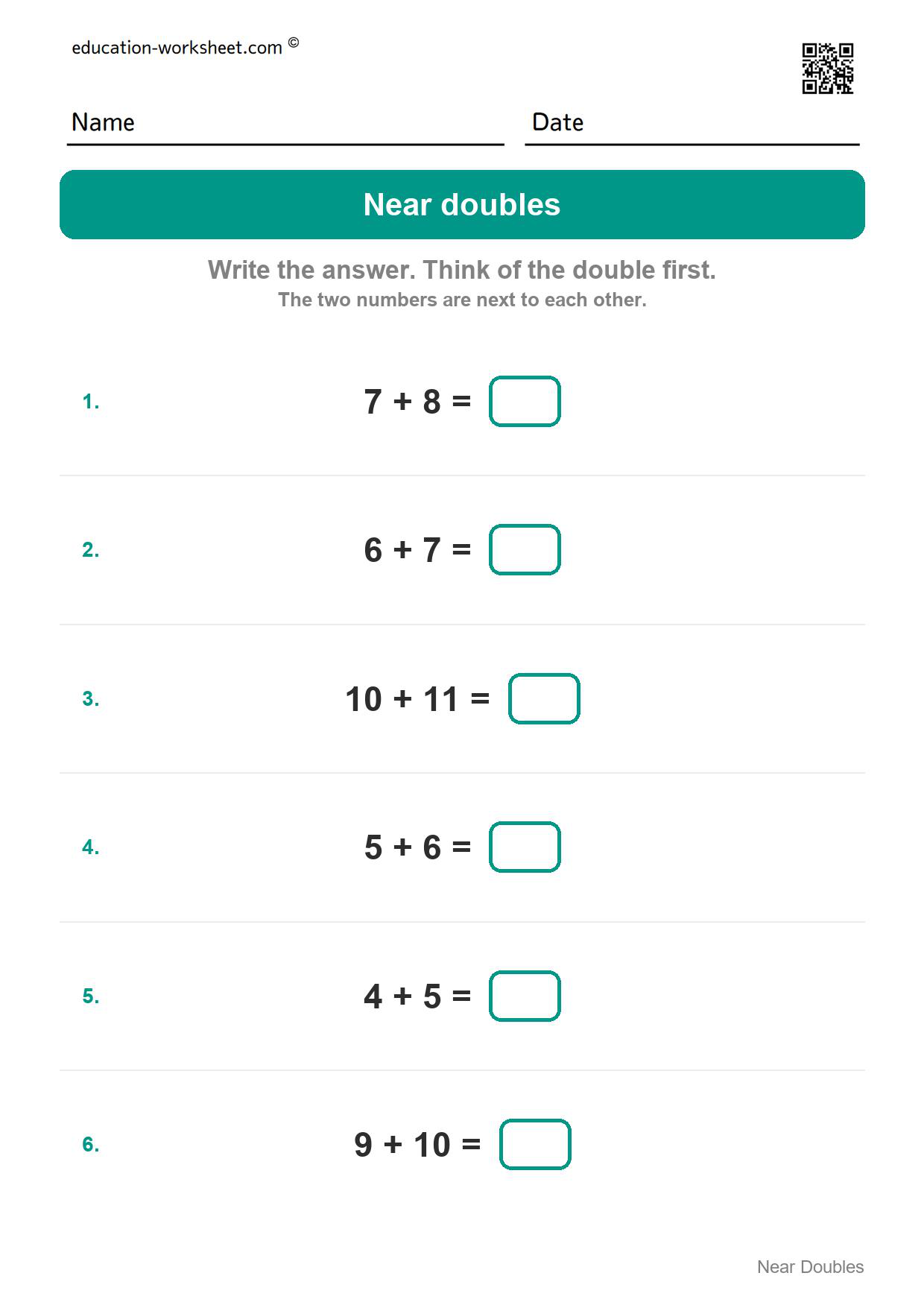
Near doubles (Set 10)
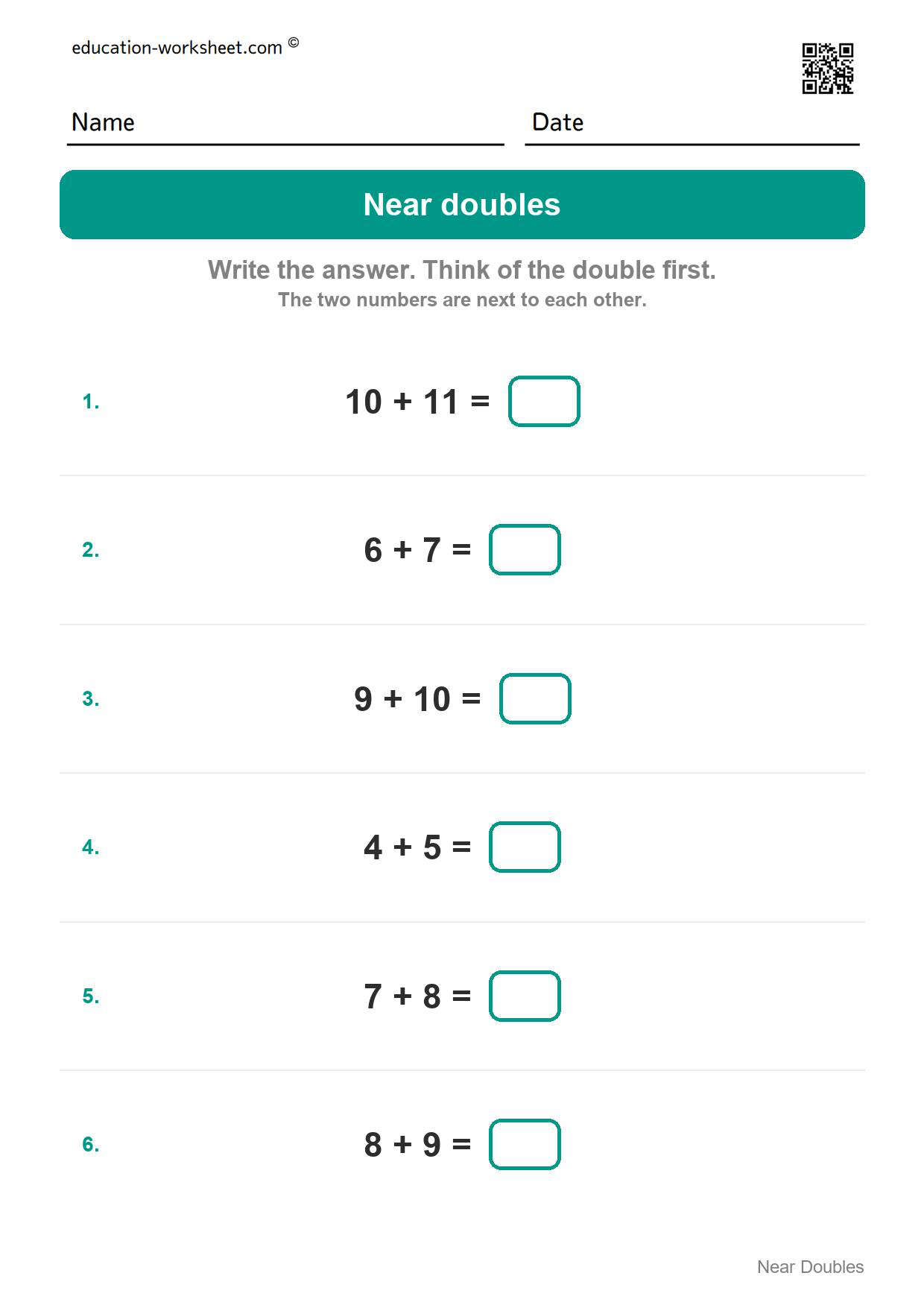
Answer key – all 10 pages
Near doubles: using a fact you know to reach one you do not
A near double is a sum where the two numbers are one apart, such as 6 + 7. The strategy is to notice the double hiding inside it: 6 + 7 is 6 + 6 plus one more, so the answer is 13. This is the first time many children use a fact they already know to work out one they do not, and that move matters more than the answer.
What your child is actually learning
Underneath the arithmetic, this unit teaches a habit of mind that runs through all of mathematics: when you meet something unfamiliar, look for the familiar thing next to it. Children who develop this habit stop treating every question as a fresh problem. The near doubles themselves also fill a real gap, since they cover a good share of the addition facts that make ten does not handle neatly.
How to work through these pages
Insist on the double being said out loud first. “Six and six is twelve, so six and seven is thirteen.” Saying the whole sentence keeps the two steps joined; a child who jumps straight to the answer often loses the method a week later. Writing the double above the problem for the first few pages is a useful support that can be dropped once the pattern is familiar.
The mistakes to expect
- Adding one to the wrong side, so 6 + 7 is answered as 11 by doubling the 6 and subtracting rather than adding.
- Doubling the larger number and forgetting to take one away. Both routes work — 6 + 6 + 1 or 7 + 7 − 1 — but a child should stick to one of them until it is secure.
- Trying the strategy when the numbers are two apart, such as 5 + 7. That needs a different approach, and it is worth saying that near doubles only work when the numbers are neighbours.
- Using the strategy correctly but slowly because the underlying double is not automatic. If this happens, go back to doubles for a few days.
What to teach next
Make ten covers the addition facts that near doubles cannot reach, so the two strategies together complete the picture within twenty. After that, fact families connect all of this addition work to subtraction.
Questions parents ask
Is near doubles the same as doubles plus one?
Yes. Doubles plus one is the classroom name for the same idea, and some schools also teach doubles minus one for working down from the larger number. Both describe the same relationship.
My child just counts on instead. Should I stop them?
Not by forbidding it, but do keep asking for the double first. Counting on works for small numbers and quietly fails as numbers grow, so the aim is to make the strategy the easier option rather than the required one.
Does this help with bigger numbers later?
Yes, and quite directly. The same reasoning gives 30 + 31 or 25 + 26 without any new learning, and later becomes the basis for adjusting numbers to make calculations simpler.