
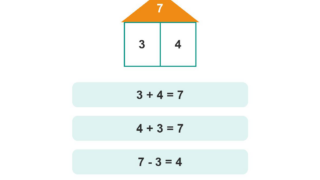
- Free Addition to 20 Worksheets for Grade 1 – Make Ten
- Adding to 20 (start here)
- Add with ten frames (Set 1)
- Add on a number line (Set 2)
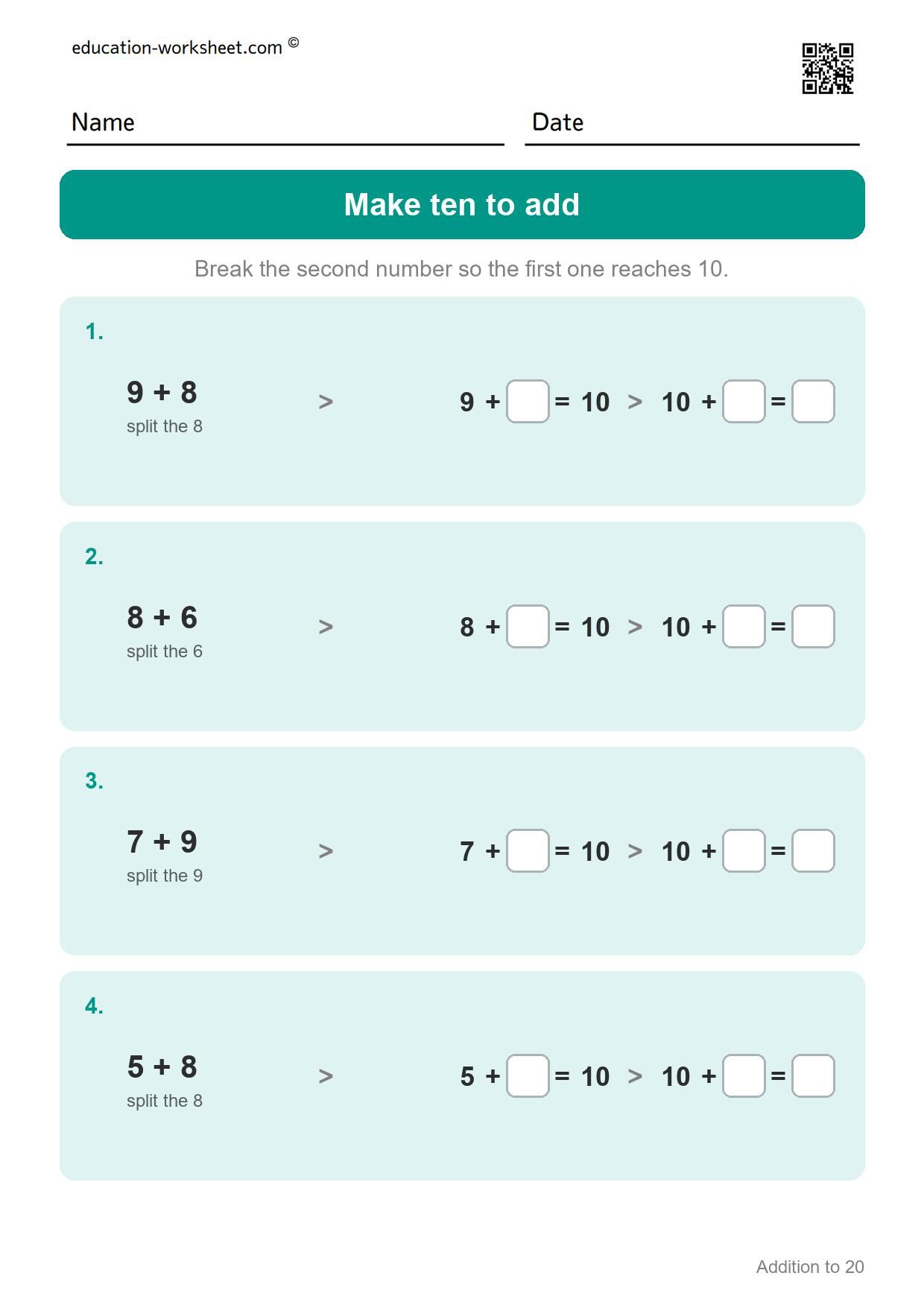
- Make ten to add (Set 3)
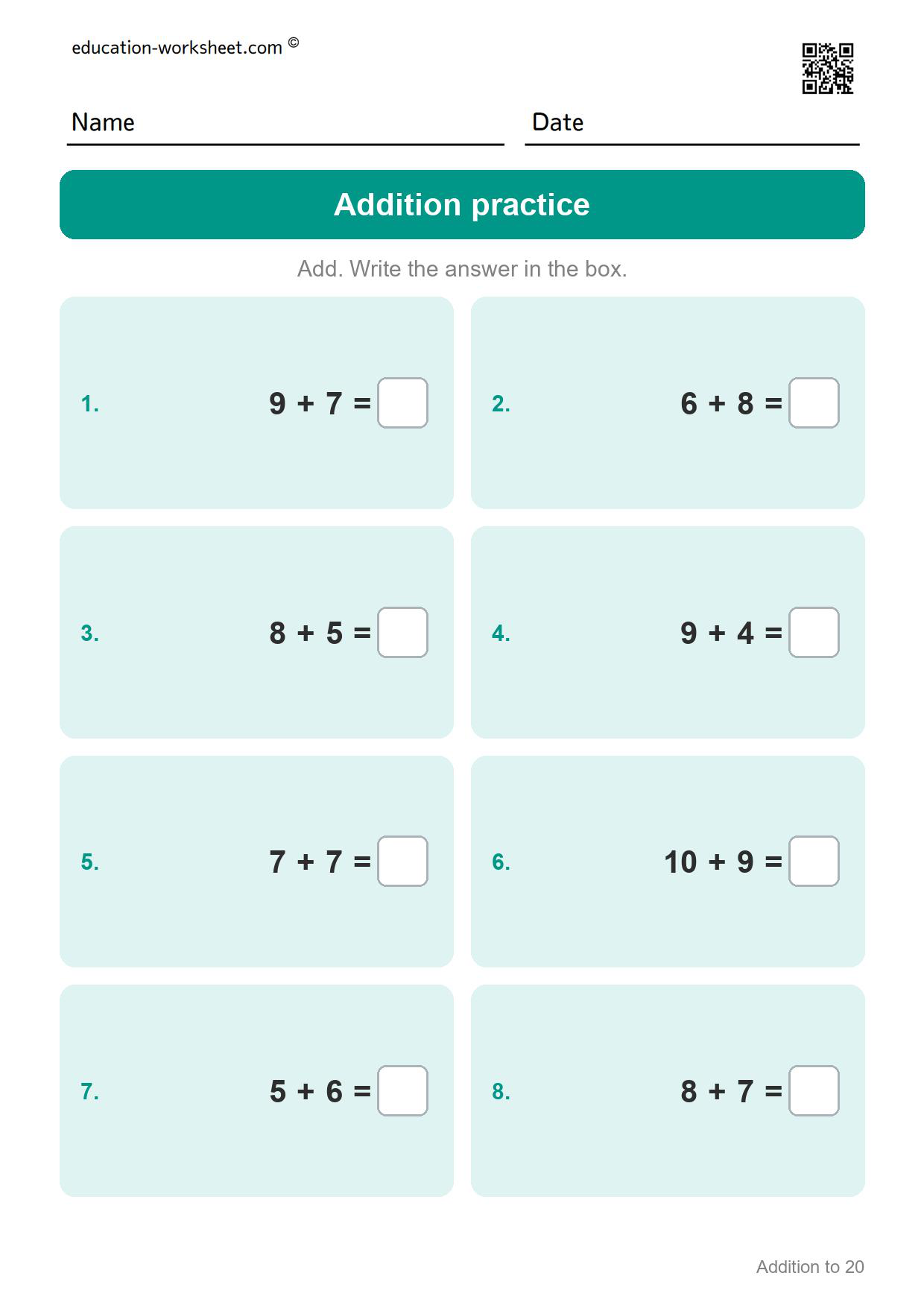
- Addition practice (Set 4)
- Add with ten frames (Set 5)
- Add on a number line (Set 6)
- Make ten to add (Set 7)
- Addition practice (Set 8)
- Add with ten frames (Set 9)
- Add on a number line (Set 10)
- Make ten to add (Set 11)
- Addition practice (Set 12)
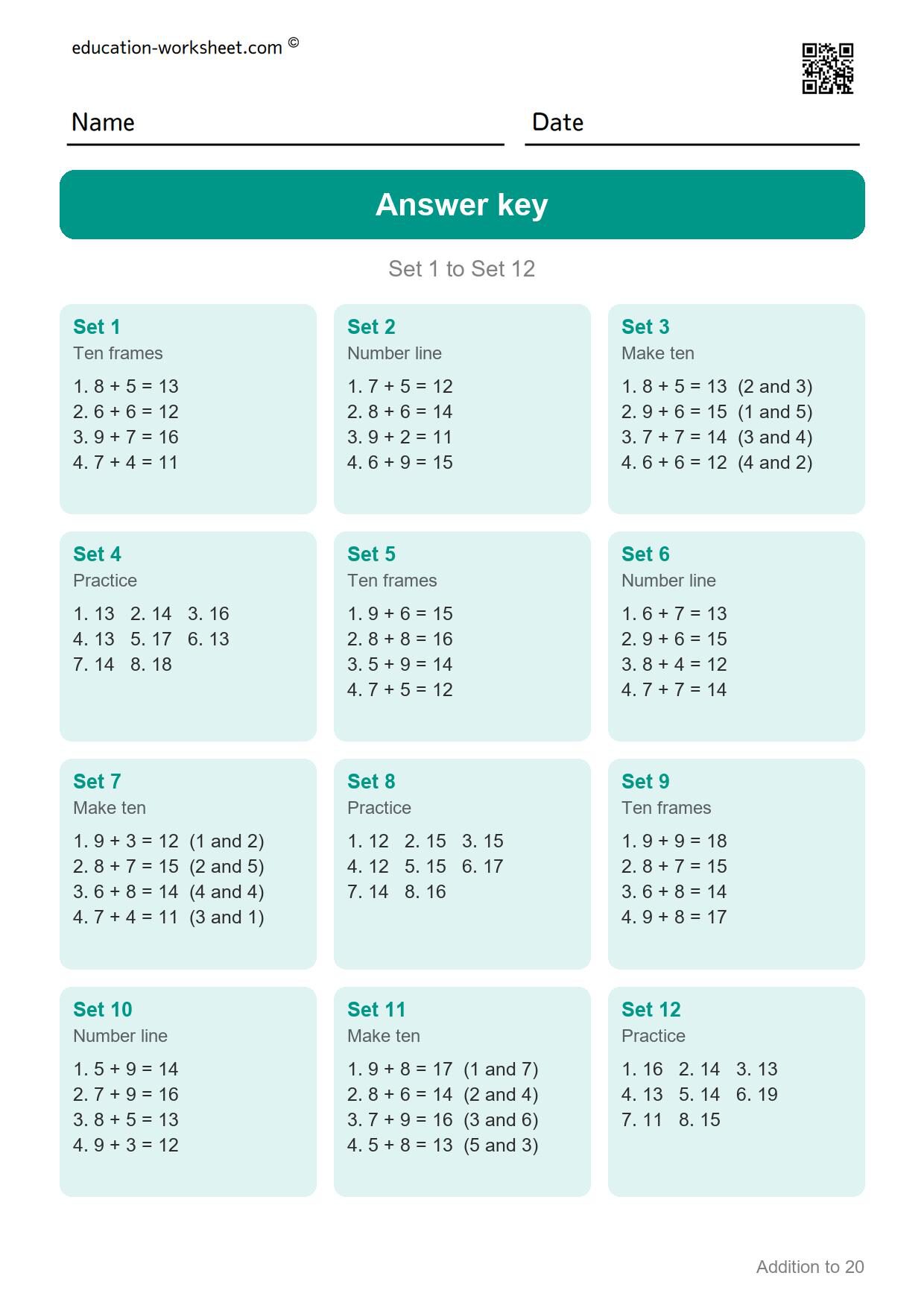
- Answer key
- Adding to 20: why ten is the number that does the work
Free Addition to 20 Worksheets for Grade 1 – Make Ten
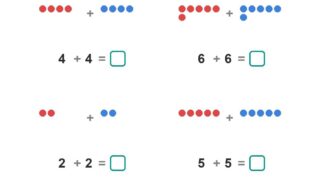
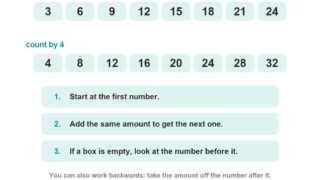
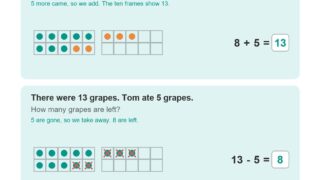
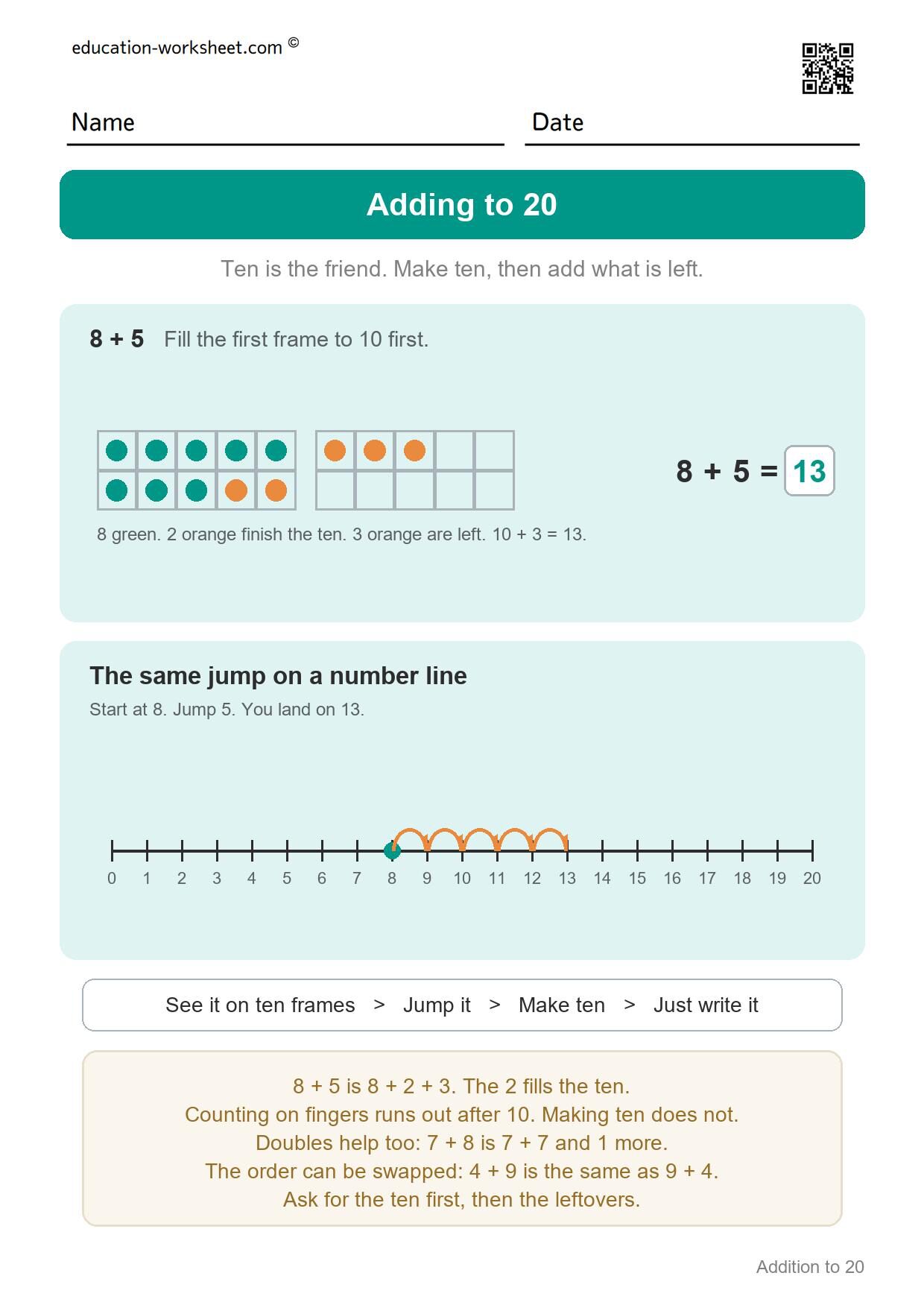
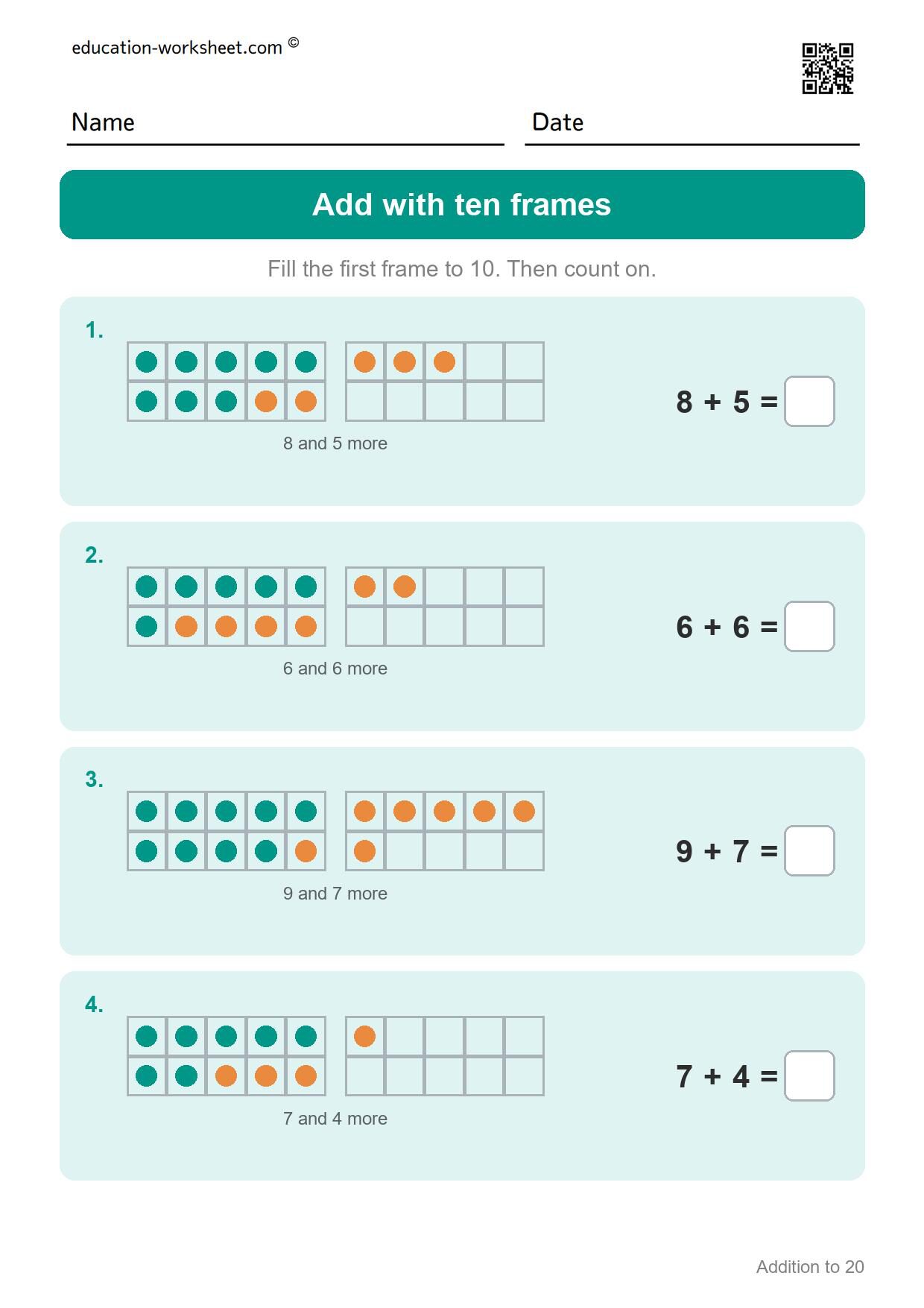
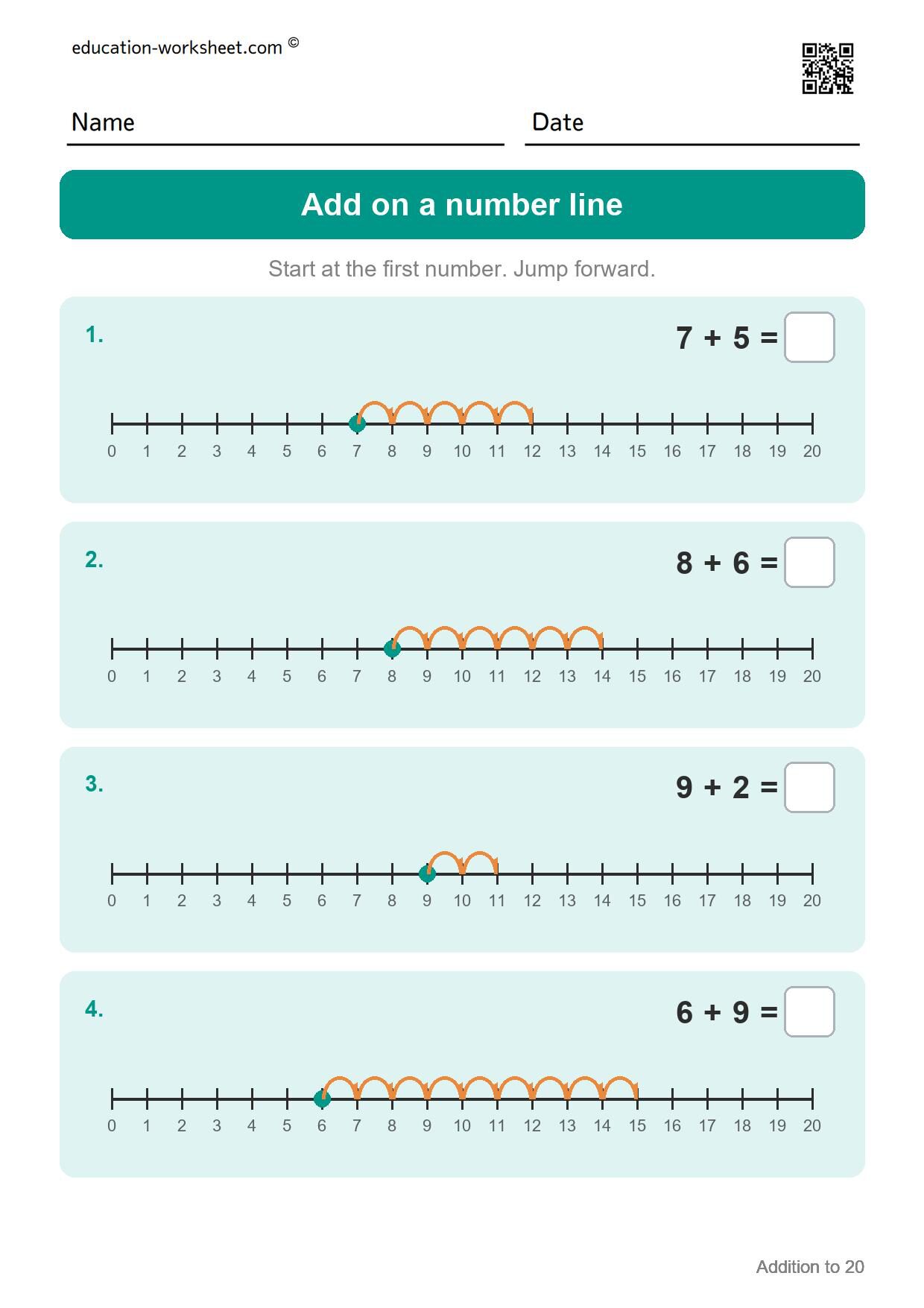
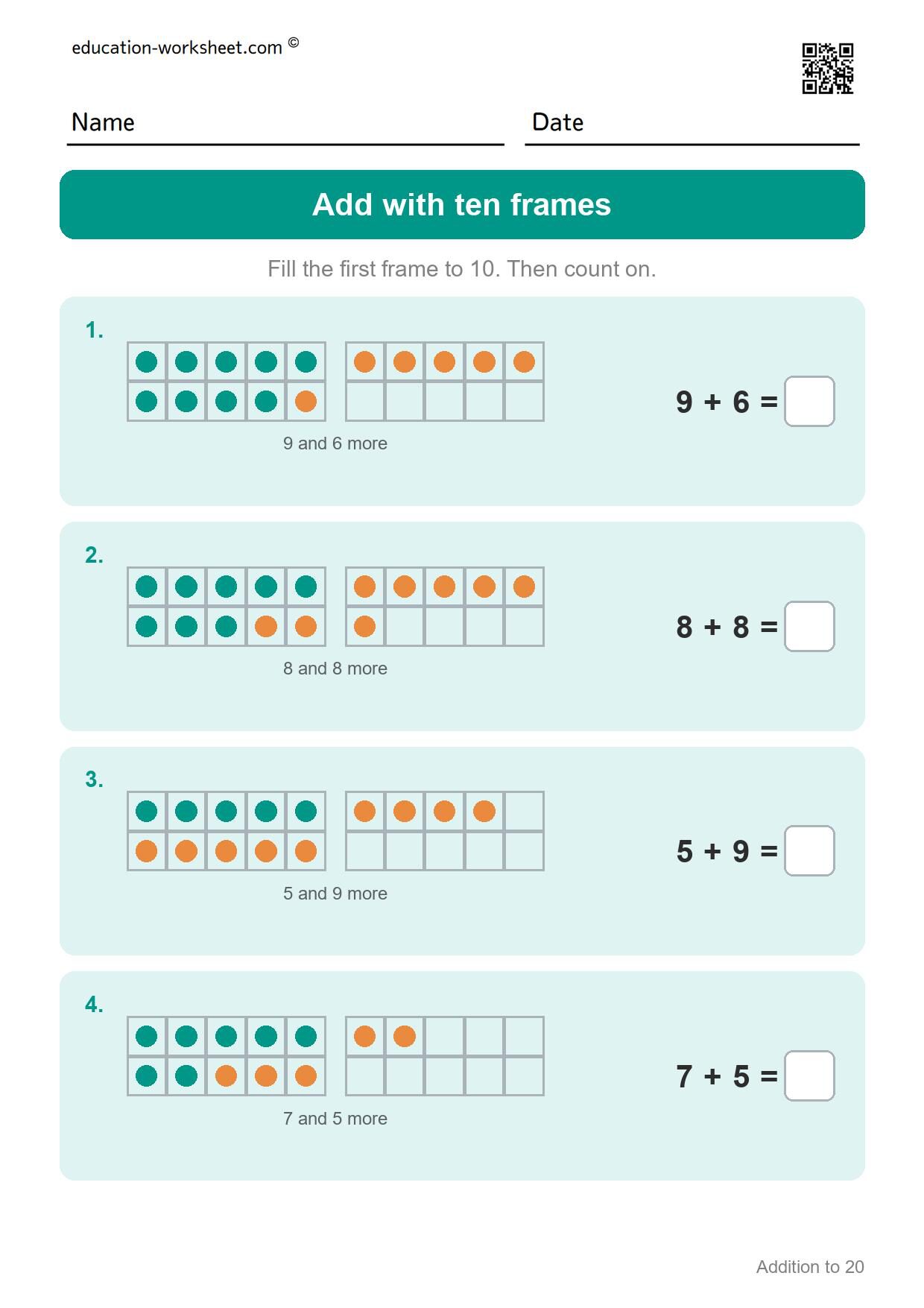
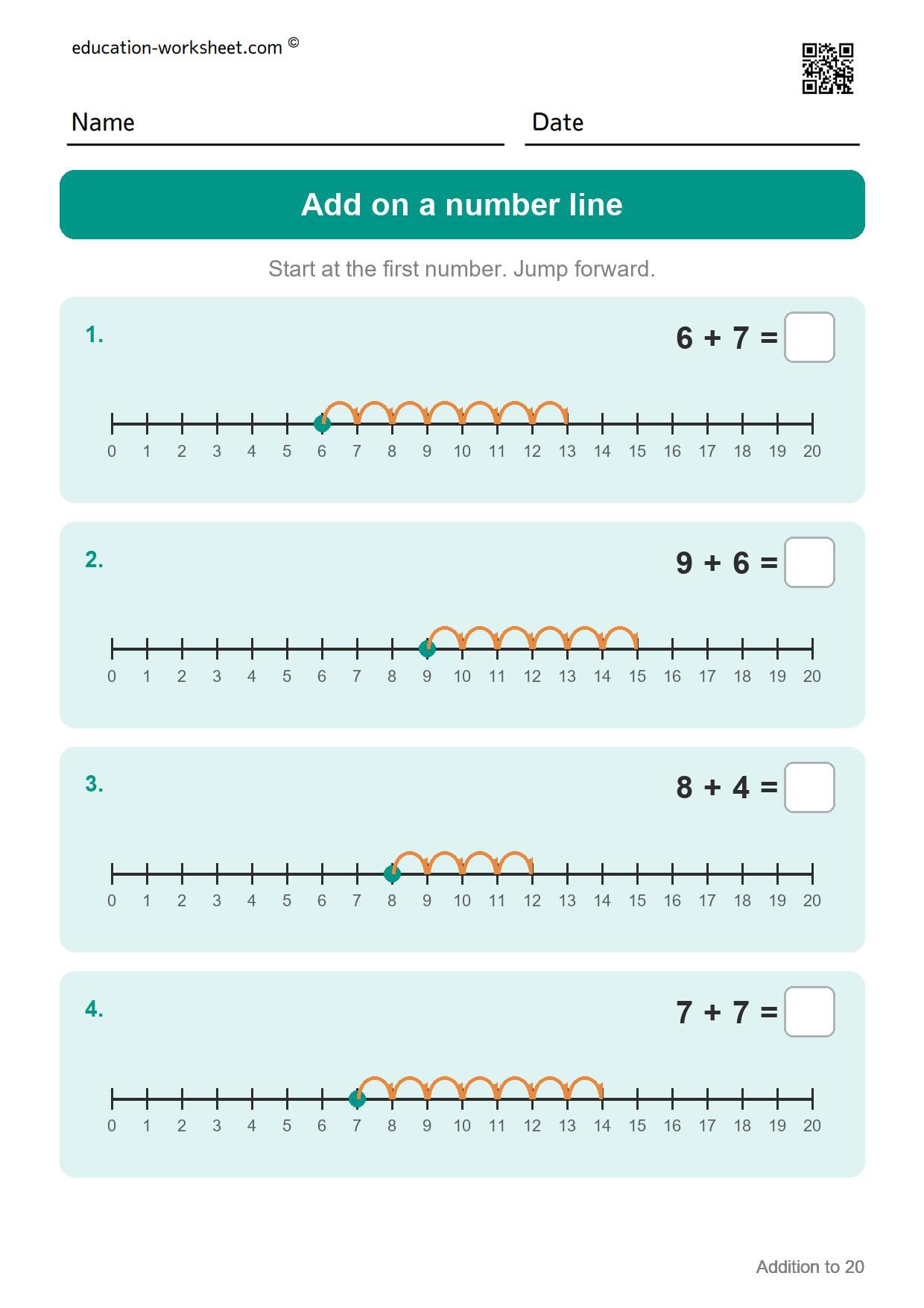
These free printable addition worksheets take first graders from adding within 10 to adding within 20, using the make ten strategy rather than counting on fingers, which runs out at ten. Every page shows the same idea in a different way, three times over: two ten frames where the first colour fills the frame to ten and the second colour carries on into the next frame, a number line where the child starts at the first number and jumps forward, a written chain that splits the second number so the first one reaches ten, and finally plain practice with no picture at all. The colours are kept consistent throughout, the first number is always blue and the number being added is always orange, so a child can see at a glance which part filled the ten. Every problem in the set crosses ten, because those are exactly the facts that are hard; sums that stay under ten are already covered in our kindergarten addition sets. The last sheet is an answer key for all twelve pages, and it also lists how each number was split, so a parent can check the thinking and not only the answer. Just download, print, and make a ten!
Adding to 20 (start here)
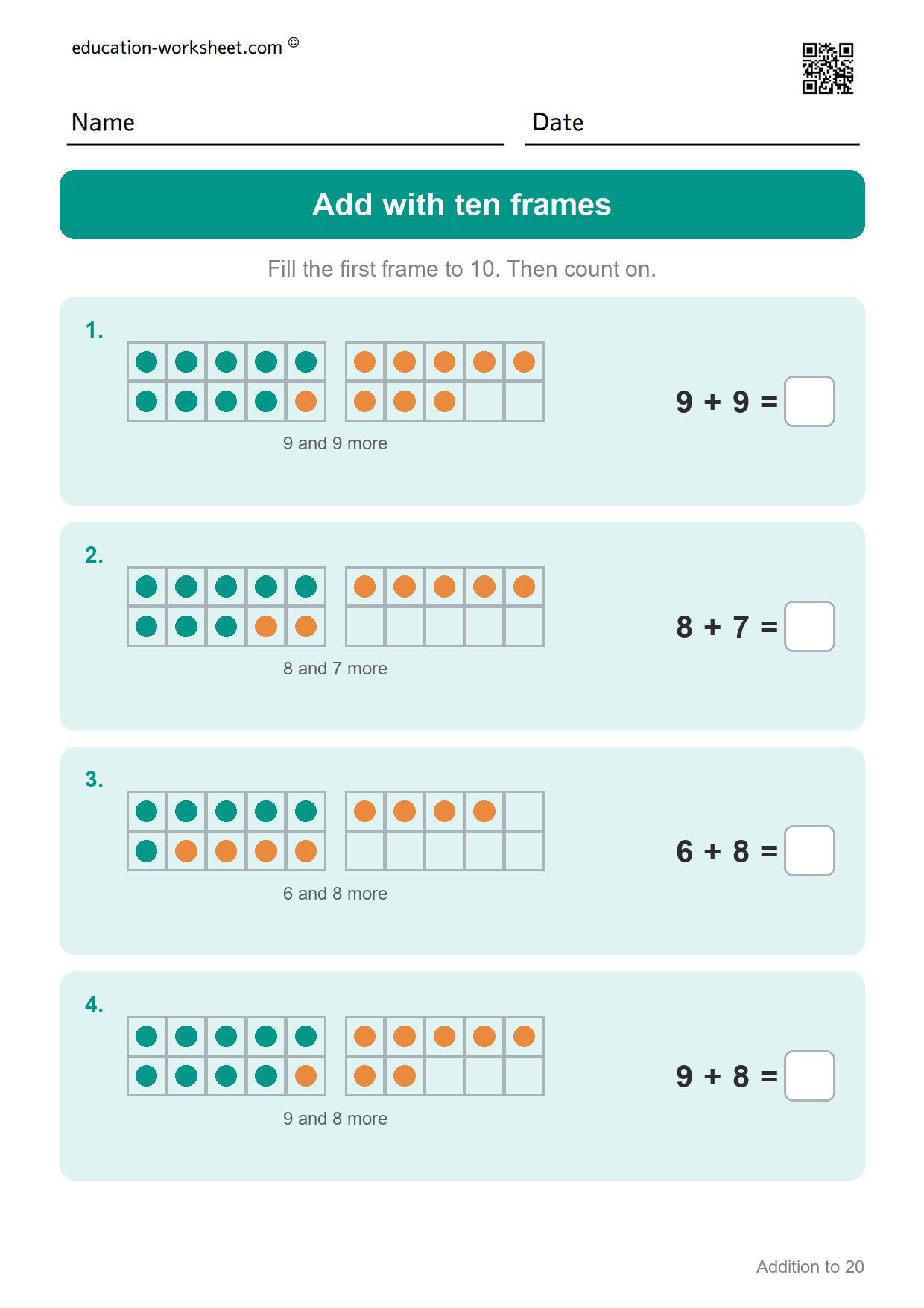
Add with ten frames (Set 1)
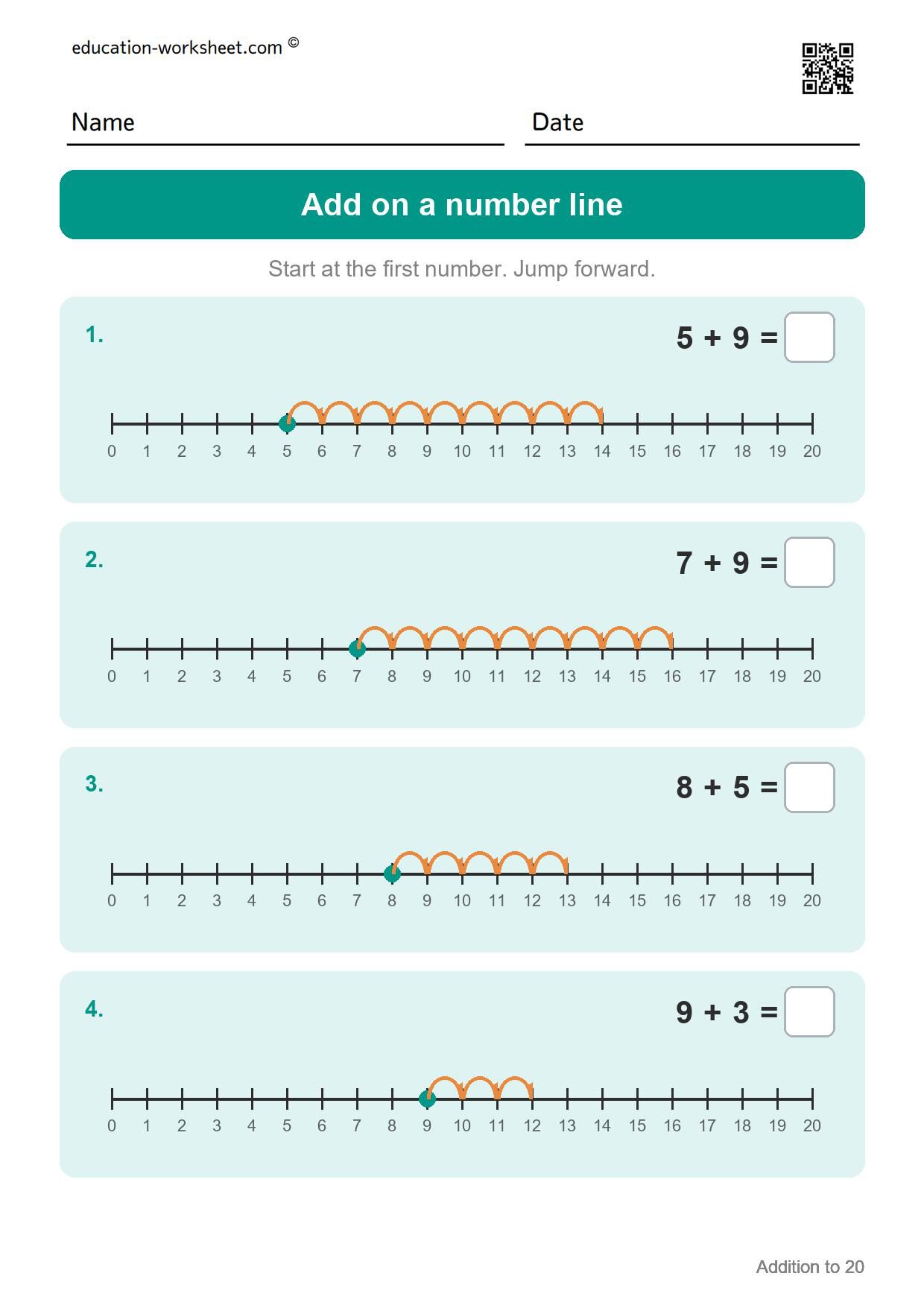
Add on a number line (Set 2)
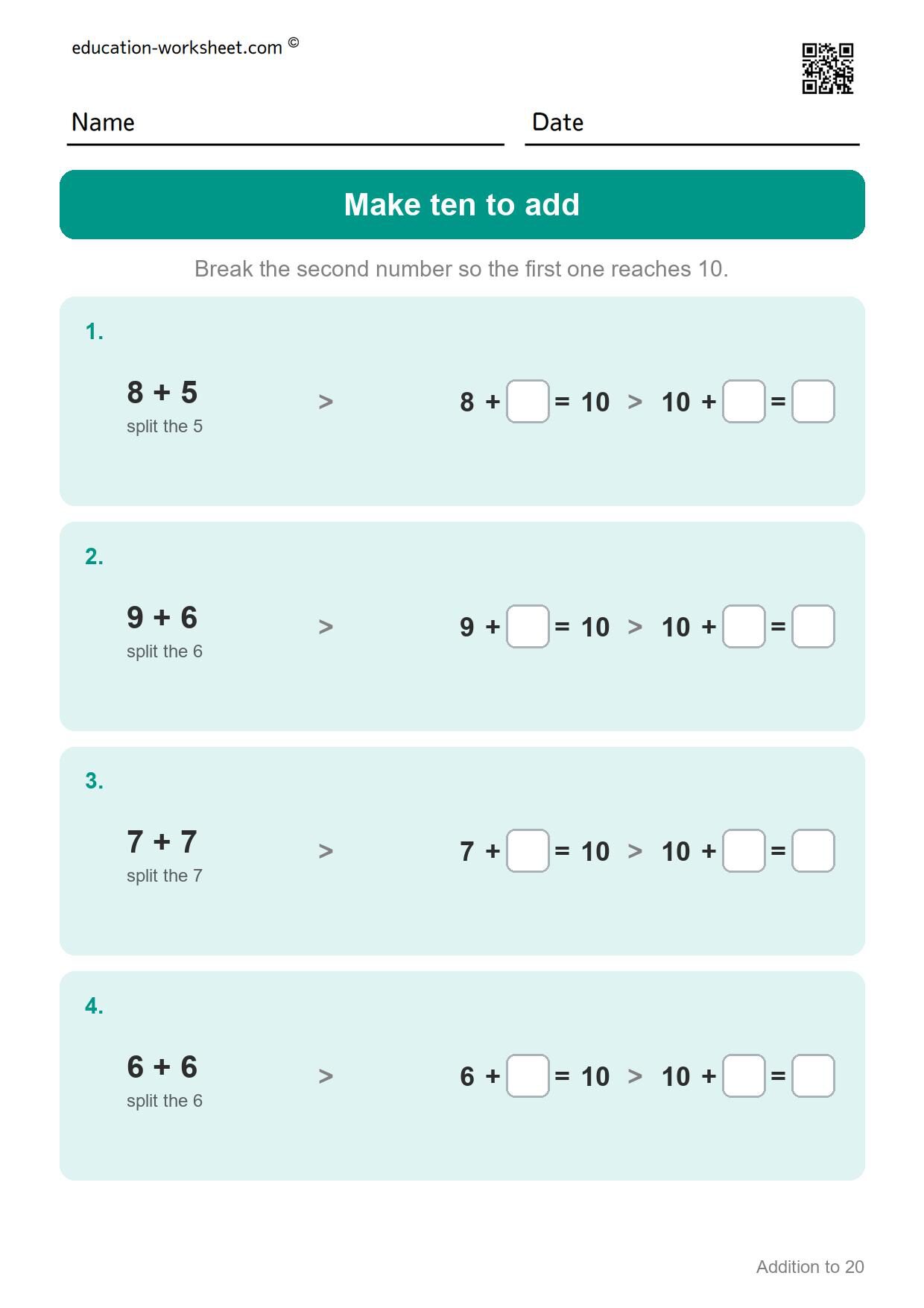
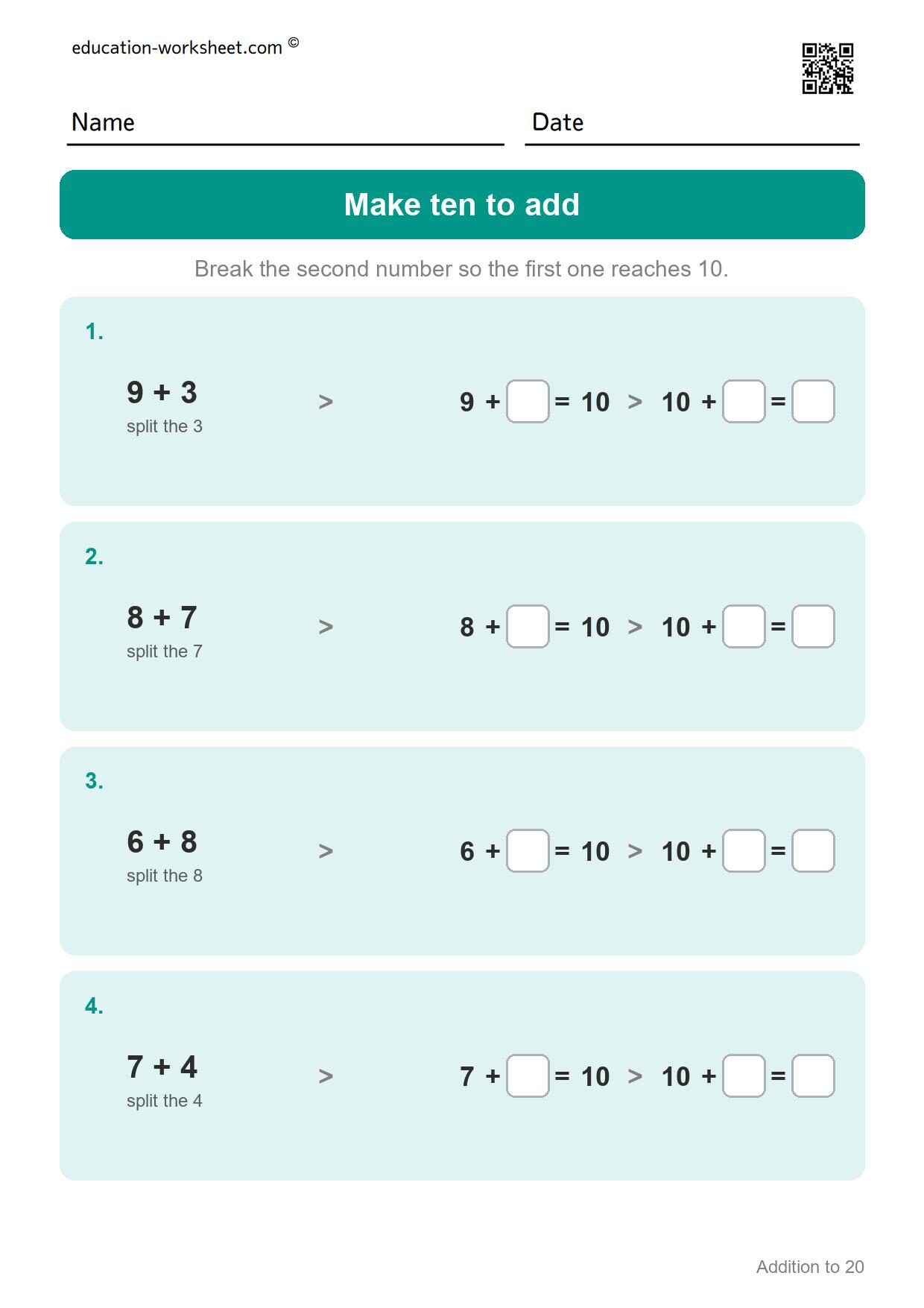
Make ten to add (Set 3)
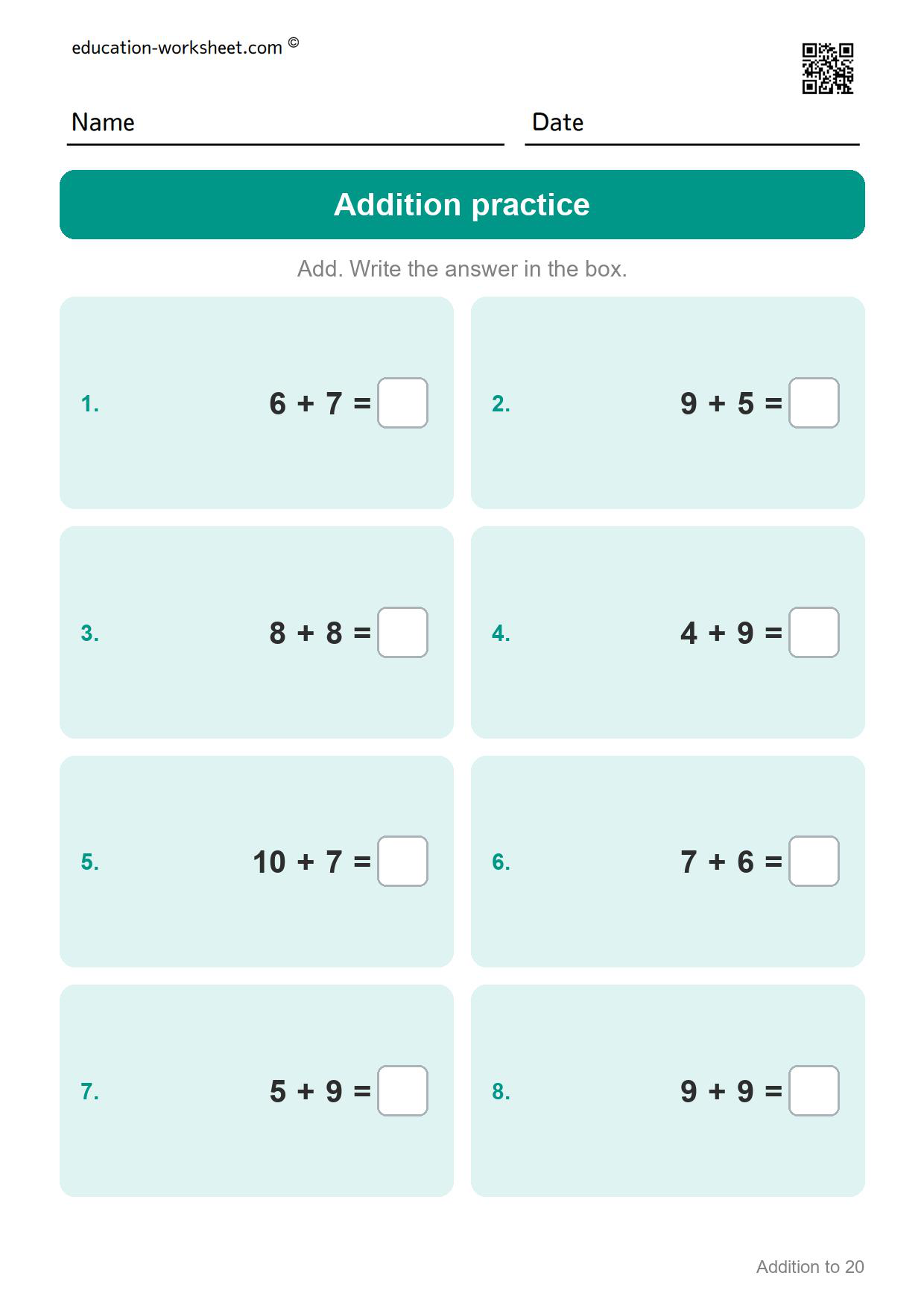
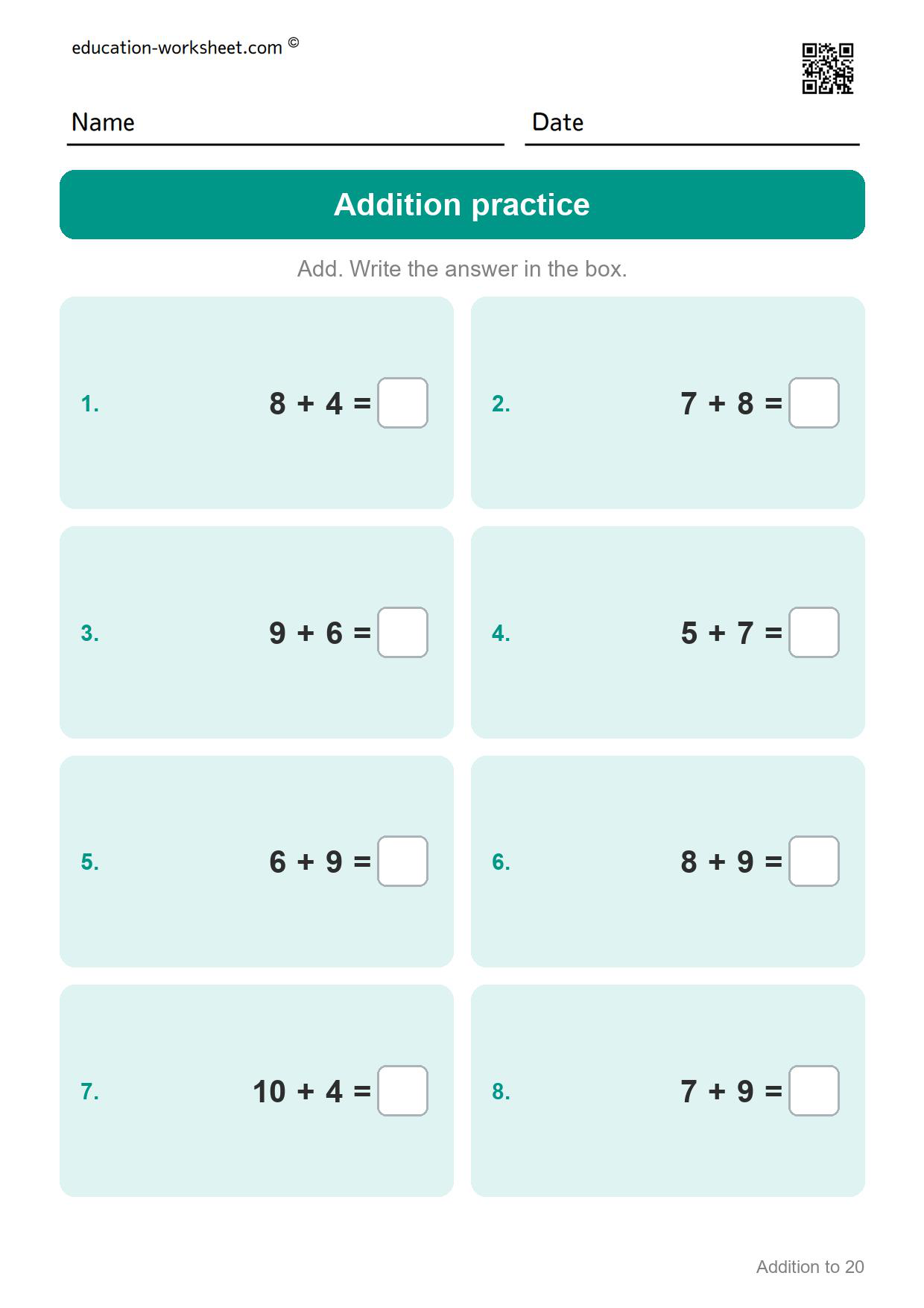
Addition practice (Set 4)
Add with ten frames (Set 5)
Add on a number line (Set 6)
Make ten to add (Set 7)
Addition practice (Set 8)
Add with ten frames (Set 9)
Add on a number line (Set 10)
Make ten to add (Set 11)
Addition practice (Set 12)
Answer key
Adding to 20: why ten is the number that does the work
Adding within ten can be done by counting. Adding past ten cannot, or at least not reliably, and this is the point where children who count on their fingers start to slow down and make mistakes. The way through is not to count faster. It is to use ten as a stepping stone: to add 5 to 8, first give the 8 what it needs to reach 10, then add what is left over.
What your child is actually learning
First grade asks children to add within 20 fluently, and fluently means without counting every one. The make ten strategy is the main route there. For 8 + 5, the child asks what 8 needs to make 10, splits the 5 into 2 and 3, makes the ten, then adds the remaining 3 to get 13. This looks like more steps than counting on, and for the first week it is slower. It becomes faster because the pairs that make ten eventually become automatic, and after that the whole calculation happens in one move.
How to work through these pages
The two ten frames on these pages are doing the teaching, so do not skip them in favour of the numbers. Fill the first frame completely before starting the second, every time, because that is the visual habit that carries the strategy. Before starting, check that the pairs making ten are secure on their own: ask what goes with 7 to make 10, with 6, with 4. If those answers are slow, practise just those for a few days first, because the whole strategy rests on them.
The mistakes to expect
- Counting all the counters from one, every single time. This is the habit the unit exists to replace, and it usually persists for a while alongside the new method.
- Splitting the second number wrongly, so 8 + 5 becomes 8 + 2 + 2. Ask the child to say the split out loud before writing anything.
- Losing the leftover part after making ten, giving an answer of exactly 10. This happens when the split is done mentally too early; write the split down for now.
- Answers that are one out. Almost always this is counting the starting number as the first count: counting on from 8 by saying “eight, nine, ten” to add two.
What to teach next
Subtraction within 20 is the natural partner, and it uses the same ten as a landmark, this time going back through it. Once both directions are comfortable, fact families tie them together and show that each set of three numbers gives two addition facts and two subtraction facts.
Questions parents ask
Is it bad if my child uses fingers?
No, not at this age. Fingers are a legitimate tool and most children use them. What matters is whether they are moving on from counting every finger towards knowing facts and using strategies. Take fingers away too early and children simply guess.
Should my child memorise addition facts?
Eventually, but the strategies come first. A child who knows why 8 + 5 is 13 remembers it far more reliably than a child who has been drilled on it, and can rebuild the answer when memory fails.
My child gets these right but very slowly. Is that a problem?
Not yet. Accuracy comes before speed, always. Speed follows from repetition once the method is correct, and pushing for speed while the method is shaky produces guessing rather than fluency.