
- Free Fact Family Worksheets for Kindergarten – Add and Subtract
- What is a fact family – how it works
- Write the four facts – numbers to 10 (Set 1)
- Write the four facts – numbers to 10 (Set 2)
- Write the four facts – numbers to 10 (Set 3)
- Write the four facts – numbers to 10 (Set 4)
- Write the four facts – numbers to 20 (Set 5)
- Write the four facts – numbers to 20 (Set 6)
- Write the four facts – numbers to 20 (Set 7)
- Write the four facts – numbers to 20 (Set 8)
- Write the four facts – numbers to 20 (Set 9)
- Write the four facts – numbers to 20 (Set 10)
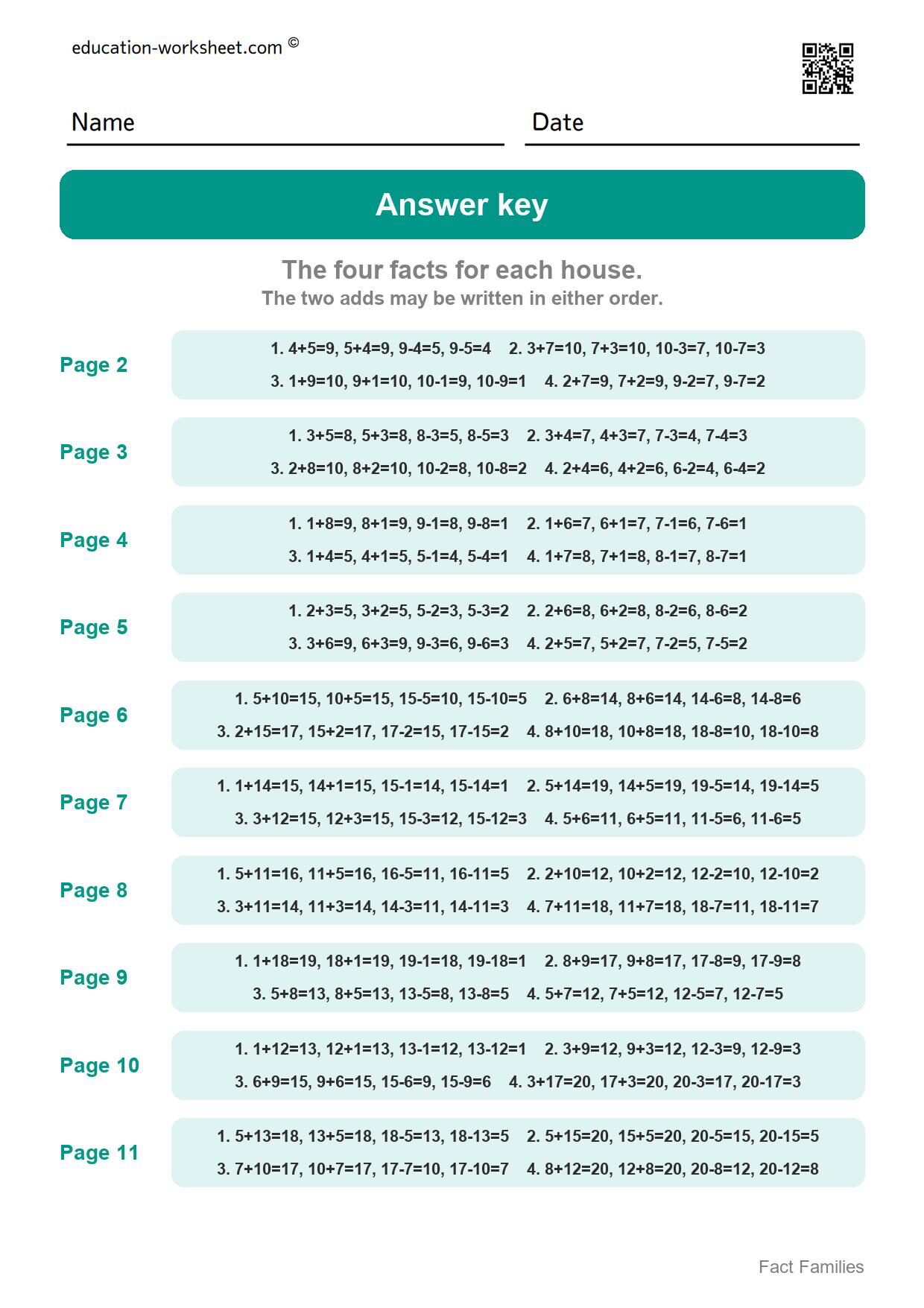
- Answer key – all 10 pages
- Fact families: three numbers, four facts, one idea
Free Fact Family Worksheets for Kindergarten – Add and Subtract
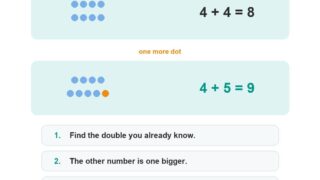
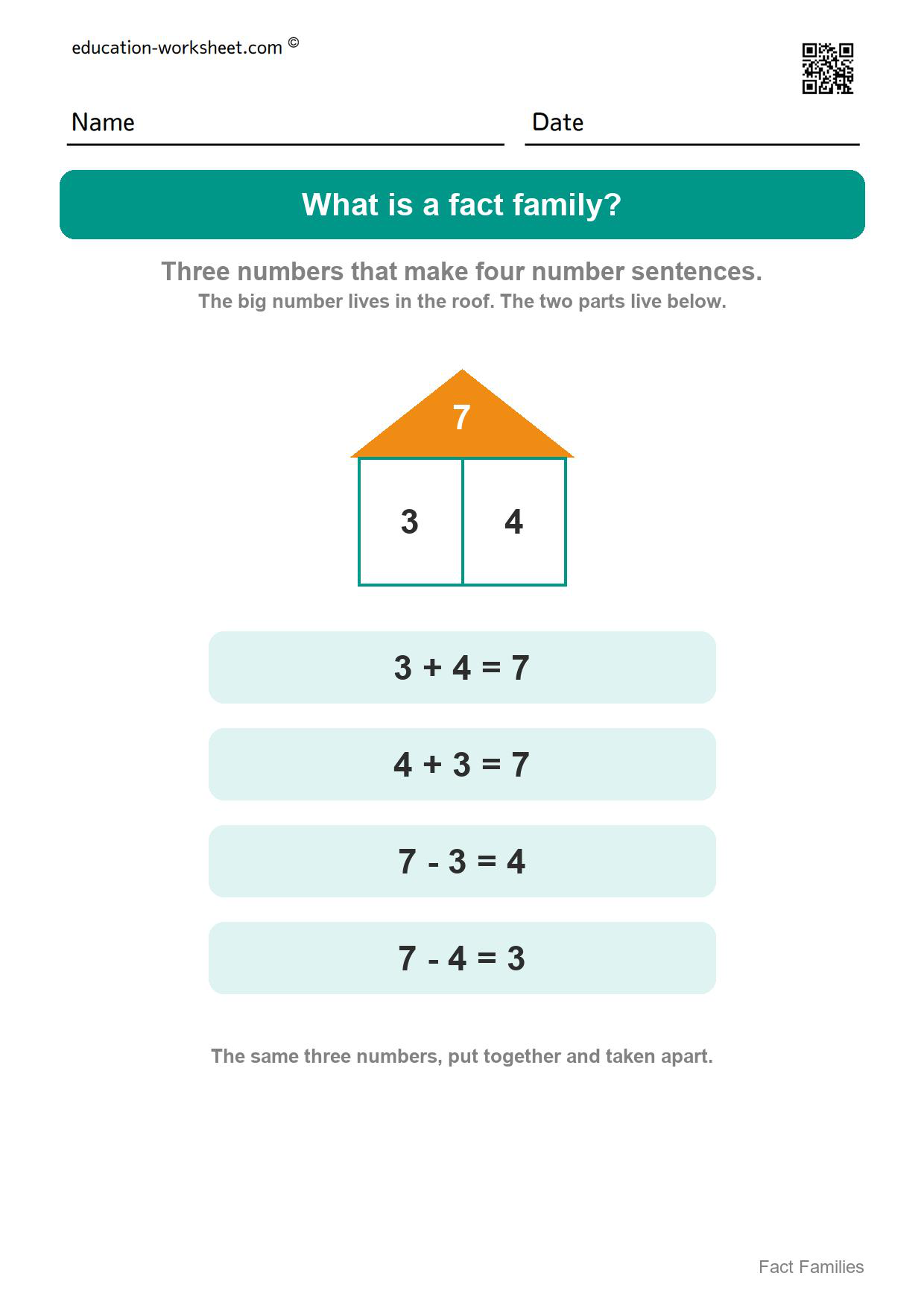
These free printable fact family worksheets show kindergarten and first grade children that adding and taking away are two sides of the same thing. Each little house holds three numbers: the big number sits in the roof and the two parts sit in the rooms below, and from those three numbers children write four number sentences, two adds and two takeaways. The first page explains the idea with the family 3, 4 and 7. Seeing that 3 + 4 = 7 and 7 – 4 = 3 come from the same three numbers is what stops subtraction feeling like a brand new thing children have to learn from scratch, and it is the beginning of understanding that one operation undoes the other. The first four pages stay within 10 and the later pages go up to 20. Number pairs where both parts are the same are left out, because those only make two different sentences. The last page is an answer key. Just download, print, and write!
What is a fact family – how it works
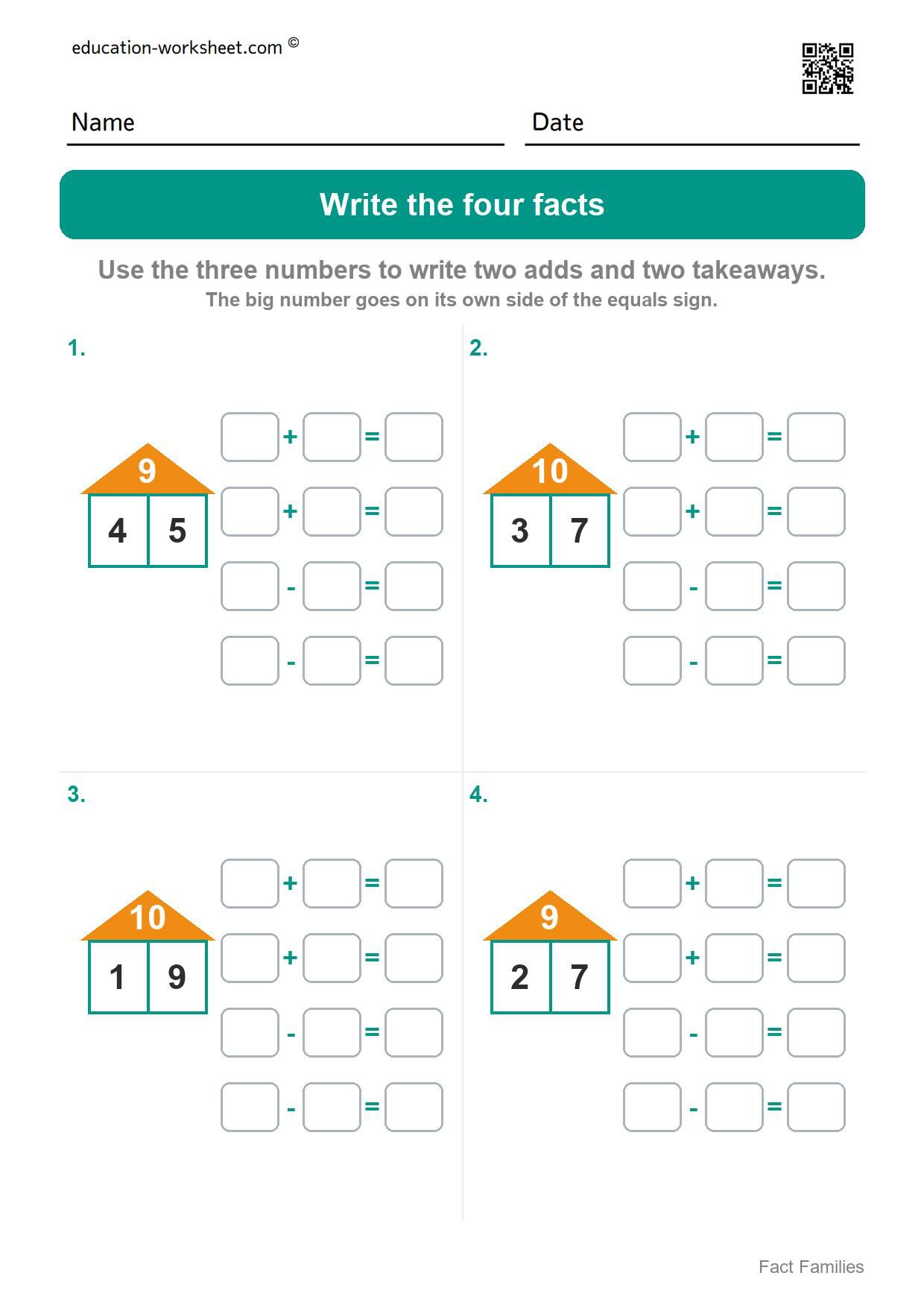
Write the four facts – numbers to 10 (Set 1)
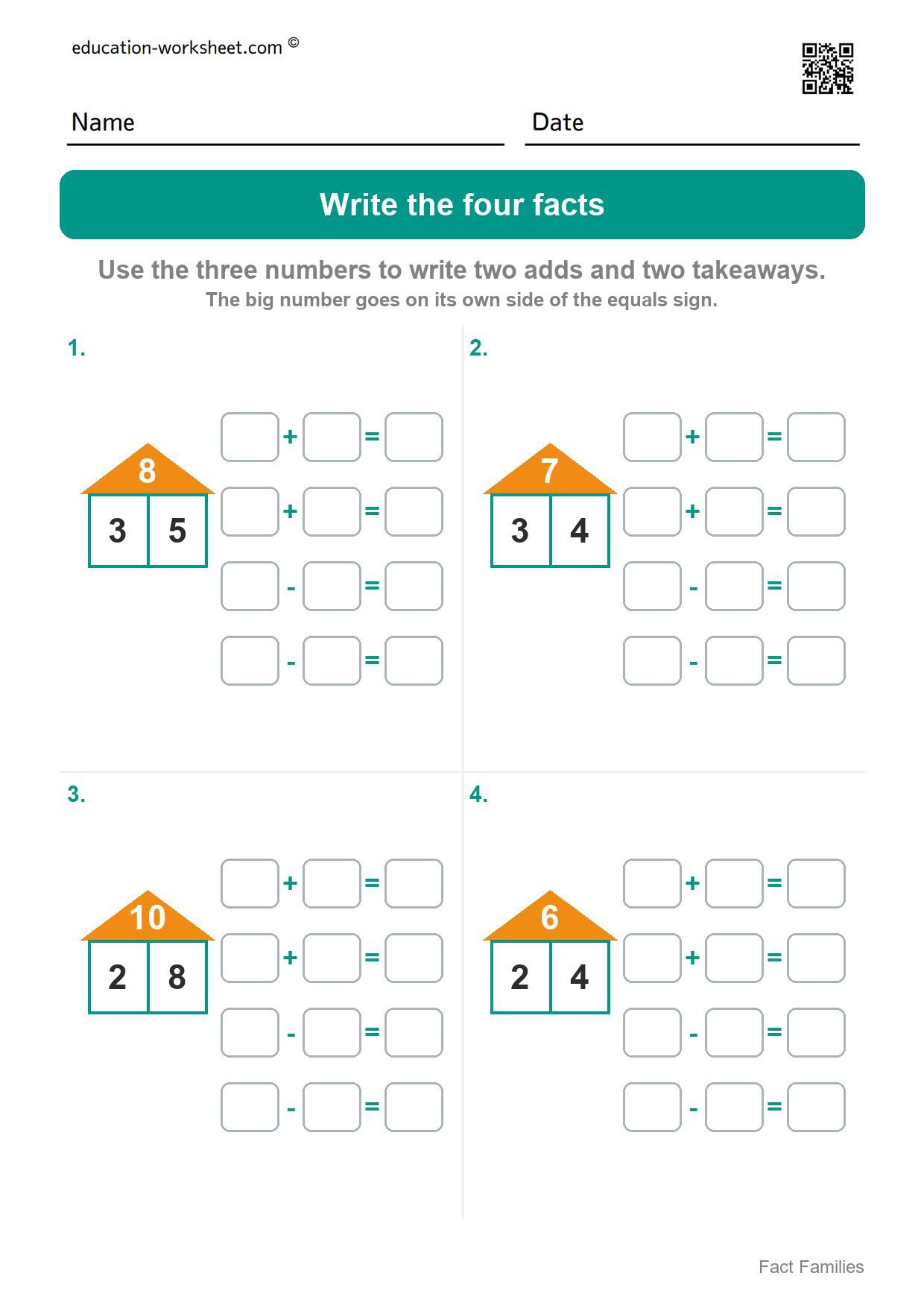
Write the four facts – numbers to 10 (Set 2)
Write the four facts – numbers to 10 (Set 3)
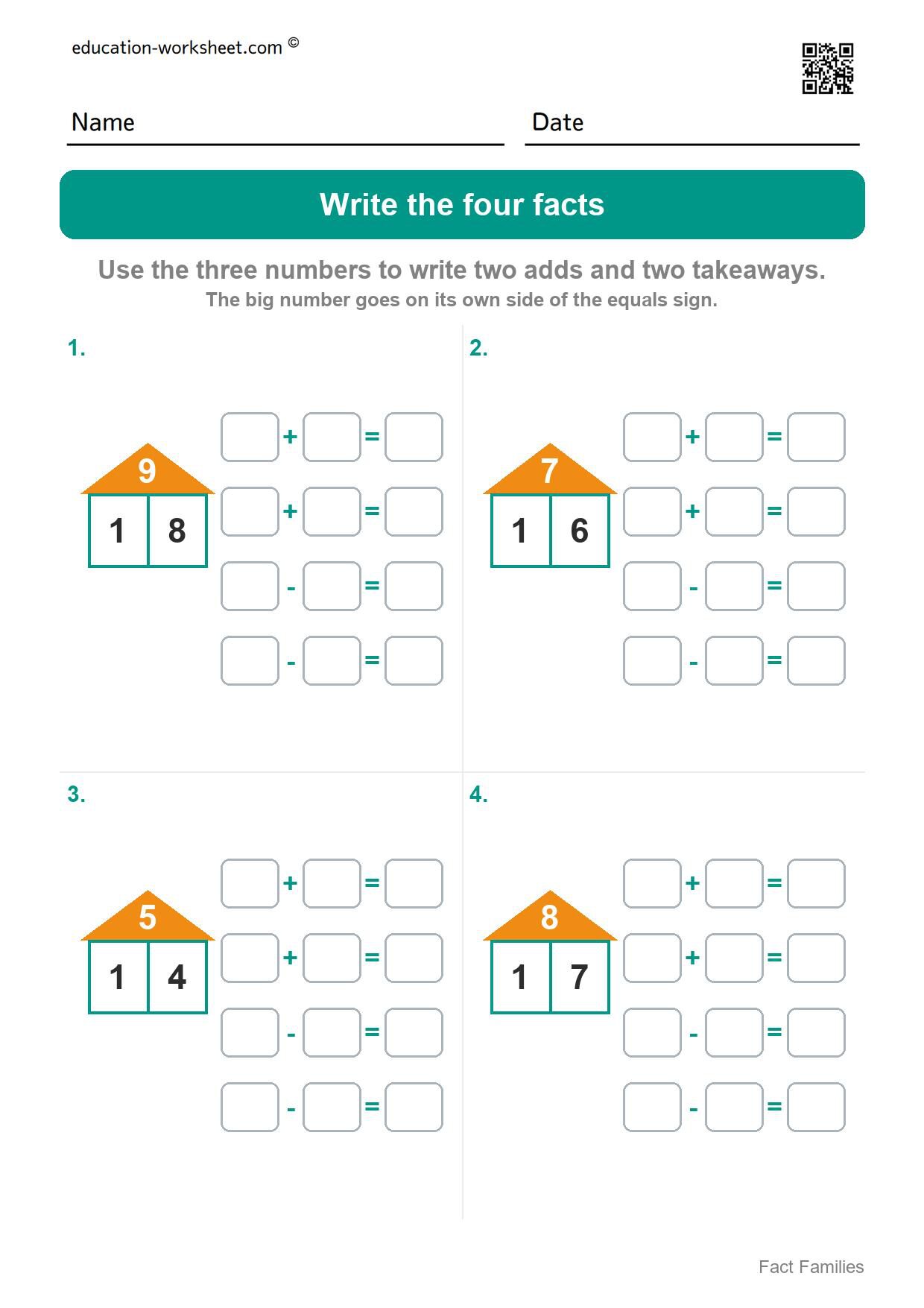
Write the four facts – numbers to 10 (Set 4)
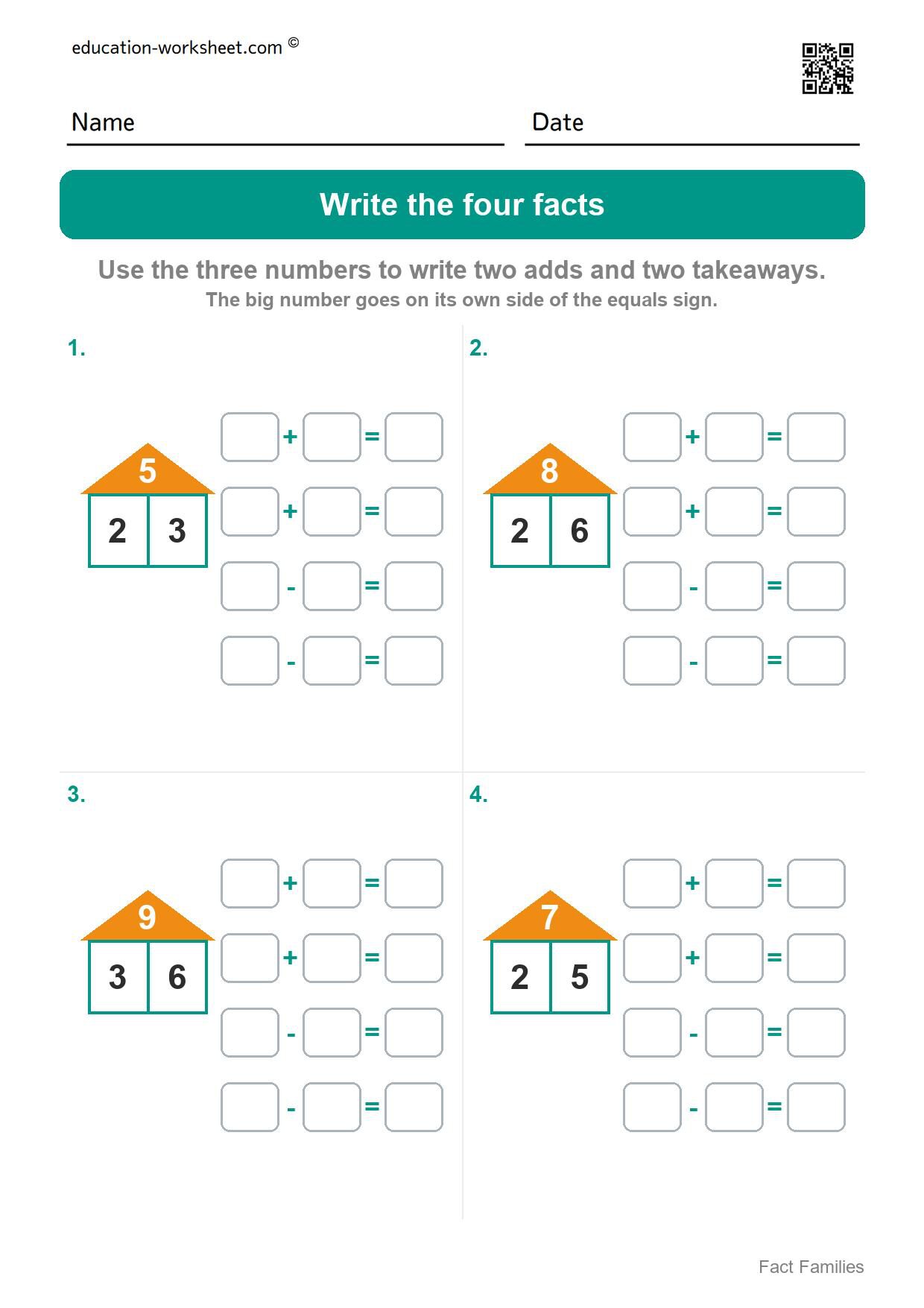
Write the four facts – numbers to 20 (Set 5)
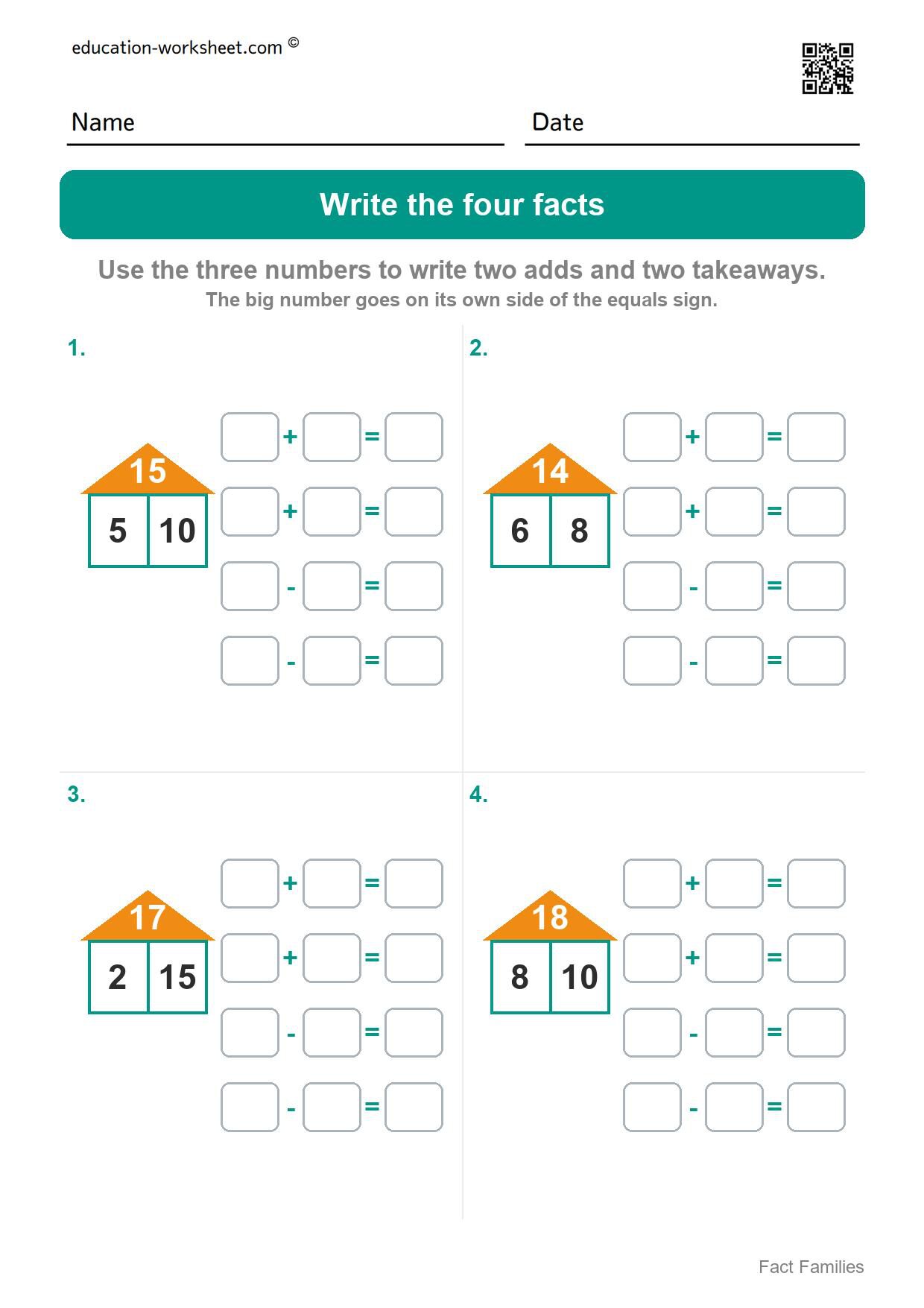
Write the four facts – numbers to 20 (Set 6)
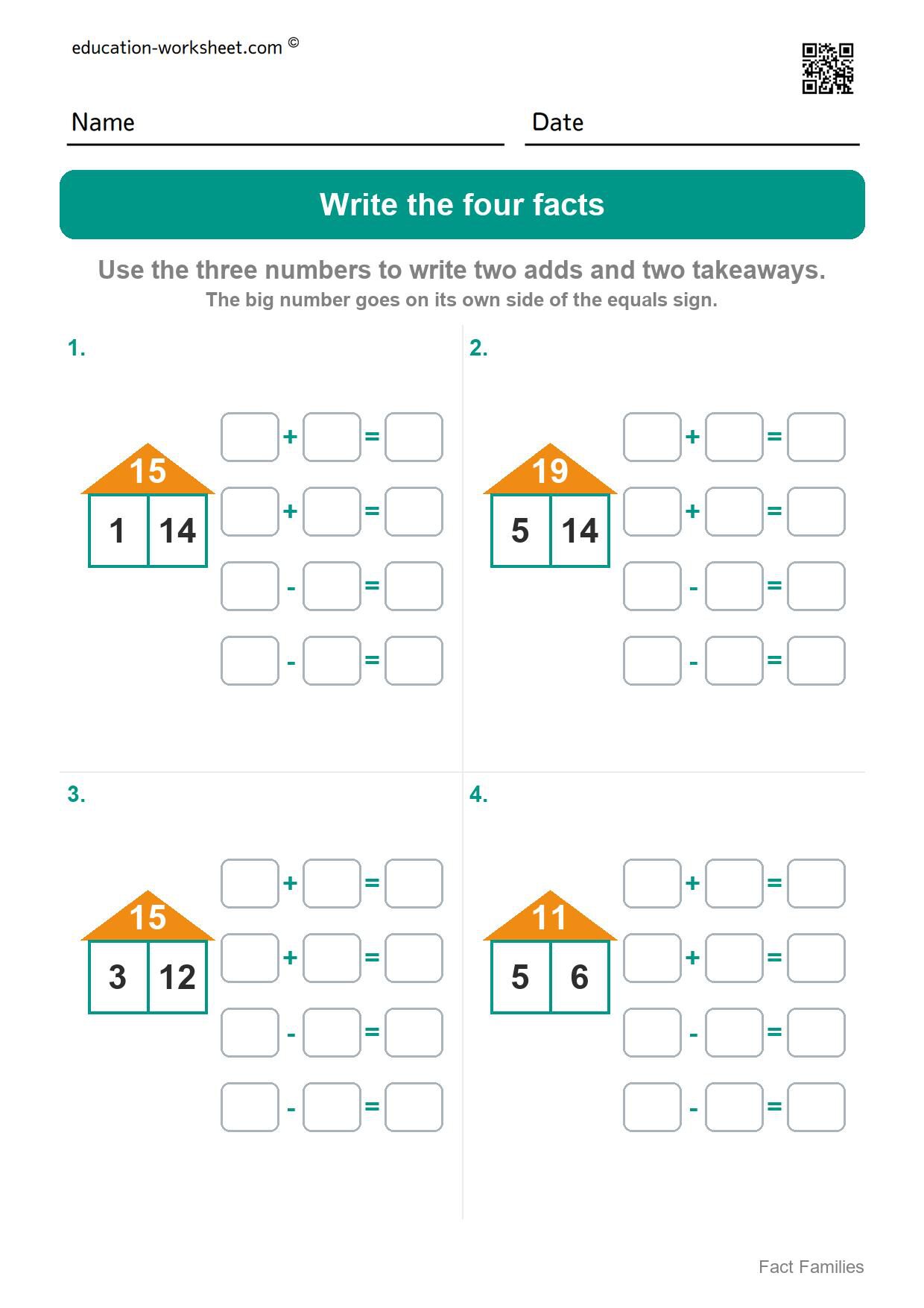
Write the four facts – numbers to 20 (Set 7)
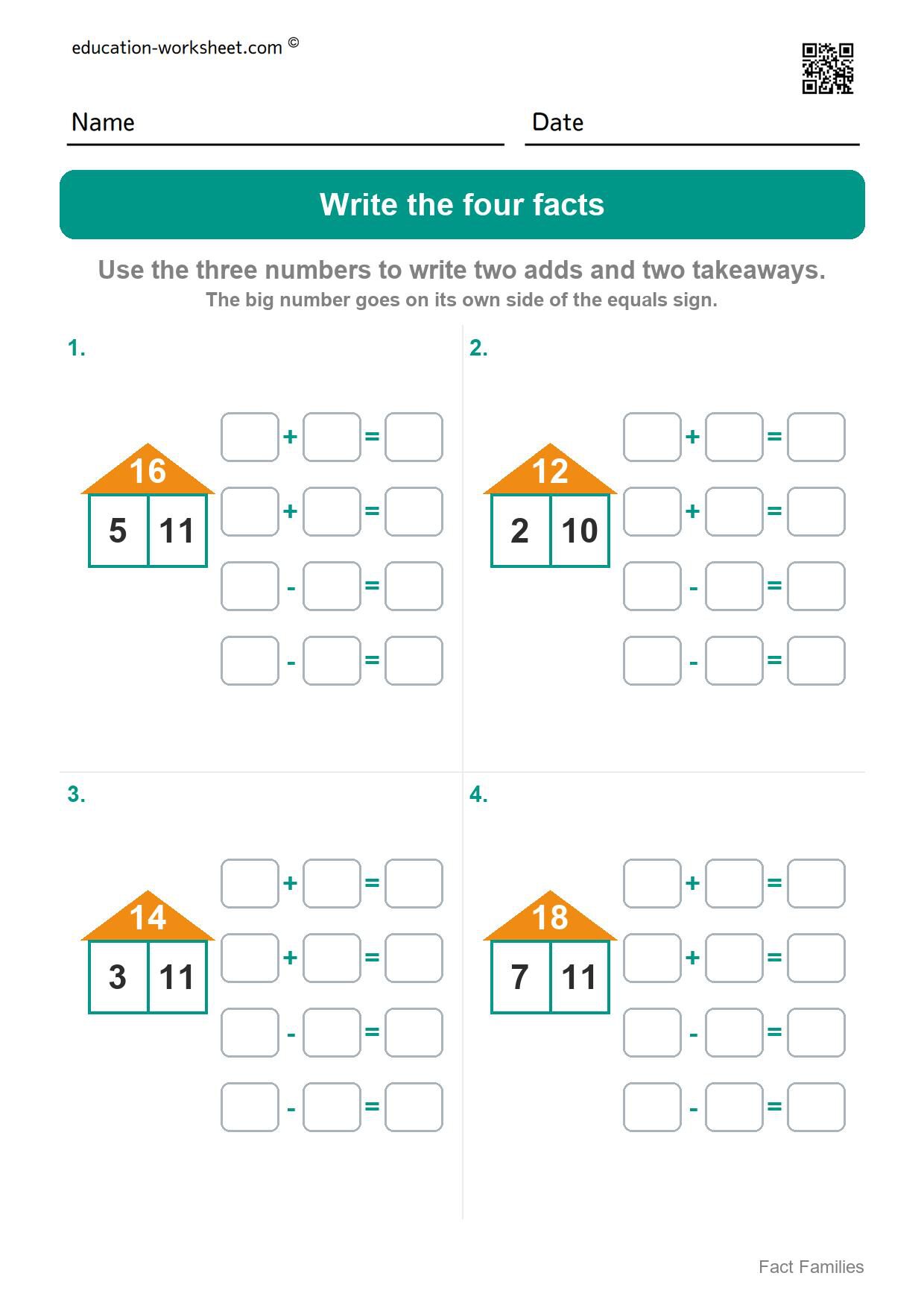
Write the four facts – numbers to 20 (Set 8)
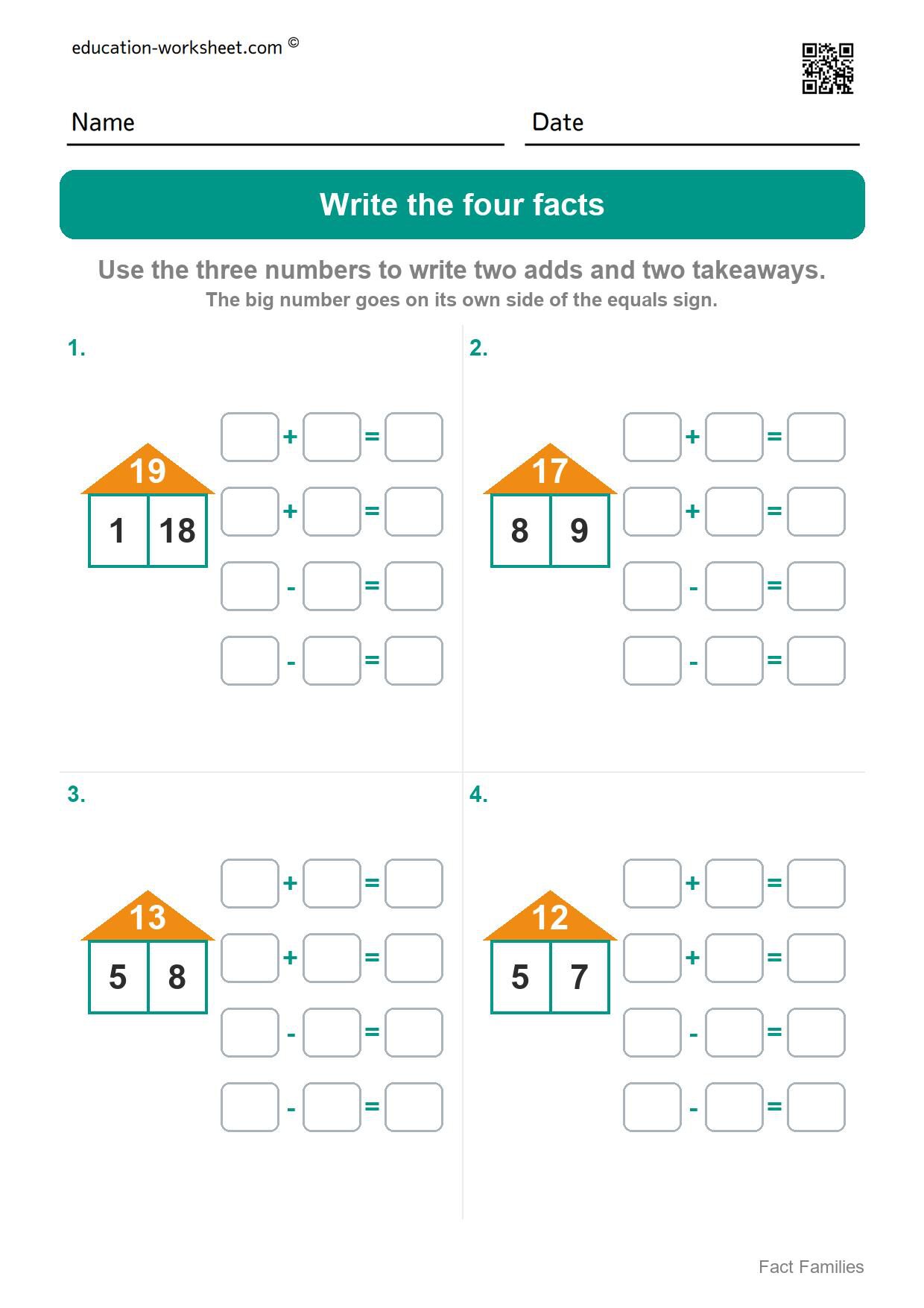
Write the four facts – numbers to 20 (Set 9)
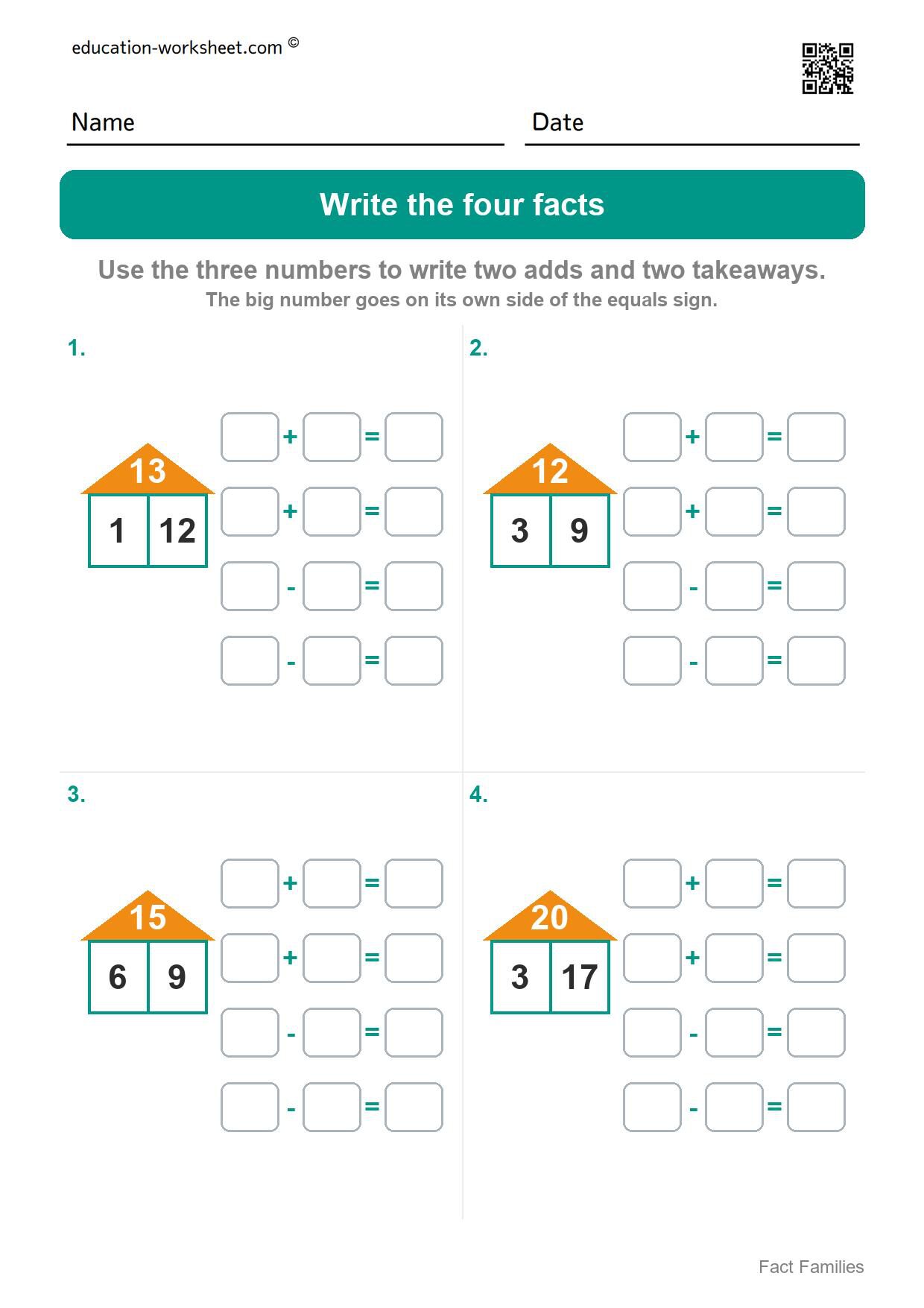
Write the four facts – numbers to 20 (Set 10)
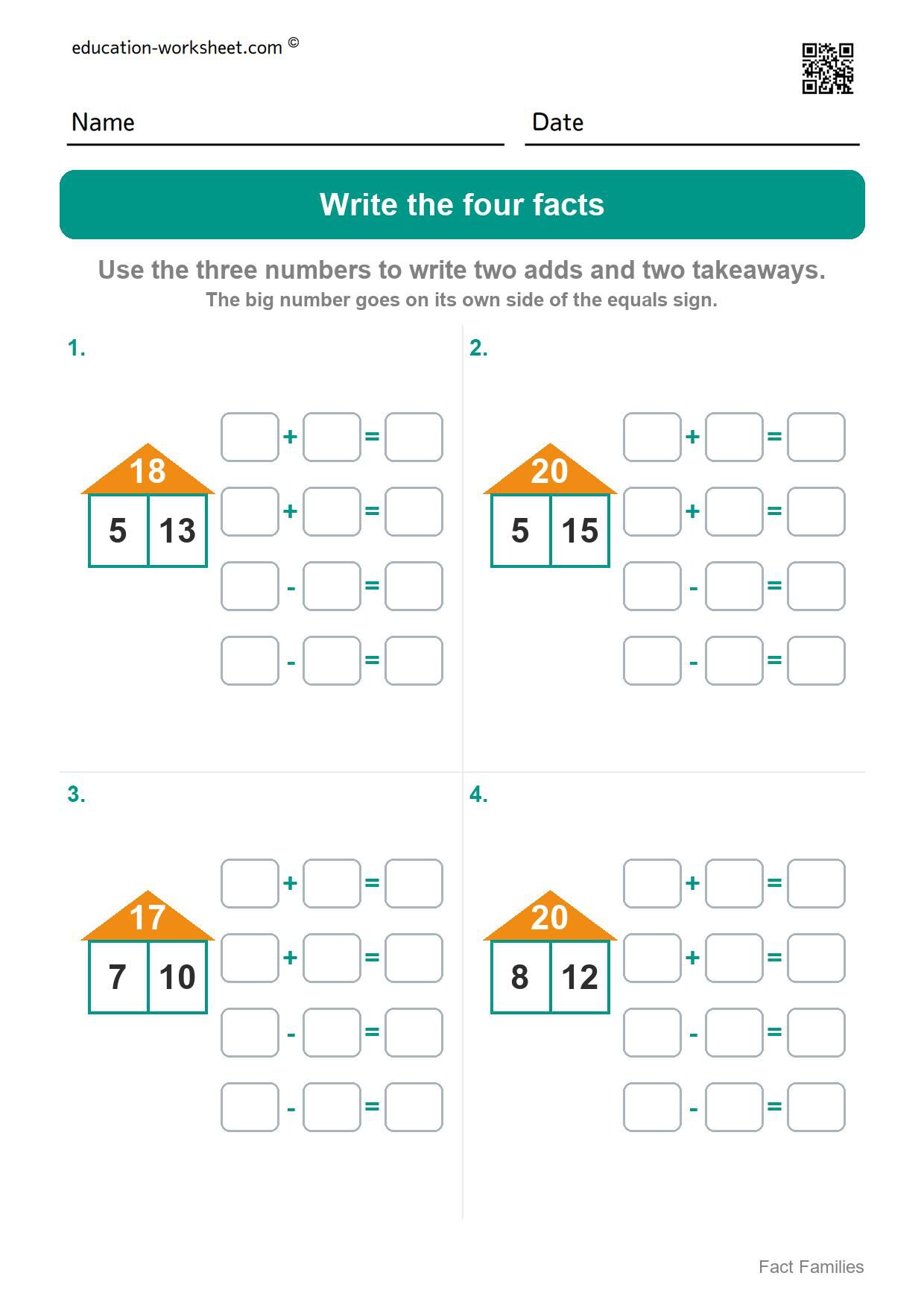
Answer key – all 10 pages
Fact families: three numbers, four facts, one idea
A fact family takes three numbers, such as 4, 9 and 13, and shows that they produce four number sentences: 4 + 9 = 13, 9 + 4 = 13, 13 − 4 = 9 and 13 − 9 = 4. The point is not the four sentences. It is that they are all the same piece of knowledge, and a child who really sees that has halved the amount of memorising left to do.
What your child is actually learning
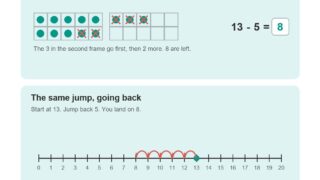
First grade asks children to understand subtraction as an unknown addend problem, which is what fact families make visible. Once a child sees that 13 − 9 is asking what goes with 9 to make 13, subtraction stops being a separate skill needing its own strategies and becomes addition asked from the other end. This is also the first step towards algebra, though nobody calls it that yet.
How to work through these pages
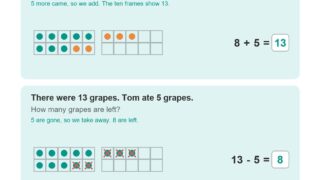
Say the family out loud as a set rather than as four separate calculations. Point out the structure directly: the two small numbers can go in either order at the front, and the big number always sits alone on one side. Physical objects help enormously here. Put nine counters and four counters together, then separate them again, and ask which sentence describes what you just did each time.
The mistakes to expect
- Writing subtraction with the small number first: 4 − 13. The rule that the whole comes first in subtraction usually needs saying explicitly.
- Producing four facts mechanically without seeing the connection. If your child cannot use 4 + 9 to answer 13 − 9, the unit has not landed yet.
- Using the same number twice, giving families such as 4, 4 and 8 an unexpected shape. These are worth doing, because they only have two facts rather than four.
- Getting the addition facts right but the subtraction ones wrong, which means the child is calculating each one afresh rather than reading them off the family.
What to teach next
Missing number problems are the natural next step, since 4 + ? = 13 is a fact family with one part hidden. Word problems follow well too, because the hardest part of a word problem is deciding which of the four sentences fits the story.
Questions parents ask
Are fact families and number bonds the same thing?
They describe the same relationship in different pictures. A number bond usually shows the whole and its two parts as a diagram, while a fact family writes the same information as four number sentences. Using both is helpful.
Why does my child find the subtraction facts harder?
Because they are being worked out rather than recalled. The whole aim of this unit is to move a child from calculating 13 − 9 to remembering that 9 and 4 make 13, which takes time and repeated exposure.
How many families should we practise at once?
Two or three, until each can be said without hesitation. Fact families are about seeing structure, and structure does not come from volume.