- Free Telling Time Worksheets for Kindergarten – Half Past the Hour
- Read half past times (Set 1)
- Read half past times (Set 2)
- Read half past times (Set 3)
- Read half past times (Set 4)
- Read half past times (Set 5)
- Read half past times (Set 6)
- Read half past times (Set 7)
- Read half past times (Set 8)
- Read half past times (Set 9)
- Read half past times (Set 10)
- Answer key – all 10 pages
- Half past: why the hour hand sits between two numbers
- What your child is actually learning
- How to work through these pages
- The mistakes to expect
- What to teach next
- Questions parents ask
- Why does my child always say the wrong hour at half past?
- Should we say half past three or three thirty?
- Is it worth using a clock with only an hour hand?
- More free worksheets
Free Telling Time Worksheets for Kindergarten – Half Past the Hour
These free printable telling time worksheets help kindergarten and first grade children learn to read half past times on a clock. When it is half past, the long hand points straight down to the 6, and the short hand sits halfway between two numbers. Children look at each clock and write the hour it is just past. Half past is the next step after o’clock, and reading it teaches kids that the hour hand moves slowly between the numbers. The final page is an answer key. Just download, print, and tell the time!
Read half past times (Set 1)
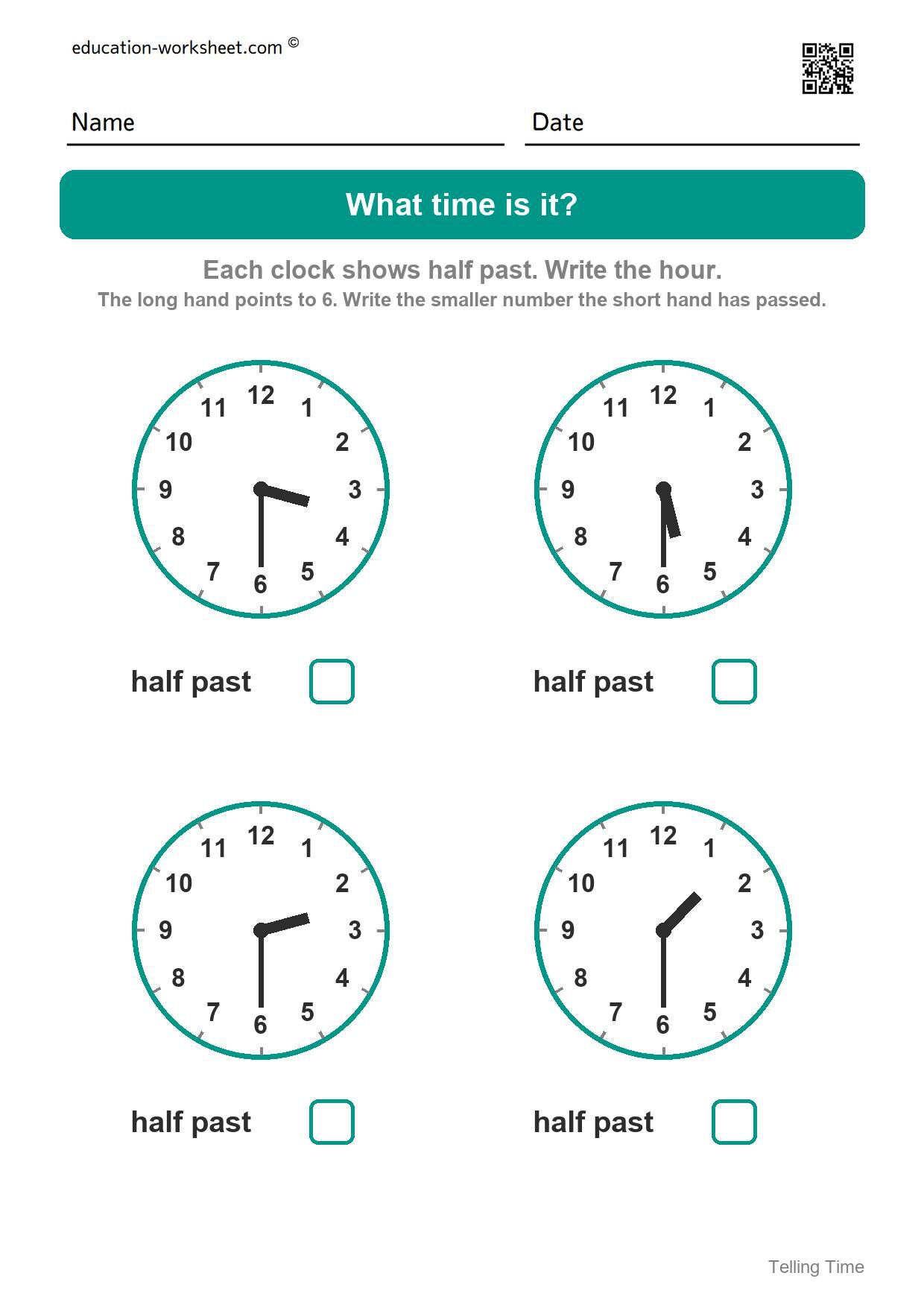
Read half past times (Set 2)
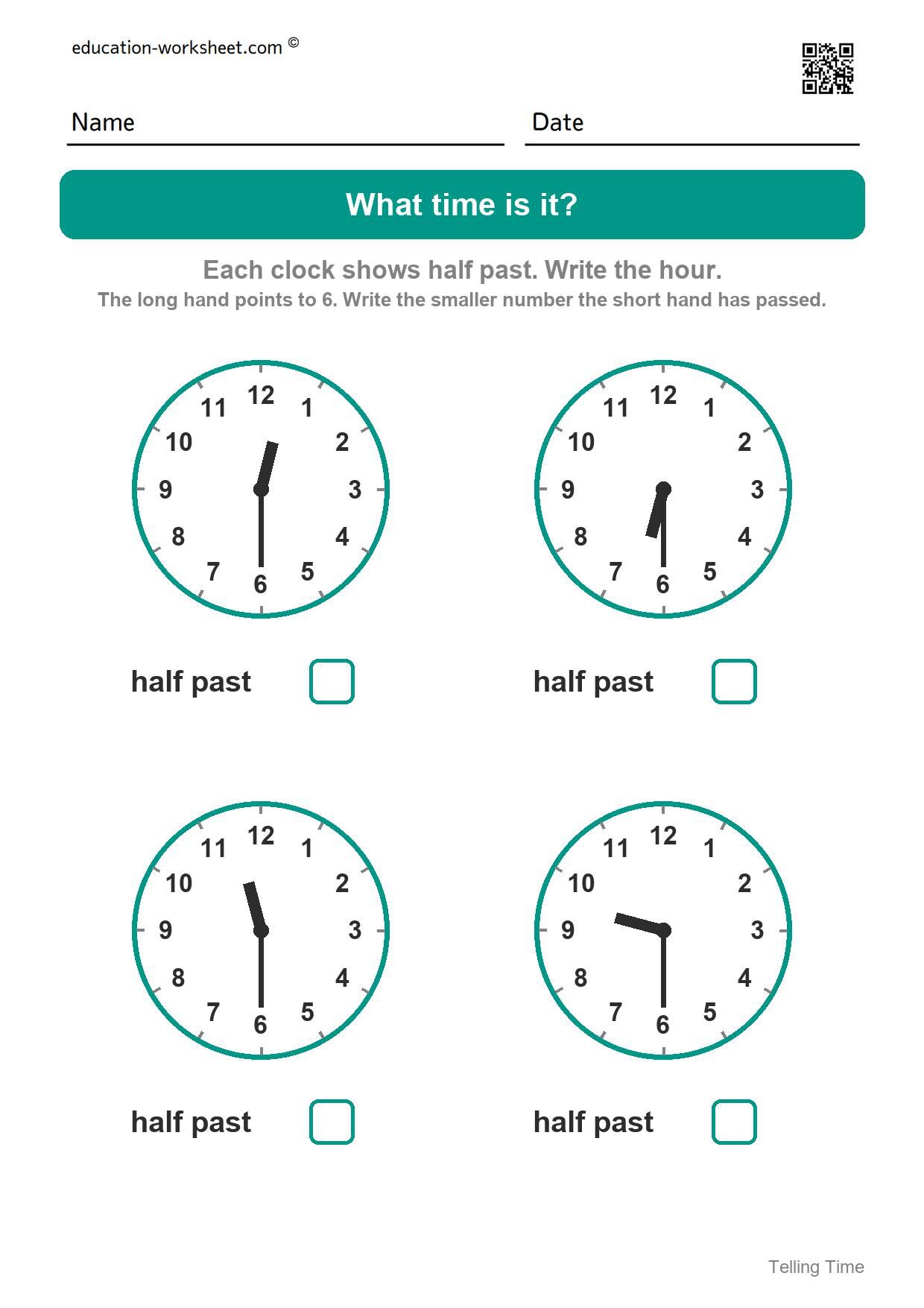
Read half past times (Set 3)
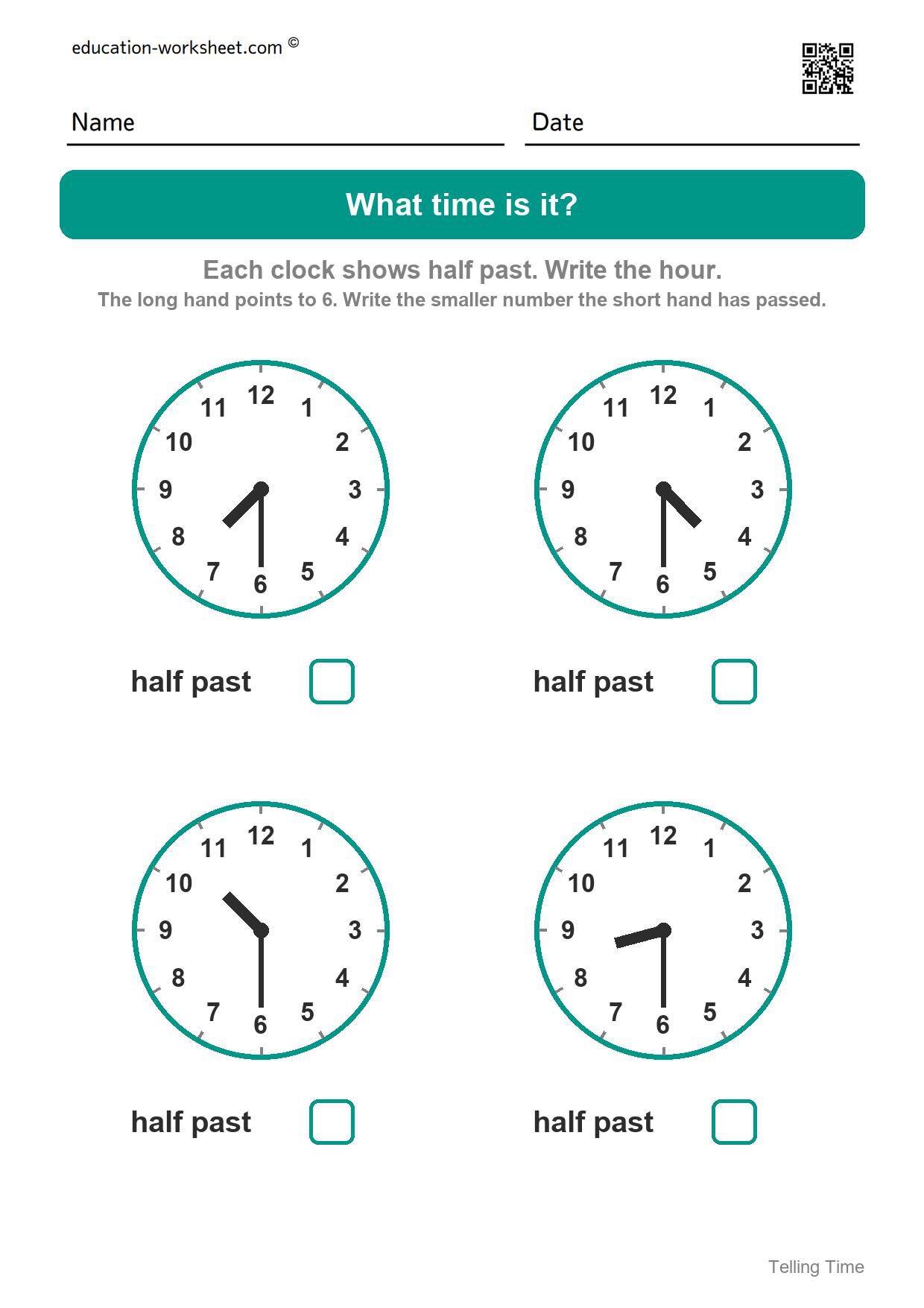
Read half past times (Set 4)
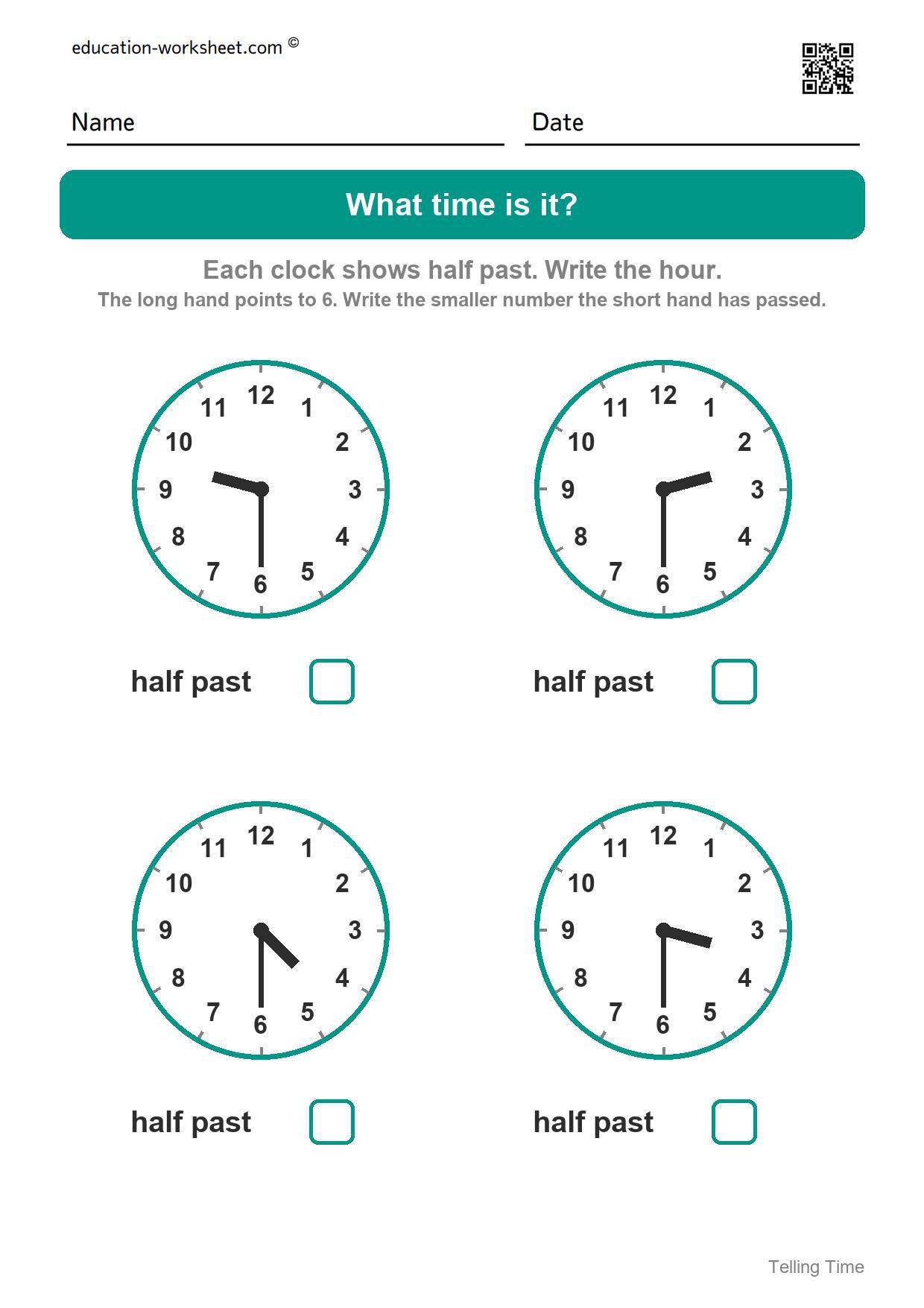
Read half past times (Set 5)
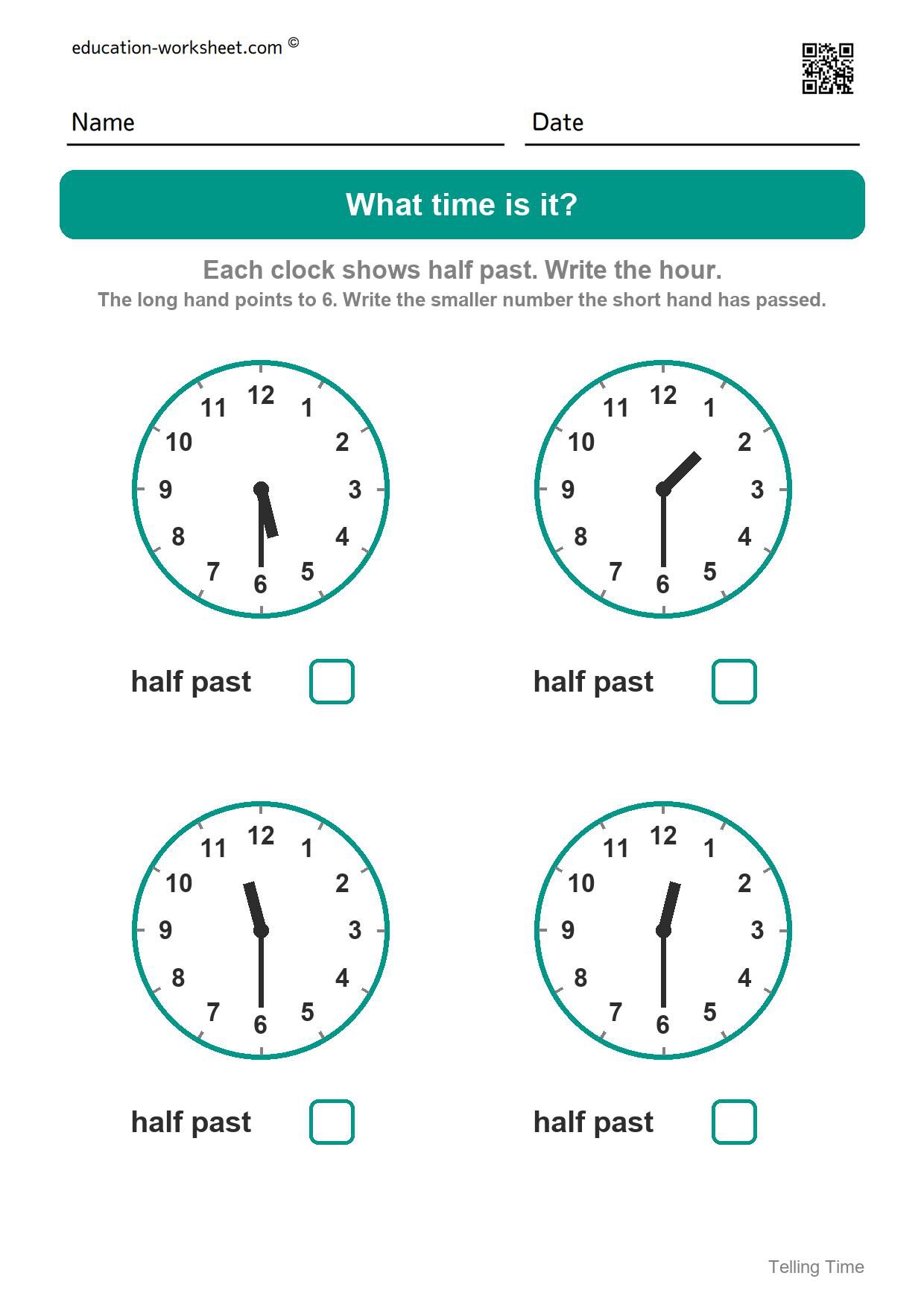
Read half past times (Set 6)
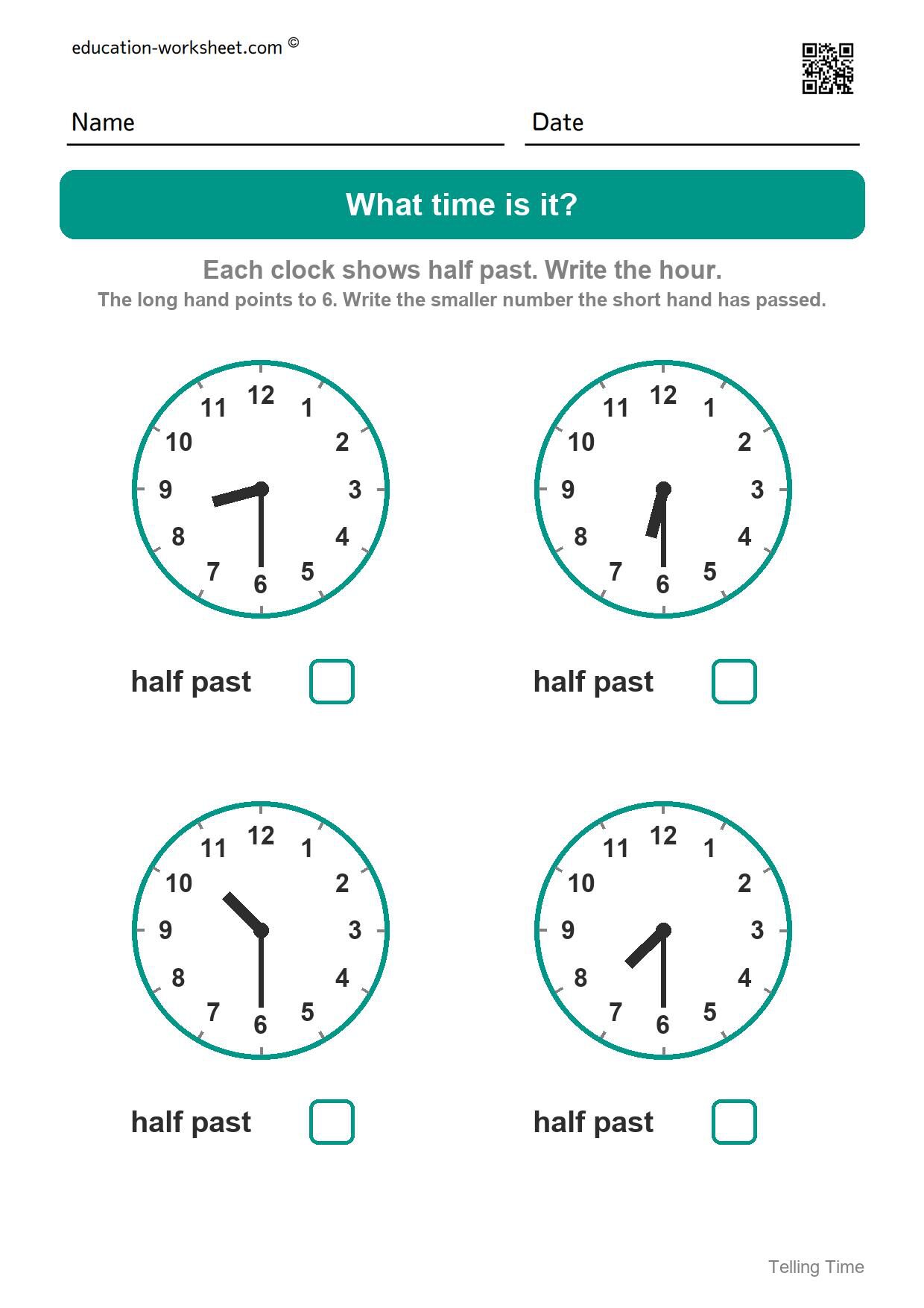
Read half past times (Set 7)
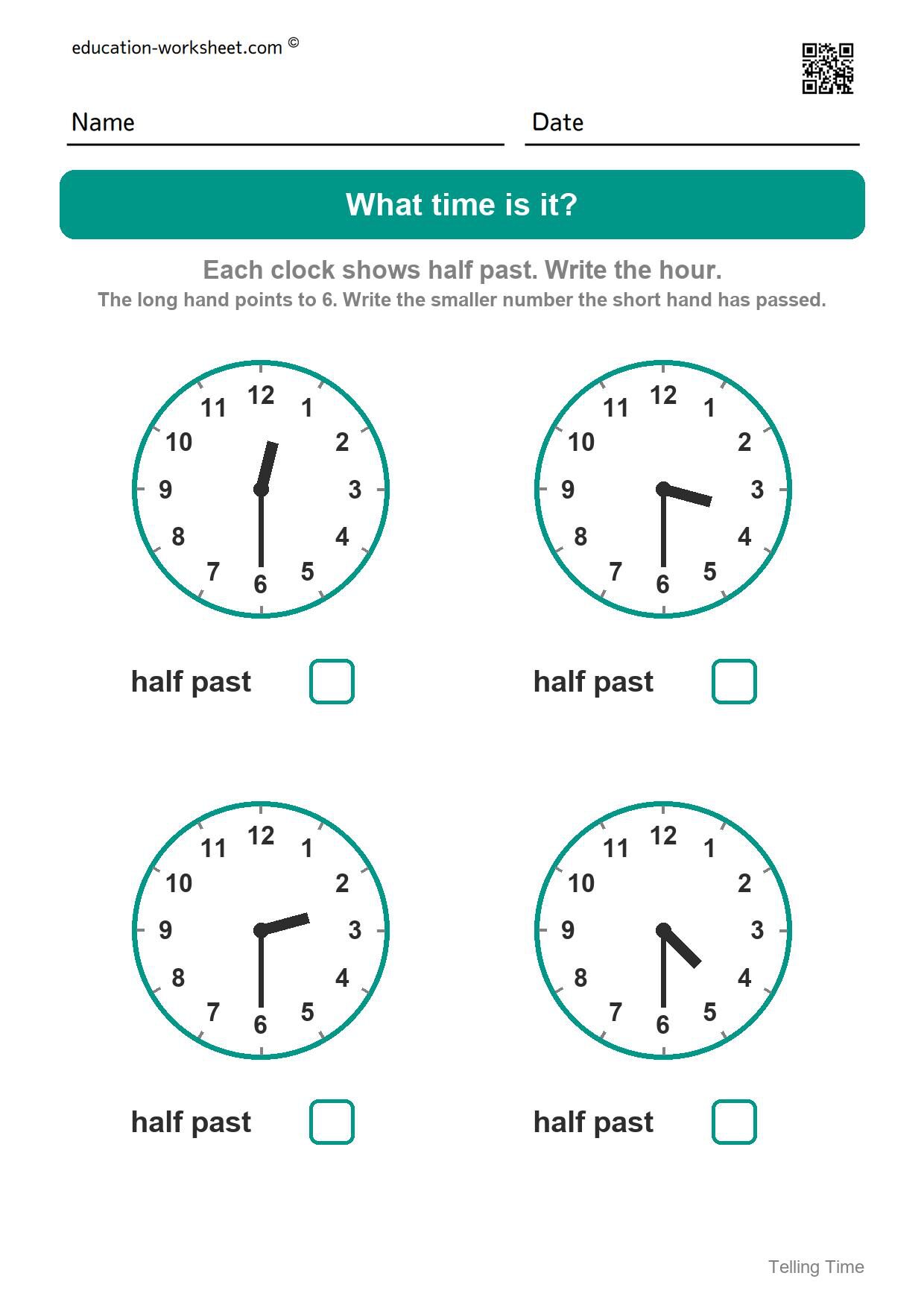
Read half past times (Set 8)
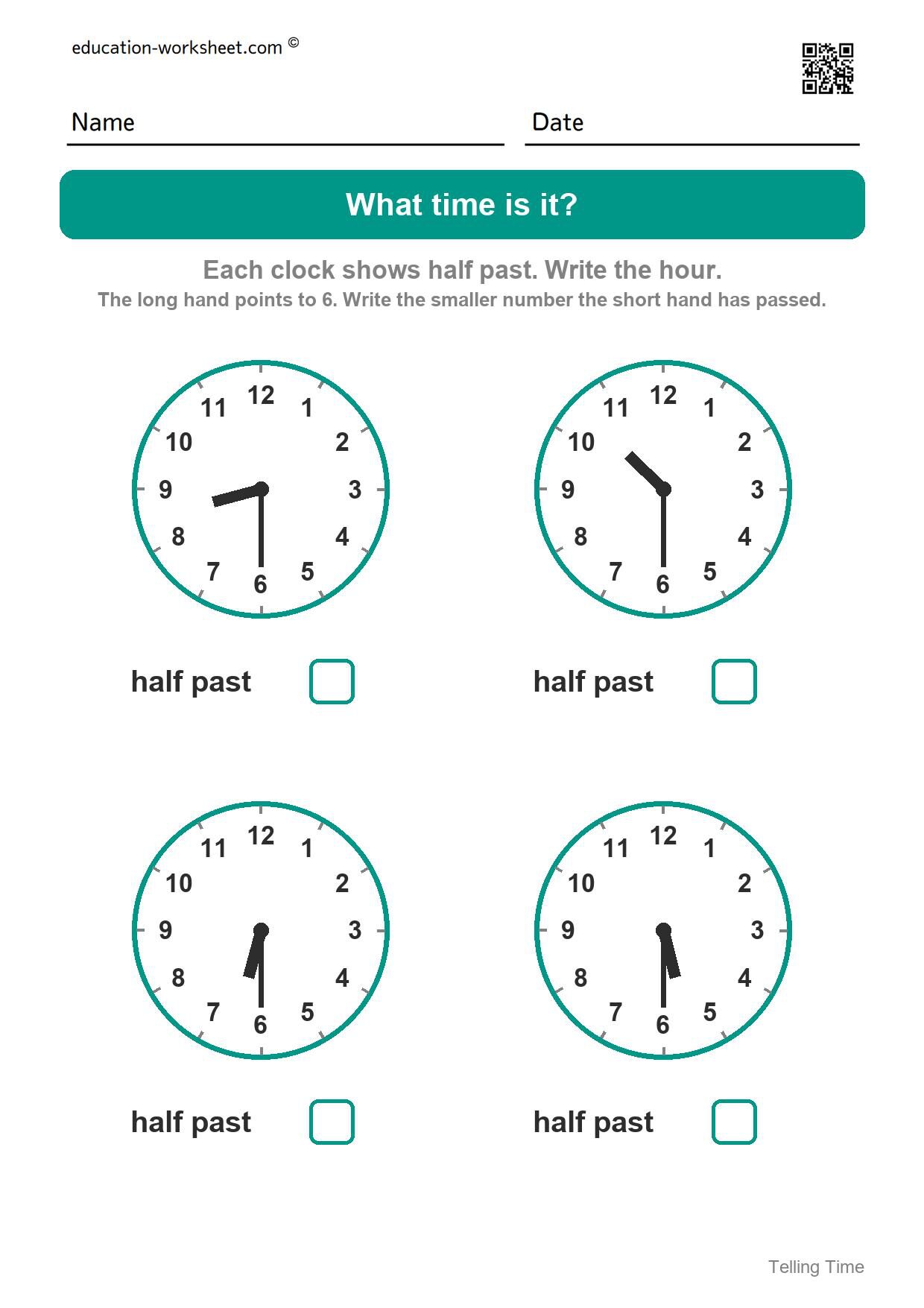
Read half past times (Set 9)
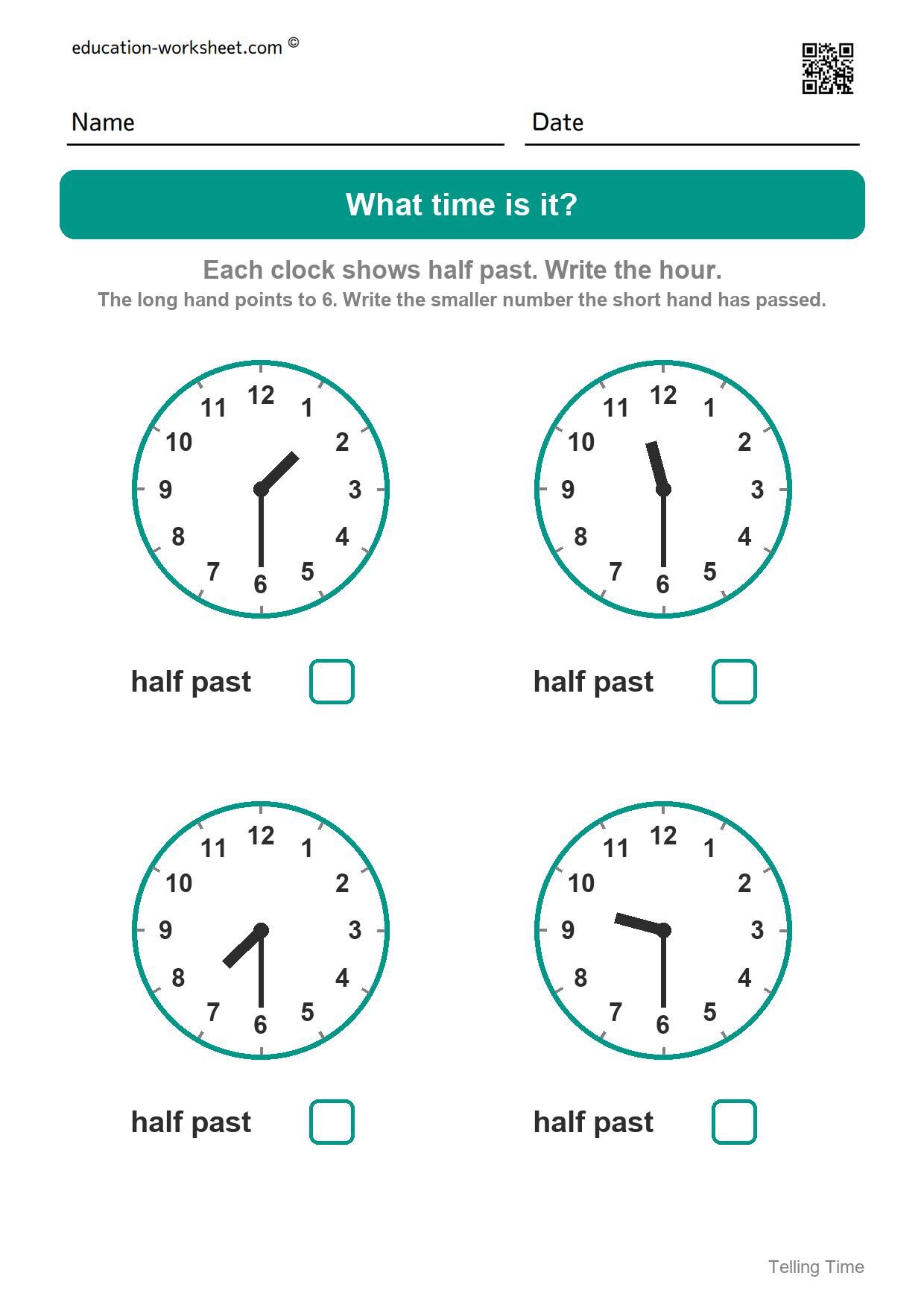
Read half past times (Set 10)
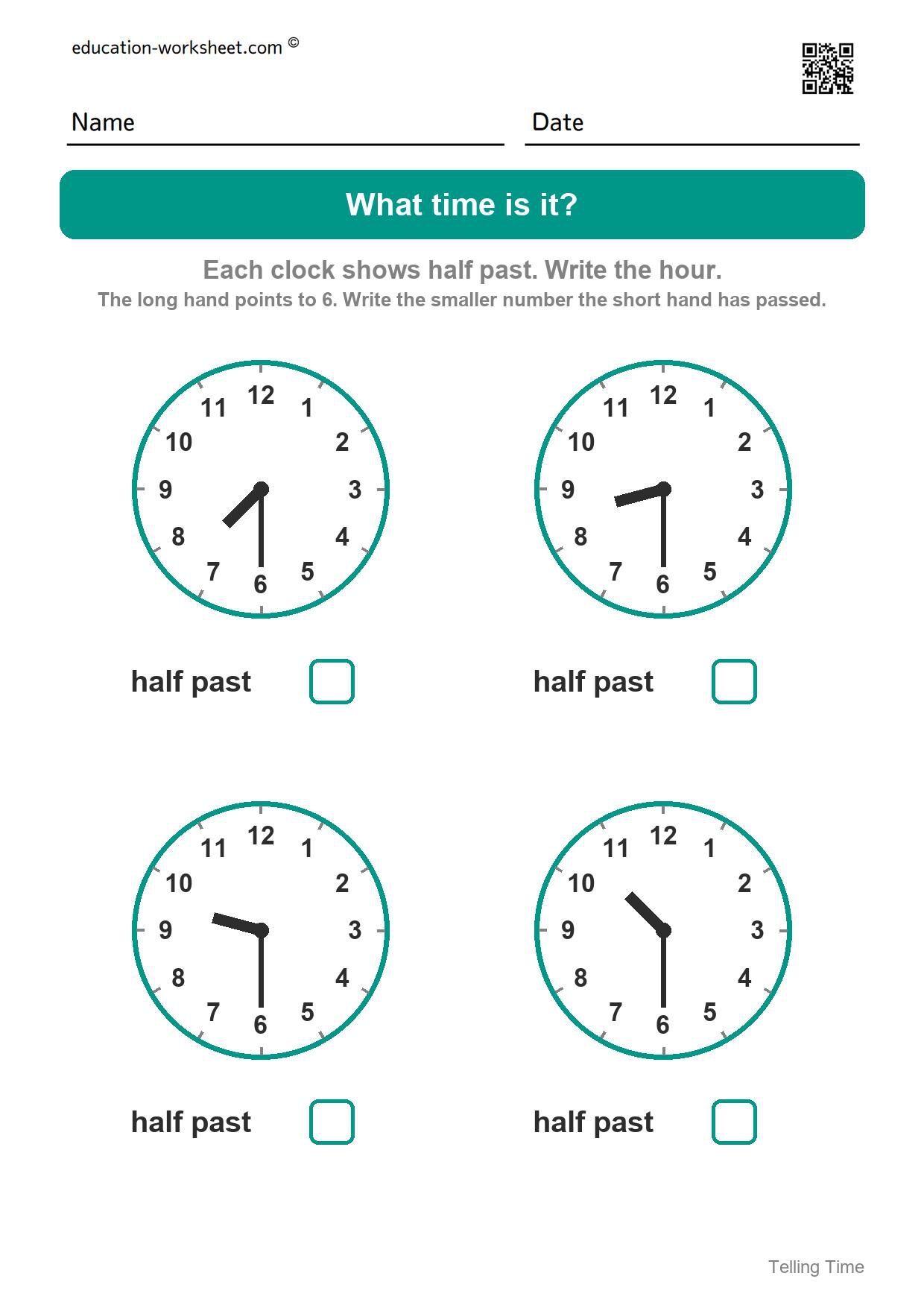
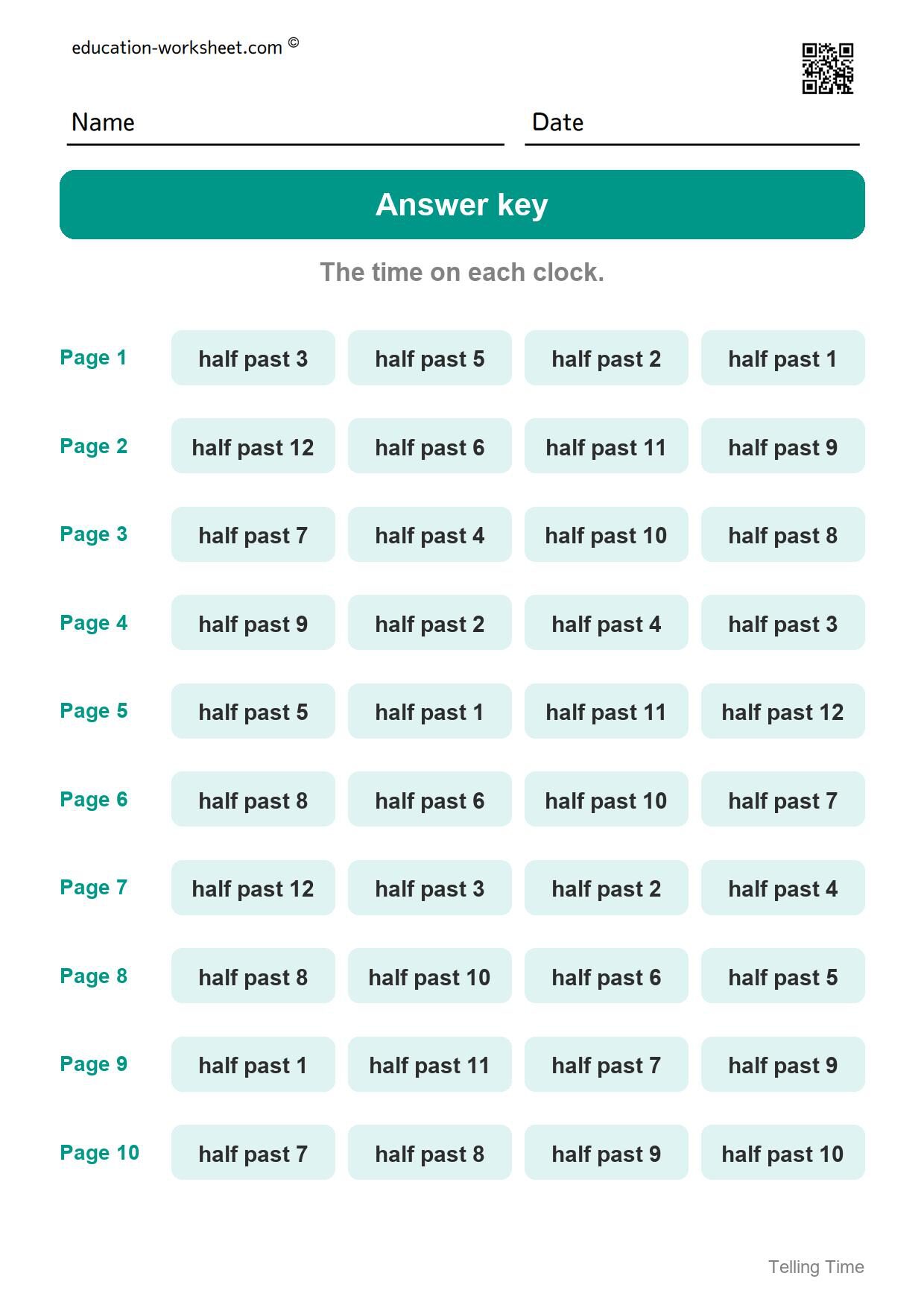
Answer key – all 10 pages
Half past: why the hour hand sits between two numbers
At half past three the hour hand is not on the three. It has moved halfway towards the four, which means it is closer to the four than to the three. A child who reads the nearest number will say half past four, and they will do it consistently, because the reasoning is sound and the rule they are using is wrong.
What your child is actually learning
Half past introduces two ideas at once. The minute hand now points at the six, which means thirty minutes rather than six, and this is the first time the numbers on the face mean something different depending on which hand is pointing at them. At the same time the hour hand has left its number. Of the two, the hour hand causes far more errors, and it is the one to spend time on.
How to work through these pages
Teach the rule as “the hour we have already passed,” not “the nearest number.” On a clock you can turn, move the hands slowly from three o’clock to half past three and let your child watch the short hand drift. Seeing it move makes the rule obvious in a way that stating it does not. Connect the half to what your child already knows about fractions: the minute hand has gone half way round.
The mistakes to expect
- Naming the hour ahead: half past four instead of half past three. This is the central difficulty of the unit and needs the passed-hour rule repeated many times.
- Reading the minute hand at the six as six minutes rather than thirty.
- Writing 3:6 instead of 3:30 in digital form.
- Getting o’clock times right and half past wrong, which shows the hour hand rule was never needed until now.
What to teach next
Quarter past and quarter to usually follow, though they belong to second grade in many schemes. Before that, plenty of mixed practice with o’clock and half past together is worth more than moving on, because mixing them is what forces the child to actually check the hour hand rather than assume.
Questions parents ask
Why does my child always say the wrong hour at half past?
Because they are reading the nearest number, which works perfectly at o’clock times and fails here. Replace the rule rather than correcting the answers: the hour hand tells you the hour it has passed.
Should we say half past three or three thirty?
Both, so neither is unfamiliar. Half past three matches the analogue picture, three thirty matches the digital display, and children meet both in daily life.
Is it worth using a clock with only an hour hand?
It genuinely helps. A single-handed clock forces a child to read position rather than numbers, and after a while they can say “a bit past three” with real understanding, which is exactly what is needed here.