- Free Counting Money Worksheets for Kindergarten – Count Coins and Write the Total
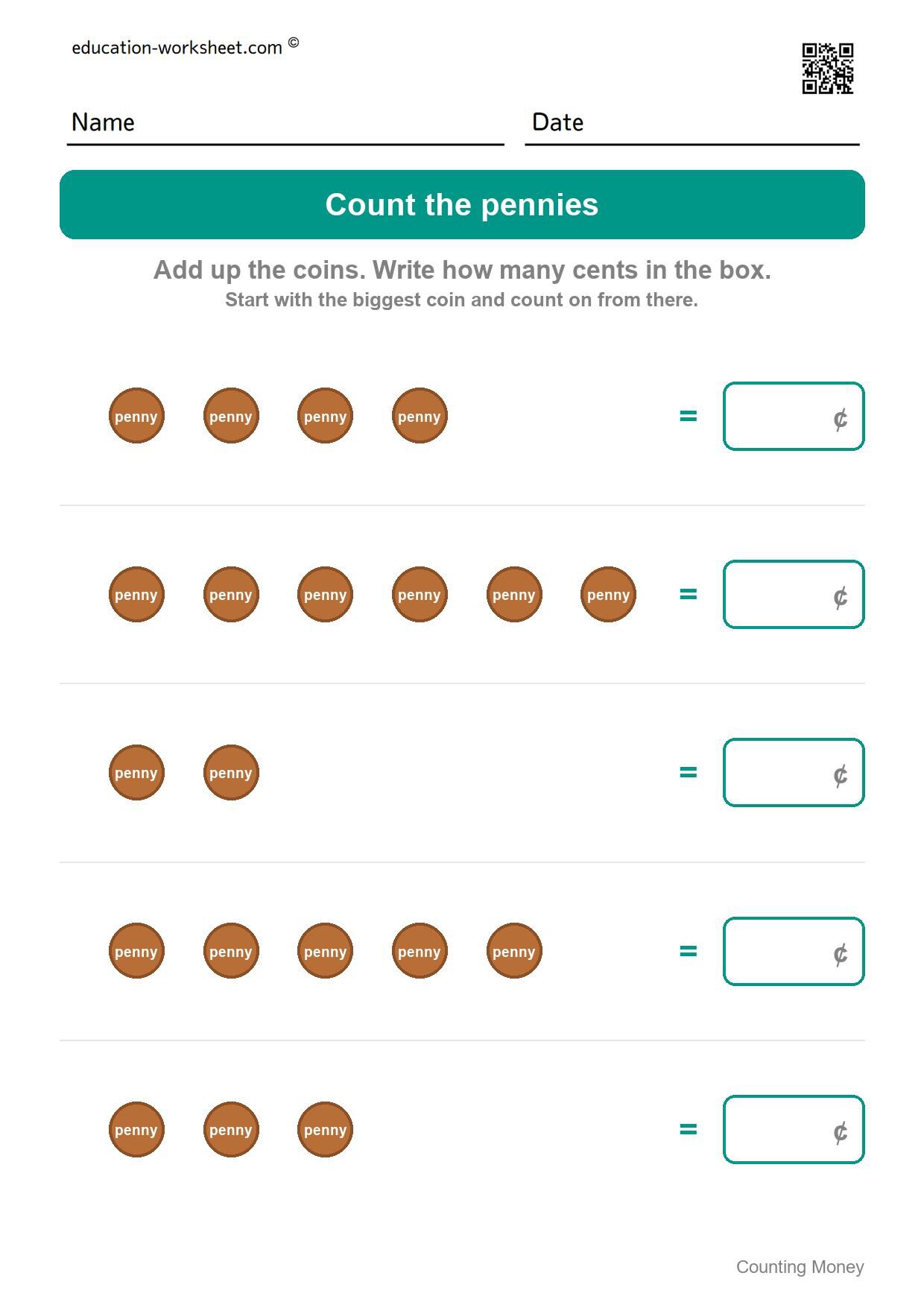
- Coin chart – penny, nickel, dime and quarter
- Count the pennies (Set 1)
- Nickels and pennies (Set 2)
- Nickels and pennies (Set 3)
- Nickels and pennies (Set 4)
- Dimes and pennies (Set 5)
- Dimes, nickels and pennies (Set 6)
- Mixed coins (Set 7)
- Mixed coins (Set 8)
- Quarters, nickels and pennies (Set 9)
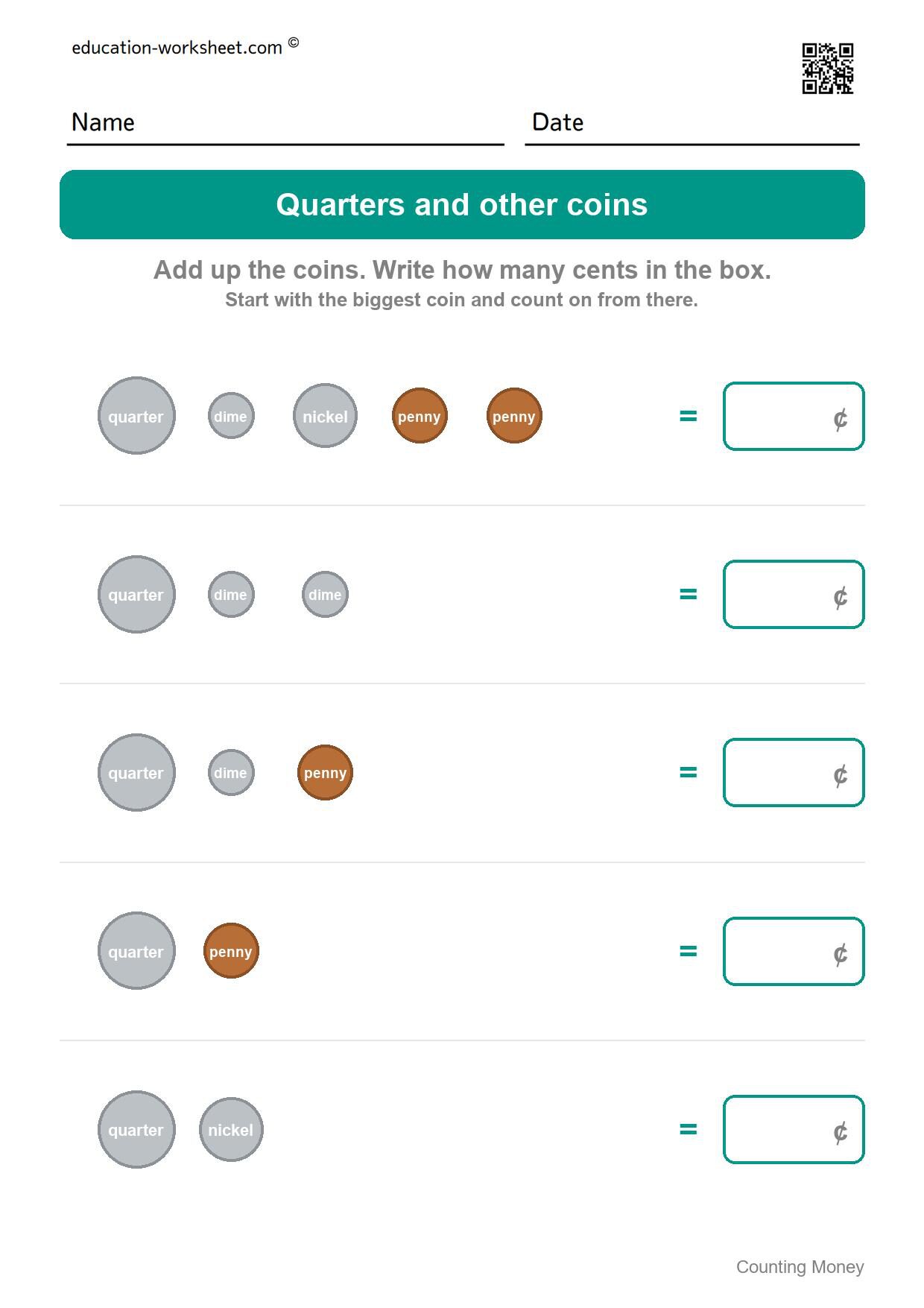
- Quarters and other coins (Set 10)
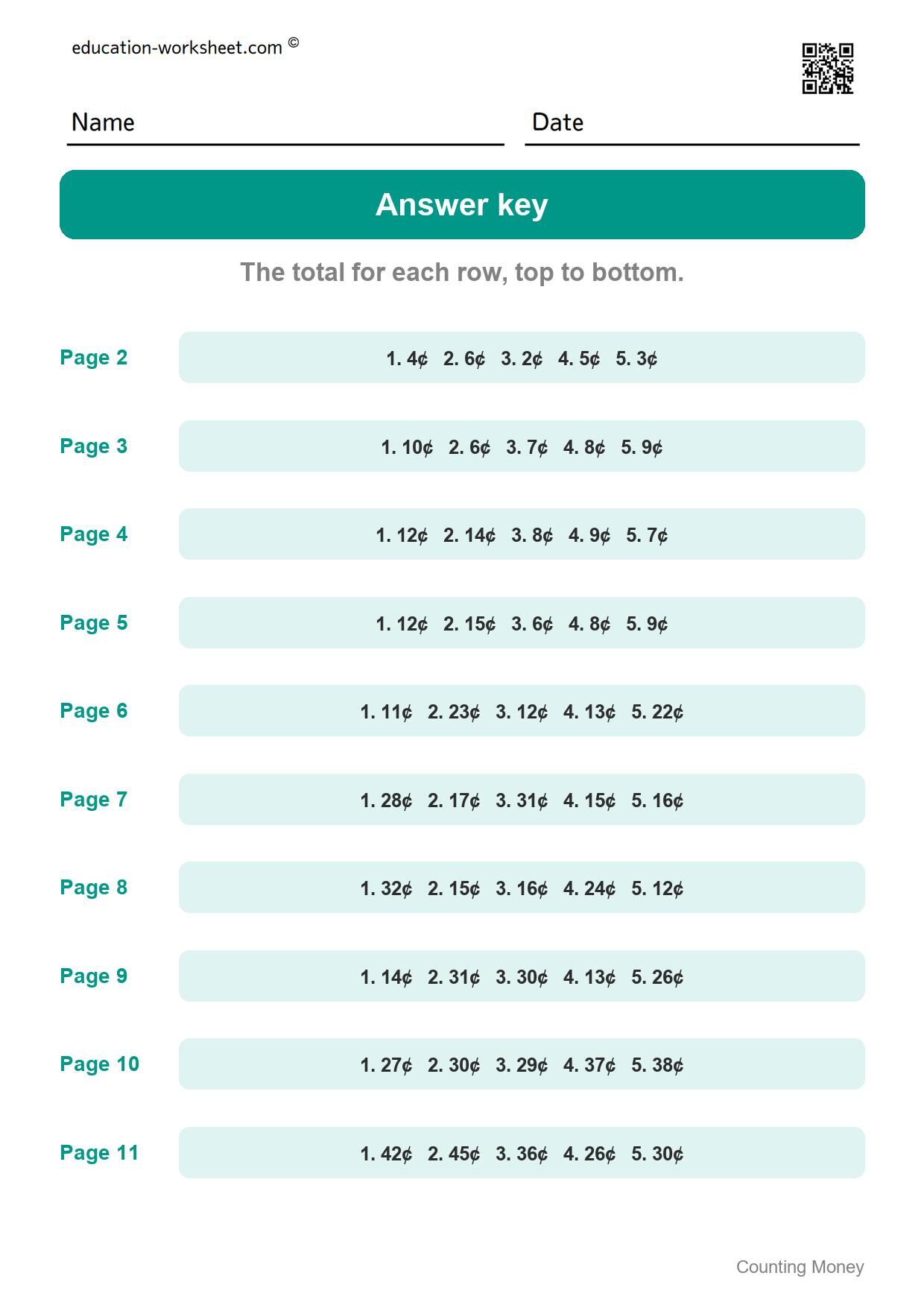
- Answer key – all 10 pages
- Counting coins: value has nothing to do with size
Free Counting Money Worksheets for Kindergarten – Count Coins and Write the Total
These free printable counting money worksheets help kindergarten and first grade children learn what coins are worth and add them up. The first page is a coin chart showing the penny, nickel, dime and quarter with their values, and children keep it beside them while they work. On the ten worksheet pages the coins are labelled with their names only, not their values, so children have to remember that a nickel is five cents and a dime is ten. Each row shows a small group of coins and a box for the total in cents. The pages get harder in order, starting with pennies alone, then adding nickels, dimes and finally quarters, so children build up instead of meeting everything at once. Counting coins is one of the first times children add numbers that are not all ones, which is exactly the step that leads to skip counting and mental addition. The last page is an answer key. Just download, print, and count!
Coin chart – penny, nickel, dime and quarter
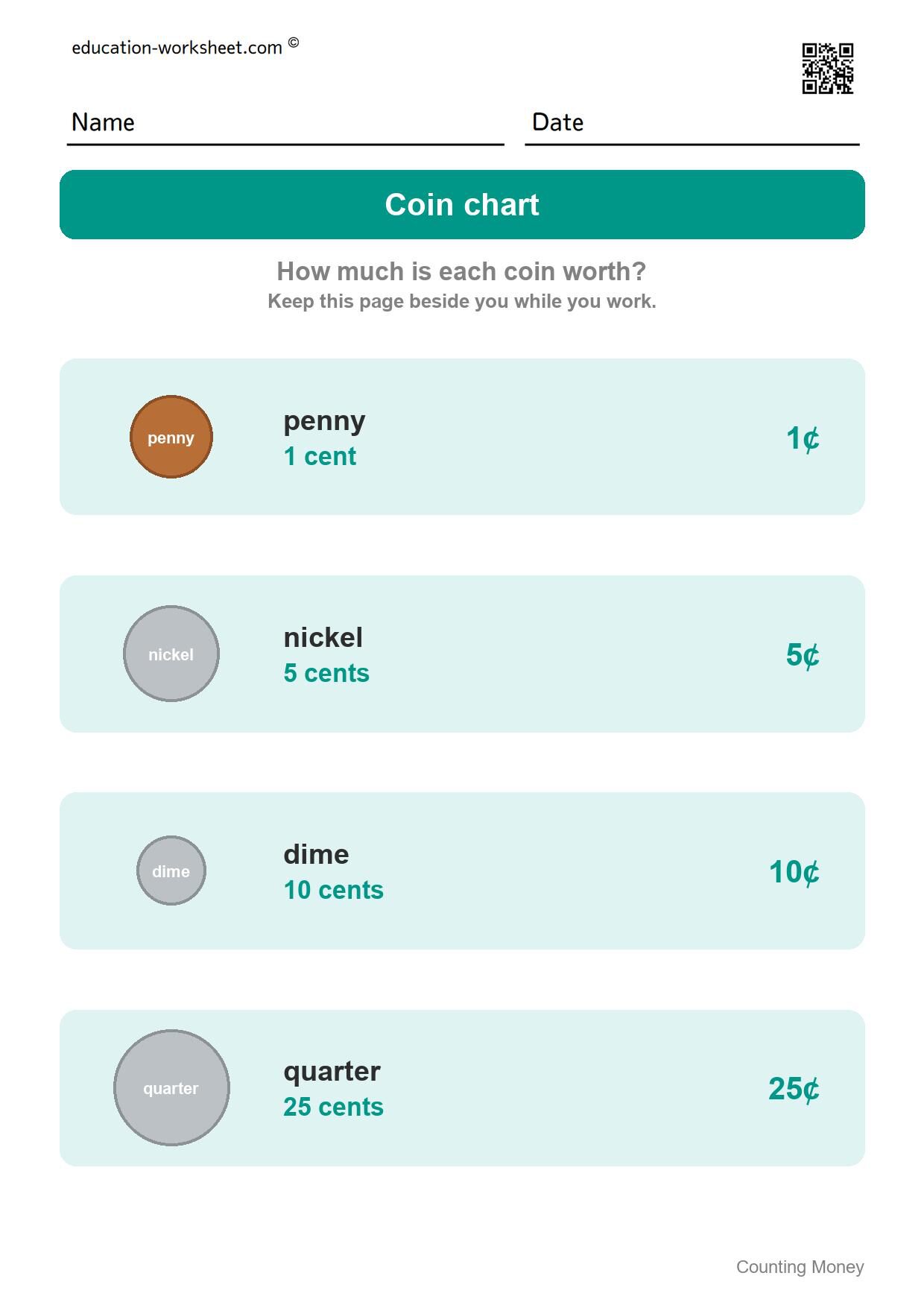
Count the pennies (Set 1)
Nickels and pennies (Set 2)
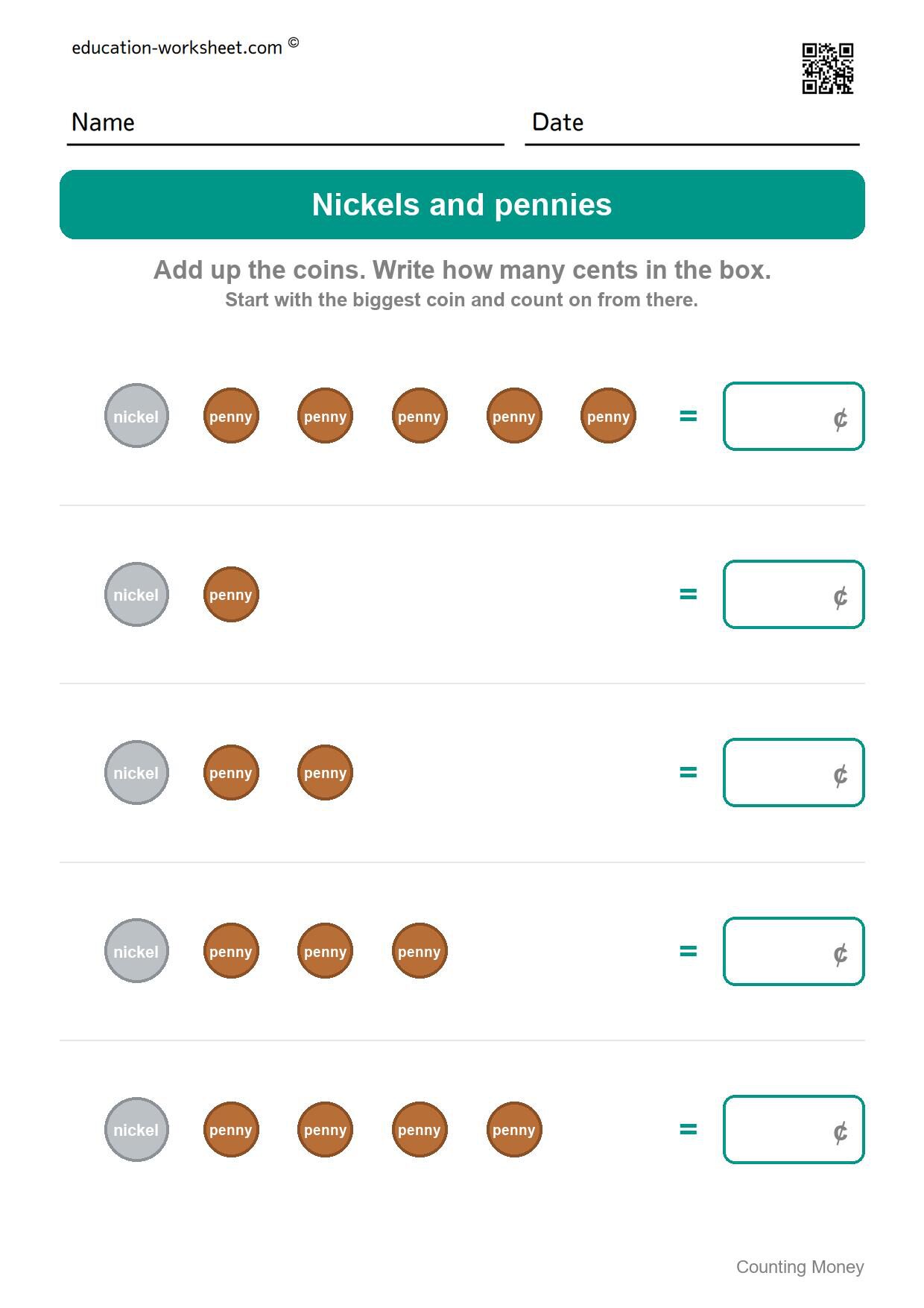
Nickels and pennies (Set 3)
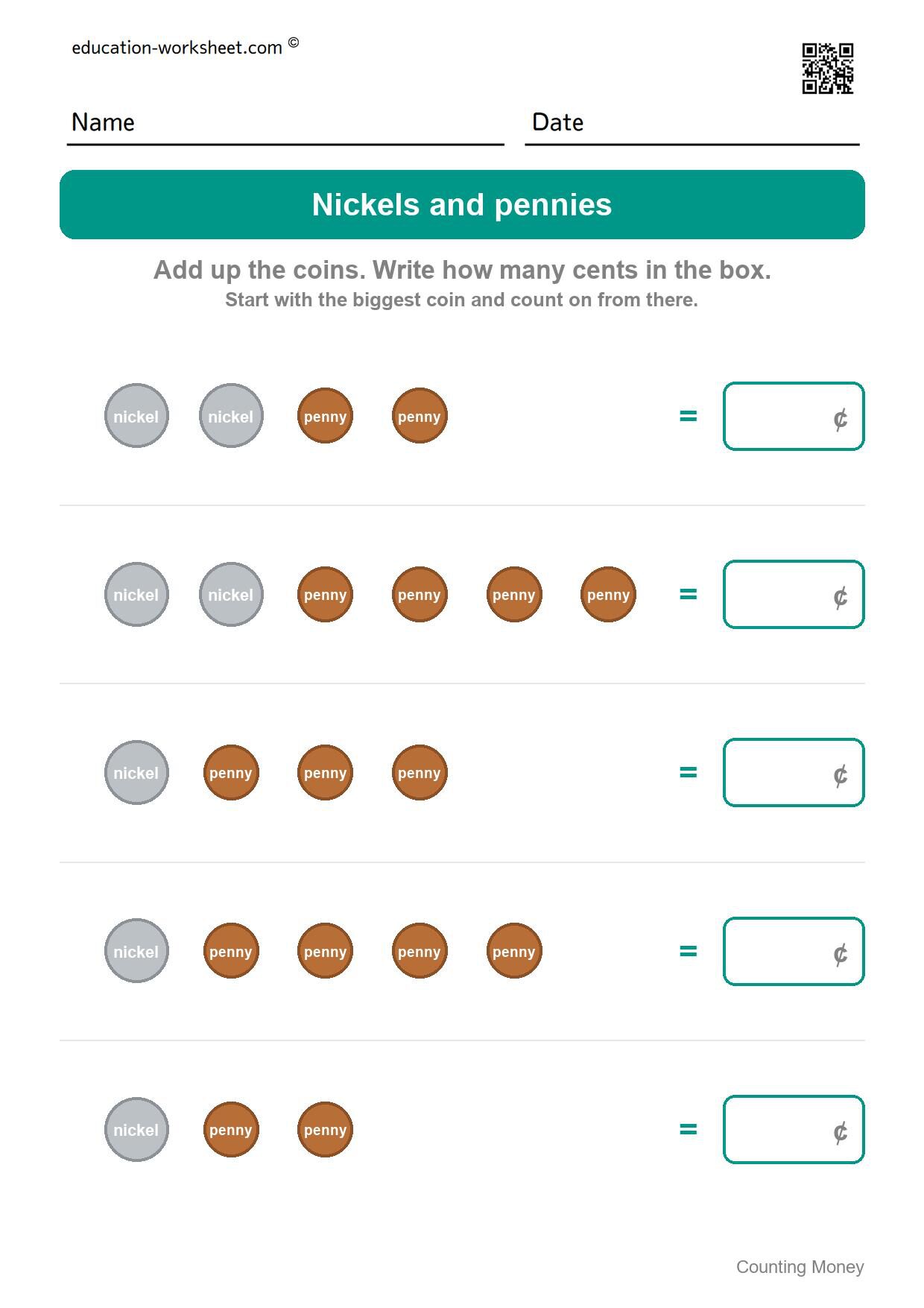
Nickels and pennies (Set 4)
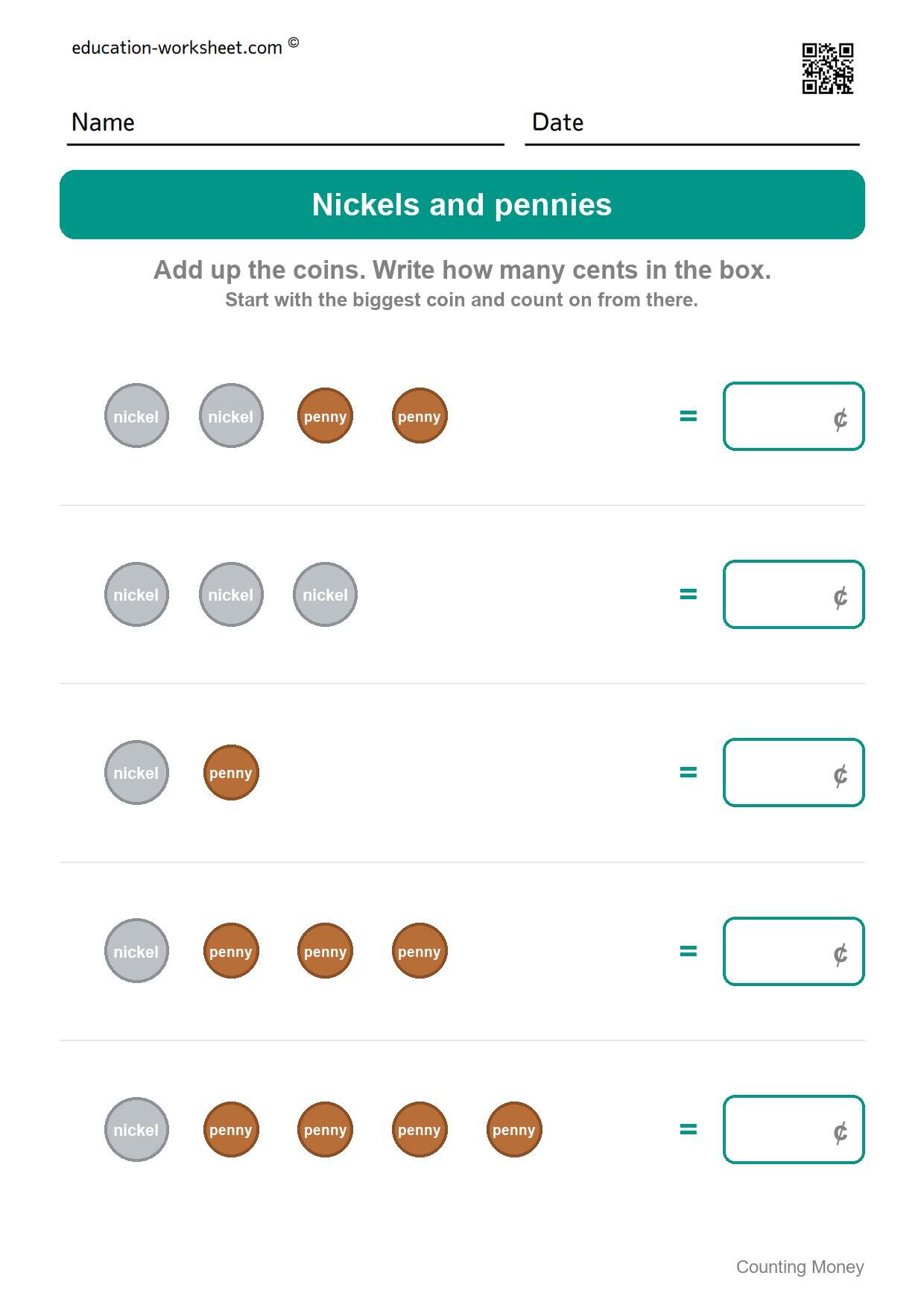
Dimes and pennies (Set 5)
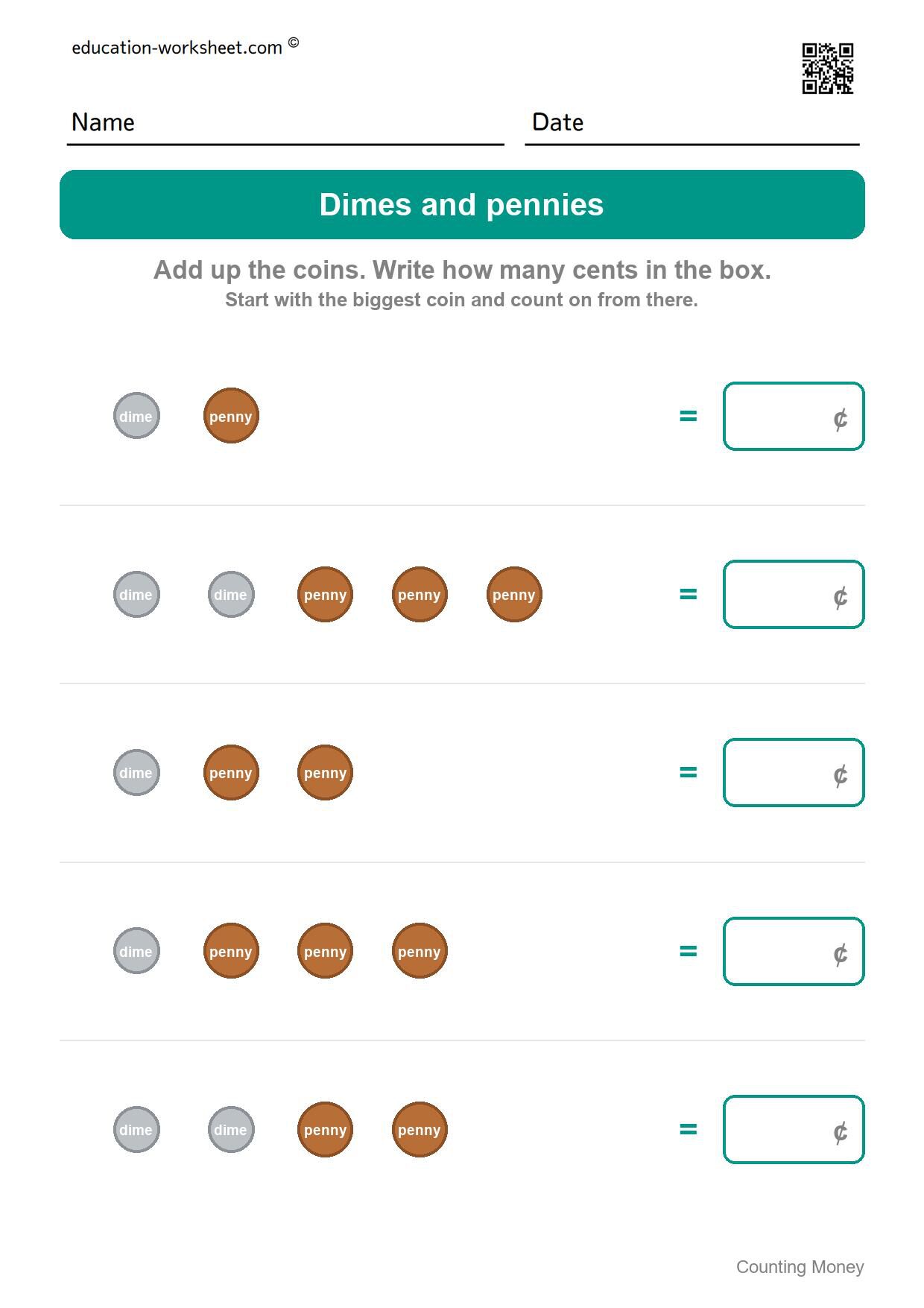
Dimes, nickels and pennies (Set 6)
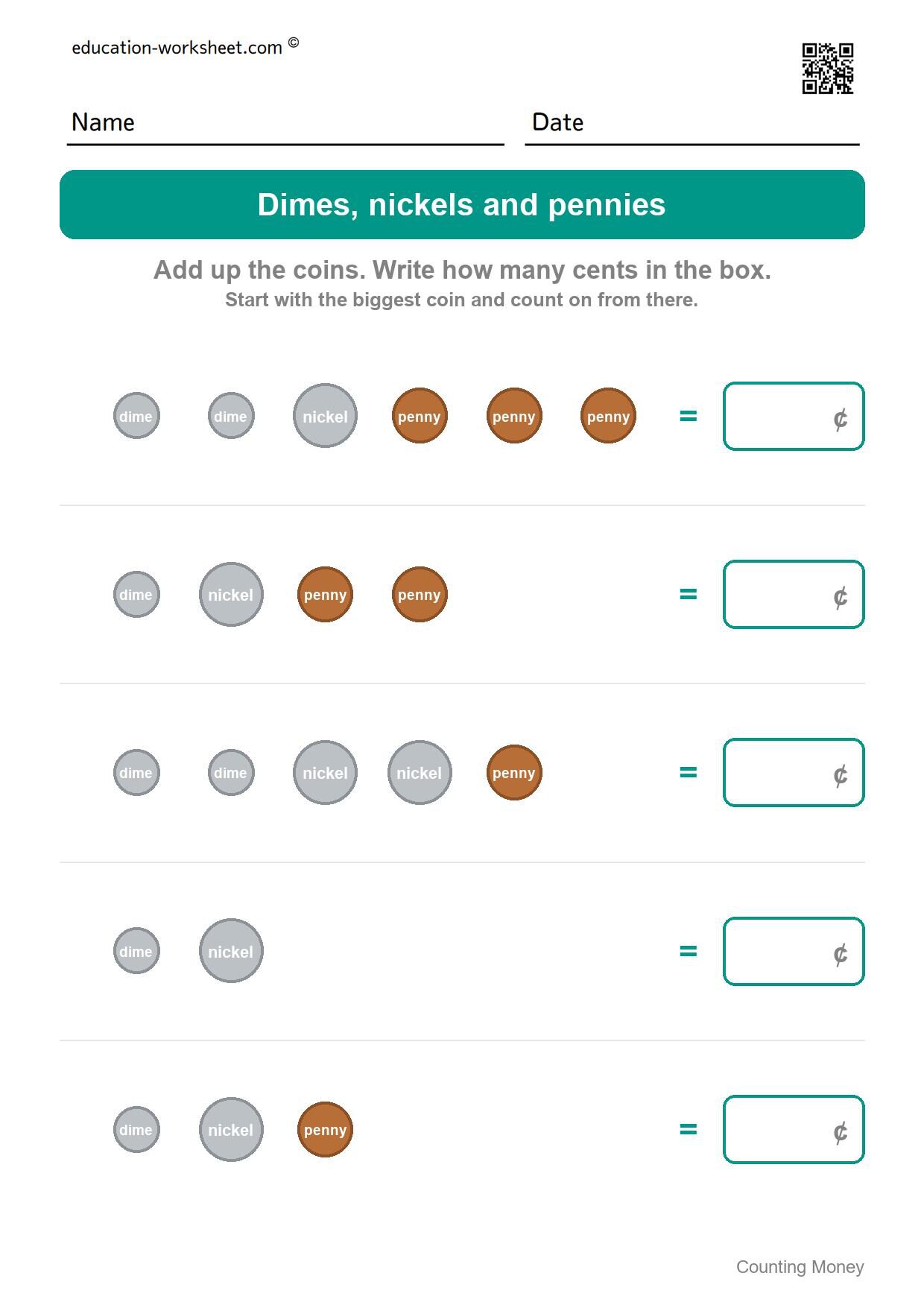
Mixed coins (Set 7)
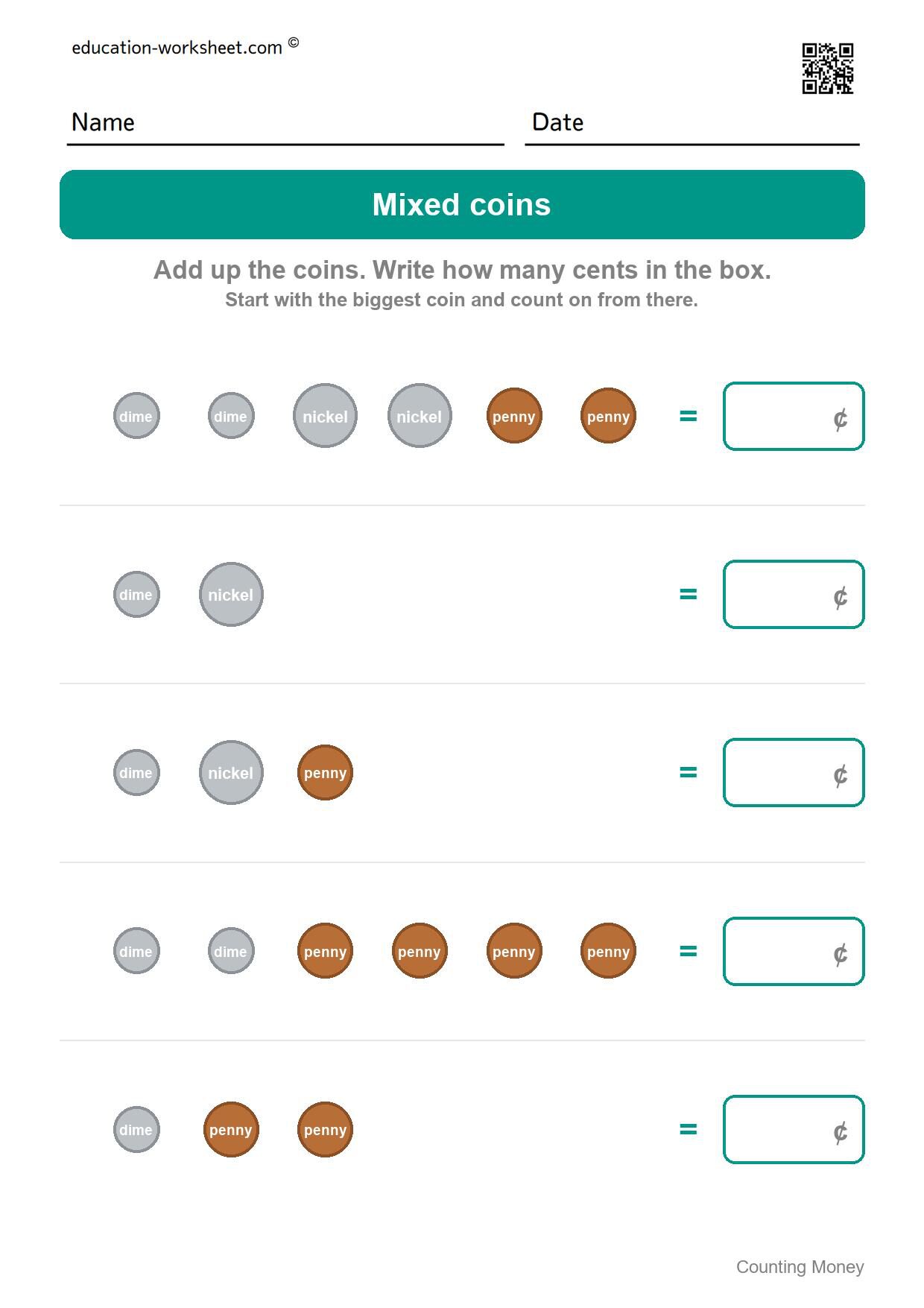
Mixed coins (Set 8)
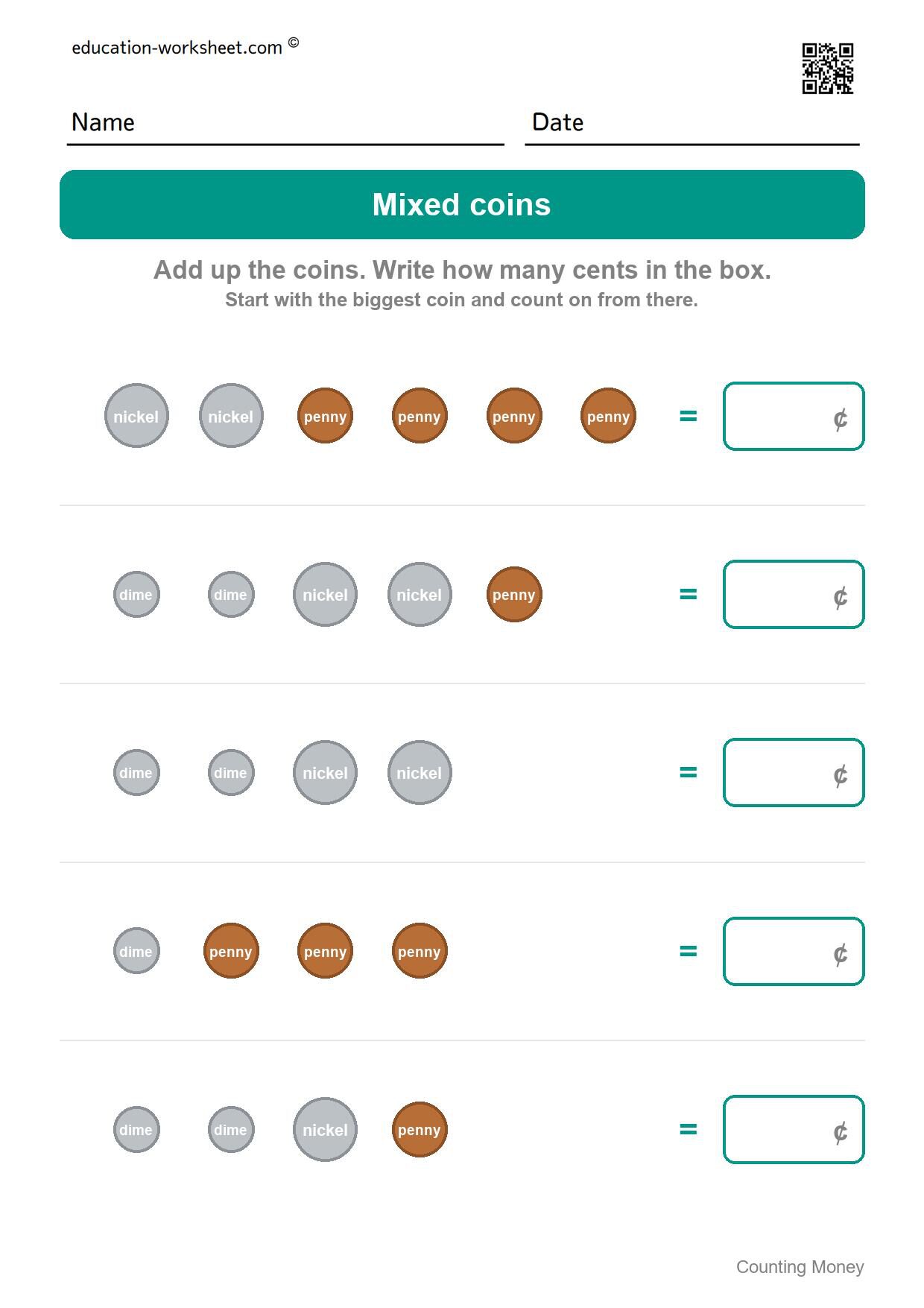
Quarters, nickels and pennies (Set 9)
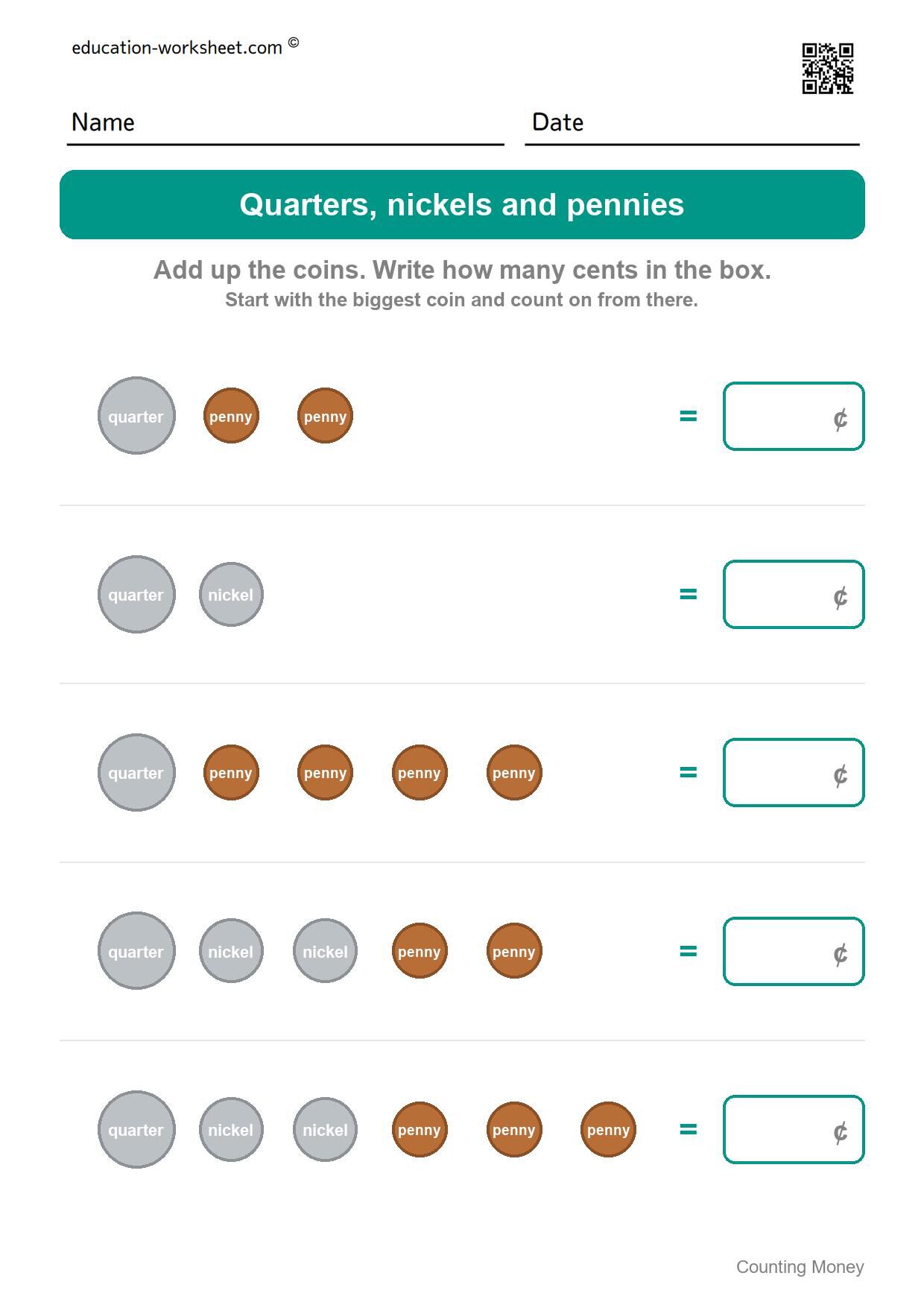
Quarters and other coins (Set 10)
Answer key – all 10 pages
Counting coins: value has nothing to do with size
A nickel is bigger than a dime and worth half as much. This one fact causes more trouble than anything else in early money work, because everything else in a child’s experience says that bigger means more. Coin values have to be learned as facts about each coin, not deduced from how the coin looks.
What your child is actually learning
The four coins carry four values that must be known on sight: penny one cent, nickel five, dime ten, quarter twenty-five. On top of that comes the counting skill, which is counting on from a starting number in different step sizes. Counting a quarter, then a dime, then two pennies means saying twenty-five, thirty-five, thirty-six, thirty-seven — three different step sizes in one line, which is genuinely demanding for a first grader.
How to work through these pages
Sort before counting. Put the coins in order from most valuable to least, then count from the biggest down. Starting with the pennies means changing step size at the hardest moment, whereas starting with the quarters lets the counting settle. Use real coins as often as possible, because their weight and feel help children tell them apart far better than pictures do.
The mistakes to expect
- Counting every coin as one, so five coins make five cents.
- Assuming the bigger coin is worth more, so a nickel is counted as more than a dime.
- Counting in the order the coins happen to lie rather than sorting first, which causes repeated changes of step size.
- Losing the running total when the step size changes, particularly when moving from dimes to pennies.
What to teach next
Making a given amount with different coins is the natural extension, and it is more demanding than counting a fixed set because there are several right answers. Simple change from ten or twenty cents follows, and it connects money directly to the subtraction work done earlier in the year.
Questions parents ask
Which coin should we teach first?
Pennies, then dimes, then nickels, then quarters. Dimes before nickels is deliberate: counting by tens is already familiar, whereas counting by fives is less so, and it avoids the size confusion at the start.
My child knows the values but counts slowly. What helps?
Practise counting on in fives and tens from any number, away from coins entirely. The bottleneck is usually the counting rather than the coin knowledge.
Are real coins better than pictures?
Considerably, especially early on. Size, weight and the ridged edges all help children identify coins, and none of that survives on a printed page. Use the worksheets for practice and real coins for teaching.