

These free printable addition worksheets give kindergarten children ten pages of adding within 10. Each page holds one number sentence, printed large, with a picture of the two groups above it and an empty box for the answer.
One sum per page is deliberate. A child who is still counting every object needs room and time for a single fact, and a page with twenty sums on it teaches most five year olds that math is something you hurry through. The ten facts are 1+1, 1+2, 2+2, 2+3, 3+3, 4+3, 4+4, 5+4, 6+4 and 5+5.
Nine of those ten are doubles or doubles plus one. That is the pack’s real design, and it is the reason it is worth printing rather than any other set of ten sums – more on that below.
- What Is in This Free Addition Worksheet Pack
- The 10 Addition Worksheets
- Worksheet 1 – 1 + 1: The First Double
- Worksheet 2 – 1 + 2: One More Than the First Double
- Worksheet 3 – 2 + 2: The Double Most Children Know First
- Worksheet 4 – 2 + 3: Two and Two, and One More
- Worksheet 5 – 3 + 3: The Last Sum That Fits in One Line
- Worksheet 6 – 4 + 3: The Pictures Change Shape
- Worksheet 7 – 4 + 4: Two Squares of Four
- Worksheet 8 – 5 + 4: Four and Four, and One More
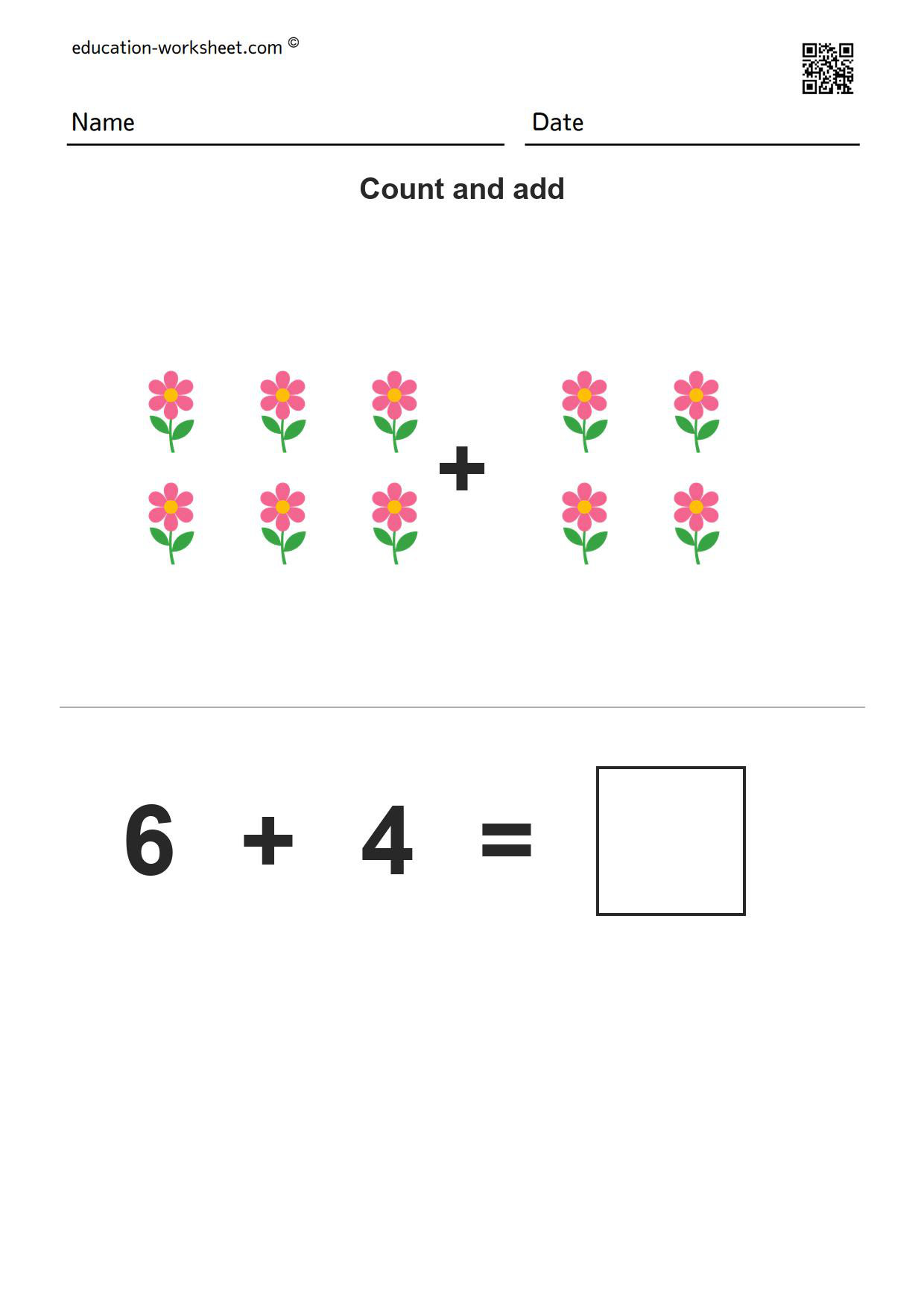
- Worksheet 9 – 6 + 4: The Only Make-Ten Pair
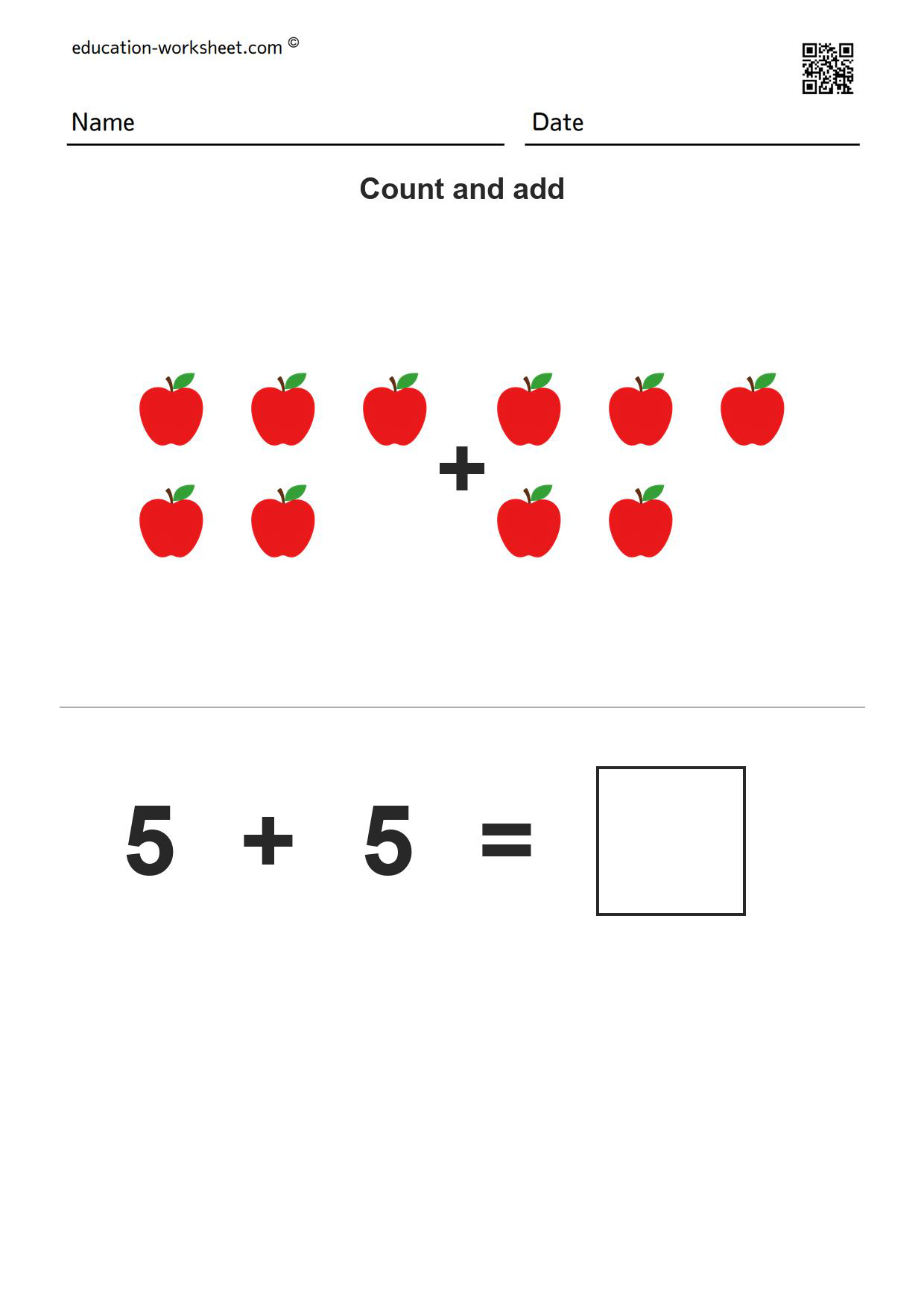
- Worksheet 10 – 5 + 5: The Double That Makes Ten
- Why These Ten Facts, and Not Any Other Ten
- When Children Are Ready for These Worksheets
- How to Use These Worksheets
- Three Things to Watch For
- Printing Tips
- Frequently Asked Questions
- More Free Addition and Counting Worksheets
What Is in This Free Addition Worksheet Pack
- Ten printable worksheets, one number sentence on each page.
- Five doubles (1+1, 2+2, 3+3, 4+4, 5+5) and four doubles-plus-one facts (1+2, 2+3, 4+3, 5+4), plus 6+4.
- A picture of both groups above every sum, so nothing has to be held in the head.
- Apples, strawberries and flowers in rotation – the same object for both groups on any one page.
- A name and date line at the top of each page.
- A separate PDF for every page, free to download and print.
The 10 Addition Worksheets
The answers run in order: 2, 3, 4, 5, 6, 7, 8, 9, 10, 10. Each page’s answer is one more than the page before, right up to page 9. That is useful and risky in equal measure. It means a child can check their own work by looking at the pile in order; it also means a child who spots the pattern can fill in ten boxes without adding anything. Shuffle the pages before you hand them over, or keep the run as a check at the end.
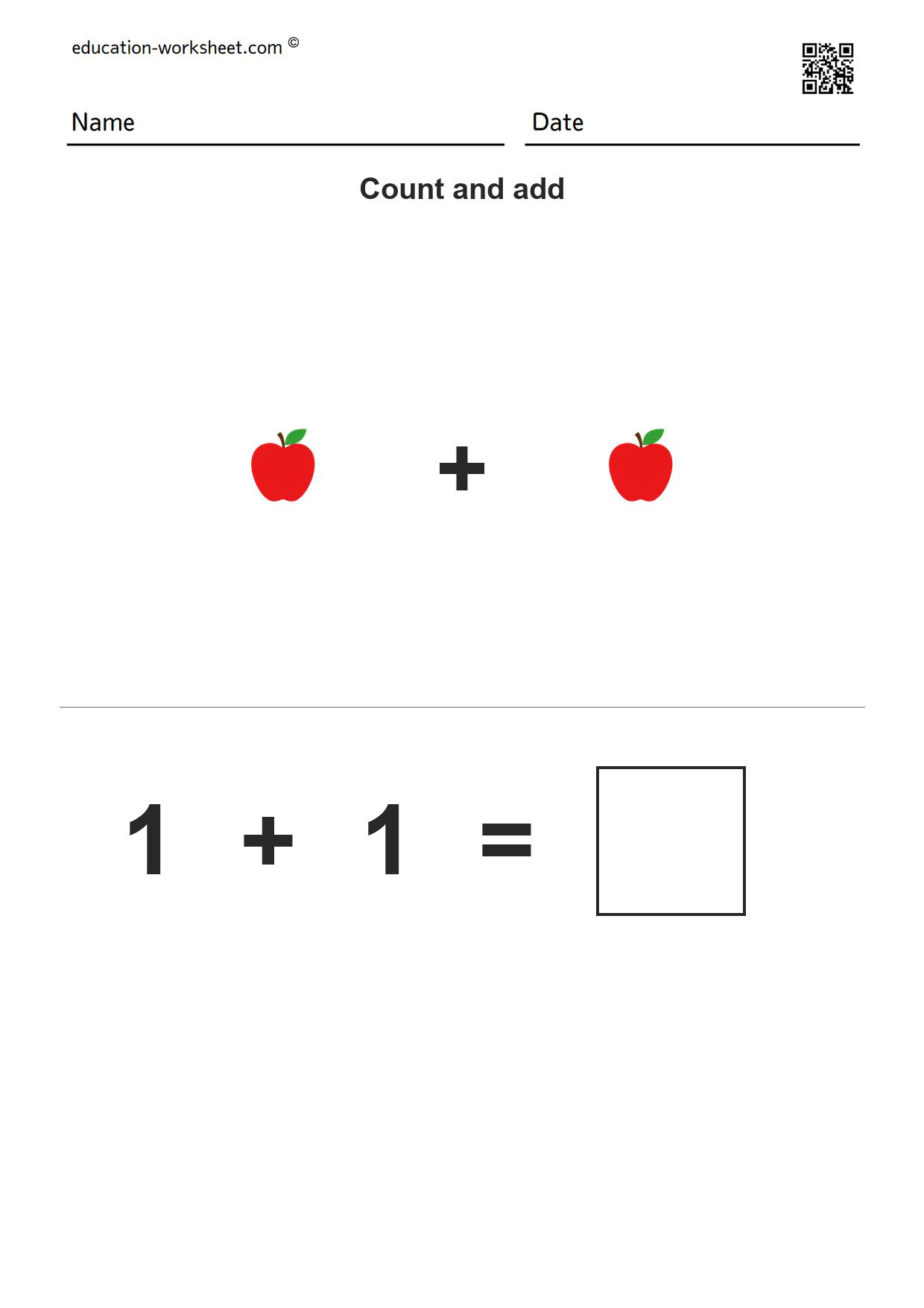
Worksheet 1 – 1 + 1: The First Double
The smallest double there is. Most children answer this without counting, which is the right way to start a pack: the first page should tell a child that they can do this. Two apples, one on each side of the plus sign.
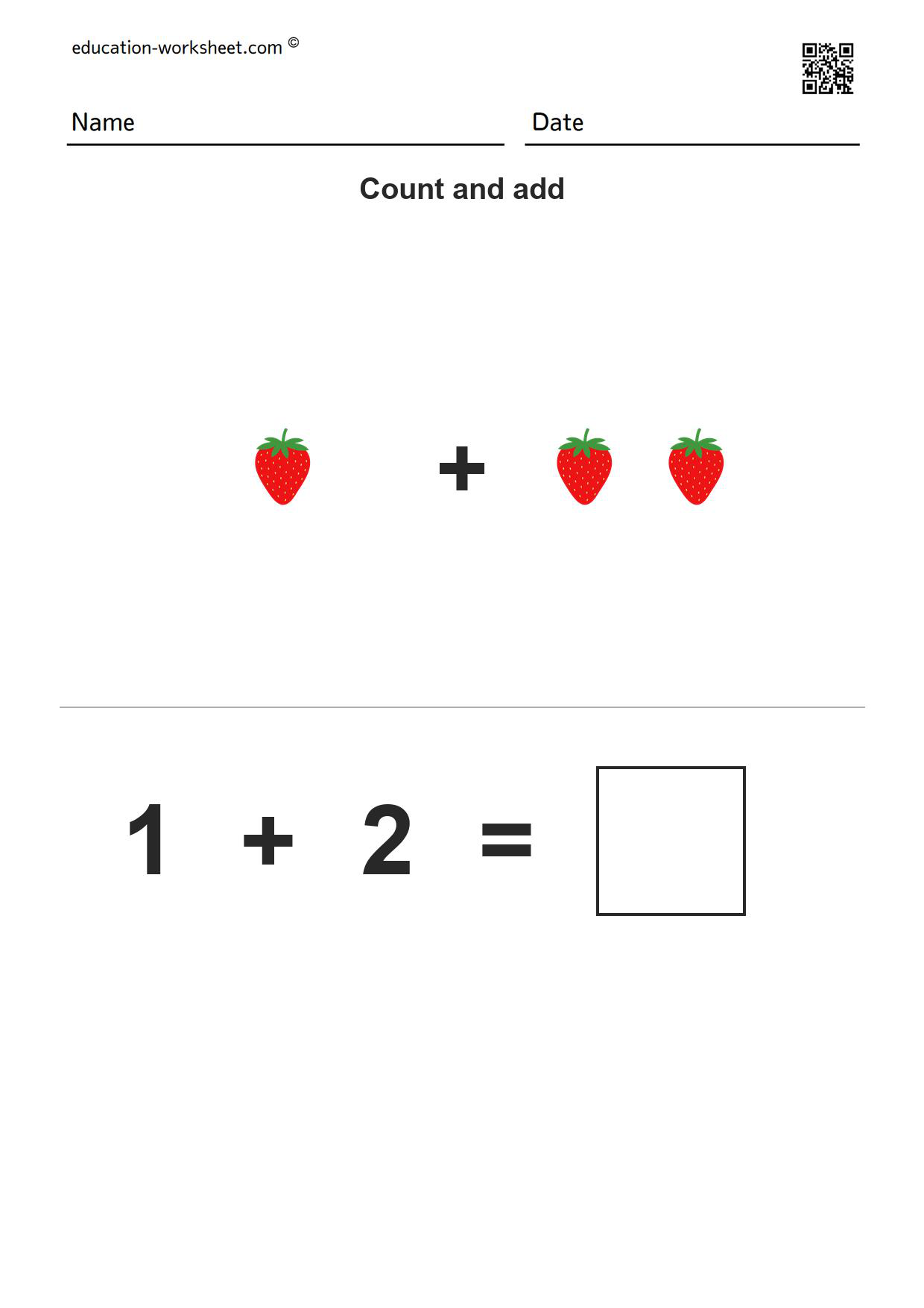
Worksheet 2 – 1 + 2: One More Than the First Double
One more than page 1, and the first taste of the pattern that runs through the whole pack: if you know a double, the sum next door is one step away. One strawberry on the left, two on the right, all in a single line.
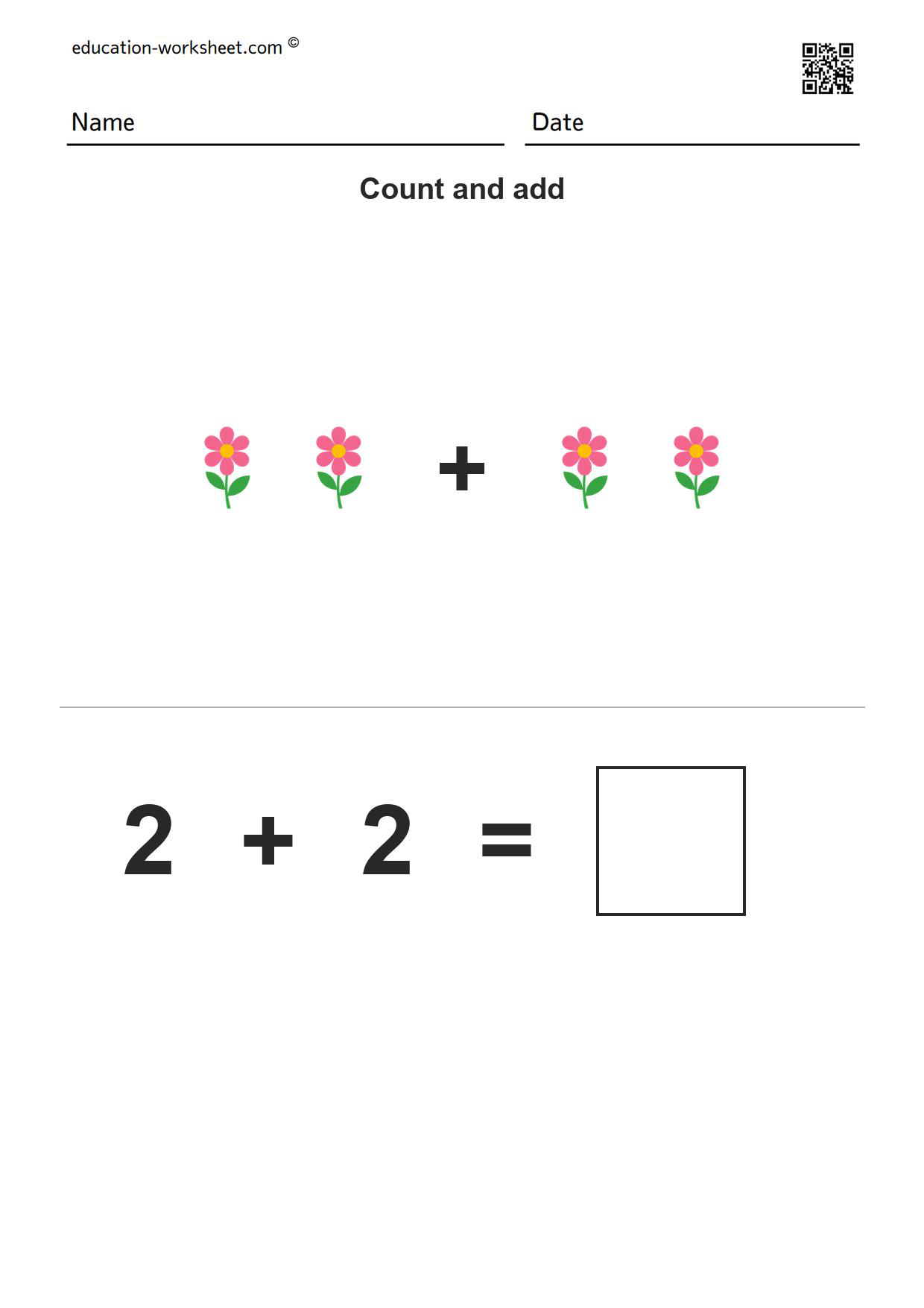
Worksheet 3 – 2 + 2: The Double Most Children Know First
Two and two is usually the earliest addition fact a child recalls rather than counts, helped along by having two hands. Watch whether your child counts the flowers or simply says four. Two flowers on each side of the plus sign.
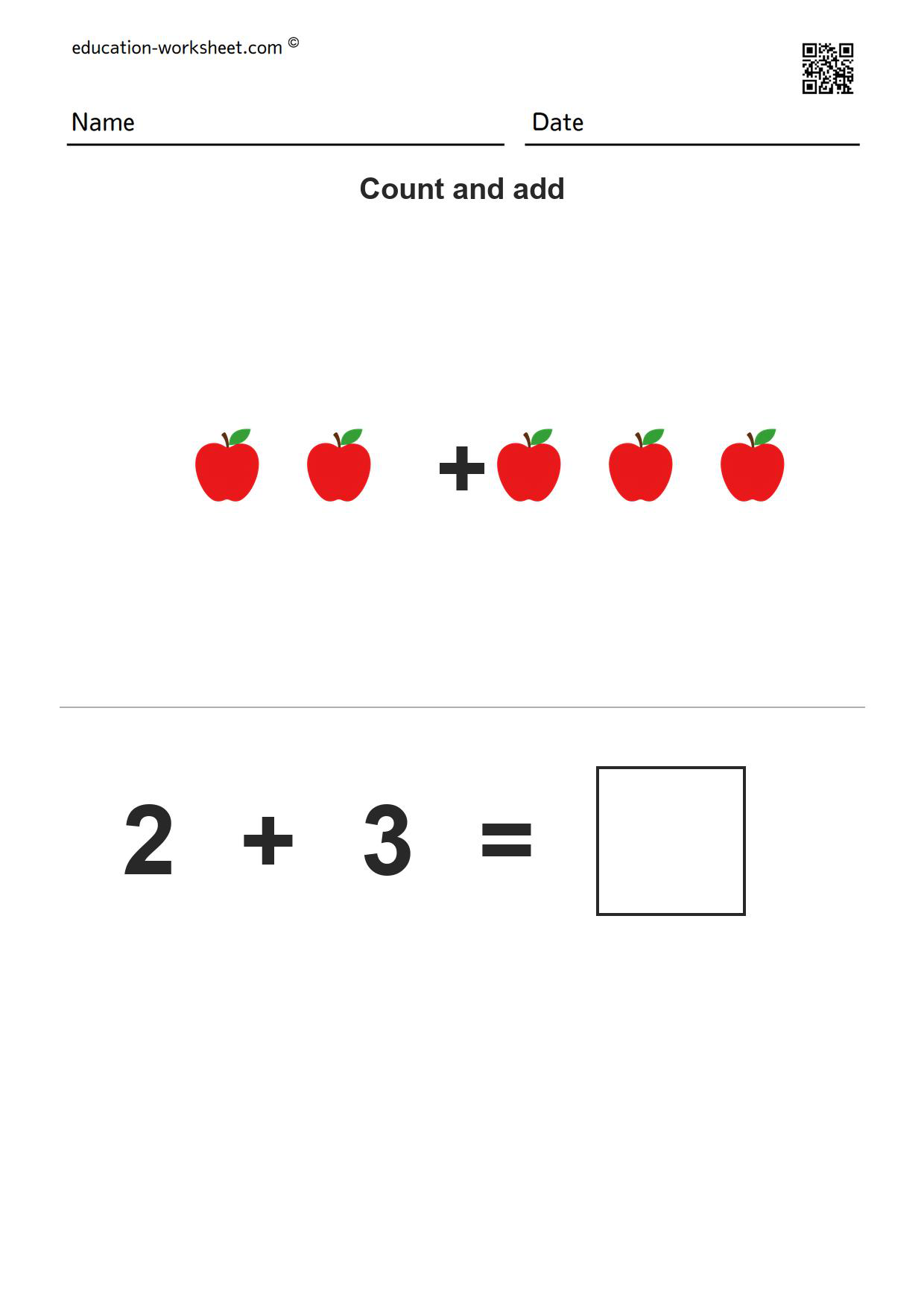
Worksheet 4 – 2 + 3: Two and Two, and One More
The doubles-plus-one idea again, this time worth saying out loud. Ask what two and two makes, then how many more there are. The answer arrives without recounting from one. Two apples on the left, three on the right, in one line of five.
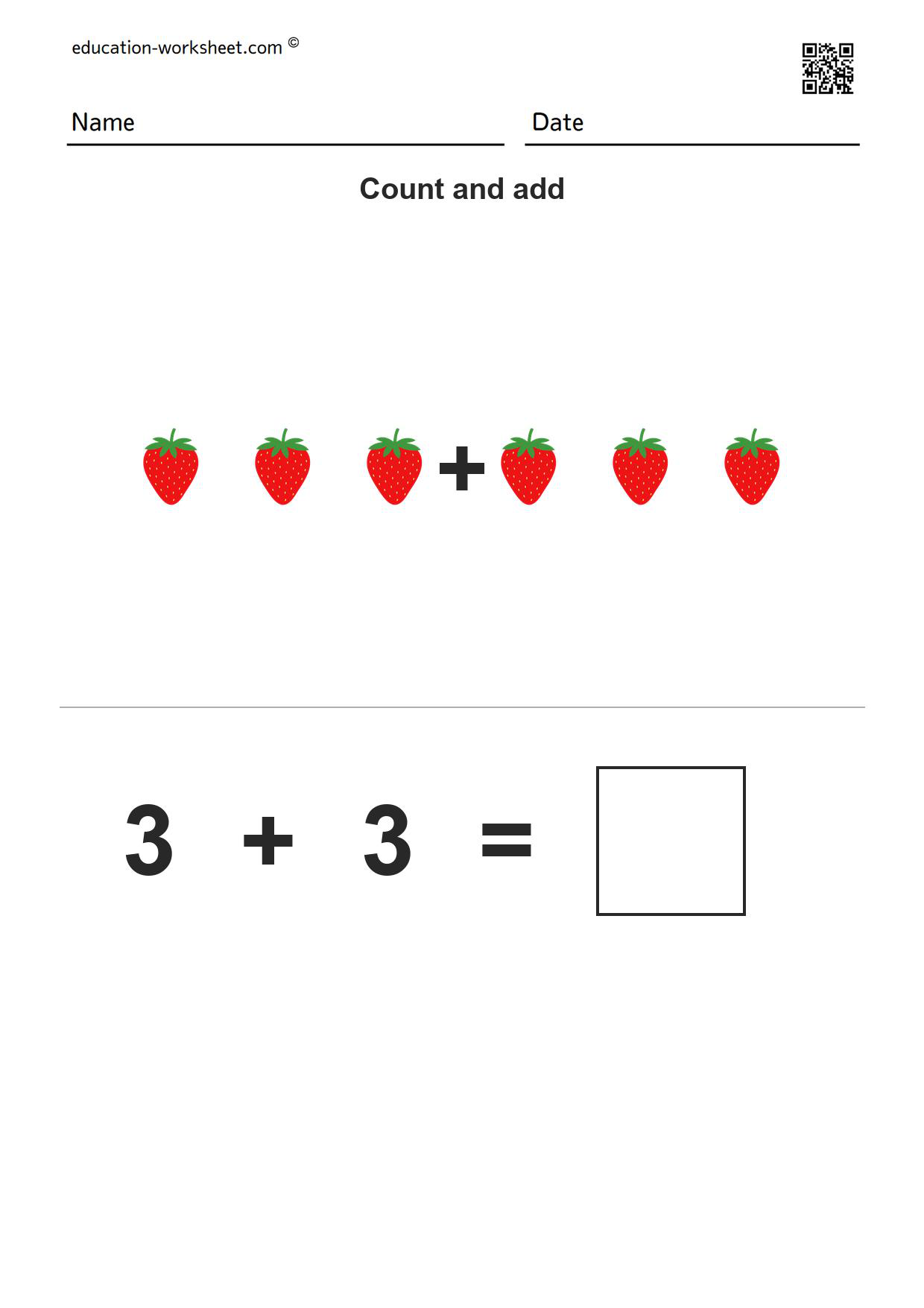
Worksheet 5 – 3 + 3: The Last Sum That Fits in One Line
Three and three is the largest group this pack shows as a straight line of objects. From the next page on the pictures change shape, which is a change worth noticing. Three strawberries on each side, six in a single row.
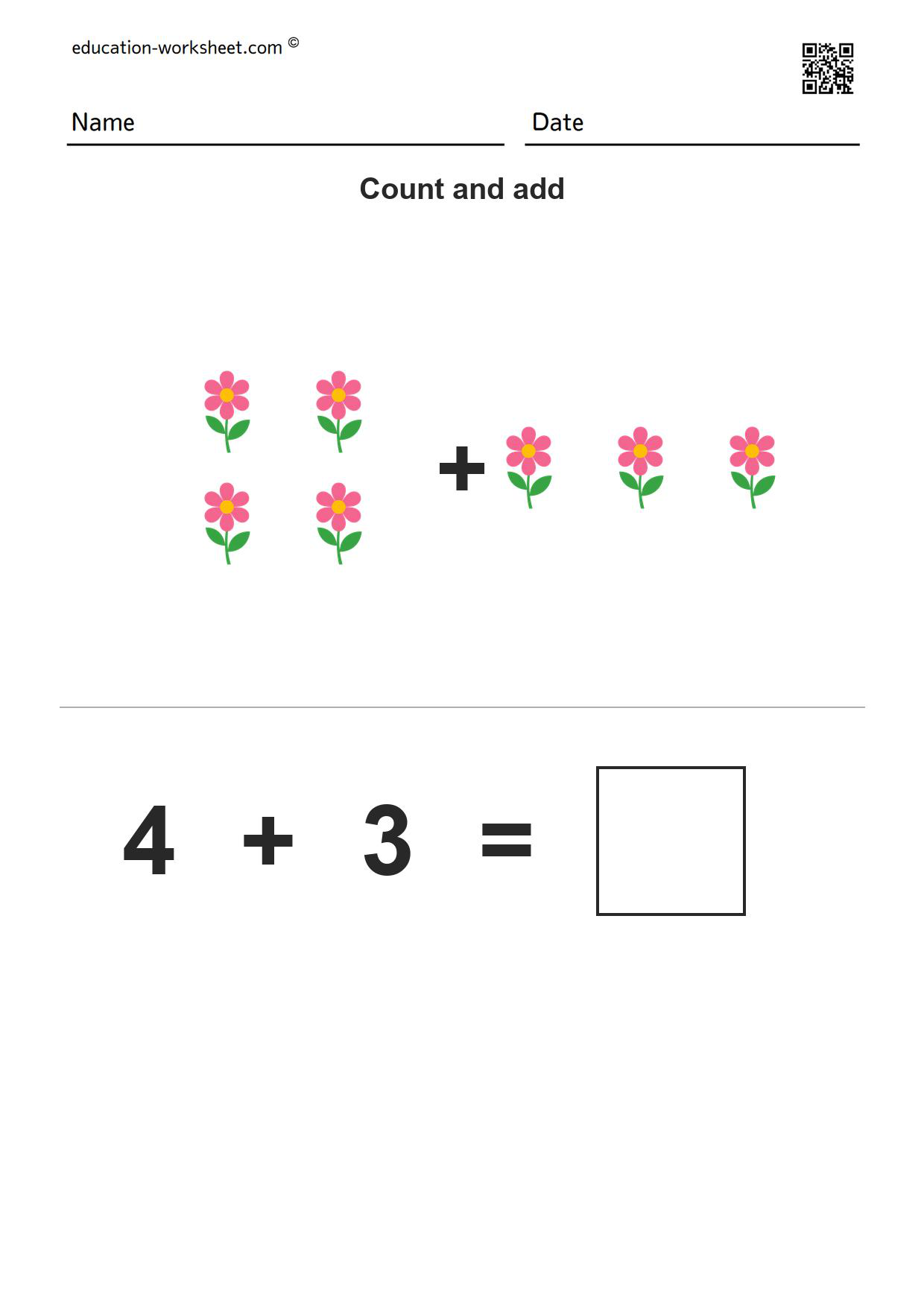
Worksheet 6 – 4 + 3: The Pictures Change Shape
The first page where a group is too big for one line. The four flowers are drawn as two rows of two rather than a row of four – four is easier to see as a square than to count along. And four and three is three and three plus one. Four flowers in a two-by-two block, three flowers in a row beside them.
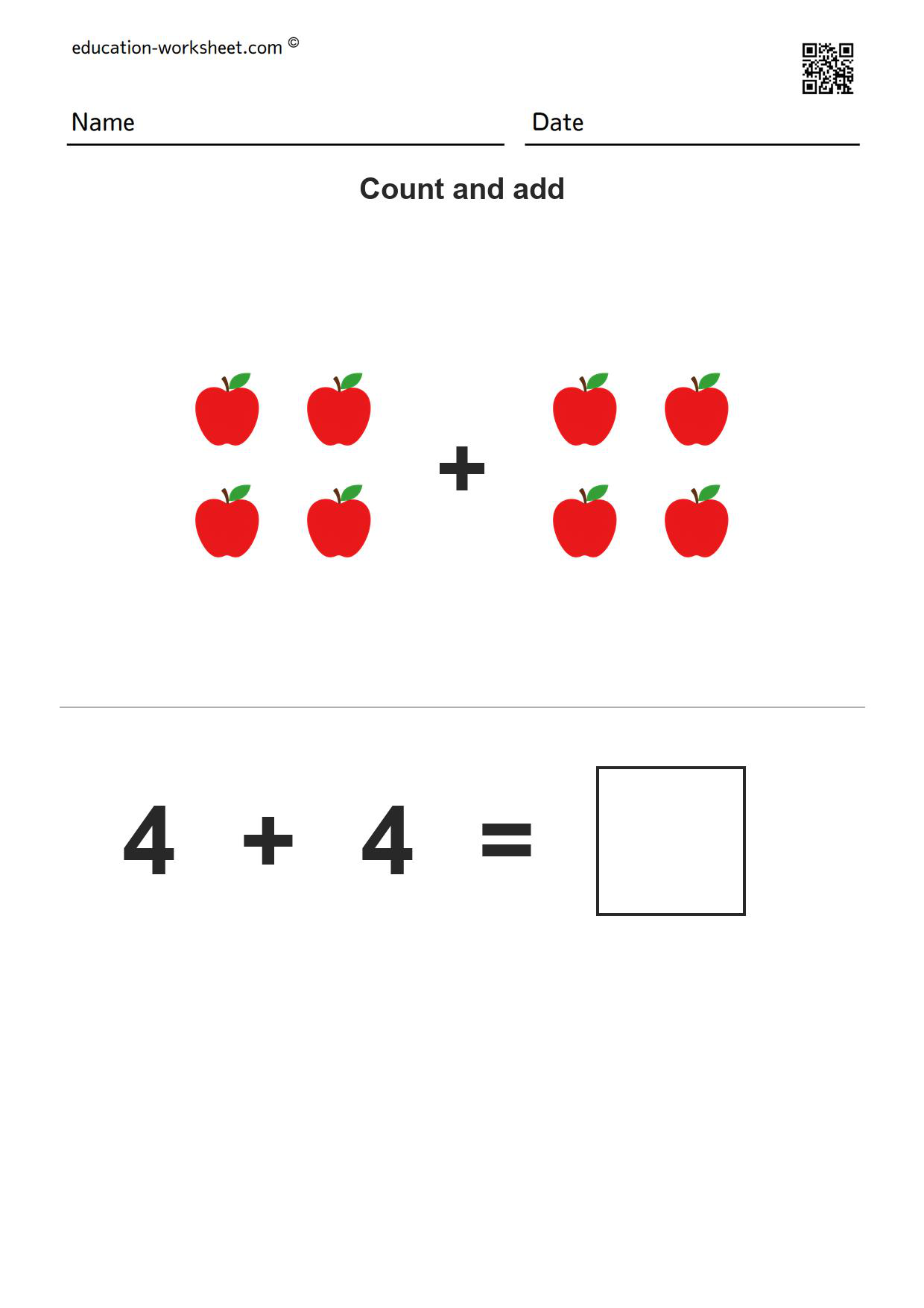
Worksheet 7 – 4 + 4: Two Squares of Four
Both groups are two-by-two blocks, which makes this page the clearest picture of a double in the pack. The two halves of the picture look identical, and that is the whole idea of a double. Two blocks of four apples, each two rows of two.
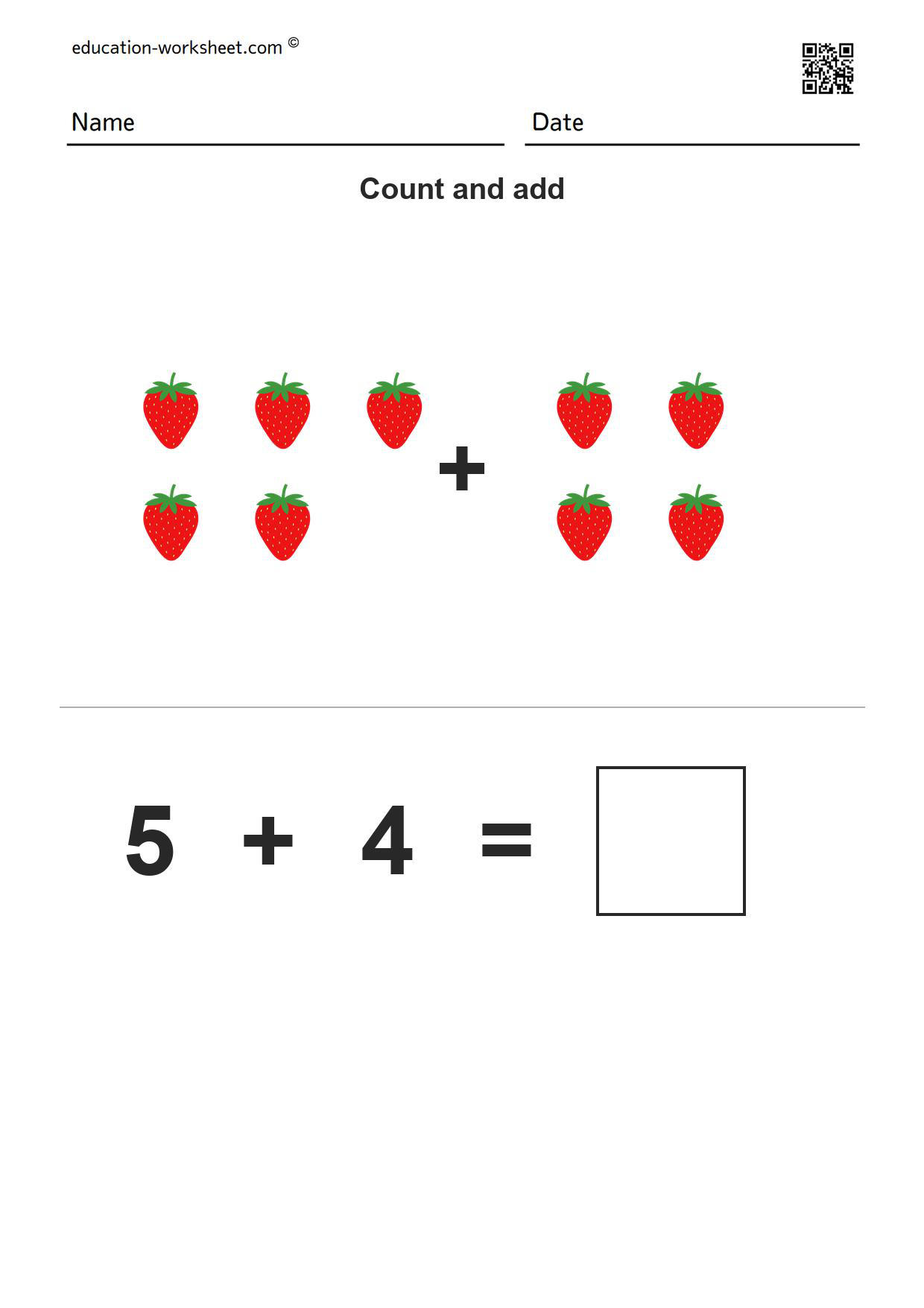
Worksheet 8 – 5 + 4: Four and Four, and One More
The five is drawn as three and two, not as a line of five. Seeing five as a small group plus a smaller one is the beginning of not having to count at all. Five strawberries as three above two, and four as two rows of two.
Worksheet 9 – 6 + 4: The Only Make-Ten Pair
The odd one out. Every other sum here is a double or one away from a double; 6 and 4 are two apart. What they do instead is make ten exactly, which is the single most useful fact in early arithmetic. If your child is ready, this is the page to talk about. Six flowers as two rows of three, four flowers as two rows of two.
Worksheet 10 – 5 + 5: The Double That Makes Ten
The pack ends where fingers begin: five and five. Both groups are drawn as three above two, so the picture shows ten as two fives, which is how a ten frame shows it too. Five apples as three above two, twice.
Why These Ten Facts, and Not Any Other Ten
Ignoring the order of the two numbers, there are twenty-five different ways to add two whole numbers and land on ten or less. This pack picks ten of them, and the choice is not random. Five are doubles – 1+1, 2+2, 3+3, 4+4, 5+5. Four more are a double plus one: 1+2 sits next to 1+1, 2+3 next to 2+2, 4+3 next to 3+3, 5+4 next to 4+4. The tenth, 6+4, makes ten.
Doubles are the facts children commit to memory first, well before the rest, and once a double is known the sums on either side of it stop needing to be counted. Working a child through doubles and their neighbors is therefore worth far more than the same amount of time spent on ten unrelated sums. If you use only some of these pages, use the doubles.
The pictures follow a rule as well: no group is ever drawn as a line of more than three. Four appears as two rows of two, five as three above two, six as two rows of three. Counting a straight line of six objects is where children lose their place and double-count; a block of three and three can be taken in at a glance. It also quietly shows a child that six is three and three, which is the same idea as the doubles the sums are teaching.
When Children Are Ready for These Worksheets
These pages suit children from about five to six: the second half of kindergarten, and first grade for a child who is still counting objects. A child is ready when they can count a group of ten reliably and recognize the plus and equals signs. They do not need to add in their head.
The relevant Common Core standards are K.OA.A.1, representing addition with objects and drawings, and K.OA.A.2, solving addition problems within 10. Page 9 also points at K.OA.A.4, finding the number that makes ten. Fluency with all the sums to five, K.OA.A.5, covers the first half of the pack.
How to Use These Worksheets
- Print one page. One sum really is a session for a child who is still counting everything.
- Count the group on the left and say how many. Count the group on the right and say how many.
- Then count them all together – pointing at each object, touching the paper. Counting from one is allowed and expected at this stage.
- Write the answer in the box.
- On the doubles pages, ask one extra question: “are the two sides the same?” Naming a double is what turns it into something a child remembers.
- Fingers and counters are welcome for as long as they are wanted. They fall away on their own.
Three Things to Watch For
Counting the whole picture again from one
A child who counts “one, two, three, four” across the whole picture has understood the sum, and is doing it the long way. The next step is counting on: hold the first group in your head and carry on from there. Cover the left group with your hand once they have said how many it holds.
Filling in the answers from the pattern
Because the answers climb by one from page to page, a child working through the pile in order can predict the next one without adding. Shuffling the pages removes the temptation. Alternatively, let them work in order and then ask how they knew, which is an interesting conversation in itself.
Reading 6 + 4 as another near double
Page 9 is the only sum here where the two numbers are two apart, and a child who has settled into the rhythm of the pack may answer 9 without looking. Point at the picture and count it. Then count it again as six and then four more, and stop at ten.
Printing Tips
- Choose Actual size or Fit to page in the print dialog – both keep the page in proportion.
- Each page fills one sheet and works on US Letter and A4 paper.
- Ordinary copier paper is fine. Card is only worth it if you want the page to survive an eraser.
- Color is helpful but not necessary. In greyscale the apples, strawberries and flowers still read as separate objects, which is all the counting needs.
- Printing two pages to a sheet halves the size of the number sentence. For a child who is writing numerals for the first time, print one page per sheet.
Frequently Asked Questions
What age are these addition worksheets for?
About five to six years old: the second half of kindergarten, and first grade for children who are still counting objects.
Which addition facts are covered?
1+1, 1+2, 2+2, 2+3, 3+3, 4+3, 4+4, 5+4, 6+4 and 5+5. Nine of the ten are doubles or doubles plus one; 6+4 makes ten.
Why is there only one sum on each page?
Because a child who counts every object needs a minute for each sum. Ten sums on one page turns a thinking task into an endurance test.
Can my child use fingers or counters?
Yes, for as long as they want to. Counting objects is the stage these pages are built for, and it is abandoned naturally once the facts are known.
Is there an answer key?
The answers, in page order, are 2, 3, 4, 5, 6, 7, 8, 9, 10 and 10. Every picture on the page matches its number sentence, so counting the picture settles any disagreement.
Do I need to sign up to download these?
No. Every PDF downloads immediately, with no account, no email address and no cost.
Can I use these in my classroom?
Yes, they are free to print for home and classroom use. Please do not sell them or re-host the files elsewhere.
More Free Addition and Counting Worksheets
- Free Number Bonds Worksheets for Kindergarten – Numbers to 10
- Free Make 10 Worksheets for Kindergarten – Ways to Make Ten with Ten Frames
- Free Subtraction Worksheets within 10 for Kindergarten – Cross Out and Subtract
- Free Number Line Addition Worksheets for Kindergarten – Add by Jumping
- Free Doubles Worksheets for Grade 1 – Addition Facts to 20
- Free Near Doubles Worksheets for Grade 1 – Doubles Plus One