These free printable beginning letter worksheets ask kindergarten children to write the first letter of forty words. Each box shows a picture, an empty square, and the rest of the word already printed – so ree next to a tree, waiting for a t.
That printed word ending is what makes this pack different from a beginning sounds sheet. A child who is not sure what the picture is called can still work the answer out, and a child who knows the picture but cannot hear the first sound gets a second way in. The two supports catch different children.
Every page also carries the whole alphabet along the bottom, in lowercase, under the heading use this if you need help.
- What Is in This Free Beginning Letter Worksheet Pack
- The 11 Beginning Letter Worksheets
- Worksheet 1 – Flower, grape, elephant, donut
- Worksheet 2 – House, dog, lion, violin
- Worksheet 3 – Tree, milk, lamp, apple
- Worksheet 4 – Carrot, bus, tomato, cat
- Worksheet 5 – Pumpkin, key, pizza, umbrella
- Worksheet 6 – Nose, onion, train, hat
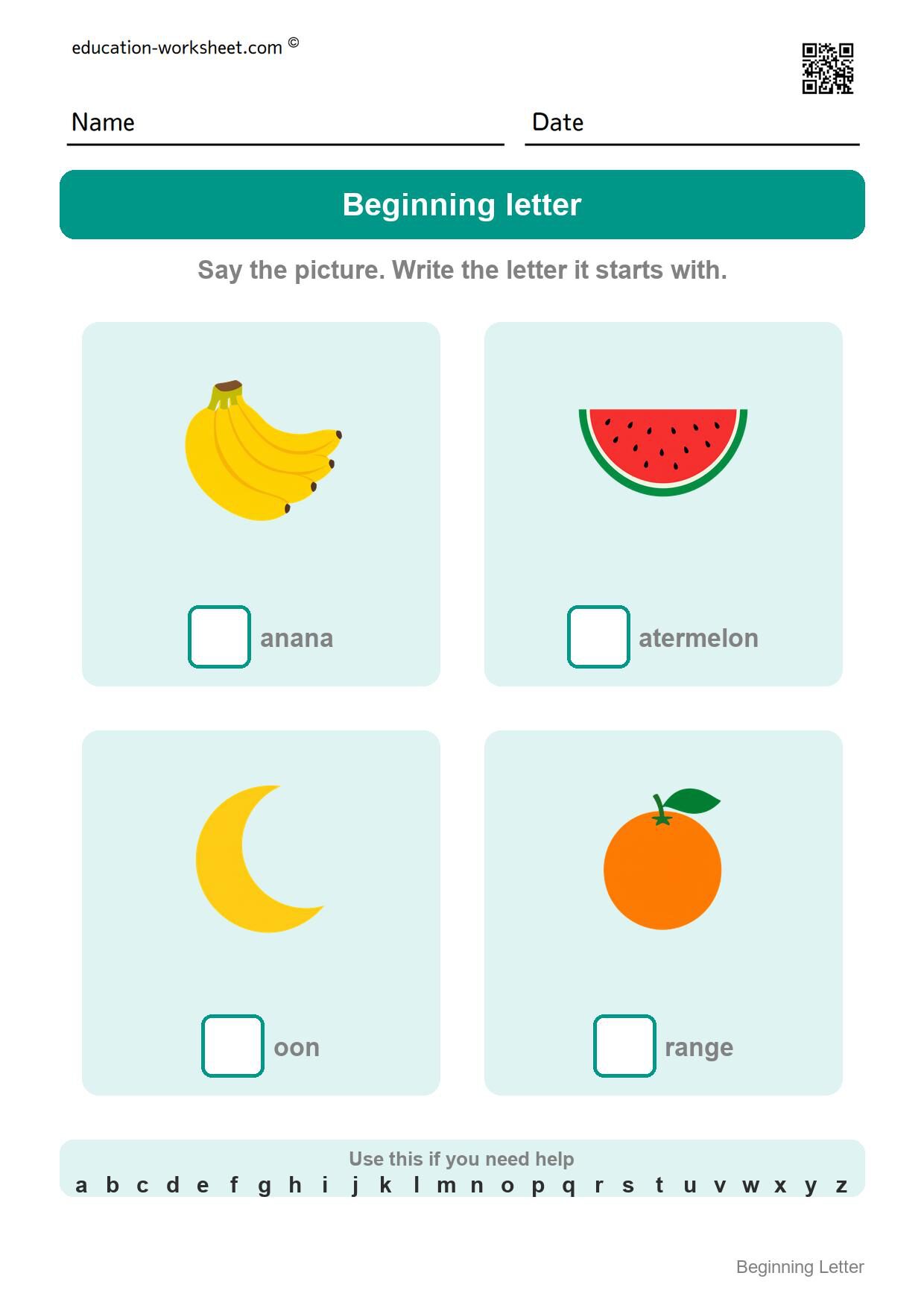
- Worksheet 7 – Banana, watermelon, moon, orange
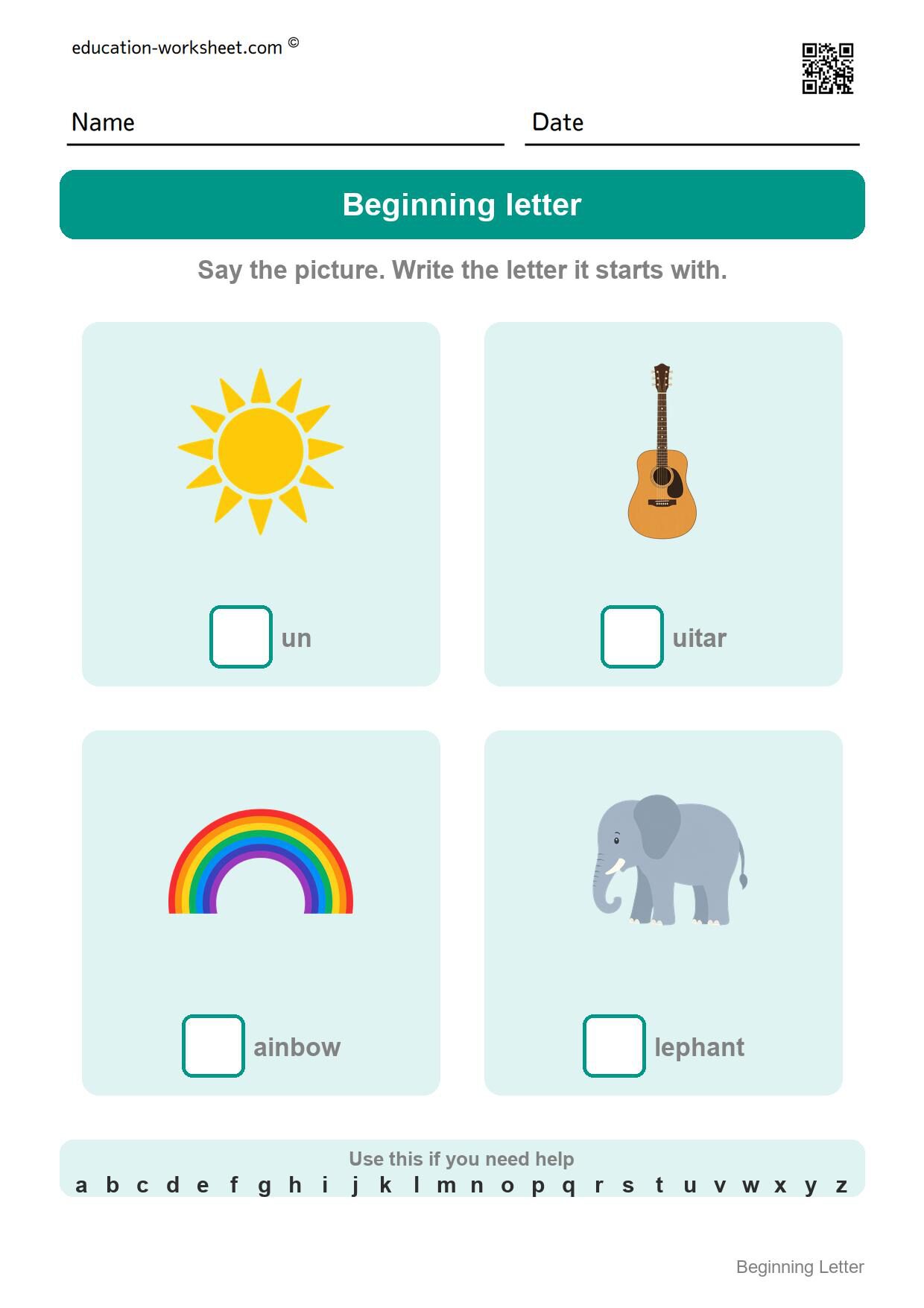
- Worksheet 8 – Sun, guitar, rainbow, elephant
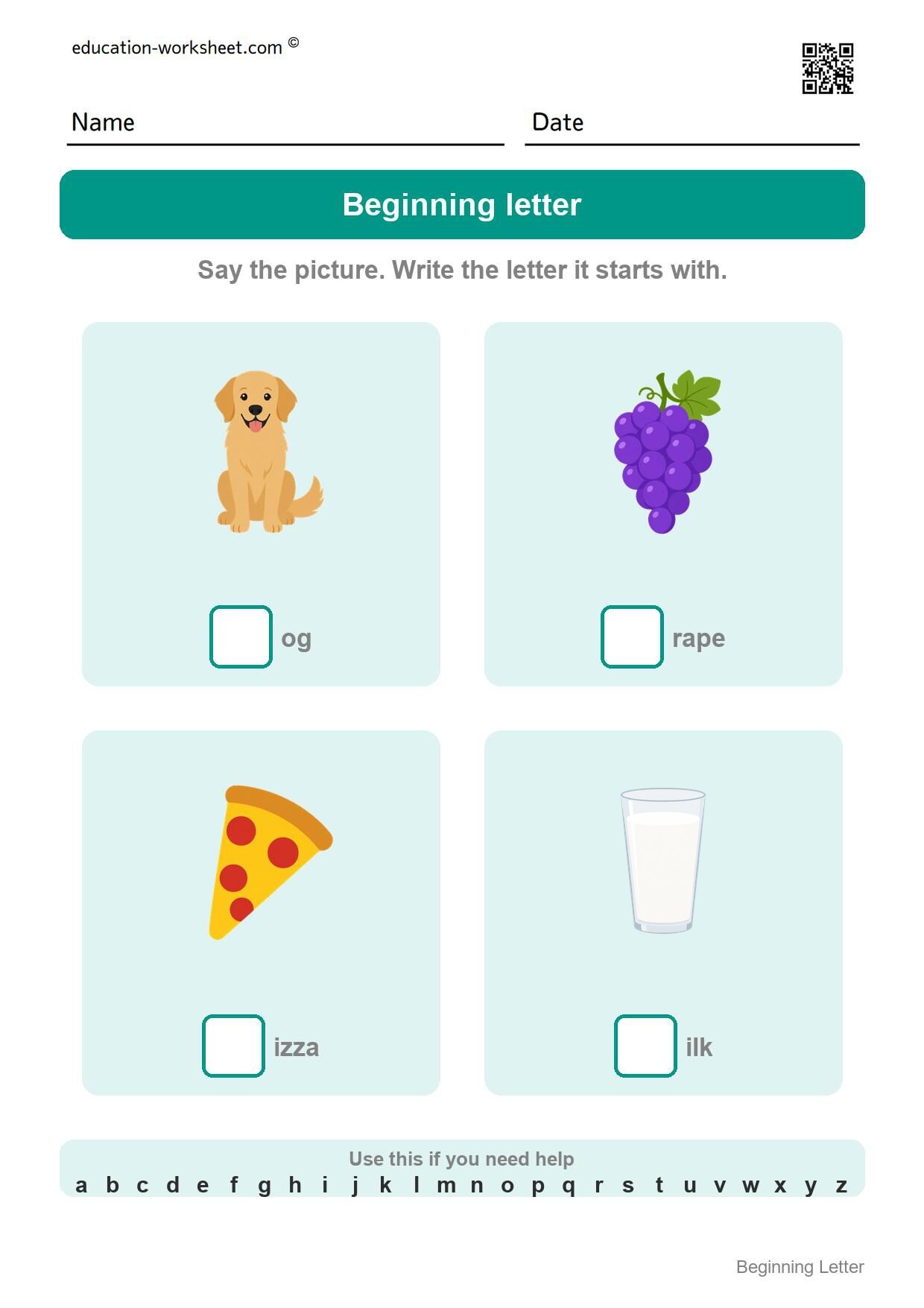
- Worksheet 9 – Dog, grape, pizza, milk
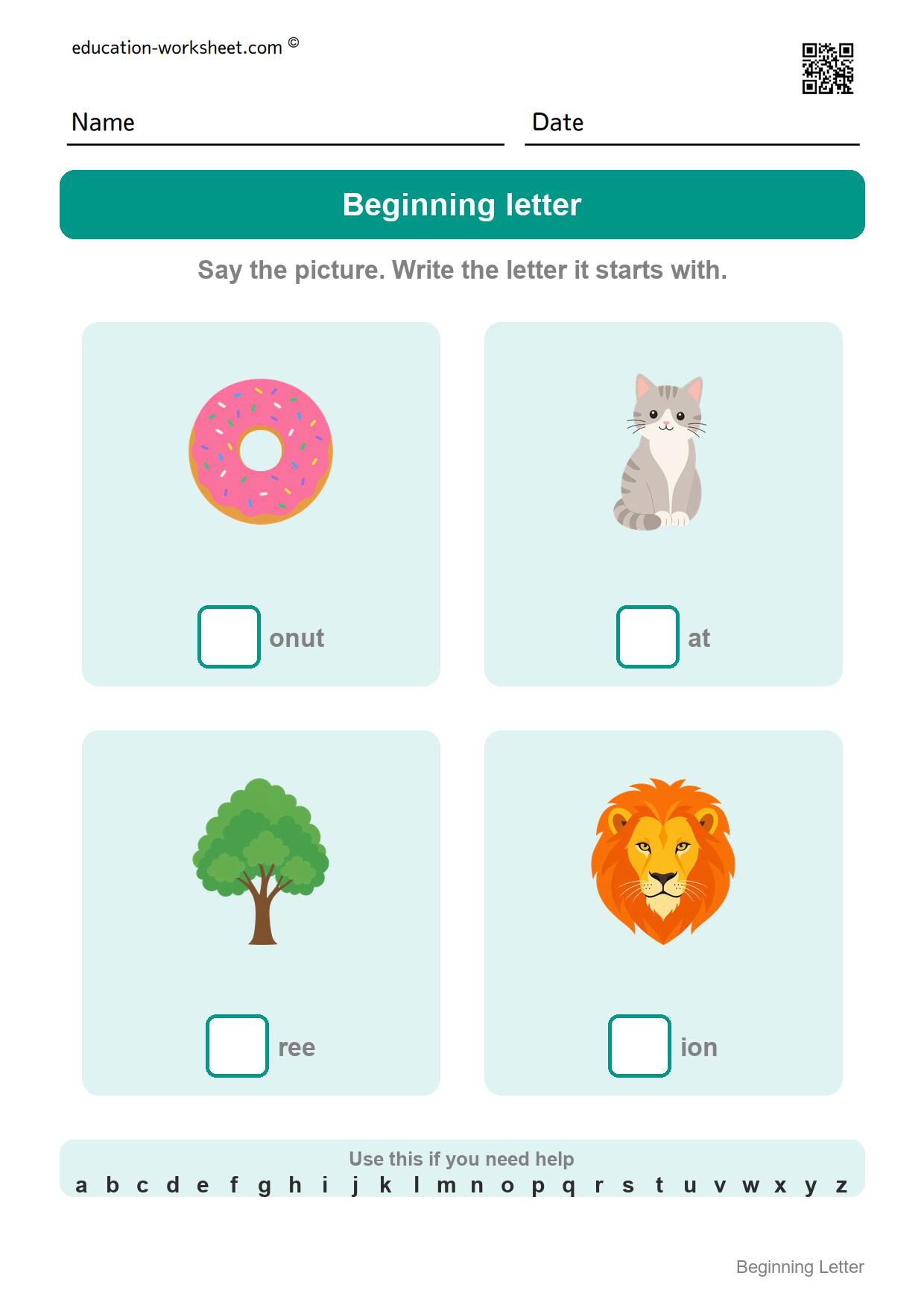
- Worksheet 10 – Donut, cat, tree, lion
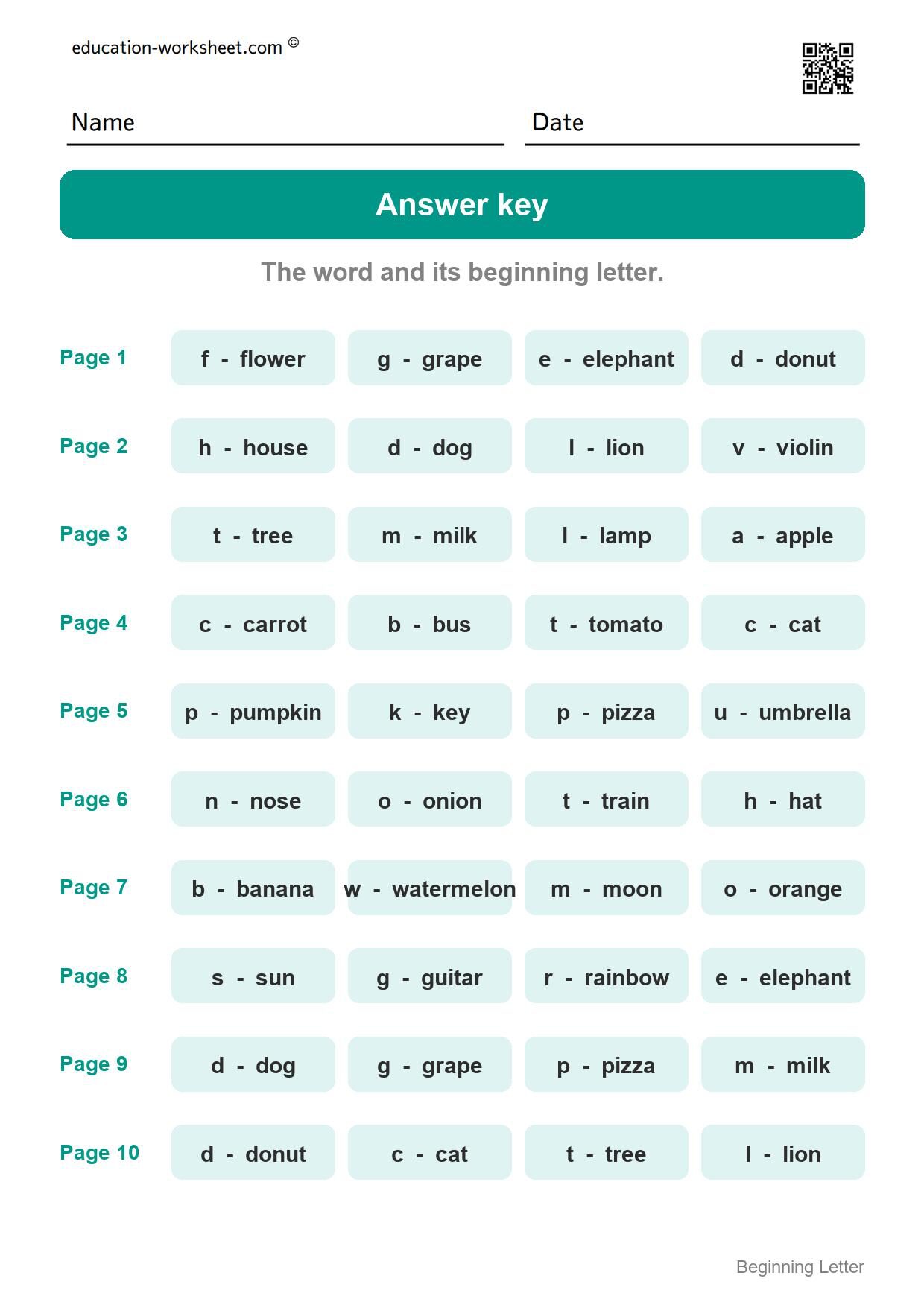
- Answer Key – All 40 Rows
- Pages 9 and 10 Are a Review, and Nothing Says So
- When Children Are Ready for Beginning Letters
- How to Use These Worksheets
- Three Things to Watch For
- Printing Tips
- Frequently Asked Questions
- More Free Alphabet and Phonics Worksheets
What Is in This Free Beginning Letter Worksheet Pack
- Ten printable worksheets with four pictures on each – forty rows in all.
- A picture, a box for the first letter, and the rest of the word printed beside it.
- An alphabet strip at the bottom of every page.
- Thirty-one different pictures, and twenty different letters as answers.
- An eleventh page with the full answer key.
- A separate PDF for every page, free to download and print.
The 11 Beginning Letter Worksheets
Twenty letters get used and six never do. The answers cover a, b, c, d, e, f, g, h, k, l, m, n, o, p, r, s, t, u, v and w. There is no i, j, q, x, y or z anywhere in the pack – which is honest rather than lazy, because the words a five-year-old can recognize in a picture simply do not start with those letters very often.
Six of the forty rows start with a vowel: elephant twice, apple, umbrella, onion and orange. Those are the hardest rows on every page, because the sound a vowel makes at the start of a word is the one children most often mishear.
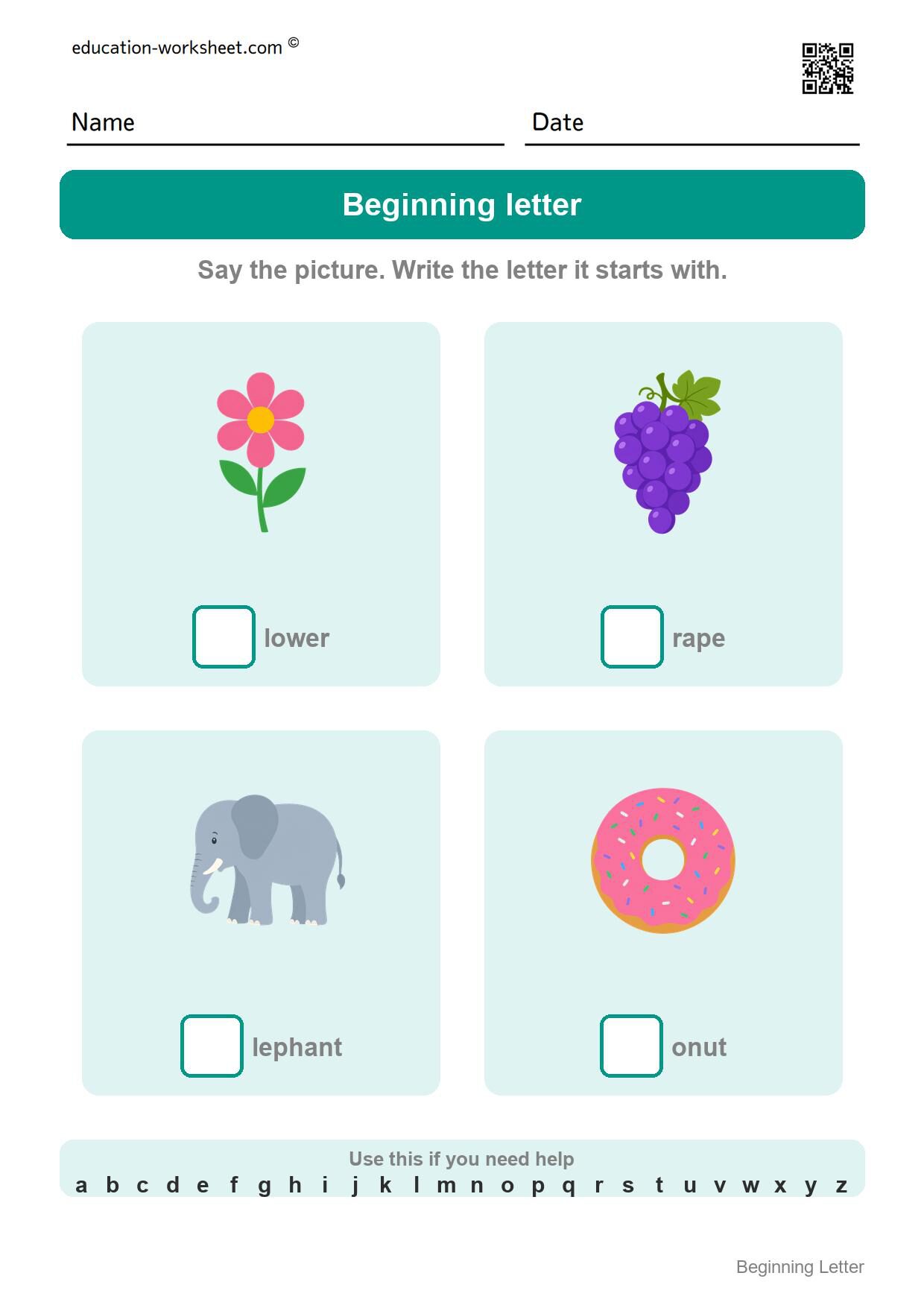
Worksheet 1 – Flower, grape, elephant, donut
The four pictures are flower, grape, elephant, donut, and the letters to write are f, g, e, d.
Elephant is the first vowel word in the pack and the hardest kind. A child sounding out e-lephant hears a sound that is nothing like the letter name E, which is why only six of the forty rows start with a vowel.
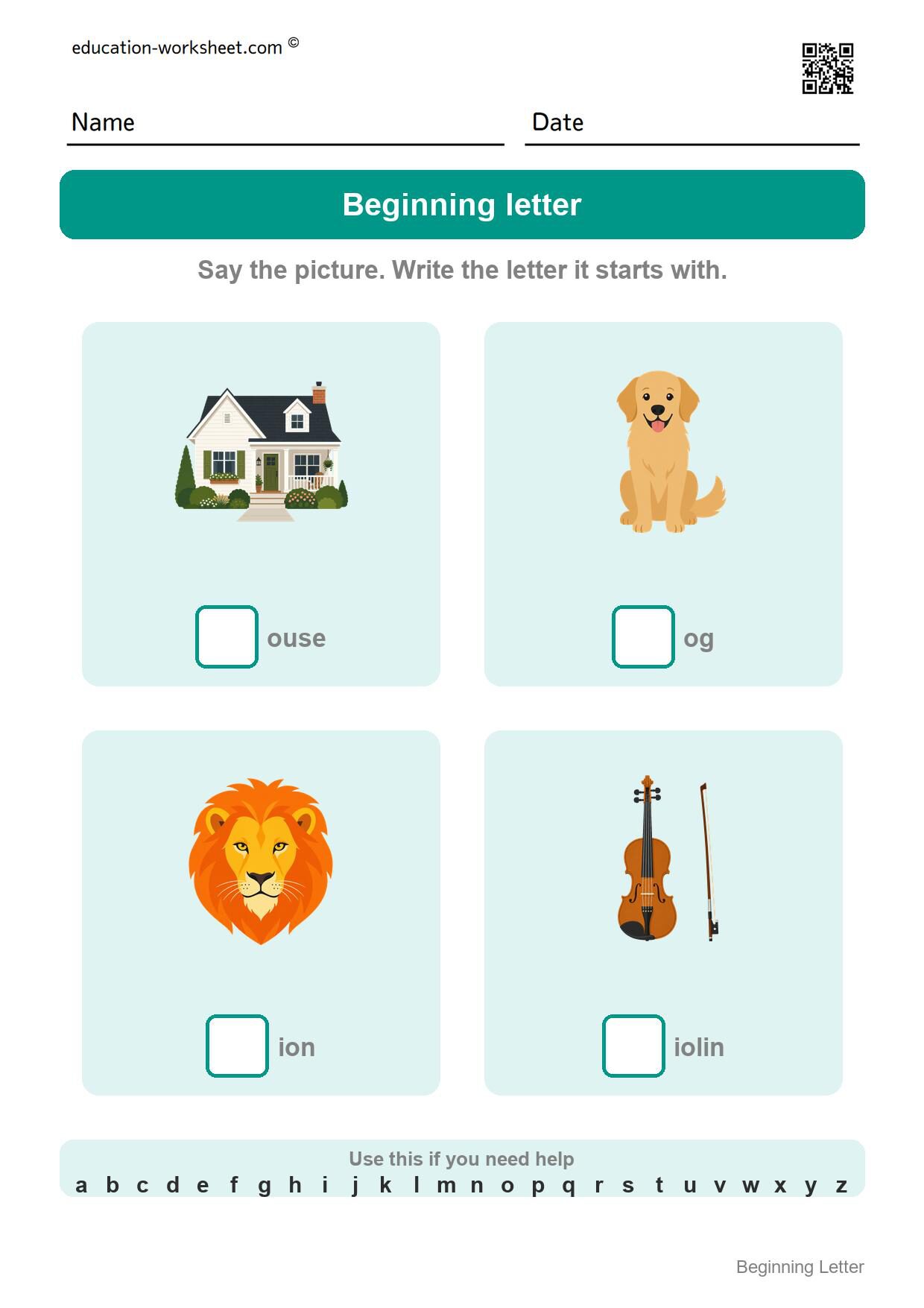
Worksheet 2 – House, dog, lion, violin
The four pictures are house, dog, lion, violin, and the letters to write are h, d, l, v.
Violin is the only v in the pack. It is also a word many children will not say without prompting, so name the picture together before they write.
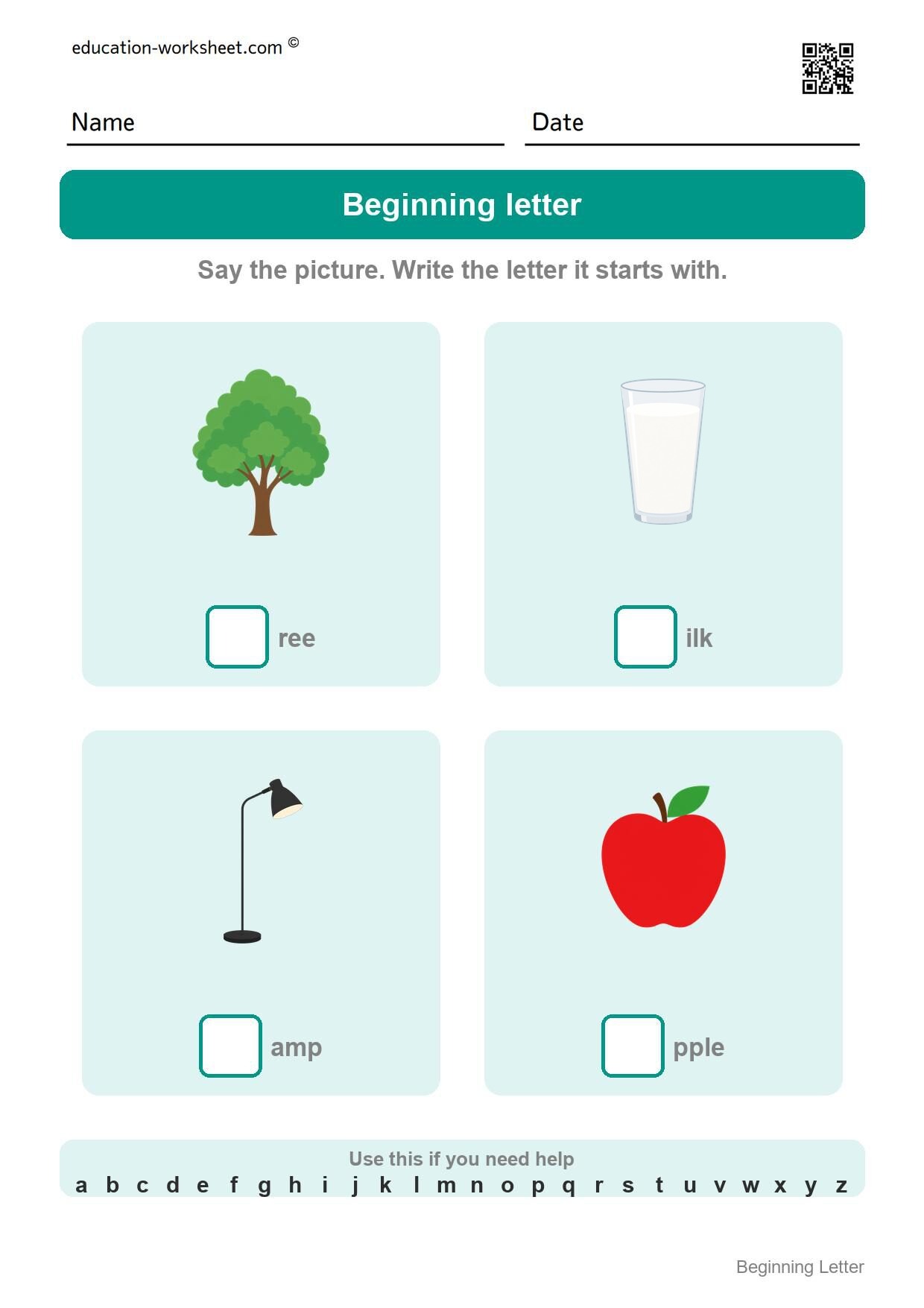
Worksheet 3 – Tree, milk, lamp, apple
The four pictures are tree, milk, lamp, apple, and the letters to write are t, m, l, a.
The milk row is the one to look at. The word ending printed beside the box is ilk, so even a child who calls the picture “a drink” can work out that the missing letter is m.
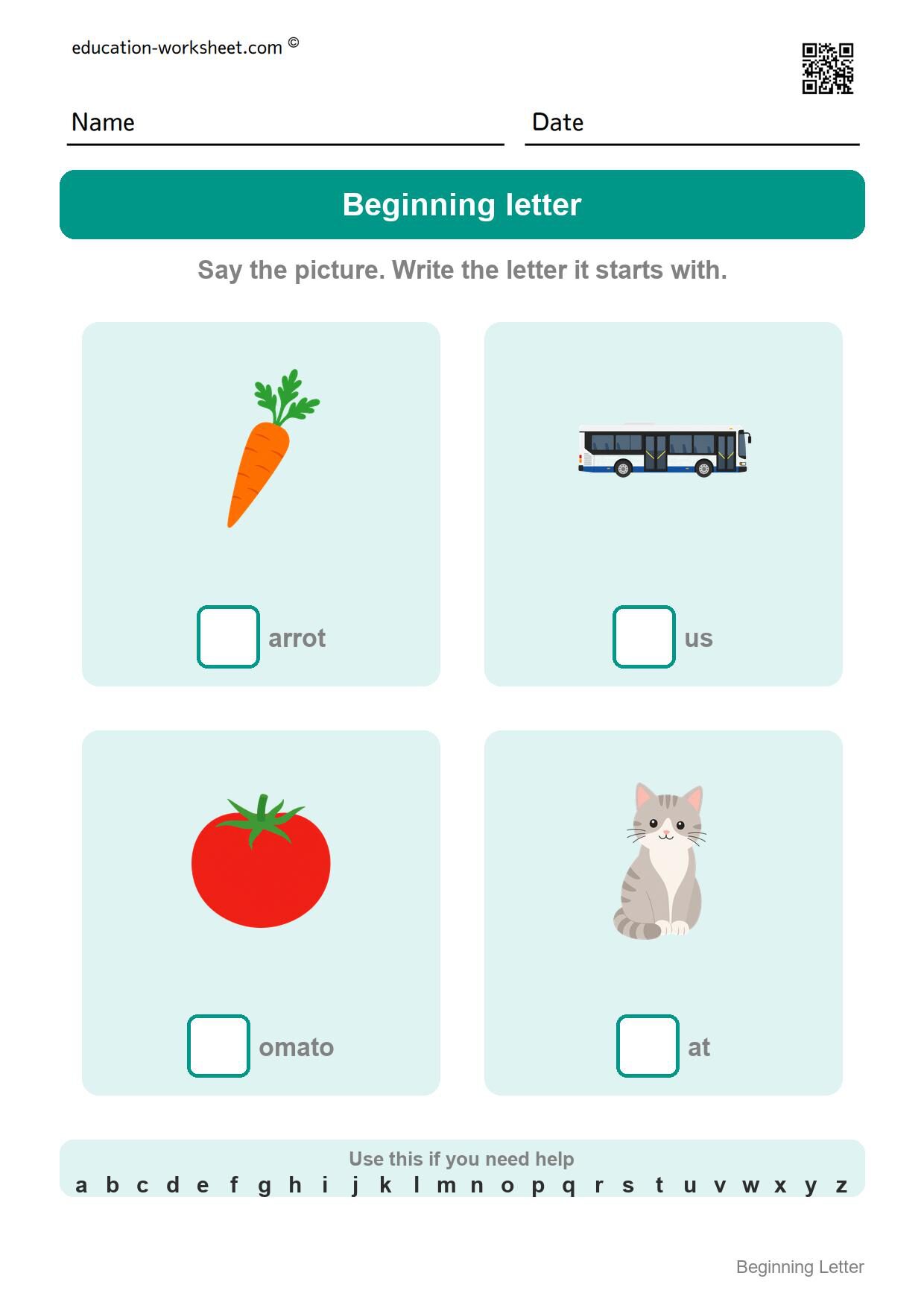
Worksheet 4 – Carrot, bus, tomato, cat
The four pictures are carrot, bus, tomato, cat, and the letters to write are c, b, t, c.
Two c words on one page, carrot and cat, with bus and tomato between them. Repeating a letter within a page is unusual here and it makes this a good page for a child who is shaky on c.
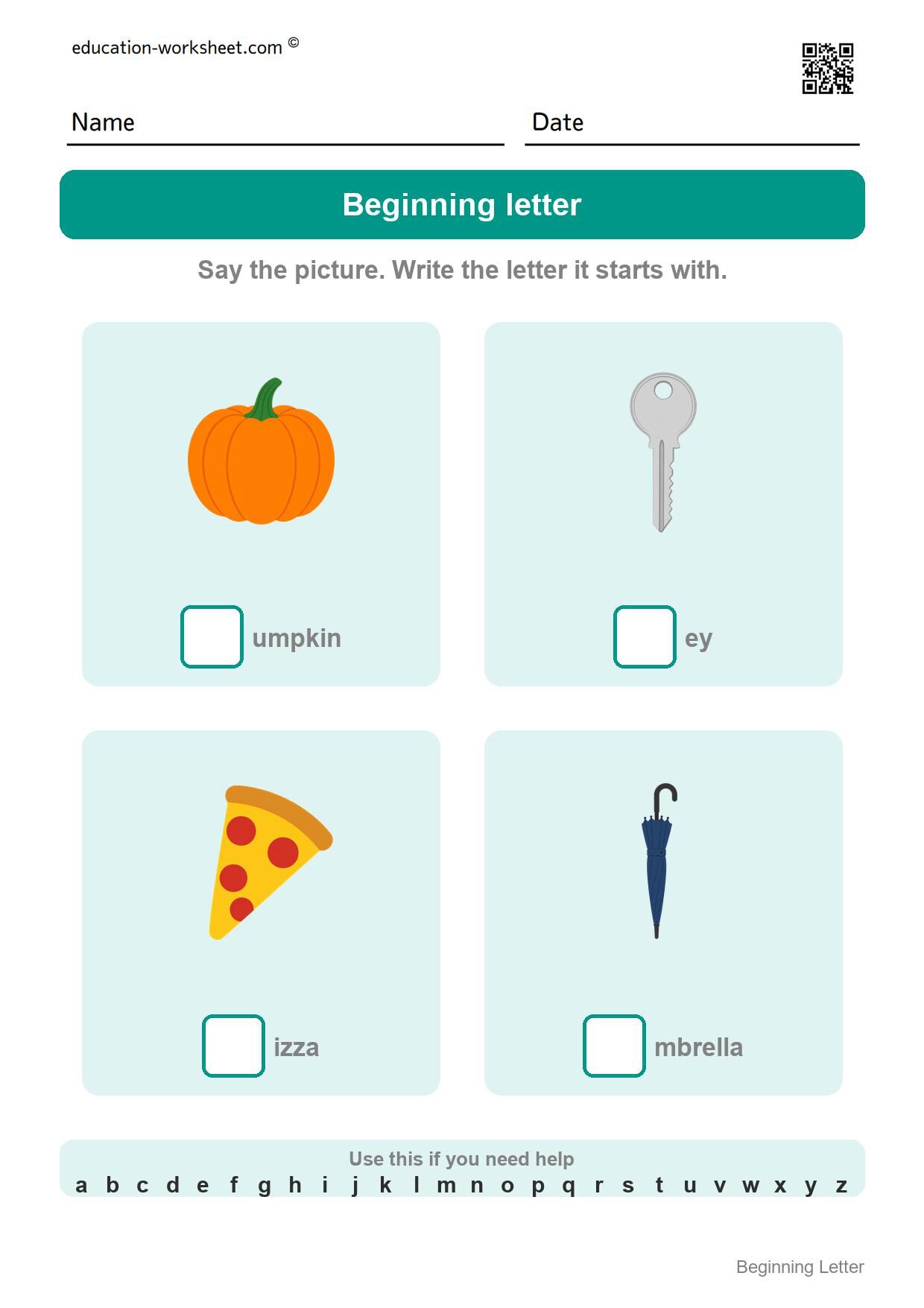
Worksheet 5 – Pumpkin, key, pizza, umbrella
The four pictures are pumpkin, key, pizza, umbrella, and the letters to write are p, k, p, u.
Pumpkin and pizza both take p, and umbrella is the second of the six vowel words. The k of key appears once in the whole pack.
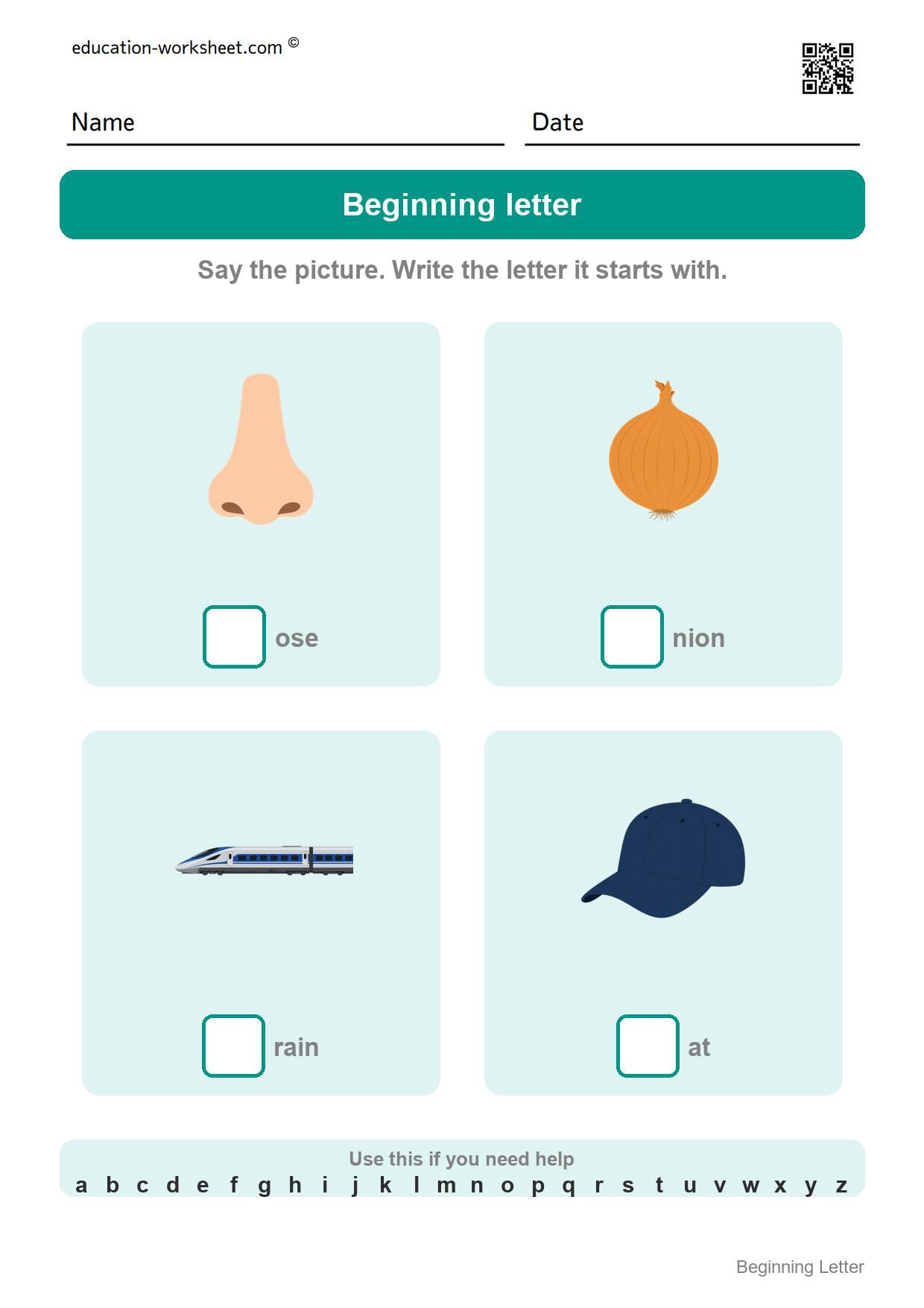
Worksheet 6 – Nose, onion, train, hat
The four pictures are nose, onion, train, hat, and the letters to write are n, o, t, h.
The picture for the at row is a baseball cap. The word the sheet wants is hat – the printed ending is at and the answer key gives h. Say the word aloud with the child before they write, and the row works as intended.
Worksheet 7 – Banana, watermelon, moon, orange
The four pictures are banana, watermelon, moon, orange, and the letters to write are b, w, m, o.
Watermelon is the longest word in the pack at ten letters, and the only w. Long words are easier for this task, not harder: there is more word to hear before the first sound is lost.
Worksheet 8 – Sun, guitar, rainbow, elephant
The four pictures are sun, guitar, rainbow, elephant, and the letters to write are s, g, r, e.
Rainbow holds the only r. Elephant comes back for the second time, which is the first sign of what pages 9 and 10 are doing.
Worksheet 9 – Dog, grape, pizza, milk
The four pictures are dog, grape, pizza, milk, and the letters to write are d, g, p, m.
Every picture on this page has appeared before – dog from page 2, grape from page 1, pizza from page 5, milk from page 3. Nothing new is introduced.
Worksheet 10 – Donut, cat, tree, lion
The four pictures are donut, cat, tree, lion, and the letters to write are d, c, t, l.
The same again: donut, cat, tree and lion are all repeats. The last two pages of the pack are a review, and a child who has done pages 1 to 8 should finish both of them quickly and correctly.
Answer Key – All 40 Rows
The eleventh sheet lists every picture with its letter, four to a page.
It also settles any argument about what a picture is called, which on a sheet with no captions is the thing an adult most often needs.
Pages 9 and 10 Are a Review, and Nothing Says So
The pack introduces four new pictures on each of the first seven pages, three on page 8, and then nothing new at all on pages 9 and 10. Every picture on the last two pages has already been answered earlier: dog, grape, pizza, milk, donut, cat, tree and lion.
That is a good design and it is worth using deliberately. Do pages 1 to 8 over a couple of weeks, then leave a gap and hand over pages 9 and 10. What comes back tells you which letters stuck without any need for a test.
Nine of the thirty-one pictures are used twice across the pack. The rest appear once.
When Children Are Ready for Beginning Letters
- Age: about four to six – pre-K through kindergarten.
- Before starting: the child should be able to write most lowercase letters. Hearing the first sound in a word should already be possible; this pack is about writing the letter that goes with it.
- RF.K.1.D – recognize and name all upper- and lowercase letters.
- RF.K.3.A – know the sound each consonant letter makes.
- L.K.2.C – write a letter for most consonant and short-vowel sounds. That is exactly what the empty box asks for.
How to Use These Worksheets
- Name the picture together before anything is written. Use the answer key if a picture is ambiguous.
- Say the word, then say just its first sound on its own, then ask which letter makes that sound.
- Point at the alphabet strip along the bottom rather than telling the child the letter. Finding it themselves is half the value of the page.
- Read the finished word with the written letter in place – t plus ree makes tree. That closes the loop between the sound, the letter and the word.
- Leave a gap of a week or two before doing pages 9 and 10, so they work as the review they were built to be.
- Check with page 11 when the page is finished.
Three Things to Watch For
1. Writing the letter name instead of the letter. Children who are strong on letter names sometimes write bee for b. The alphabet strip at the bottom of the page is the cure: point at it and let them copy the shape.
2. The vowel rows. Elephant, apple, umbrella, onion and orange are the six hardest rows in the pack. The short vowel sound at the start of a word is genuinely difficult to hear, and a child who gets the other thirty-four right and stumbles here is doing fine.
3. Calling the picture something else. A picture of a drink might be called juice, and the answer would be wrong for the right reason. The printed word ending is the fix – ilk can only be milk – so point at it before correcting anything.
Printing Tips
- Print at 100 percent, actual size, on A4 or US Letter. The answer boxes are small already.
- Color printing helps, because several of the pictures are recognized by color as much as by shape.
- Print pages 9 and 10 separately from the rest, so they can be kept back and used as a review later.
Frequently Asked Questions
What age are these beginning letter worksheets for?
About four to six years old. The child should be able to write most lowercase letters; the alphabet strip on each page helps with the rest.
How is this different from a beginning sounds worksheet?
A beginning sounds sheet asks the child to circle a letter. This one asks them to write it, and it prints the rest of the word beside the box, which gives a second way to work out the answer.
Which letters are covered?
Twenty of them: a, b, c, d, e, f, g, h, k, l, m, n, o, p, r, s, t, u, v and w. There is no i, j, q, x, y or z.
Is there an answer key?
Yes, page 11 lists all forty pictures with their letters.
Are pages 9 and 10 new?
No, and that is deliberate. Every picture on those two pages has appeared earlier in the pack, so they work as a review.
Do I need to sign up to download these?
No. Every PDF downloads immediately, with no account, no email address and no cost.
Can I use these in my classroom?
Yes, they are free to print for home and classroom use. Please do not sell them or re-host the files elsewhere.
More Free Alphabet and Phonics Worksheets
- Free Beginning Sounds Worksheets for Kindergarten – Phonics
- Free Ending Letter Worksheets for Kindergarten – Write the Last Letter
- Free Find the Letter Worksheets for Kindergarten – Letter Recognition
- Free Letter Tracing Worksheets A to Z – Capital and Small Letters
- Free Middle Sounds Worksheets for Kindergarten – Short Vowels
- Free CVC Word Building Worksheets for Kindergarten – Make Three Letter Words