- Free Comparing Numbers Worksheets for Grade 1 – Greater Less
- Comparing numbers to 100 (start here)
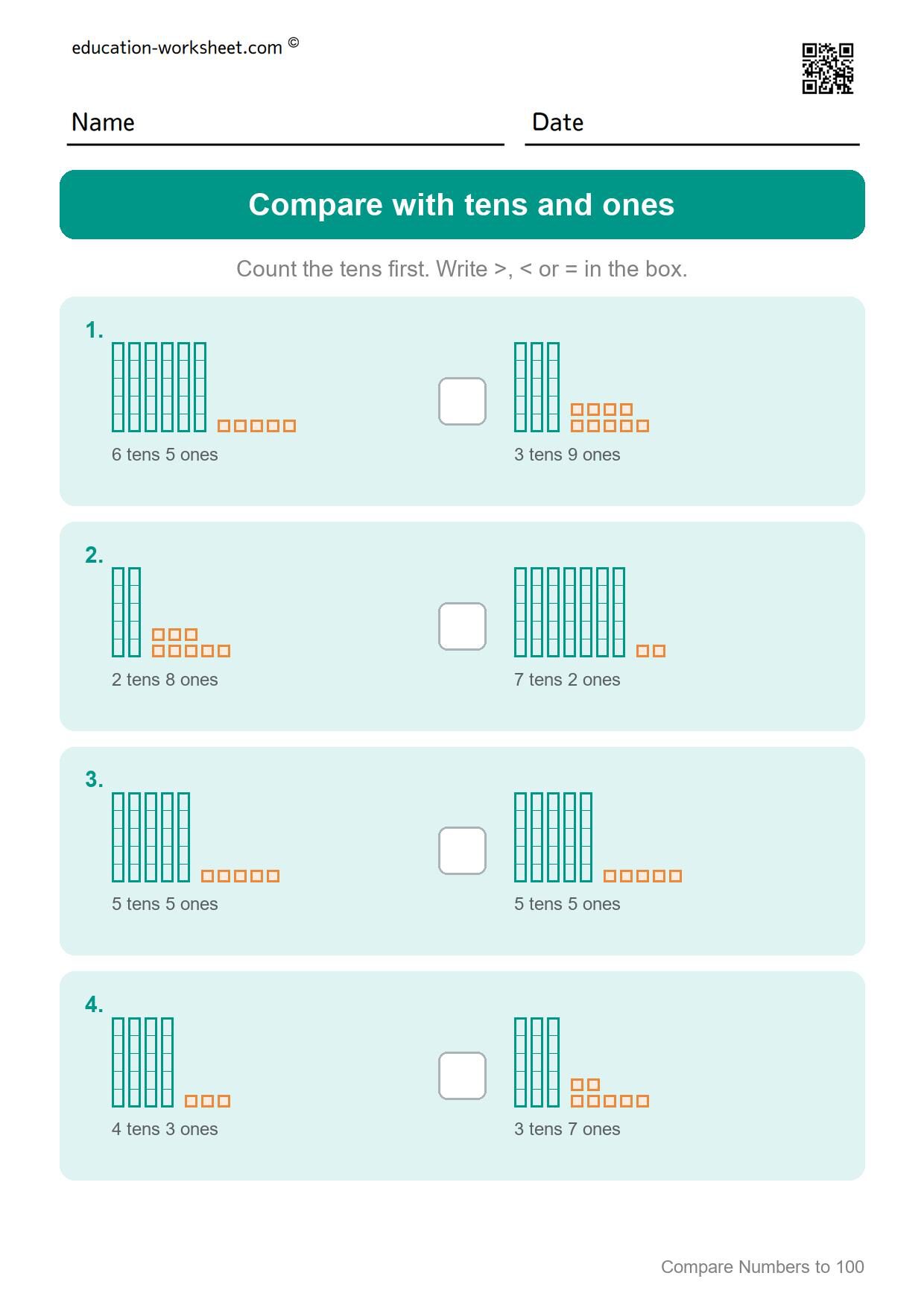
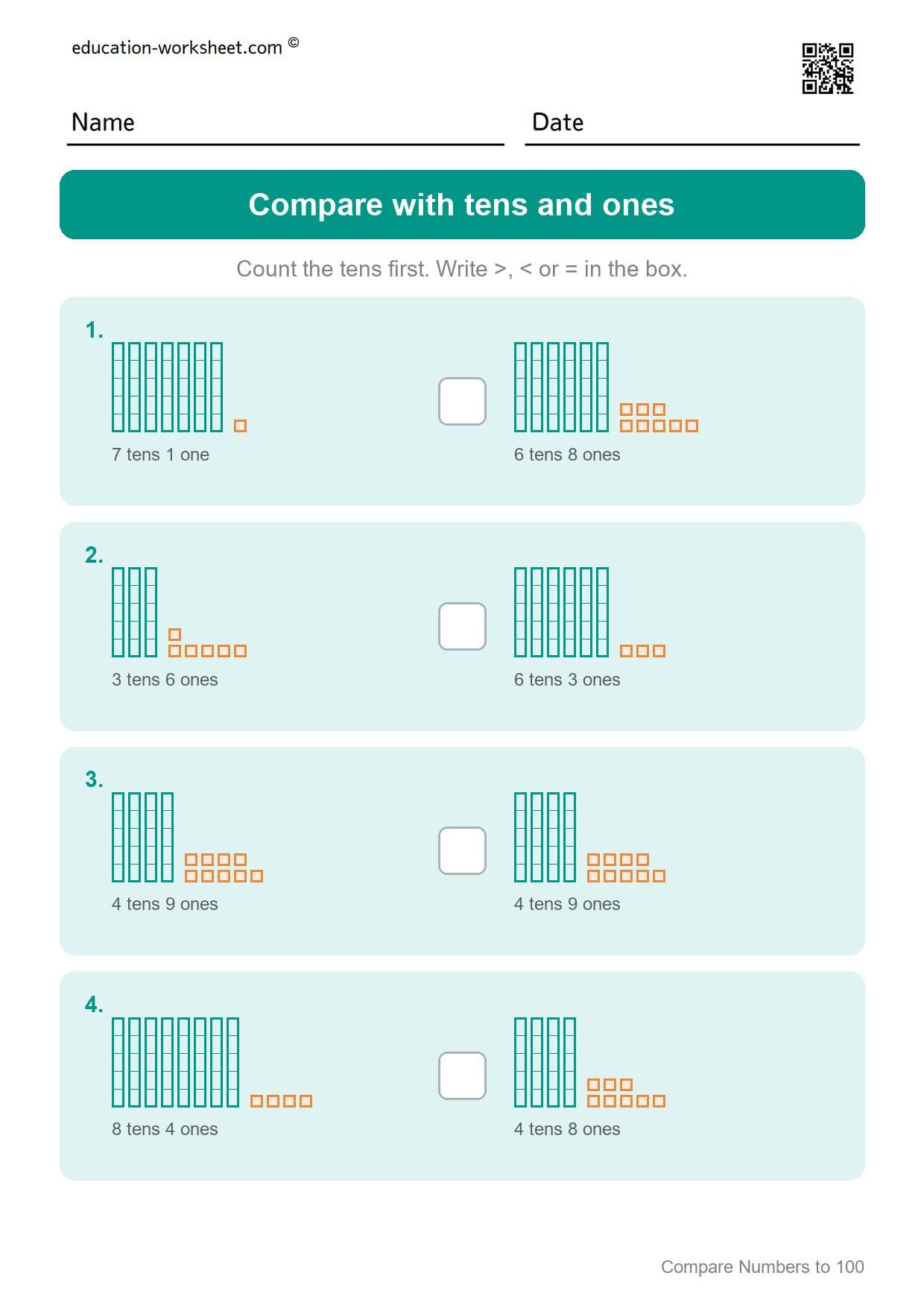
- Compare with tens and ones (Set 1)
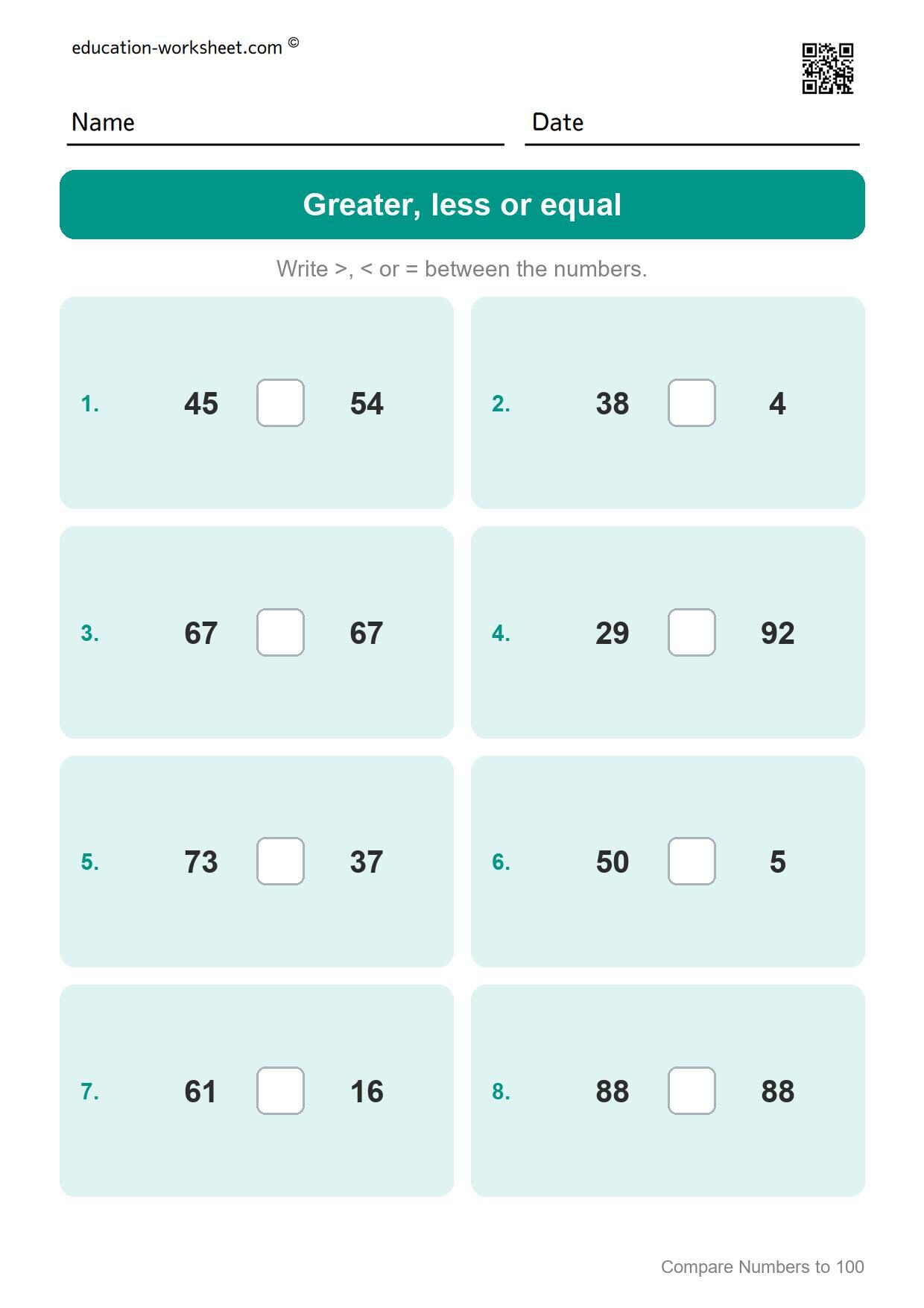
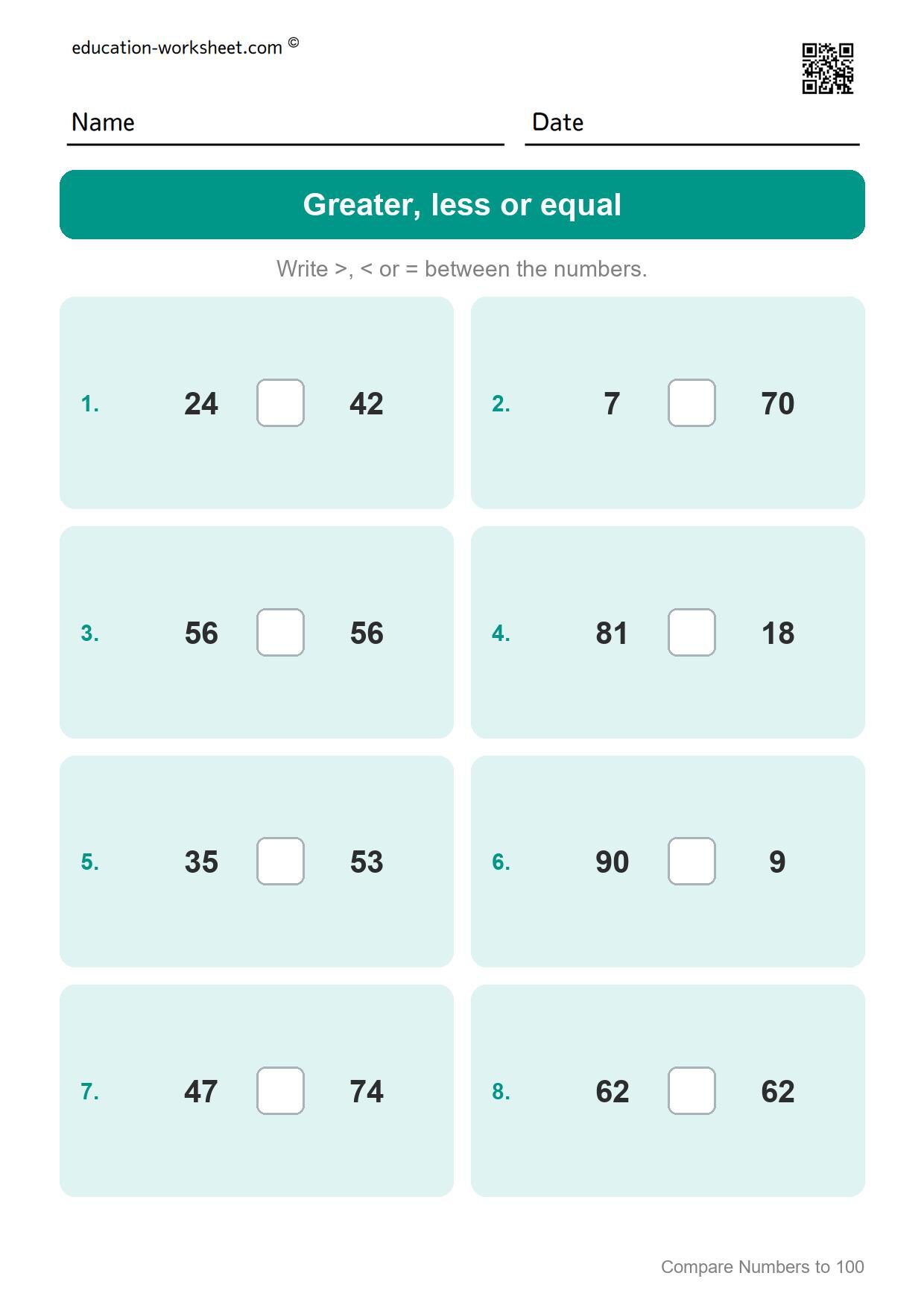
- Greater, less or equal (Set 2)
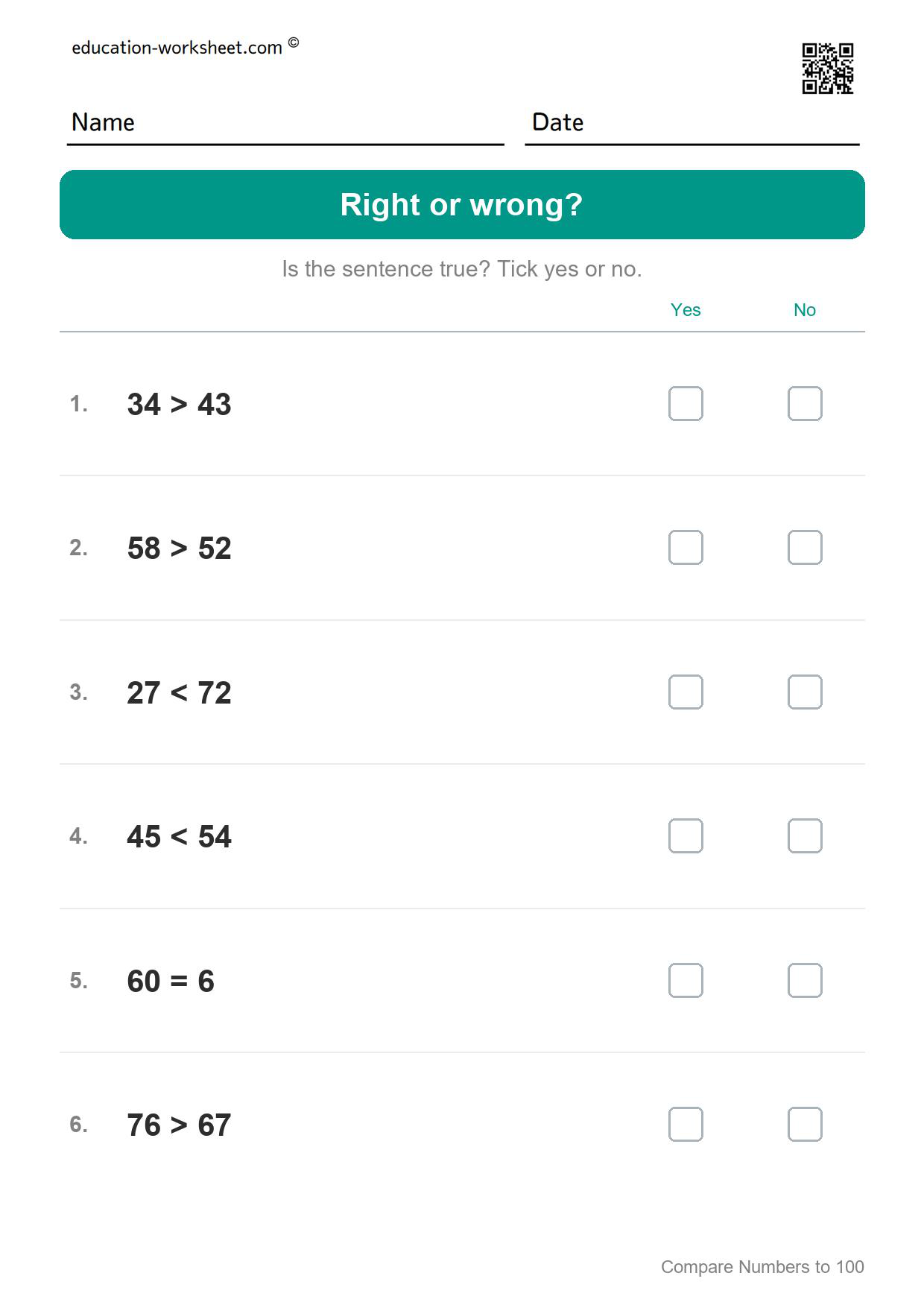
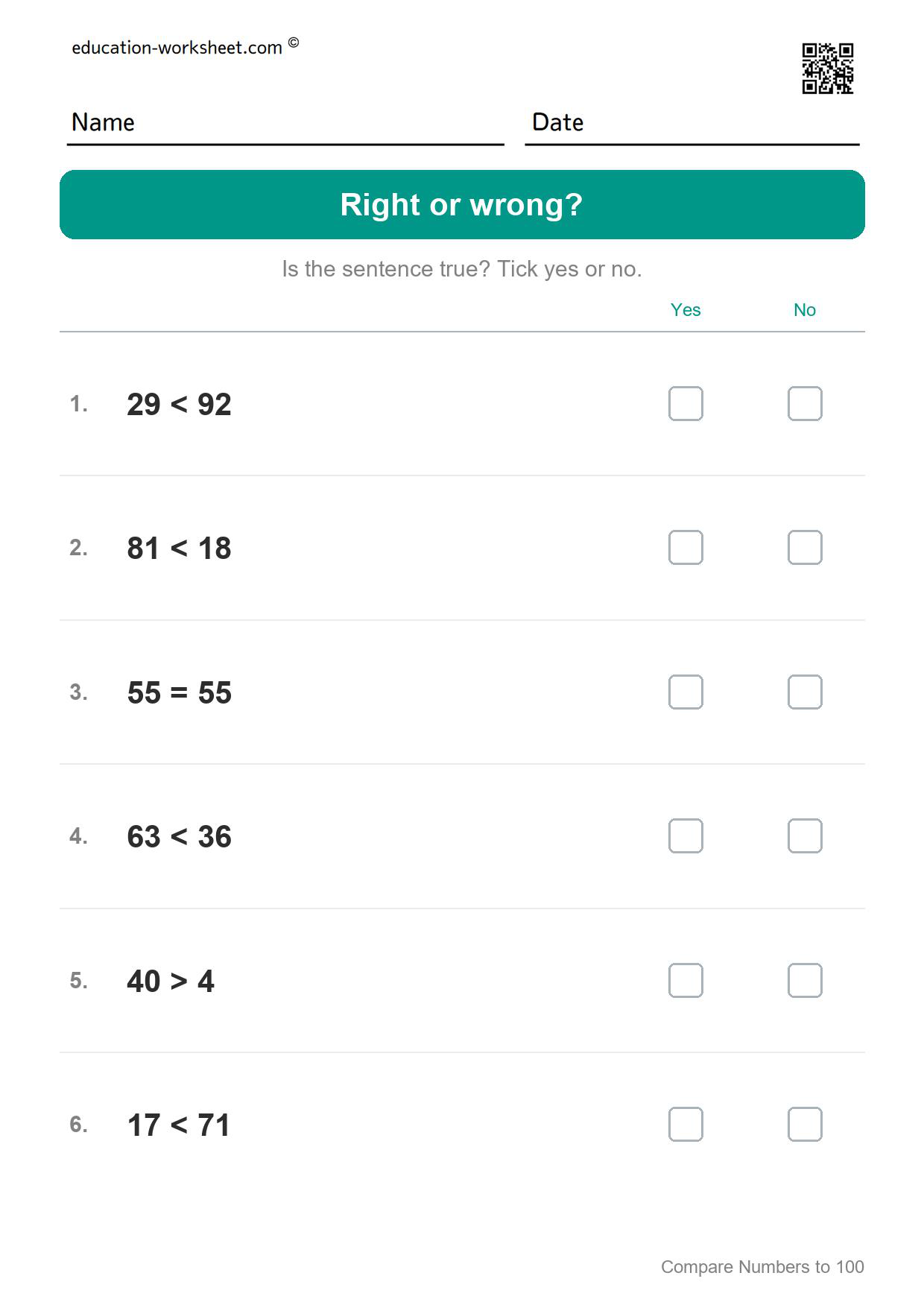
- Right or wrong? (Set 3)
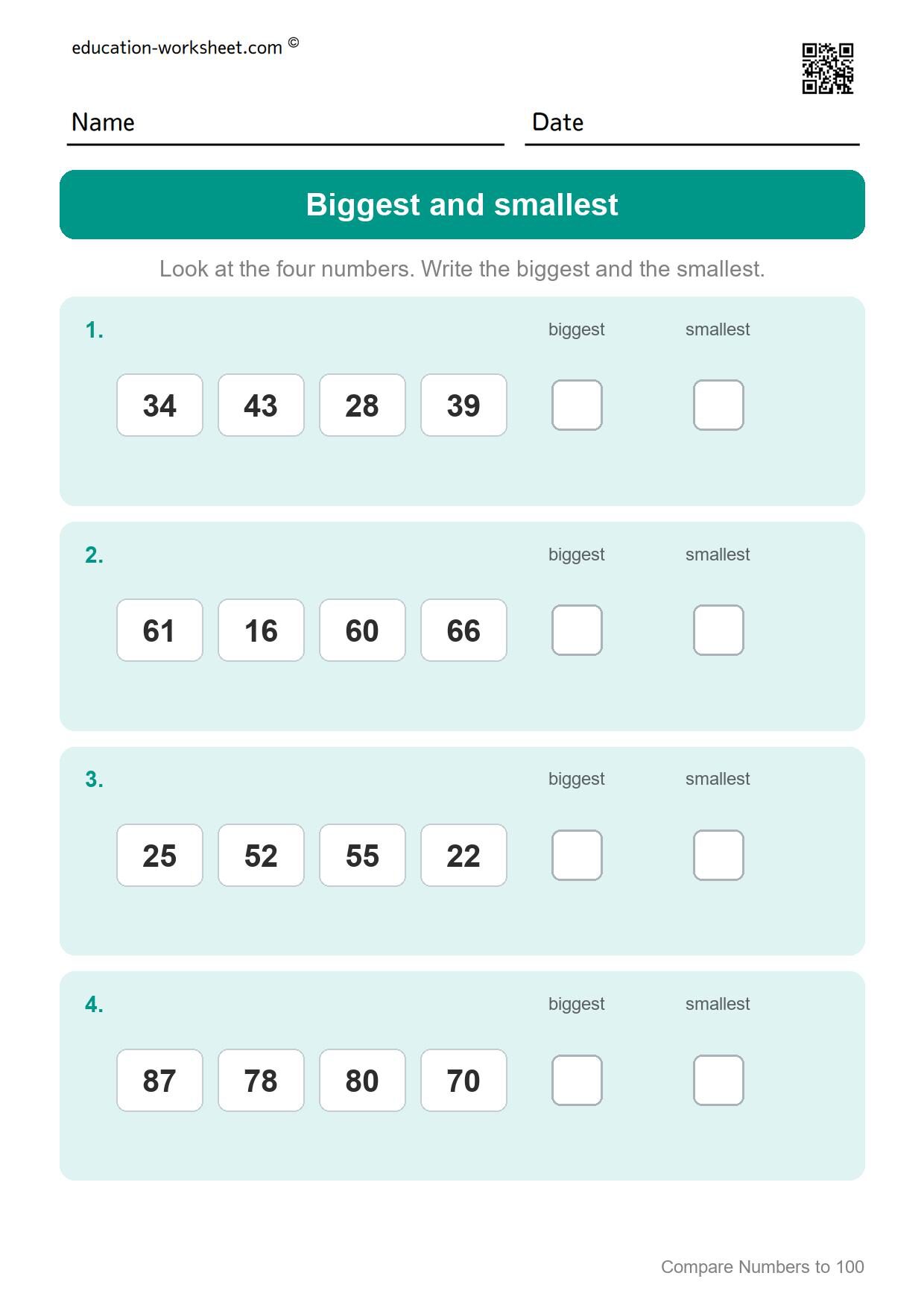
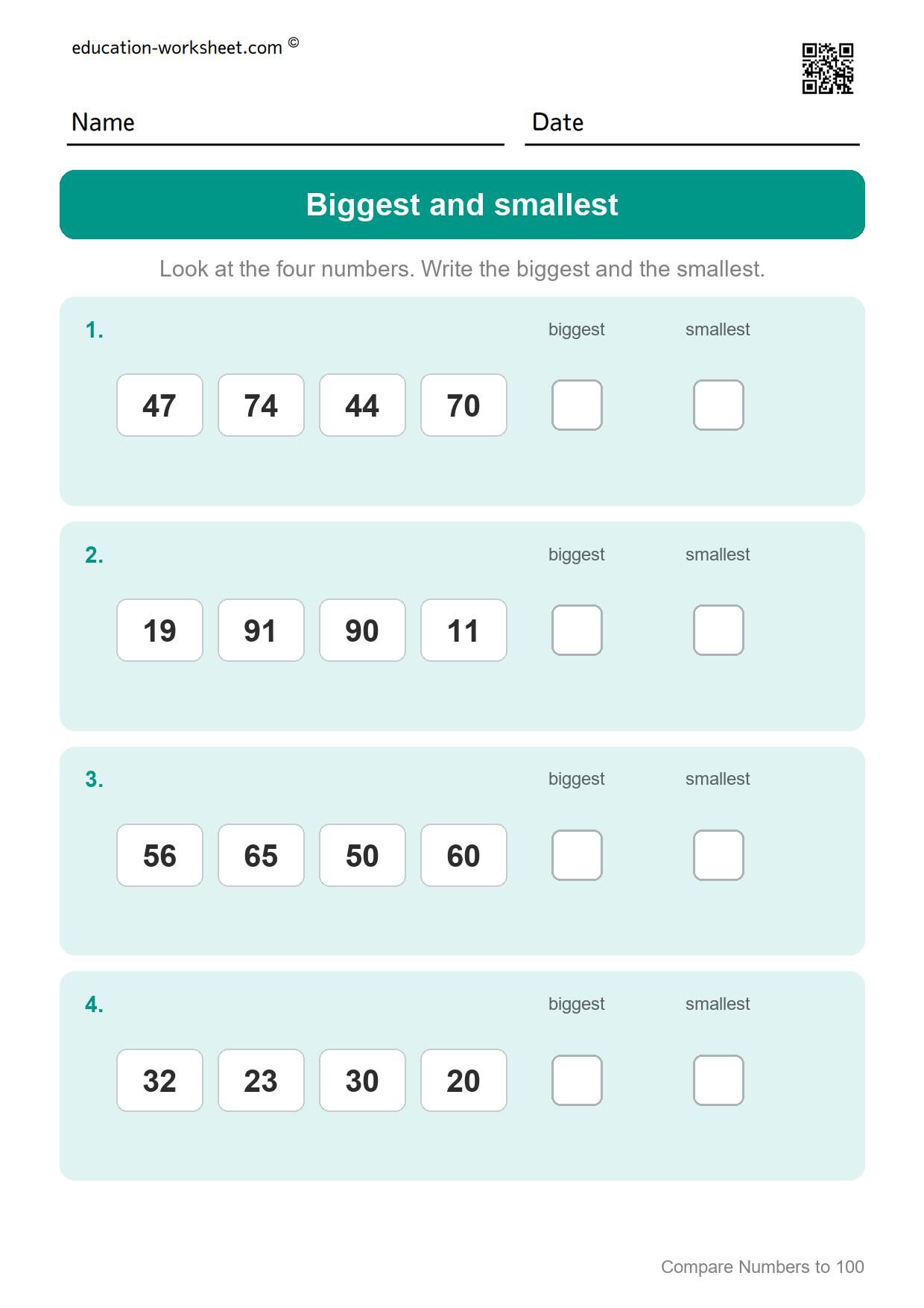
- Biggest and smallest (Set 4)
- Compare with tens and ones (Set 5)
- Greater, less or equal (Set 6)
- Right or wrong? (Set 7)
- Biggest and smallest (Set 8)
- Compare with tens and ones (Set 9)
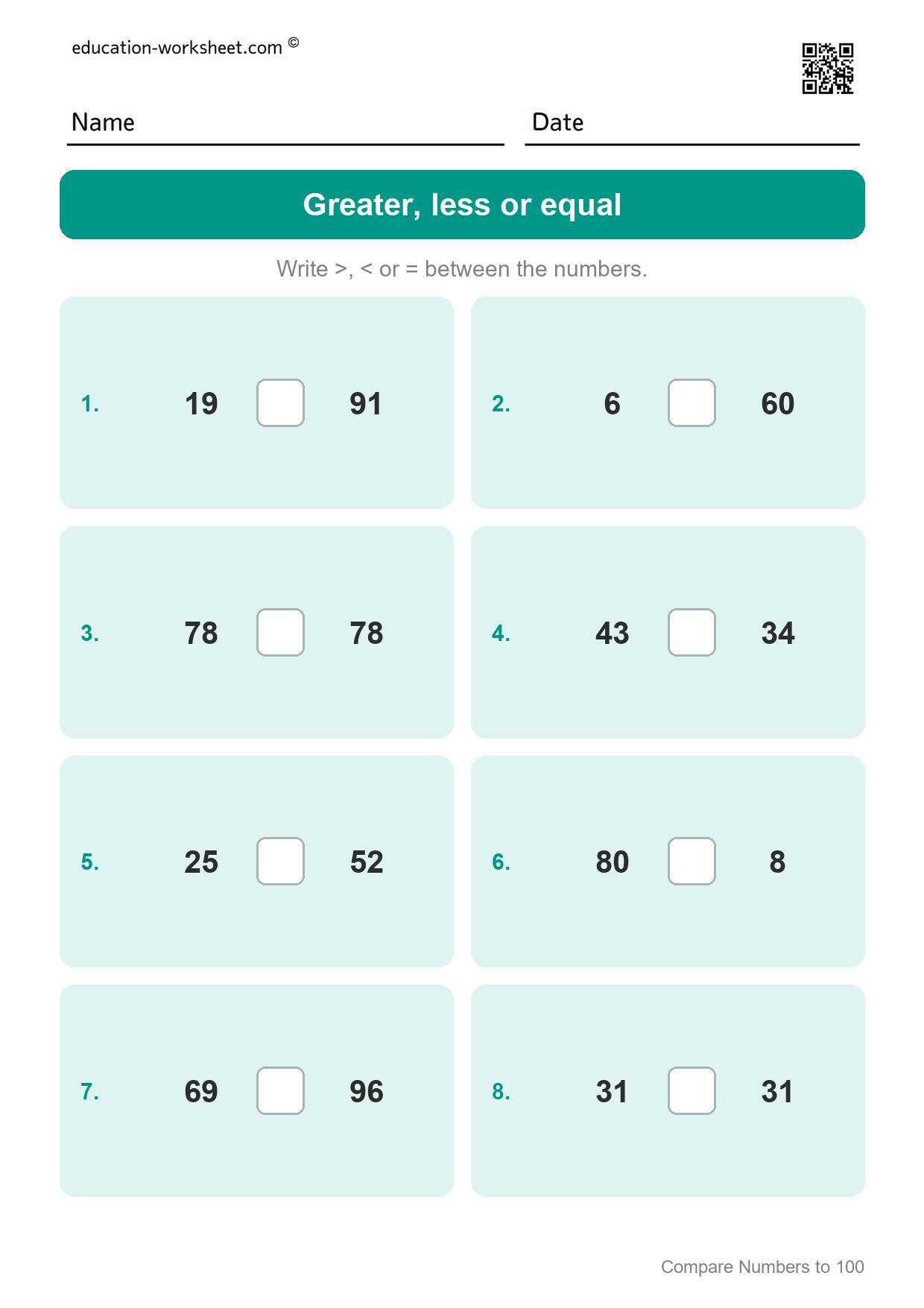
- Greater, less or equal (Set 10)
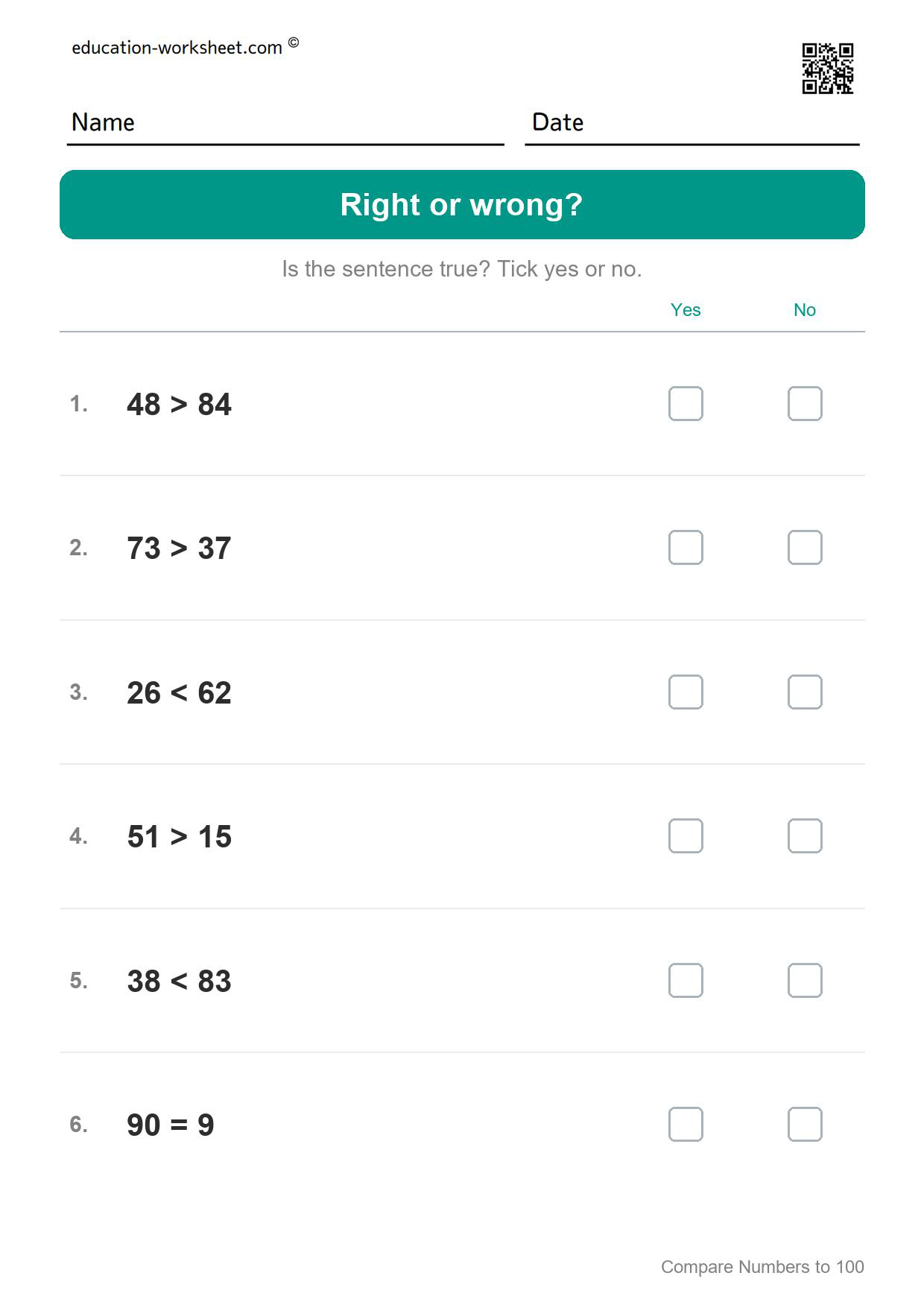
- Right or wrong? (Set 11)
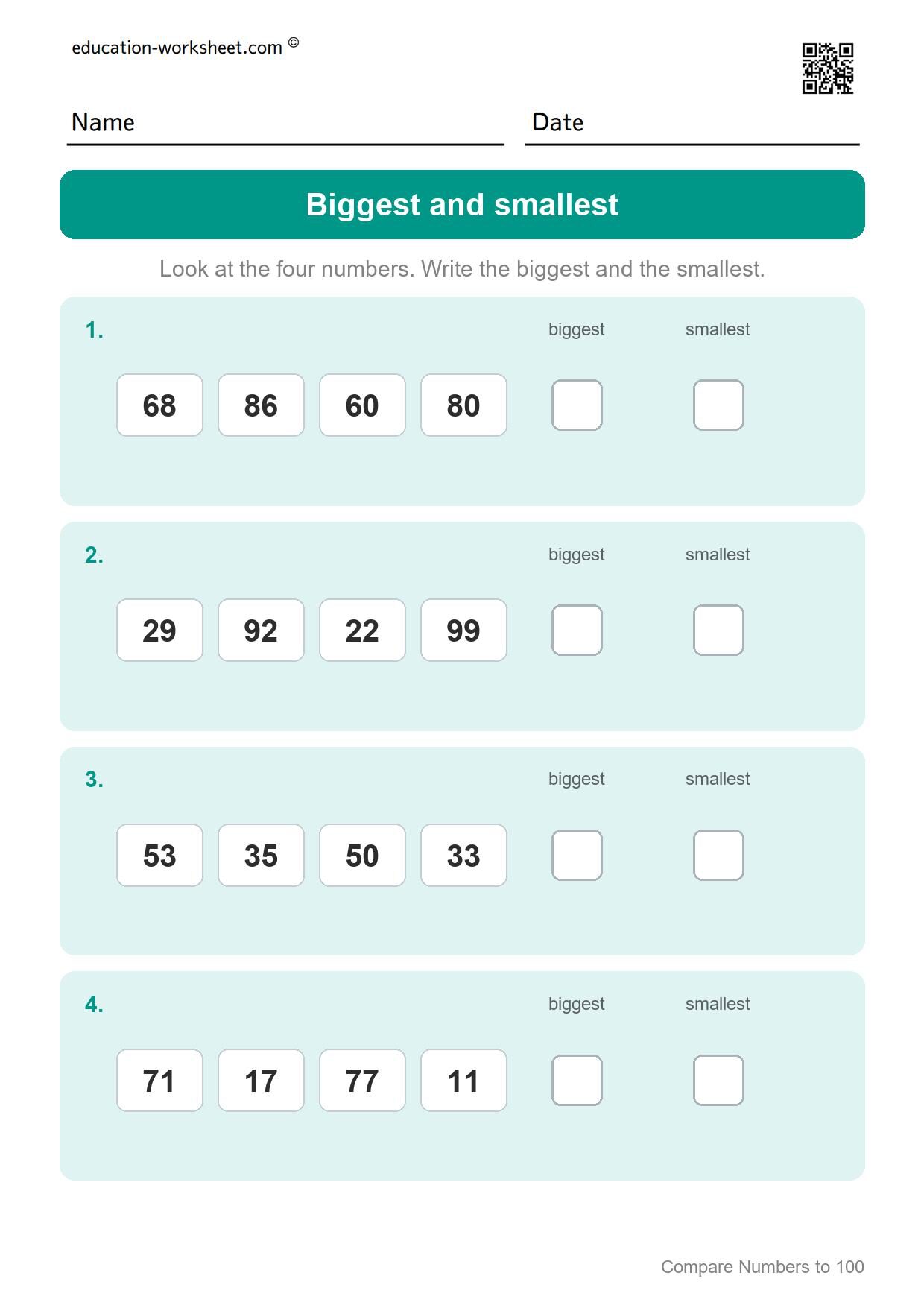
- Biggest and smallest (Set 12)
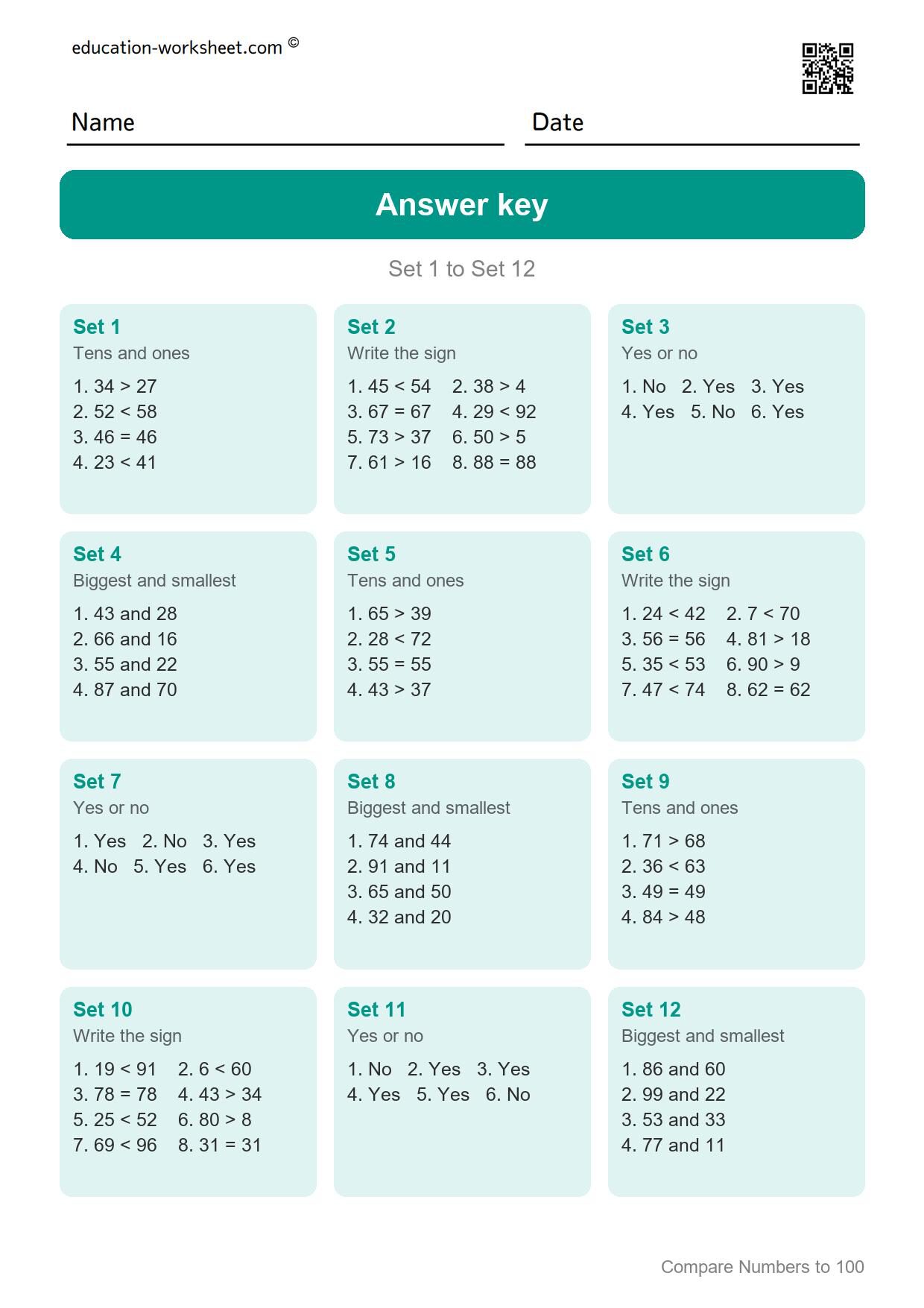
- Answer key
- Comparing two-digit numbers: look at the tens first
- What your child is actually learning
- How to work through these pages
- The mistakes to expect
- What to teach next
- Questions parents ask
- Is the crocodile a good way to teach the symbols?
- My child compares correctly but writes the wrong symbol. Which matters more?
- Should we use blocks for this?
- More free worksheets
Free Comparing Numbers Worksheets for Grade 1 – Greater Less
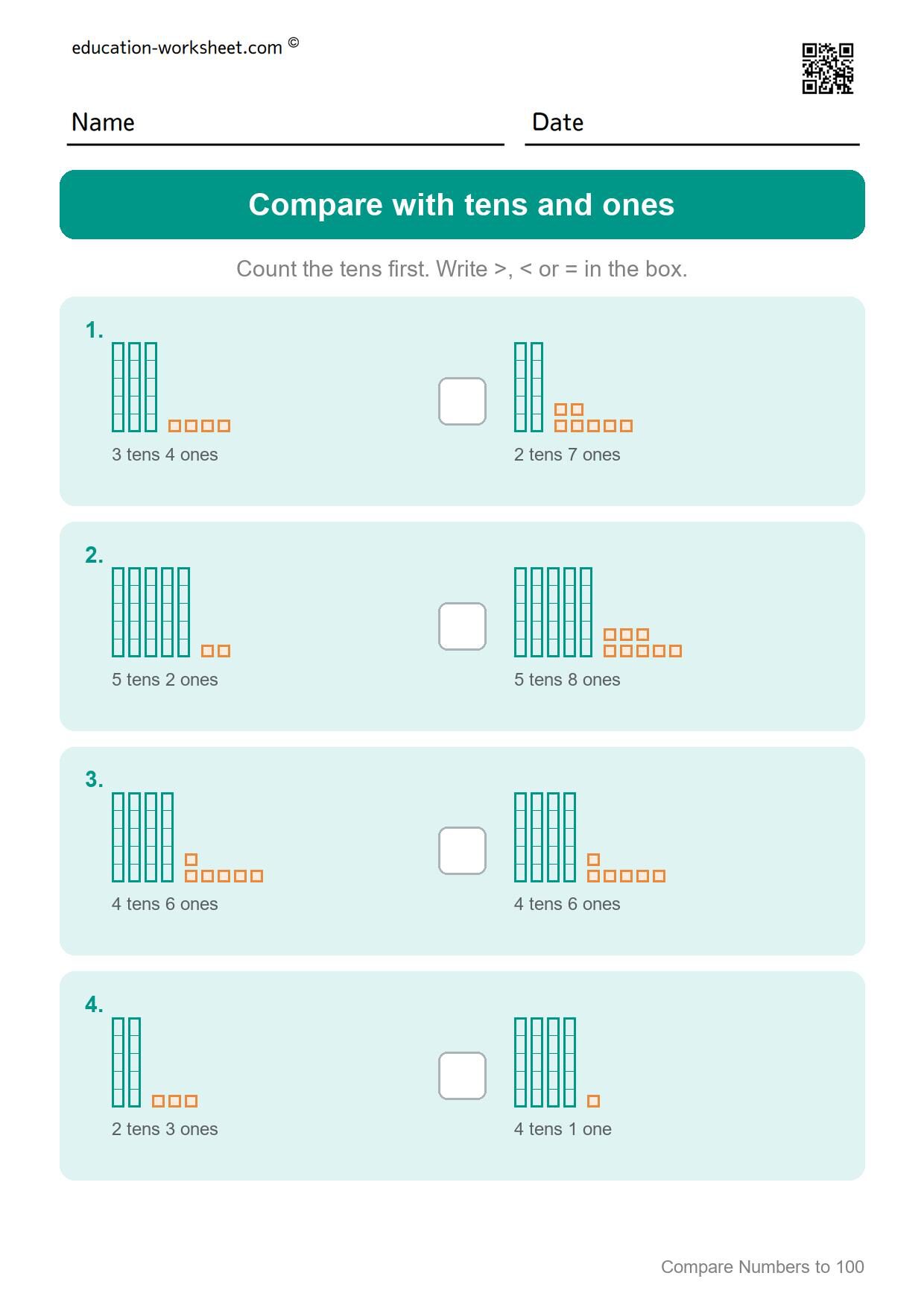
These free printable comparing numbers worksheets teach first graders to use the greater than, less than and equal signs with two digit numbers, and more importantly to compare in the right order: tens first, ones only if the tens are the same. Three predictable mistakes are targeted on purpose throughout the set. Pairs like 45 and 54 appear again and again, because a child who reads digits instead of numbers will call them equal. Pairs like 38 and 4 appear too, because a one digit number can look bigger when only the ones are compared. And the sign itself gets its own page, since remembering which way it points is a separate problem from knowing which number is bigger. The pages rotate through four tasks three times: comparing with tens rods and ones blocks so the difference can be seen rather than reasoned about, writing the sign between two bare numbers, judging whether a printed sentence is true or false, and picking the biggest and smallest out of four numbers. The last sheet is an answer key for all twelve pages. Just download, print, and count the tens first!
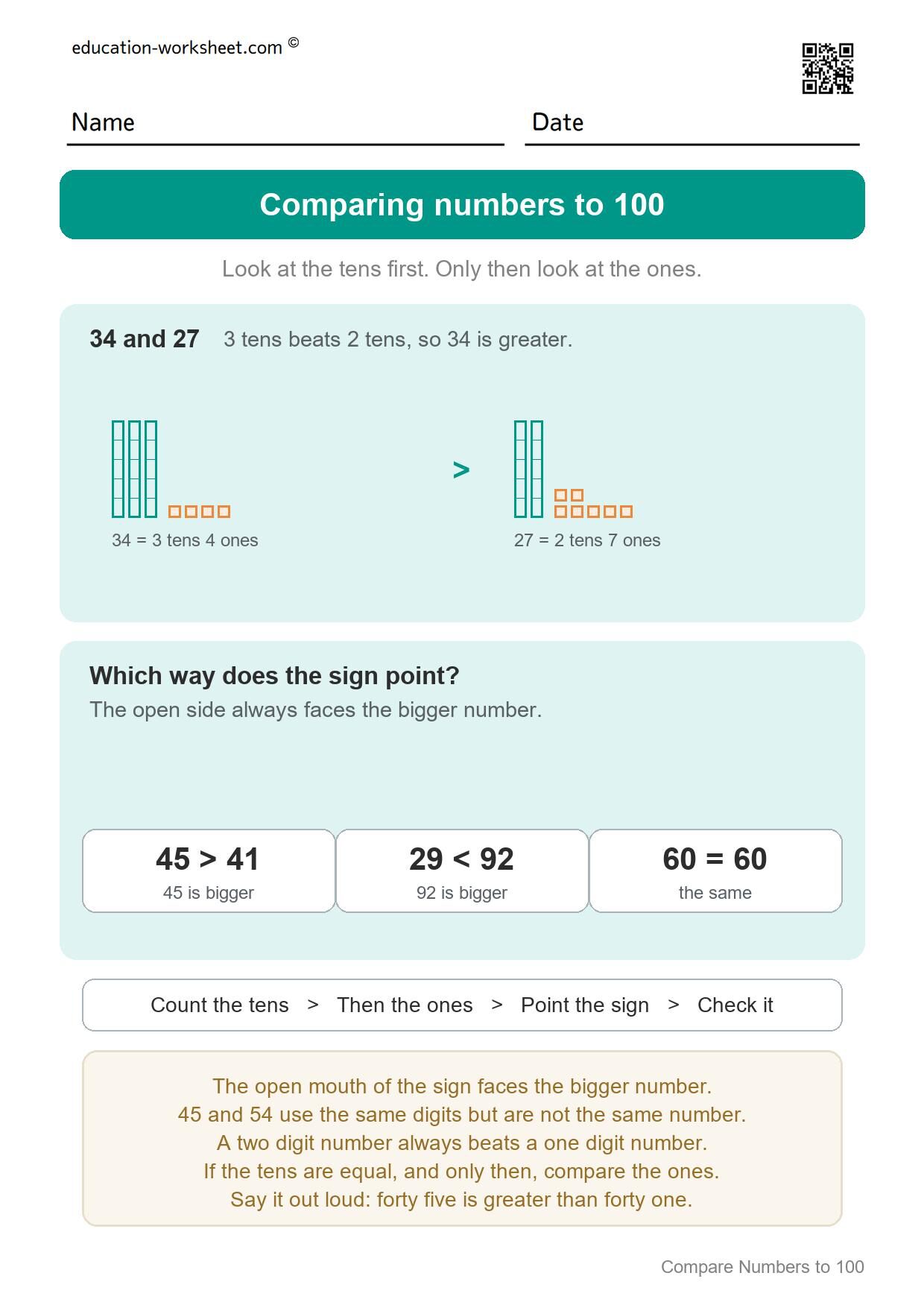
Comparing numbers to 100 (start here)
Compare with tens and ones (Set 1)
Greater, less or equal (Set 2)
Right or wrong? (Set 3)
Biggest and smallest (Set 4)
Compare with tens and ones (Set 5)
Greater, less or equal (Set 6)
Right or wrong? (Set 7)
Biggest and smallest (Set 8)
Compare with tens and ones (Set 9)
Greater, less or equal (Set 10)
Right or wrong? (Set 11)
Biggest and smallest (Set 12)
Answer key
Comparing two-digit numbers: look at the tens first
Comparing 45 and 54 is not about which number feels bigger. It is about a rule that has to be applied in the right order: compare the tens, and only if the tens are equal do you look at the ones. Children who have not been given that rule compare whichever digit catches their eye, which produces confident wrong answers.
What your child is actually learning
First grade asks children to compare two two-digit numbers using the symbols for greater than, less than and equal to. There are two separate difficulties here, and they are worth keeping apart. One is the comparison itself, which depends on place value. The other is the symbols, which is a matter of notation and confuses children long after the comparing is secure.
How to work through these pages
Say the rule out loud every time until it becomes routine: “tens first.” For the symbols, the open end always faces the larger number, and the crocodile mouth image works well enough at this age as long as the child can also say the sentence in words. Ask for the sentence, not just the symbol: “forty-five is less than fifty-four.” A child who can say it correctly will get the symbol right eventually; the reverse is not true.
The mistakes to expect
- Comparing the ones digit and ignoring the tens, so 38 is judged smaller than 4 because 8 is bigger than 4. This is the single most common error in the unit.
- Treating 45 and 54 as the same because they use the same digits.
- Writing the symbol backwards. Very common and quite separate from understanding which number is larger.
- Forgetting that equal is an option when the two numbers match.
What to teach next
Ordering three or more numbers is the obvious extension, and it exposes any remaining weakness in place value quickly. Adding and subtracting two-digit numbers follows, and it relies on exactly the same habit of dealing with tens and ones separately.
Questions parents ask
Is the crocodile a good way to teach the symbols?
It is a memory aid rather than an explanation, and it works well as long as it sits on top of real understanding. Always ask for the sentence in words as well, so the child is not relying on the picture alone.
My child compares correctly but writes the wrong symbol. Which matters more?
The comparison. Getting the symbol backwards is a notation slip, and it corrects itself with practice. Comparing wrongly is a place value problem and needs work.
Should we use blocks for this?
Yes, particularly for children still making the ones-digit error. Building 38 and 4 out of tens rods and single cubes settles the question in a way that argument does not.