- Free Telling Time Worksheets for Kindergarten – O’clock
- Telling time to the hour: the short hand is the one that matters
- What your child is actually learning
- How to work through these pages
- The mistakes to expect
- What to teach next
- Questions parents ask
- Should we teach digital or analogue first?
- My child can read the clock but cannot set it. Is that normal?
- When should a child know o’clock times reliably?
- More free worksheets
Free Telling Time Worksheets for Kindergarten – O’clock
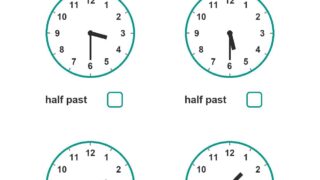
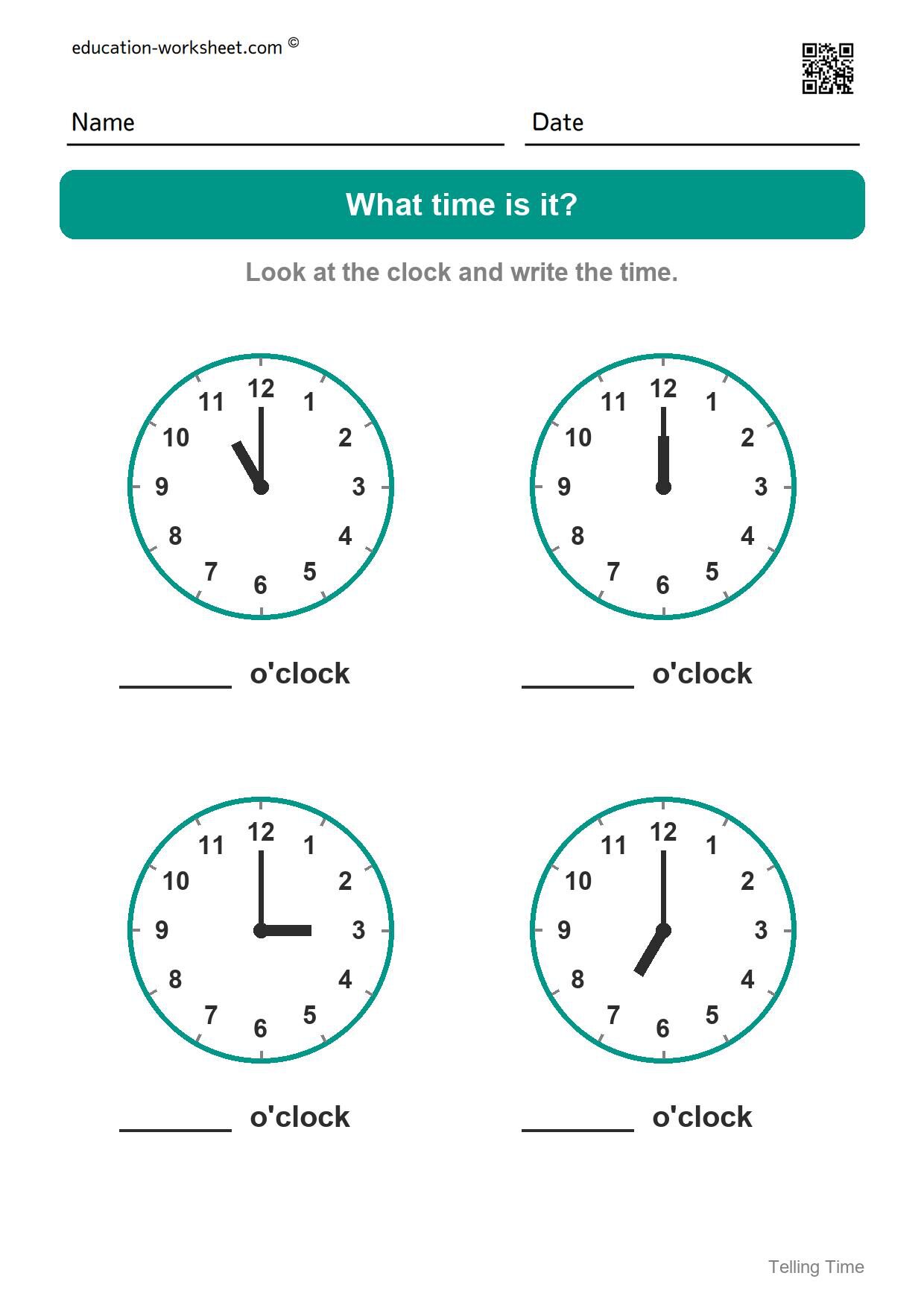
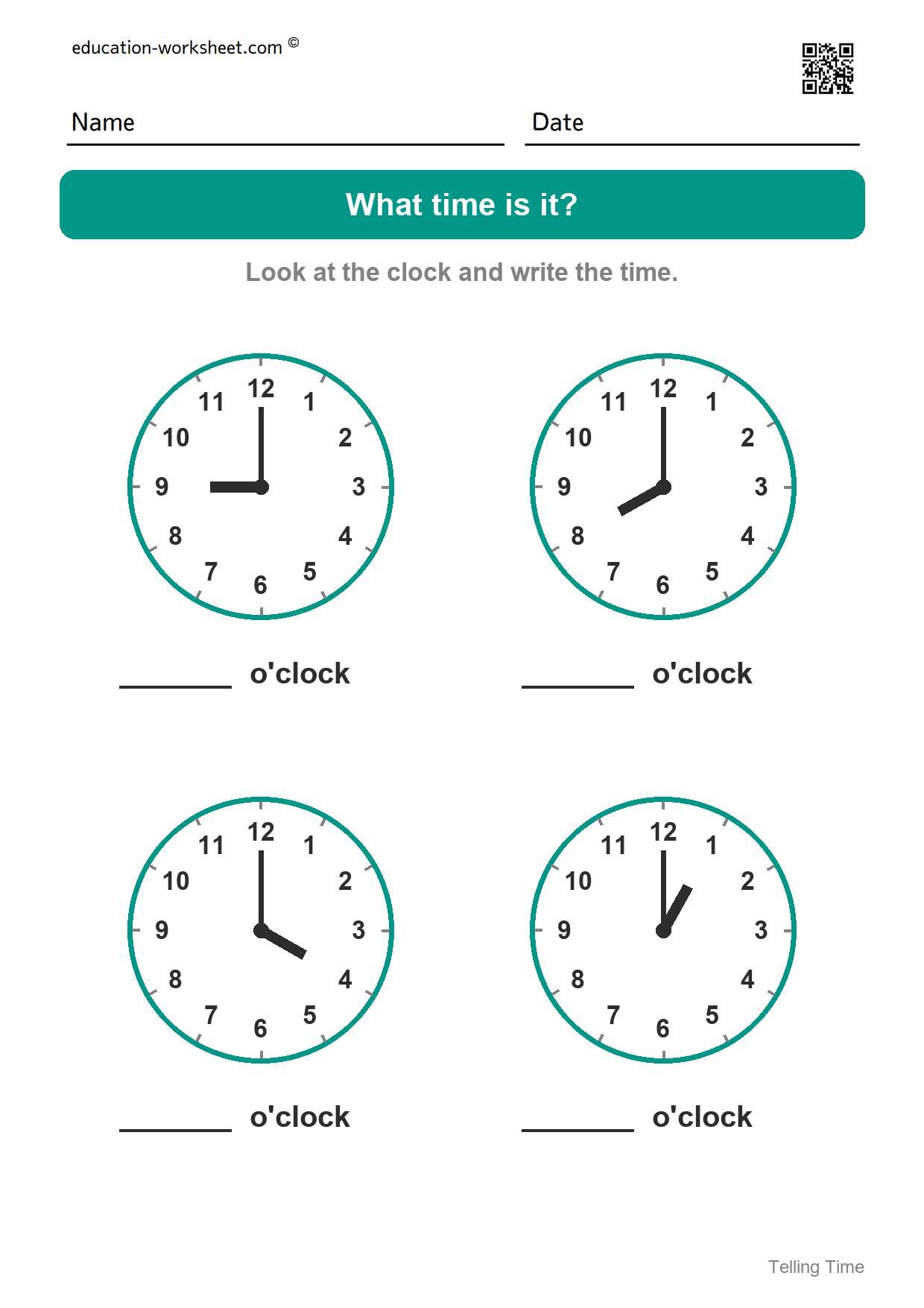
These free printable telling time worksheets help kindergarten and first grade children learn to read a clock. Every clock shows an o’clock time, so the long hand always points to 12 and kids only need to read the short hand. Children look at each clock and write the hour on the line. Telling time to the hour is the first step in learning to read a clock. Just download, print, and practice!
What time is it? (Set 1)
What time is it? (Set 2)
What time is it? (Set 3)
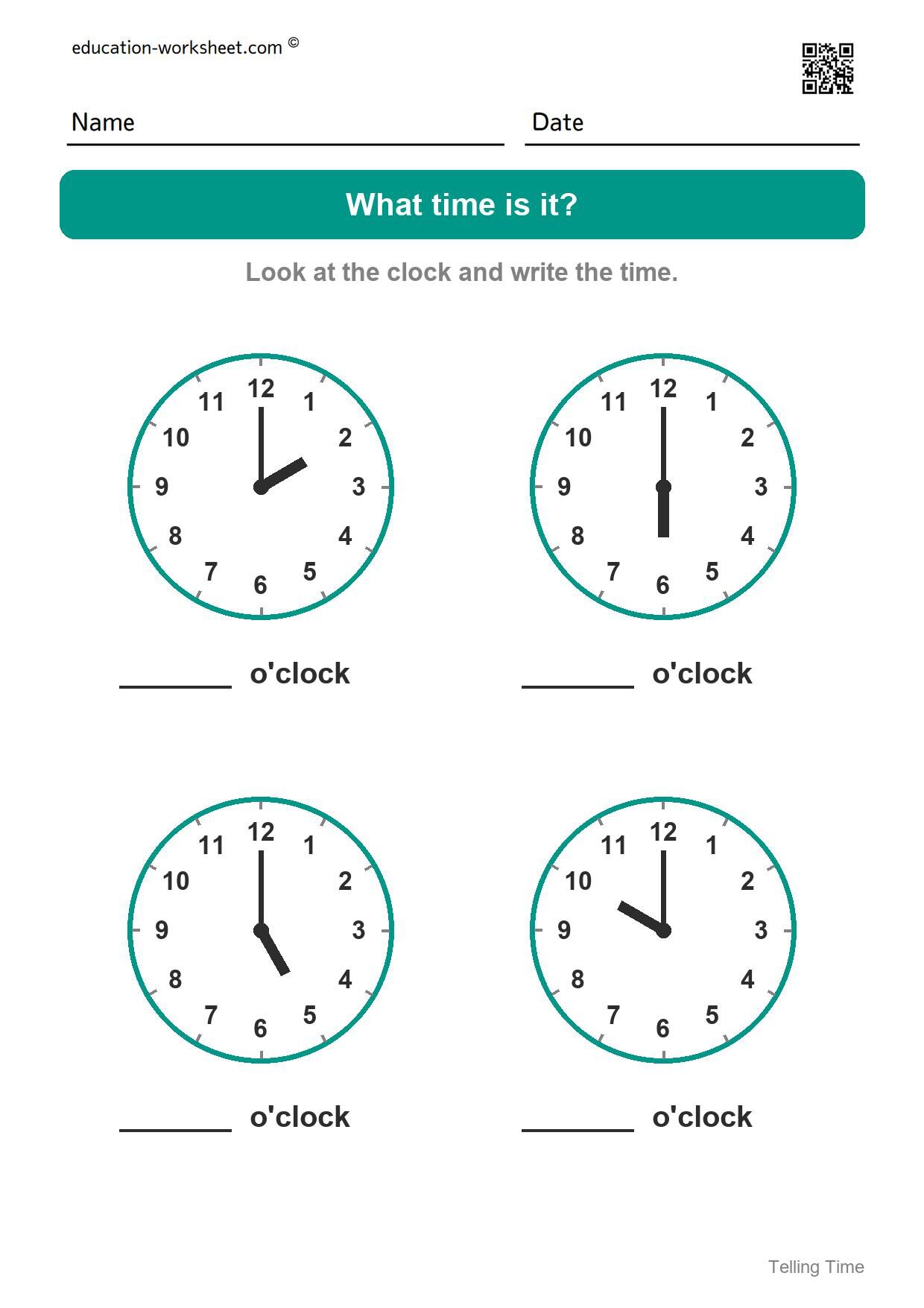
What time is it? (Set 4)
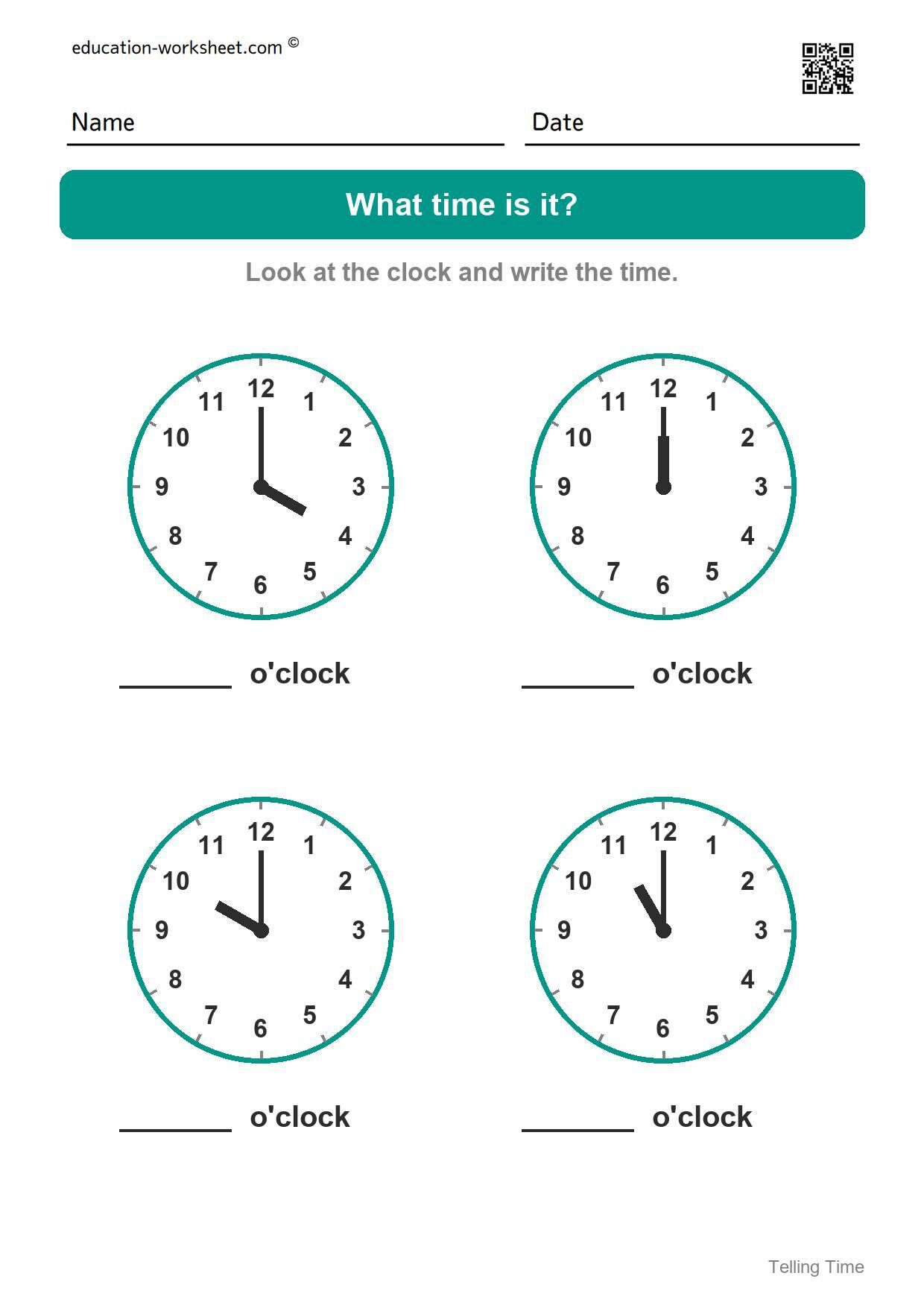
What time is it? (Set 5)
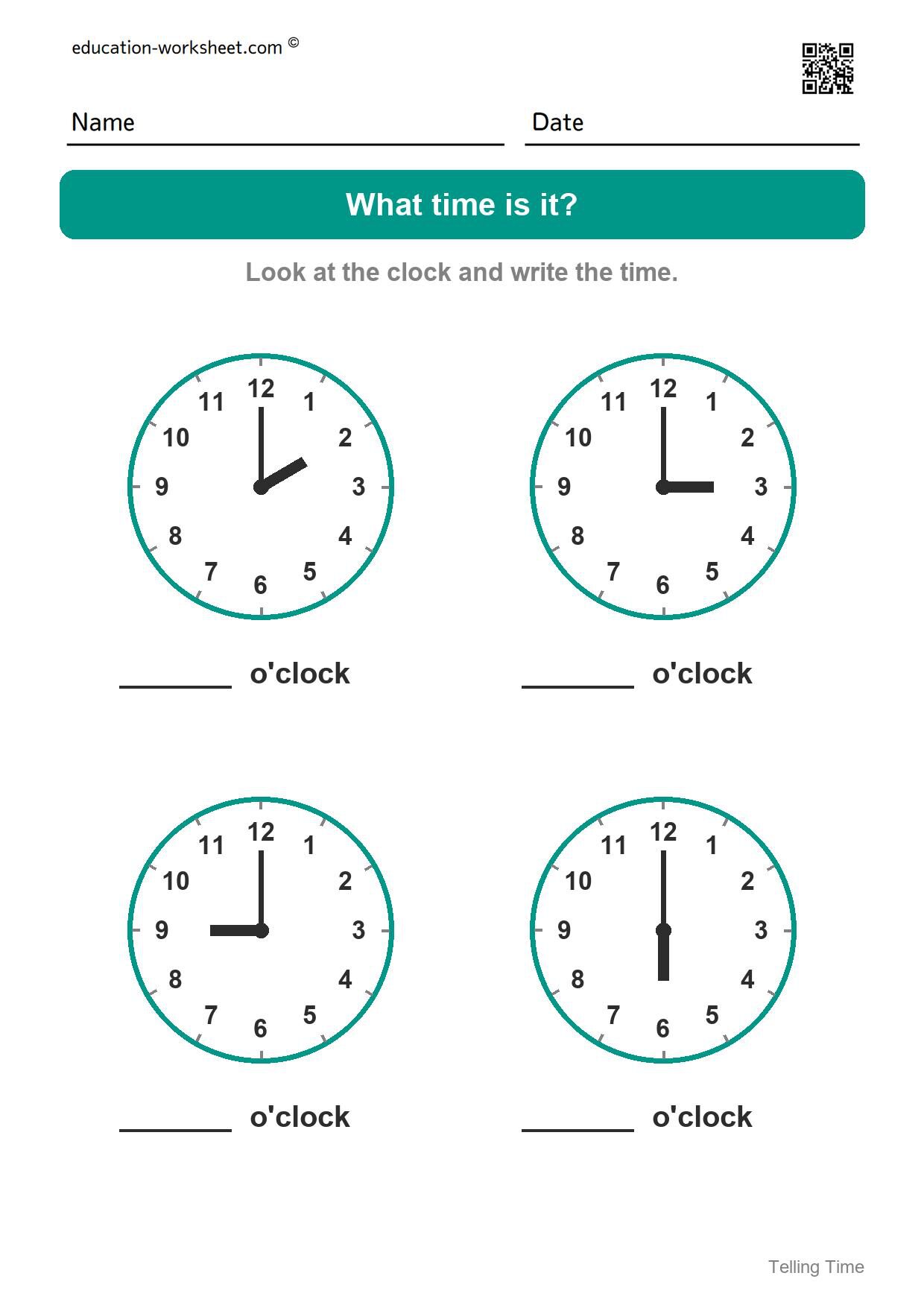
What time is it? (Set 6)
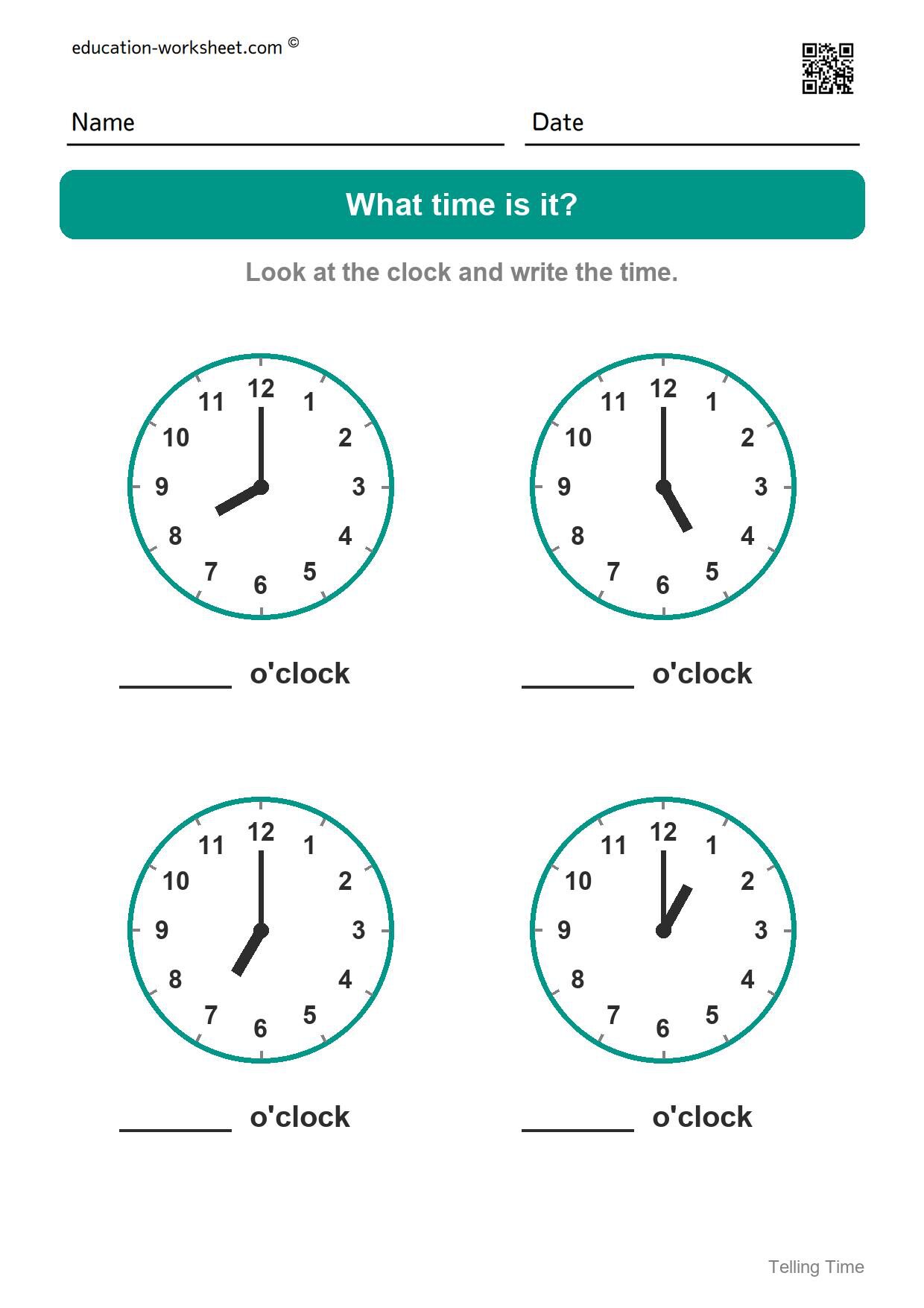
What time is it? (Set 7)
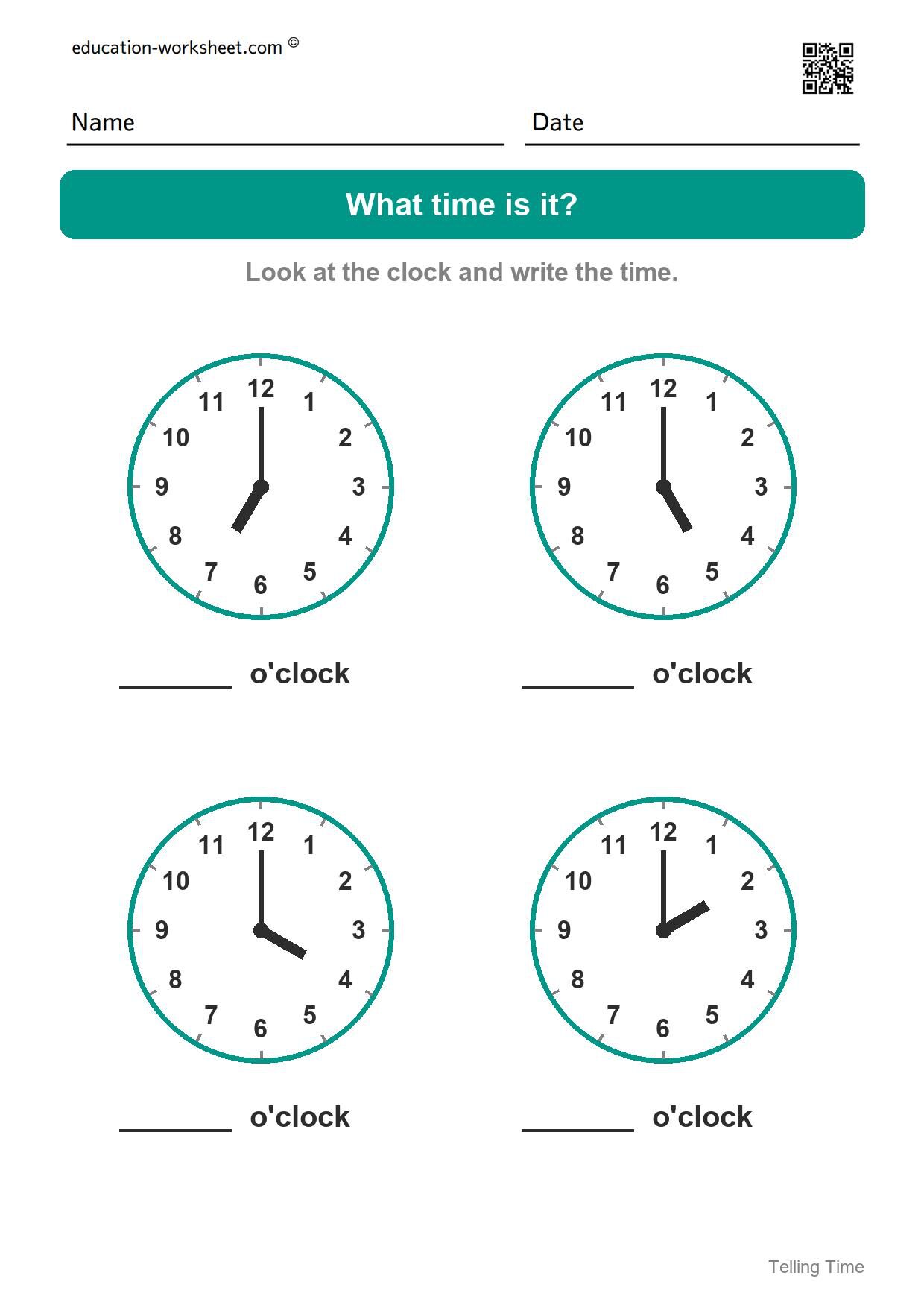
What time is it? (Set 8)
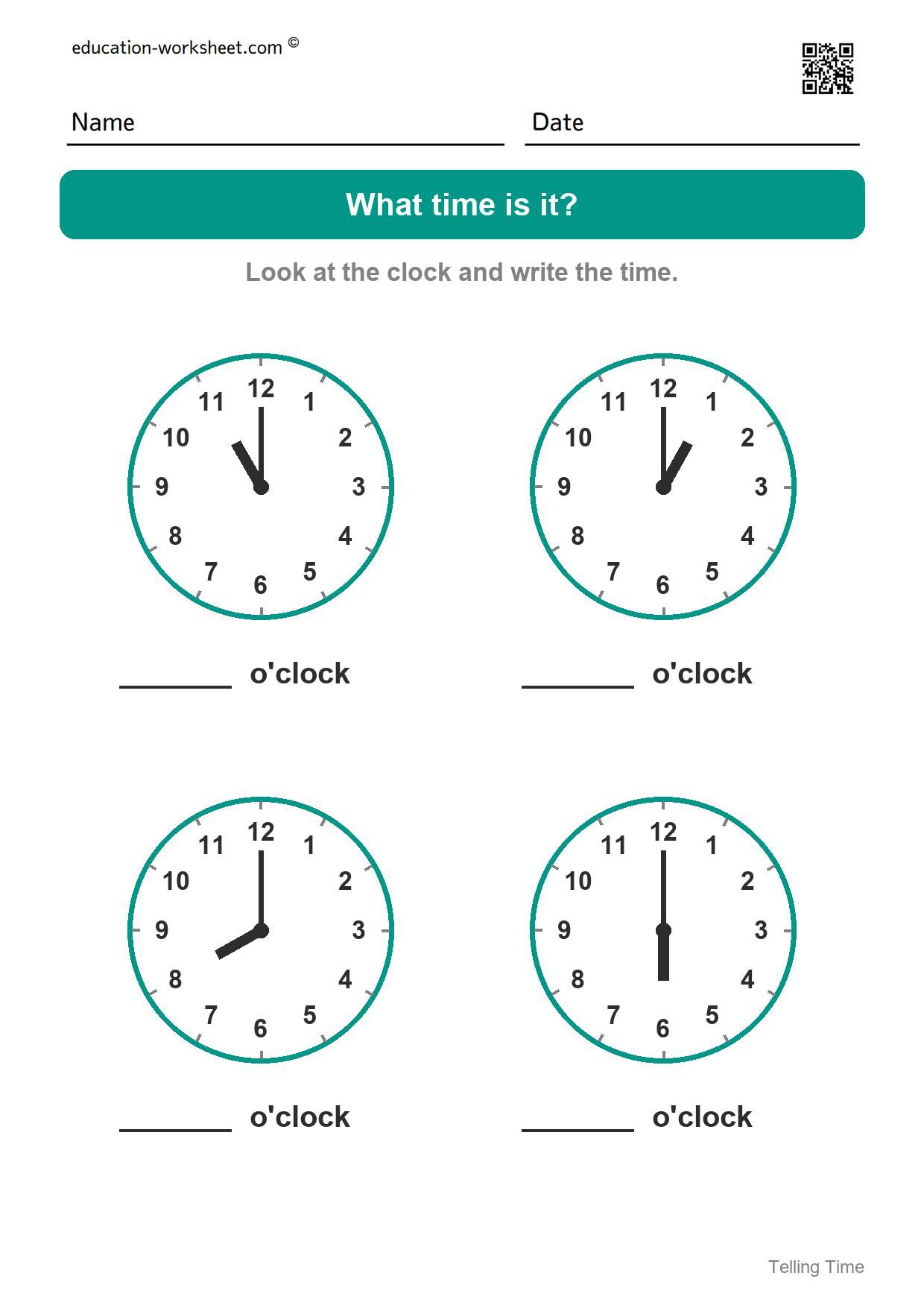
What time is it? (Set 9)
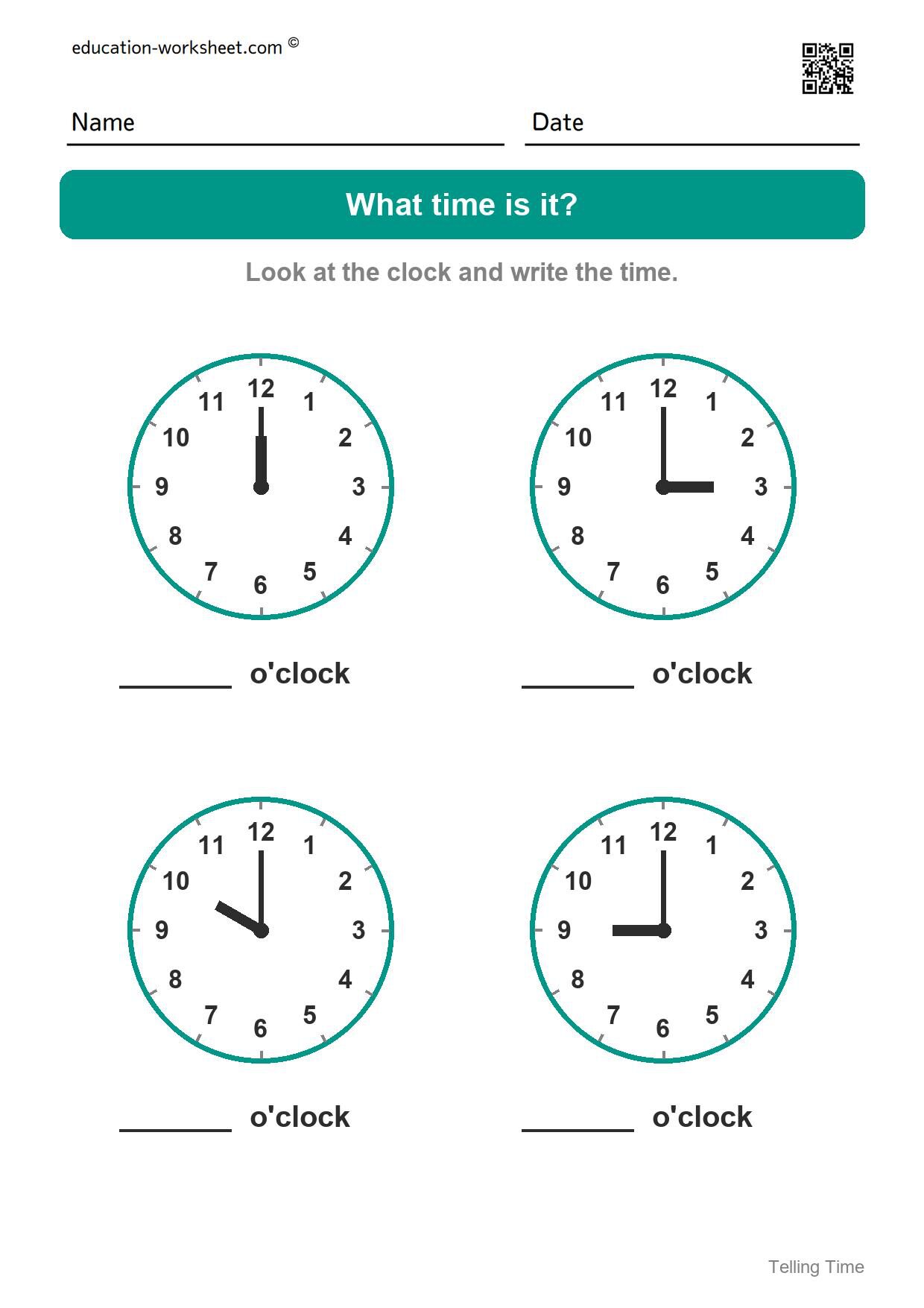
What time is it? (Set 10)
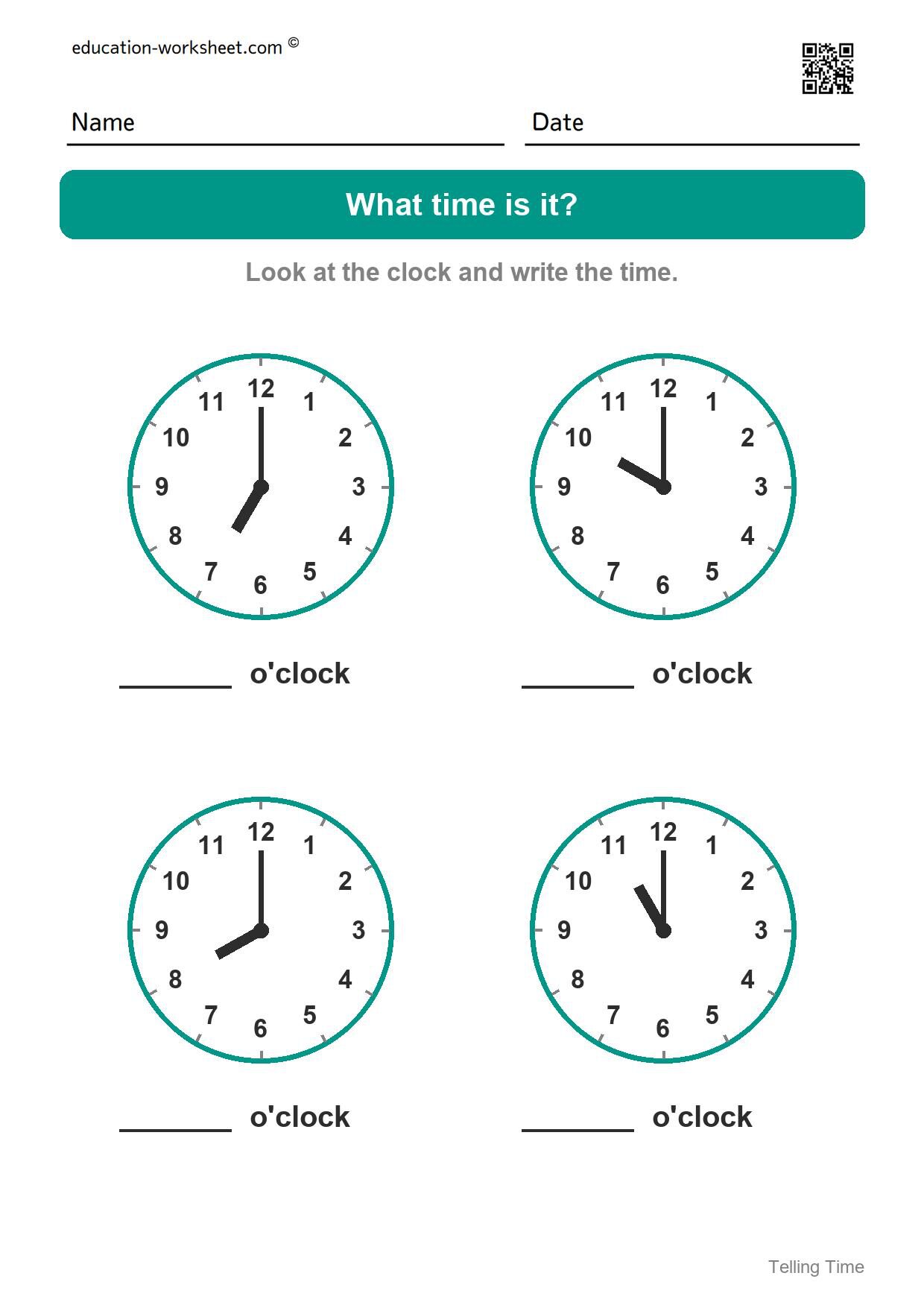
Telling time to the hour: the short hand is the one that matters
On an o’clock time the long hand always points straight up at the twelve, so it carries no information at all. Everything depends on the short hand. Saying this plainly at the start saves a great deal of confusion, because children naturally watch the big, obvious hand and it is the wrong one.
What your child is actually learning
First grade asks children to tell and write time in hours and half hours using both analogue and digital clocks. Reading to the hour comes first because it isolates one hand. Underneath the reading is a piece of knowledge children often lack: that the hour hand moves too, slowly, and that its position is what names the hour. The numbers on the face are for the hour hand; the minute hand borrows them for something else entirely.
How to work through these pages
Name the hands every time before reading: short hand for hours, long hand for minutes. Use a real clock with hands you can turn, and let your child move them rather than only looking. Connect times to the day — seven o’clock is breakfast, eight o’clock is bedtime — because a time attached to an event is remembered and a time on a worksheet is not.
The mistakes to expect
- Reading the long hand as the hour, so twelve o’clock is given for every clock.
- Reading the hour hand as the number it is nearest rather than the number it has passed. This is harmless at o’clock times and becomes the main problem at half past.
- Confusing the hands when they are similar lengths, which is a fault of the clock rather than the child.
- Reading a digital clock fluently and an analogue one not at all. They are separate skills and both need practice.
What to teach next
Half past the hour is the next step and it is a real jump in difficulty, because the hour hand no longer points at a number. Before moving on, make sure your child can both read a clock and set one to a given time, since setting is the harder direction and reveals gaps that reading hides.
Questions parents ask
Should we teach digital or analogue first?
Analogue, even though digital is what children see most. An analogue face shows time as a quantity going round, which is what makes half past and quarter past make sense. Digital reading is easy to add afterwards.
My child can read the clock but cannot set it. Is that normal?
Yes, and setting is the more demanding skill. Ask for a few set-the-clock tasks in every session, because they show whether the child understands the hands or is pattern-matching.
When should a child know o’clock times reliably?
Most children manage o’clock times during first grade and half past by the end of it. Progress here depends heavily on how much time is talked about at home, so it varies more than most topics.