These free printable color words worksheets give kindergarten children ten pages of matching practice. Five colored dots run down the left of each page and five color words run down the right, in a different order, and the child draws a line from each dot to its word.
Nine colors appear across the pack: red, orange, yellow, green, blue, purple, pink, brown and black. On any one page the five words are exactly the five colors shown – never a sixth word, never a color without a word. It is a matching puzzle rather than a multiple choice, so every line a child draws rules something else out.
Color words are the first words many children read on their own, because the meaning is sitting right there on the page to check against. That makes these pages a reading exercise dressed as a coloring one.
- What Is in This Free Color Words Worksheet Pack
- The 10 Color Words Worksheets
- Worksheet 1 – One Line Goes Straight Across
- Worksheet 2 – Two Straight Lines
- Worksheet 3 – All Three B Words on One Page
- Worksheet 4 – Nothing Lines Up
- Worksheet 5 – Three Straight Lines: the Easiest Page
- Worksheet 6 – Nothing Lines Up Again
- Worksheet 7 – The Warm Colors, Fully Crossed
- Worksheet 8 – Another Fully Crossed Page
- Worksheet 9 – Black Alone on the Bottom Row
- Worksheet 10 – A Fully Crossed Finish
- Five Pages Cannot Be Done Without Reading
- When Children Are Ready for These Worksheets
- How to Use These Worksheets
- Three Things to Watch For
- Printing Tips
- Frequently Asked Questions
- More Free Color and Word Worksheets
What Is in This Free Color Words Worksheet Pack
- Ten printable worksheets, five matches on each page.
- Fifty matches in all, across nine colors.
- The five words on a page are always exactly the five colors shown.
- No reading of instructions needed – the page says only “Draw a line to match”.
- Words printed large and clear in lowercase, which is how children first meet them.
- A separate PDF for every page, free to download and print.
The 10 Color Words Worksheets
The pages differ in one way that matters more than which colors are on them: how many of the dots sit level with their own word. Those can be matched with a straight line and no reading at all.
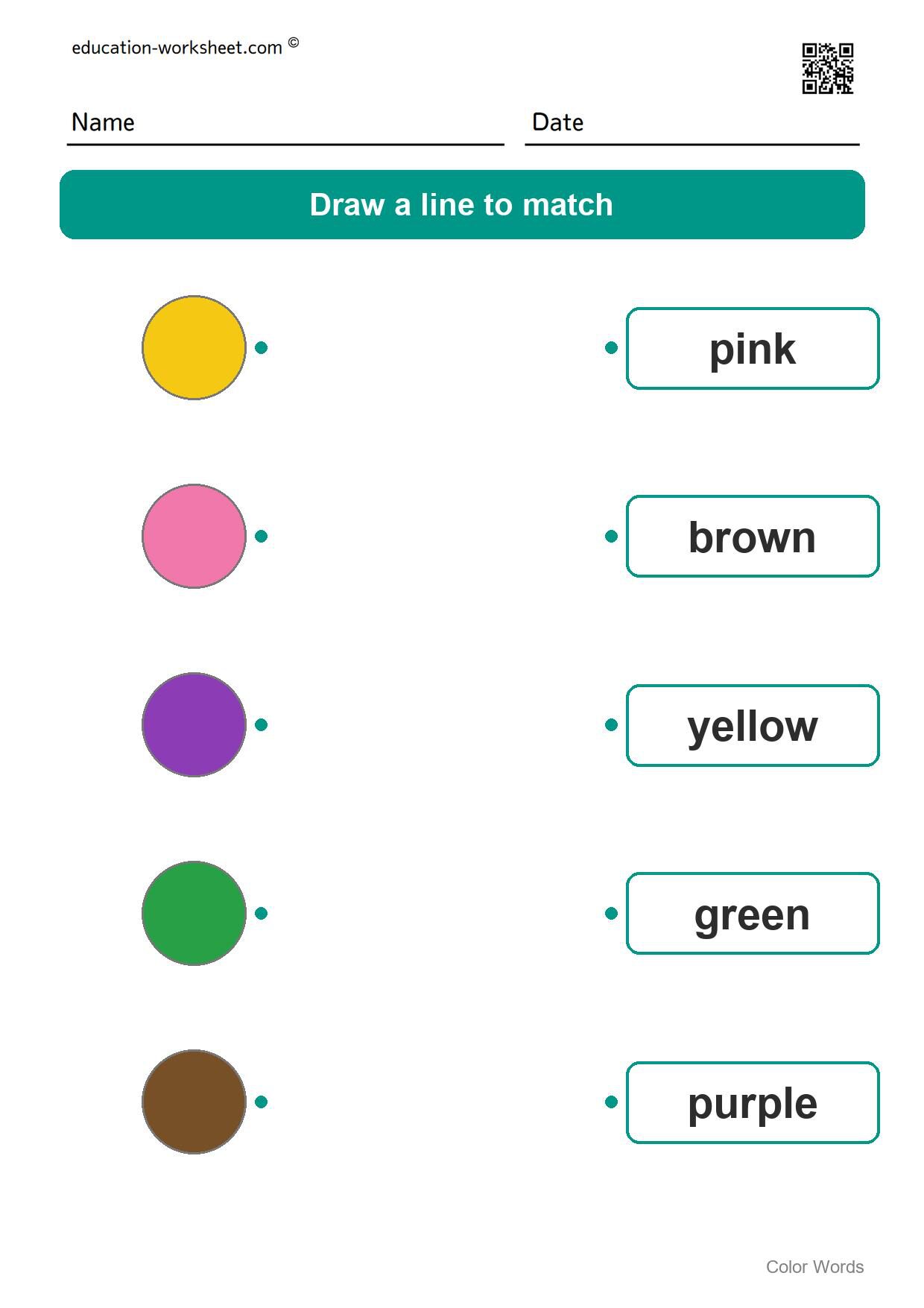
Worksheet 1 – One Line Goes Straight Across
The green dot sits opposite the word green, so one of the five matches can be drawn as a straight horizontal line. The other four cross. Colors on this page: yellow, pink, purple, green and brown. 1 of the five can be matched with a straight horizontal line (row 4).
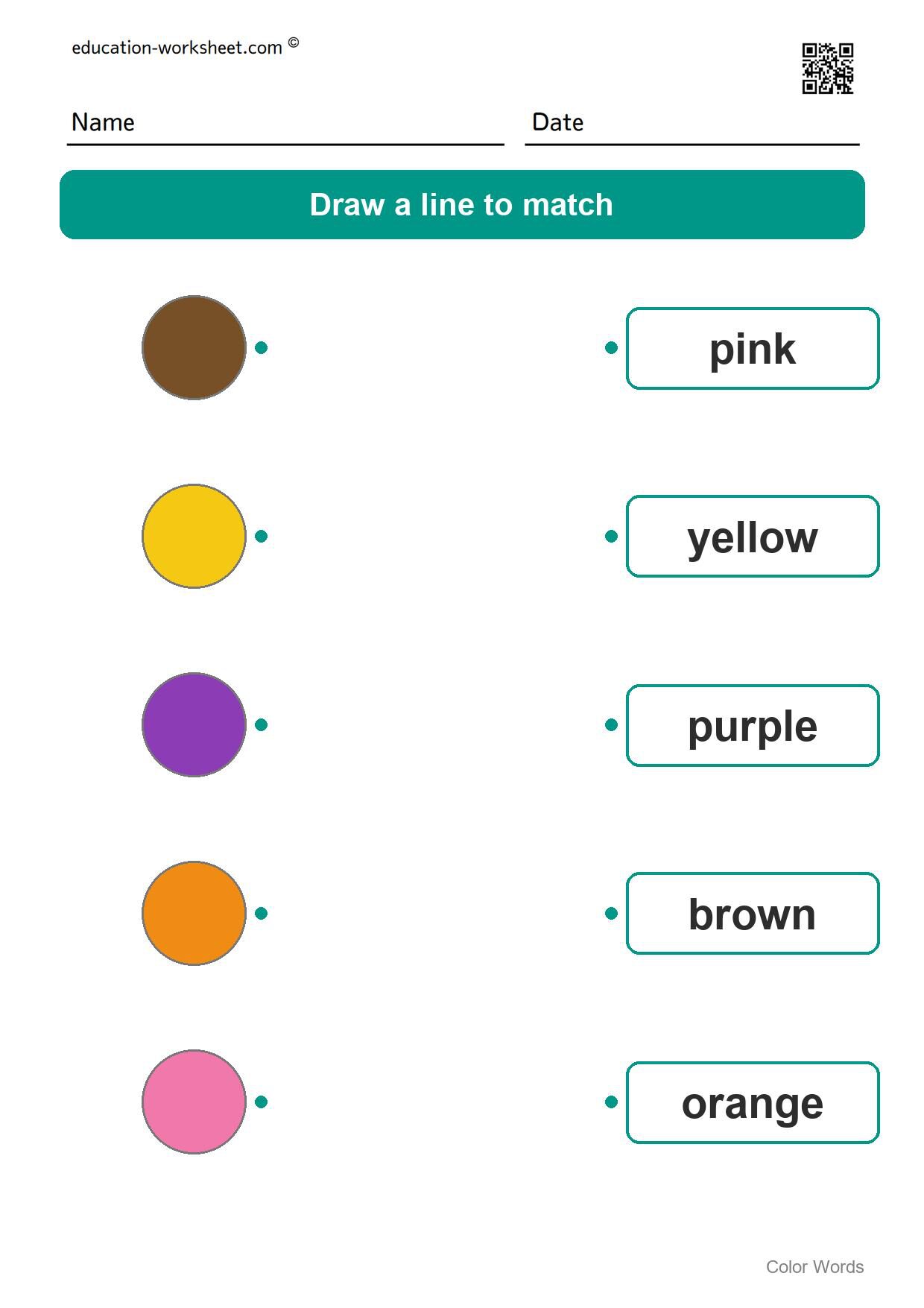
Worksheet 2 – Two Straight Lines
Yellow and purple are both level with their own words. That makes this the second easiest page in the pack, and a reasonable one to start on. Colors on this page: brown, yellow, purple, orange and pink. 2 of the five can be matched with a straight horizontal line (rows 2, 3).
Worksheet 3 – All Three B Words on One Page
Blue, brown and black together. Three of the five words begin with b and two of them begin with bl, so a child who reads the first letter and guesses has a one in three chance here. This is the page that shows whether the whole word is being read. Colors on this page: blue, brown, red, black and orange. 1 of the five can be matched with a straight horizontal line (row 5).
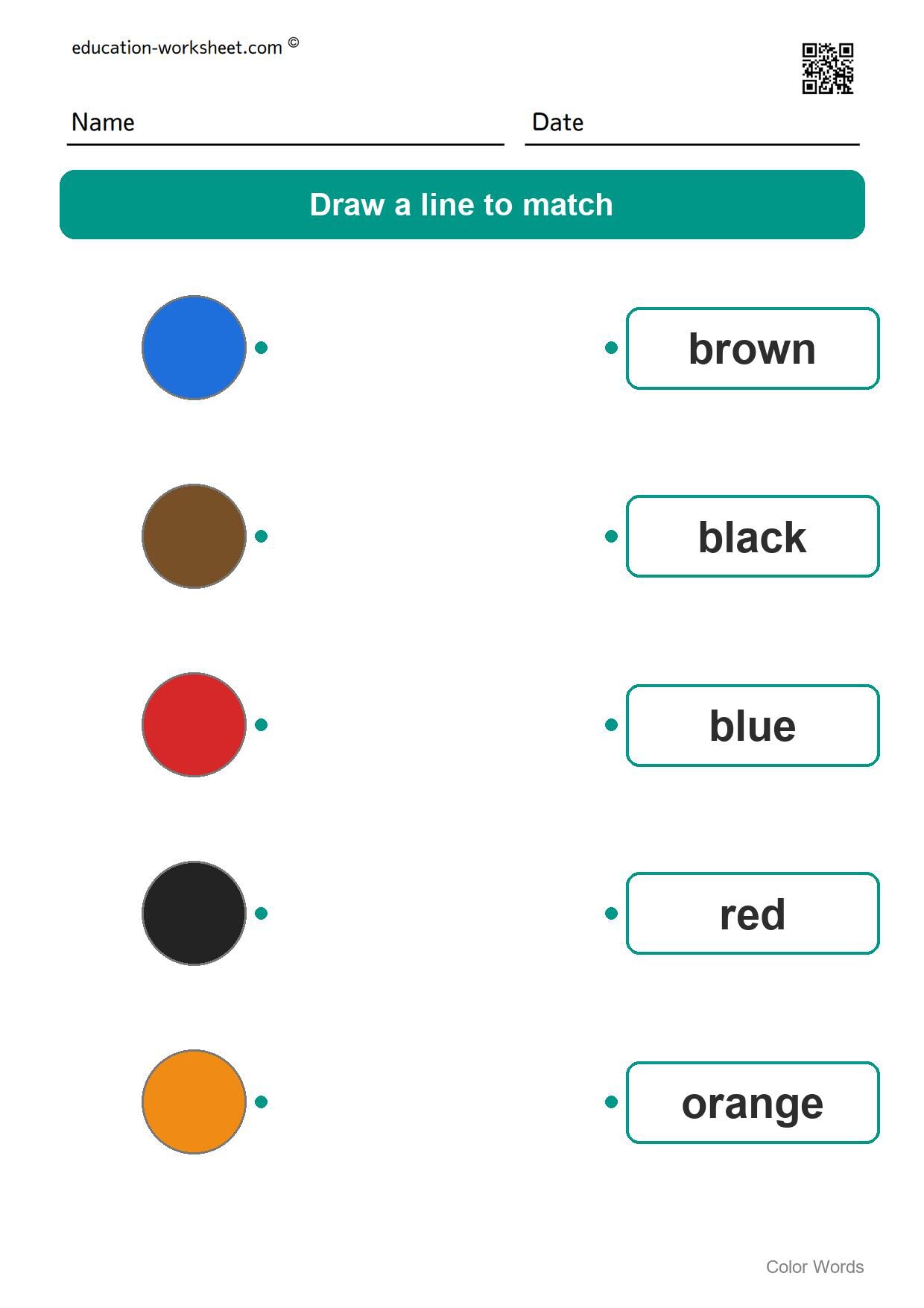
Worksheet 4 – Nothing Lines Up
Not one of the five colors is level with its own word. Every line has to cross another, which means every match has to be read rather than seen. Colors on this page: yellow, pink, green, red and blue. None of the five line up, so every line crosses another.
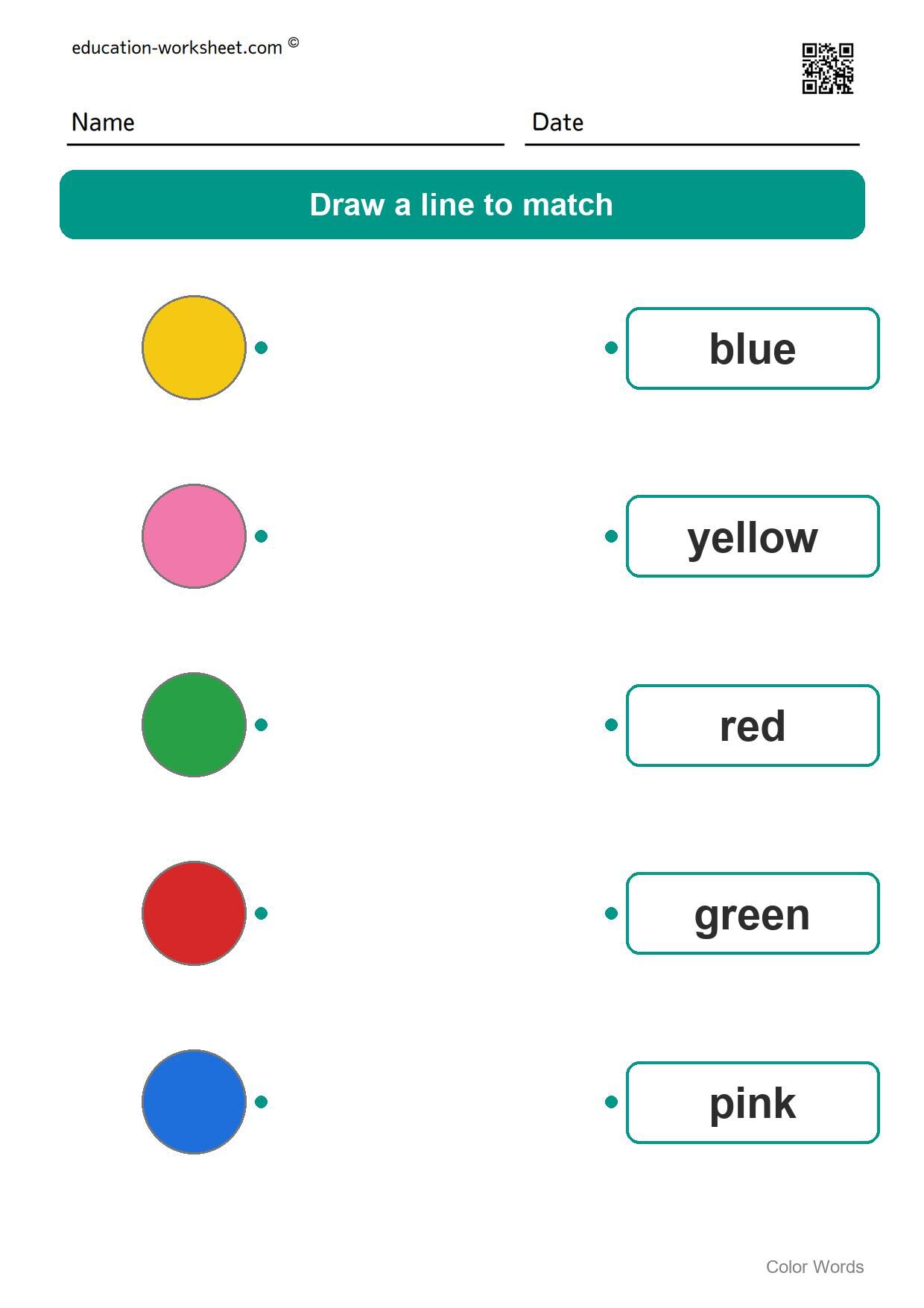
Worksheet 5 – Three Straight Lines: the Easiest Page
Blue, red and yellow all sit opposite their own words. Three of the five matches are horizontal lines. A good confidence page, and a poor test. Colors on this page: blue, red, black, yellow and purple. 3 of the five can be matched with a straight horizontal line (rows 1, 2, 4).
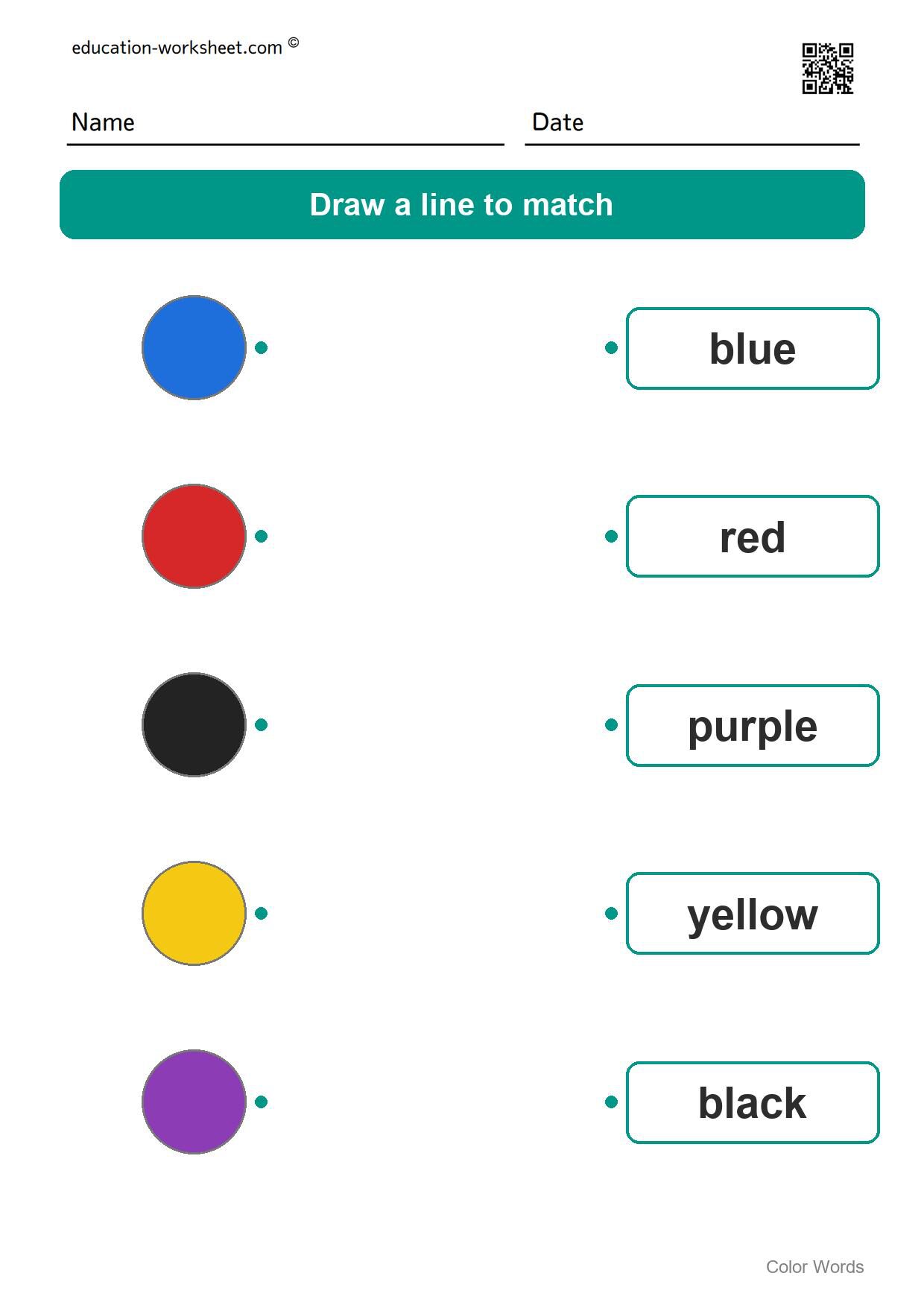
Worksheet 6 – Nothing Lines Up Again
A fully crossed page. Yellow and pink swap positions with each other, which is the neatest kind of pair to spot and the easiest to draw. Colors on this page: red, yellow, pink, purple and orange. None of the five line up, so every line crosses another.
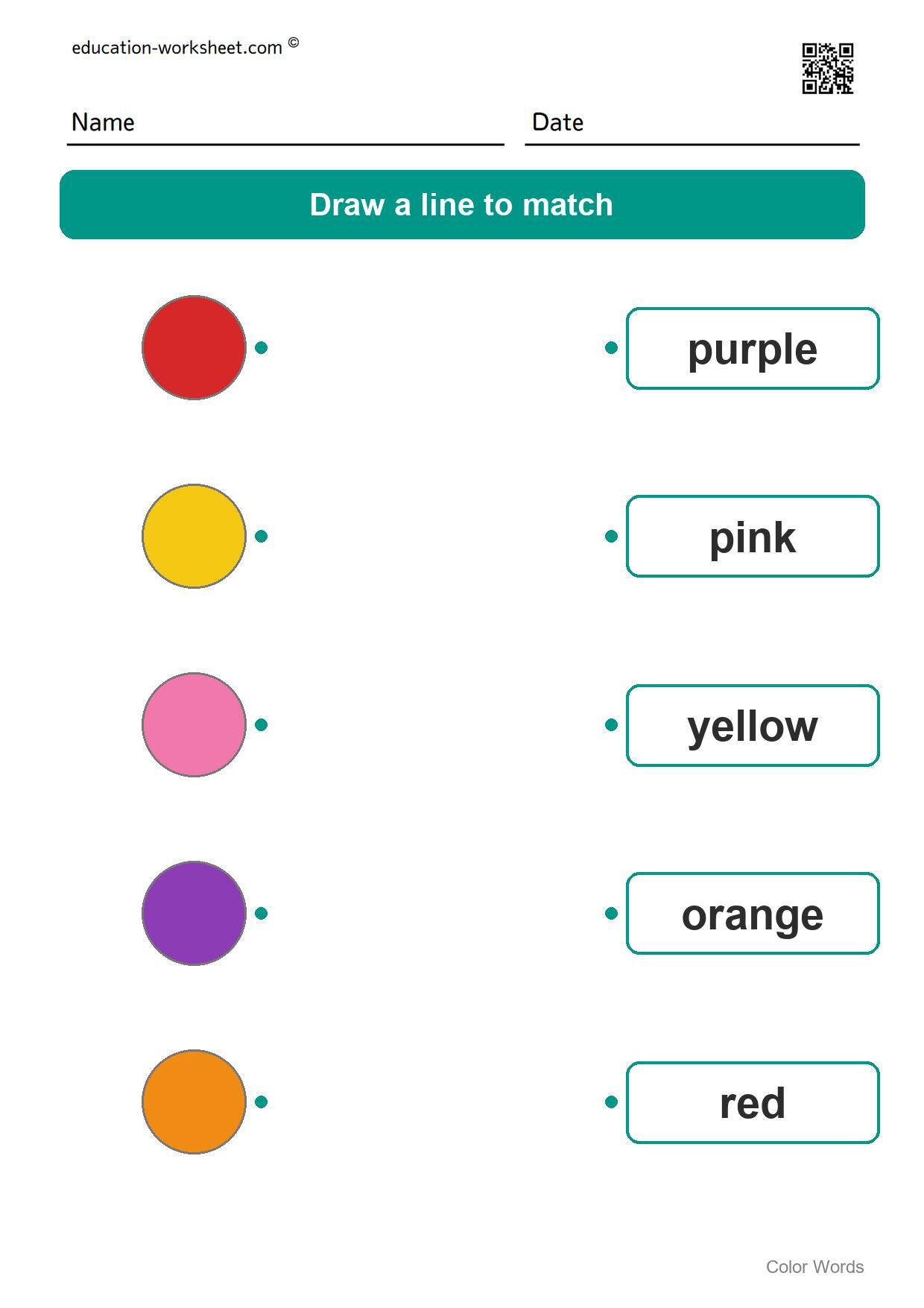
Worksheet 7 – The Warm Colors, Fully Crossed
Red, yellow, orange, brown and black on one page, none of them level with its word. Brown and black are also the two hardest to tell apart at a glance when a child is scanning colors rather than reading. Colors on this page: red, yellow, orange, brown and black. None of the five line up, so every line crosses another.
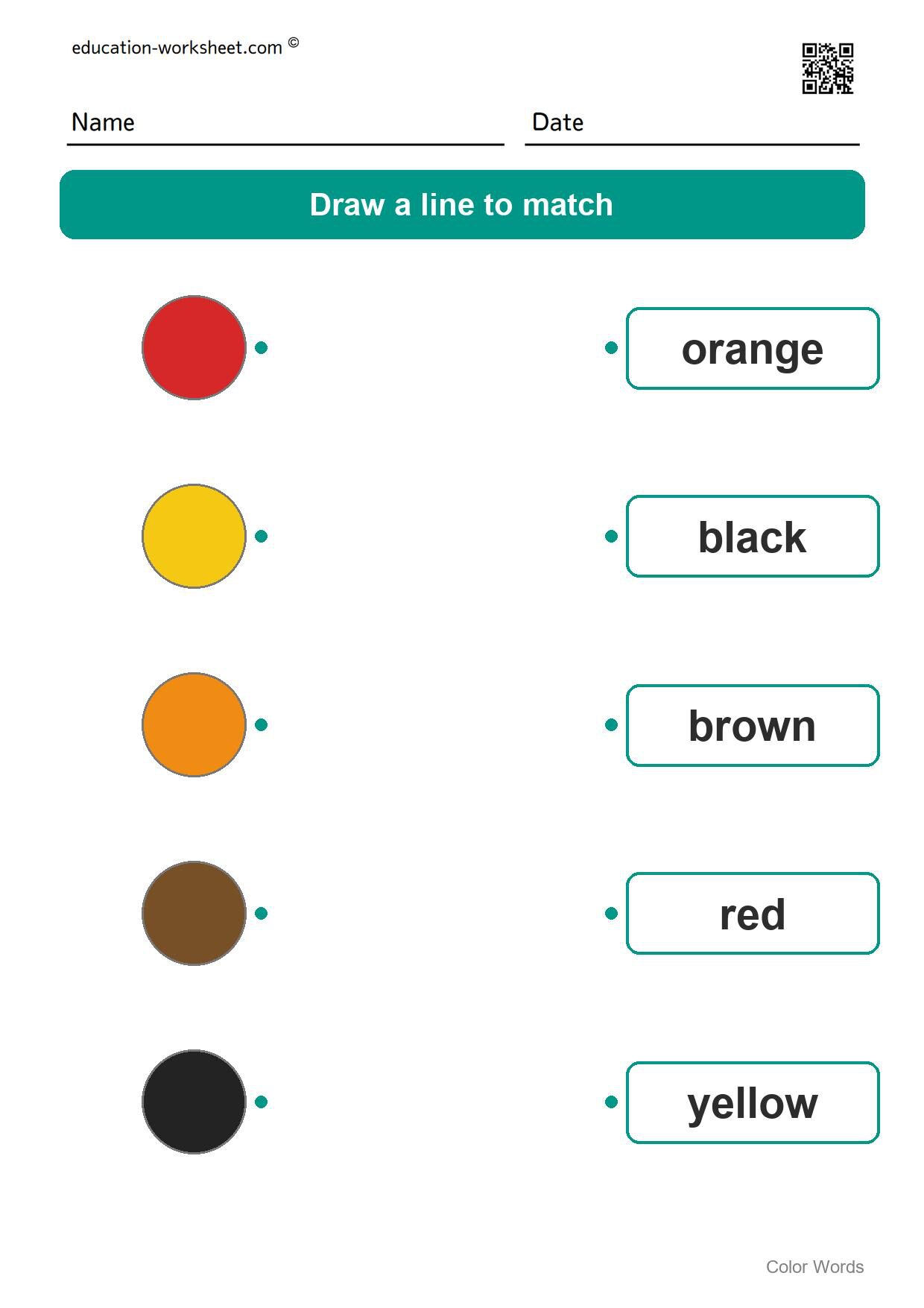
Worksheet 8 – Another Fully Crossed Page
Five colors, five words, nothing in line. Red and brown swap with each other at the two ends of the page, which is the longest line a child will draw in the pack. Colors on this page: red, orange, yellow, pink and brown. None of the five line up, so every line crosses another.
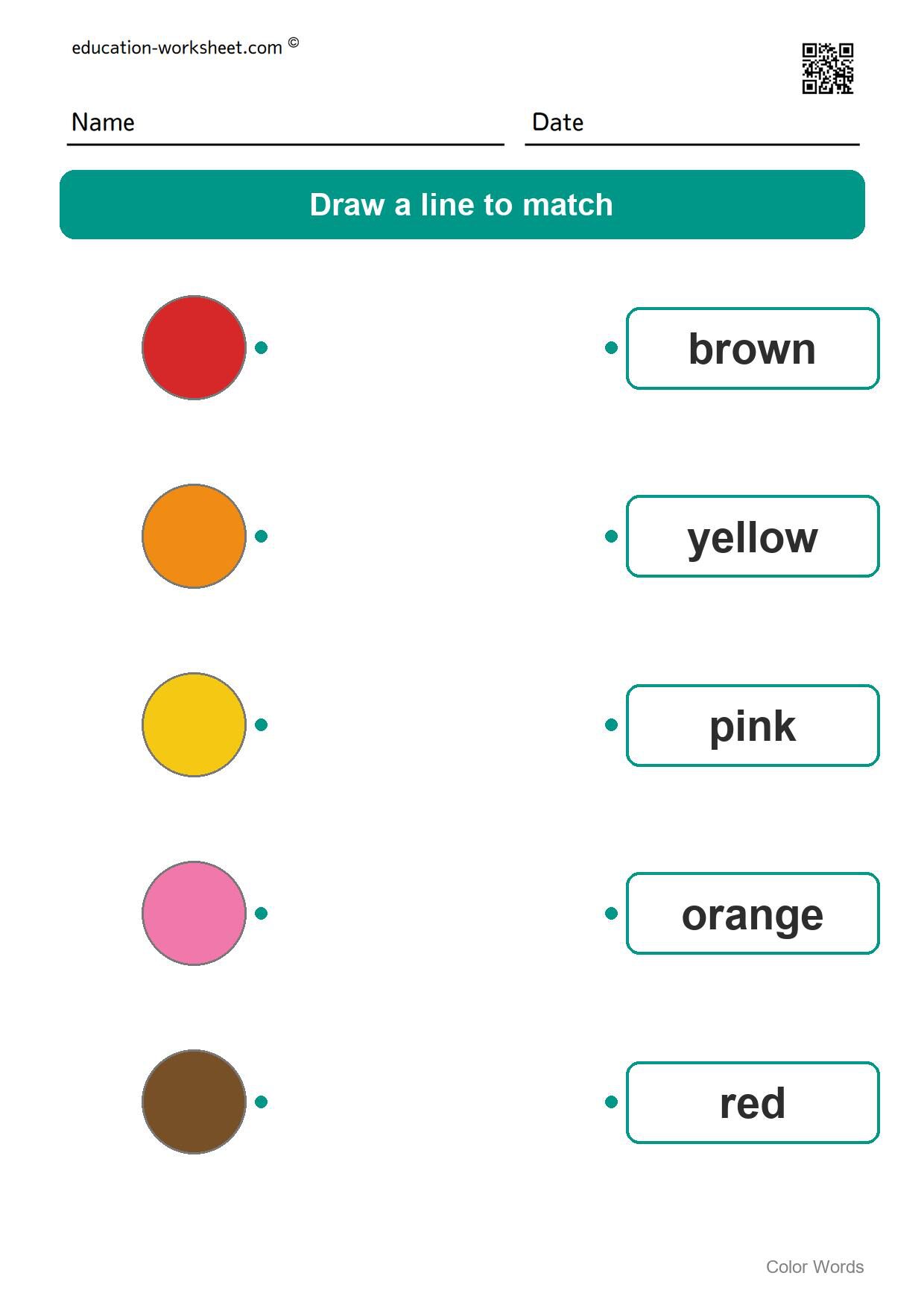
Worksheet 9 – Black Alone on the Bottom Row
Only the black dot is level with its word. The other four cross, and red and purple swap directly with each other. Colors on this page: yellow, red, purple, pink and black. 1 of the five can be matched with a straight horizontal line (row 5).
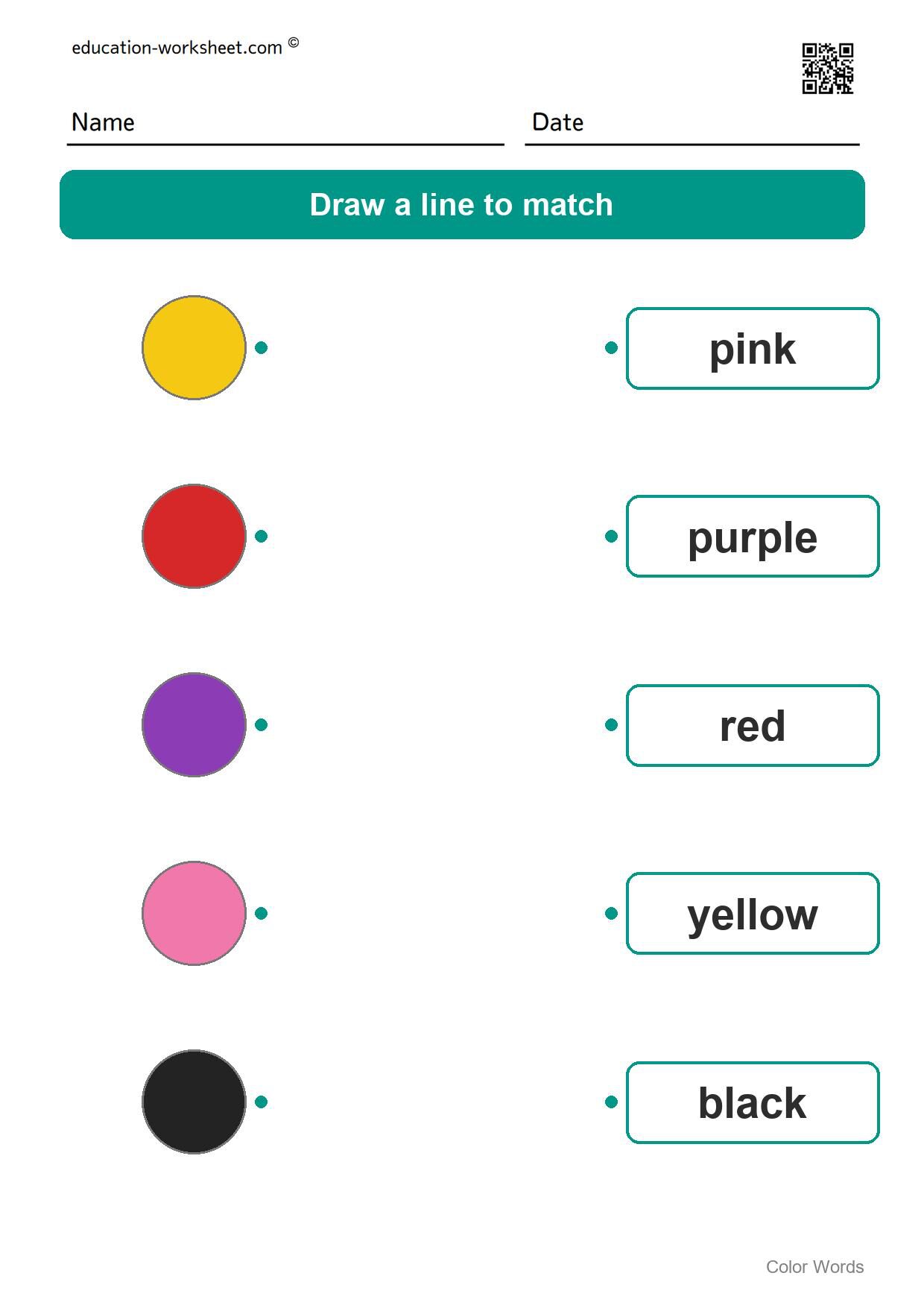
Worksheet 10 – A Fully Crossed Finish
The last page lines nothing up. If your child manages this one comfortably, the words are being read. Colors on this page: pink, orange, black, red and green. None of the five line up, so every line crosses another.
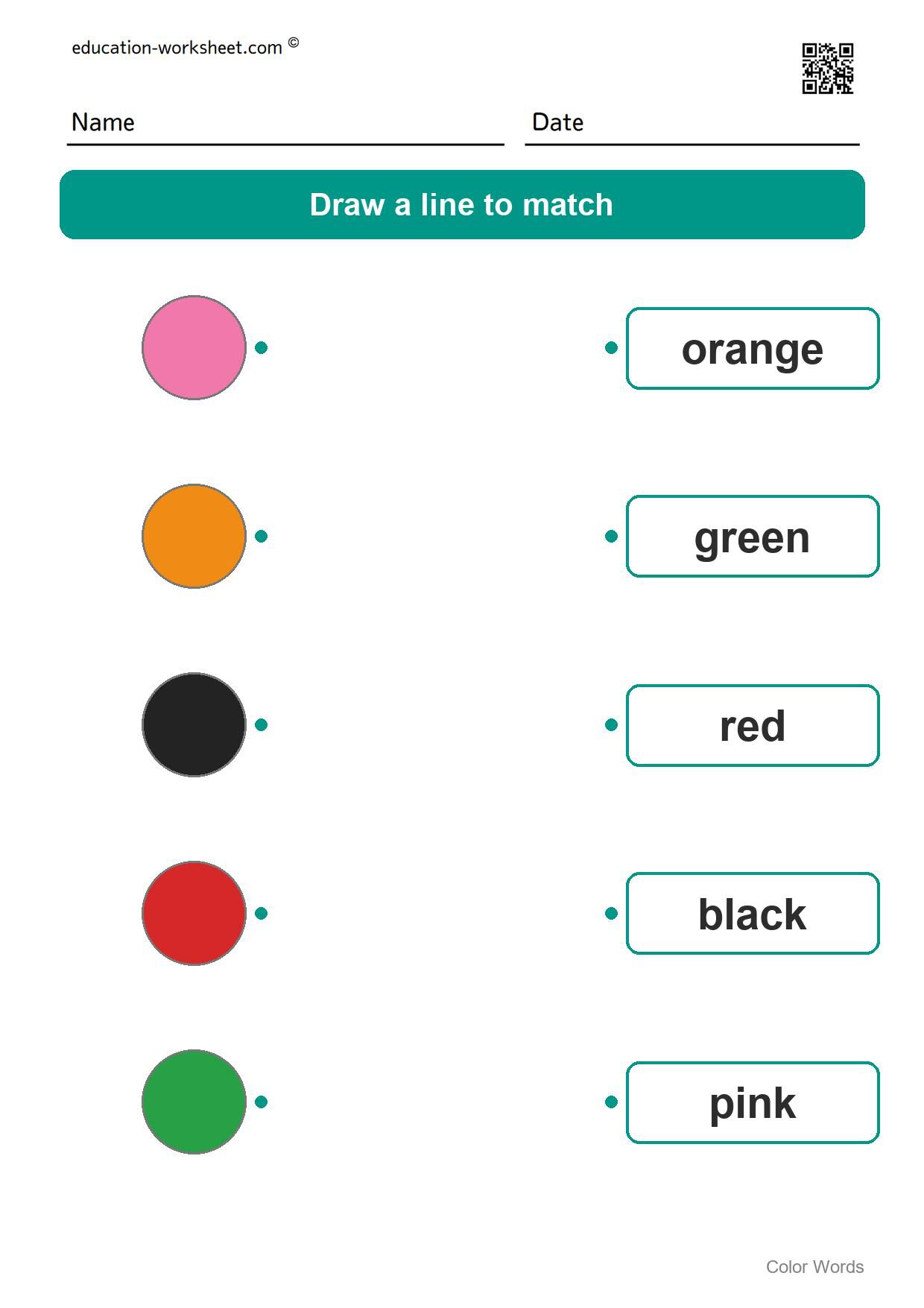
Five Pages Cannot Be Done Without Reading
Here is the thing to check before you hand a page over. Across the fifty matches in the pack, eight of them have the dot sitting level with its own word, so they can be drawn as a straight horizontal line by a child who is not reading anything at all.
They are not spread evenly. Page 5 has three of them, which makes it the easiest page in the pack by some distance. Pages 4, 6, 7, 8 and 10 have none. On those five pages every single line crosses another one, and there is no way to finish the page except by reading each word.
So if you want to know whether your child can read color words, use page 4, 6, 7, 8 or 10. If you want a page that will go well, use page 5 or page 2. Both are useful; they are just not the same thing, and the page does not tell you which one you have picked up.
One page deserves a note of its own. Page 3 carries blue, brown and black together – three of the five words beginning with b, and two of those beginning with bl. A child who has learned to read by the first letter cannot separate them, and that is exactly what makes the page worth doing. Watch what happens at the second letter.
When Children Are Ready for These Worksheets
These pages suit children from about four to six. A child can begin as soon as they can name the colors out loud, even if the reading is not there yet; an adult can read the words at first, and the child takes over without being asked to.
The standard in view is RF.K.3.C, reading common high-frequency words by sight. Color words sit early on the sight-word lists used in most classrooms, and they are unusually good ones to start with because a child can check their own answer against the dot. RF.K.3.A, knowing the sound of each consonant, is what page 3 quietly tests.
How to Use These Worksheets
- Print one page on ordinary paper, in color.
- Name the five colors down the left side together before looking at the words at all.
- Take the words one at a time. Read the word, then find the dot – not the other way round. Starting from the dot lets a child match by elimination without reading.
- Draw the line. Crossed lines are expected and are not a mistake.
- At the end, follow each line back with a finger and say it: “this one is orange”. Five lines, five sentences.
Three Things to Watch For
Matching by position instead of reading
On the pages where something lines up, a child can draw a straight line and be right without reading. Page 5 allows this three times. It is not cheating and it is worth noticing, because it tells you the page has not tested anything. Move to page 4 or 7.
Reading only the first letter
Blue, black and brown are the trap, and page 3 has all three. If a child matches blue to the word black, they are reading the b and stopping. Cover everything after the first two letters and build the word up again.
Working from the dots rather than the words
A child who starts at a dot and hunts for its word does less reading than one who starts at a word and hunts for its dot. The second way forces the word to be read; the first allows guessing. Ask them to start on the right.
Printing Tips
- Choose Actual size or Fit to page in the print dialog – both keep the page in proportion.
- Each page fills one sheet and works on US Letter and A4 paper.
- Ordinary copier paper is fine. Card is only worth it if you want the page to survive an eraser.
- Print these in color. Unlike most of our worksheets, grayscale breaks this one: yellow, orange and pink all become pale grey circles and the page stops working.
- A plastic wallet and a dry-wipe pen make the same page reusable, which is worth doing because the pairings are fixed.
Frequently Asked Questions
What age are these color words worksheets for?
About four to six years old: pre-K and kindergarten.
Which colors are included?
Nine: red, orange, yellow, green, blue, purple, pink, brown and black. Five of them appear on each page.
Which page is the best test of reading?
Page 4, 6, 7, 8 or 10. On those five pages no dot is level with its own word, so nothing can be matched without reading. Page 5 is the easiest, with three straight-line matches.
Is there an answer key?
None is needed. The dot shows the answer, and checking it together is the exercise.
Can I print these in black and white?
These are the one pack we would not print in grayscale. The colors are the question; without them there is nothing to match.
Do I need to sign up to download these?
No. Every PDF downloads immediately, with no account, no email address and no cost.
Can I use these in my classroom?
Yes, they are free to print for home and classroom use. Please do not sell them or re-host the files elsewhere.
More Free Color and Word Worksheets
- Free Learn the Colors Worksheets for Preschool – 9 Colors, One Page Each
- Free What Color Is It Worksheets for Kindergarten – Color Words
- Free Color Recognition Worksheets for Preschool – Find the Same Color
- Free Color by Shape Worksheets for Kindergarten – Read the Key and Color
- Free Color Mixing Worksheets for Preschool – What Two Colors Make
- Free Sight Words Worksheets for Kindergarten – Trace, Write and Find