These free printable sight words worksheets give kindergarten children twelve pages of practice with the words that have to be known by sight rather than sounded out. One word per page, and every page does the same three things: trace it, write it, then find it.
The twelve words are the, and, see, you, can, look, play, we, go, my, is and it. Each page shows the word large at the top, then handwriting lines that give less and less help – the first line has the word printed twice in grey to trace over, the second has it once and then leaves the child on their own, and the third line is empty.
Underneath is a panel of eight words, and the child circles every one that matches. The target word appears exactly three times on every page, on all twelve pages, so there is never any doubt about when the page is finished.
- What Is in This Free Sight Words Worksheet Pack
- The 12 Sight Words Worksheets
- Worksheet 1 – The Sight Word “the”
- Worksheet 2 – The Sight Word “and”
- Worksheet 3 – The Sight Word “see”
- Worksheet 4 – The Sight Word “you”
- Worksheet 5 – The Sight Word “can”
- Worksheet 6 – The Sight Word “look”
- Worksheet 7 – The Sight Word “play”
- Worksheet 8 – The Sight Word “we”
- Worksheet 9 – The Sight Word “go”
- Worksheet 10 – The Sight Word “my”
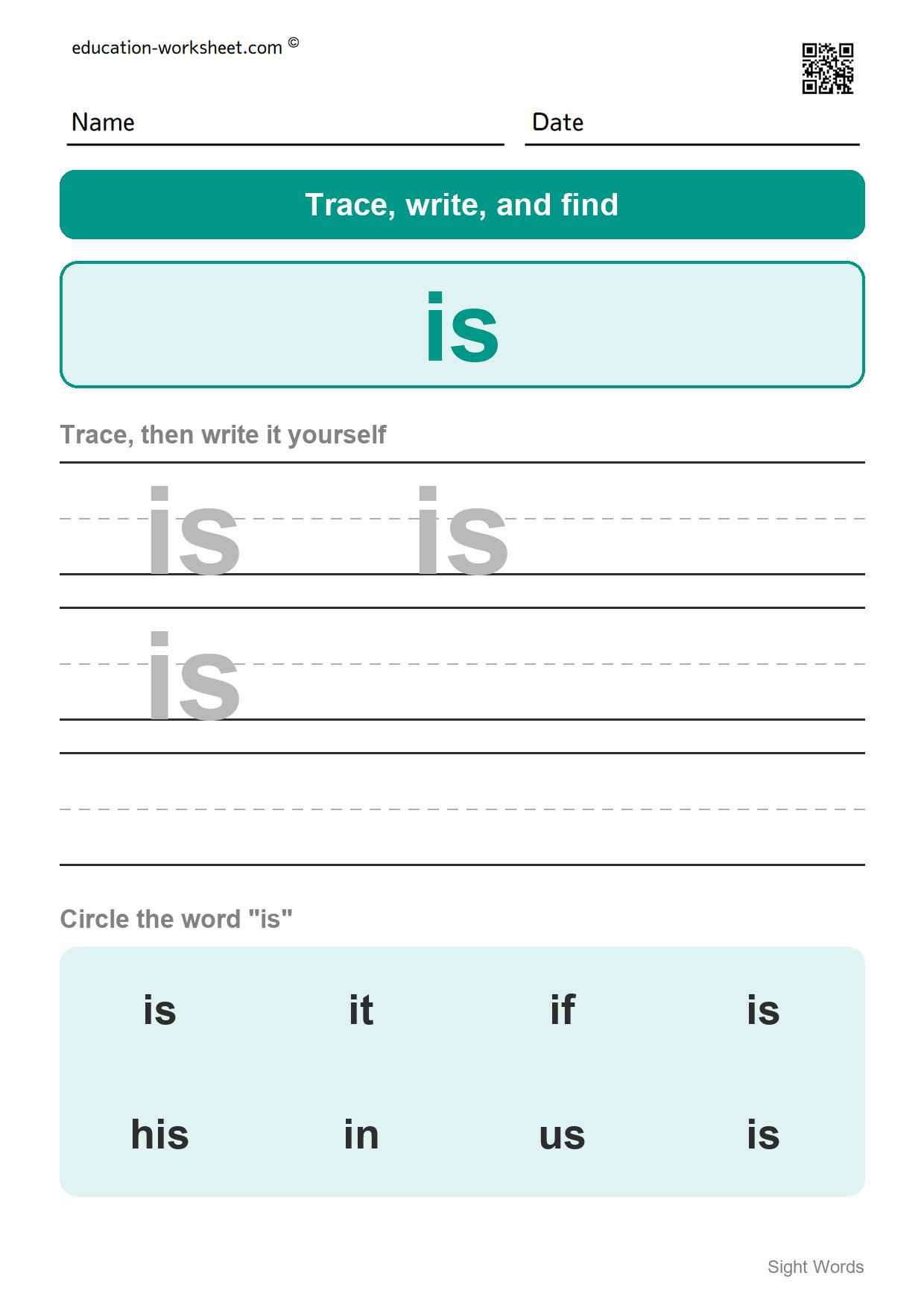
- Worksheet 11 – The Sight Word “is”
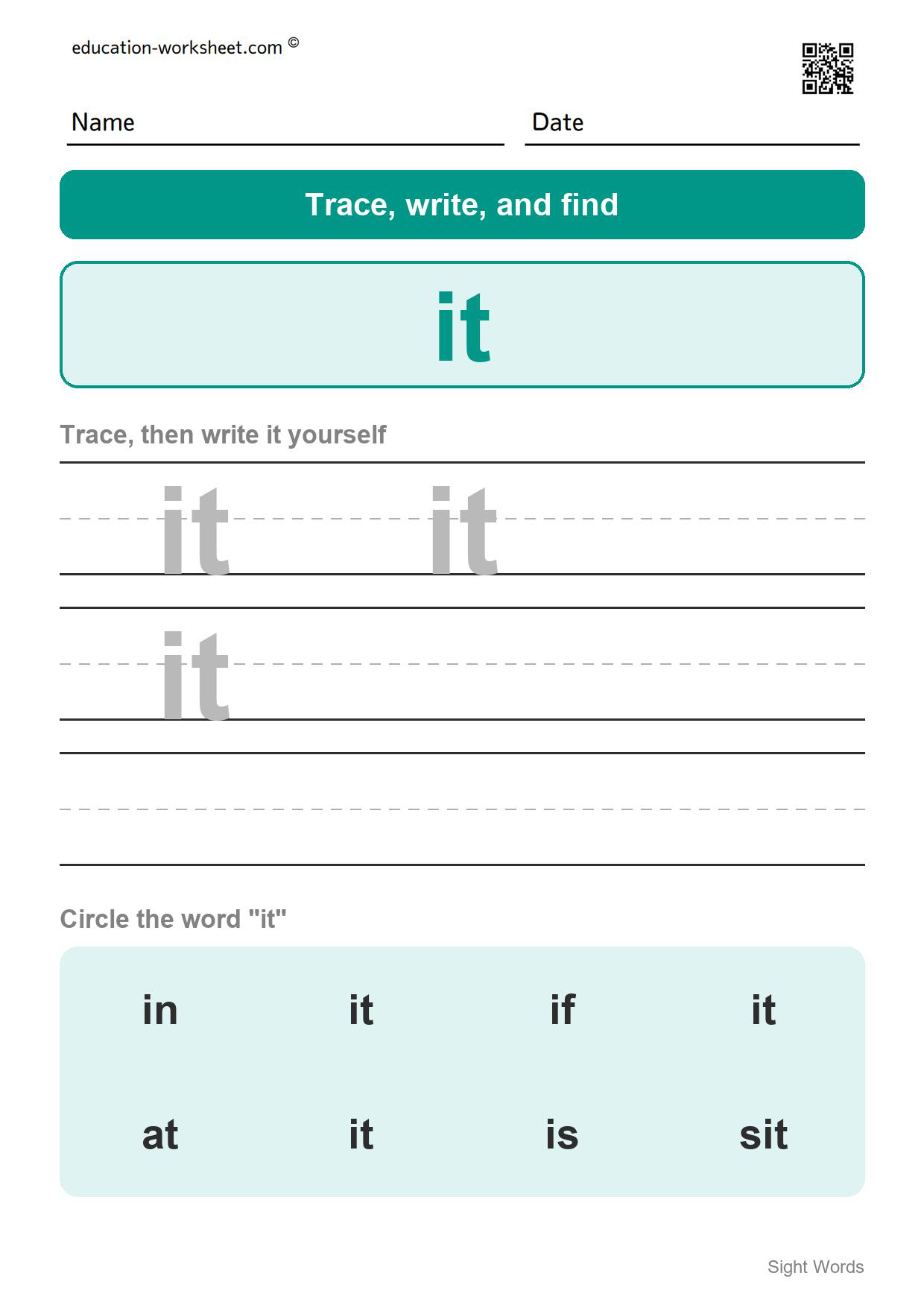
- Worksheet 12 – The Sight Word “it”
- The Wrong Words Are the Lesson
- When Children Are Ready for These Worksheets
- How to Use These Worksheets
- Three Things to Watch For
- Printing Tips
- Frequently Asked Questions
- More Free Reading and Phonics Worksheets
What Is in This Free Sight Words Worksheet Pack
- Twelve printable worksheets, one sight word on each page.
- The words: the, and, see, you, can, look, play, we, go, my, is and it.
- Three handwriting lines per page that hand over the work gradually – trace twice, trace once, then write it alone.
- A find panel of eight words at the foot of every page.
- Exactly three correct words to circle, on every page.
- A separate PDF for every page, free to download and print.
The 12 Sight Words Worksheets
The wrong words in each find panel are not filler. They are chosen to look like the target, and on eight of the twelve pages at least one of them contains the target word inside it. Which page you choose therefore decides what is being tested.
Worksheet 1 – The Sight Word “the”
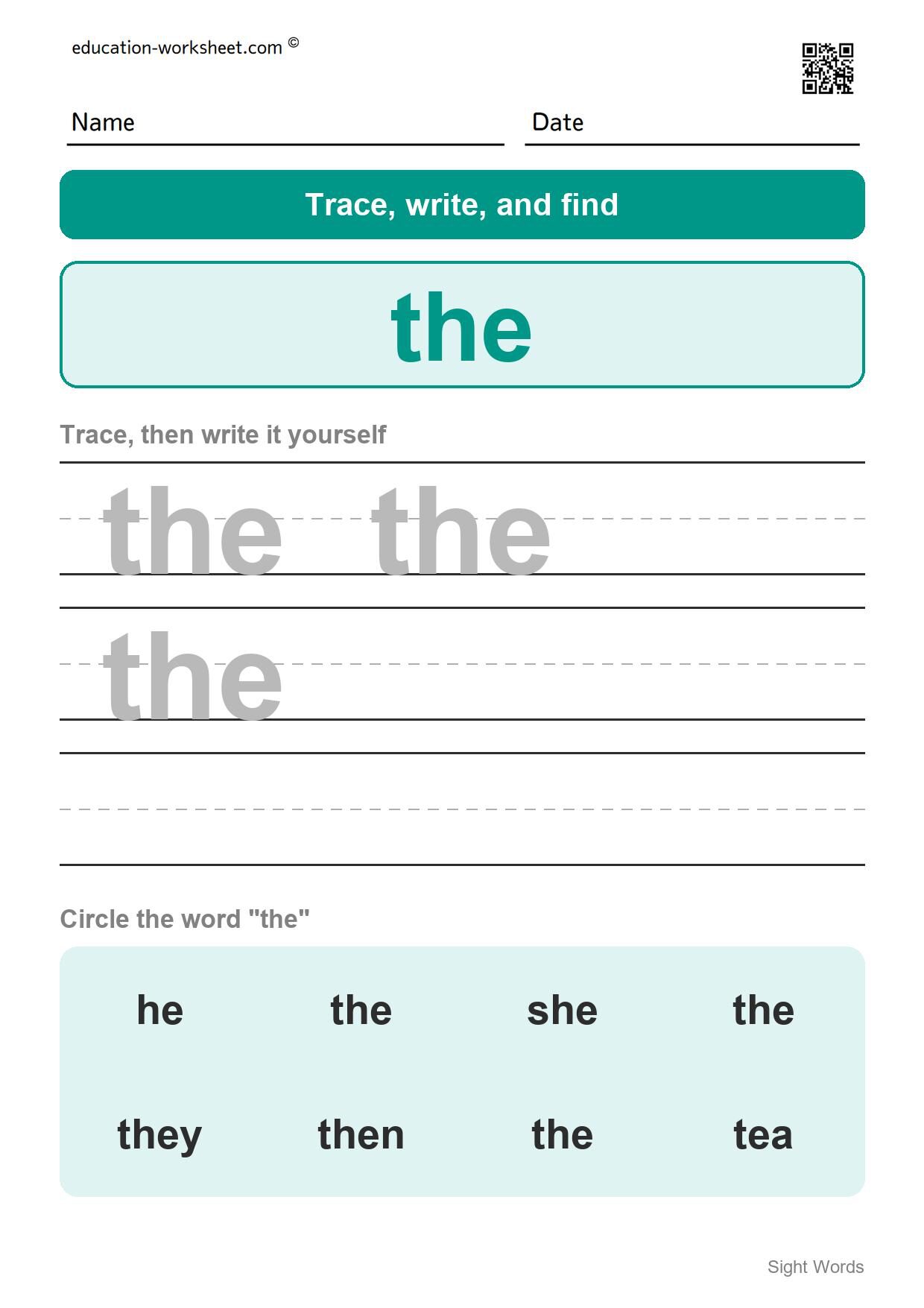
The most common word in English, and the one every reading scheme starts with. The five wrong words on this page are he, she, they, then and tea, and four of the five carry the letters h and e together, which is exactly what a child scanning for shapes will lock on to. The eight words to search are he, the, she, the, they, then, the and tea. Watch for then and they: the word the is inside them.
Worksheet 2 – The Sight Word “and”
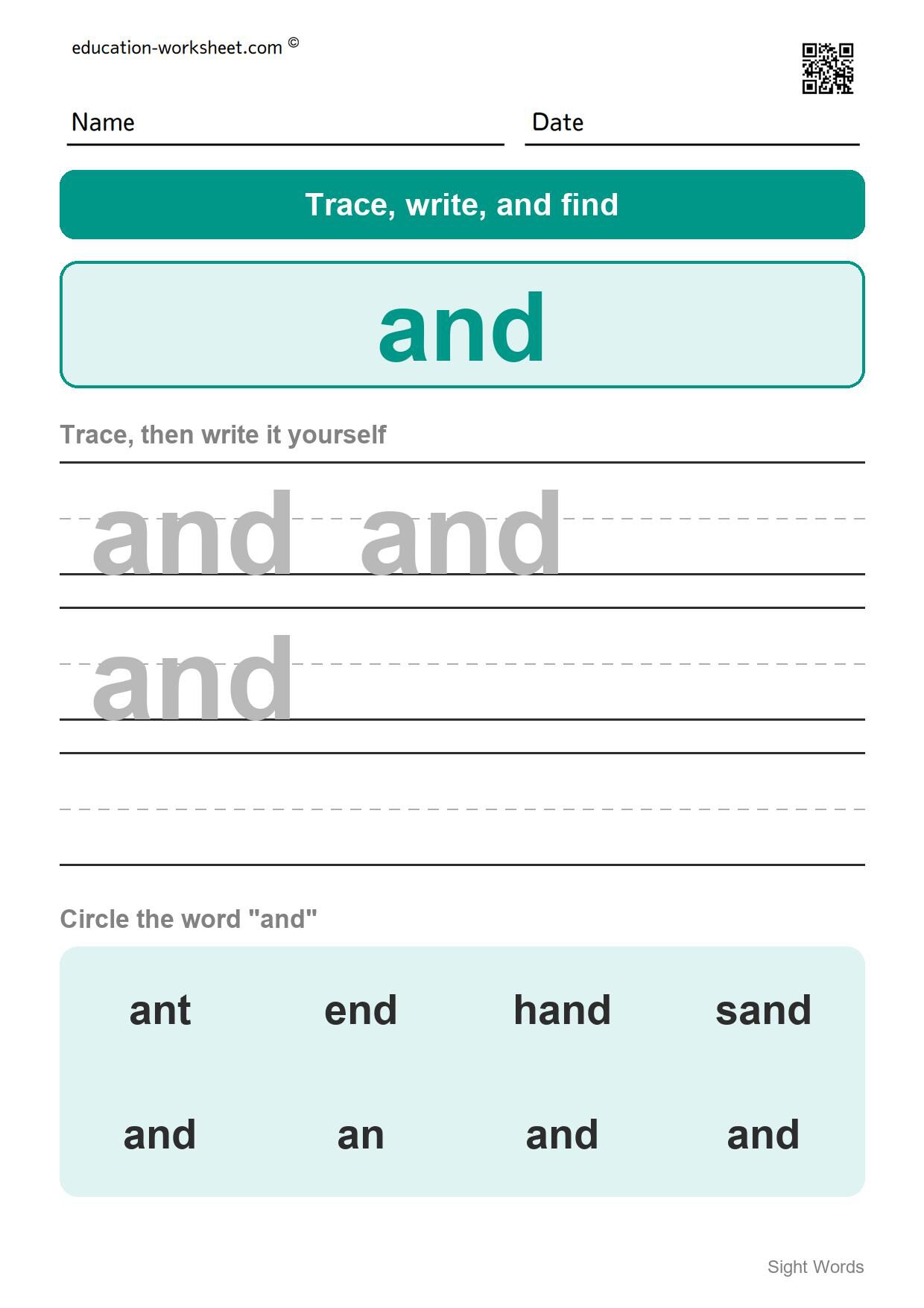
The find panel here is the sharpest trap in the pack. Two of the wrong words, hand and sand, contain the word and inside them, letter for letter. A child who circles hand has not been careless; they have found what they were looking for and stopped. The eight words to search are ant, end, hand, sand, and, an, and and and. Watch for hand and sand: the word and is inside them.
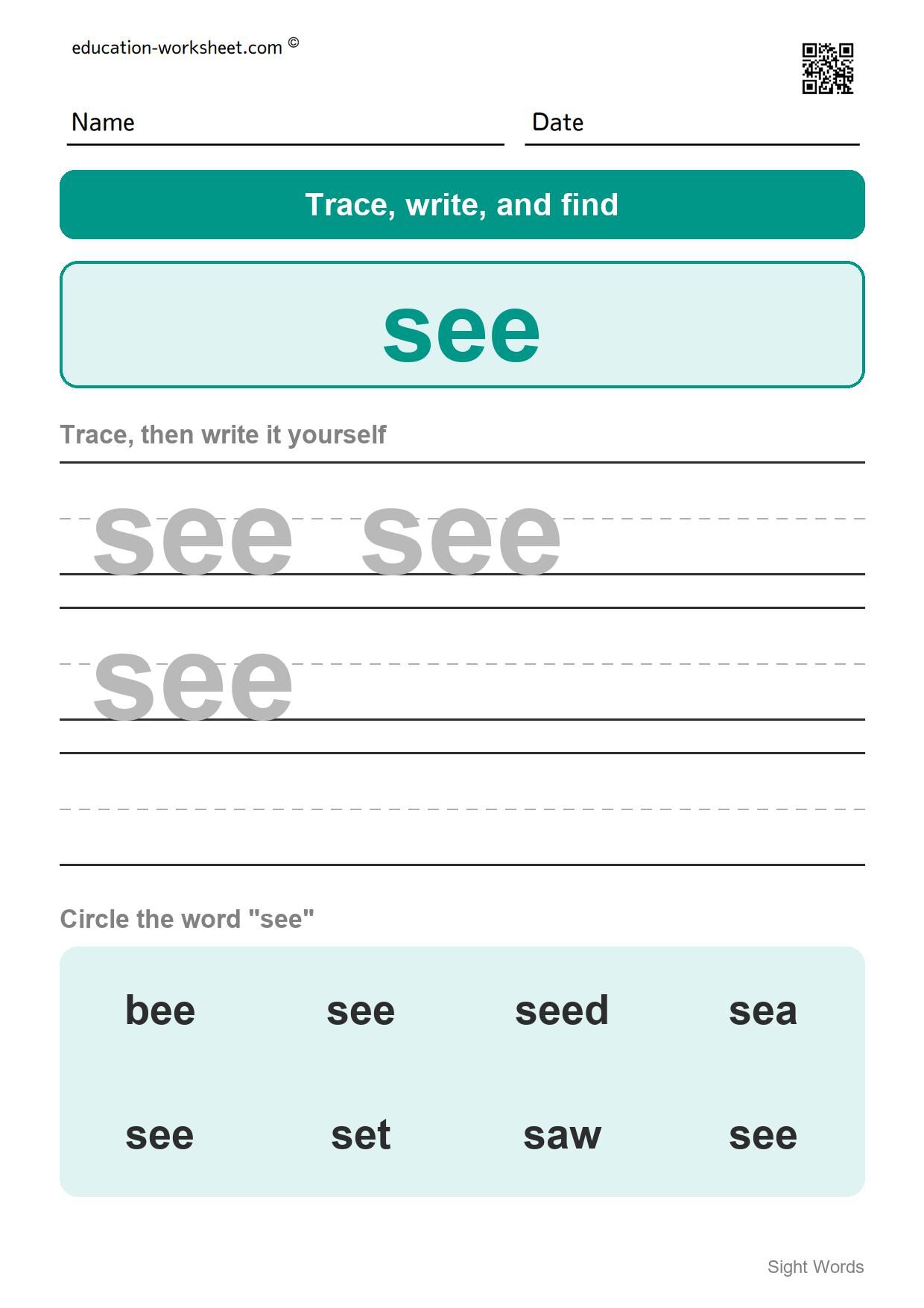
Worksheet 3 – The Sight Word “see”
Seed is see with a d on the end, and it is printed right next to the real thing. The other wrong words, bee, sea, set and saw, change a letter or two instead, so the page works from both directions at once. The eight words to search are bee, see, seed, sea, see, set, saw and see. Watch for seed: the word see is inside it.
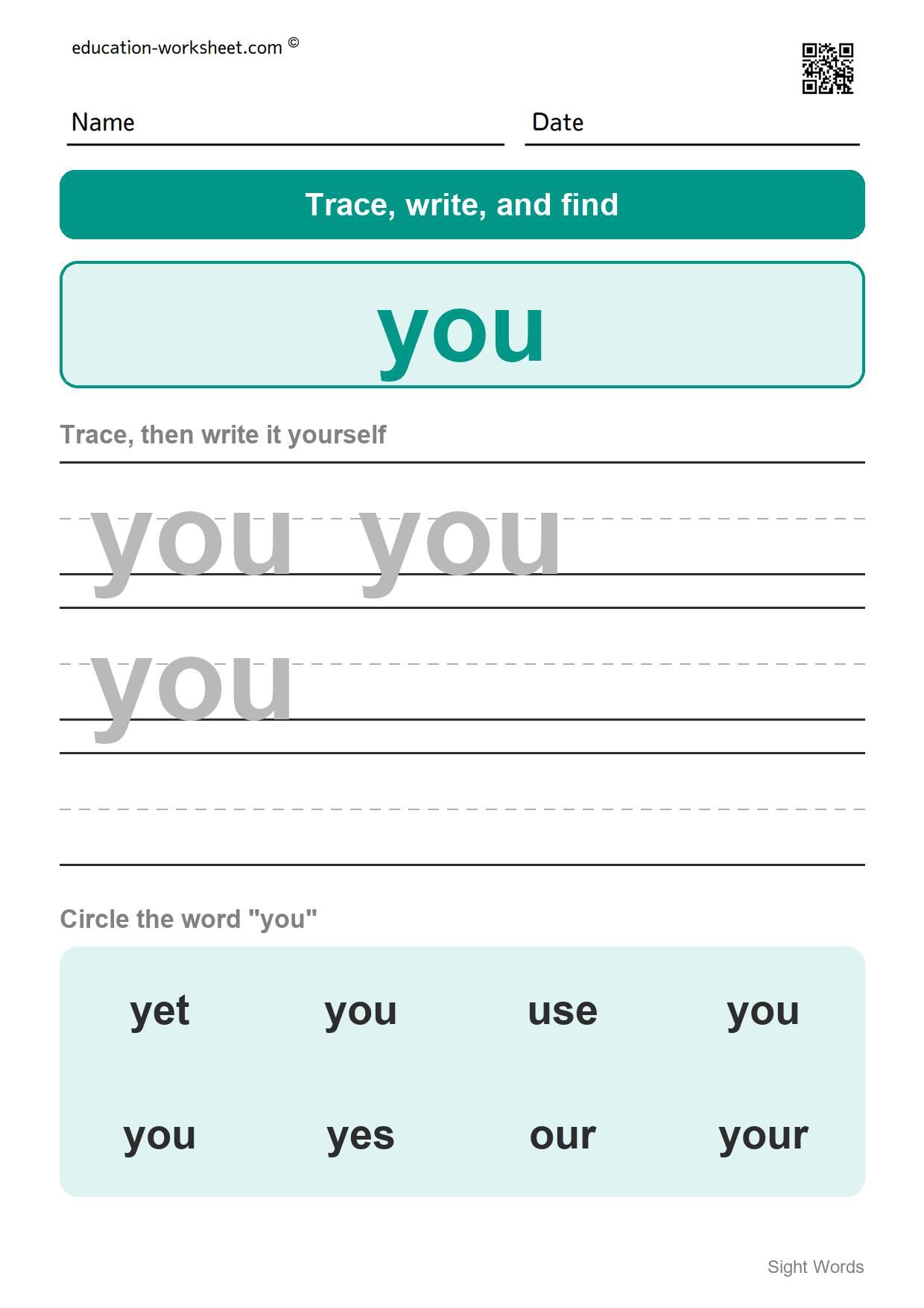
Worksheet 4 – The Sight Word “you”
Your contains you and is one letter longer. Children who have learned you as a shape rather than a string of letters circle it almost every time, and that is useful information. The eight words to search are yet, you, use, you, you, yes, our and your. Watch for your: the word you is inside it.
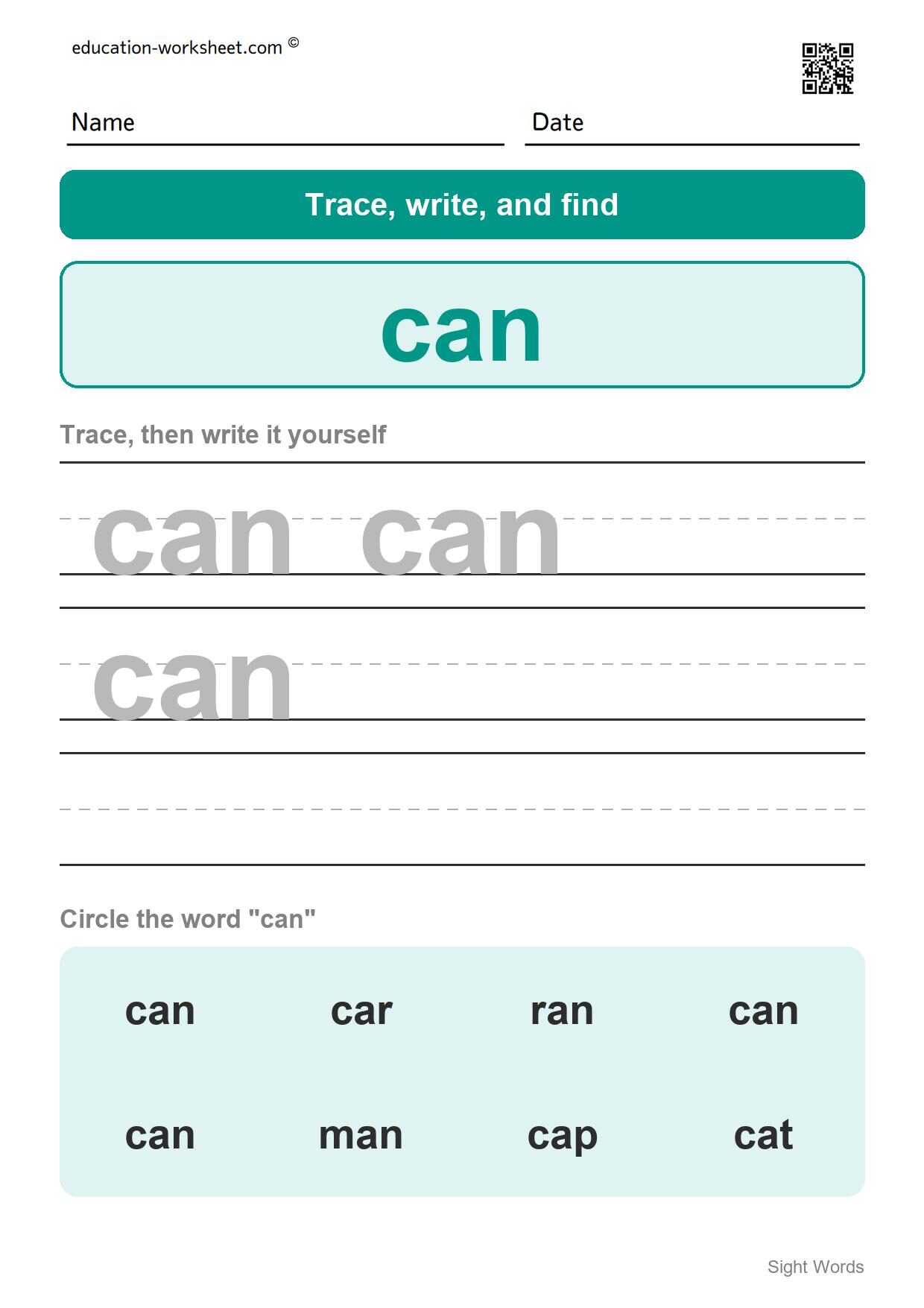
Worksheet 5 – The Sight Word “can”
No wrong word on this page contains can inside it. Instead every distractor changes exactly one letter: car, ran, man, cap, cat. This is the page for a child who is beginning to sound words out rather than recognize them whole. The eight words to search are can, car, ran, can, can, man, cap and cat. No wrong word contains can inside it on this page.
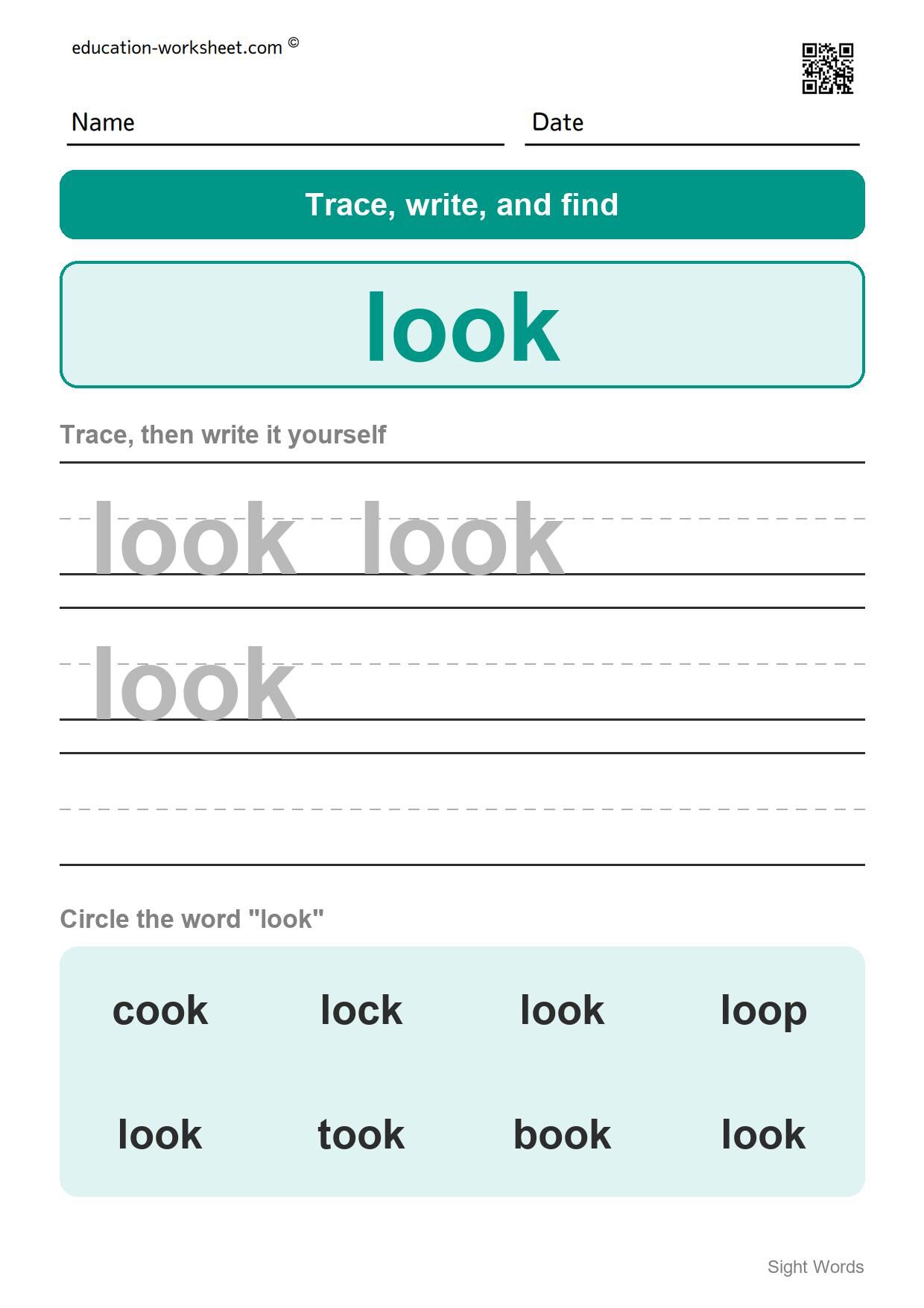
Worksheet 6 – The Sight Word “look”
Look is the first four-letter word in the pack, and the length is what makes it harder rather than the letters. Four of the five wrong words keep the double o – cook, loop, took and book – while lock quietly drops one of them. The eight words to search are cook, lock, look, loop, look, took, book and look. No wrong word contains look inside it on this page.
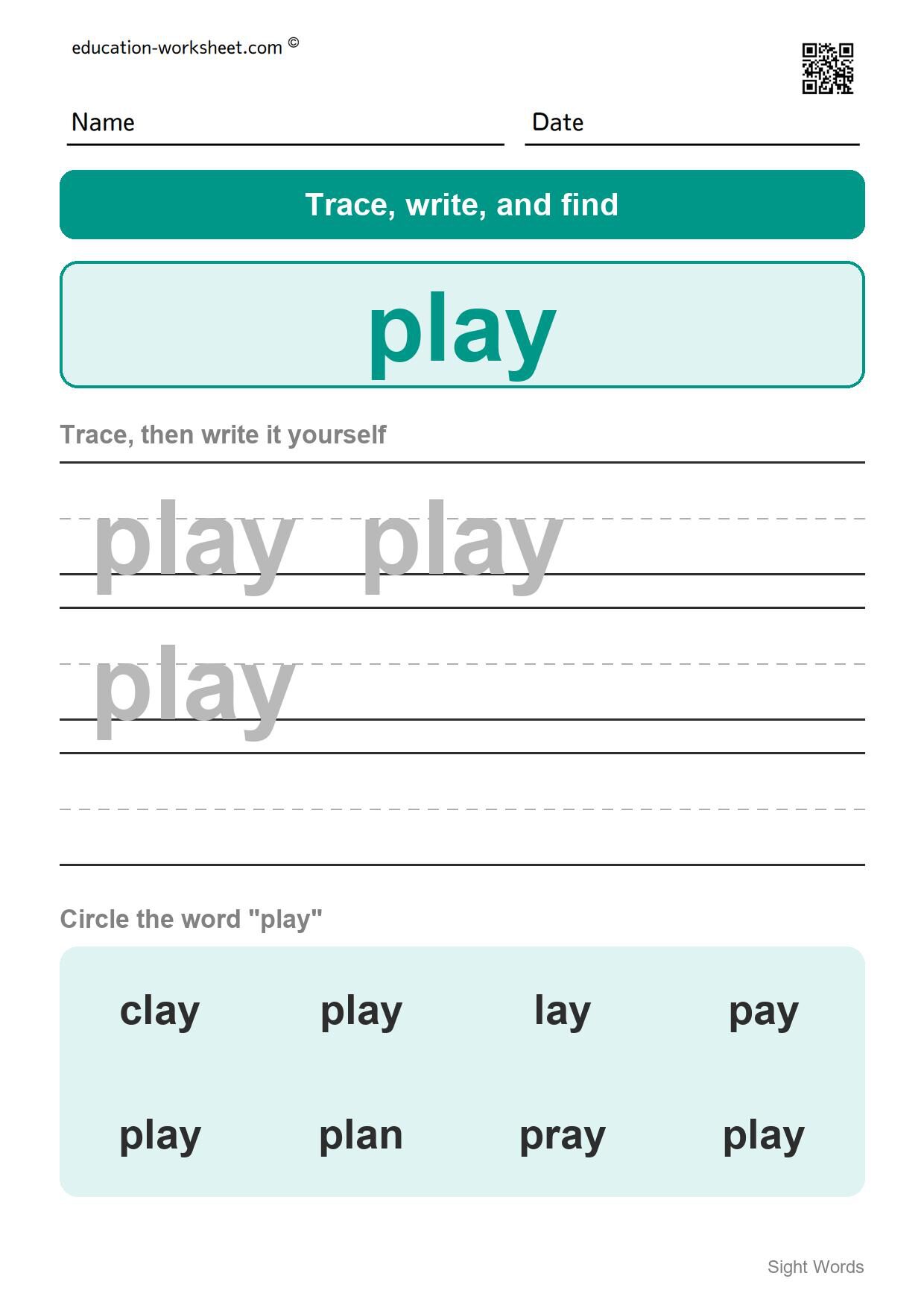
Worksheet 7 – The Sight Word “play”
Play is the only target in the pack with a shorter real word inside it: lay. And lay is printed on the same page as one of the wrong answers. Of the others, clay, plan and pray are four letters like play, while pay is three. The eight words to search are clay, play, lay, pay, play, plan, pray and play. No wrong word contains play inside it on this page.
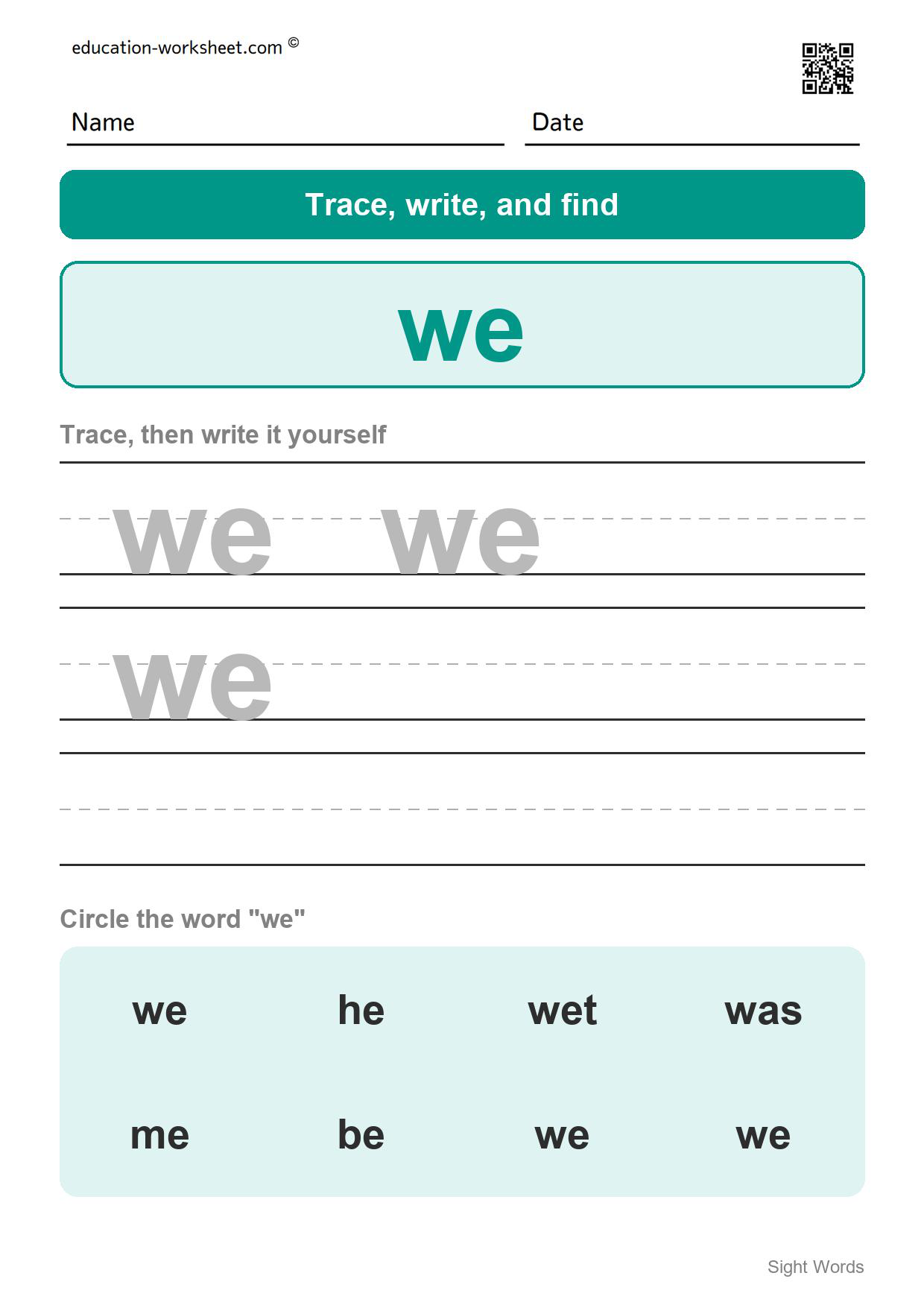
Worksheet 8 – The Sight Word “we”
Wet contains we. So this two-letter word has the same trap as and and you, and it arrives just when children have started to feel confident about the short words. The eight words to search are we, he, wet, was, me, be, we and we. Watch for wet: the word we is inside it.
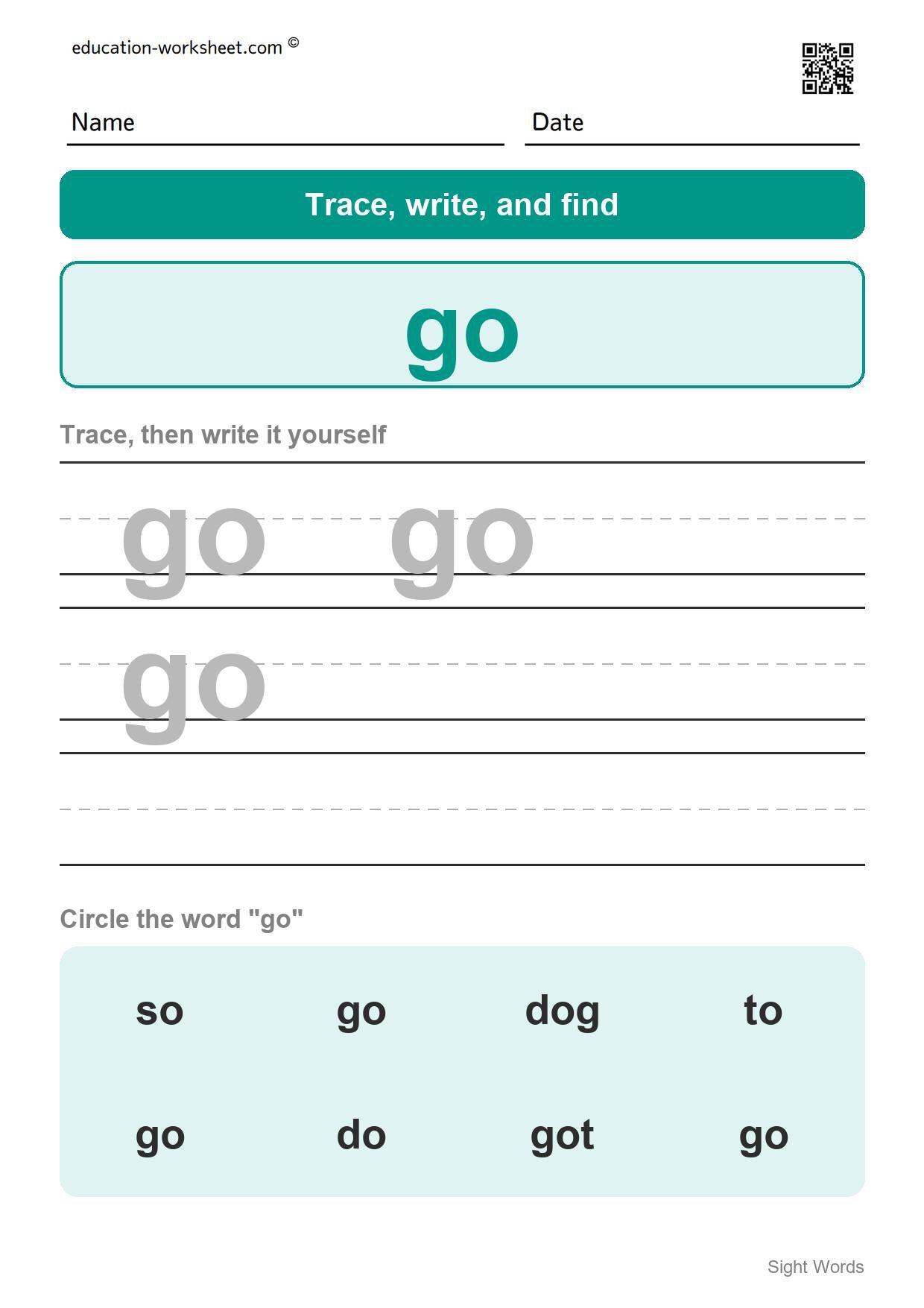
Worksheet 9 – The Sight Word “go”
Got contains go. Dog does not, though it looks as if it should, and that pair is worth pointing at: d-o-g has the letters in a different order, while g-o-t begins with the whole word. The eight words to search are so, go, dog, to, go, do, got and go. Watch for got: the word go is inside it.
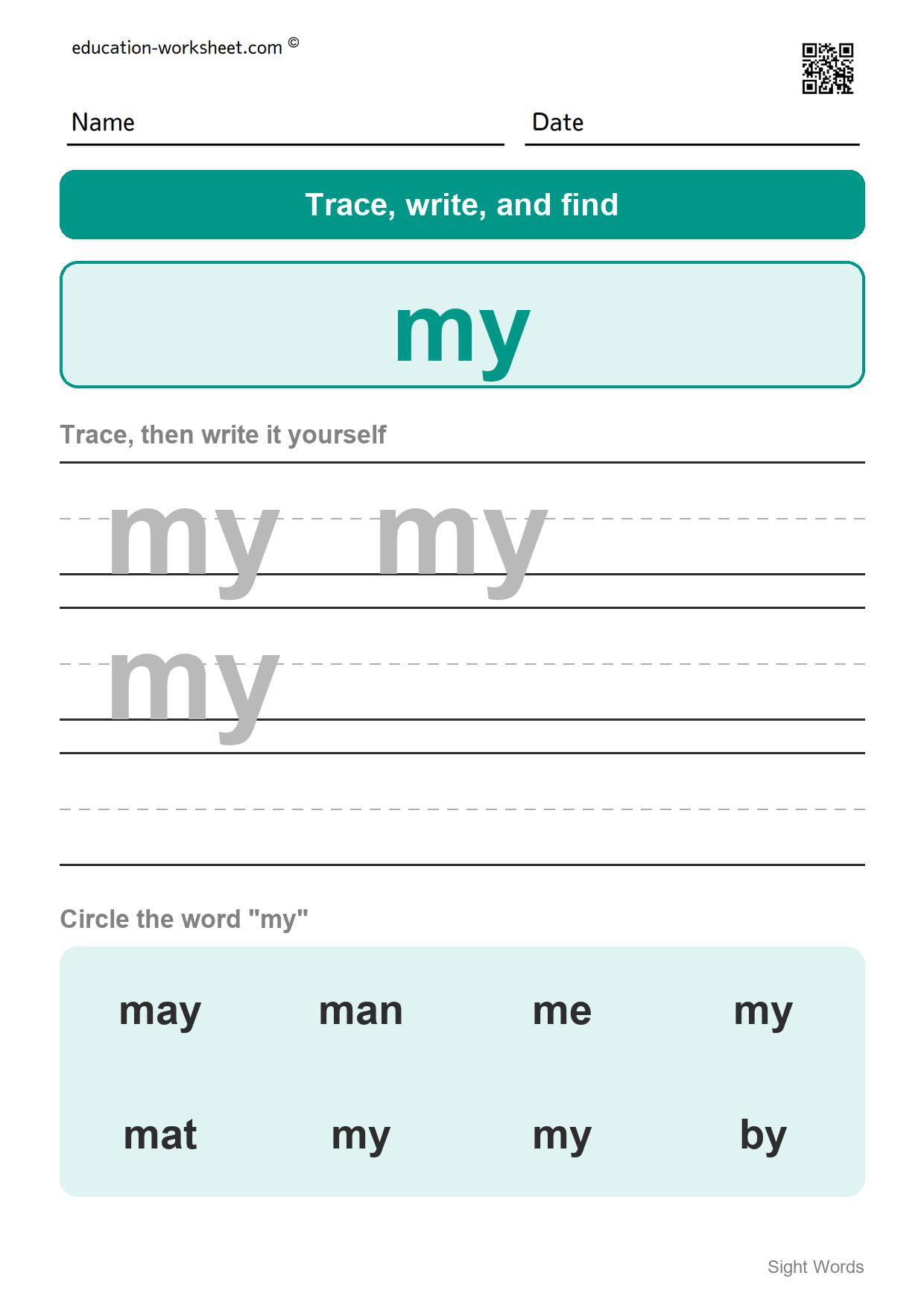
Worksheet 10 – The Sight Word “my”
Four of the five wrong words begin with m – may, man, me and mat – so a child reading the first letter alone has almost nothing to go on. The fifth, by, is the only word on the page that looks nothing like the target. The eight words to search are may, man, me, my, mat, my, my and by. No wrong word contains my inside it on this page.
Worksheet 11 – The Sight Word “is”
His contains is, and it is the only trap on the page. The other wrong words, it, if, in and us, are all two letters long, so the eye has to look at both letters rather than the length. The eight words to search are is, it, if, is, his, in, us and is. Watch for his: the word is is inside it.
Worksheet 12 – The Sight Word “it”
Sit contains it. The last page of the pack, and it uses the same trick as the first: a longer word with the target hidden inside it. If a child gets this one clean, the habit has taken. The eight words to search are in, it, if, it, at, it, is and sit. Watch for sit: the word it is inside it.
The Wrong Words Are the Lesson
Go through all twelve find panels and a pattern appears that is easy to miss on any single page. On eight of them, at least one wrong word has the target word sitting inside it: then and they contain the, hand and sand contain and, seed contains see, your contains you, wet contains we, got contains go, his contains is and sit contains it.
That is the whole difficulty of sight words in one design. A child learning by shape sees the right letters in the right order and circles the word. They have done exactly what they were taught to do, and they are wrong. The fix is not to try harder but to look at where the word stops, and these pages force that question.
The other four pages – can, look, play and my – work the opposite way. No distractor contains the target; every one of them changes a single letter instead (car, ran, man, cap, cat for can). Those pages test whether a child is reading every letter. The eight trap pages test whether they know where a word ends. Both matter, and it is worth doing one of each in a sitting rather than working straight through.
One more thing worth knowing: the word play is the only target in the pack that has a shorter real word inside it, and that shorter word, lay, is printed on the same page as one of the wrong answers. A child who circles lay has read three correct letters in a row. Page 7 is the page to sit beside.
When Children Are Ready for These Worksheets
These pages suit children from about four and a half to six. A child is ready when they know most letter names and can hold a pencil well enough to trace. The writing lines and the find panel are independent of each other, so a child who is not writing yet can still do the bottom half of every page.
The standard is RF.K.3.C, reading common high-frequency and irregularly spelled words by sight. Every one of the twelve words here is on the lists used in most kindergarten classrooms. The handwriting lines add L.K.1.A, printing many upper- and lowercase letters.
How to Use These Worksheets
- Print one page. One word is a session, and a word usually needs more than one session.
- Read the word at the top together, then spell it out loud: “the: t, h, e”. The spelling is what stops the traps below from working.
- Trace the two grey words, then the one, then write it alone on the last line.
- In the find panel, read every word out loud before circling anything – including the wrong ones. Children circle without reading when they are allowed to.
- Count the circles at the end. Three, every time. If there are four, one of them is a longer word with the right letters inside it.
Three Things to Watch For
Circling the longer word
Hand for and, your for you, sit for it. This is the error the pack is built around and it is a sign of progress, not of carelessness. Put a finger after the last letter of the target and ask what comes next.
Tracing beautifully and then stopping
The third handwriting line has no grey word on it, and that blank line is where children put the pencil down. Write it yourself in the air first, or let them copy from the big word at the top of the page rather than from memory.
Learning the page instead of the word
A child who does the same page twice in a week will circle from memory the second time. Use the word in a book or on a shopping list between sittings. A sight word is only learned when it is recognized somewhere it was not expected.
Printing Tips
- Choose Actual size or Fit to page in the print dialog – both keep the page in proportion.
- Each page fills one sheet and works on US Letter and A4 paper.
- Ordinary copier paper is fine. Card is only worth it if you want the page to survive an eraser.
- Grayscale printing works. The grey tracing letters stay lighter than the child’s pencil, which is what matters.
- If the tracing letters come out too faint, print at a slightly higher quality setting rather than darker paper.
- A plastic wallet and a dry-wipe pen let the writing lines be reused, though the find panel can only be done once before it is remembered.
Frequently Asked Questions
What age are these sight words worksheets for?
About four and a half to six years old: pre-K and kindergarten.
Which words are included?
Twelve: the, and, see, you, can, look, play, we, go, my, is and it.
How many words does my child circle on each page?
Three, on every page. Eight words are printed and three of them match.
Why are words like hand and your in the puzzle?
Because they contain the target word inside them. A child who circles hand for and has found the right letters in the right order, and learning where a word ends is the point of the exercise.
Is there an answer key?
None is needed. Count the circles: three is right. If there are four, look for the longest word circled.
Do I need to sign up to download these?
No. Every PDF downloads immediately, with no account, no email address and no cost.
Can I use these in my classroom?
Yes, they are free to print for home and classroom use. Please do not sell them or re-host the files elsewhere.
More Free Reading and Phonics Worksheets
- Free Sight Words Worksheets for Kindergarten – Trace and Write
- Free CVC Word Building Worksheets for Kindergarten – Make Three Letter Words
- Free Word Family Worksheets for Kindergarten – CVC Words and Phonics
- Free Rhyming Words Worksheets for Kindergarten – Words That Rhyme
- Free Letter Tracing Worksheets A to Z for Kindergarten – Capital and Small Letters
- Free Beginning Sounds Worksheets for Kindergarten – Phonics, 40 Words