



- Free Subtraction to 20 Worksheets for Grade 1 – Ten Frames
- Taking away from 20 (start here)
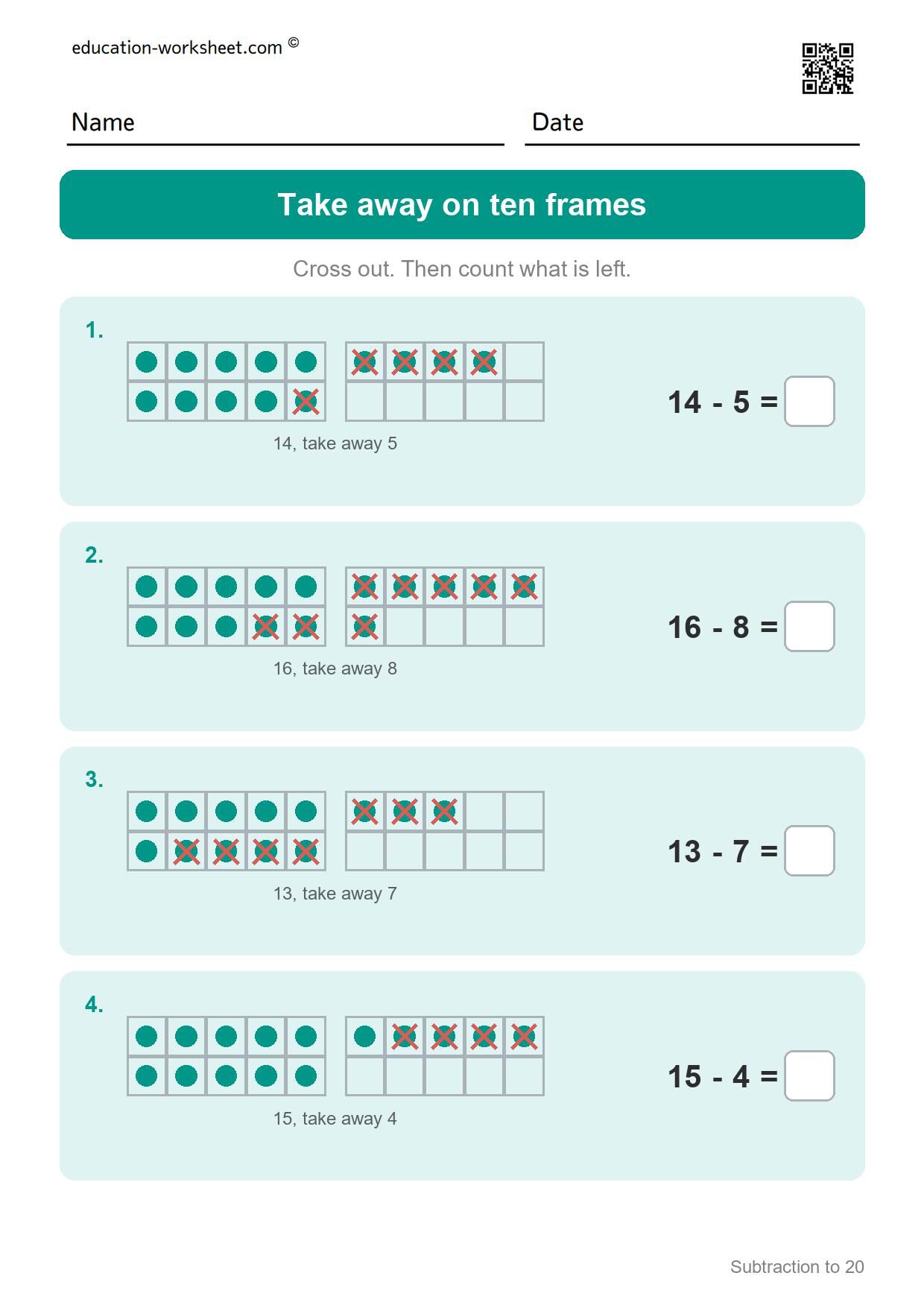
- Take away on ten frames (Set 1)
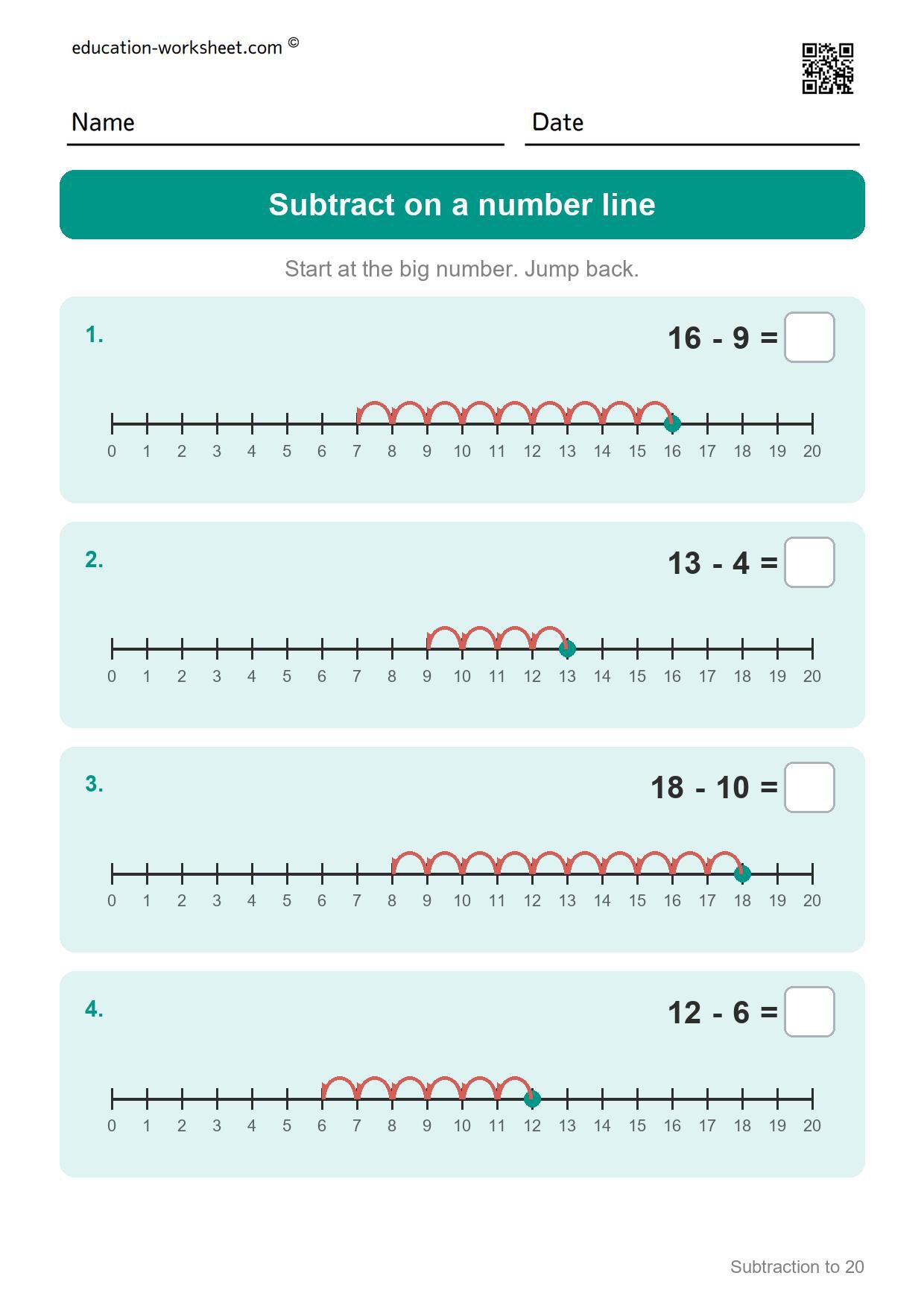
- Subtract on a number line (Set 2)
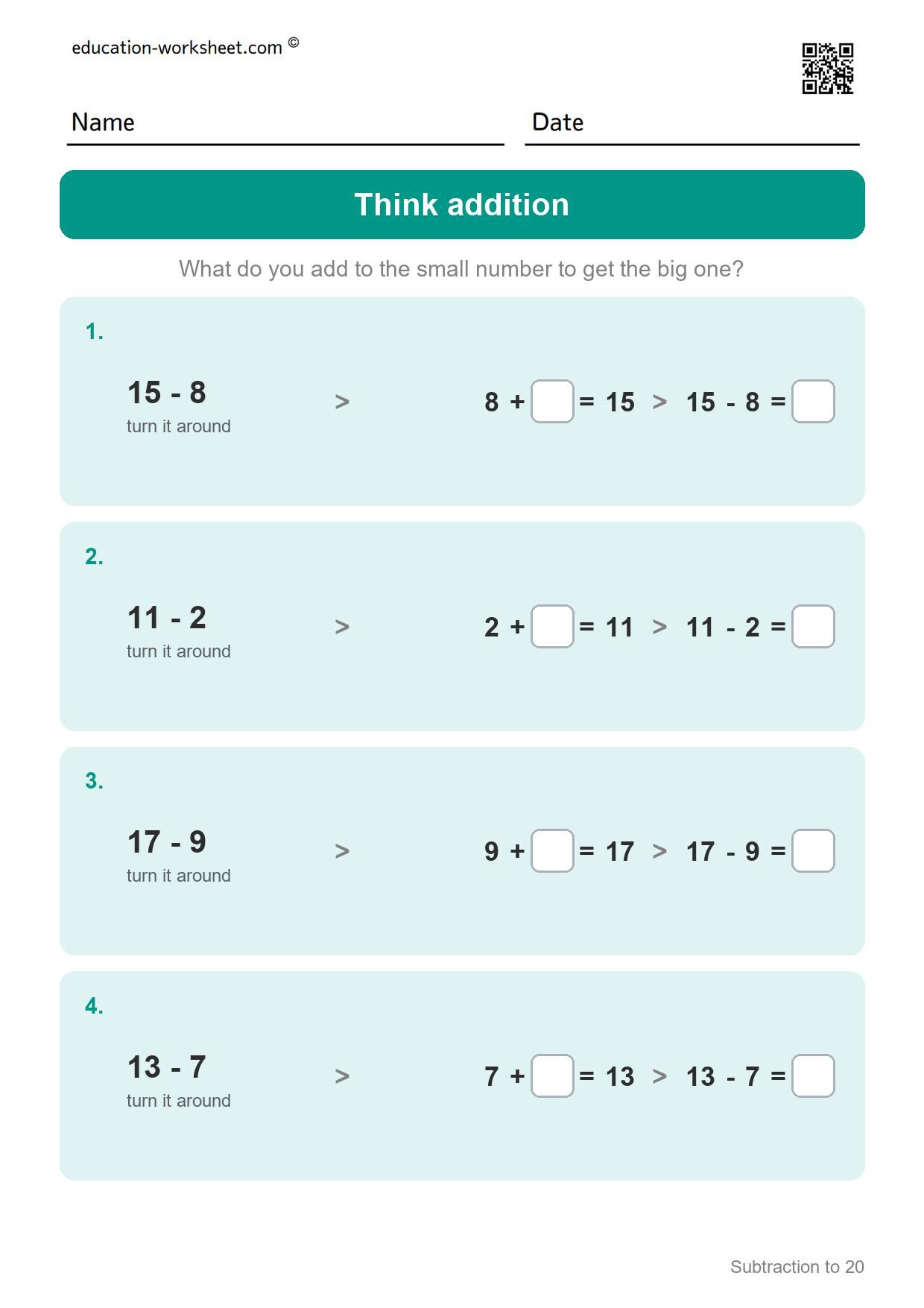
- Think addition (Set 3)
- Subtraction practice (Set 4)
- Take away on ten frames (Set 5)
- Subtract on a number line (Set 6)
- Think addition (Set 7)
- Subtraction practice (Set 8)
- Take away on ten frames (Set 9)
- Subtract on a number line (Set 10)
- Think addition (Set 11)
- Subtraction practice (Set 12)
- Answer key
- Subtracting past ten: two ways to think about 15 minus 7
Free Subtraction to 20 Worksheets for Grade 1 – Ten Frames
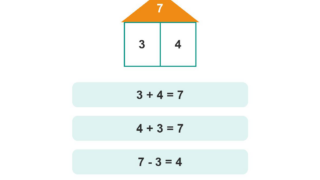
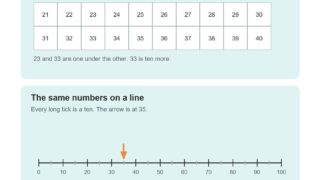
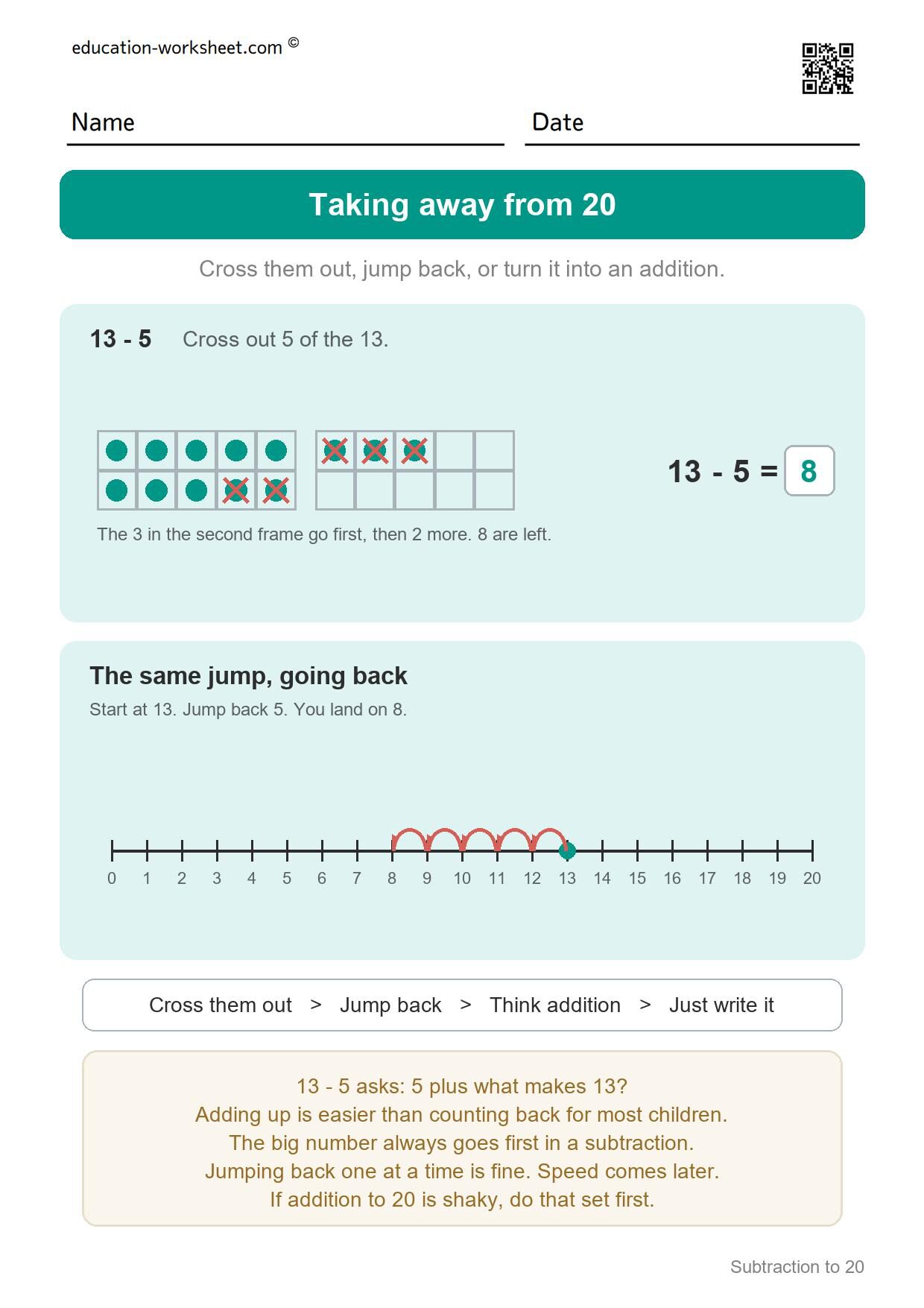
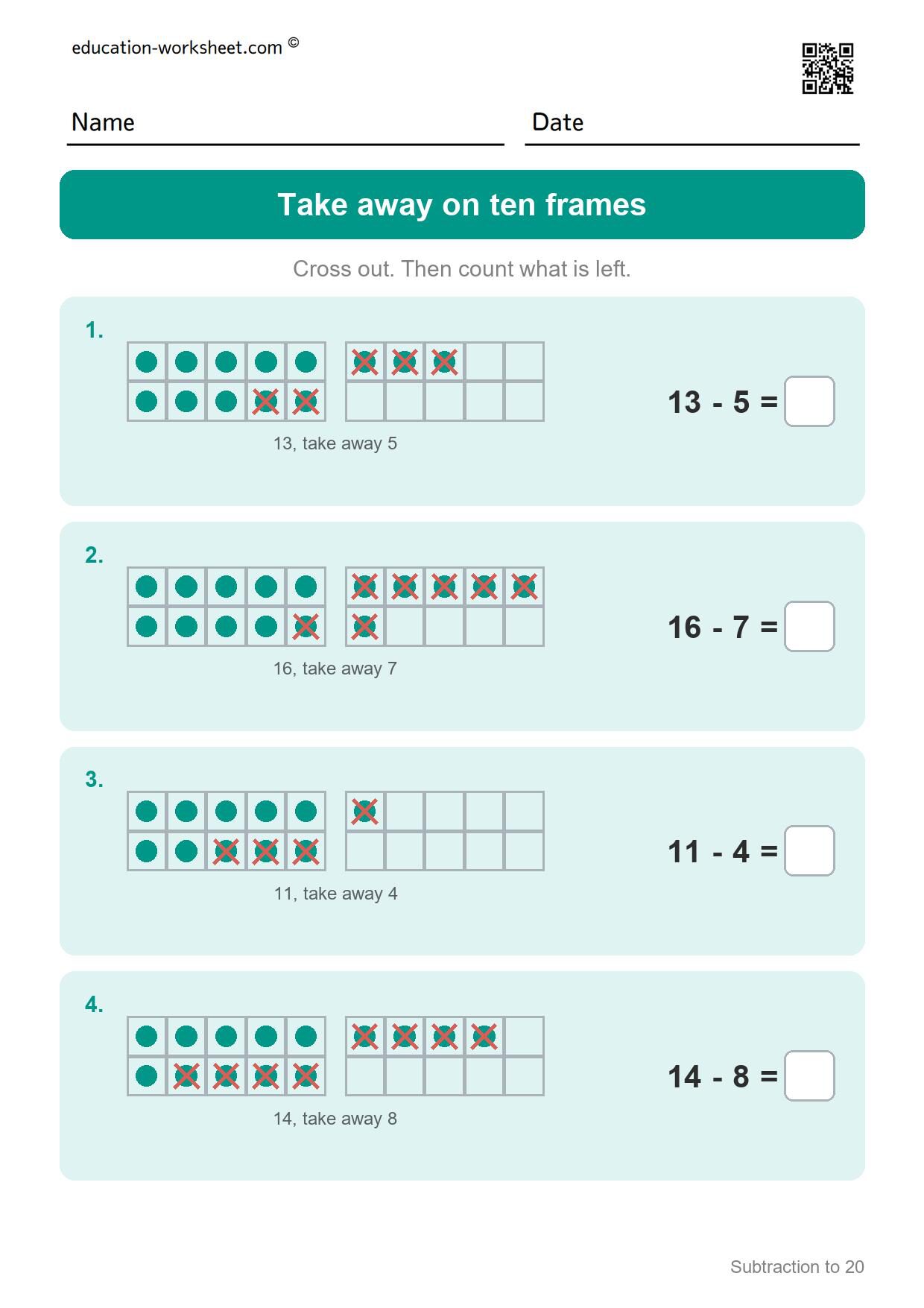
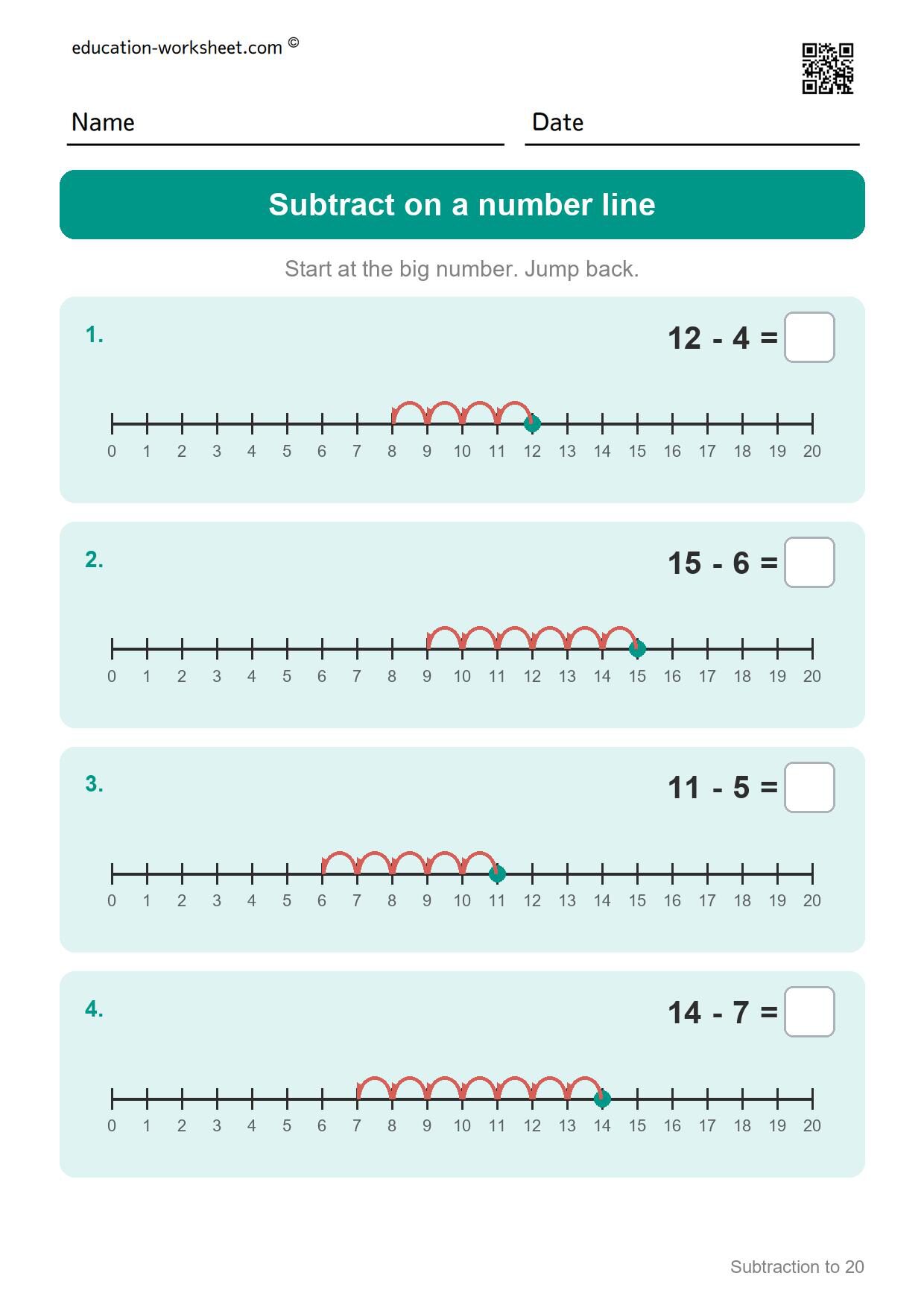
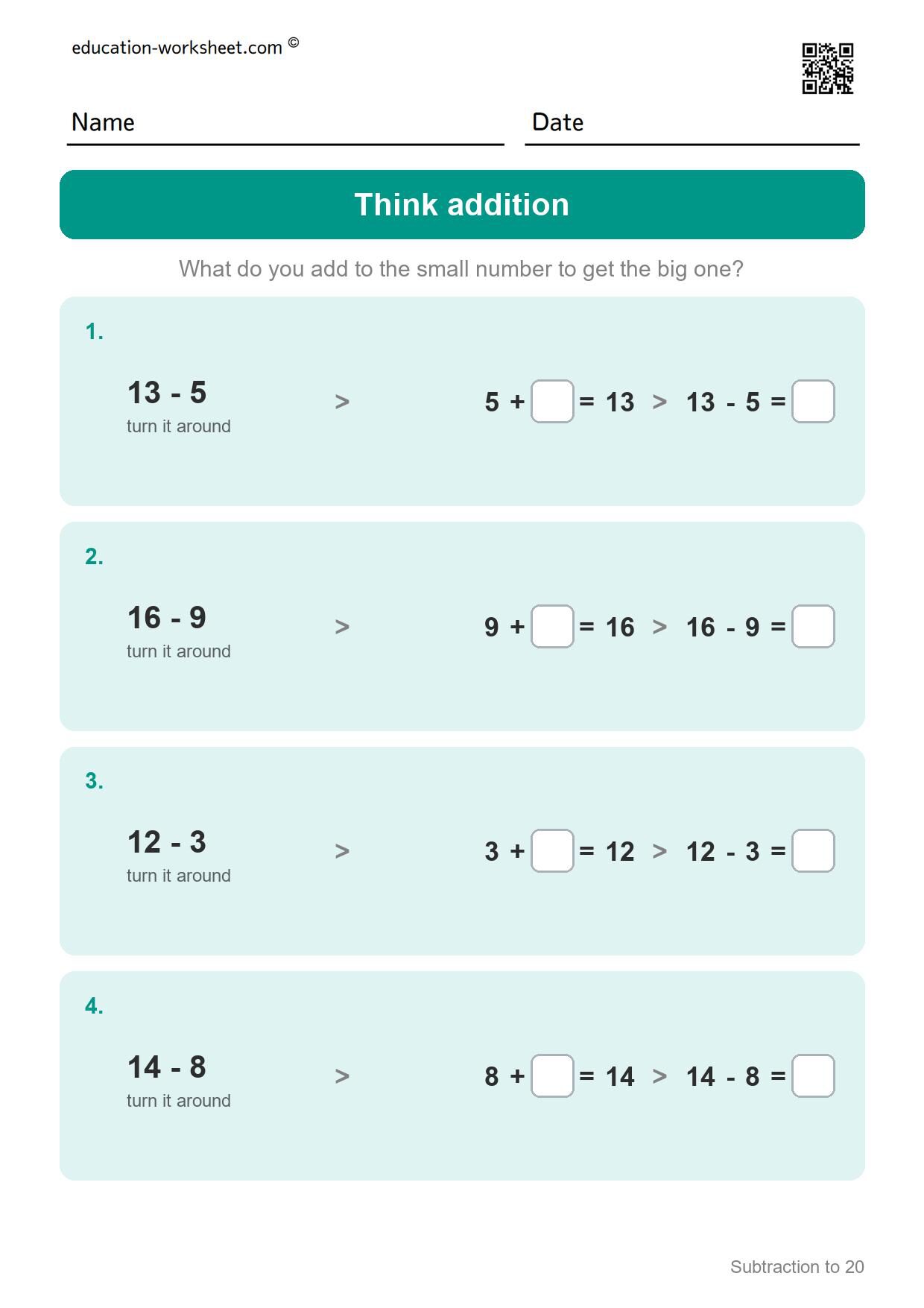
These free printable subtraction worksheets carry first graders from taking away within 10 to taking away within 20, and they teach the strategy that matters most at this stage: turning the subtraction into an addition. Counting backwards is slow and error prone, and fingers run out, so 13 minus 5 is taught here as the question five plus what makes thirteen. Every page shows the same idea a different way, three times over: two ten frames where the counters that go are crossed out, a number line where the child starts at the big number and jumps back, a written pair that turns the subtraction around into an addition with a missing part, and finally plain practice with no picture at all. Every problem crosses ten, because those are the facts that are genuinely hard; take aways that stay under ten are already covered in our kindergarten subtraction sets. The big number is always written first, and the notes on the first sheet say so explicitly, because writing 5 minus 13 is the most common mistake at this age. The last sheet is an answer key for all twelve pages. Just download, print, and turn it around!
Taking away from 20 (start here)
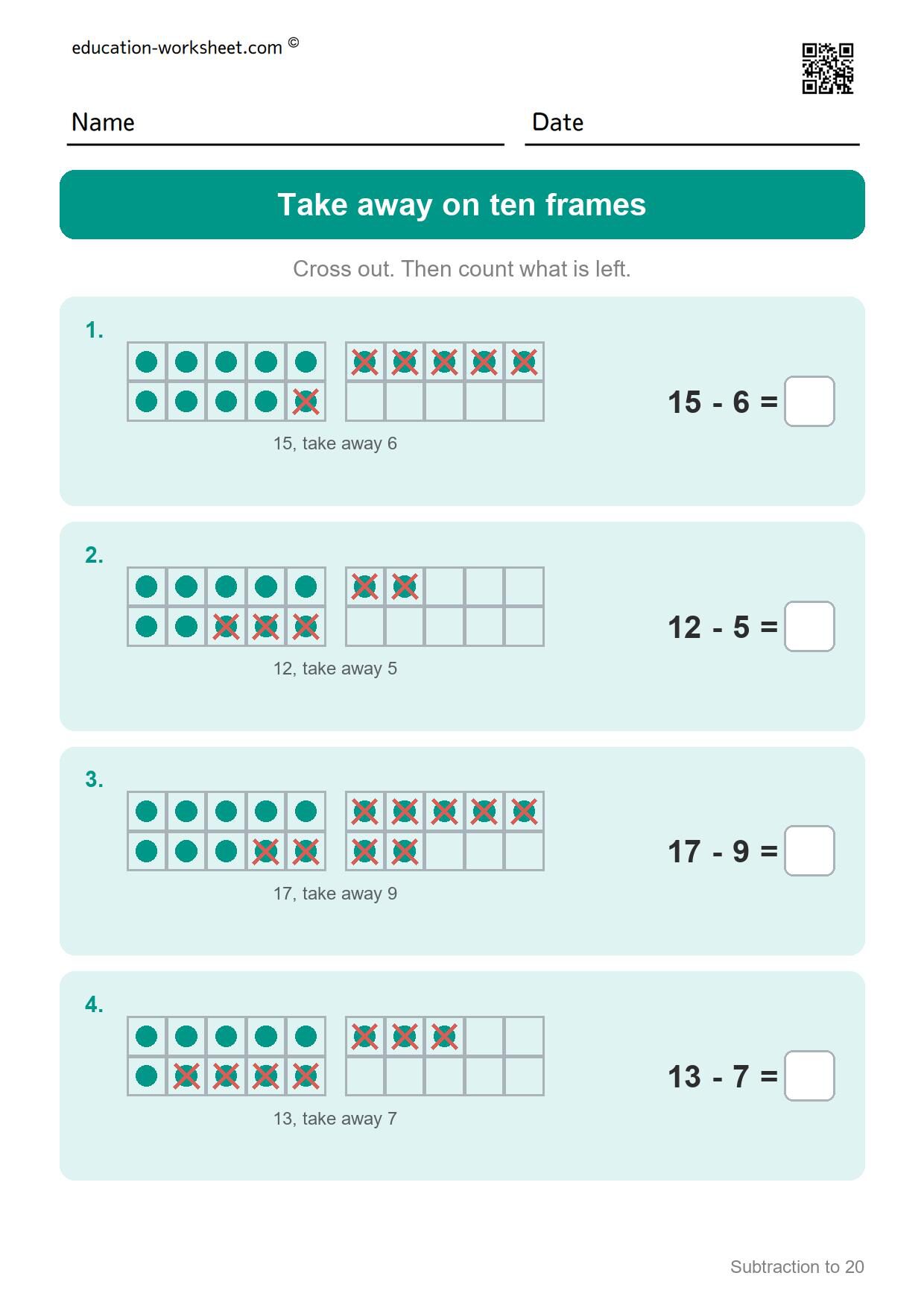
Take away on ten frames (Set 1)
Subtract on a number line (Set 2)
Think addition (Set 3)
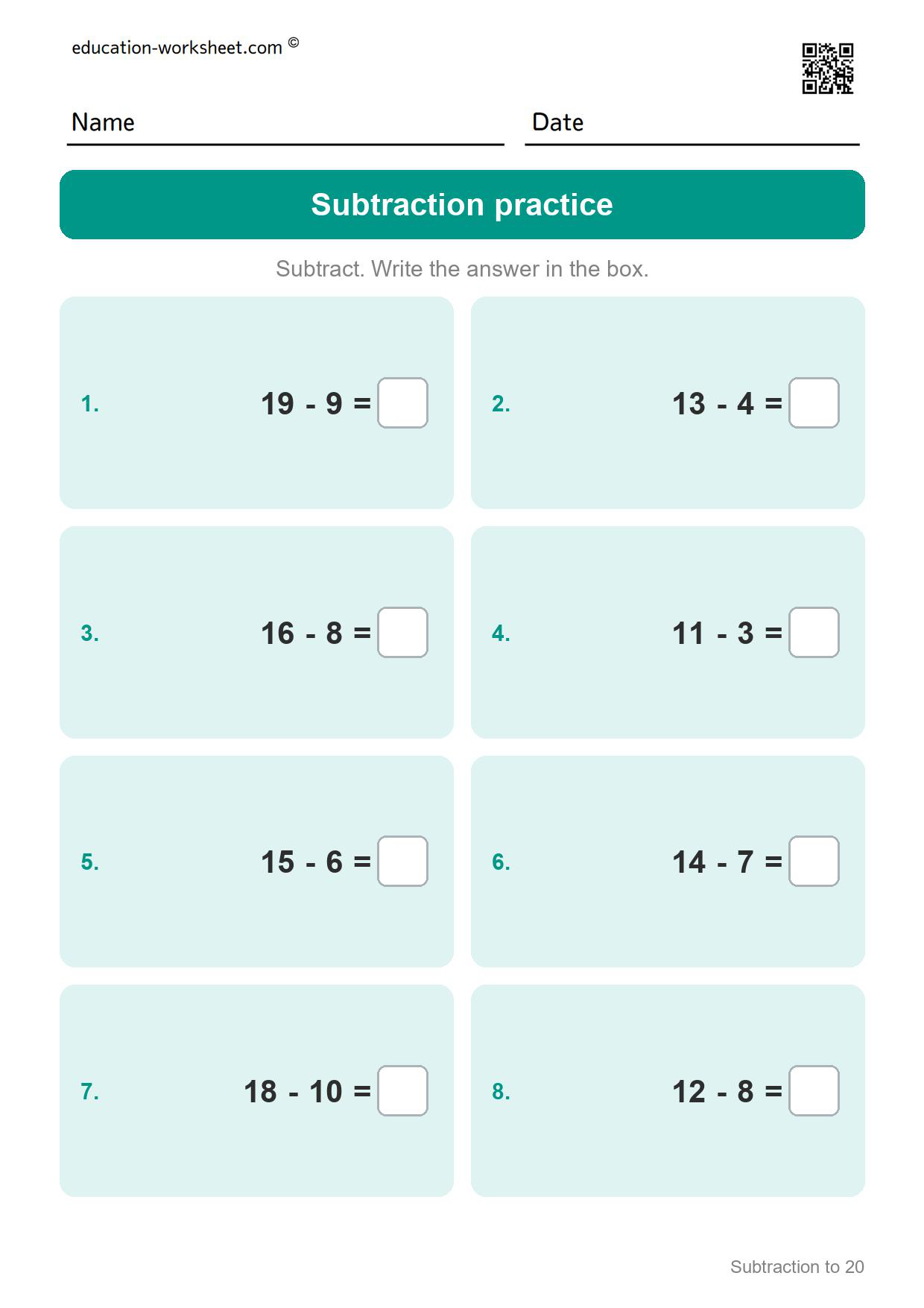
Subtraction practice (Set 4)
Take away on ten frames (Set 5)
Subtract on a number line (Set 6)
Think addition (Set 7)
Subtraction practice (Set 8)
Take away on ten frames (Set 9)
Subtract on a number line (Set 10)
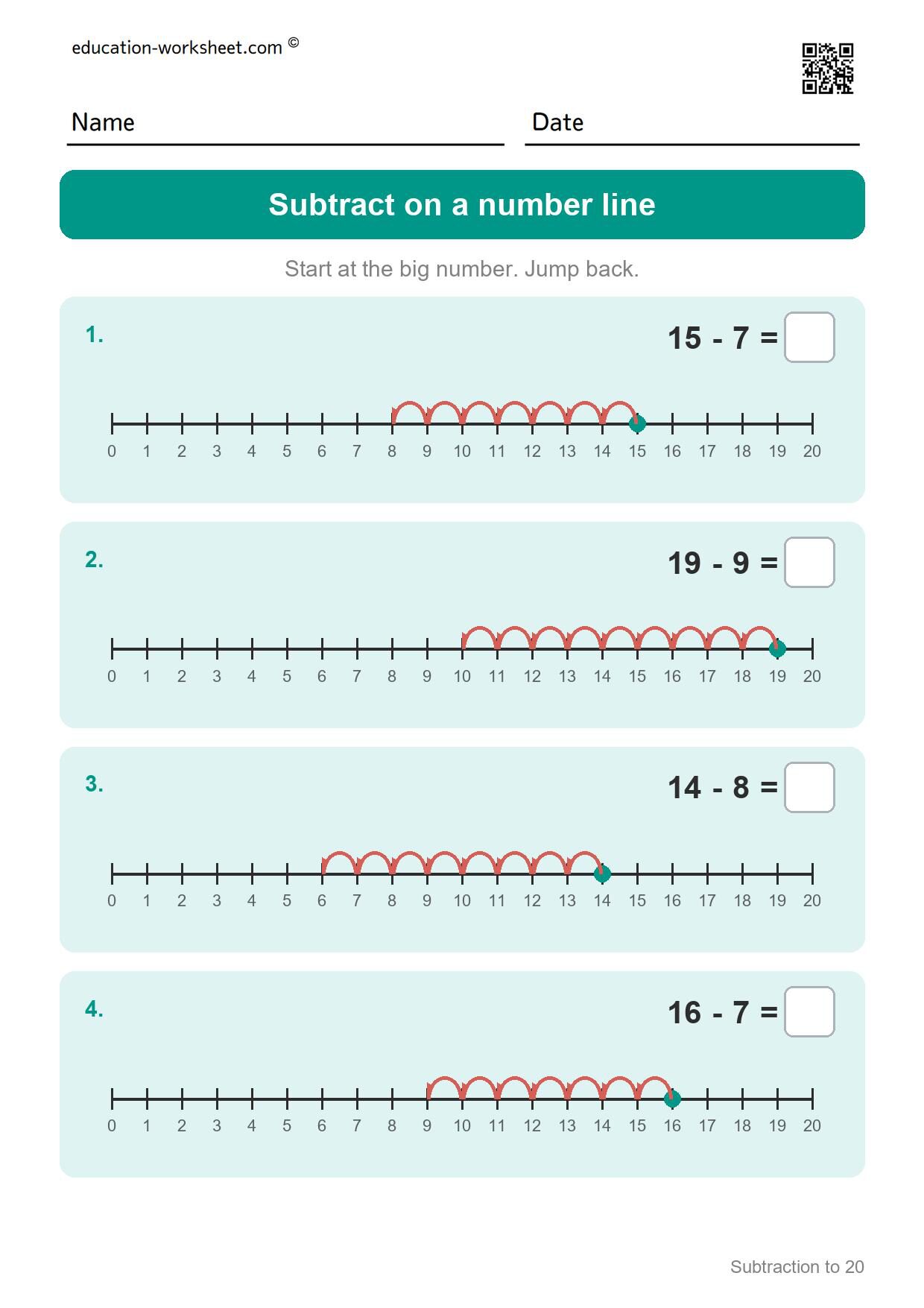
Think addition (Set 11)
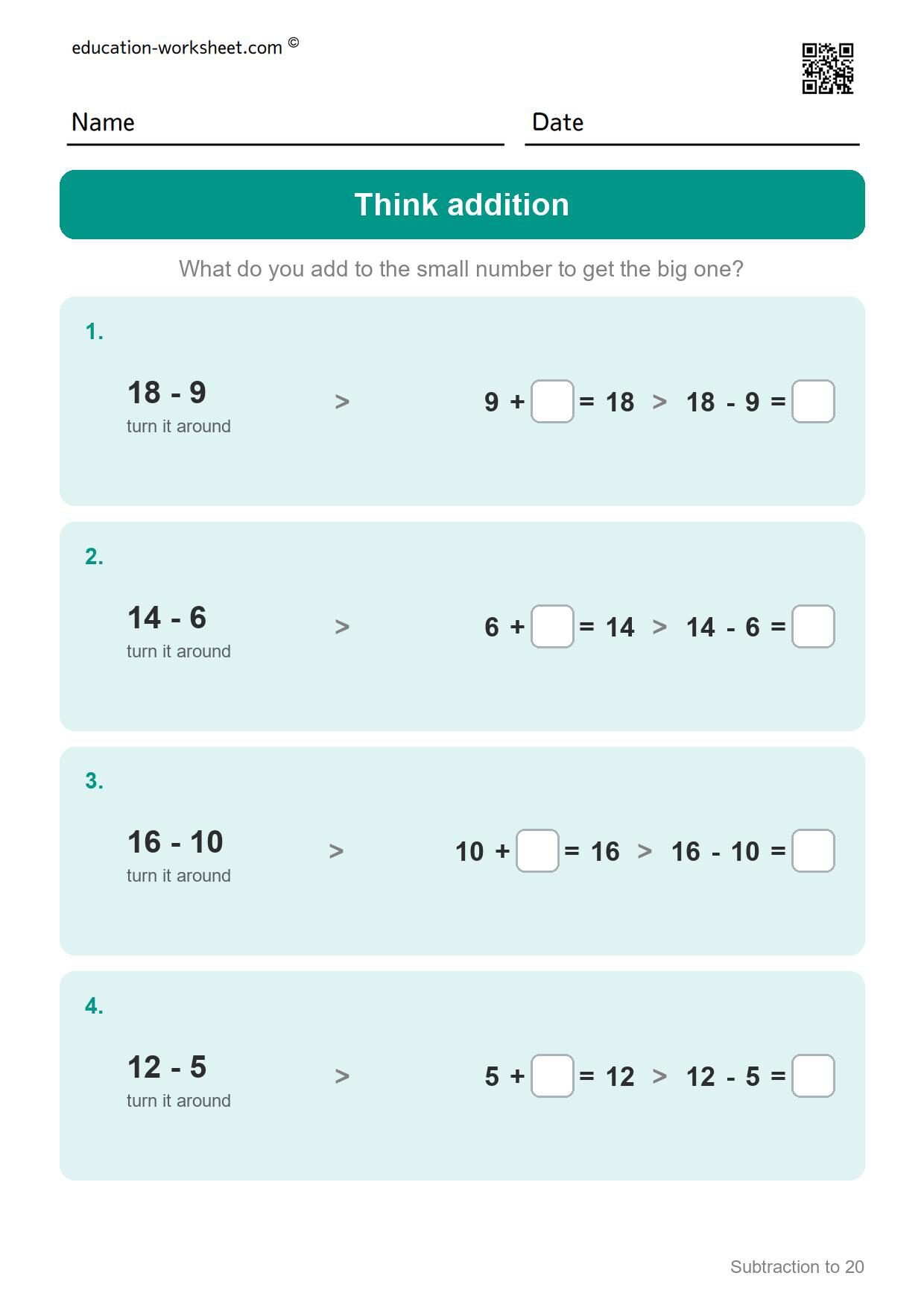
Subtraction practice (Set 12)
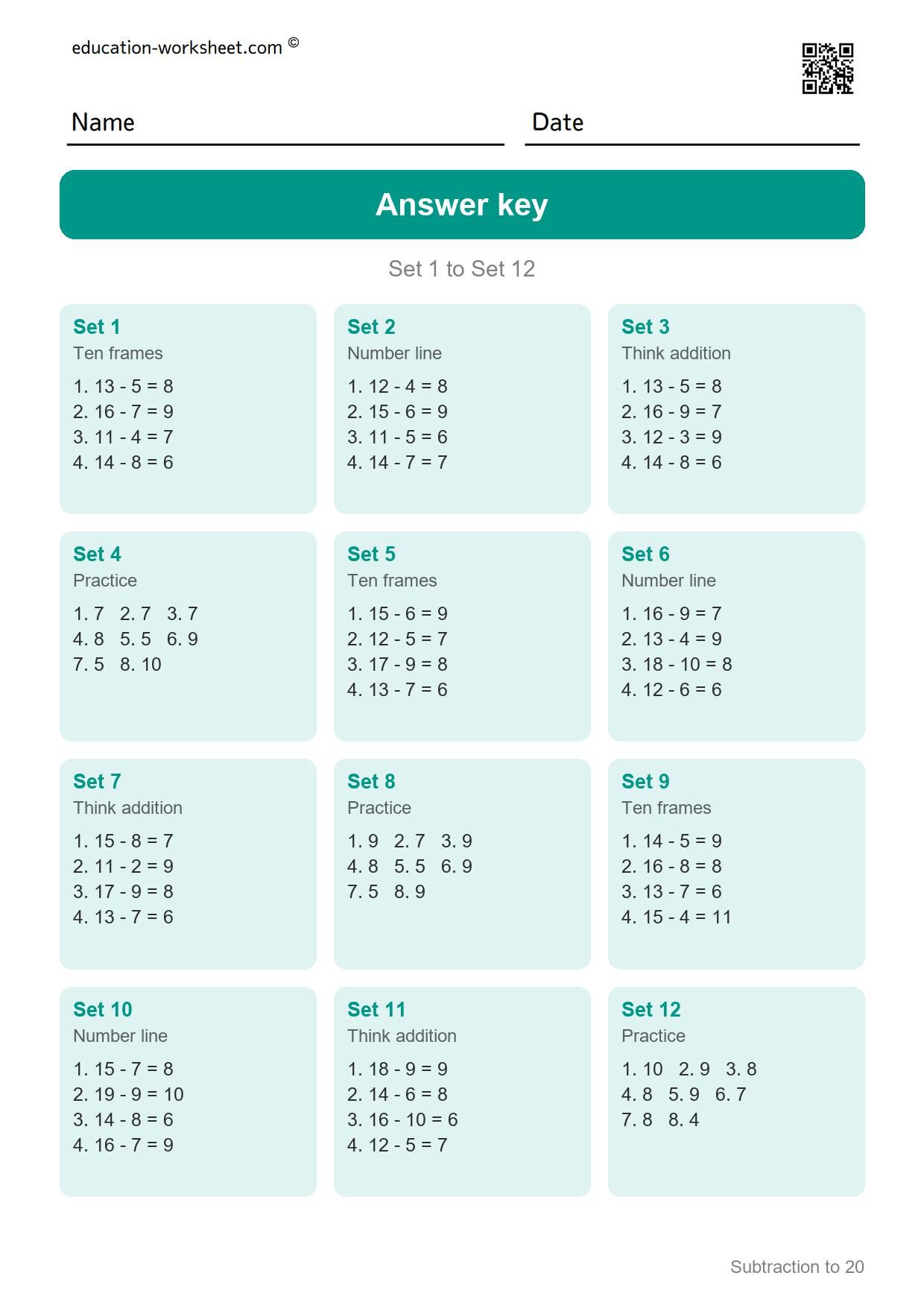
Answer key
Subtracting past ten: two ways to think about 15 minus 7
Subtraction within ten can be handled by counting backwards. Subtraction that crosses ten cannot, because counting back seven from fifteen while keeping track is exactly the kind of task that produces answers one out. First grade needs a strategy instead, and there are two good ones.
What your child is actually learning
The first strategy is going back through ten. For 15 − 7, take away 5 to land exactly on 10, then take away the remaining 2 to reach 8. Ten is a comfortable place to stop and regroup. The second strategy is thinking in addition: instead of asking what 15 − 7 is, ask what you add to 7 to reach 15. Many children find the second much easier, and it is not a lesser method. It is how most adults do it.
How to work through these pages
The ten frames on these pages show the crossed-out counters, so the landing on ten is visible rather than described. Let your child say which strategy they are using before they start, and accept either. If a child consistently prefers thinking in addition, that is a strength to build on rather than a gap to correct, because it is the same understanding seen from the other side.
The mistakes to expect
- Counting back one at a time and losing the place. The answer is usually out by one in either direction.
- Subtracting the wrong way round, turning 7 − 15 into 8. Children who have only ever seen the bigger number first sometimes assume order does not matter.
- Stopping at ten and forgetting the second step, giving 10 as the answer.
- Taking the whole second number off in one go and overshooting past ten by miscounting the split.
What to teach next
Fact families are the natural next step, because they make the link between the two strategies explicit: the fact that 7 + 8 = 15 and the fact that 15 − 7 = 8 are the same piece of knowledge. After that, word problems ask children to decide which operation a situation calls for, which is the harder skill.
Questions parents ask
Which strategy should I teach first?
Going back through ten, because it mirrors the make ten strategy in addition and keeps the two units connected. Then offer thinking in addition as a second route and let your child choose.
My child can add but subtraction is much harder. Is that normal?
Yes, very. Subtraction is harder for almost every child, partly because counting backwards is genuinely more difficult than counting forwards, and partly because it gets less practice. Expect subtraction to lag behind by some months.
Should we use a number line as well?
It helps, especially for children who find ten frames abstract. A number line makes the jump back to ten visible as a movement, which suits children who think in distances rather than in groups.