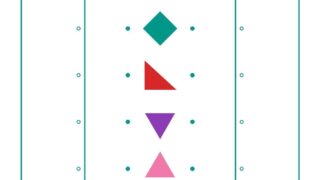
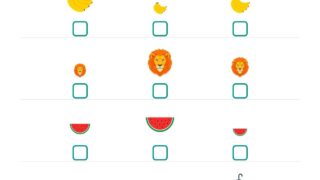
These free printable same or different worksheets give kindergarten children ten pages of odd-one-out practice. Each page holds five rows, each row holds four pictures, and in every row one of the four does not belong.
What makes the pack worth printing is a rule it keeps without ever stating it. In every row, exactly one thing changes. Either the odd picture is a different shape and the same color, or it is the same shape in a different color. It is never both. That holds for all fifty rows.
Six shapes are used – star, heart, diamond, square, circle and triangle – in eight colors. Across the fifty rows, 26 change the shape and 24 change the color, which is as close to half and half as fifty will allow.
- What Is in This Free Same or Different Worksheet Pack
- The 10 Same or Different Worksheets
- Worksheet 1 – 2 Shape Changes, 3 Color Changes
- Worksheet 2 – 2 Shape Changes, 3 Color Changes
- Worksheet 3 – 2 Shape Changes, 3 Color Changes
- Worksheet 4 – 3 Shape Changes, 2 Color Changes
- Worksheet 5 – 3 Shape Changes, 2 Color Changes
- Worksheet 6 – 3 Shape Changes, 2 Color Changes
- Worksheet 7 – 3 Shape Changes, 2 Color Changes
- Worksheet 8 – 3 Shape Changes, 2 Color Changes
- Worksheet 9 – 3 Shape Changes, 2 Color Changes
- Worksheet 10 – 2 Shape Changes, 3 Color Changes
- One Thing Changes, and Only One
- When Children Are Ready for These Worksheets
- How to Use These Worksheets
- Three Things to Watch For
- Printing Tips
- Frequently Asked Questions
- More Free Shape and Color Worksheets
What Is in This Free Same or Different Worksheet Pack
- Ten printable worksheets, five rows on each page.
- Fifty rows in all, four pictures in every row.
- Exactly one difference per row – the shape or the color, never both.
- 26 rows where the shape changes, 24 where the color changes.
- Six shapes and eight colors, with no reading or counting required.
- A separate PDF for every page, free to download and print.
The 10 Same or Different Worksheets
Every page mixes both kinds of difference. No page is all shape or all color; each one has at least two of each. And the odd picture moves around: across the fifty rows it sits first 15 times, second 13, third 13 and fourth 9, so its position cannot be guessed.
Worksheet 1 – 2 Shape Changes, 3 Color Changes
Two rows change the shape and three change the color. The odd one is never in the last position on this page, so a child who works left to right finds it early every time. row 1: the shape changes (picture 2), row 2: the color changes (picture 2), row 3: the shape changes (picture 1), row 4: the color changes (picture 3), row 5: the color changes (picture 3).

Worksheet 2 – 2 Shape Changes, 3 Color Changes
The page opens with a color change and closes with a shape change. Three of the five odd ones sit in the first position, which is the hardest place to spot them: there is nothing before it to compare against. row 1: the color changes (picture 3), row 2: the shape changes (picture 1), row 3: the color changes (picture 3), row 4: the color changes (picture 1), row 5: the shape changes (picture 1).

Worksheet 3 – 2 Shape Changes, 3 Color Changes
Two shape changes then three color changes, in that order. Working down the page, a child switches from asking what is it to asking what color is it, and the switch itself is worth naming out loud. row 1: the shape changes (picture 2), row 2: the shape changes (picture 1), row 3: the color changes (picture 1), row 4: the color changes (picture 1), row 5: the color changes (picture 2).

Worksheet 4 – 3 Shape Changes, 2 Color Changes
The only page where the odd one turns up in all four positions across five rows. Nothing can be predicted from where the last one was. row 1: the color changes (picture 1), row 2: the shape changes (picture 3), row 3: the shape changes (picture 4), row 4: the shape changes (picture 2), row 5: the color changes (picture 2).

Worksheet 5 – 3 Shape Changes, 2 Color Changes
Three shape changes, all in the first three rows, then two color changes to finish. The clearest page in the pack for showing that different can mean two entirely separate things. row 1: the shape changes (picture 1), row 2: the shape changes (picture 1), row 3: the shape changes (picture 3), row 4: the color changes (picture 1), row 5: the color changes (picture 4).

Worksheet 6 – 3 Shape Changes, 2 Color Changes
A color change, then shape, then color, then two shape changes. The odd one is in the second position three times, which is the position children check last. row 1: the color changes (picture 3), row 2: the shape changes (picture 2), row 3: the color changes (picture 2), row 4: the shape changes (picture 1), row 5: the shape changes (picture 2).

Worksheet 7 – 3 Shape Changes, 2 Color Changes
Four of the five odd ones sit in the third or fourth position, so this page rewards looking all the way to the end of the row before deciding. row 1: the color changes (picture 4), row 2: the shape changes (picture 3), row 3: the color changes (picture 2), row 4: the shape changes (picture 3), row 5: the shape changes (picture 4).

Worksheet 8 – 3 Shape Changes, 2 Color Changes
The first row is the closest call in the pack: three yellow shapes and one orange. Yellow and orange sit next to each other and a child scanning quickly will read the row as all the same. row 1: the color changes (picture 4), row 2: the shape changes (picture 3), row 3: the shape changes (picture 4), row 4: the color changes (picture 3), row 5: the shape changes (picture 4).

Worksheet 9 – 3 Shape Changes, 2 Color Changes
Three shape changes and two color changes, with the odd one in the first position three times. A good page to use when you want to talk about checking rather than guessing. row 1: the shape changes (picture 1), row 2: the color changes (picture 2), row 3: the shape changes (picture 1), row 4: the shape changes (picture 1), row 5: the color changes (picture 2).

Worksheet 10 – 2 Shape Changes, 3 Color Changes
The last page finishes with two color changes in a row. By now a child who has worked through the pack has met twenty-six shape changes and twenty-four color changes, which is the point of it. row 1: the shape changes (picture 4), row 2: the color changes (picture 4), row 3: the shape changes (picture 3), row 4: the color changes (picture 3), row 5: the color changes (picture 2).

One Thing Changes, and Only One
Look at fifty rows in a row and the discipline behind them shows. A red star among three red hearts changes only the shape. A teal heart among three yellow hearts changes only the color. Not once in the pack does the odd picture change both at the same time.
That restraint is what makes the question answerable. If a picture were a different shape and a different color, a child could circle it for the wrong reason and nobody would know. Because only one thing moves, the answer to “how is it different?” is always a single word, and that is the question worth asking on every row.
It also means the pack teaches something more useful than spotting. A child who says “that one is a triangle and the rest are squares” is describing a category. A child who says “that one is blue” is describing an attribute. Knowing which one you are looking at is the whole of early sorting, and it is the skill that lets a child later see that b and d are the same shape in different directions.
One page deserves a warning. The first row of page 8 puts one orange shape among three yellow ones. Measured, those two colors are much closer than any other pair in the pack. A child who misses it has not stopped looking; the row is genuinely harder than it appears, and it is worth saying so rather than letting them think they were careless.
When Children Are Ready for These Worksheets
These pages suit children from about three and a half to six. There is nothing to read, nothing to count and nothing to write; a child only has to look and to circle. That makes them among the first worksheets a young child can complete without help.
Odd-one-out is not itself a named Common Core standard. What it feeds is: K.MD.B.3 asks children to classify objects into categories, which is the same act in a different order, and K.G.A.2 asks them to name shapes whatever their size and orientation. Underneath both sits visual discrimination, the plain ability to see that two things are not identical, which is what letter recognition is built on.
How to Use These Worksheets
- Print one page. Five rows is a session for a three or four year old.
- Do the first row together and ask the second question as well as the first: not just which one, but how is it different?
- Insist on the word. “It is a circle and the others are squares”, or “it is blue and the others are yellow”. Pointing is not an answer.
- Let them work down the page alone after that.
- At the end, count how many rows changed the shape and how many changed the color. There are always at least two of each.
Three Things to Watch For
Circling without being able to say why
Very common and not a problem in itself, but it is the difference between spotting and sorting. Ask how it is different every time for the first few rows, then once a page.
Missing a color change after a run of shape changes
Page 5 has three shape changes in a row and then switches to color. A child who has settled into looking at outlines will read the fourth row as all the same. Say “this one might be a color” before they start it.
Yellow against orange
The first row of page 8 is the one genuinely difficult row in the pack. If your child misses it, put a finger over the other three pictures one at a time rather than telling them the answer.
Printing Tips
- Choose Actual size or Fit to page in the print dialog – both keep the page in proportion.
- Each page fills one sheet and works on US Letter and A4 paper.
- Ordinary copier paper is fine. Card is only worth it if you want the page to survive an eraser.
- Print this pack in color. Almost half the rows change only the color, and in grayscale those twenty-four rows have no answer at all.
- A plastic wallet and a dry-wipe pen make a page reusable, but the answers are quickly remembered, so space the repeats out.
Frequently Asked Questions
What age are these same or different worksheets for?
About three and a half to six years old: preschool, pre-K and kindergarten.
What is different about the odd picture?
Either its shape or its color, and never both. That rule holds for all fifty rows in the pack.
How many rows change the shape and how many change the color?
26 change the shape and 24 change the color. Every page has at least two of each.
Can I print these in black and white?
We would not. Twenty-four of the fifty rows are color changes, and in grayscale those rows stop having an answer.
Is there an answer key?
None is needed. The odd one is visible once you look, and asking your child to say how it is different is a better check than any key.
Do I need to sign up to download these?
No. Every PDF downloads immediately, with no account, no email address and no cost.
Can I use these in my classroom?
Yes, they are free to print for home and classroom use. Please do not sell them or re-host the files elsewhere.
More Free Shape and Color Worksheets
- Free Same Shape Worksheets for Kindergarten – Match Shapes of Any Size
- Free Shape Recognition Worksheets for Kindergarten – Circle All the Shapes
- Free Sorting Worksheets for Kindergarten – Sort by Color and Shape
- Free Color Recognition Worksheets for Preschool – Find the Same Color
- Free Shadow Matching Worksheets for Kindergarten – Match Shadows
- Free 2D Shapes Worksheets for Kindergarten – Count Sides and Corners