These free printable before and after number worksheets give preschool and kindergarten children ten pages of practice with number order from 1 to 12. Each page shows three boxes in a row. The middle one holds a number; the child writes the number that comes before it in the left box and the one that comes after it in the right box.
A number line from 1 to 12 is printed along the bottom of every page. It is there on purpose, and using it is not cheating. A child who reads the answer off the line is doing exactly what the line is for, and the reading itself teaches the order – the support falls away on its own once the sequence is known.
- What Is in This Free Before and After Worksheet Pack
- The 10 Before and After Worksheets
- Why the Pack Starts at 2 and Stops at 11
- “Before” Is the Hard Half
- When Children Are Ready for These Worksheets
- How to Use These Worksheets
- Three Things to Watch For
- Printing Tips
- Frequently Asked Questions
- More Free Number Order Worksheets
What Is in This Free Before and After Worksheet Pack
- Ten printable worksheets, one number on each page.
- The numbers 2 to 11, so every page has a real answer in both boxes.
- Three large boxes per page, sized for a young hand.
- A number line from 1 to 12 printed at the foot of every page.
- Arrows between the boxes showing which way the sequence runs.
- A separate PDF for every page – no sign-up, no email address, no cost.
The 10 Before and After Worksheets
The pages run from 2 up to 11. One page is a complete session for most five year olds.
Before and After 2
The gentlest page in the pack. Two is the smallest number that has anything before it, which is why the set starts here rather than at one.
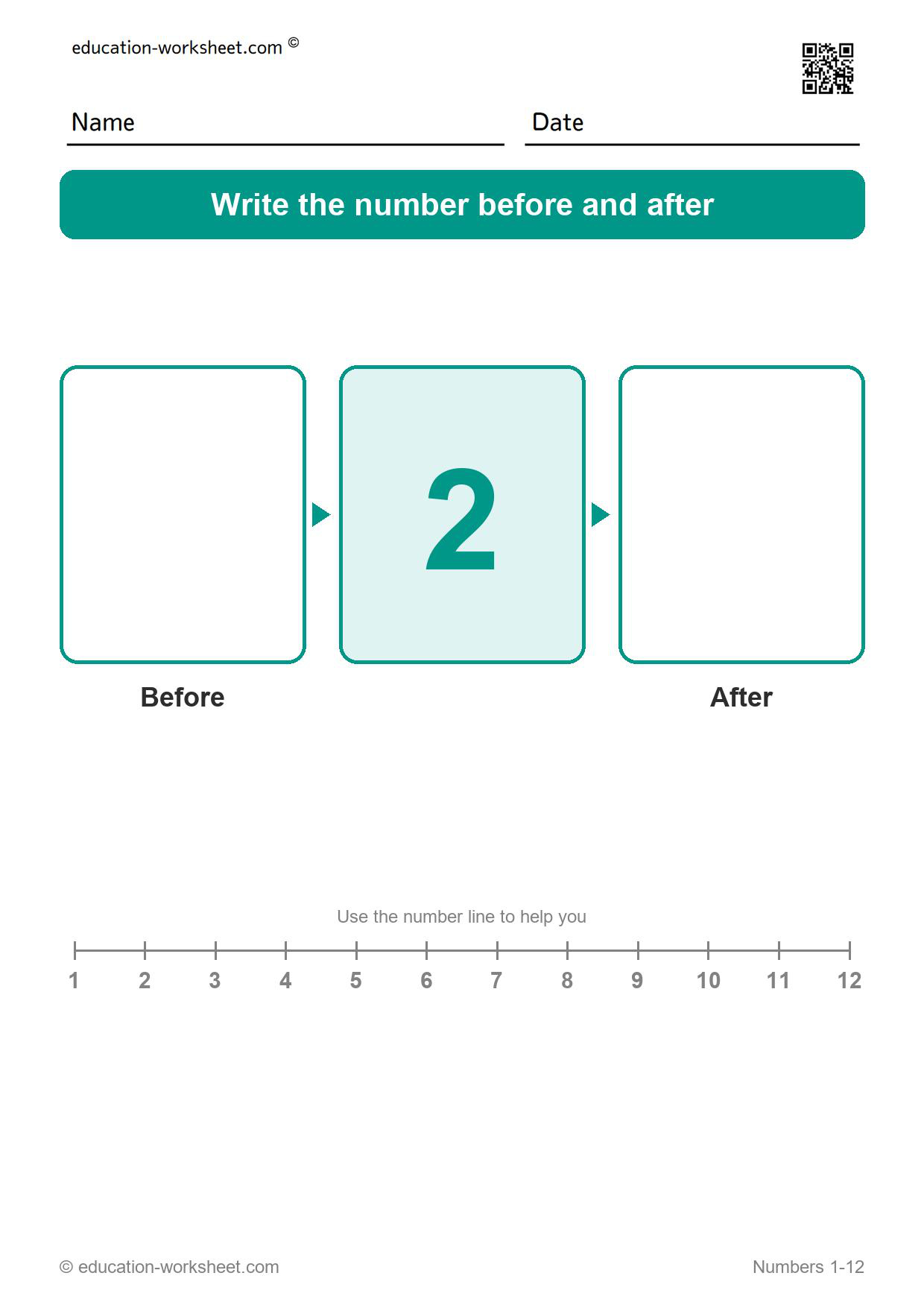
Before and After 3
Three take its place between two and four. Most children answer the after box first and the before box second, and that order is worth allowing.
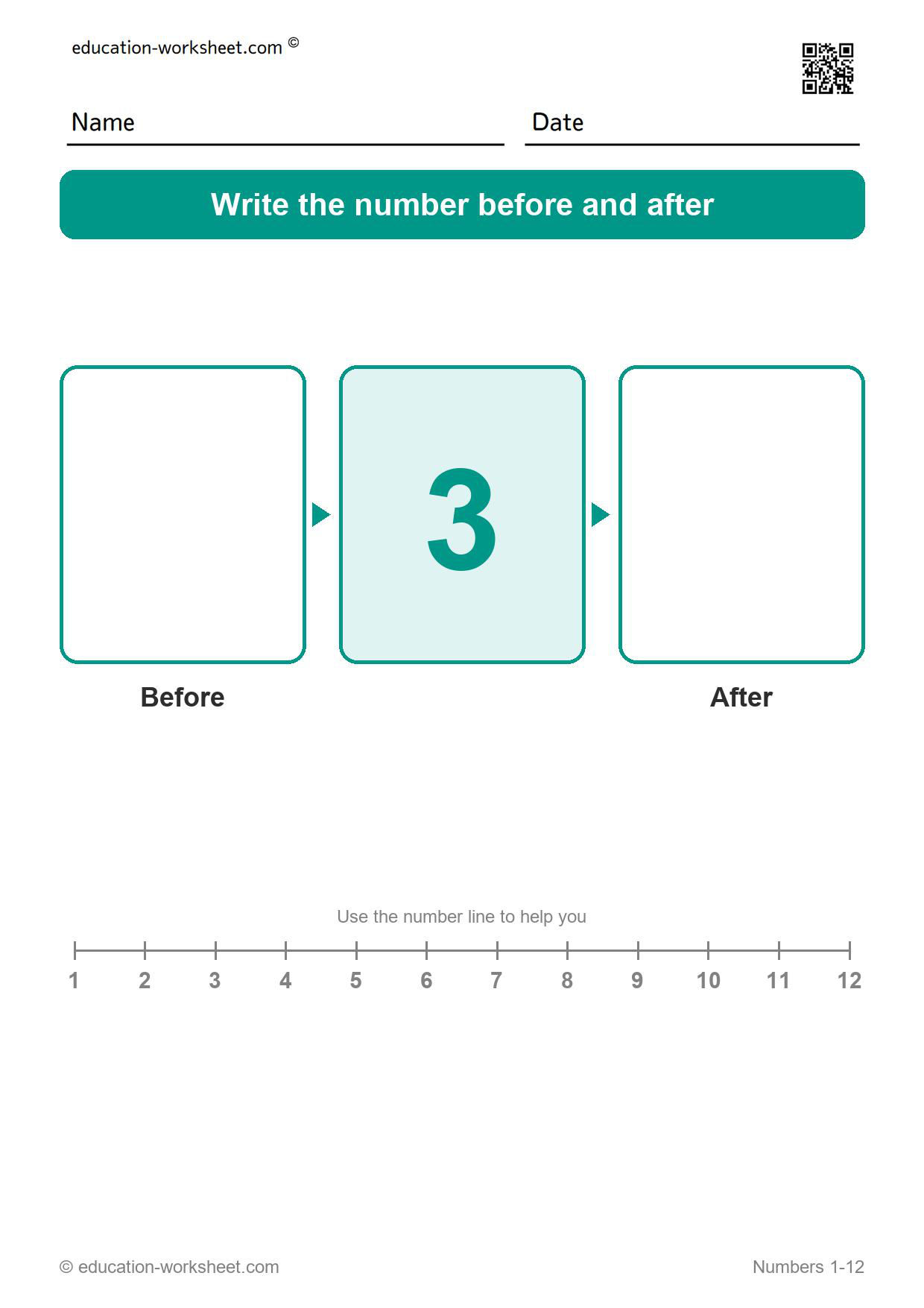
Before and After 4
Four. By this page a child who is reciting from one every time will be doing a lot of counting, which is fine and will fade.
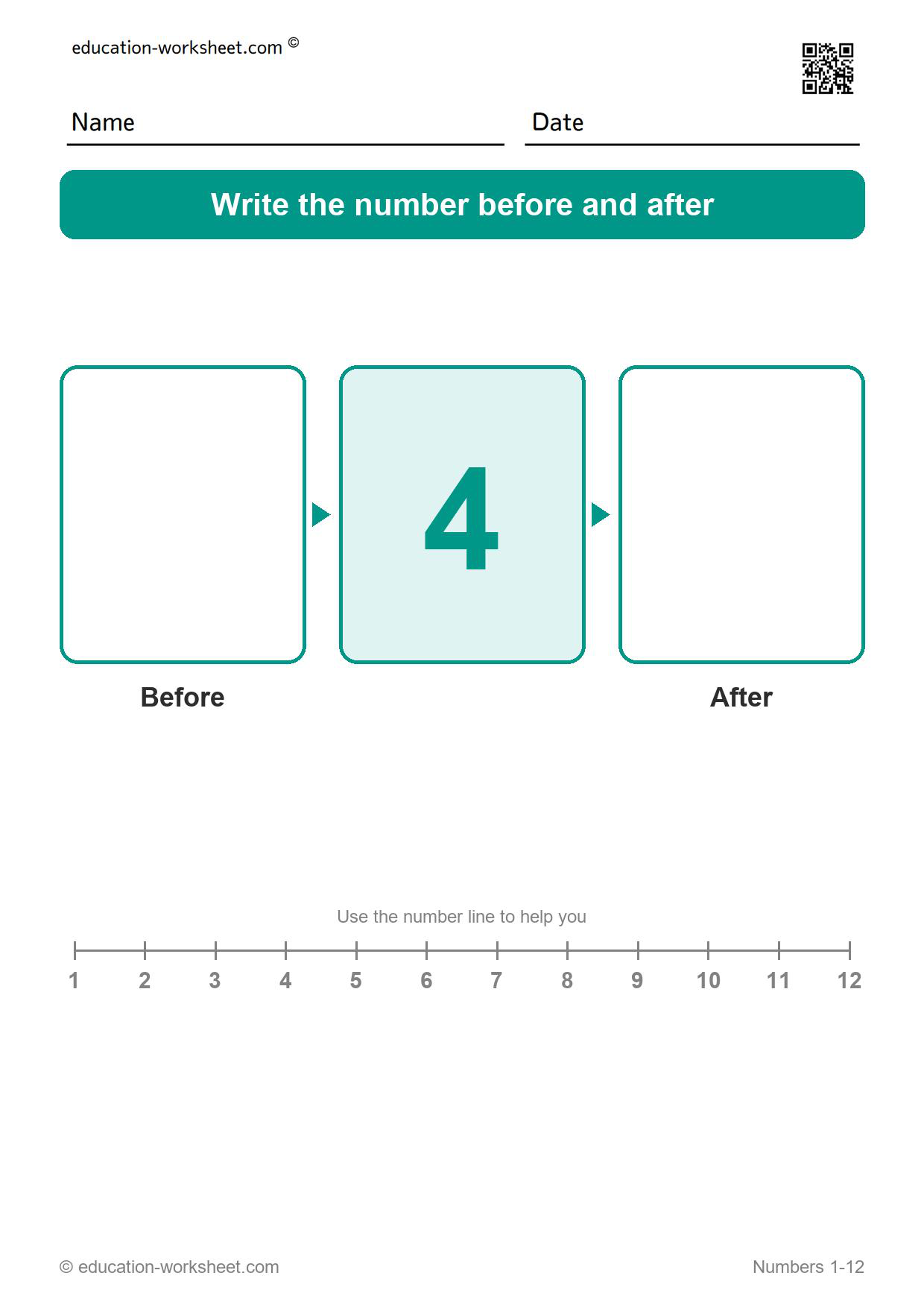
Before and After 5
Five sits in the middle of the number line printed at the bottom of the page, making it an easy one to find.
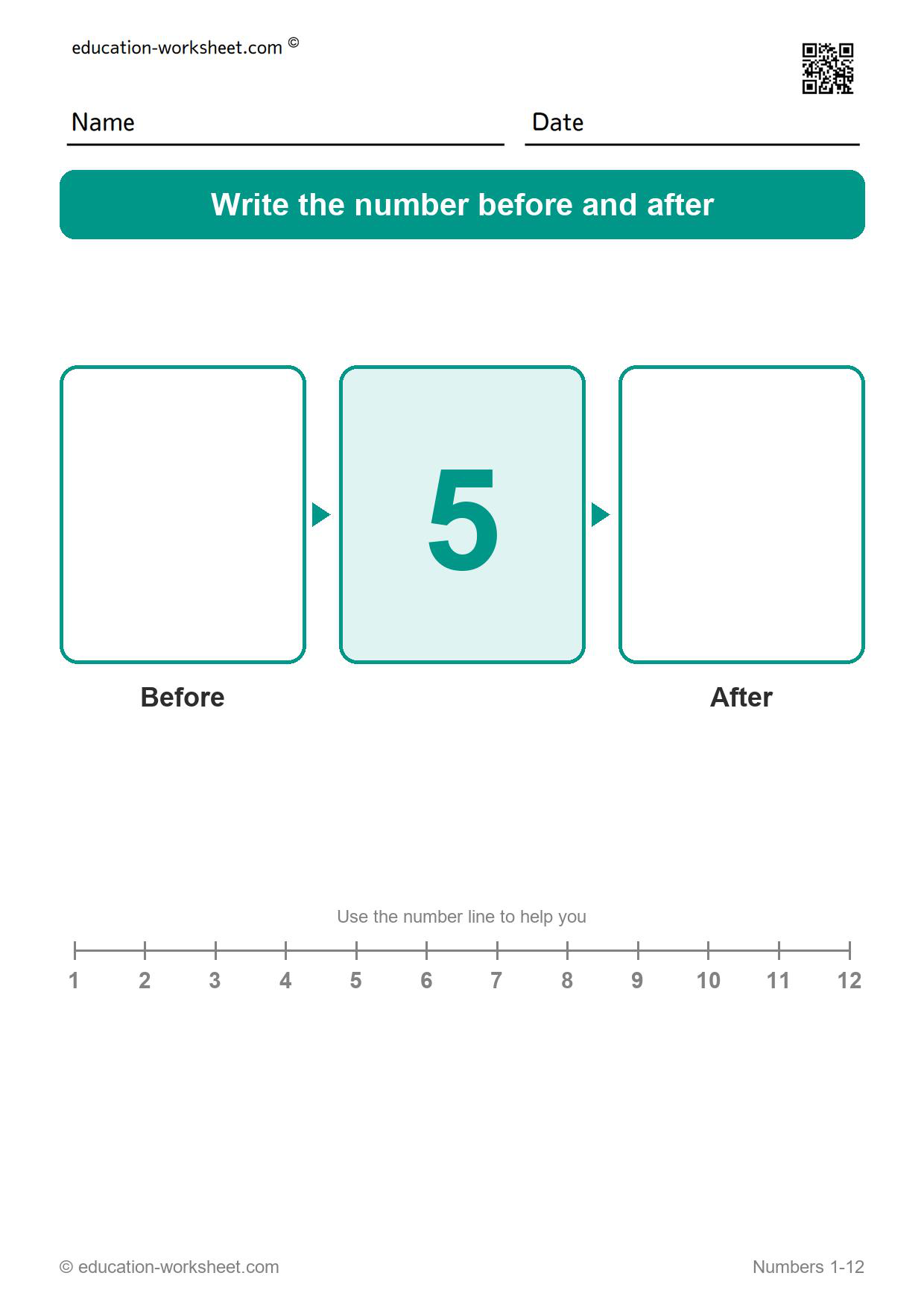
Before and After 6
Six. The first page where the before answer, five, is a number children often skip when counting quickly.
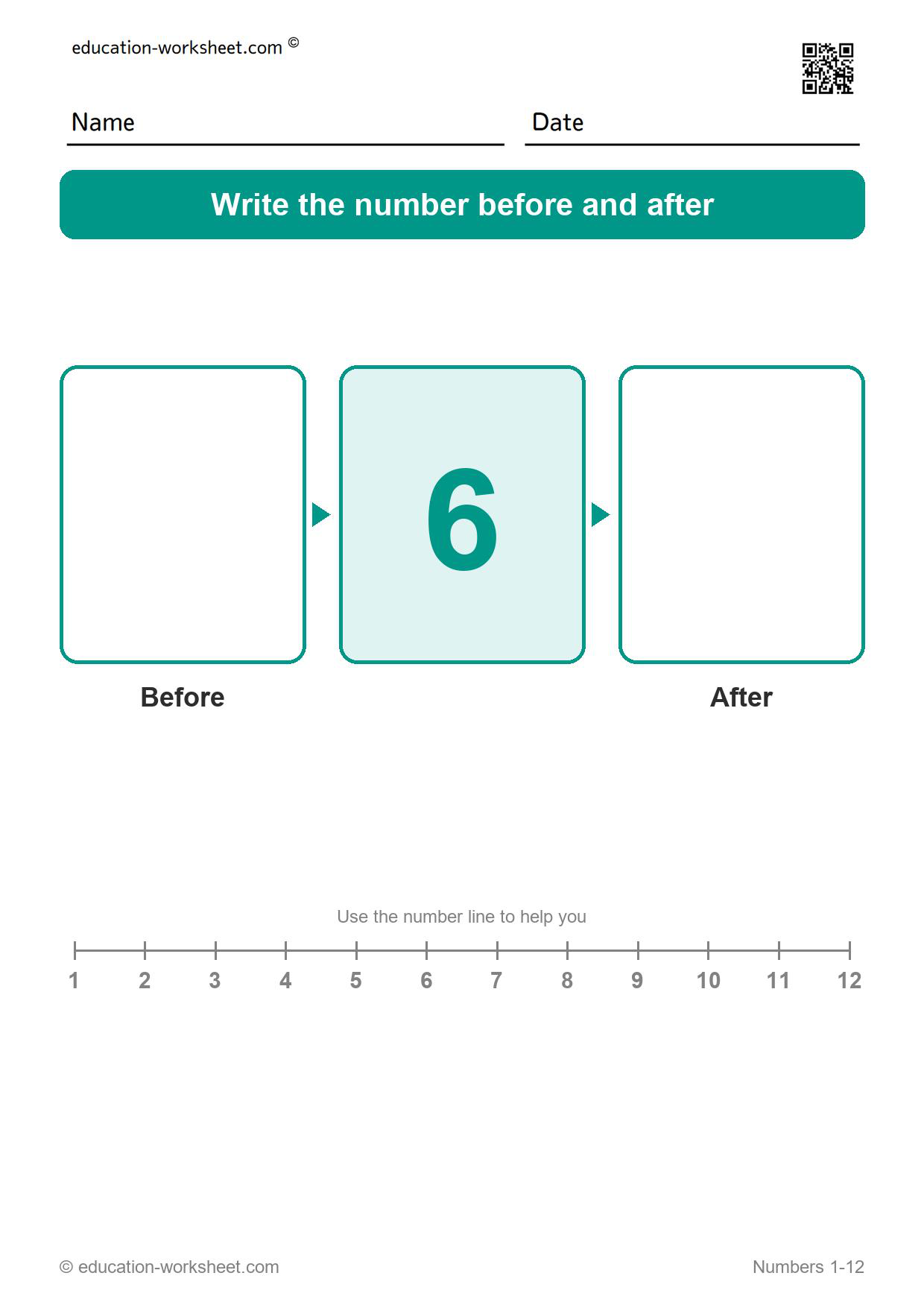
Before and After 7
Seven.
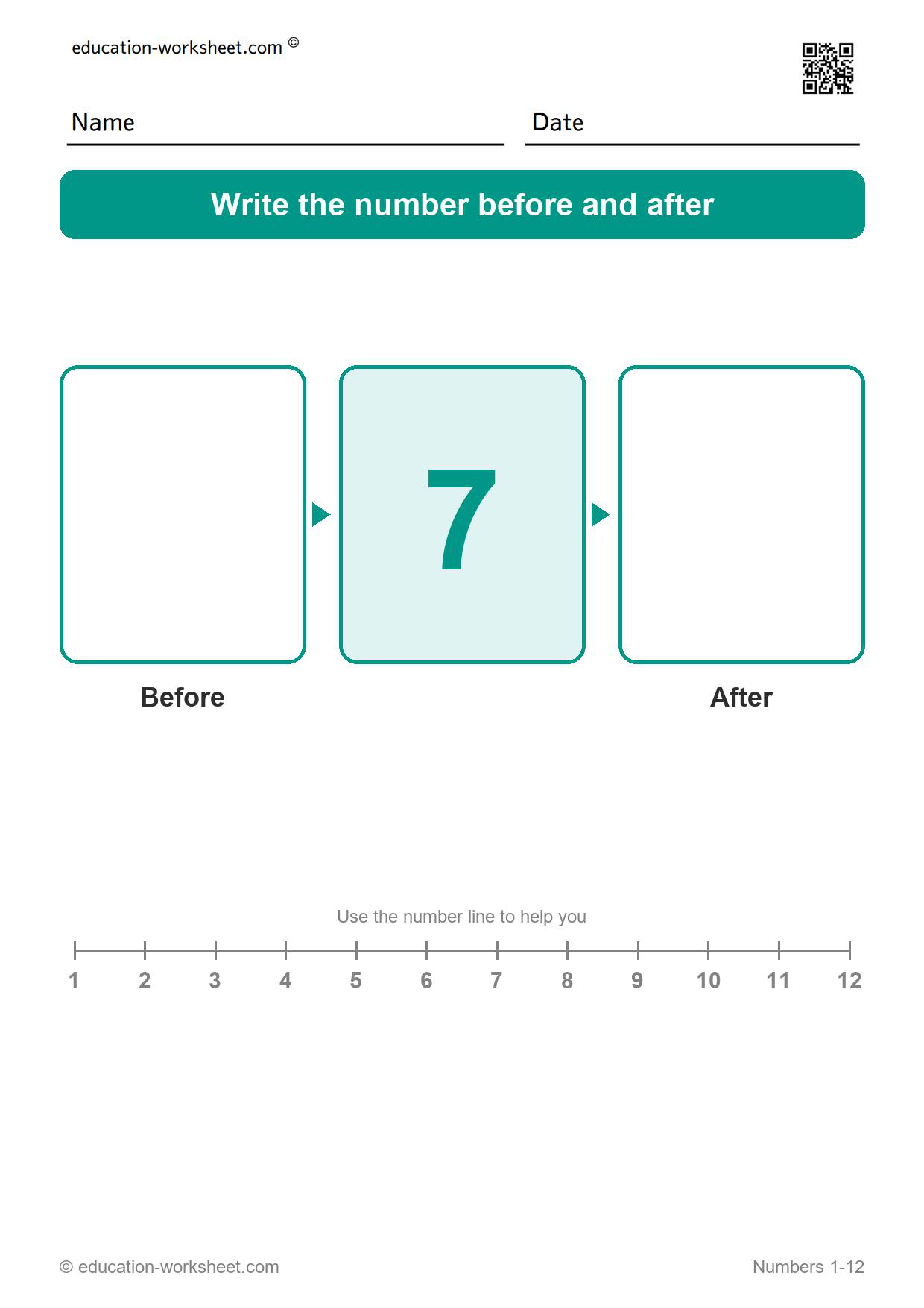
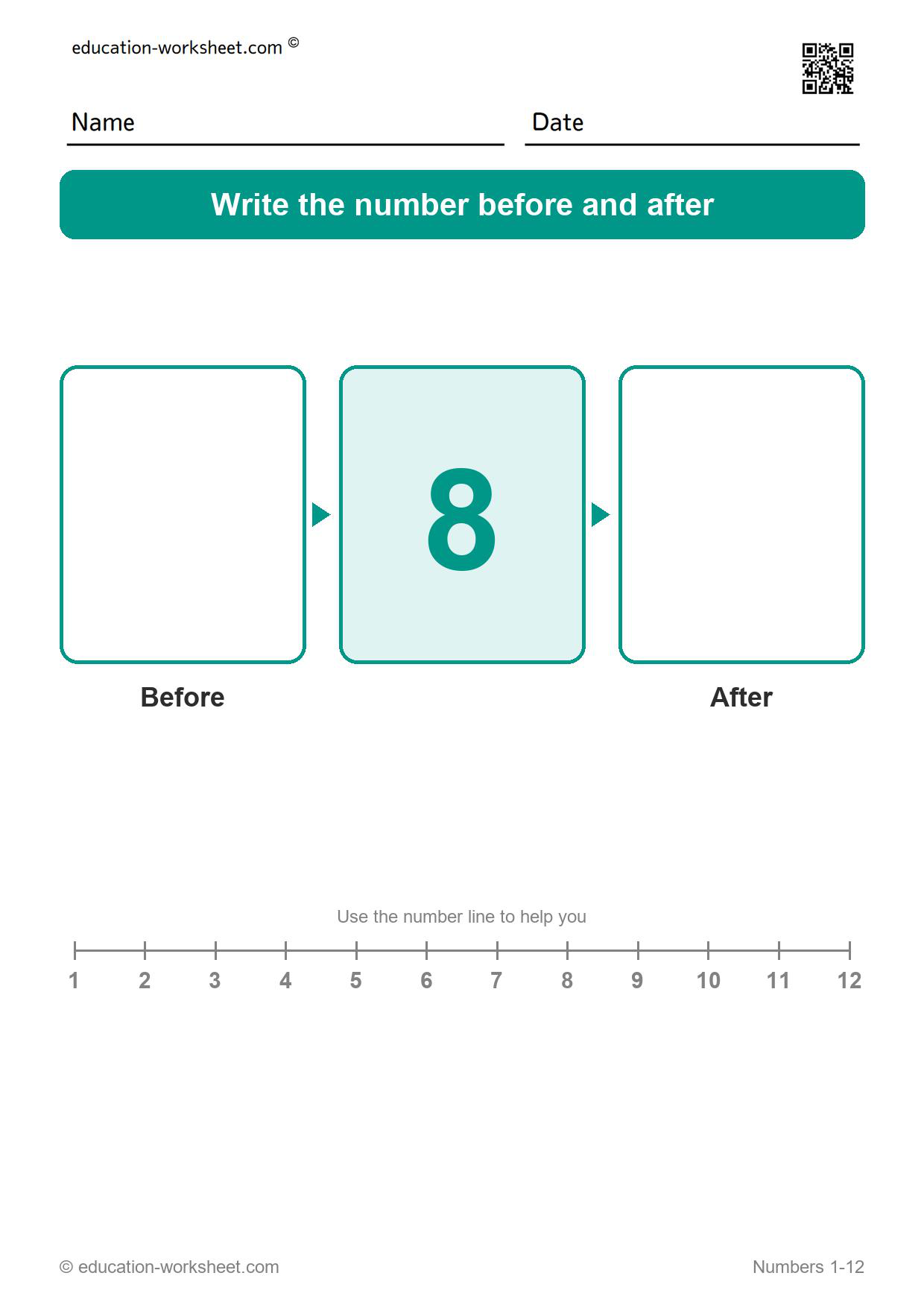
Before and After 8
Eight. Eight and nine are the pair most often swapped when a child is counting backwards.
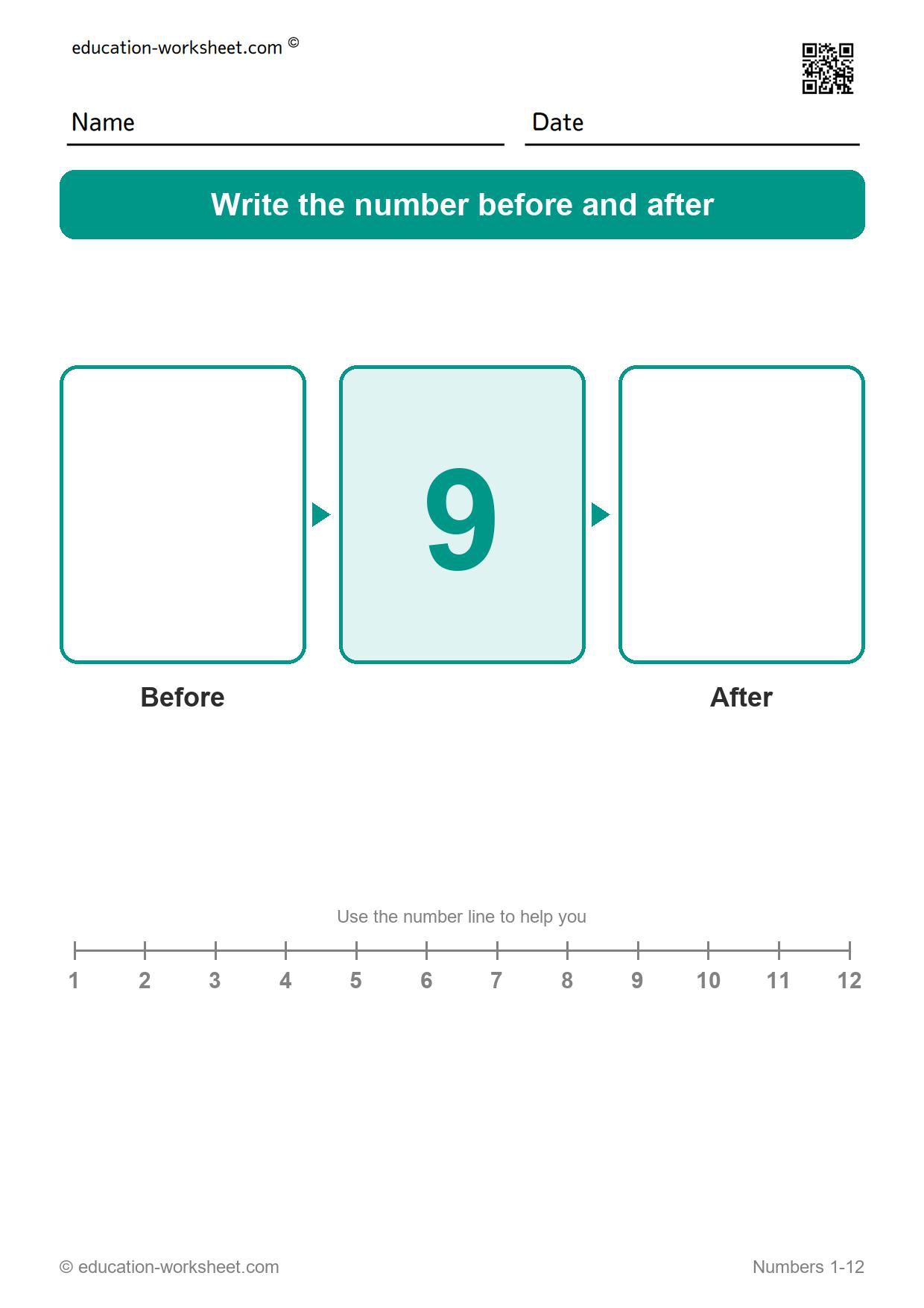
Before and After 9
Nine, with ten on one side. Crossing into double figures is the part children hesitate over.
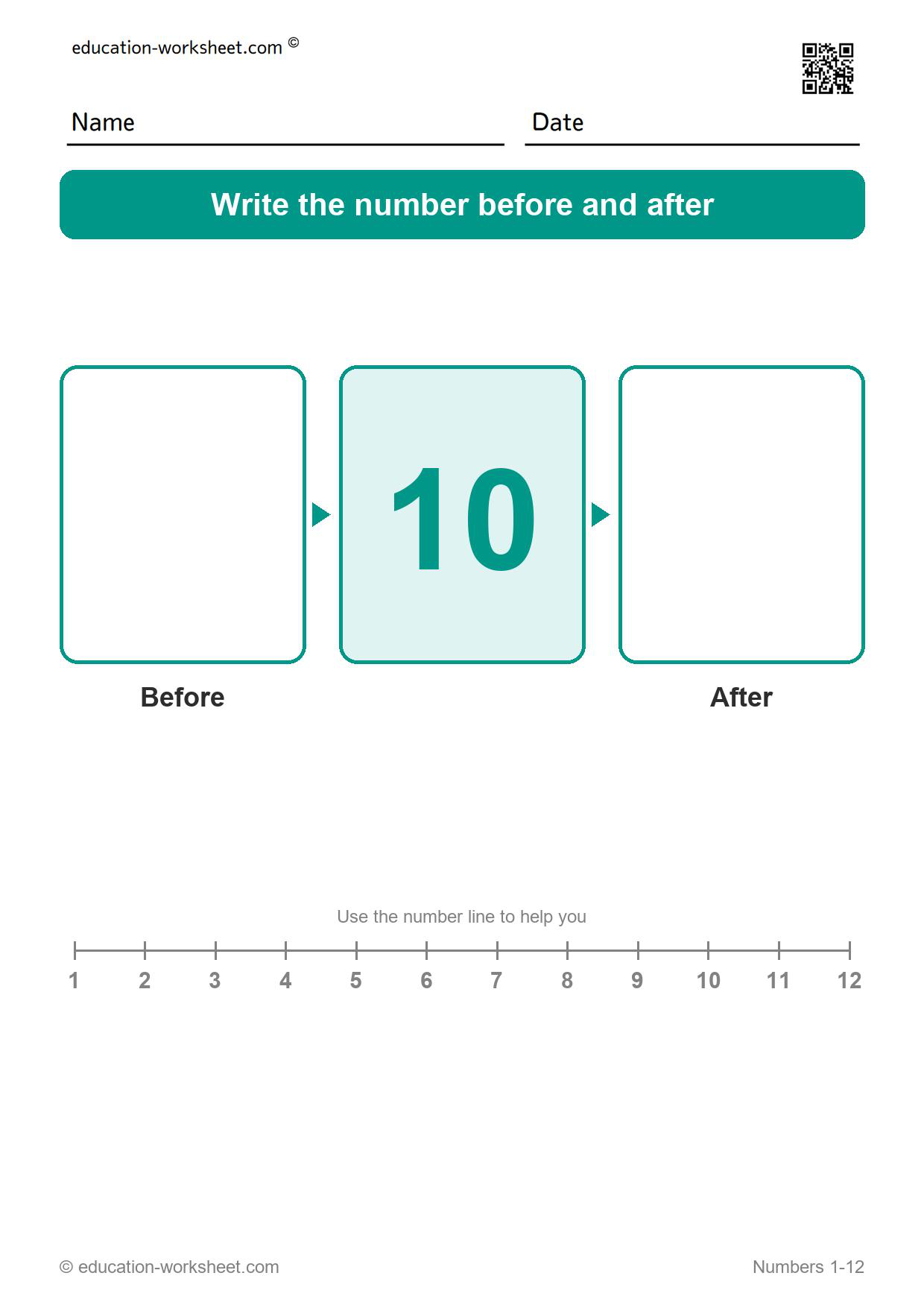
Before and After 10
Ten, with eleven after it. Teen numbers are irregular in English – eleven and twelve give no clue to their value – so this page and the next are genuinely harder than they look.
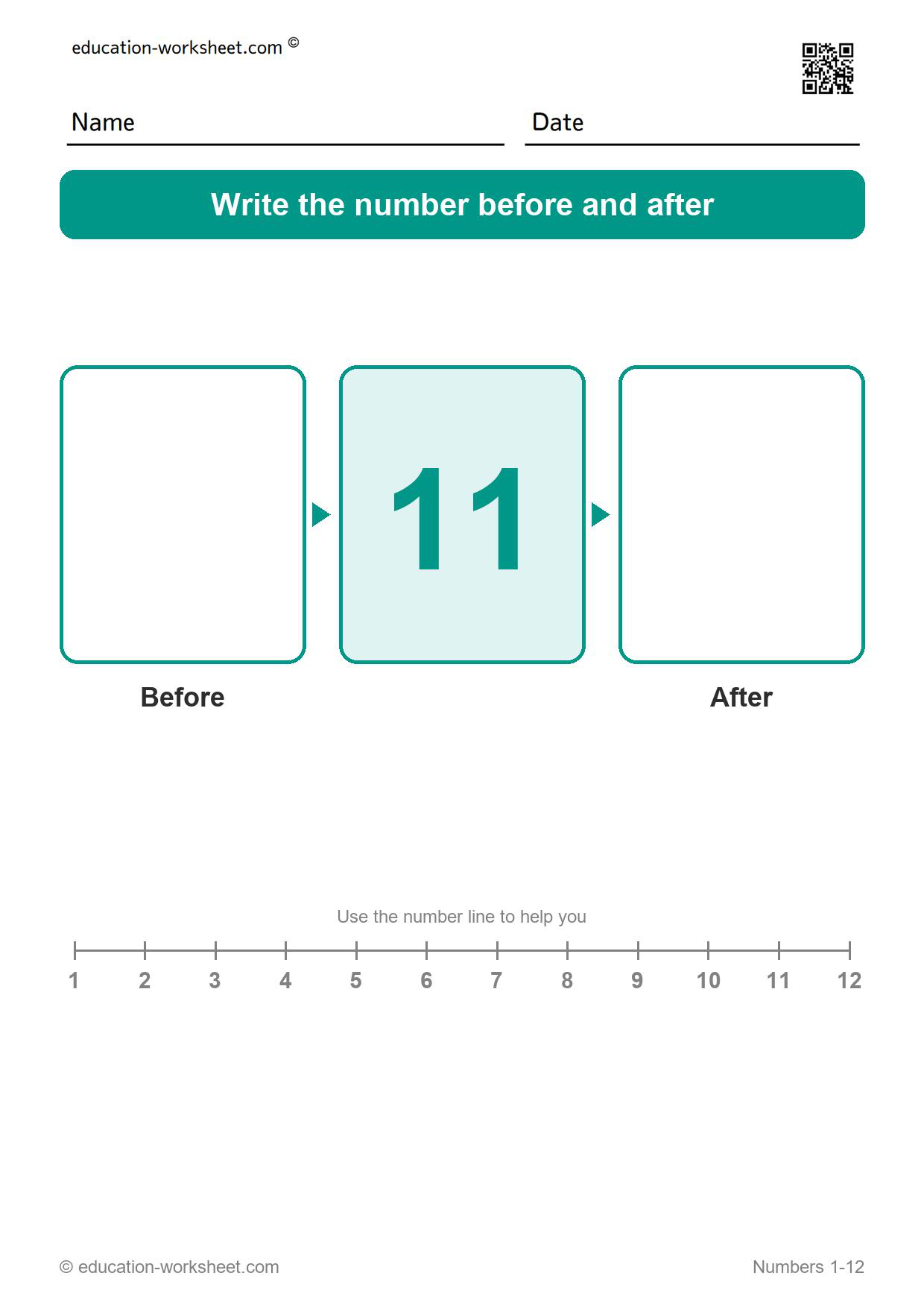
Before and After 11
Eleven, the last page. Both answers are in the teens, and the number line at the foot of the page does most of the work.
Why the Pack Starts at 2 and Stops at 11
Neither end is an accident. One has nothing before it, so a page for the number one would leave a box that cannot honestly be filled in. Twelve is the last number on the printed line, so a page for twelve would ask for an after answer the child cannot check.
Starting at two and stopping at eleven means every box on every page has an answer, and every answer can be found on the page itself. It is a small thing, but a worksheet that quietly asks the impossible is worse than no worksheet at all.
“Before” Is the Hard Half
Children learn to count forwards long before they can count backwards, so the after box is usually answered instantly and the before box needs thought. Many children solve it by counting up from one until they reach the number just below – slow, but completely correct, and not worth discouraging.
If the before box is consistently the problem, practise counting backwards away from paper: from ten down to one while going downstairs, or counting down to something enjoyable. Backwards counting is a skill in itself and it is what makes subtraction possible later.
When Children Are Ready for These Worksheets
These pages suit children from about four and a half to six years old. A child should be able to count to twelve out loud and recognise the written numerals; they do not need to be able to count backwards, because that is the thing being taught.
In American classrooms this is kindergarten counting work: counting forward from a given number instead of always starting at one (Common Core K.CC.A.2), together with writing the numerals (K.CC.A.3).
How to Use These Worksheets
- Print one page and read the number in the middle box out loud.
- Do the after box first if your child wants to. The easy half first builds momentum.
- For the before box, point at the number line and let them find the number and look left.
- Read the finished row out loud as a sequence: “five, six, seven”.
- Cover the number line on a later page and see whether it is still needed.
Three Things to Watch For
Writing the same number twice
A child who copies the middle number into both boxes has understood the format but not the question. Read the words before and after aloud while pointing at the two boxes.
Going the wrong way on the number line
Left and right are not obvious at five. The arrows between the boxes point the way the numbers grow, and tracing them with a finger usually fixes it.
Reversed numerals
A backwards 3 or 7 is normal well into the school years. Leave it – the number order is what this page is teaching, not the handwriting.
Printing Tips
- Choose Actual size or Fit to page so the boxes stay big enough to write in.
- Each page fills one sheet and works on both US Letter and A4 paper.
- Slip a page into a plastic wallet and use a dry-wipe pen to reuse it with more than one child.
Frequently Asked Questions
What age are these before and after worksheets for?
About four and a half to six years old – pre-K and kindergarten.
Is it alright to use the number line?
Yes. It is printed on the page for exactly that reason, and reading it is part of the learning.
Why is there no page for the number 1?
Because nothing comes before it. Every box in this pack has a real answer.
Which numbers are covered?
The pack covers 2 to 11, with answers ranging from 1 to 12.
Do I need to sign up to download these?
No. Every PDF downloads immediately, with no account, no email address and no cost.
Can I use these in my classroom?
Yes, they are free to print for home and classroom use. Please do not sell them or re-host the files elsewhere.
More Free Number Order Worksheets
- Free Missing Numbers Worksheets 1-20 for Kindergarten
- Free Number Order Worksheets – Ordering Numbers 1 to 20
- Free Connect the Numbers in a Circle Worksheets – Number Order 1 to 12
- Free Number Tracing Worksheets 1-10 – Trace, Count and Write
- Free Counting 1 to 10 Worksheets – Count and Write
- Free Ordinal Numbers Worksheets – First, Second, Third