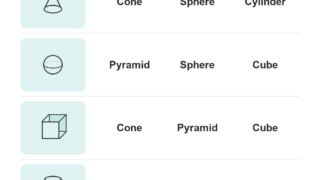
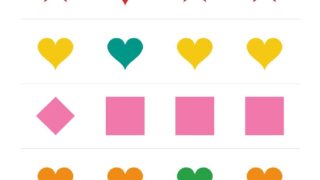
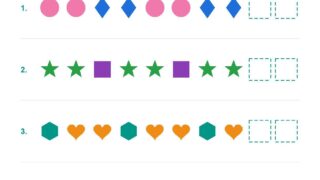
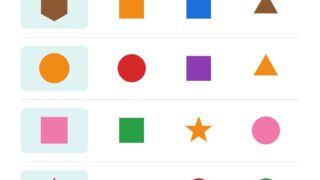
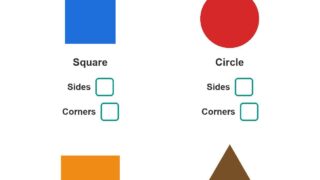
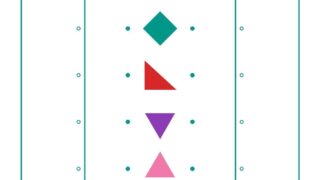
These free printable sorting worksheets give kindergarten children ten pages of classifying practice. Each page is a small table: six pictures run down the left-hand column, two sample pictures head the other two columns, and the child puts a check mark in the column each picture belongs to.
The pages alternate. Pages 1, 3, 5, 7 and 9 say Sort by color. Pages 2, 4, 6, 8 and 10 say Sort by shape. That much is printed at the top. What is not printed is how carefully the two kinds of page are built to stop a child using the wrong clue.
And the arithmetic is fixed: the six pictures always split three and three. Not once in the pack is it four and two. Three check marks in each column means the page is right, which gives a child a way to check their own work.
- What Is in This Free Sorting Worksheet Pack
- The 10 Sorting Worksheets
- Worksheet 1 – Two Colors, One Shape at the Top
- Worksheet 2 – The Color Disappears
- Worksheet 3 – Two Colors That Sit Close Together
- Worksheet 4 – Round Against Pointed
- Worksheet 5 – Hearts, Stars and Diamonds, None of Which Count
- Worksheet 6 – A Circle Against a Diamond
- Worksheet 7 – The Clearest Color Page
- Worksheet 8 – Two Straight-Sided Shapes
- Worksheet 9 – Orange Against Purple
- Worksheet 10 – A Last Page Without Color
- Why the Samples at the Top Look the Way They Do
- When Children Are Ready for These Worksheets
- How to Use These Worksheets
- Three Things to Watch For
- Printing Tips
- Frequently Asked Questions
- More Free Sorting and Shape Worksheets
What Is in This Free Sorting Worksheet Pack
- Ten printable worksheets, six pictures to sort on each page.
- Sixty sorting decisions in all.
- Five pages sorting by color and five sorting by shape, alternating.
- Always three pictures in each column, on every page.
- A check-mark table, so no drawing or writing is needed.
- A separate PDF for every page, free to download and print.
The 10 Sorting Worksheets
The sample pictures at the top of the table are the cleverest part of the pack, and the easiest to look past. On the color pages both samples are circles. On the shape pages both samples are drawn as outlines, with no color at all. Each kind of page removes the other attribute from the header, so the wrong clue is simply not available.
Worksheet 1 – Two Colors, One Shape at the Top
Both sample pictures in the header are circles. Only their color differs, so a child cannot sort by shape even if they want to. Six items go into the two columns, three in each. Sort by color: purple and yellow. Three pictures go in each column.

Worksheet 2 – The Color Disappears
The two samples are drawn as outlines with nothing inside them. The items below are still colored, but the header offers no color to match, so the only thing left to sort by is the shape. Sort by shape: circles and stars. Three pictures go in each column.

Worksheet 3 – Two Colors That Sit Close Together
Blue and purple are the closest pair in the pack, which makes this the hardest of the five color pages. The items include hearts, diamonds, triangles and squares, and none of that matters. Sort by color: blue and purple. Three pictures go in each column.

Worksheet 4 – Round Against Pointed
The easiest of the shape pages: a circle and a triangle have nothing in common at a glance. Good for a first attempt at sorting without color. Sort by shape: circles and triangles. Three pictures go in each column.

Worksheet 5 – Hearts, Stars and Diamonds, None of Which Count
Five different shapes appear among the six items and every one of them is a distraction. A child who starts naming shapes on this page has misread the header. Sort by color: purple and green. Three pictures go in each column.

Worksheet 6 – A Circle Against a Diamond
Both samples are outlines again. The diamonds here come in three different colors, which is the point: the color is noise and the shape is the signal. Sort by shape: circles and diamonds. Three pictures go in each column.

Worksheet 7 – The Clearest Color Page
Yellow against blue is the widest color gap in the pack, so this page runs quickly. Useful when you want the sorting itself to be the difficulty rather than the telling apart. Sort by color: yellow and blue. Three pictures go in each column.

Worksheet 8 – Two Straight-Sided Shapes
The hardest shape page, because a square and a triangle are both made of straight lines and corners. Counting the corners out loud is the way through it. Sort by shape: squares and triangles. Three pictures go in each column.

Worksheet 9 – Orange Against Purple
Hearts appear three times on this page in two different colors, which catches children who have started sorting by what the picture is rather than what color it is. Sort by color: orange and purple. Three pictures go in each column.

Worksheet 10 – A Last Page Without Color
The pack ends on shape, with the colors as mixed as they have been anywhere. If your child can do this page, they can hold one attribute in mind and ignore another. Sort by shape: circles and diamonds. Three pictures go in each column.

Why the Samples at the Top Look the Way They Do
Put a color page and a shape page next to each other and the design shows itself.
On Sort by color pages, the two samples in the header are both circles. One is purple, the other yellow; one is blue, the other purple. The shape is held still so that it carries no information, and a child looking for a shape to match finds the same one twice.
On Sort by shape pages, the two samples are drawn as plain outlines with nothing inside them. A circle and a star, a square and a triangle. There is no color in the header to match against, even though every picture in the left-hand column is still brightly colored. The color has been taken out of the question, not out of the page.
That is the difference between a sorting worksheet and a good one. Sorting is not about noticing that things are different; it is about choosing which difference to care about and ignoring the rest. A header that offered a colored star would let a child match on either attribute and never have to choose. These do not.
The three-and-three split does a second job. Because it never varies, a child who finishes with four check marks in one column knows something is wrong without being told, and can go back and find it. That is K.MD.B.3 in full: classify objects into categories, then count how many are in each.
When Children Are Ready for These Worksheets
These pages suit children from about four to six. A child is ready when they can name basic colors and shapes. Nothing has to be read: the header is pictures, and the answer is a check mark.
Beyond K.MD.B.3, the shape pages lean on K.G.A.2, naming shapes regardless of size, orientation or color. Sorting by one attribute while ignoring another is also the habit that later makes place value possible, where the same digit means different things depending on which column it is in.
How to Use These Worksheets
- Print one page. Six pictures is a session.
- Point at the two samples in the header and ask what is the same about them and what is different. On a color page the answer is “both circles, different colors”. That sentence is the instruction.
- Work down the left column one picture at a time, saying which column it goes in and why.
- Put the check mark in.
- Count the check marks at the end. Three and three, every time.
Three Things to Watch For
Sorting by the wrong attribute
A child on a shape page who groups all the blue ones together has not misunderstood sorting; they have chosen a different attribute. Point at the header: there is no blue up there to match. The samples answer the question.
Blue against purple on page 3
These are the closest two colors in the pack. If your child hesitates, hold the page up to a window or put a finger on the sample and move it down the column. It is a seeing problem, not a sorting one.
Four check marks in one column
Always a mistake, and one the child can find alone. Ask them to count each column rather than telling them which row is wrong.
Printing Tips
- Choose Actual size or Fit to page in the print dialog – both keep the page in proportion.
- Each page fills one sheet and works on US Letter and A4 paper.
- Ordinary copier paper is fine. Card is only worth it if you want the page to survive an eraser.
- Print the color pages in color. In grayscale, pages 1, 3, 5, 7 and 9 have no answer at all.
- The shape pages survive grayscale, since the header is already only outlines.
- A plastic wallet and a dry-wipe pen turn the table into something reusable, which suits this format well.
Frequently Asked Questions
What age are these sorting worksheets for?
About four to six years old: pre-K and kindergarten.
How many pictures go in each column?
Three and three, on every page. That never changes, so counting the check marks is a reliable check.
Why are the shape samples not colored in?
So that color cannot be used to answer a question about shape. On the color pages the samples are both circles for the same reason, the other way round.
Can I print these in black and white?
The five shape pages, yes. The five color pages, no: the colors are the question.
Is there an answer key?
None is included. The samples at the top of the table are the key, and counting three in each column catches any mistake.
Do I need to sign up to download these?
No. Every PDF downloads immediately, with no account, no email address and no cost.
Can I use these in my classroom?
Yes, they are free to print for home and classroom use. Please do not sell them or re-host the files elsewhere.
More Free Sorting and Shape Worksheets
- Free Same or Different Worksheets for Kindergarten – Odd One Out by Shape or Color
- Free Sort by Size and Color Worksheets for Kindergarten
- Free Sort Shapes by Sides Worksheets for Kindergarten – Count and Classify
- Free Color Recognition Worksheets for Preschool – Find the Same Color
- Free Shape Recognition Worksheets for Kindergarten – Circle All the Shapes
- Free Count and Graph Worksheets for Kindergarten – Picture Graphs