- Free Skip Counting by 3s and 4s Worksheets for Kindergarten
- Skip counting by 3s and 4s: the groundwork for times tables
- What your child is actually learning
- How to work through these pages
- The mistakes to expect
- What to teach next
- Questions parents ask
- Should my child learn threes and fours before fives and tens?
- Is skip counting the same as multiplication?
- My child can chant but cannot use it. What is missing?
- More free worksheets
Free Skip Counting by 3s and 4s Worksheets for Kindergarten
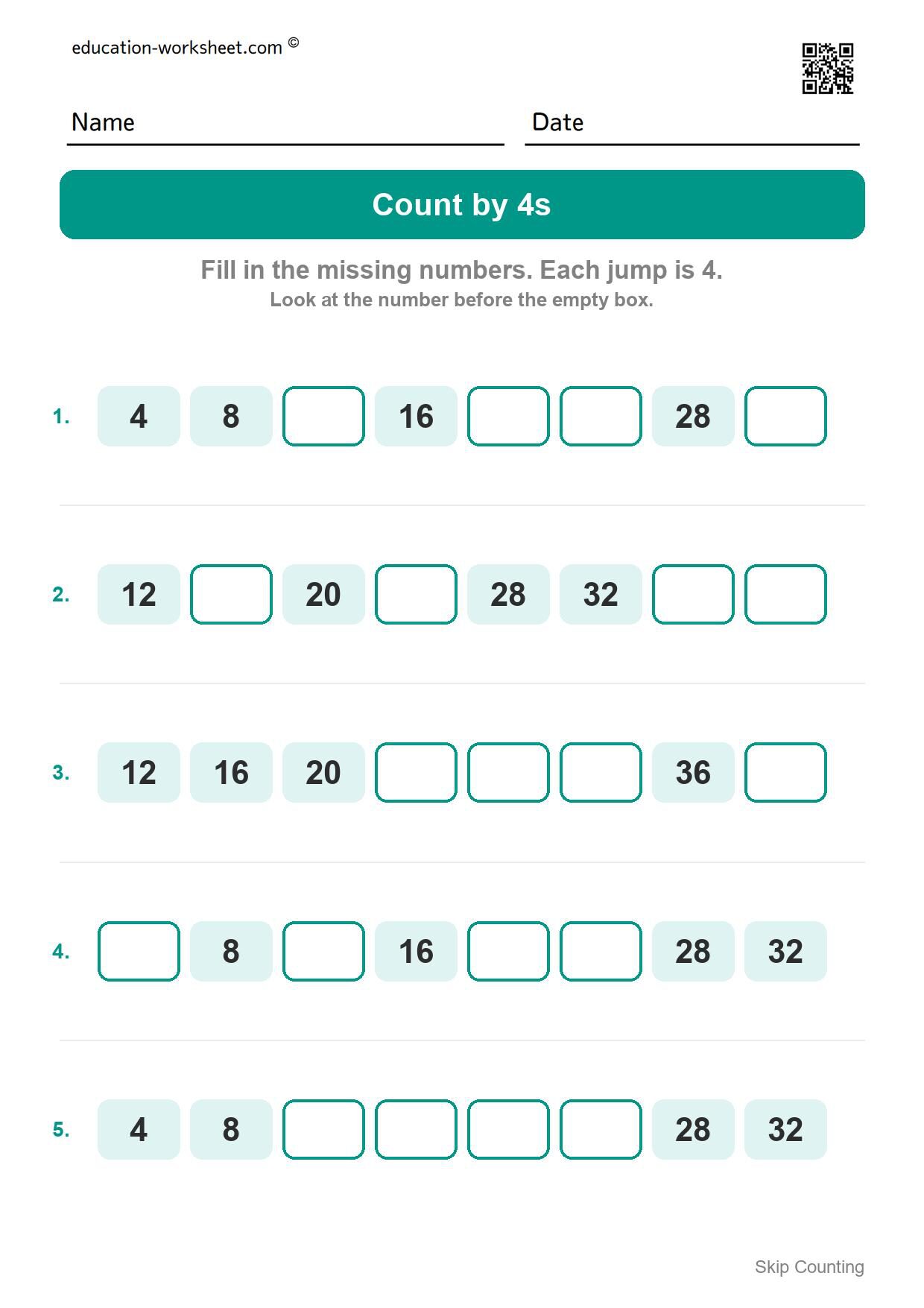
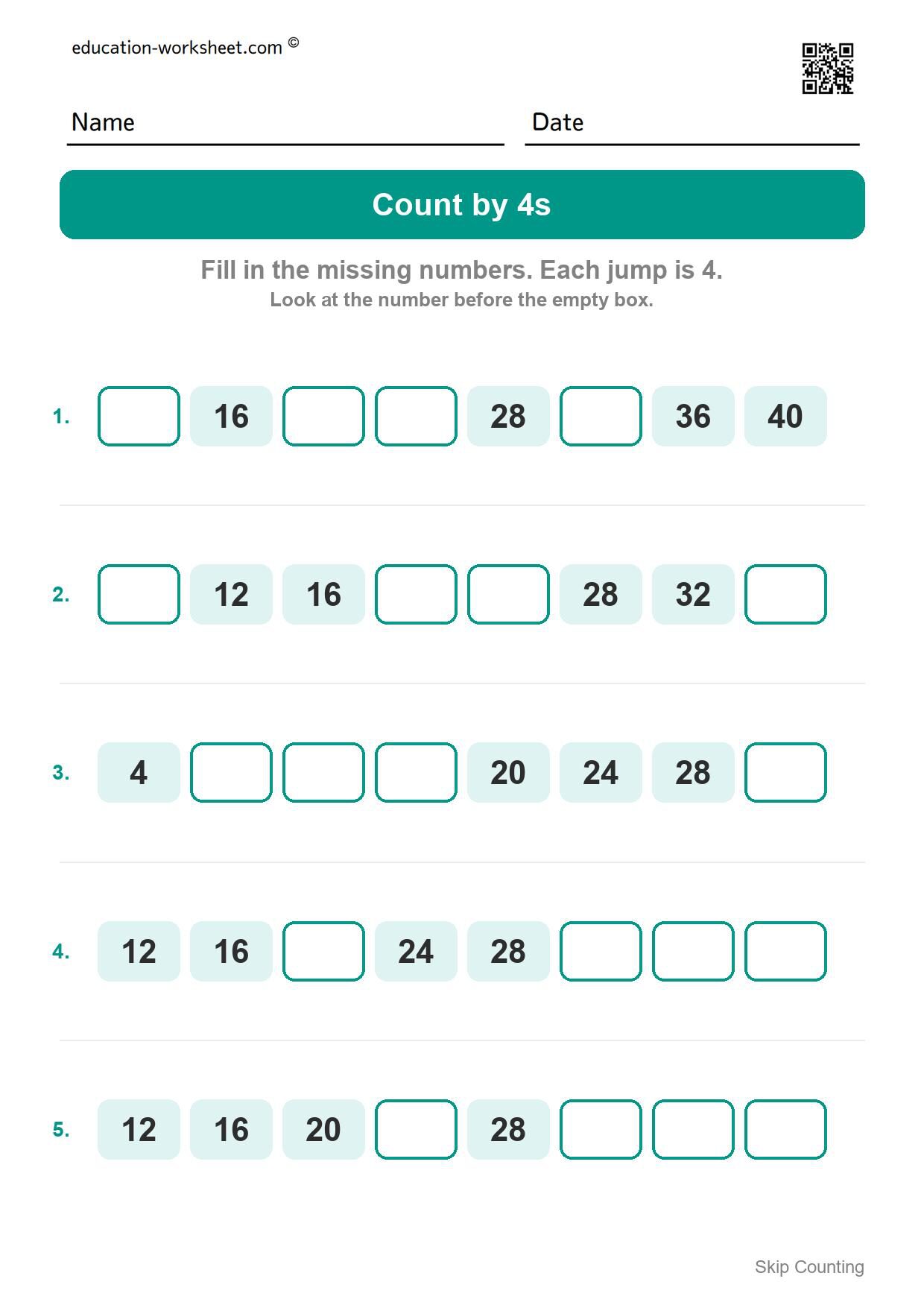
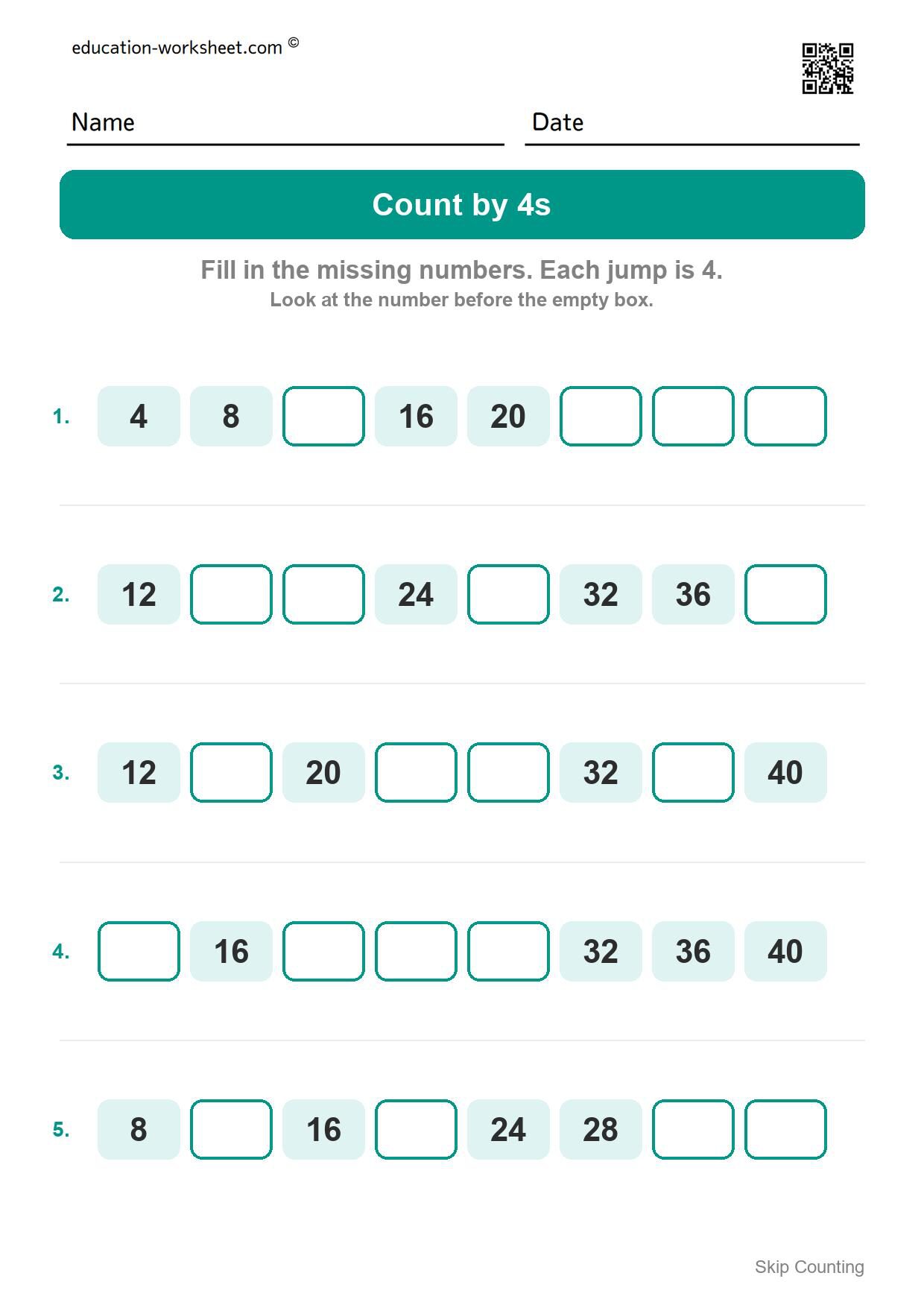
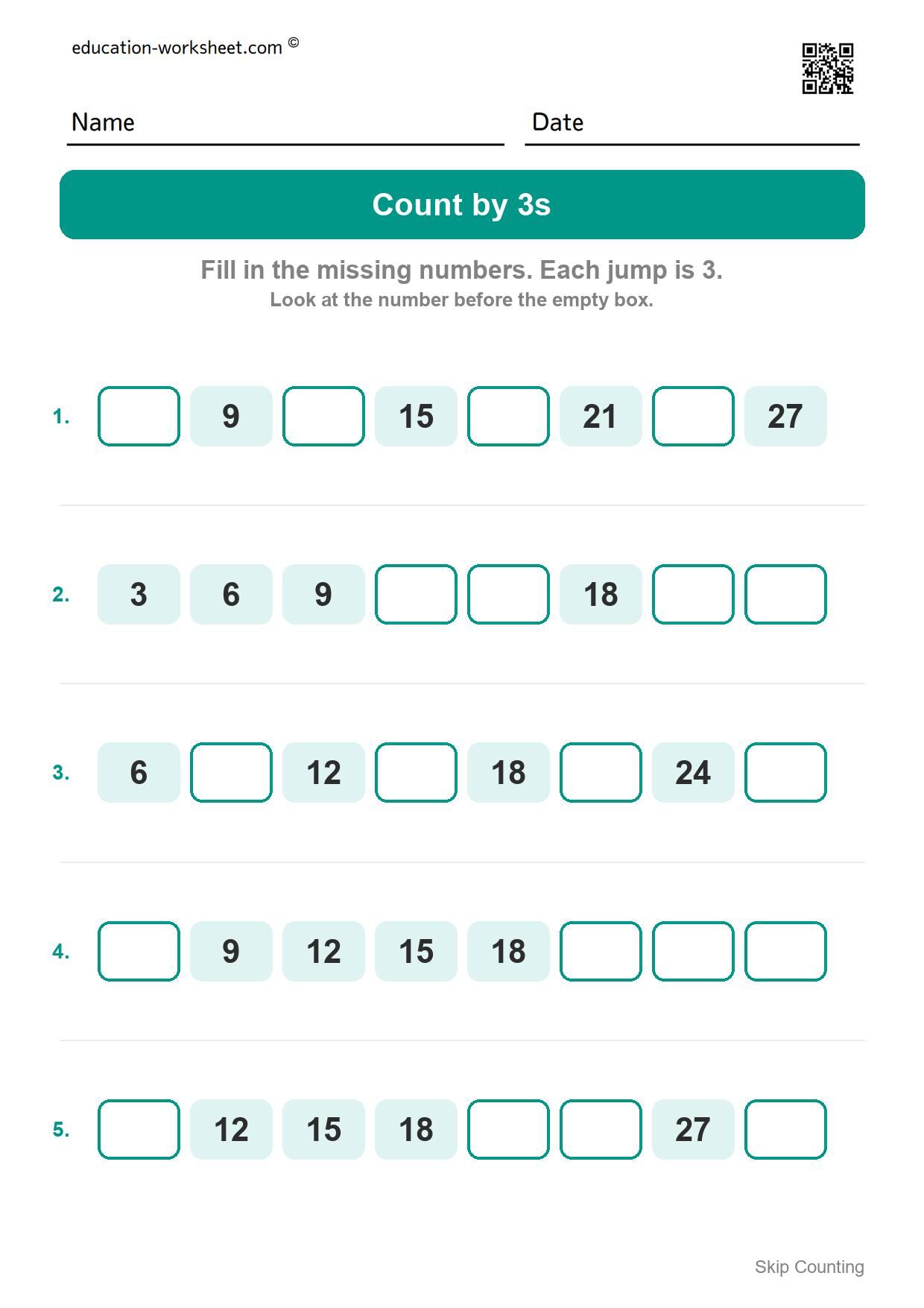
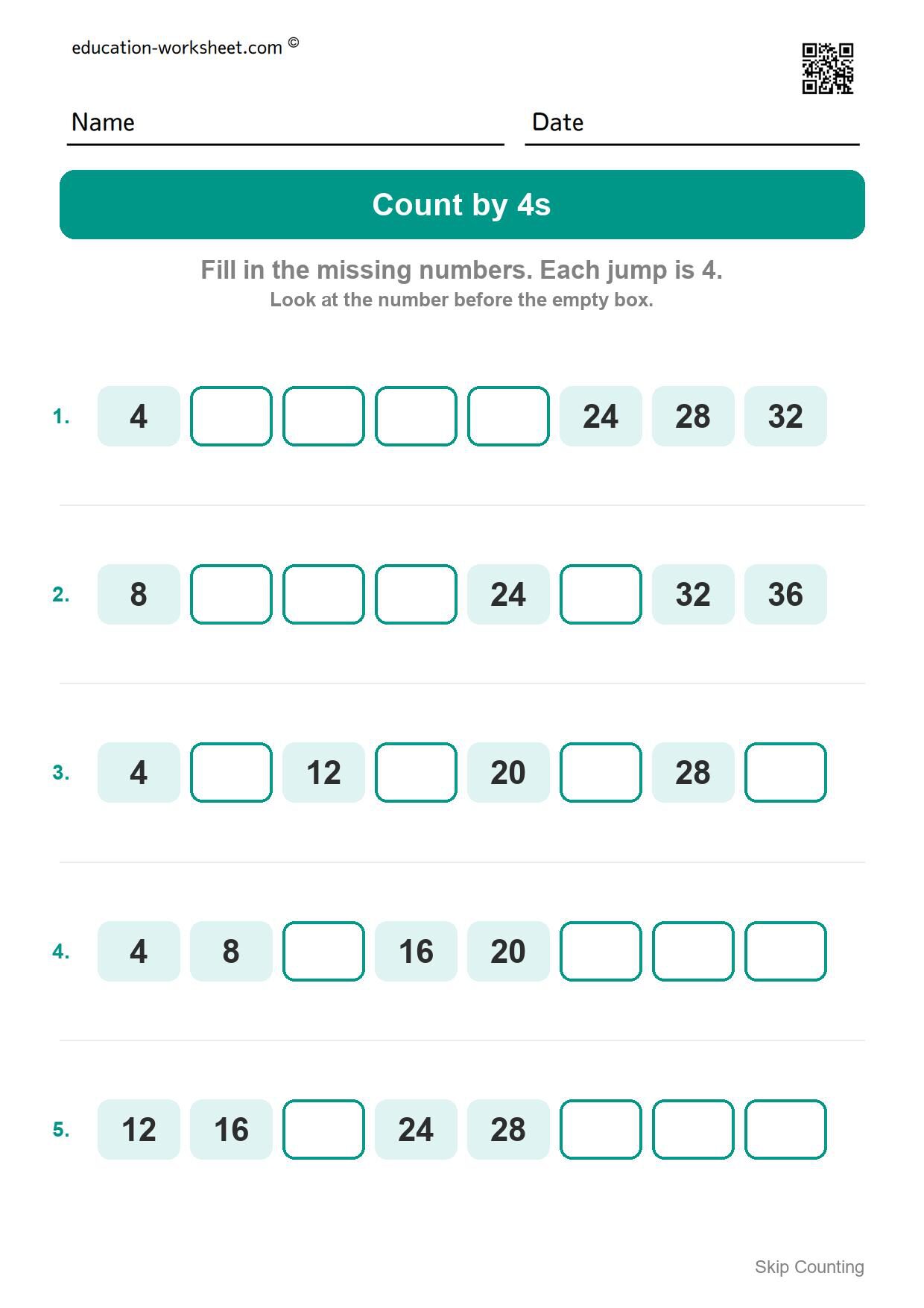
These free printable skip counting worksheets take kindergarten and first grade children on from counting by 2s, 5s and 10s to the two steps that come next, 3s and 4s. Each row is a counting sequence with some of the numbers missing, and children fill in the empty boxes. Threes and fours are harder than twos and fives because the numbers do not end in a neat pattern, so children have to add the jump rather than recognise a shape in the digits, and that is exactly why they are worth practising. At least one of the first two boxes in every row is filled in, so children always have somewhere to start, and half of each row is given so nobody is left guessing. The first four pages count in 3s, the next four in 4s, and the last two mix them. The last page is an answer key. Just download, print, and count!
How skip counting by 3s and 4s works
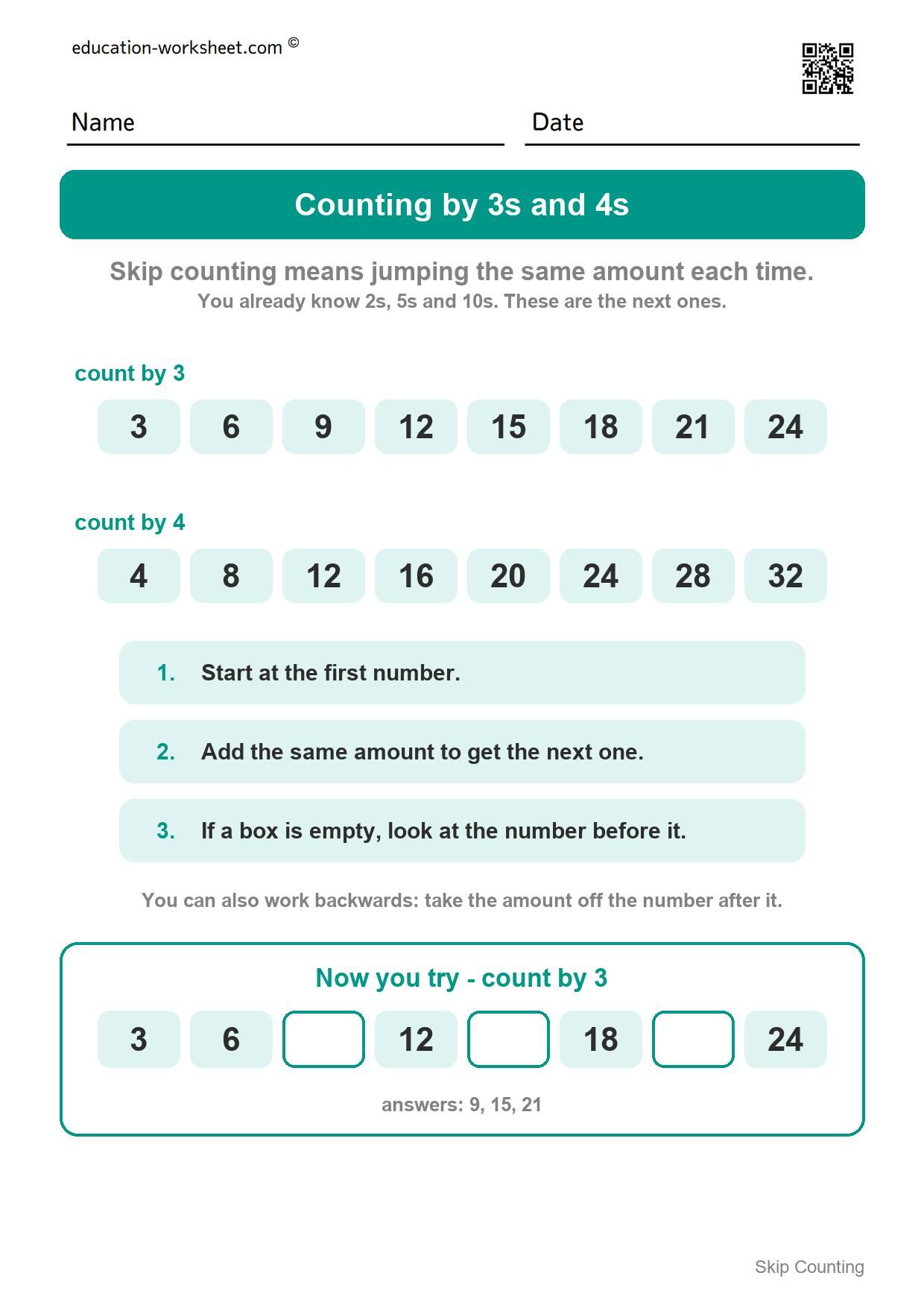
Count by 3s (Set 1)
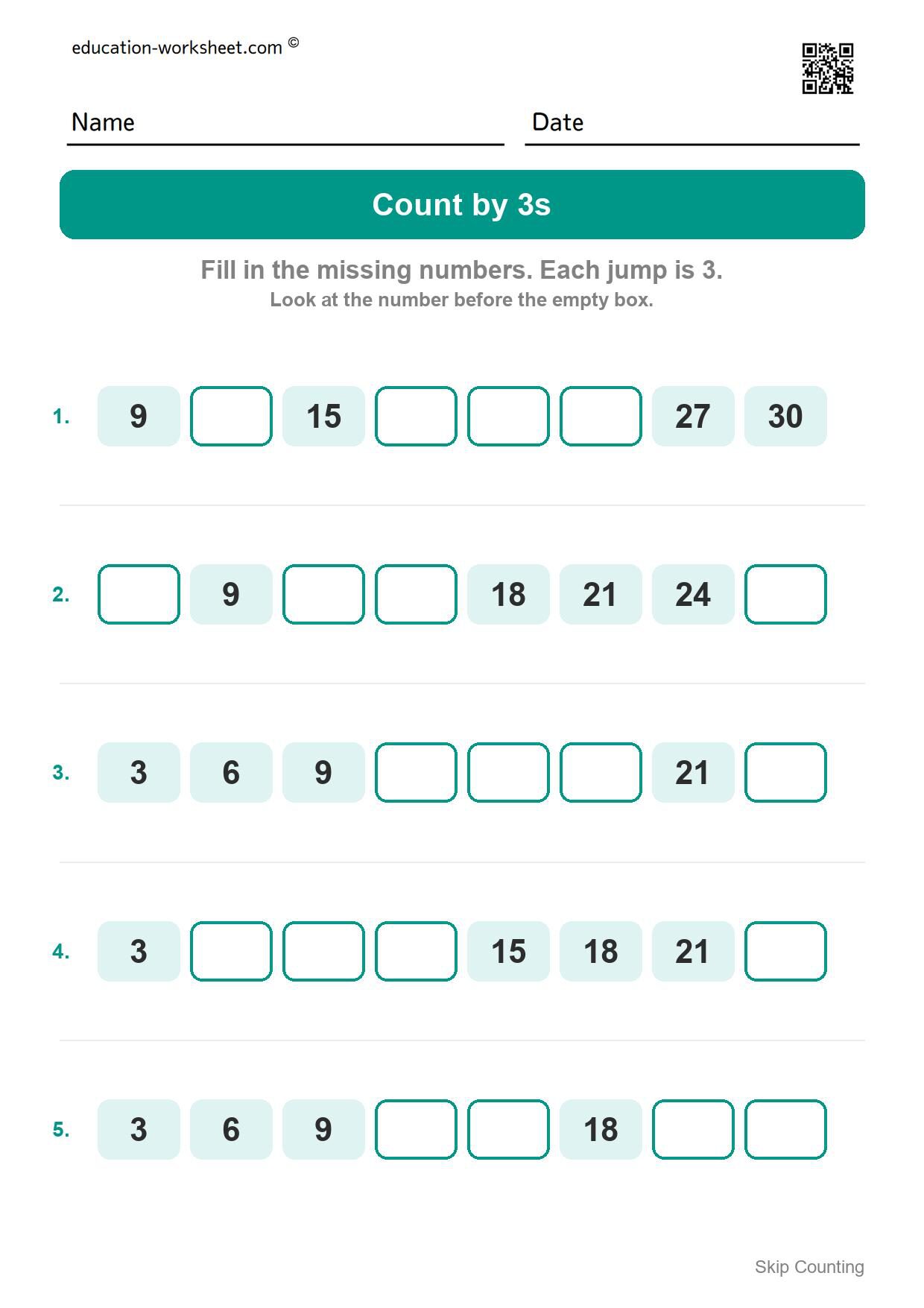
Count by 3s (Set 2)
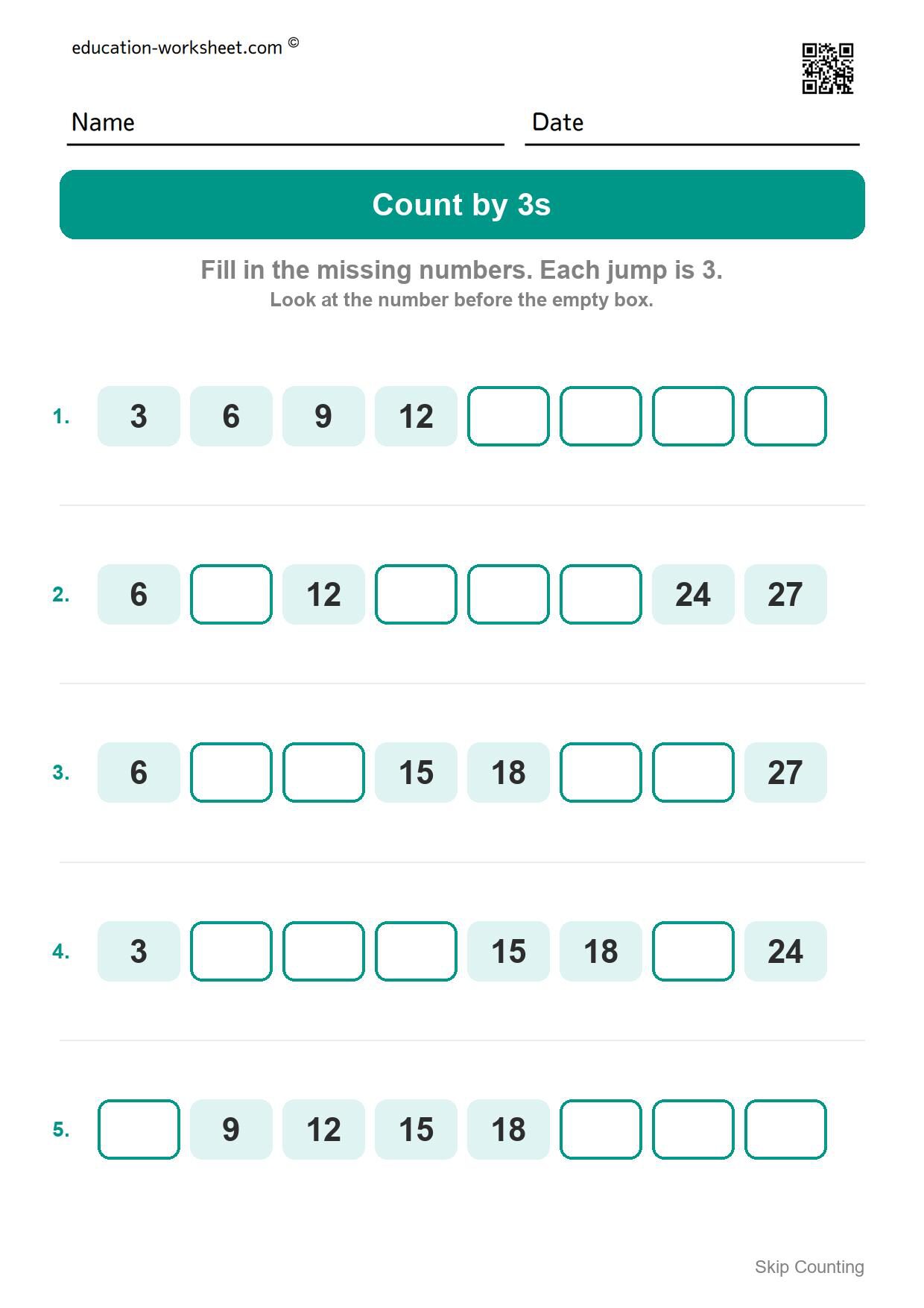
Count by 3s (Set 3)
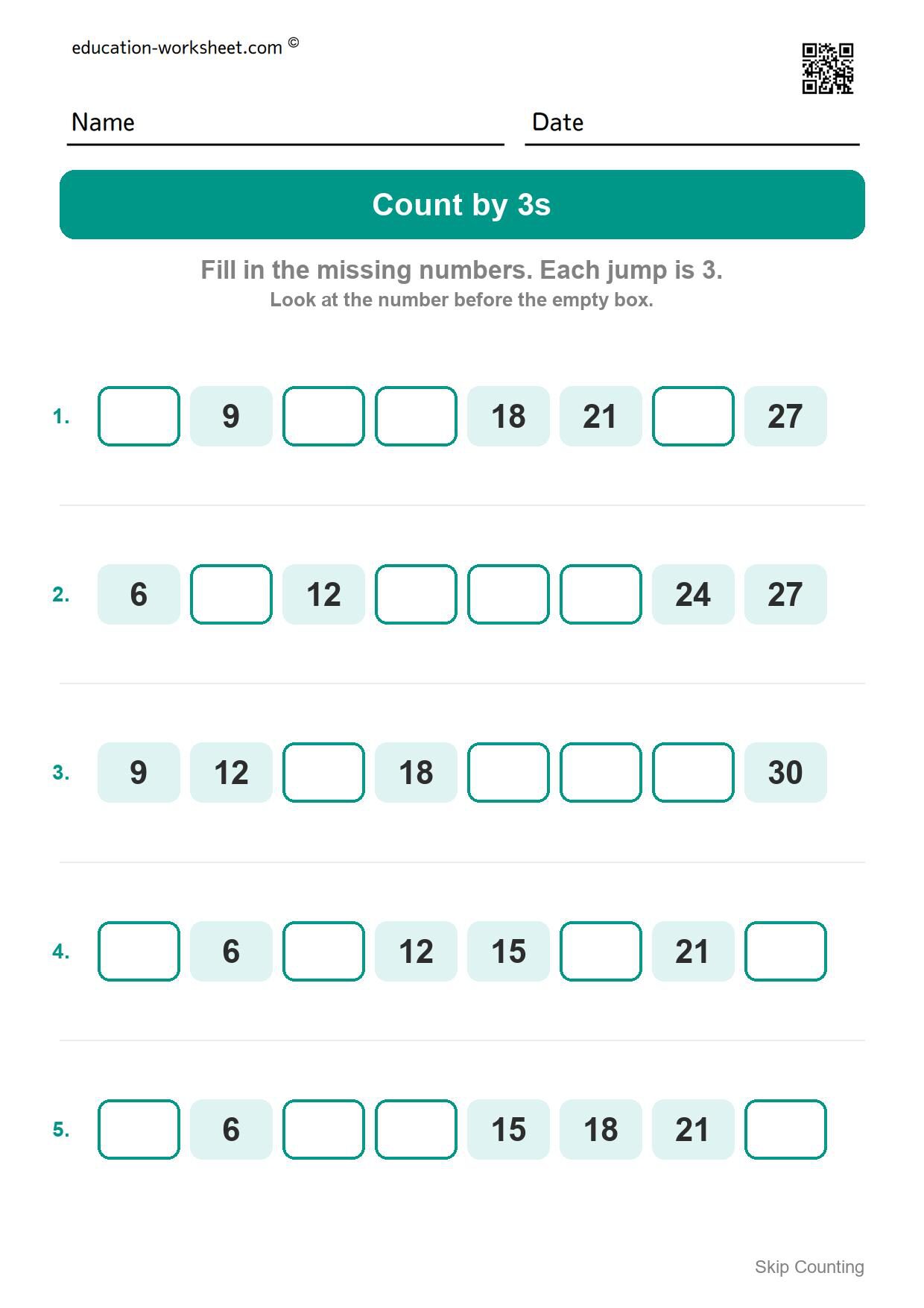
Count by 3s (Set 4)
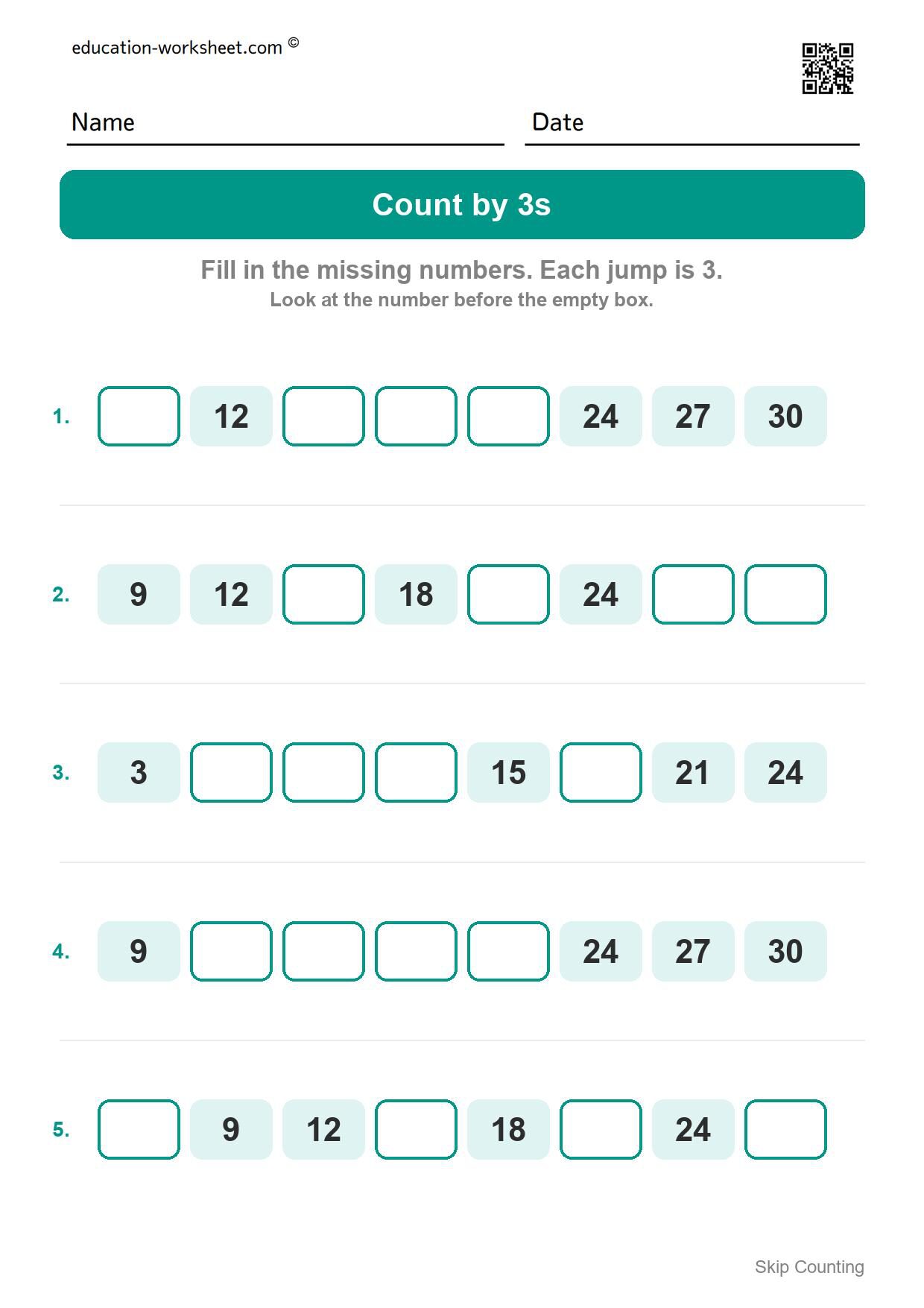
Count by 4s (Set 5)
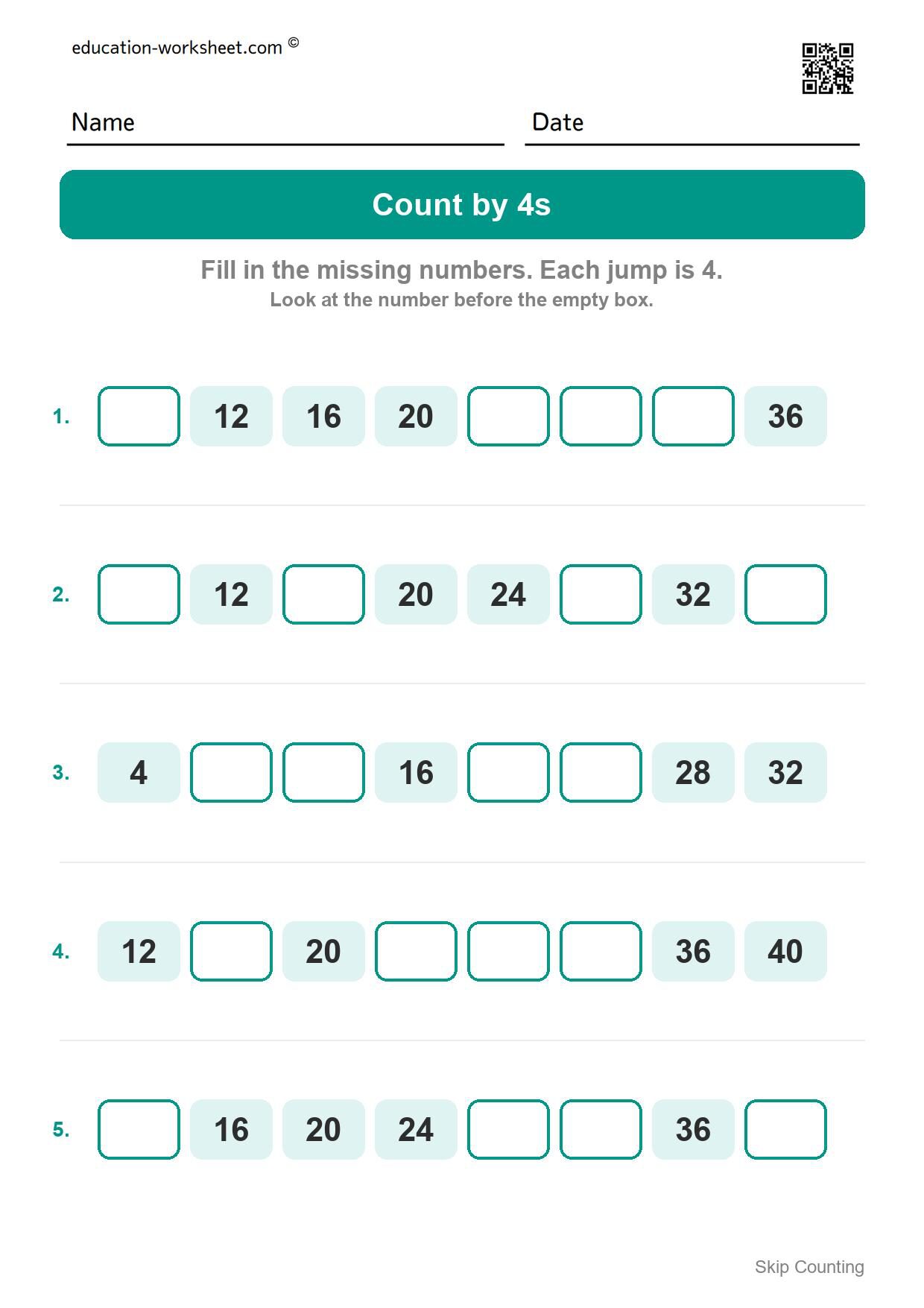
Count by 4s (Set 6)
Count by 4s (Set 7)
Count by 4s (Set 8)
Count by 3s (Set 9)
Count by 4s (Set 10)
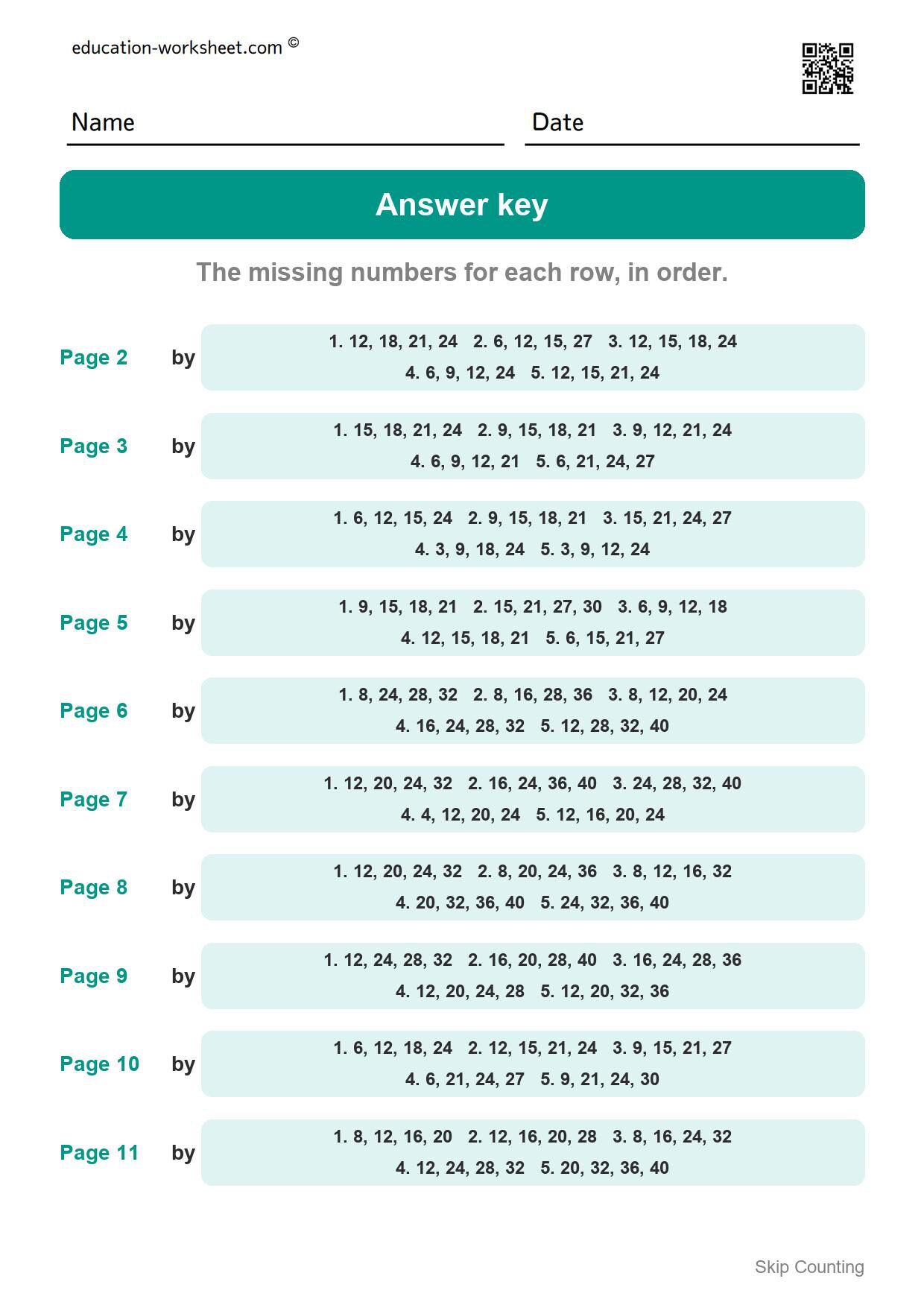
Answer key – all 10 pages
Skip counting by 3s and 4s: the groundwork for times tables
Counting by twos, fives and tens comes easily because the patterns are visible and the numbers are familiar. Threes and fours are the first skip counts that have to be learned rather than noticed, and they are where skip counting stops being a chant and starts being mathematics.
What your child is actually learning
Skip counting is counting groups instead of counting ones, which is the whole idea behind multiplication. When a child counts 3, 6, 9, 12 they are really saying one three, two threes, three threes, four threes. Making that link explicit now means that multiplication, when it arrives next year, is a new name for something already familiar rather than a new topic.
How to work through these pages
Count real groups, not just numbers. Three wheels on each tricycle, four legs on each chair, four wheels on each car. Then ask the question that makes the connection: how many threes did we count? A child who can answer both “twelve” and “four threes” for the same set of objects is ready for multiplication. Also practise starting from the middle, because a child who can only start at the beginning is reciting.
The mistakes to expect
- Losing the sequence in the middle, especially past 12 where the numbers stop being familiar.
- Being unable to continue from a given number, so “carry on from 15” produces a restart from 3.
- Adding one group too many or too few when counting objects, usually from touching a group twice.
- Chanting fluently while not knowing how many groups have been counted, which means the sequence has been memorised without the meaning.
What to teach next
Arrays are the natural next step, because they show the same groups arranged in rows and columns and make the connection to multiplication visible. Counting equal groups of objects in everyday situations keeps the idea alive between formal units.
Questions parents ask
Should my child learn threes and fours before fives and tens?
No, after. Twos, fives and tens have clear patterns and should come first. Threes and fours are harder precisely because the pattern in the digits is not obvious.
Is skip counting the same as multiplication?
It is the counting half of it. Multiplication also requires knowing how many groups there are, which is why asking “how many threes?” alongside the count matters so much.
My child can chant but cannot use it. What is missing?
The link to objects. Go back to counting real groups and asking both questions each time: how many altogether, and how many groups. The chant on its own is just a sequence of sounds.