- Free Halves Worksheets for Kindergarten – Equal Parts of Shapes
- Circle the equal halves (Set 1)
- Circle the equal halves (Set 2)
- Circle the equal halves (Set 3)
- Circle the equal halves (Set 4)
- Circle the equal halves (Set 5)
- Circle the equal halves (Set 6)
- Circle the equal halves (Set 7)
- Circle the equal halves (Set 8)
- Circle the equal halves (Set 9)
- Circle the equal halves (Set 10)
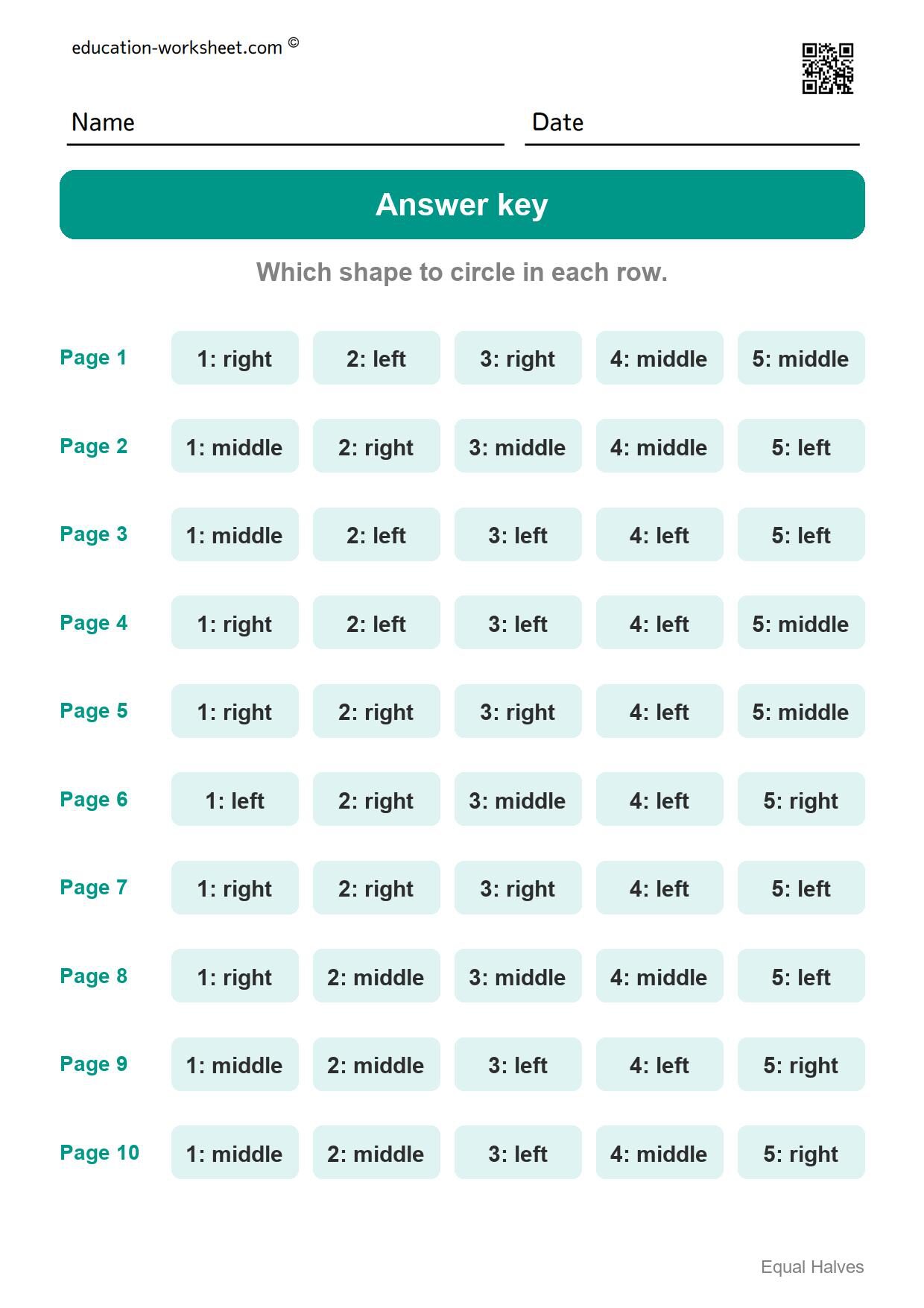
- Answer key – all 10 pages
- Halves: why equal is the word that matters
Free Halves Worksheets for Kindergarten – Equal Parts of Shapes
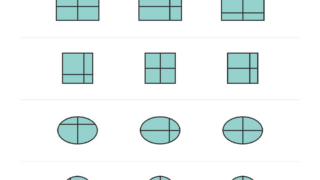
These free printable halves worksheets help kindergarten and first grade children learn about equal parts. In each row a shape is cut into two parts in three different ways, and kids circle the one that is cut into two equal halves. Two equal halves are exactly the same size, like folding a shape right down the middle. Understanding halves and equal parts is the first step toward fractions, and it also sharpens careful looking. The final page is an answer key. Just download, print, and find the halves!
Circle the equal halves (Set 1)
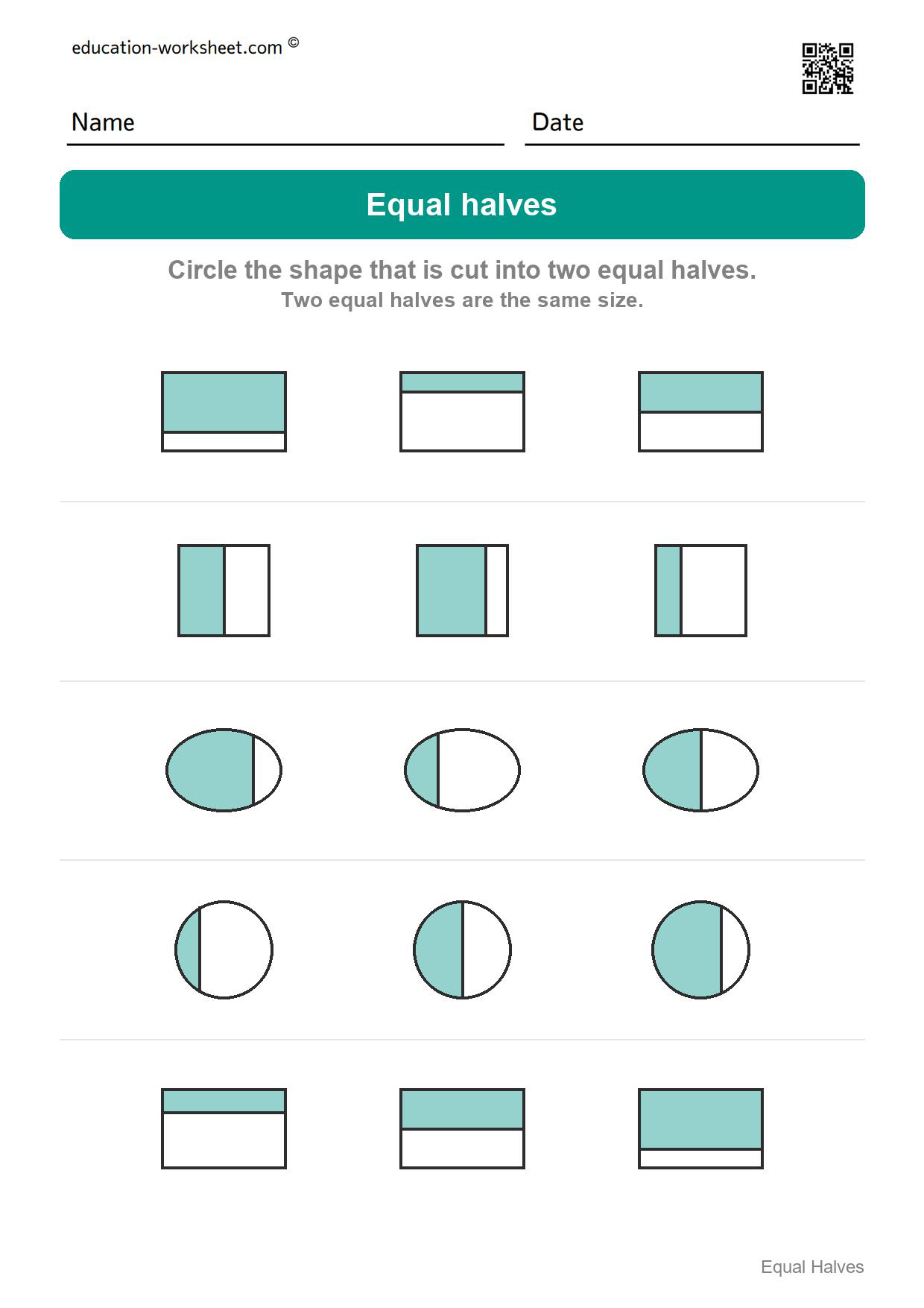
Circle the equal halves (Set 2)
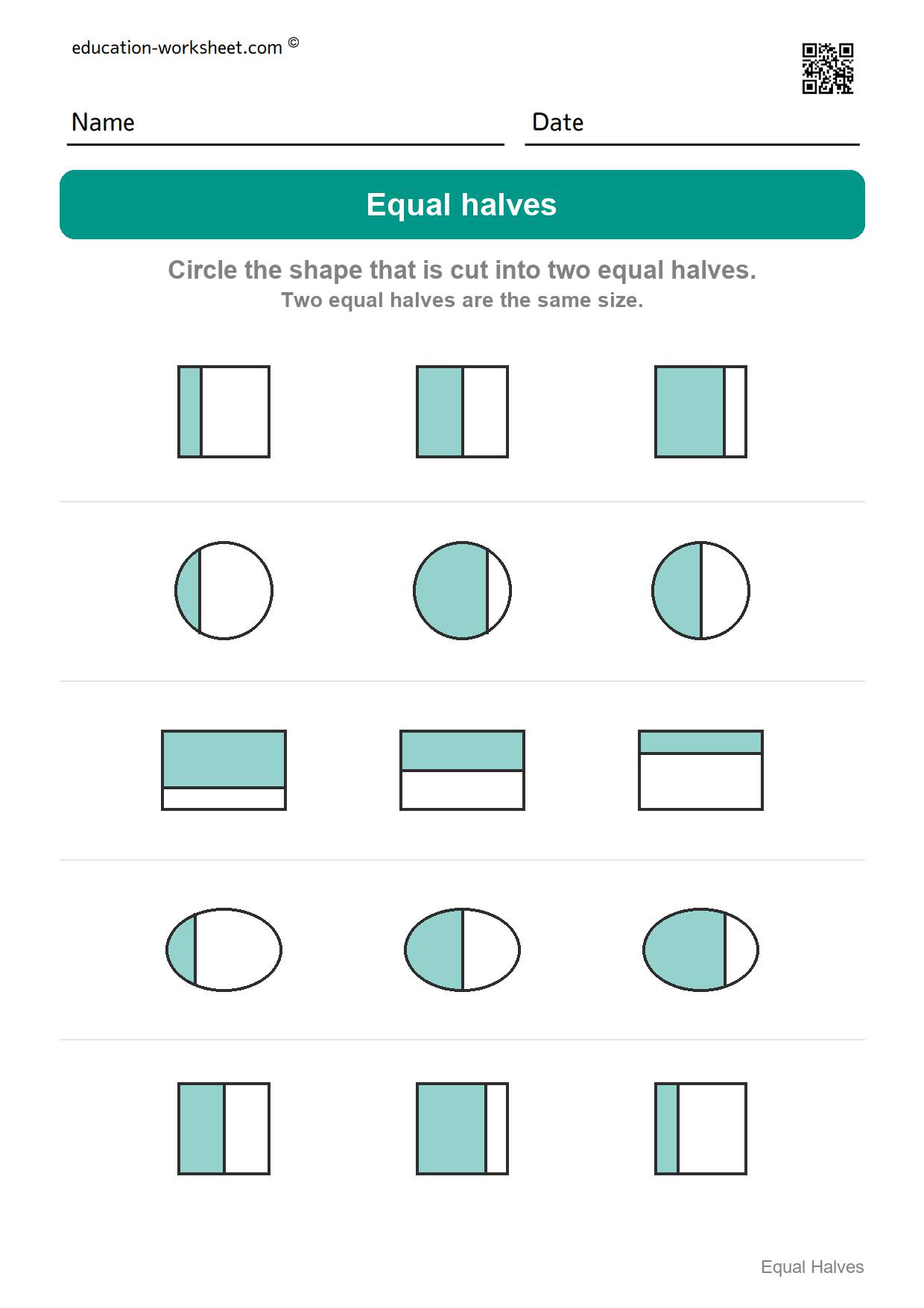
Circle the equal halves (Set 3)
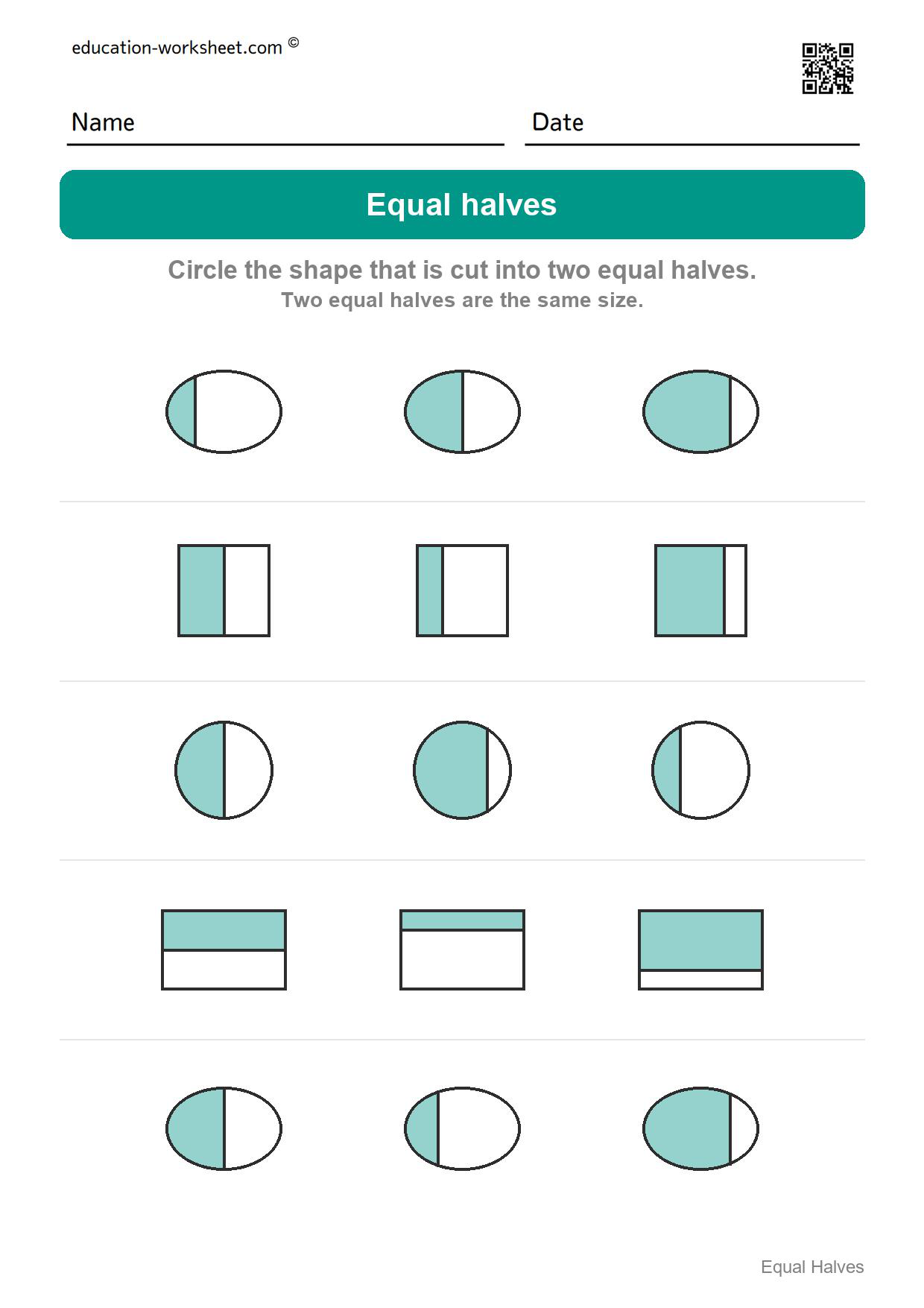
Circle the equal halves (Set 4)
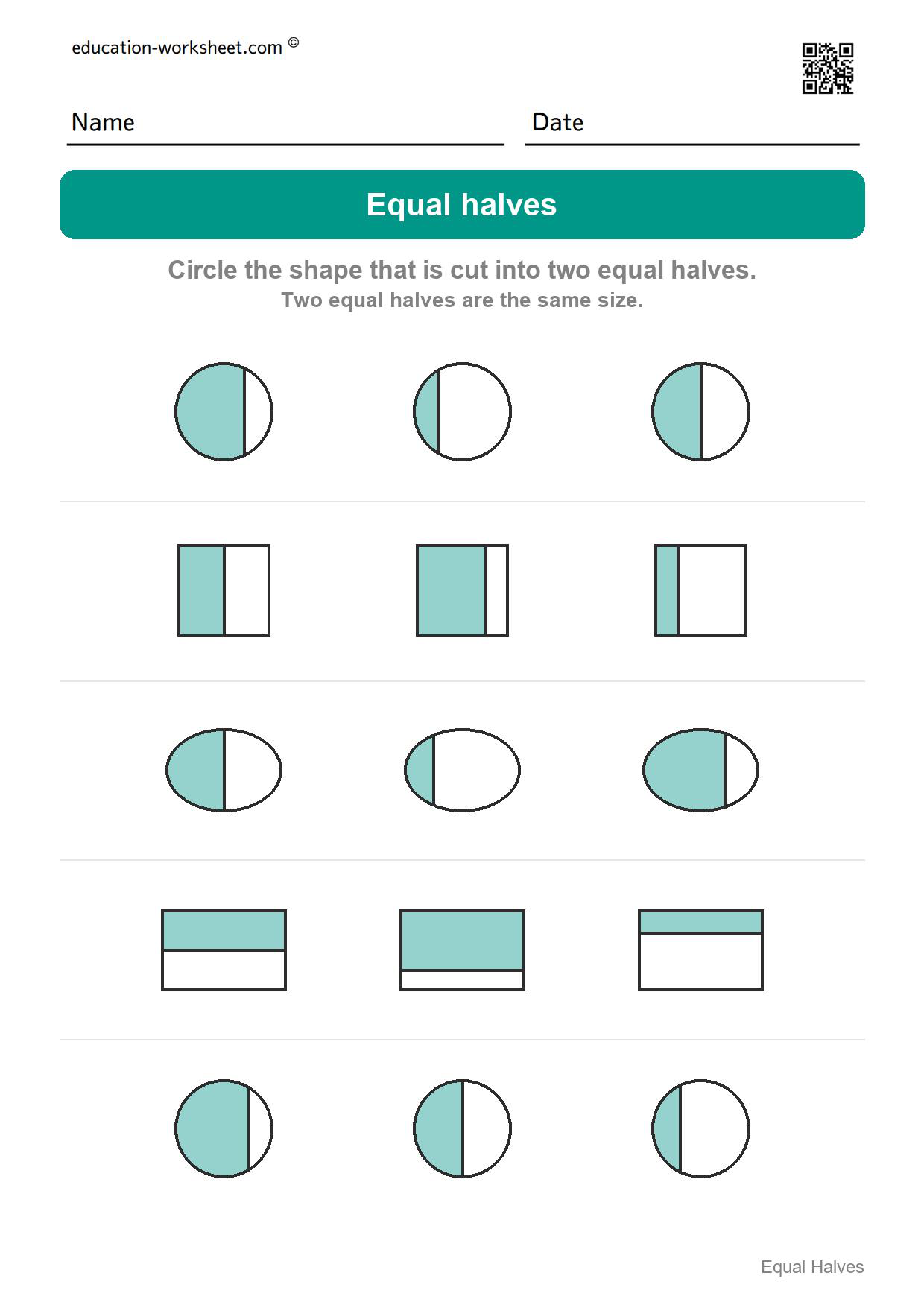
Circle the equal halves (Set 5)
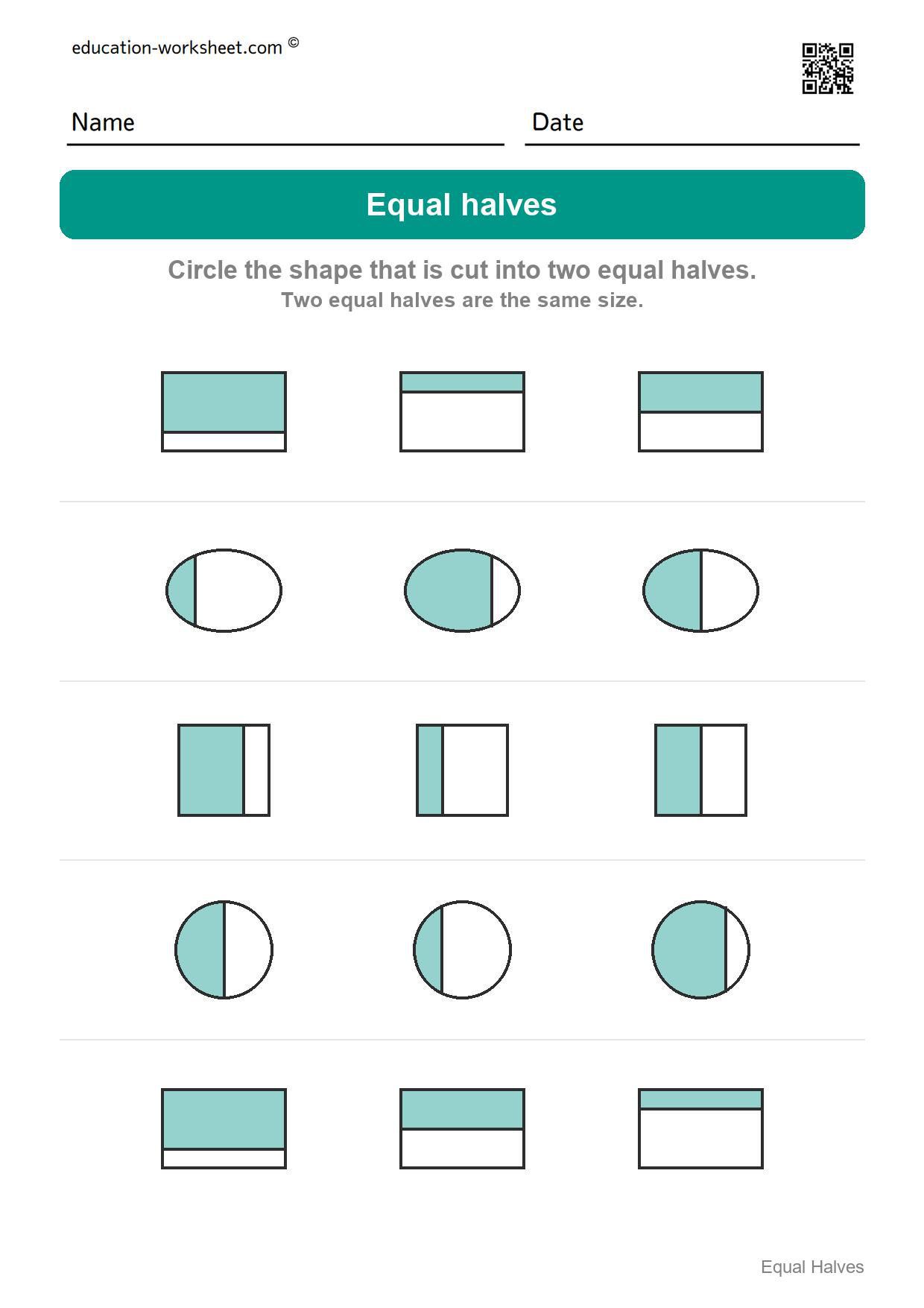
Circle the equal halves (Set 6)
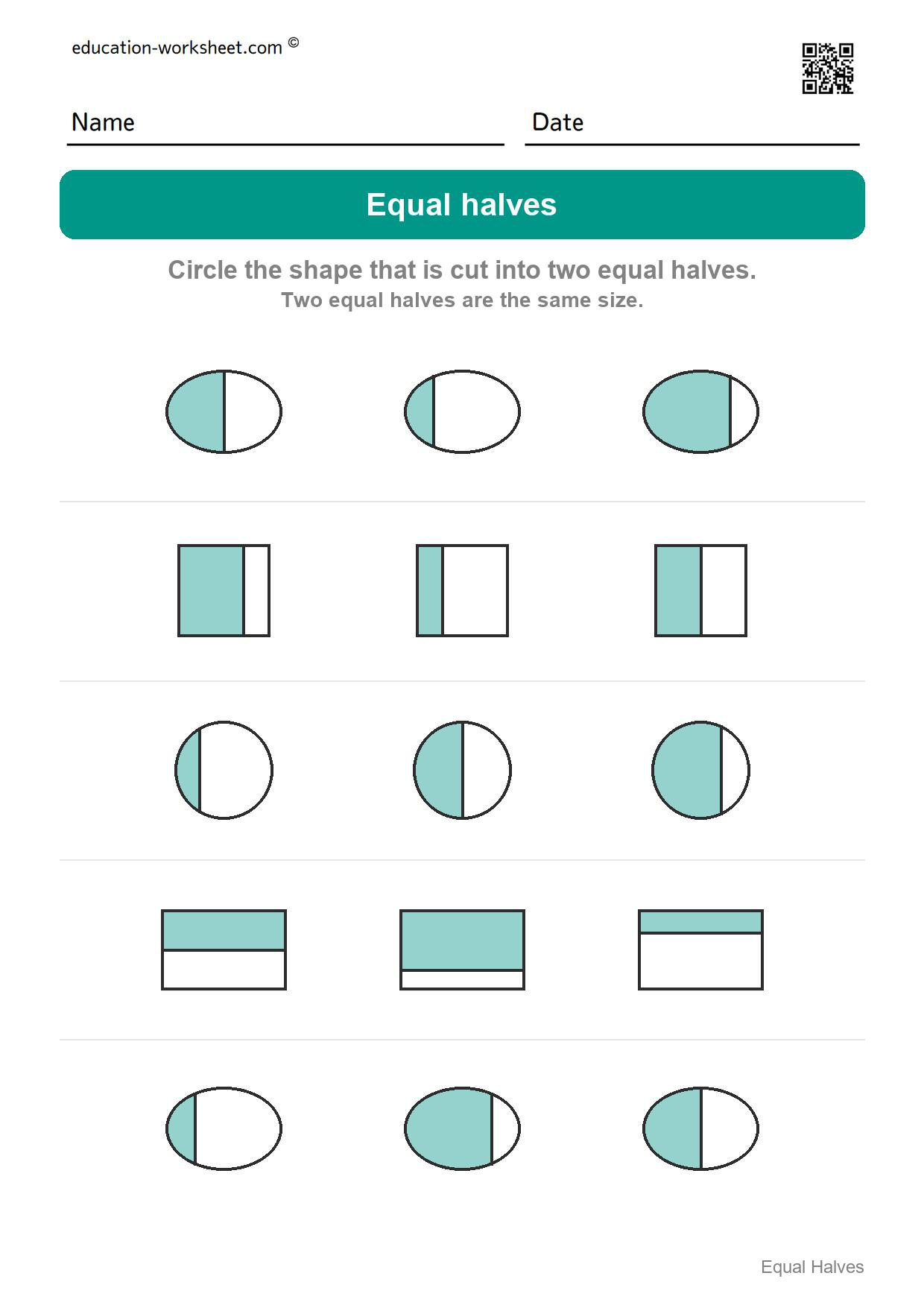
Circle the equal halves (Set 7)
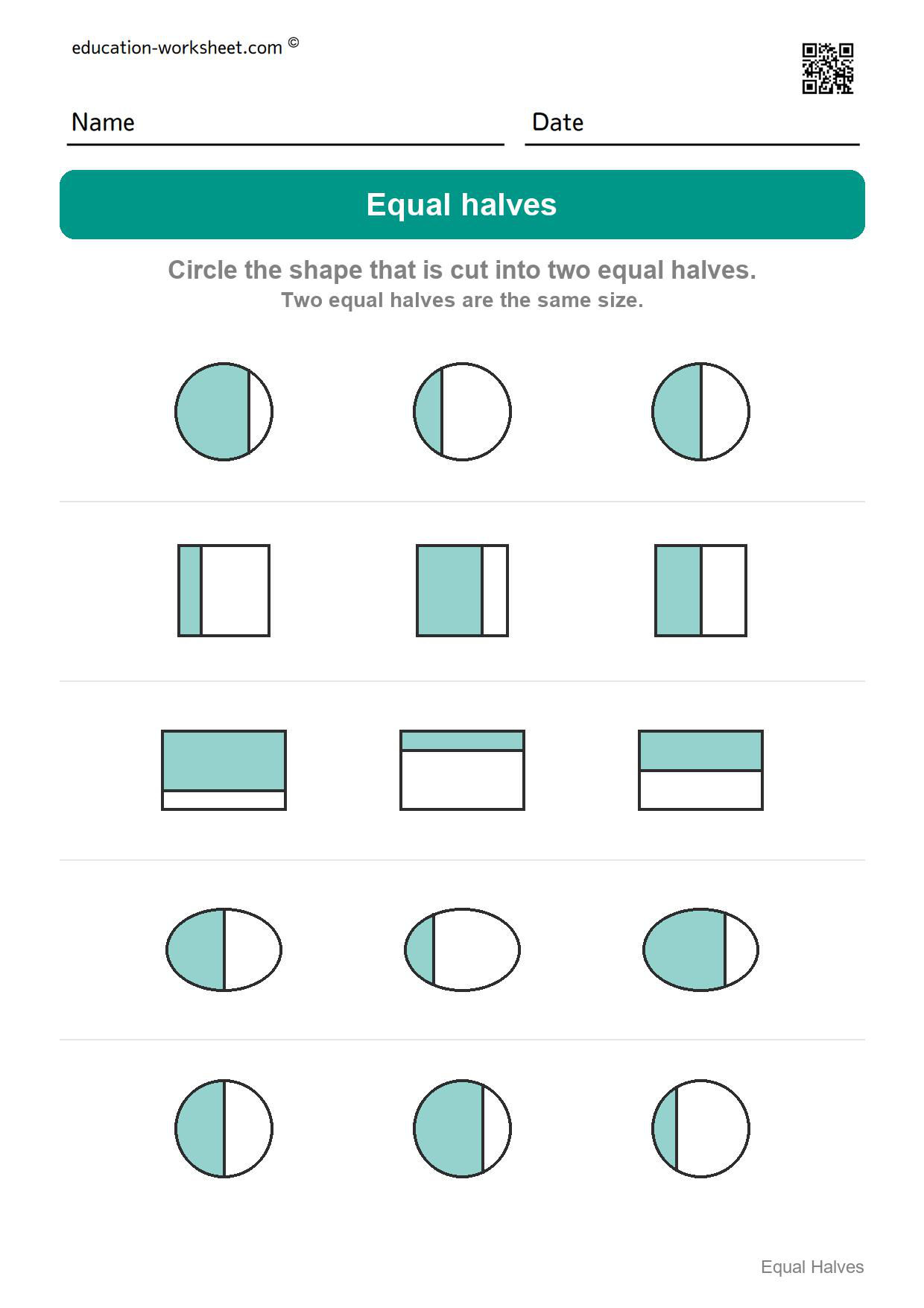
Circle the equal halves (Set 8)
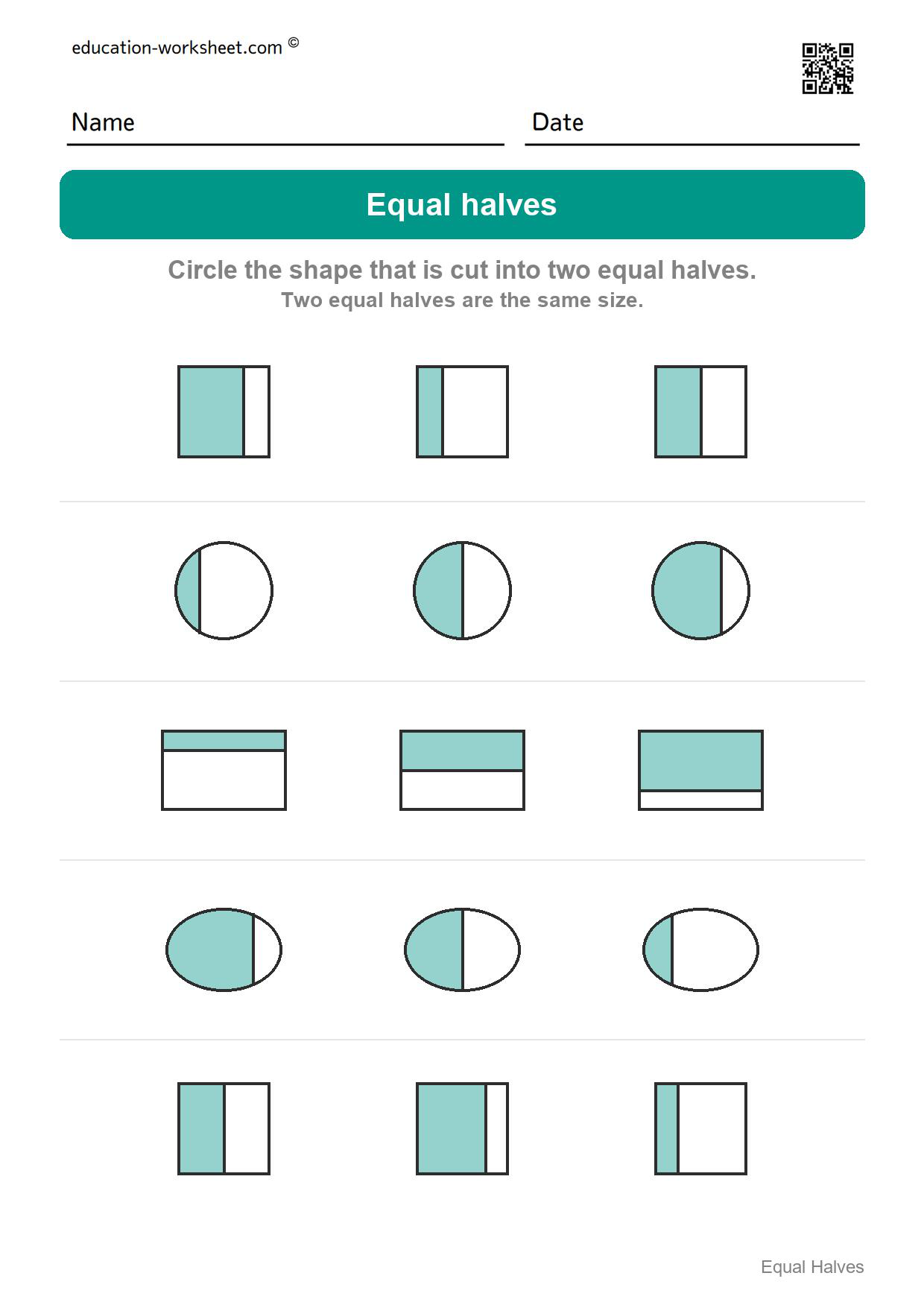
Circle the equal halves (Set 9)
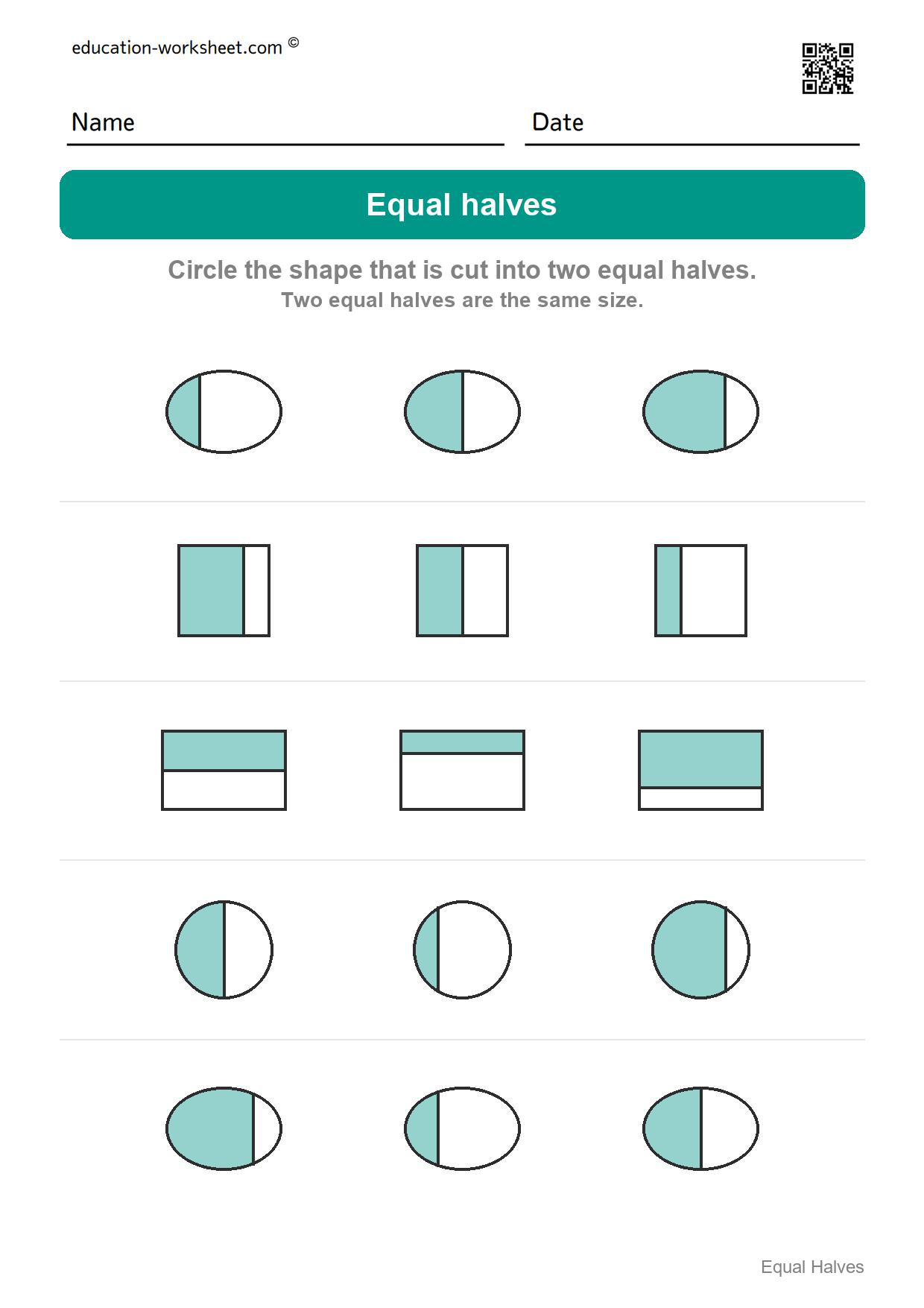
Circle the equal halves (Set 10)
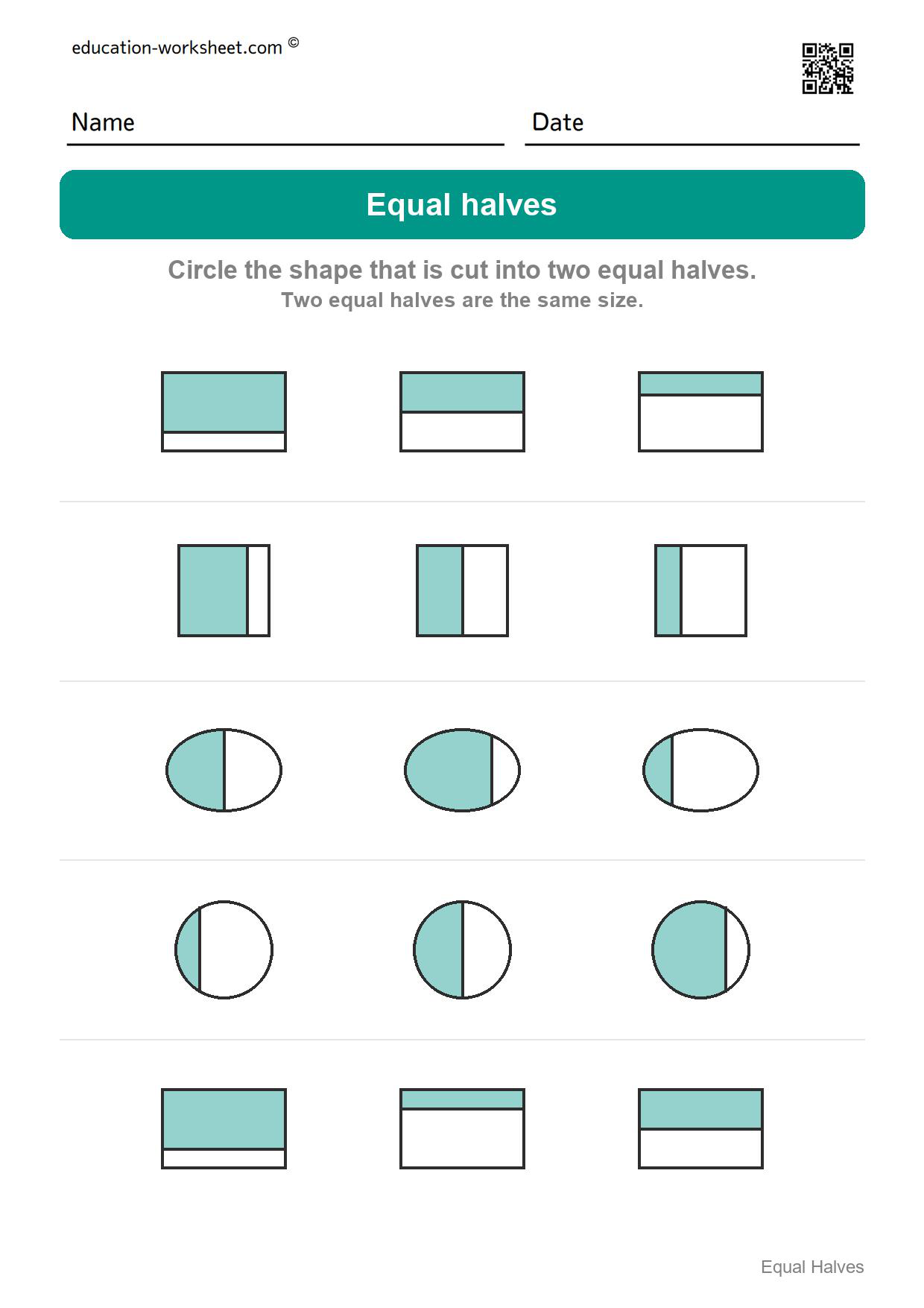
Answer key – all 10 pages
Halves: why equal is the word that matters
Cutting a shape into two pieces does not make halves. Cutting it into two pieces that are exactly the same size does. That single word, equal, is the whole of this unit, and it is the thing children skip over when they draw a line somewhere near the middle and call the job done.
What your child is actually learning
First grade geometry asks children to partition shapes into two and four equal parts and to use the words halves and fourths. The mathematics being built underneath is the idea that a fraction describes equal shares of a whole. Children who meet halves as “two pieces” rather than “two equal pieces” carry the misunderstanding forward into third grade fraction work, where it becomes much harder to unpick.
How to work through these pages
Fold paper. It is worth doing before any worksheet, because folding proves equality in a way that drawing never can: the two parts land exactly on top of each other or they do not. Then use food, which children care about. Cut a sandwich into two very unequal pieces and offer your child the smaller one as “half” and you will get an immediate and correct objection. That objection is the concept.
The mistakes to expect
- Accepting any two pieces as halves. The fold test settles it.
- Assuming halves must be made by a vertical line. A square can be halved vertically, horizontally or diagonally, and all three are correct.
- Thinking the two halves must be the same shape as well as the same size. A rectangle cut diagonally gives two triangles that are equal but do not look identical at first glance.
- Saying “one half” for one piece of any number of pieces, so one slice of four is called a half.
What to teach next
Fourths follow naturally, because a fourth is a half halved and children can see it happen with a second fold. Thirds are harder and are usually left until halves and fourths are secure, since thirds cannot be made by folding in half at all.
Questions parents ask
Halves or a half? Which should my child say?
Both, in the right places. Two halves make a whole; one piece is a half. First grade standards use halves and fourths, and hearing the plural and singular used correctly is part of learning what they mean.
Do we need to write the fraction 1/2?
Not in first grade. The notation comes later. At this stage the words and the pictures are what matter, and introducing symbols too early tends to hide the concept rather than help it.
My child says the bigger piece is the half. What should I do?
Fold it. Arguing about it rarely works, but a fold that does not line up ends the discussion immediately and the child sees why for themselves.