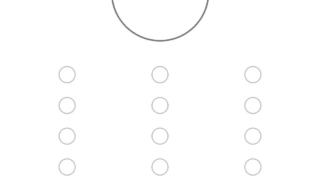
These free printable shape tracing worksheets give preschool and kindergarten children ten pages of shape practice, one shape on each page. Every page works the same way: trace it, draw it, then color it.
That order matters more than it looks. The top section gives three dashed outlines to trace over. The middle section gives three empty boxes and the heading “Now you draw” – no guide, no dots, nothing to follow. The bottom section gives three finished outlines to color in. Nine goes at the same shape on one page, and the support is taken away in the middle and handed back at the end.
Each page also opens with the shape drawn solid in a color, with a short description underneath: “3 sides, 3 corners” for the triangle, “round, no corners” for the Ten shapes are covered: circle, square, triangle, rectangle, oval, diamond, star, heart, pentagon and hexagon.
- What Is in This Free Shape Tracing Worksheet Pack
- The 10 Shape Tracing Worksheets
- Worksheet 1 – Trace and Draw the Circle
- Worksheet 2 – Trace and Draw the Square
- Worksheet 3 – Trace and Draw the Triangle
- Worksheet 4 – Trace and Draw the Rectangle
- Worksheet 5 – Trace and Draw the Oval
- Worksheet 6 – Trace and Draw the Diamond
- Worksheet 7 – Trace and Draw the Star
- Worksheet 8 – Trace and Draw the Heart
- Worksheet 9 – Trace and Draw the Pentagon
- Worksheet 10 – Trace and Draw the Hexagon
- The Square and the Diamond Are the Same Shape
- When Children Are Ready for These Worksheets
- How to Use These Worksheets
- Three Things to Watch For
- Printing Tips
- Frequently Asked Questions
- More Free Shape Worksheets
What Is in This Free Shape Tracing Worksheet Pack
- Ten printable worksheets, one shape on each page.
- Three dashed shapes to trace, three empty boxes to draw in, three outlines to color.
- A colored example of the shape at the top of every page with a plain-English description.
- Ten shapes, from the circle through to the pentagon and hexagon.
- No reading and no counting needed.
- A separate PDF for every page, free to download and print.
The 10 Shape Tracing Worksheets
The order runs roughly from easiest to hardest to draw, with the star and heart placed late and the pentagon and hexagon last of all.
Worksheet 1 – Trace and Draw the Circle
The first shape and the easiest to recognize, but not the easiest to draw. A freehand circle that closes neatly takes more control than a square does, because there is no corner to stop and change direction at. The example at the top is a red circle, captioned “round, no corners”.

Worksheet 2 – Trace and Draw the Square
Four straight lines and four right-angle turns. Corners are a gift to a child who is still learning to steer a pencil: each one is a place to stop, lift, and start again. The example at the top is a blue square, captioned “4 equal sides”.

Worksheet 3 – Trace and Draw the Triangle
The caption counts sides and corners together, which is the language children are asked to use later on. Three of each, and the two sloping lines are the first diagonals in the pack. The example at the top is a orange triangle, captioned “3 sides, 3 corners”.

Worksheet 4 – Trace and Draw the Rectangle
Deliberately drawn wider than it is tall, so it cannot be mistaken for the square two pages earlier. Notice the caption changes too: the square has four equal sides, the rectangle just has four. The example at the top is a green rectangle, captioned “4 sides, 4 corners”.

Worksheet 5 – Trace and Draw the Oval
The hardest shape here to describe, and the caption does not try to count anything. Children who have just drawn a circle often draw another one; putting the two pages side by side is the quickest way to show the difference. The example at the top is a purple oval, captioned “round like an egg”.

Worksheet 6 – Trace and Draw the Diamond
The same caption as the square, and not by accident. See the section below: this page and page 2 are showing the same shape in two different positions. The example at the top is a teal diamond, captioned “4 equal sides”.

Worksheet 7 – Trace and Draw the Star
The first shape most children want to draw and the one they can least manage. Ten lines and ten changes of direction. Expect the traced star to look right and the freehand one not to, and say so before they start. The example at the top is a yellow star, captioned “5 points”.

Worksheet 8 – Trace and Draw the Heart
Not a mathematical shape at all, and included because children love it. The caption is an honest description of how to draw it: two curves that meet at a point underneath. The example at the top is a pink heart, captioned “2 curves and a point”.

Worksheet 9 – Trace and Draw the Pentagon
Past the shapes a four year old meets in daily life. By now the counting caption is doing real work: a pentagon is not recognized, it is counted. The example at the top is a brown pentagon, captioned “5 sides, 5 corners”.

Worksheet 10 – Trace and Draw the Hexagon
The last page, and the one where counting matters most, because a hexagon and a pentagon look alike at a glance. This one is drawn point-up, taller than it is wide. The example at the top is a blue hexagon, captioned “6 sides, 6 corners”.

The Square and the Diamond Are the Same Shape
Page 2 is the square and page 6 is the diamond, and both captions read “4 equal sides”. That is not a slip. Measure the two examples and they are the same size in both directions – the diamond is the square stood on its point.
This is the single most useful thing in the pack, because it is exactly what young children get wrong. A four year old who can name a square will usually call the same square a diamond once it is turned, and will tell you they are different shapes. The Common Core standard K.G.A.2 asks children to name shapes “regardless of their orientations or overall size”, and this pair of pages is a ready-made demonstration.
Print page 2 and page 6 together, put them side by side, and turn one of them forty-five degrees. Most children are surprised. Some will argue. Both reactions mean the idea has landed somewhere it can be worked on.
The captions repay a second look elsewhere, too. The square has four equal sides; the rectangle has four sides and four corners, with no claim that they match. The circle has no corners at all and the oval is not counted but compared to an egg. That is the vocabulary of K.G.B.4, where children describe shapes by their parts rather than by what they look like.
When Children Are Ready for These Worksheets
These pages suit children from about three and a half to six. Tracing is within reach as soon as a child can hold a pencil and follow a line; the empty boxes in the middle are harder and are usually a year later. There is no need to wait for the drawing to be good before starting.
They cover K.G.B.5, modeling shapes by drawing them, and K.G.A.2, naming shapes whichever way round they are. The captions support K.G.B.4, describing shapes by their sides and corners.
How to Use These Worksheets
- Print one page. One shape is a session.
- Read the caption at the top together and count what it names. “Three sides. One, two, three. Three corners.” Touch the example while counting.
- Trace the three dashed shapes. Start at the top and go the same way round each time.
- Then the empty boxes. Say out loud that these ones are harder and that the first try usually looks wrong – children abandon the boxes when they are surprised by that, not when they find it difficult.
- Color the three shapes at the bottom. This is the reward section, and it is also more practice at staying inside a line.
Three Things to Watch For
Tracing neatly, then refusing the empty boxes
The most common pattern with pages built this way, and it is a confidence problem rather than a skill problem. Draw one yourself in the first box, badly, and leave it there. A child who sees an adult draw a wobbly circle will draw one too.
Corners quietly turning into curves
Squares come out with rounded corners because the pencil never stops. Ask for a full stop at each corner: draw, stop, turn, draw. It is slower and it looks worse for a week.
Calling the diamond a different shape from the square
Expected, and the reason the two pages exist. Do not correct it flatly. Put the two pages together, turn one, and let them watch a square become a diamond and go back again.
Printing Tips
- Choose Actual size or Fit to page in the print dialog – both keep the page in proportion.
- Each page fills one sheet and works on US Letter and A4 paper.
- Ordinary copier paper is fine. Card is only worth it if you want the page to survive an eraser.
- The color example at the top is worth printing in color if you can, since it is the only thing on the page that is not line art.
- A plastic wallet and a dry-wipe pen turn one page into many. The drawing boxes in the middle are the section children want to repeat.
- Print on slightly thicker paper if your child presses hard. Tracing over dashes tends to produce heavy pencil work.
Frequently Asked Questions
What age are these shape tracing worksheets for?
About three and a half to six years old: preschool, pre-K and kindergarten.
Which shapes are included?
Circle, square, triangle, rectangle, oval, diamond, star, heart, pentagon and hexagon – ten pages, one shape each.
What is on each page?
A colored example with a short description, three dashed shapes to trace, three empty boxes to draw in, and three outlines to color.
Why do the square and the diamond have the same description?
Because they are the same shape. The diamond is a square turned on its point, and both have four equal sides. Naming a shape whichever way round it is sitting is a kindergarten standard in its own right.
Should my child do the empty boxes every time?
Try them every time, but do not insist on three. One honest freehand attempt is worth more than three careful traces.
Do I need to sign up to download these?
No. Every PDF downloads immediately, with no account, no email address and no cost.
Can I use these in my classroom?
Yes, they are free to print for home and classroom use. Please do not sell them or re-host the files elsewhere.
More Free Shape Worksheets
- Free Trace the Shapes Worksheets for Preschool – 8 Shapes to Trace and Draw
- Free 2D Shapes Worksheets for Kindergarten – Count Sides and Corners
- Free Shape Recognition Worksheets for Kindergarten – Circle All the Shapes
- Free Same Shape Worksheets for Kindergarten – Match Shapes of Any Size
- Free Shape Words Worksheets for Kindergarten – Read and Write Shape Names
- Free Line Tracing Worksheets for Preschool and Kindergarten