
These free printable missing letter worksheets give preschool and kindergarten children ten pages of alphabet order practice. Each page shows three boxes: two lowercase letters with a gap between them, and the child writes the letter that belongs in the middle.
The full lowercase alphabet is printed along the bottom of every page. As with a number line, it is there to be used – a child who finds the two letters on the strip and reads off what sits between them is doing the intended work, and the strip stops being needed after a while without anyone taking it away.
What Is in This Free Missing Letters Worksheet Pack
- Ten printable worksheets, one missing letter on each page.
- The missing letters are b, e, h, k, n, q, t, w, x and y – spread right across the alphabet.
- Lowercase throughout, which is what children read first.
- Three large boxes per page with arrows showing the direction.
- The whole alphabet a to z printed at the foot of every page as support.
- A separate PDF for every page – no sign-up, no email address, no cost.
The 10 Missing Letter Worksheets
The pages work through the alphabet roughly every third letter, so the whole sequence gets covered without twenty-six sheets.
Missing Letter b
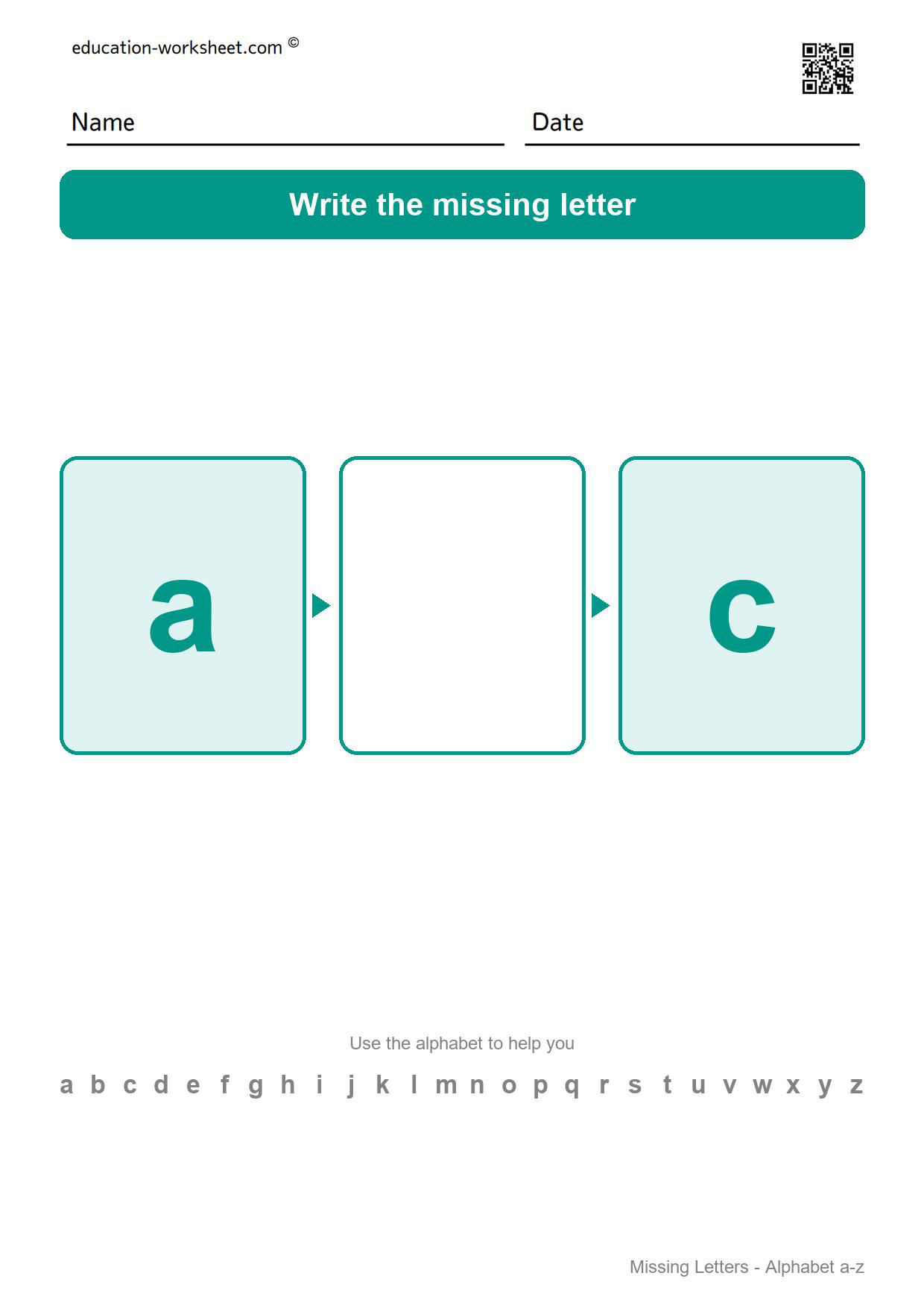
a – ? – c. The very start of the alphabet, and the page almost every child gets right. It also quietly introduces b, the letter most often written back to front.
Missing Letter e
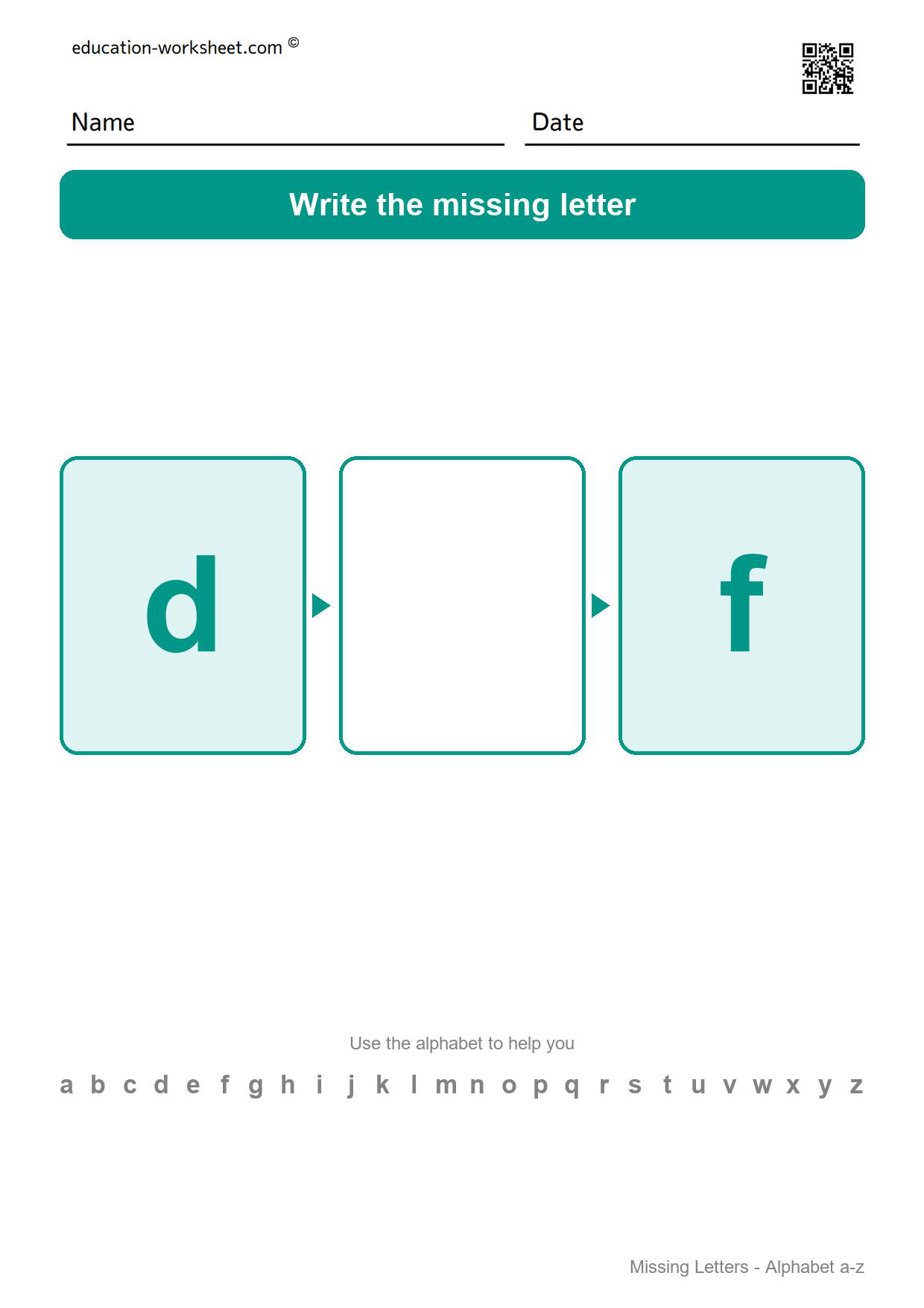
d – ? – f. Still near the beginning, where the alphabet song is at its most reliable.
Missing Letter h
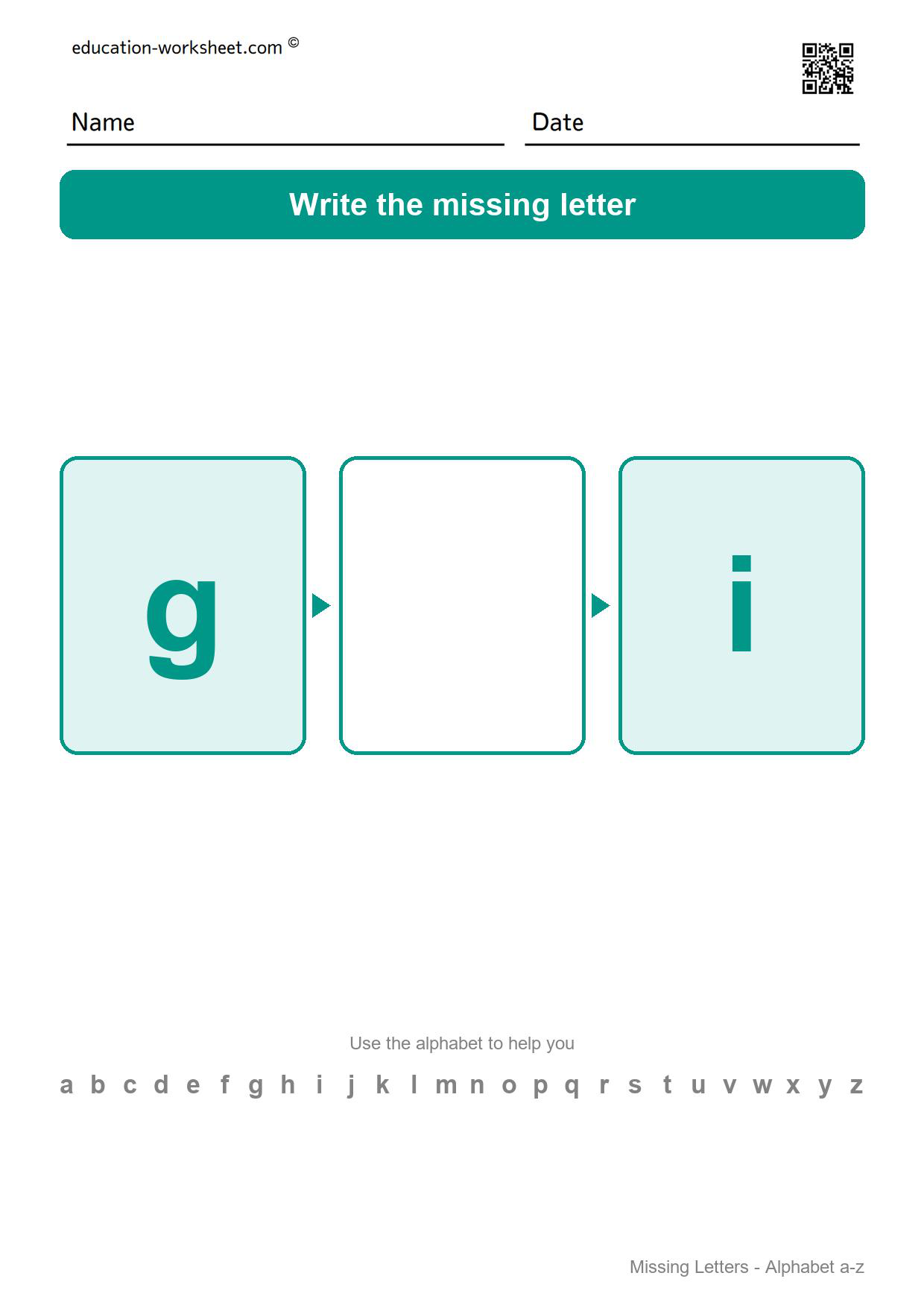
g – ? – i. The first page where a child usually has to sing from the start rather than simply know the answer.
Missing Letter k
j – ? – l. Lowercase j, k and l are three tall thin letters in a row, so this page is as much about looking as remembering.
Missing Letter n
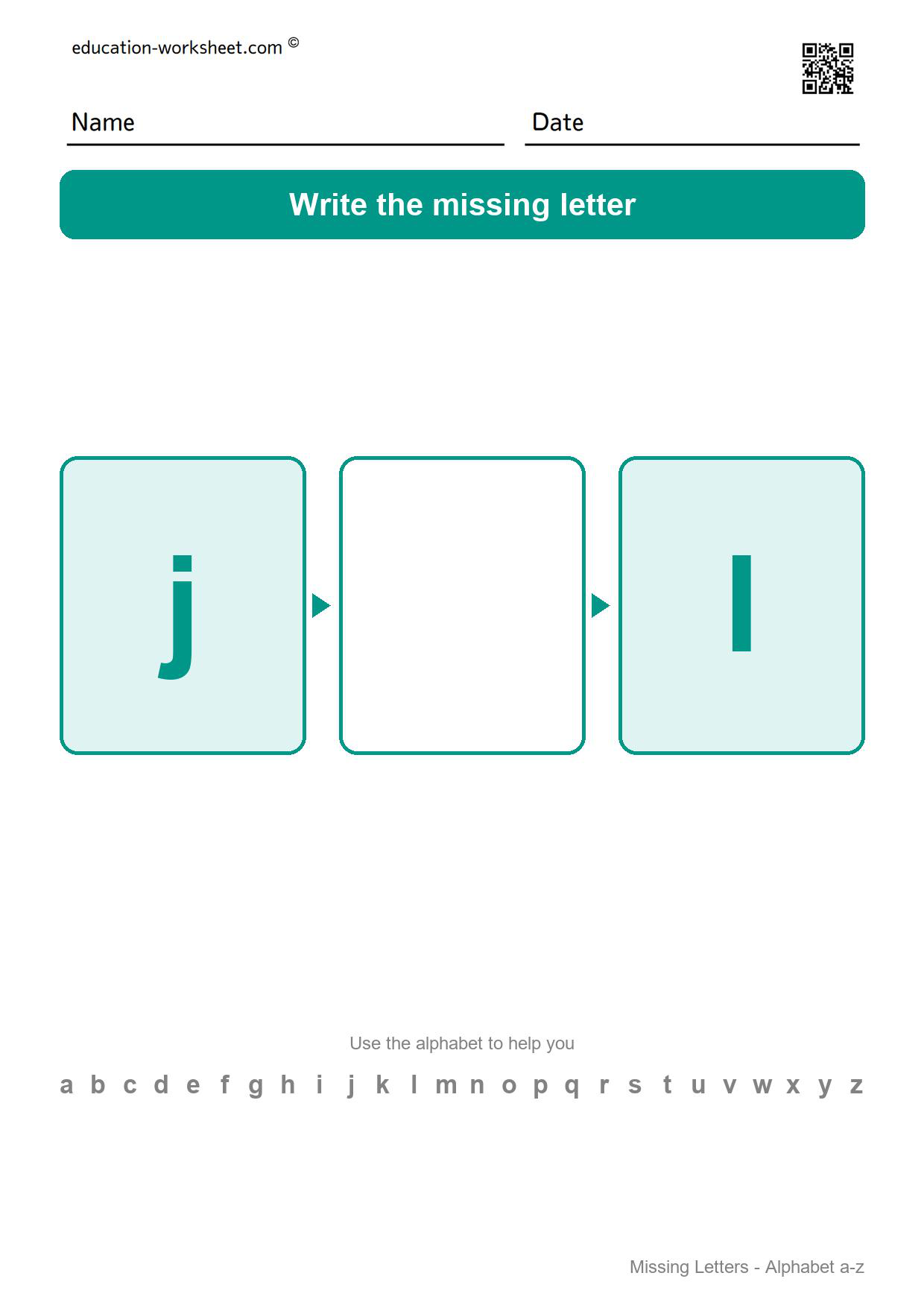
m – ? – o. This lands in the middle of lmnop, the run most children sing as a single word. Slowing that stretch down is the whole value of this page.
Missing Letter q
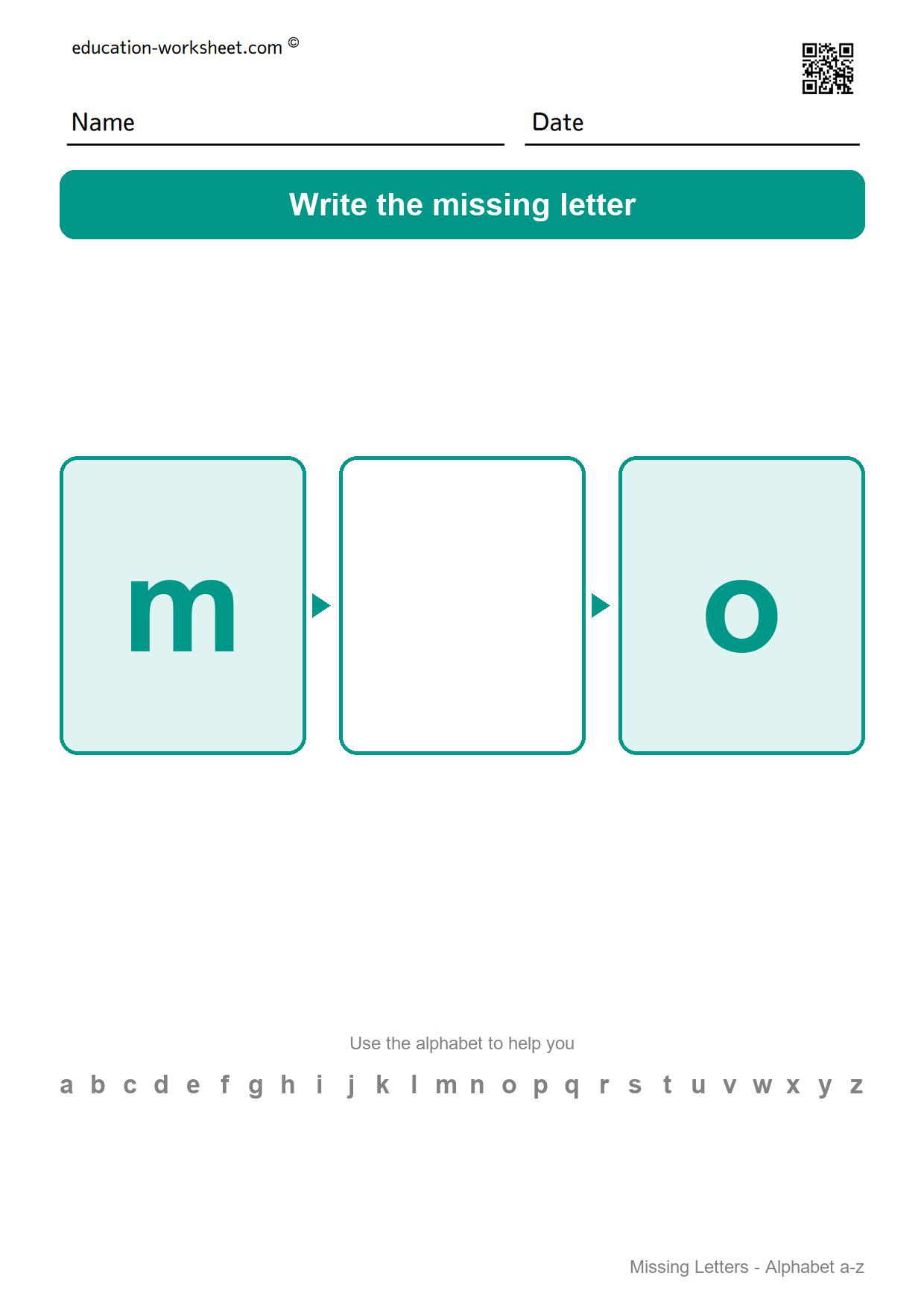
p – ? – r. Lowercase p and q are mirror images of each other, which makes this the trickiest page in the pack to read, never mind answer.
Missing Letter t
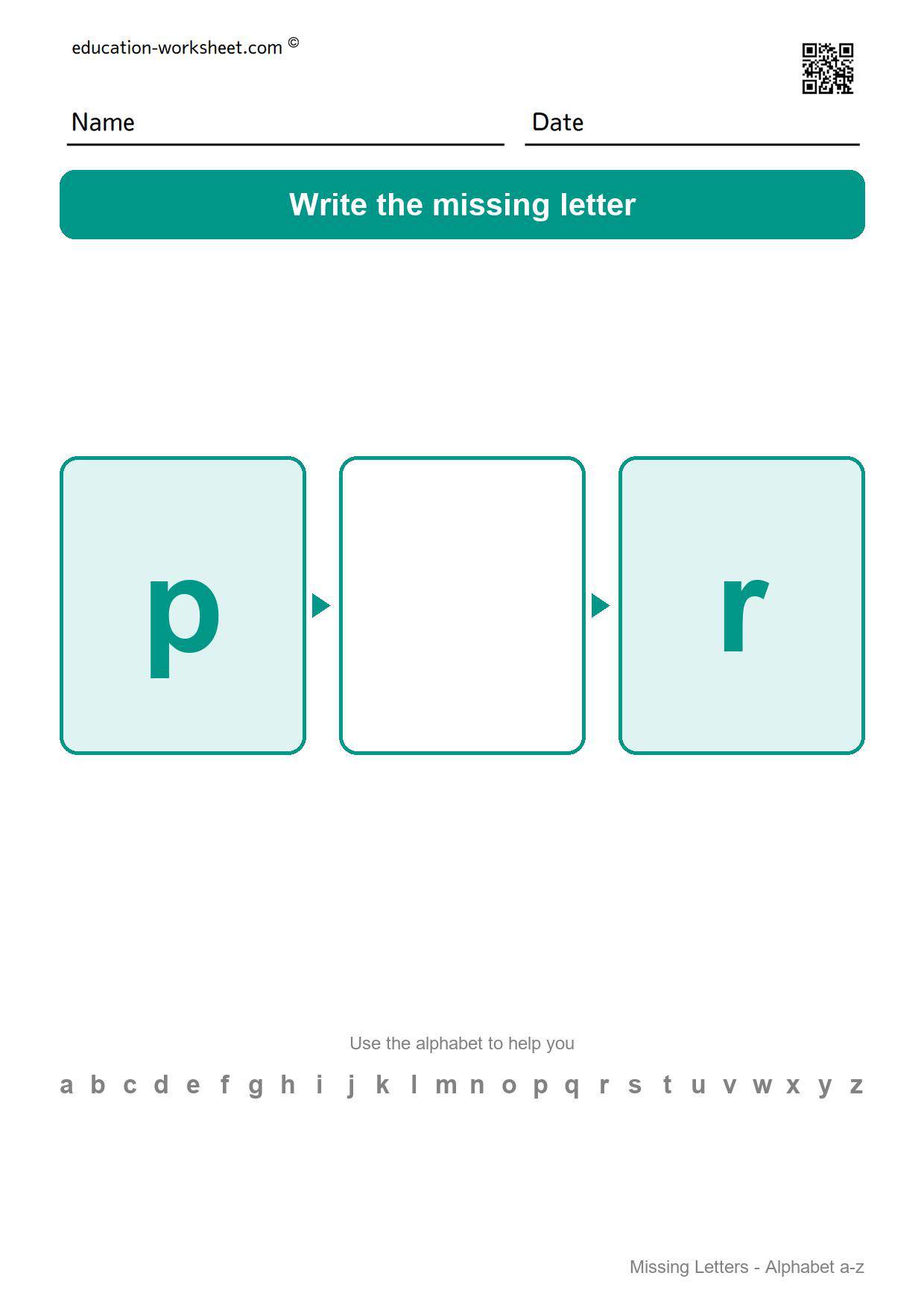
s – ? – u. Past the middle, where the song speeds up and the letters blur.
Missing Letter w
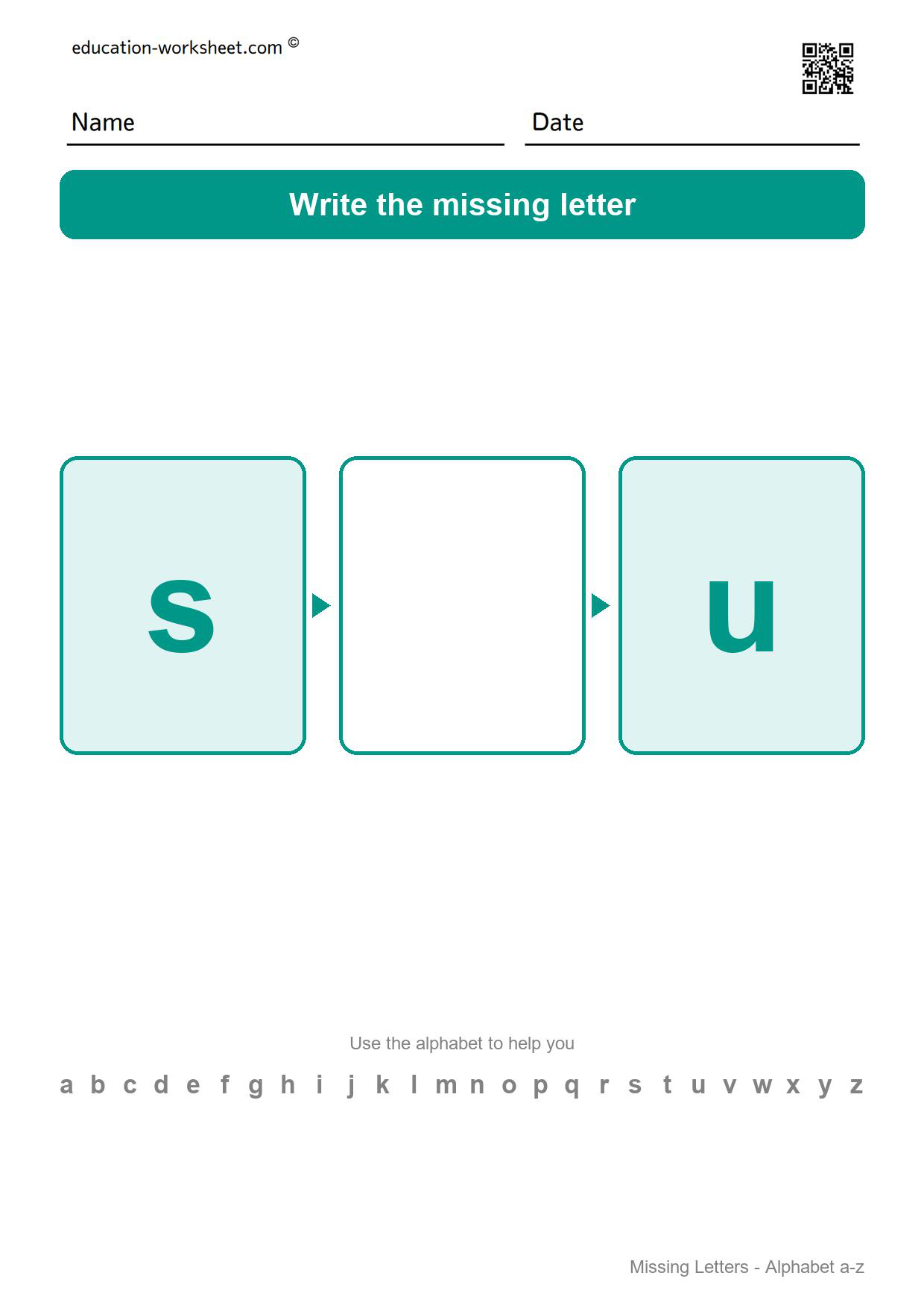
v – ? – x. Near the end, where children are usually confident again because the ending of the song is sung clearly.
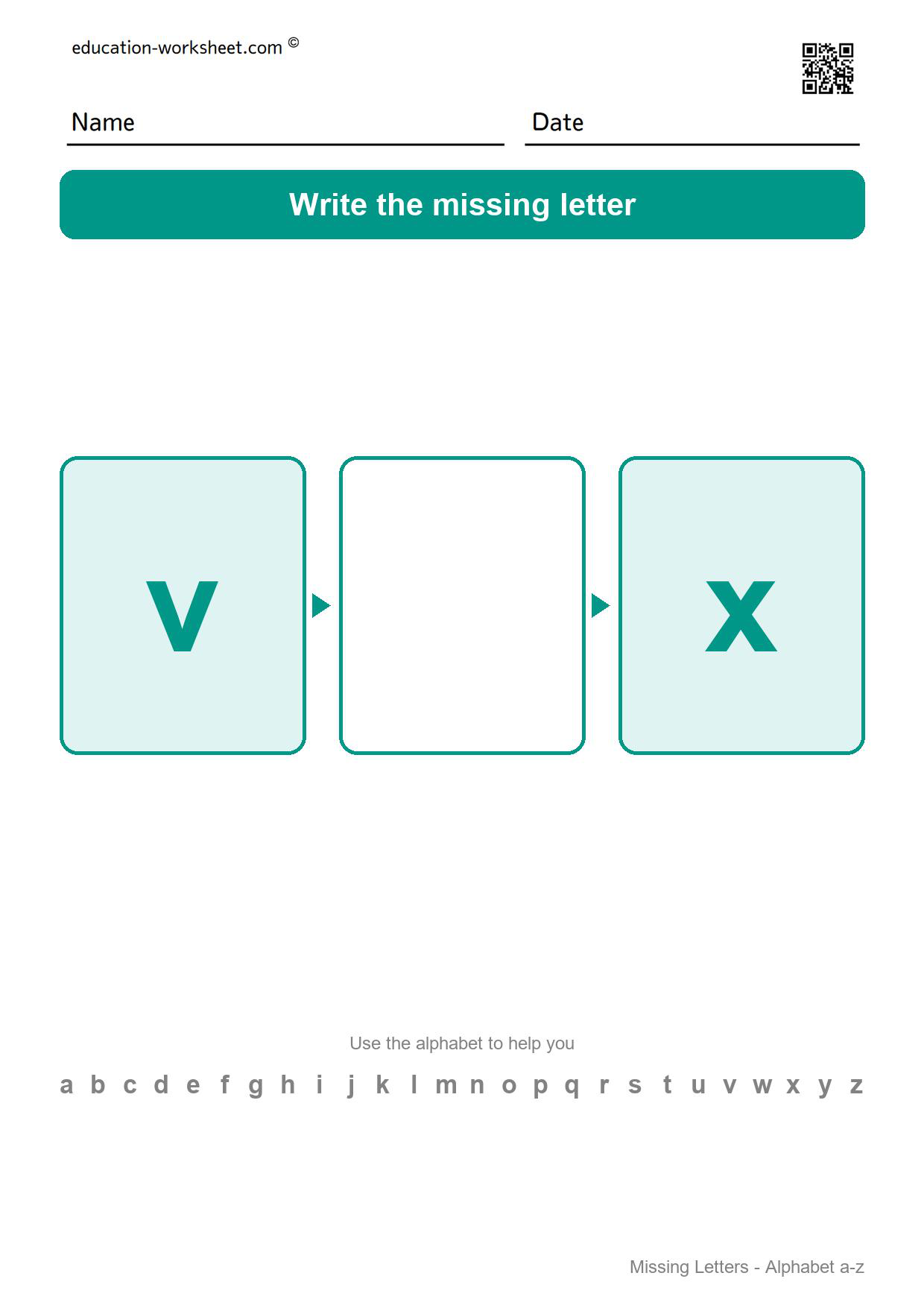
Missing Letter x
w – ? – y. Three letters that rarely appear in a young child’s reading, so this page tests the sequence itself rather than familiarity.
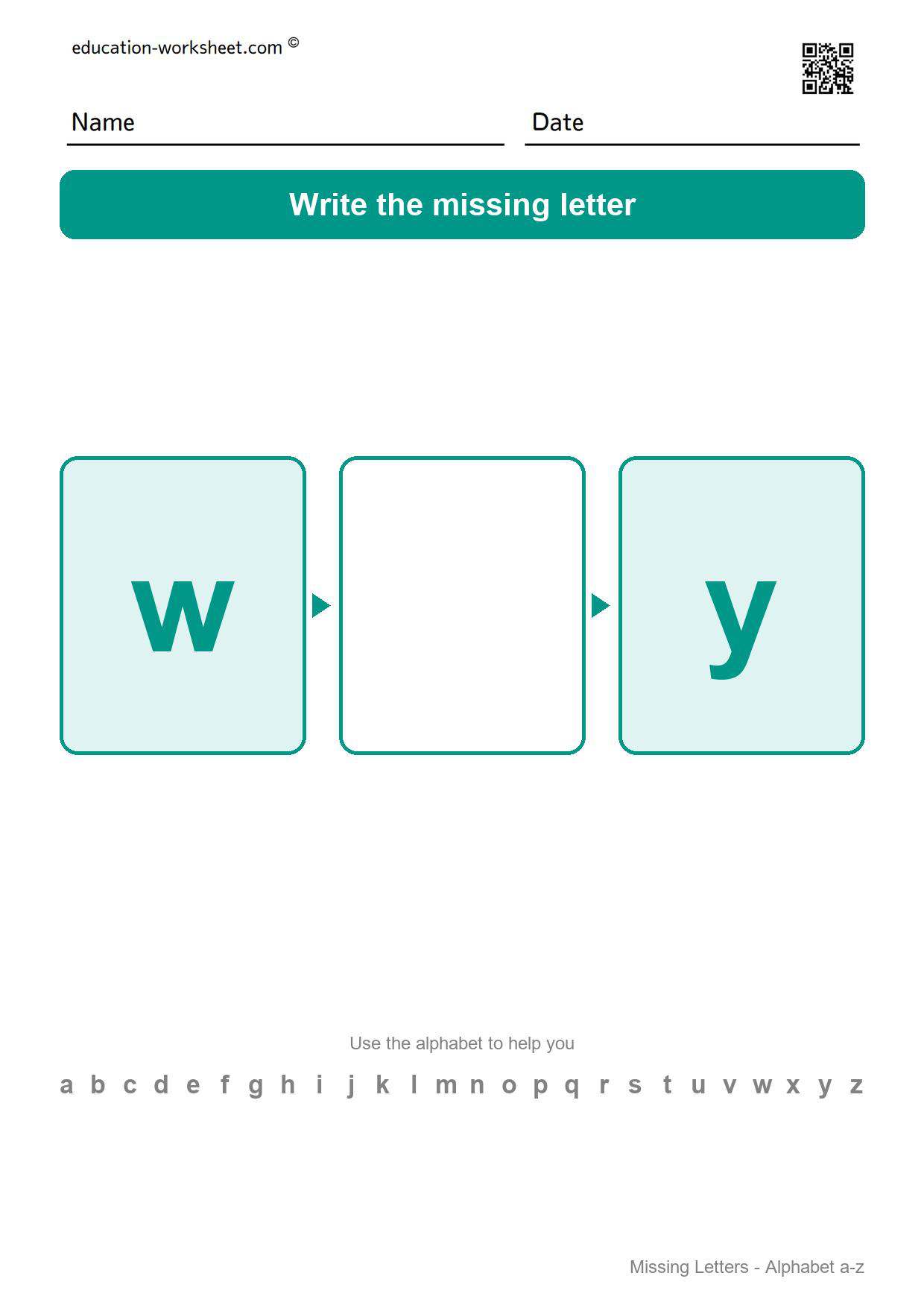
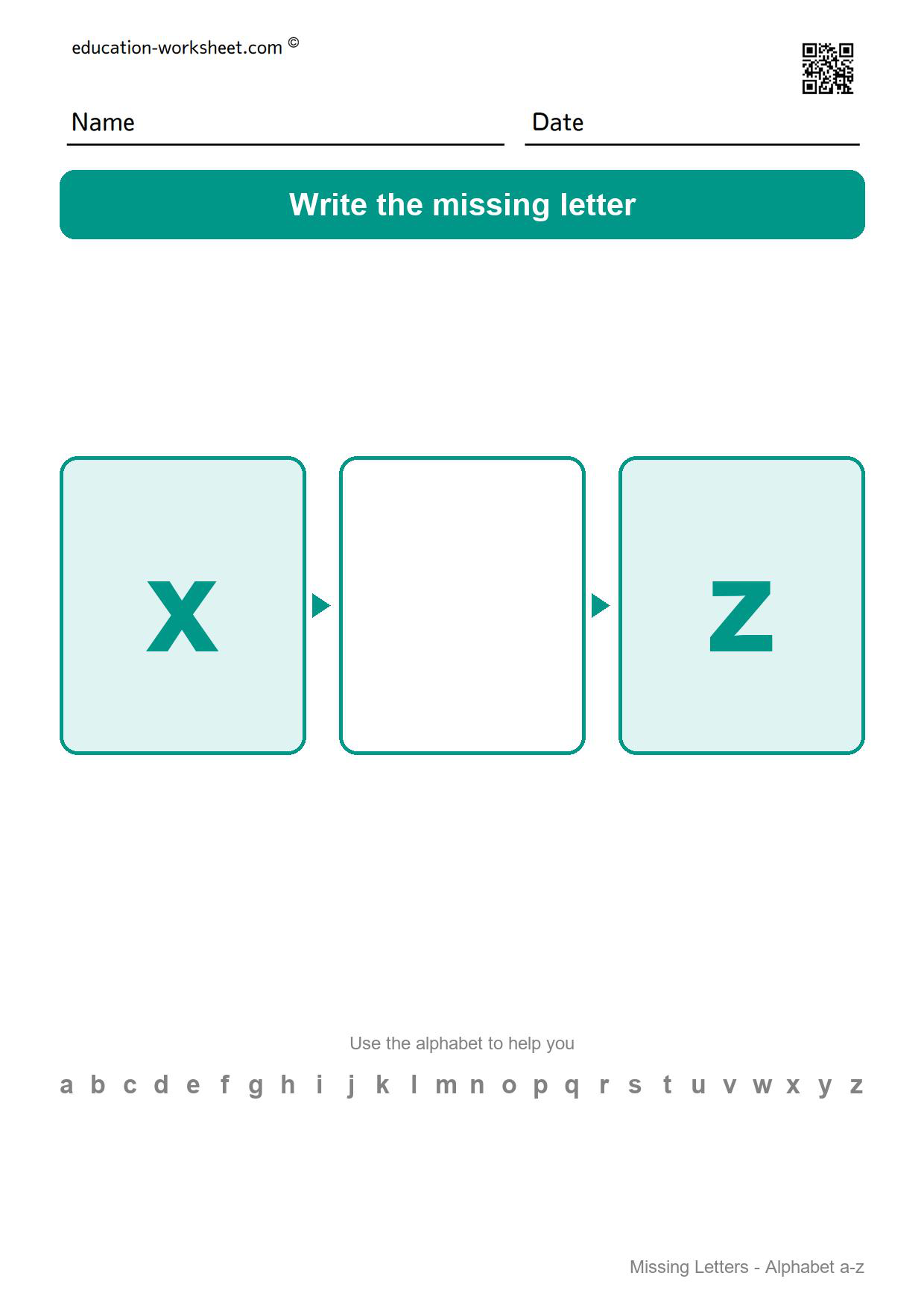
Missing Letter y
x – ? – z. The last page, and an easy one to finish on.
Singing the Alphabet Is Not the Same as Knowing It
Almost every child can sing the alphabet song long before starting school, and it is easy to take that as proof that they know the order. They usually do not. The song is learned as a single long sound, and the famous evidence is the middle of it: a great many children sing elemenopee as one word and have no idea that four separate letters are hiding in there.
That is why these pages ask for one letter from a standing start rather than for the whole sequence. A child who can answer “what comes after m?” without singing from a has genuinely separated the letters out. One who has to sing from the beginning every time is not wrong – they are simply not finished yet, and the page after page of short single questions is what finishes the job.
When Children Are Ready for These Worksheets
These pages suit children from about four to six years old. A child should recognise most lowercase letters on sight and be able to write them roughly; neat handwriting is not needed, and letters that come out back to front are fine at this age.
In American classrooms this supports the kindergarten reading foundation standard on recognising and naming all upper- and lowercase letters (Common Core RF.K.1.D), and it is one of the standard ways of moving a child from reciting the alphabet to using it.
How to Use These Worksheets
- Print one page and read the two given letters out loud.
- Ask what comes next, before pointing at the alphabet strip at the bottom.
- If the answer does not come, find the first letter on the strip together and move one to the right.
- Write the letter in the box and read all three out loud as a run.
- Cover the strip on a later page and see whether it is still needed.
Three Things to Watch For
Singing from a every single time
Not a mistake, and not worth stopping. It is how children search the sequence. It gets shorter on its own as individual letters become independent.
b, d, p and q
These four are the same shape in four orientations, and the q page in this pack sits right next to p. Reversals here are expected until about seven and are not a sign of any difficulty.
Writing the letter that comes after instead
A child who writes c on the a – ? – c page has read only the first box. Cover the left-hand letter and ask what goes before c, then uncover it.
Printing Tips
- Choose Actual size or Fit to page so the boxes stay big enough to write in.
- Each page fills one sheet and works on both US Letter and A4 paper.
- Slip a page into a plastic wallet and use a dry-wipe pen to reuse it with more than one child.
- These pages are almost entirely black and white and cost very little to print.
Frequently Asked Questions
What age are these missing letter worksheets for?
About four to six years old – preschool, pre-K and kindergarten.
Are the letters uppercase or lowercase?
Lowercase throughout, because that is the form children meet first in reading.
Is it alright to use the alphabet strip at the bottom?
Yes. It is printed there for that purpose, and reading it is part of the learning.
Which letters are missing?
b, e, h, k, n, q, t, w, x and y – ten pages spread across the whole alphabet.
Do I need to sign up to download these?
No. Every PDF downloads immediately, with no account, no email address and no cost.
Can I use these in my classroom?
Yes, they are free to print for home and classroom use. Please do not sell them or re-host the files elsewhere.
More Free Alphabet Worksheets
- Free ABC Order Worksheets – Alphabetical Order Practice
- Free Letter Before and After Worksheets – Alphabet Order
- Free Complete the Alphabet Worksheets – Missing Letters
- Free Uppercase and Lowercase Letter Matching – One Page for Every Letter
- Free Find the Letter Worksheets – Letter Recognition
- Free Alphabet Maze Worksheets – ABC Order Fun