- Free Contractions Worksheets for Kindergarten – Two Words in One
- Contractions: what the apostrophe is actually doing
- What your child is actually learning
- How to work through these pages
- The mistakes to expect
- What to teach next
- Questions parents ask
- Should young children use contractions in writing?
- Why is won’t spelled that way rather than willn’t?
- My child says can’t but writes cannot. Is that wrong?
- More free worksheets
Free Contractions Worksheets for Kindergarten – Two Words in One
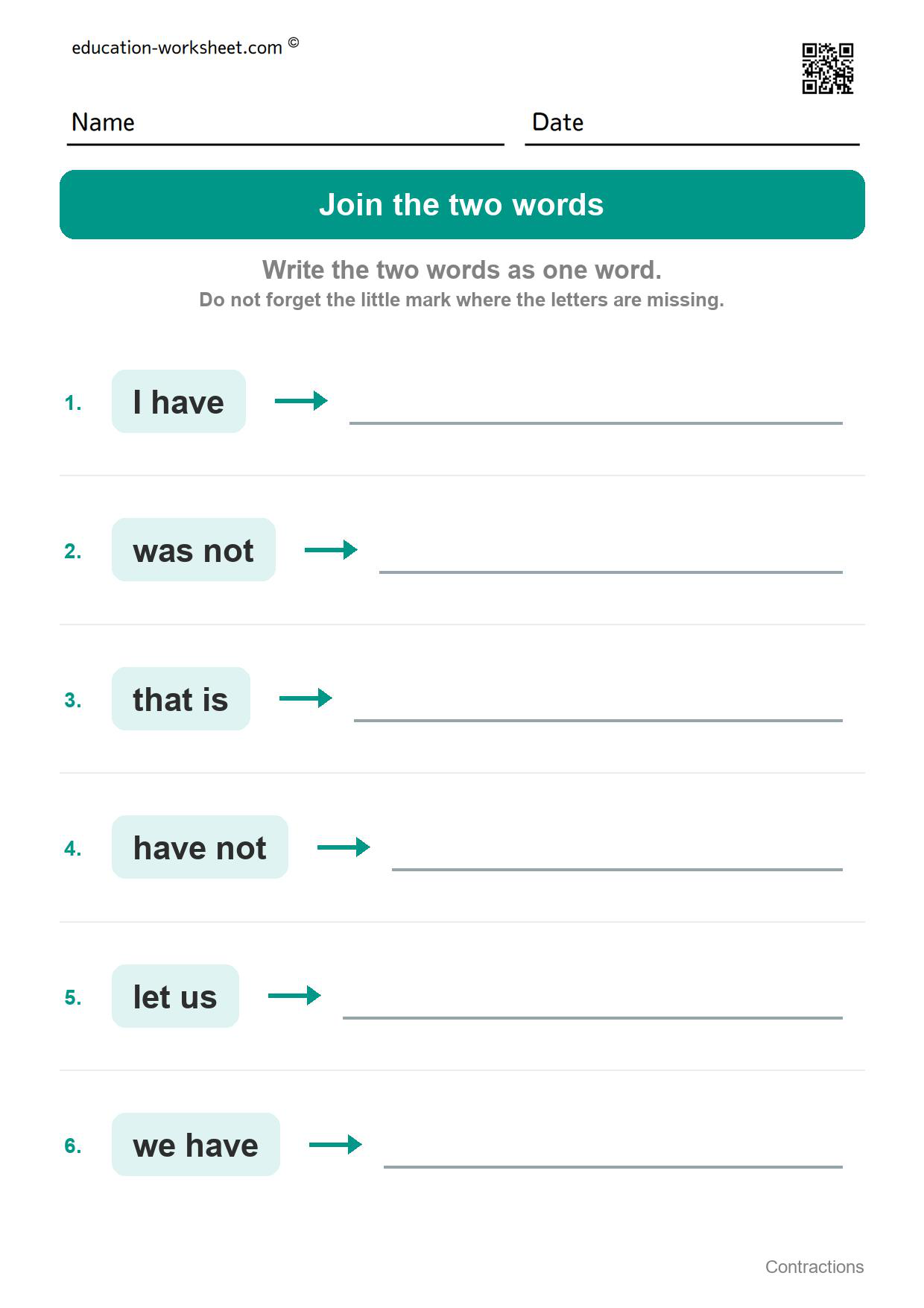
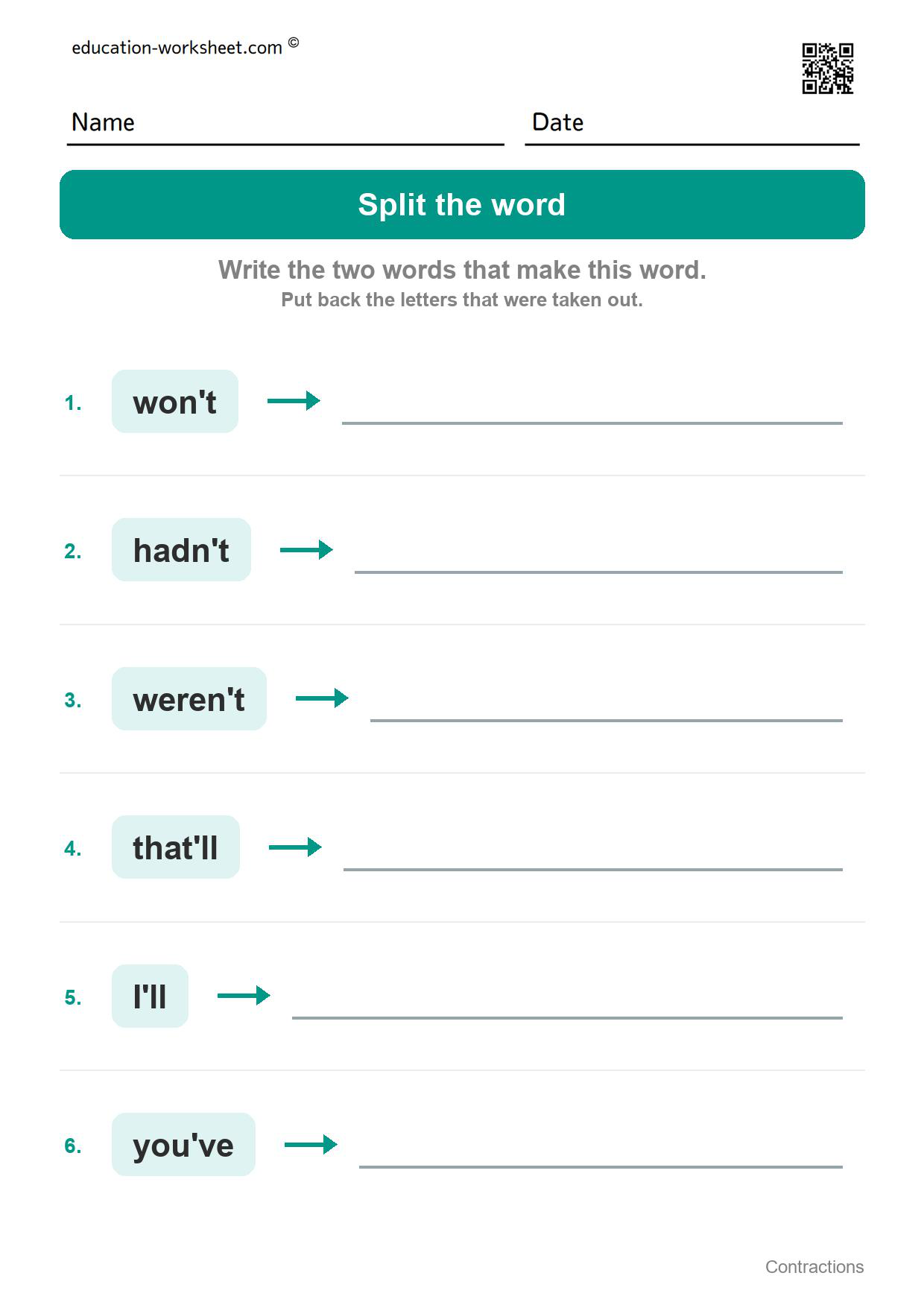
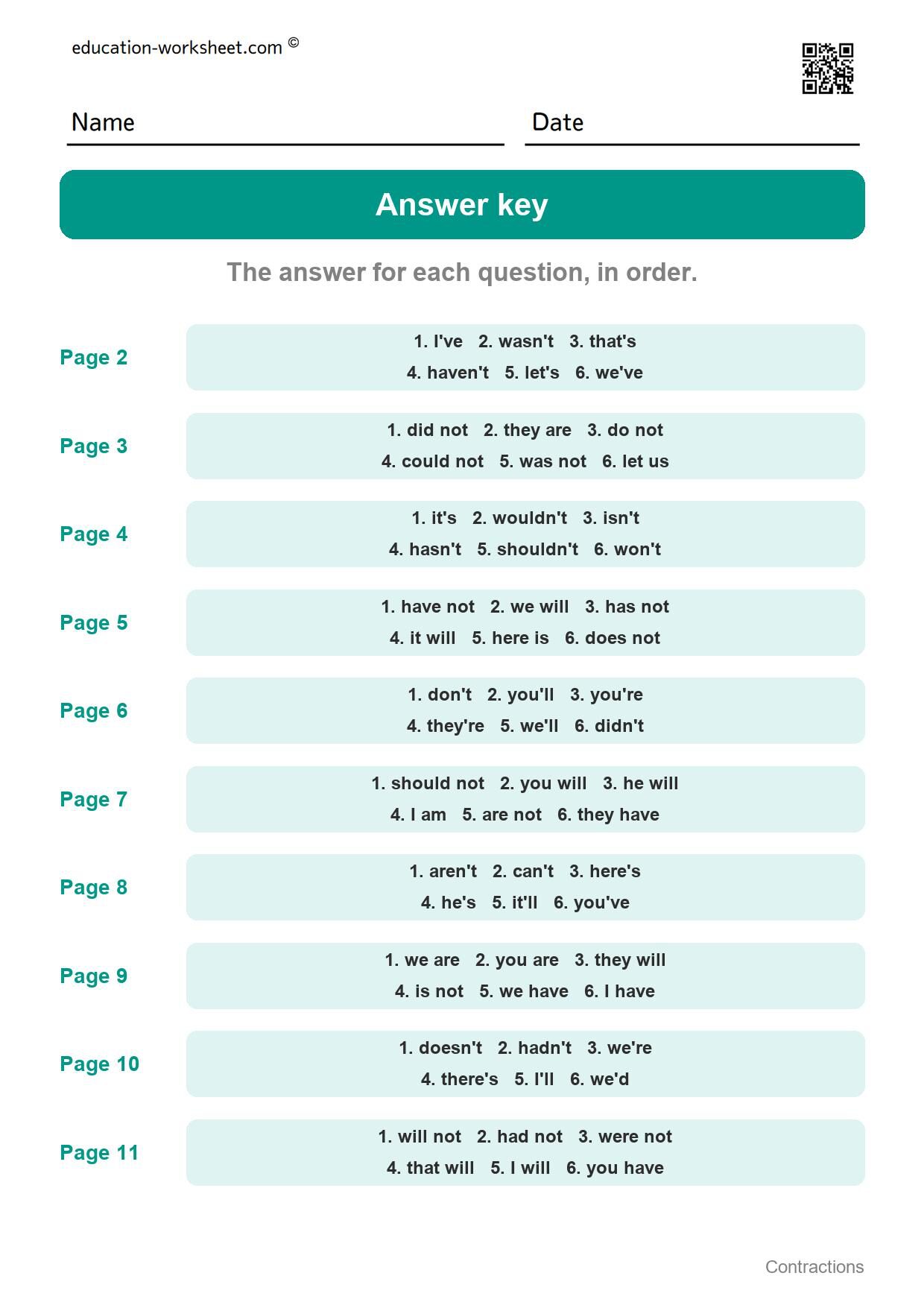
These free printable contractions worksheets show kindergarten and first grade children how two words can be squashed into one, with an apostrophe standing in for the letters that have gone. The pages alternate between two jobs: on half of them children join two words into one, and on the other half they split a contraction back into the two words it came from. Splitting is the harder direction and it is where children really show they understand. Contractions that could be split in more than one way are only used in the joining direction, never in the splitting direction, because he’s can stand for he is or he has and both answers would be right. The first page explains the idea with do not and I am, and it warns about will not, which turns into won’t rather than willn’t. The last page is an answer key. Just download, print, and write!
How contractions work
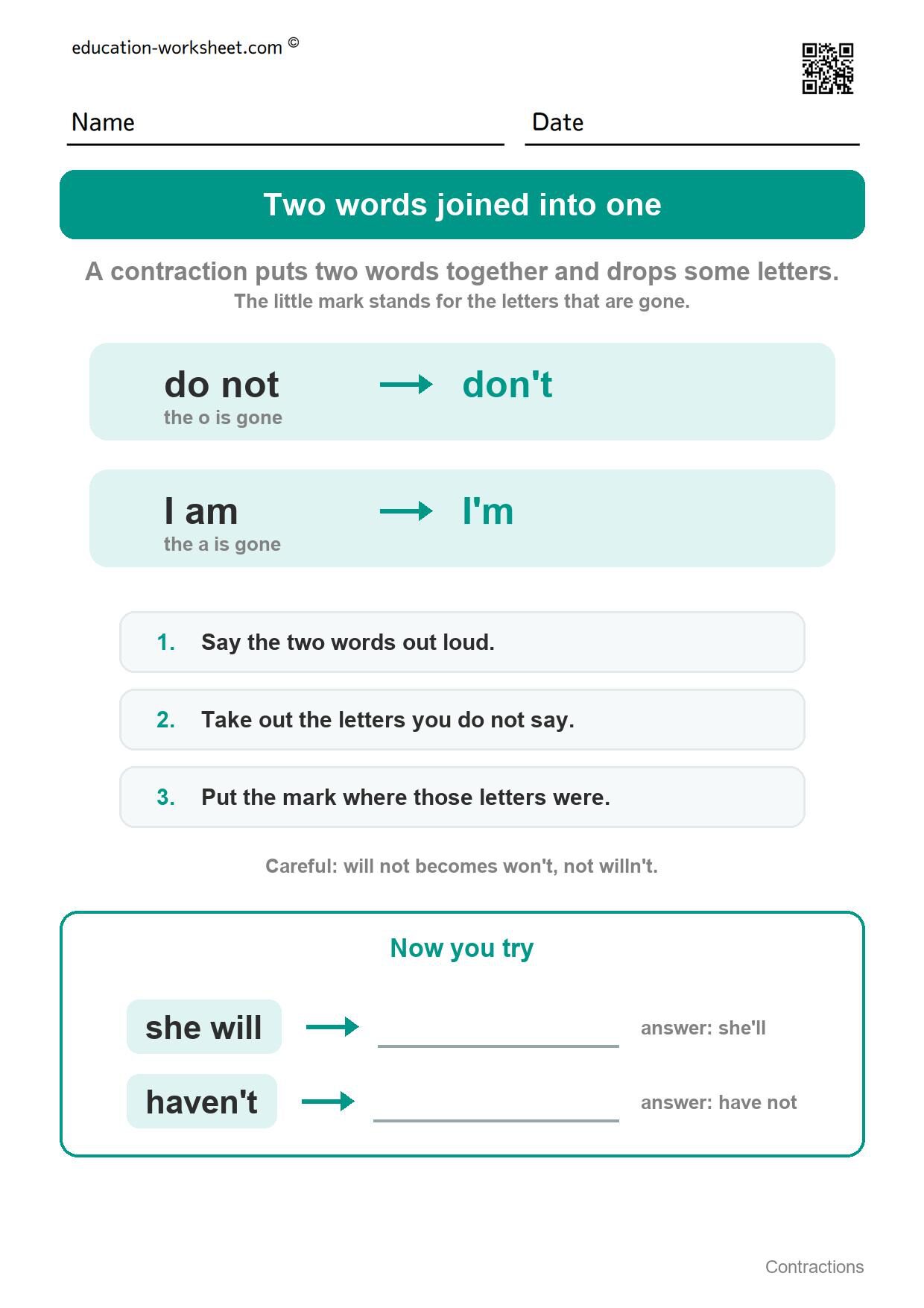
Join the two words (Set 1)
Split the word (Set 2)
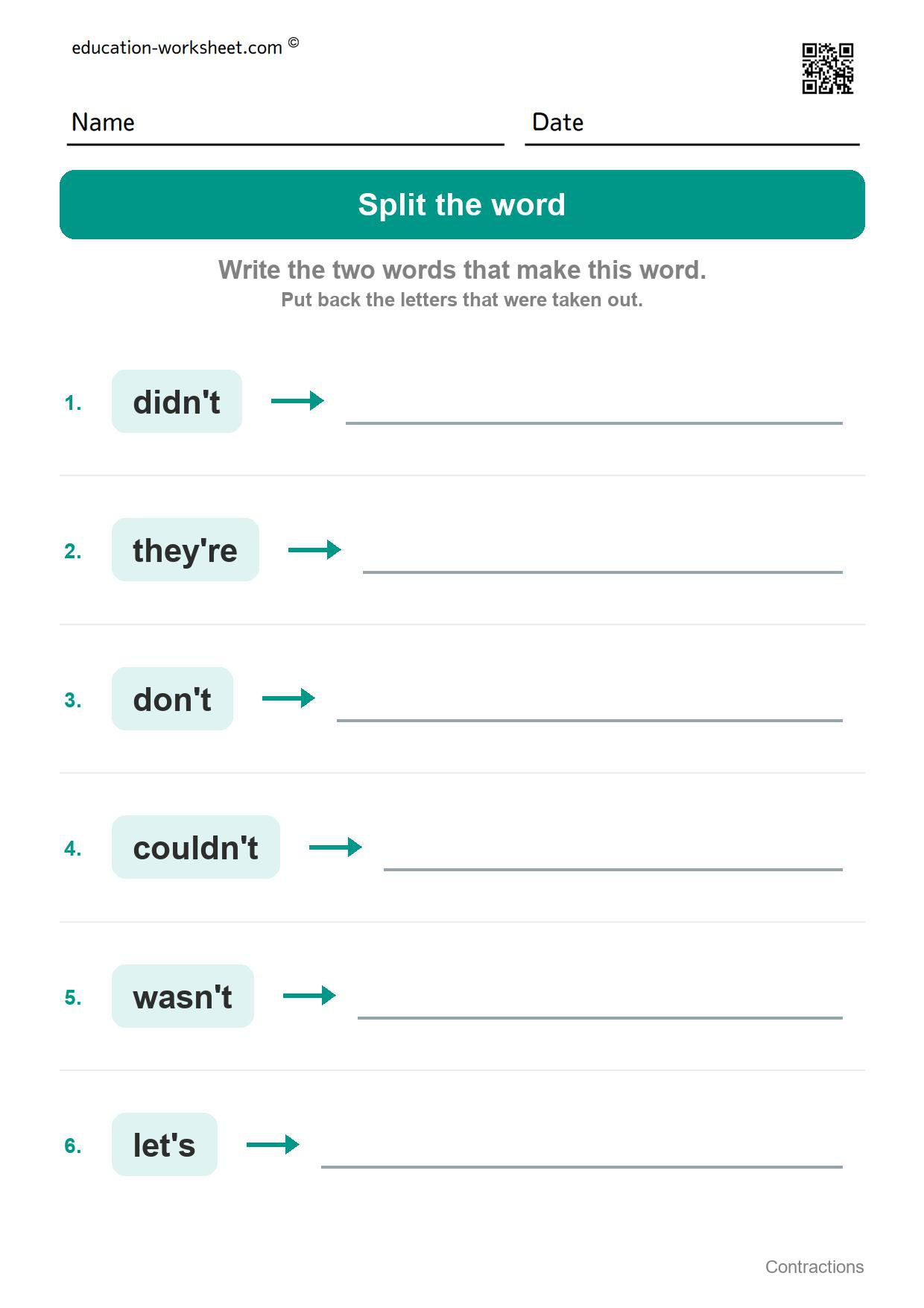
Join the two words (Set 3)
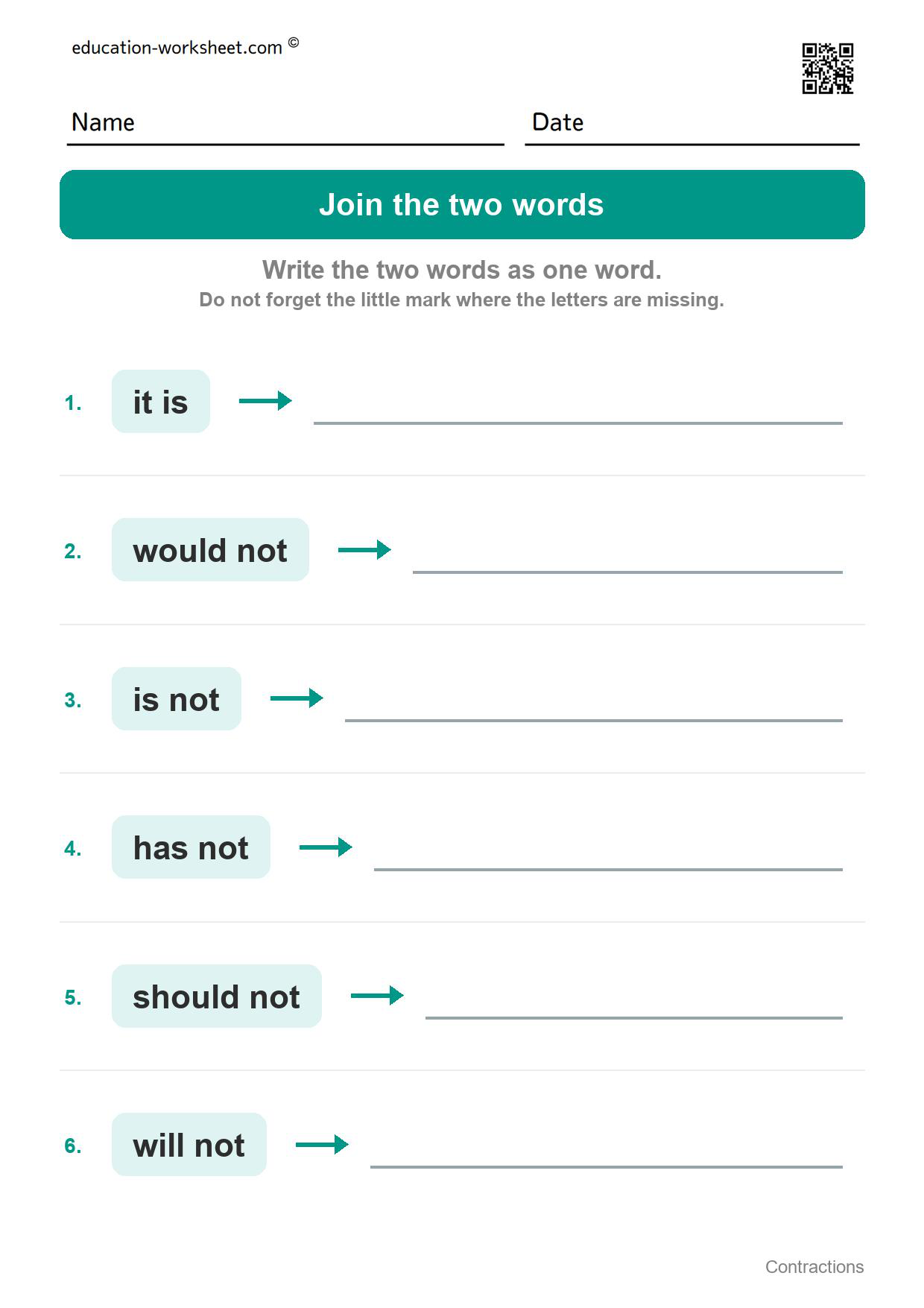
Split the word (Set 4)
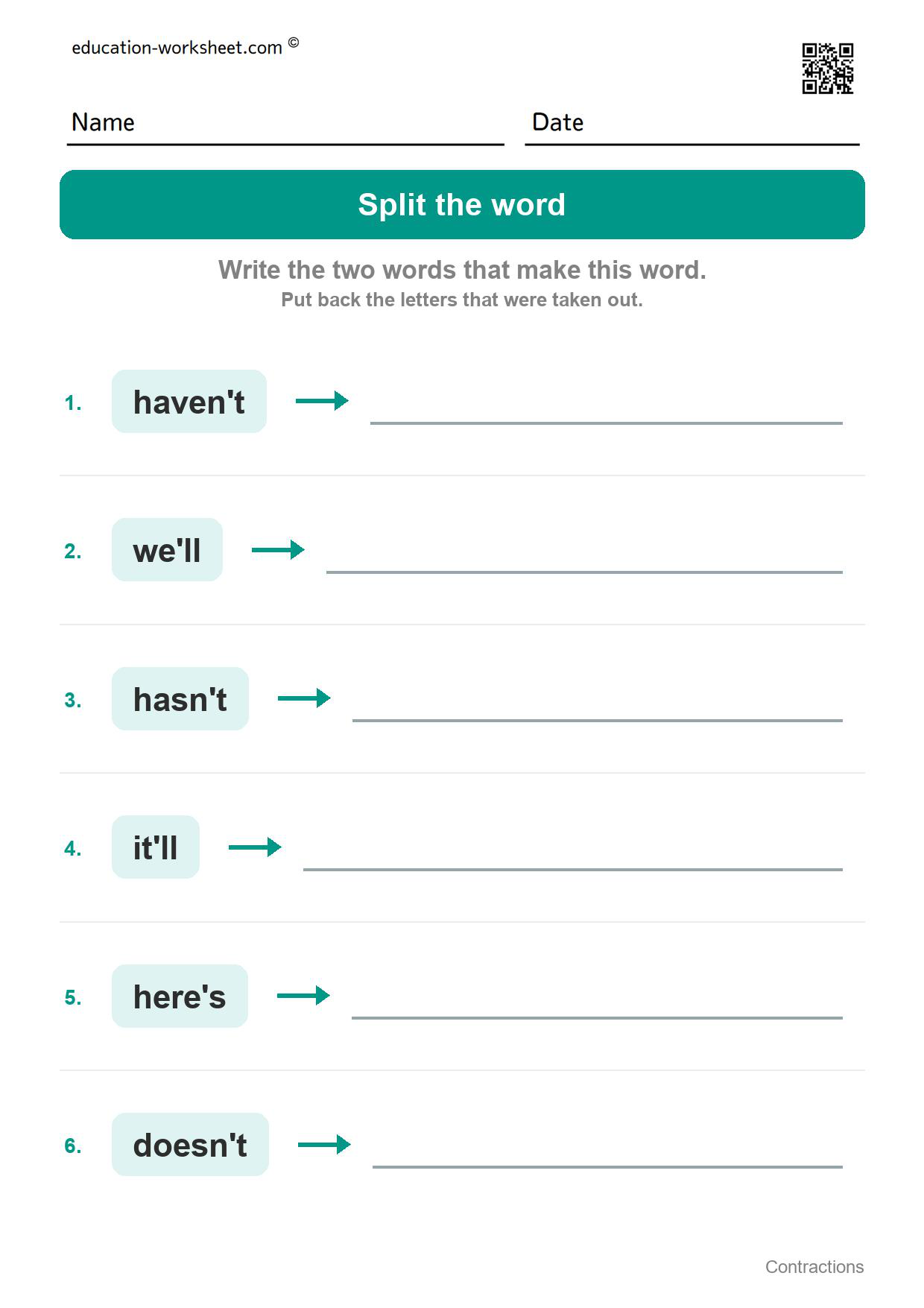
Join the two words (Set 5)
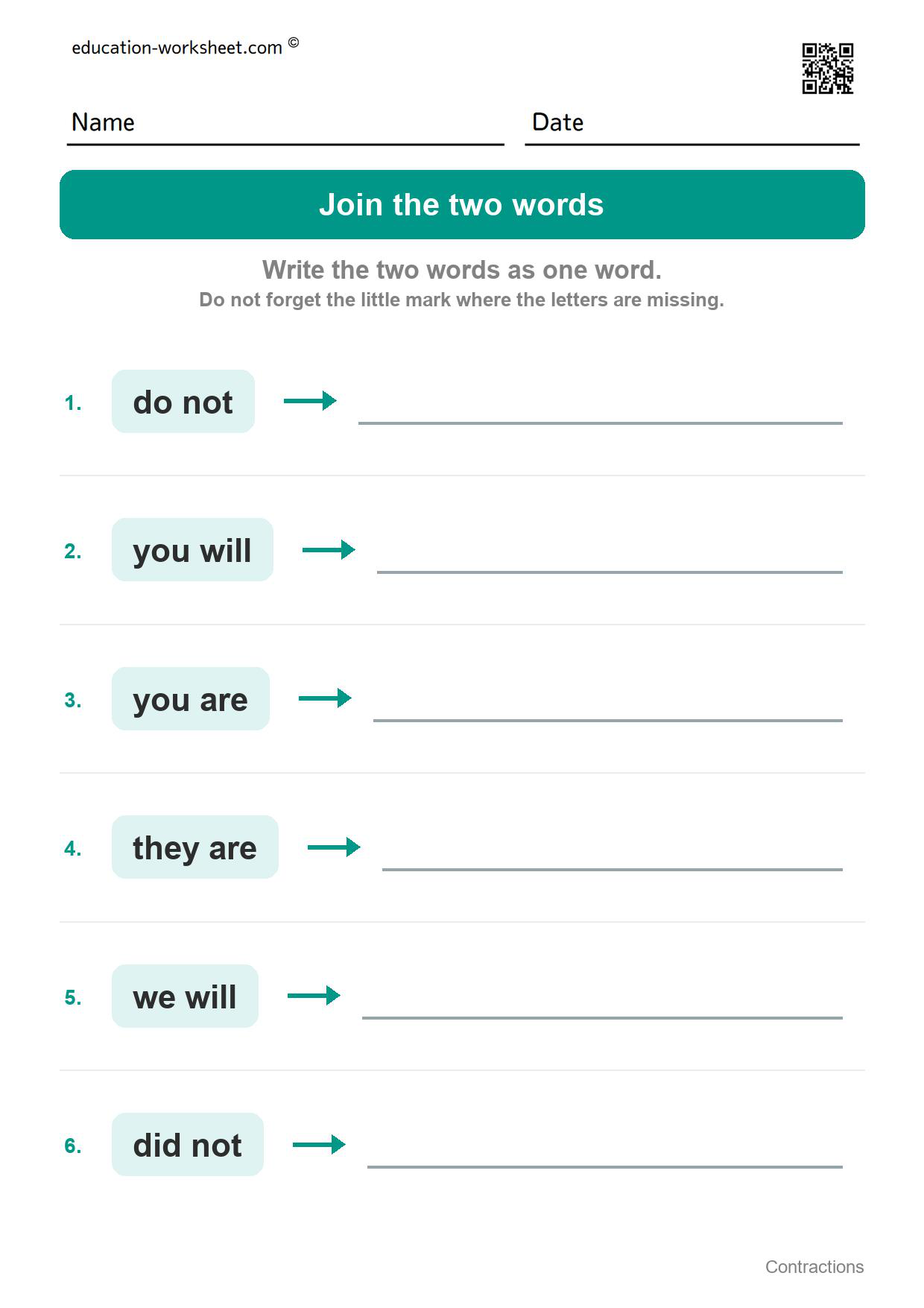
Split the word (Set 6)
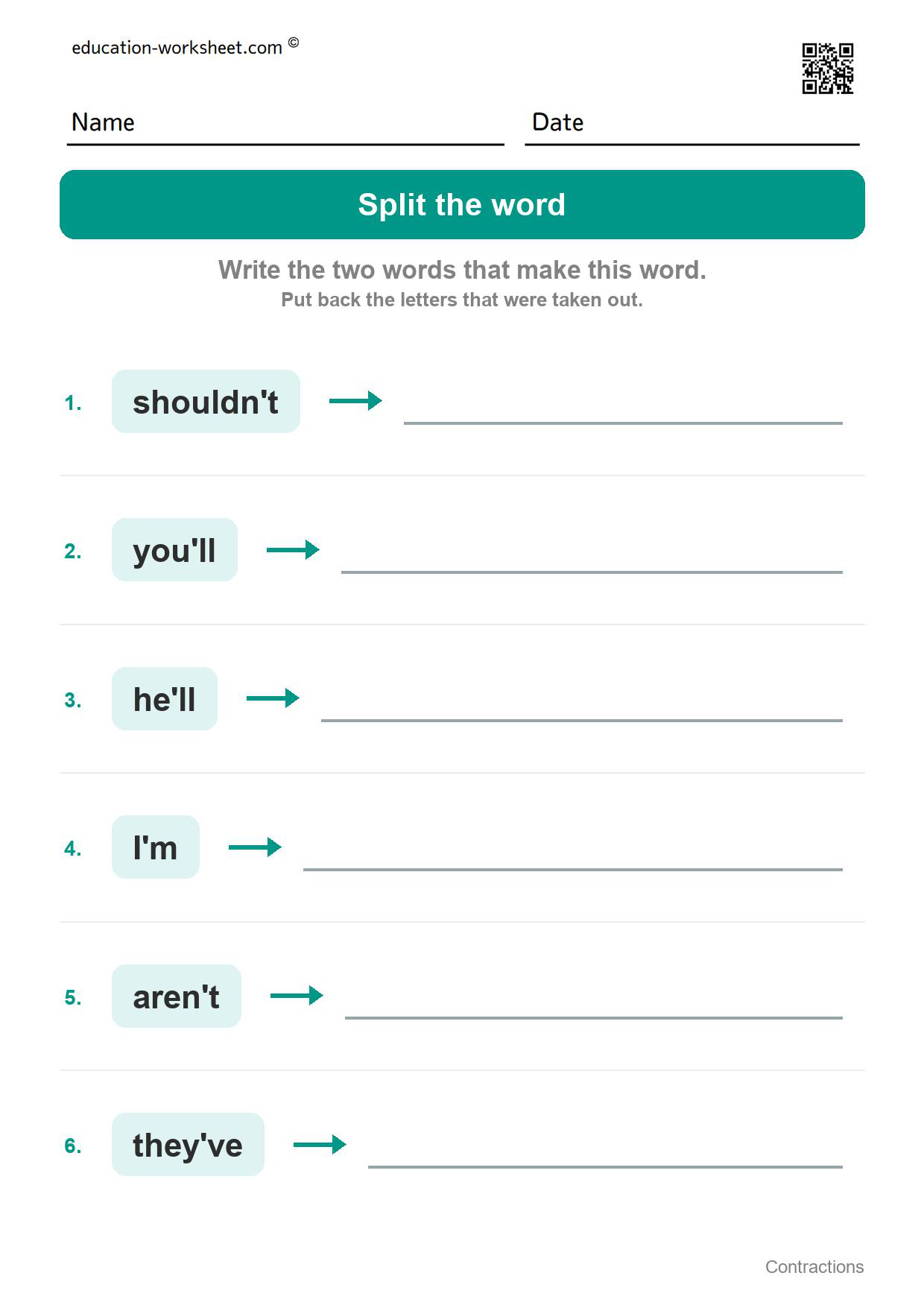
Join the two words (Set 7)
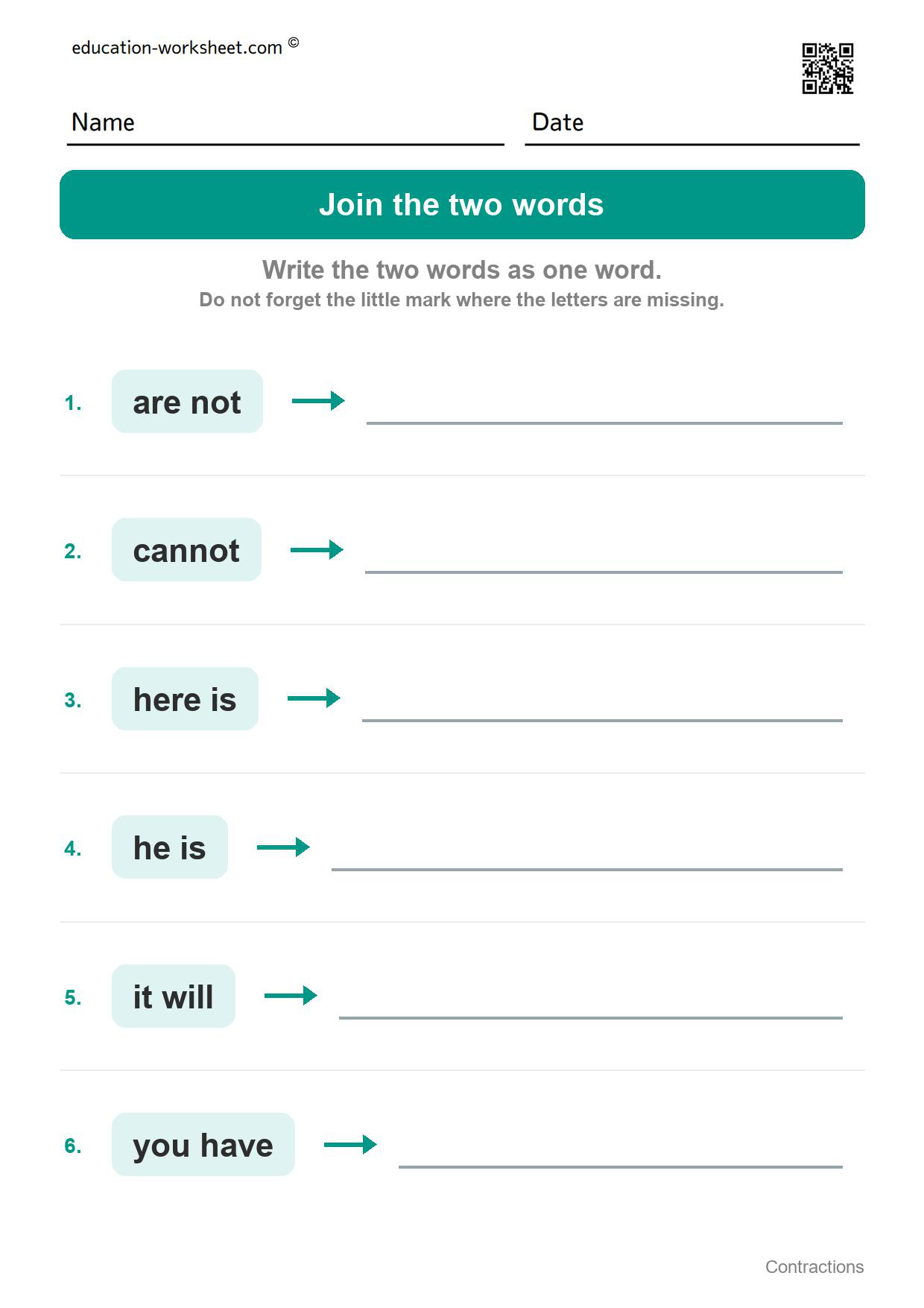
Split the word (Set 8)
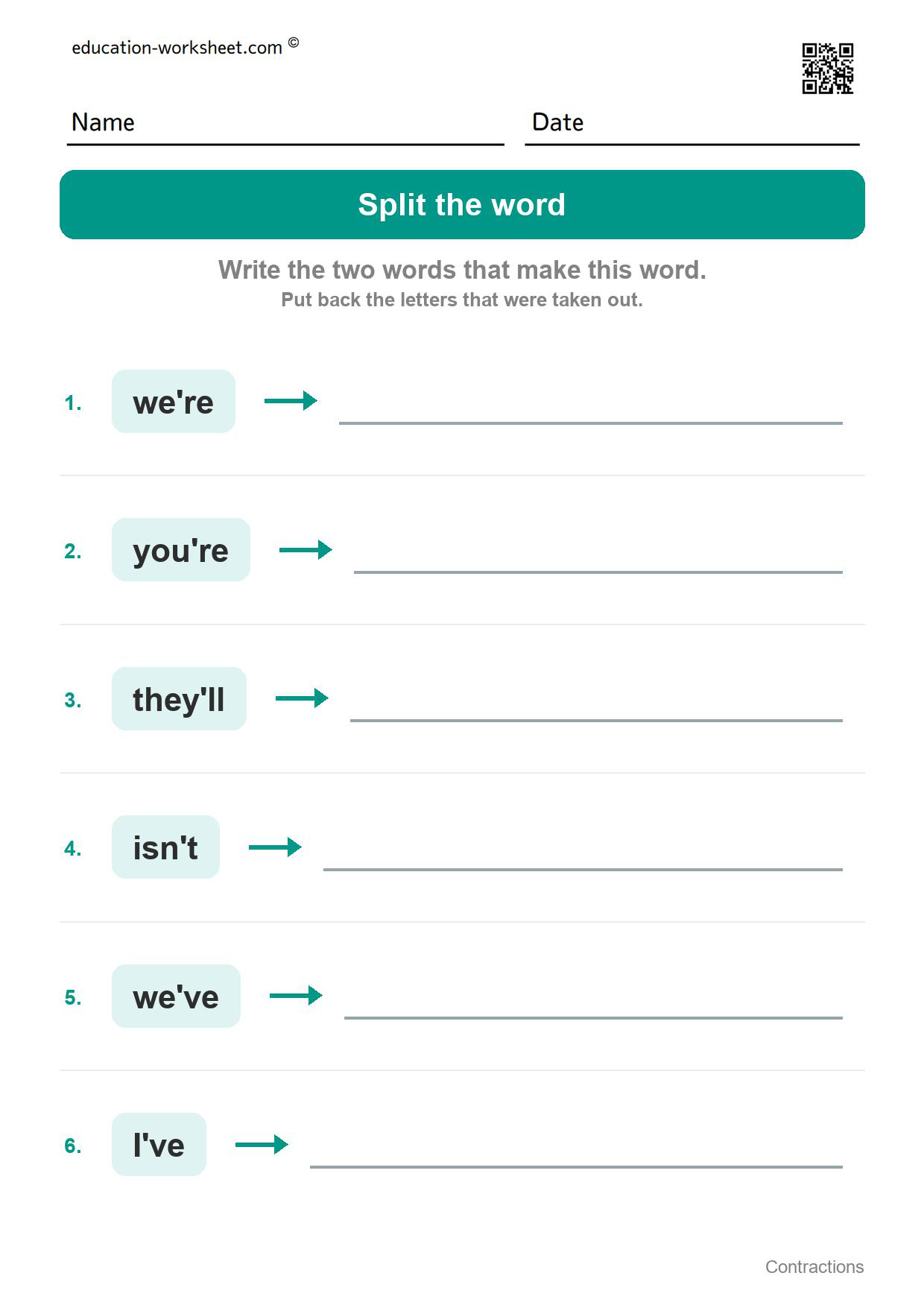
Join the two words (Set 9)
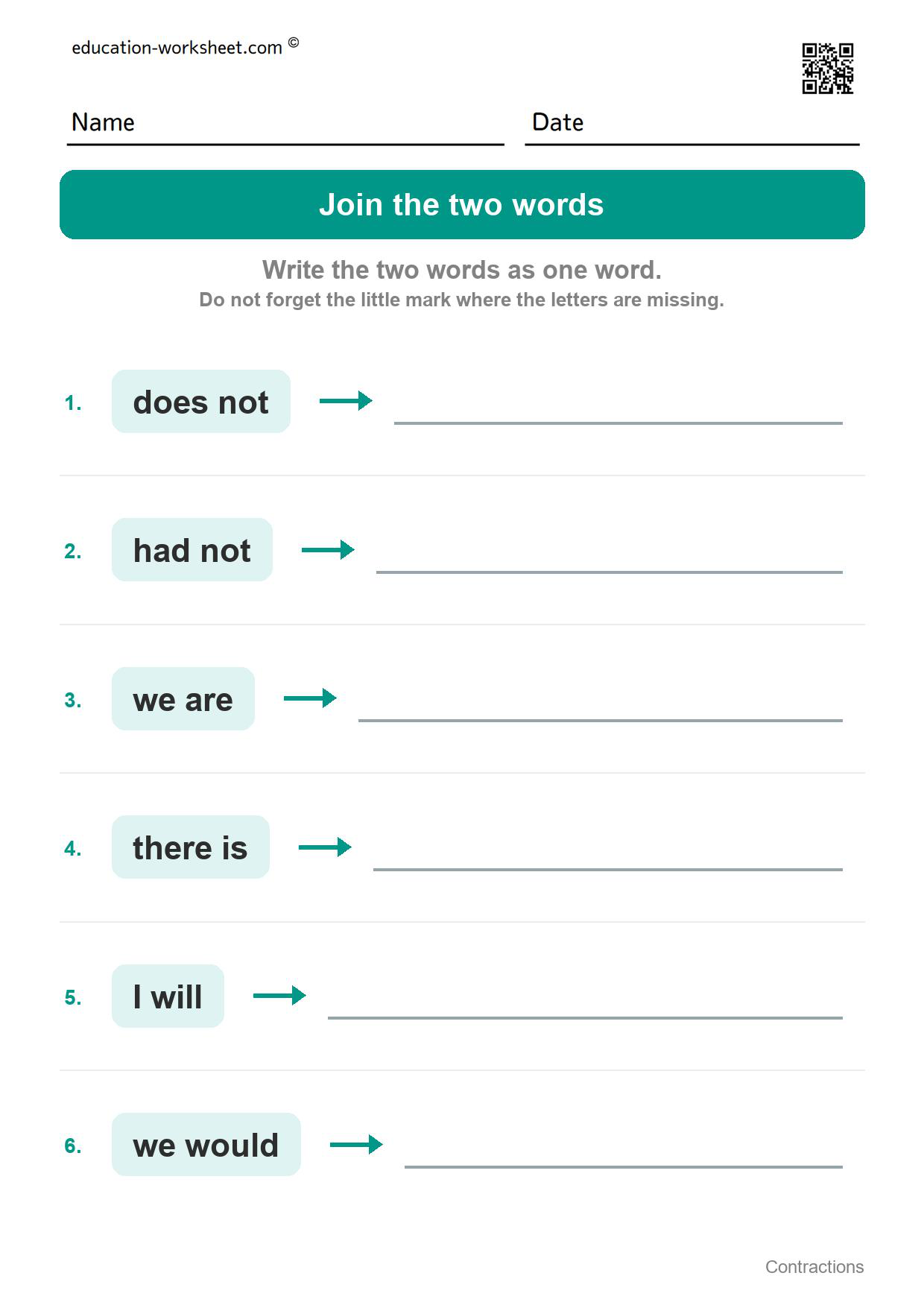
Split the word (Set 10)
Answer key – all 10 pages
Contractions: what the apostrophe is actually doing
A contraction squeezes two words into one and puts an apostrophe where the missing letters used to be. Do not becomes don’t, and the apostrophe stands exactly where the o of not was. Children who are taught that one fact place the apostrophe correctly almost every time; children who are taught only that contractions have an apostrophe somewhere produce do’nt for months.
What your child is actually learning
Recognising and writing common contractions is part of first grade language work, and the useful groups are small: the not family (isn’t, don’t, can’t, didn’t), the is and has family (he’s, she’s, it’s), the will family (I’ll, we’ll, they’ll) and the are family (you’re, we’re, they’re). Teaching by family rather than as one long list means the apostrophe lands in the same place every time within a group.
How to work through these pages
Ask the same question on every item: which letters went missing? Have your child say the two full words, then the contraction, then point to where the gap is. Writing the full pair above the contraction for the first few is a useful crutch that can be dropped quickly. Reading contractions aloud in a real sentence also matters, because contractions belong to speech and sound natural there in a way they do not in isolation.
The mistakes to expect
- Putting the apostrophe between the two original words rather than at the missing letters: do’nt, is’nt. The missing-letters question fixes this.
- Leaving the apostrophe out entirely, giving dont and cant.
- Confusing its and it’s. This one troubles adults too. In first grade it is enough to say that it’s always means it is.
- Assuming an apostrophe always means a contraction. It also shows possession, as in the dog’s bowl, and children meet both in the same year.
What to teach next
Sentence building works well next, because contractions are most natural inside real sentences and because both units are about how written English is put together rather than how it is sounded out. Plural nouns are also worth revisiting alongside contractions, so the difference between a plural s and an apostrophe s gets settled early.
Questions parents ask
Should young children use contractions in writing?
Yes. They are ordinary standard English, not slang, and they make writing sound like a real voice. The only place to avoid them is very formal writing, which is years away.
Why is won’t spelled that way rather than willn’t?
It is an old form that survived from an earlier version of the word. It is the one contraction that has to be learned as an exception, and it is common enough that children pick it up without much trouble.
My child says can’t but writes cannot. Is that wrong?
Not wrong at all, just more formal. It is worth pointing out that cannot is the only one of these that is normally written as a single word without a space.