- Free Consonant Blends Worksheets for Kindergarten – Find the Words That Start with bl, cr, st
- Teaching consonant blends: hearing two sounds in a hurry
- What your child is actually learning
- How to work through these pages
- The mistakes to expect
- What to teach next
- Questions parents ask
- Should my child learn blends as whole units or letter by letter?
- Why does my child manage blends when reading but not when spelling?
- Are three-letter blends like str and spl too early for first grade?
- More free worksheets
Free Consonant Blends Worksheets for Kindergarten – Find the Words That Start with bl, cr, st
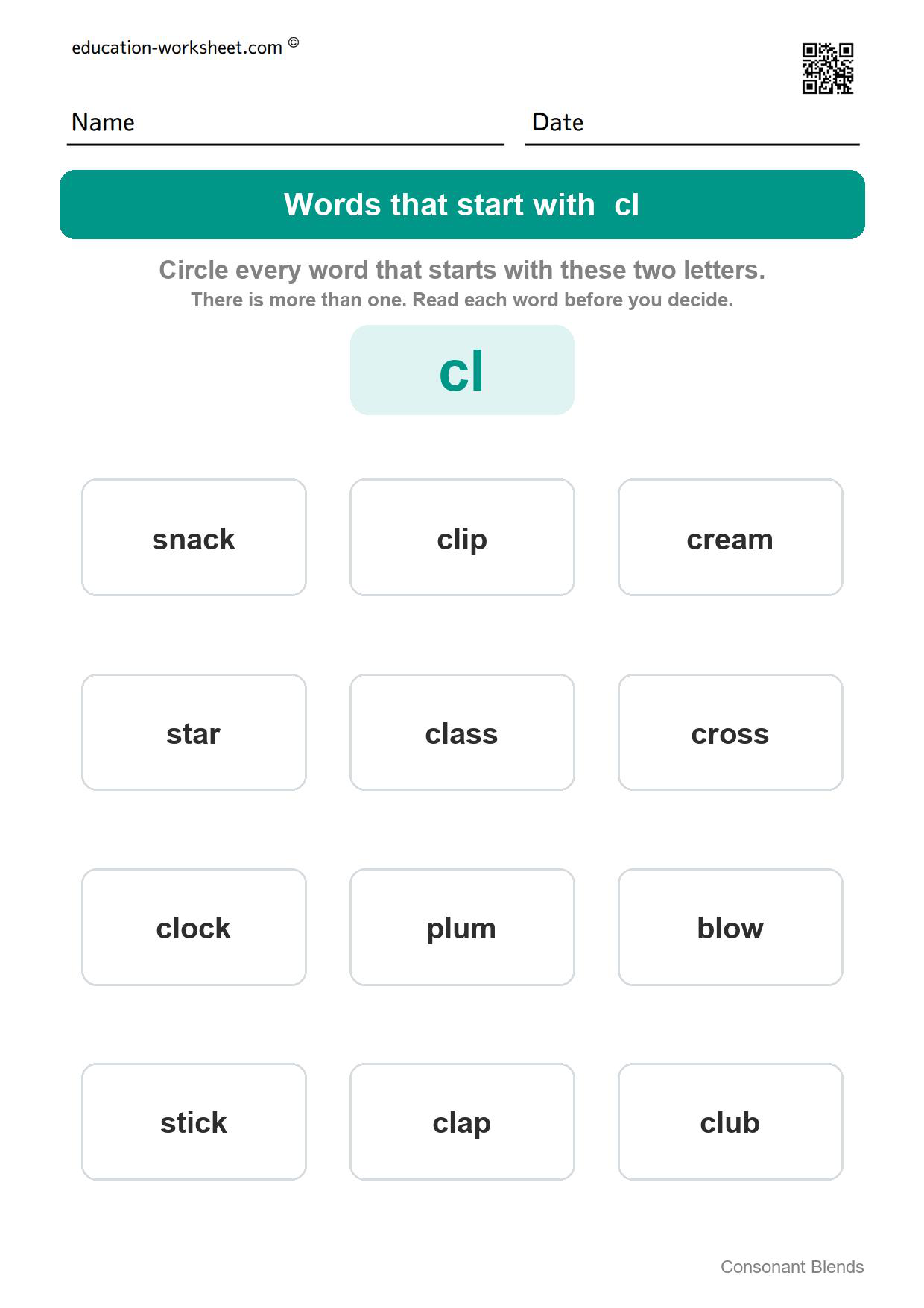
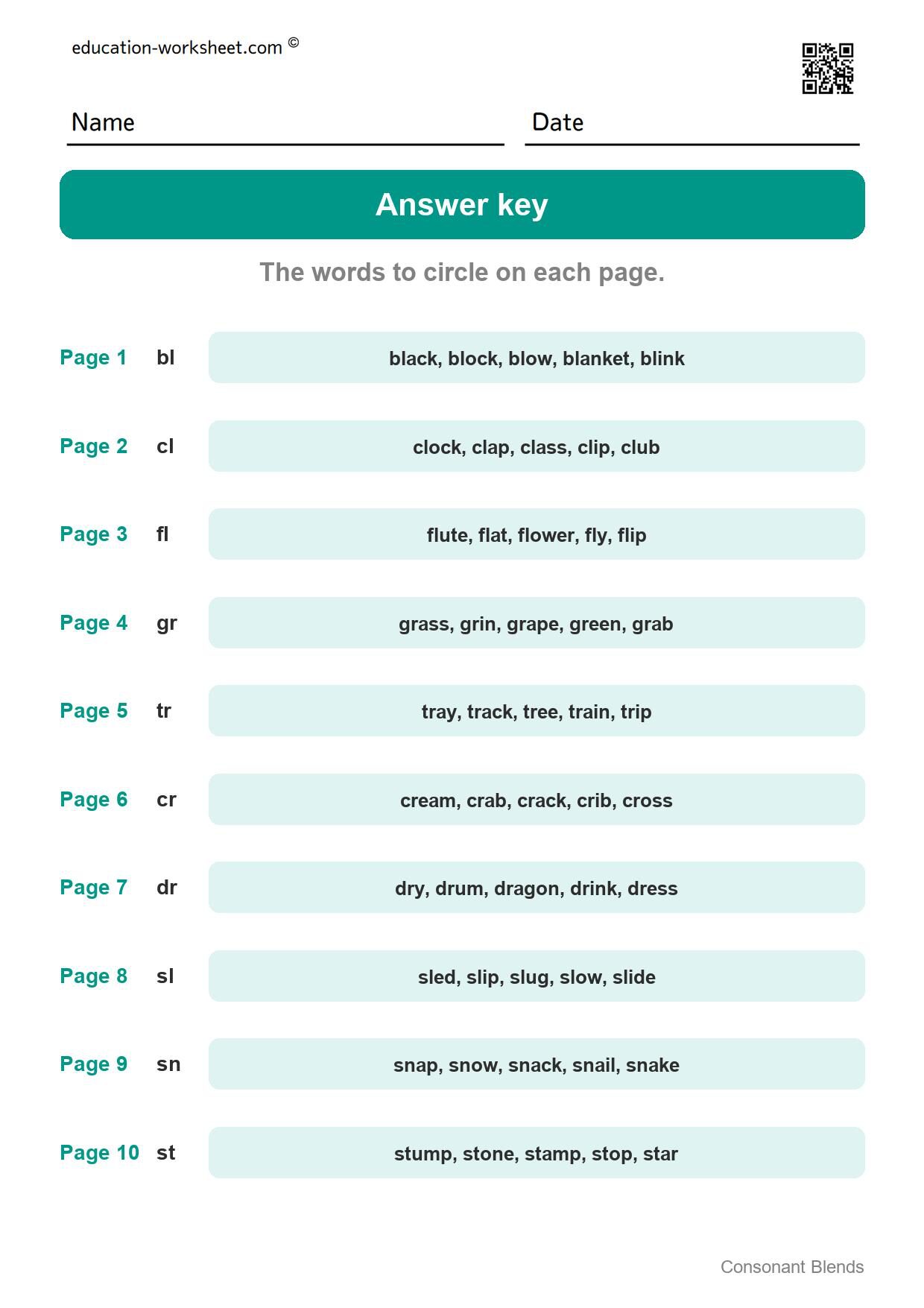
These free printable consonant blends worksheets help kindergarten and first grade children read the two letter sounds that so many words begin with. Each page takes one blend, such as bl, gr or st, shows it in large letters at the top, and then gives twelve words. Children read every word and circle the ones that start with that blend. Five of the twelve are correct, so children cannot guess their way through by picking one and stopping. A blend is two letters that keep their own sounds but are said together, and learning to see them as one chunk is what lets early readers get past three letter words. The ten blends in this set are bl, cl, fl, gr, tr, cr, dr, sl, sn and st, and every word is one children already say. The last page is an answer key. Just download, print, and circle!
Words that start with bl
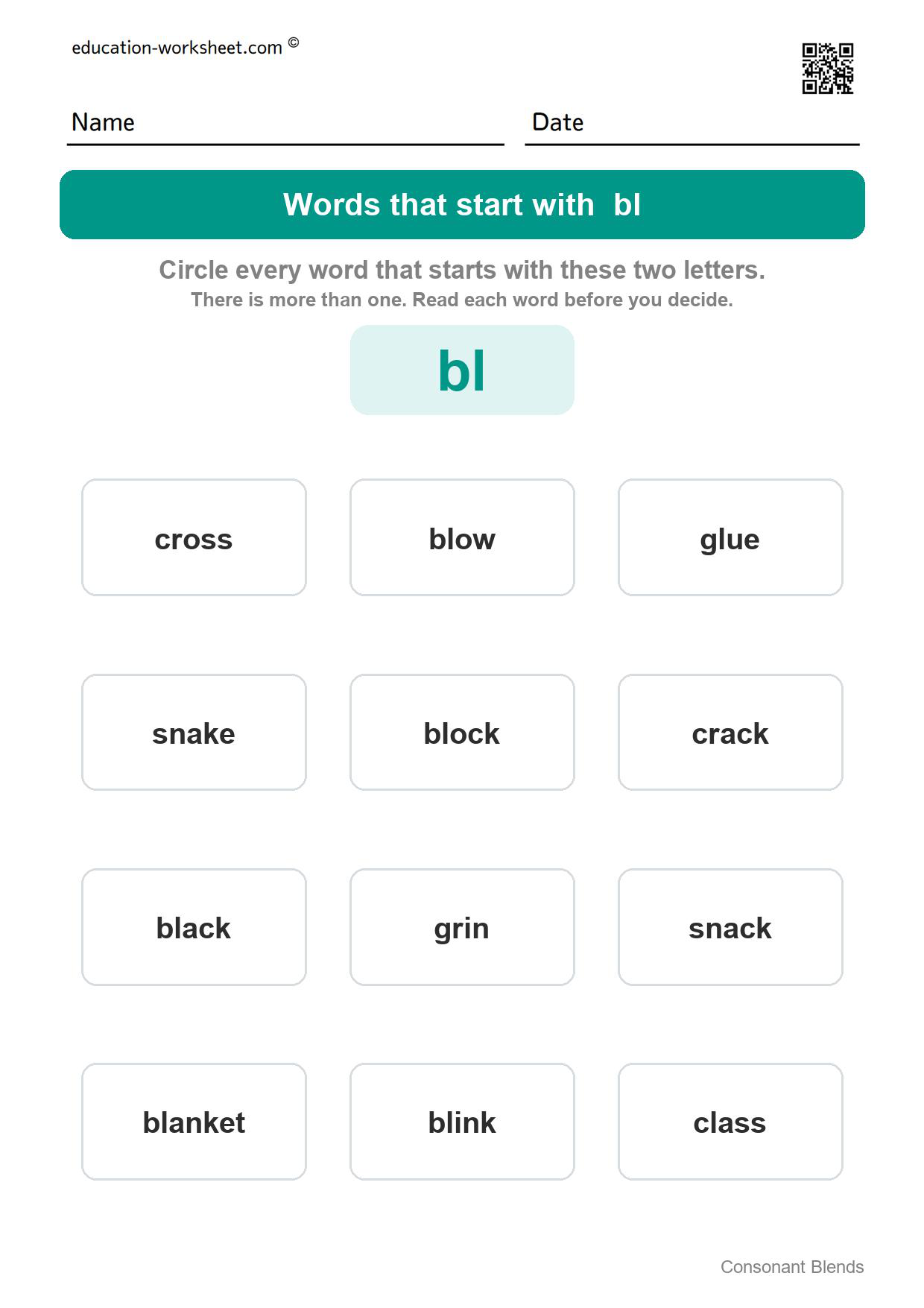
Words that start with cl
Words that start with fl
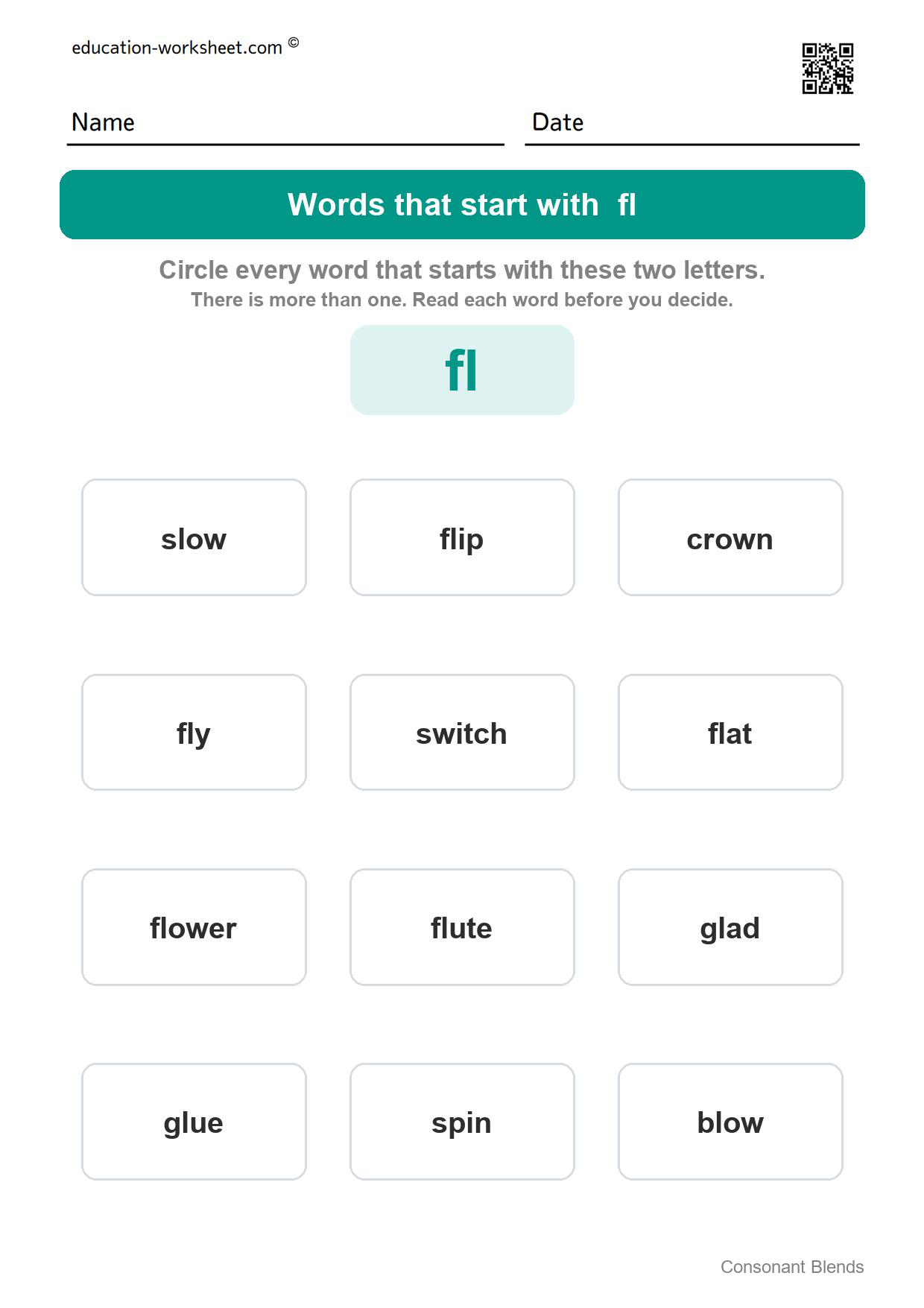
Words that start with gr
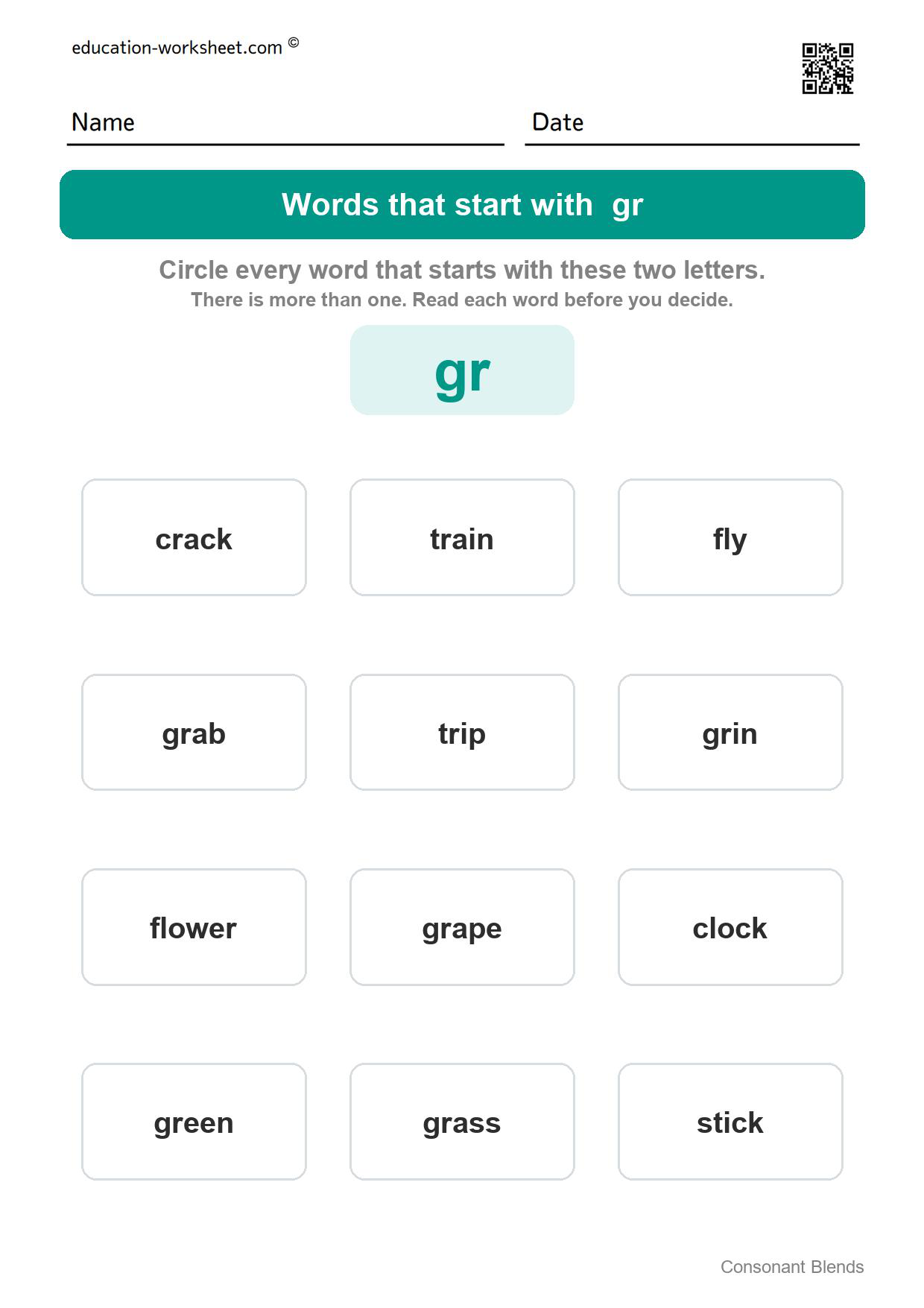
Words that start with tr
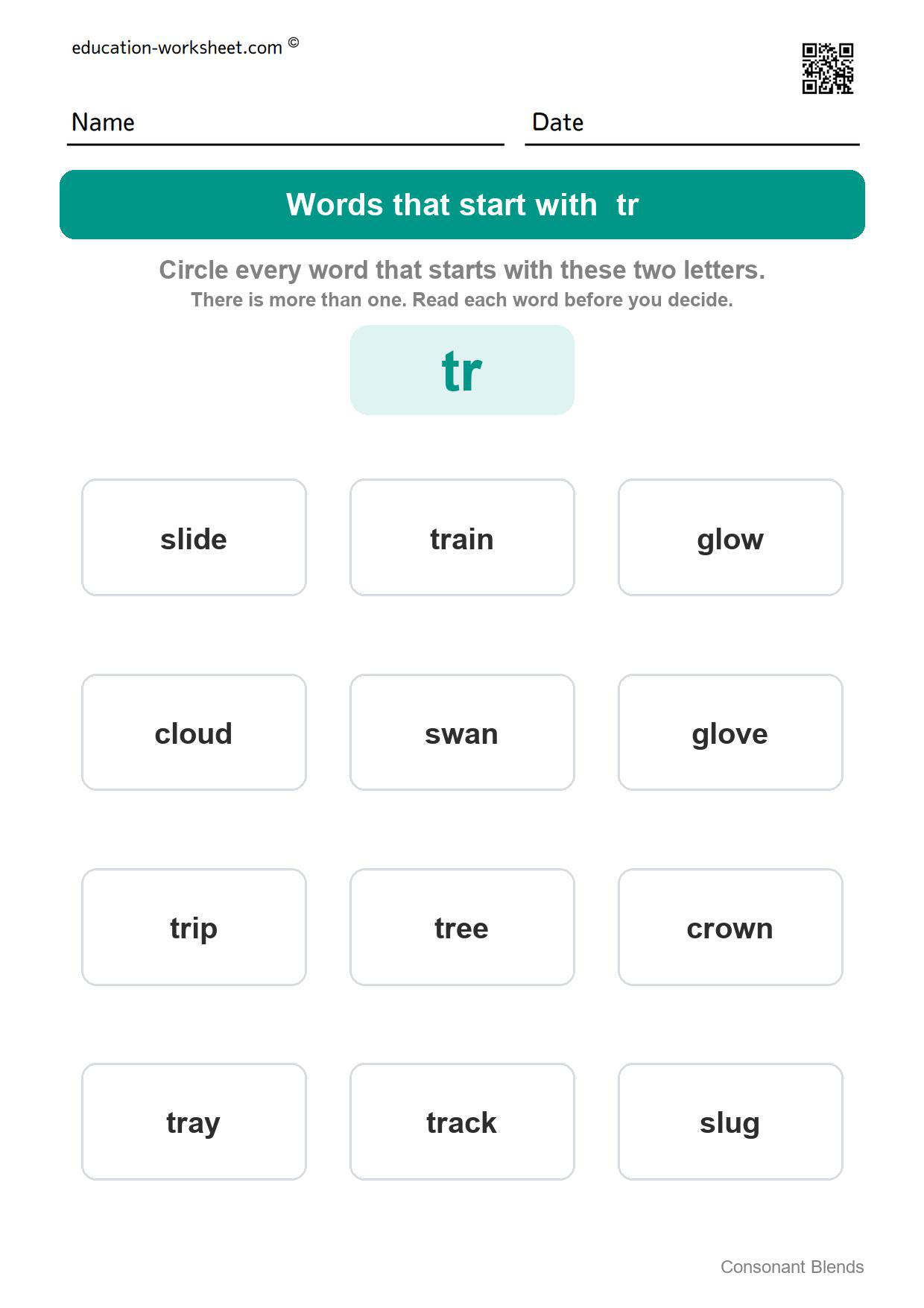
Words that start with cr
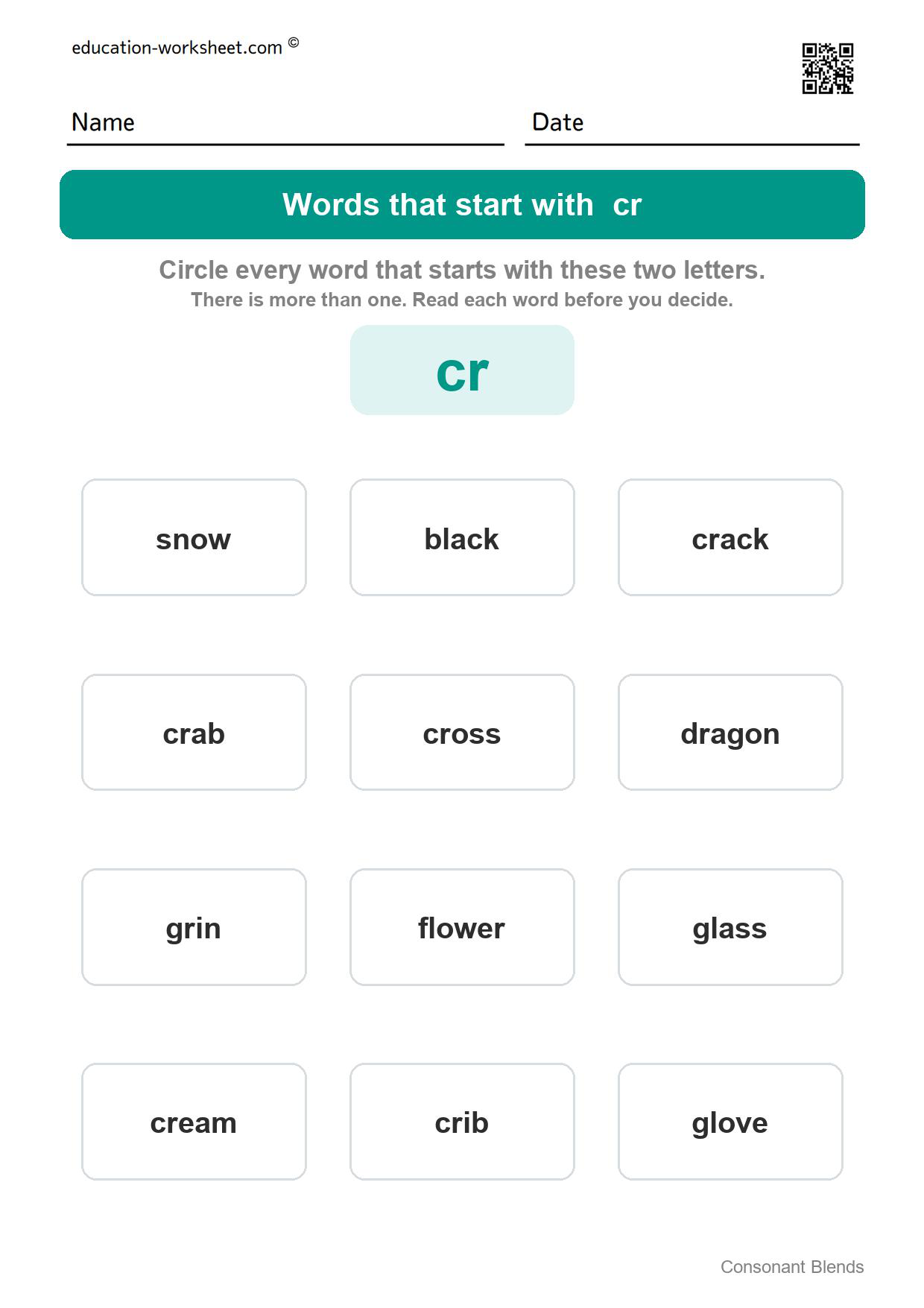
Words that start with dr
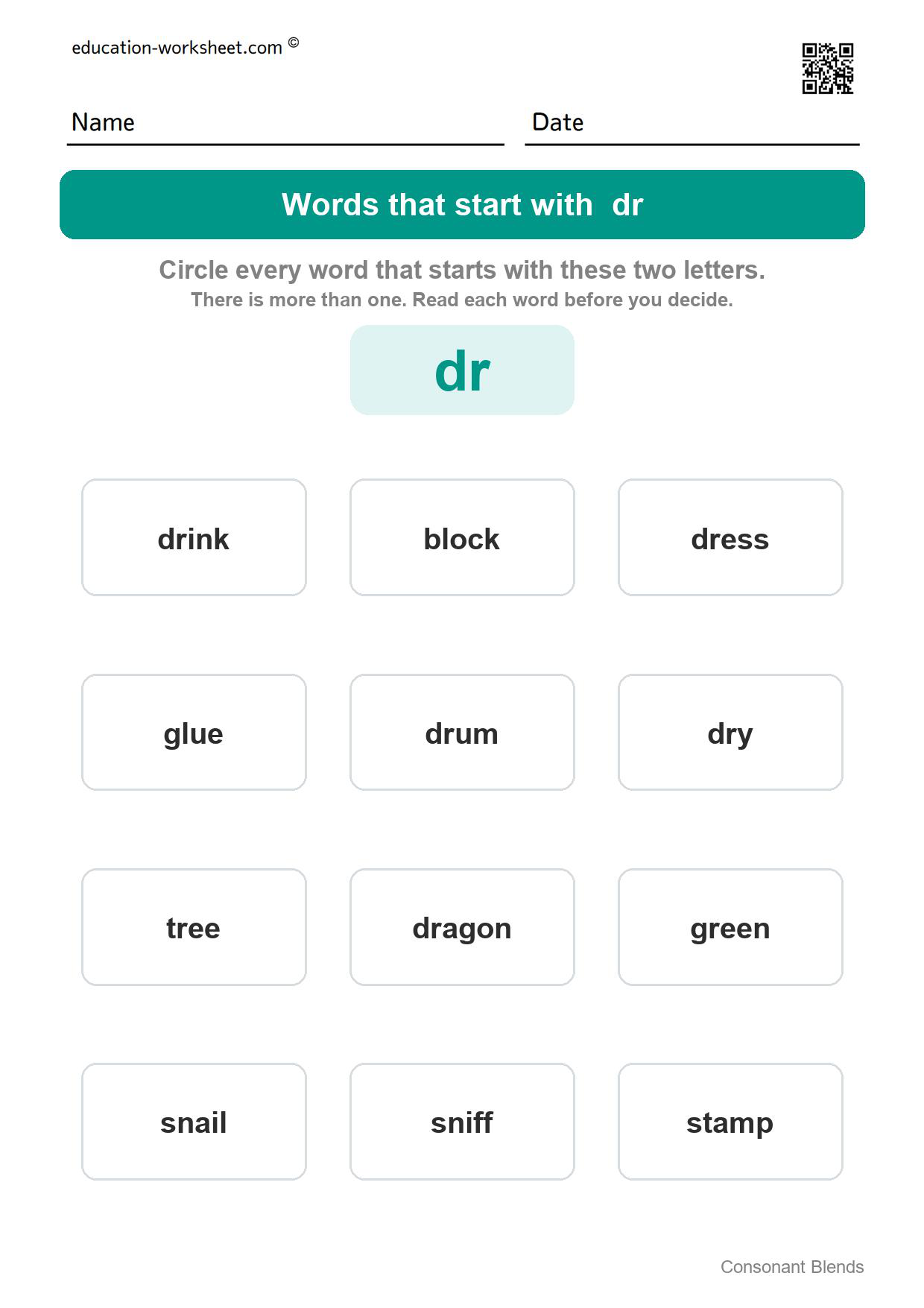
Words that start with sl
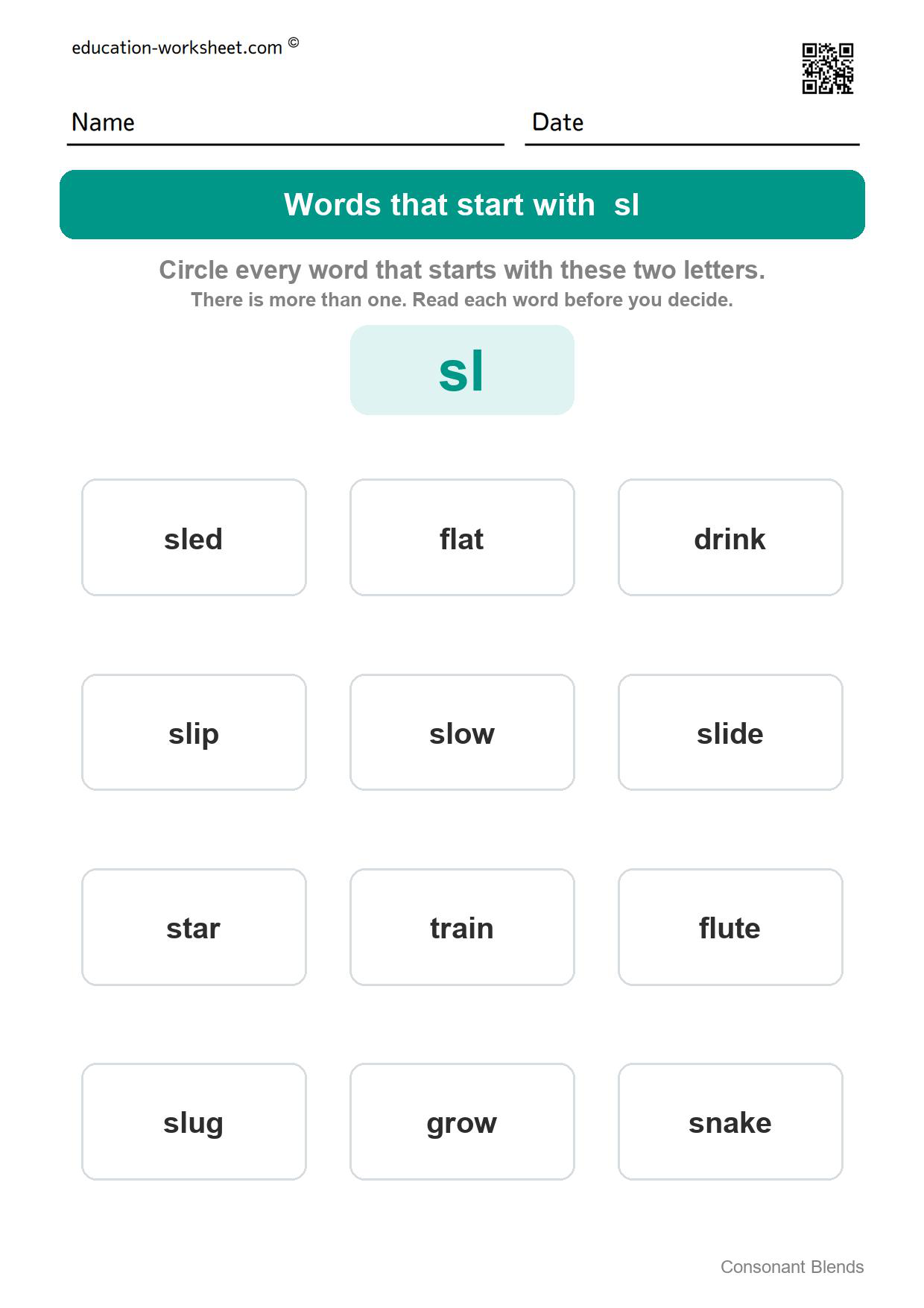
Words that start with sn
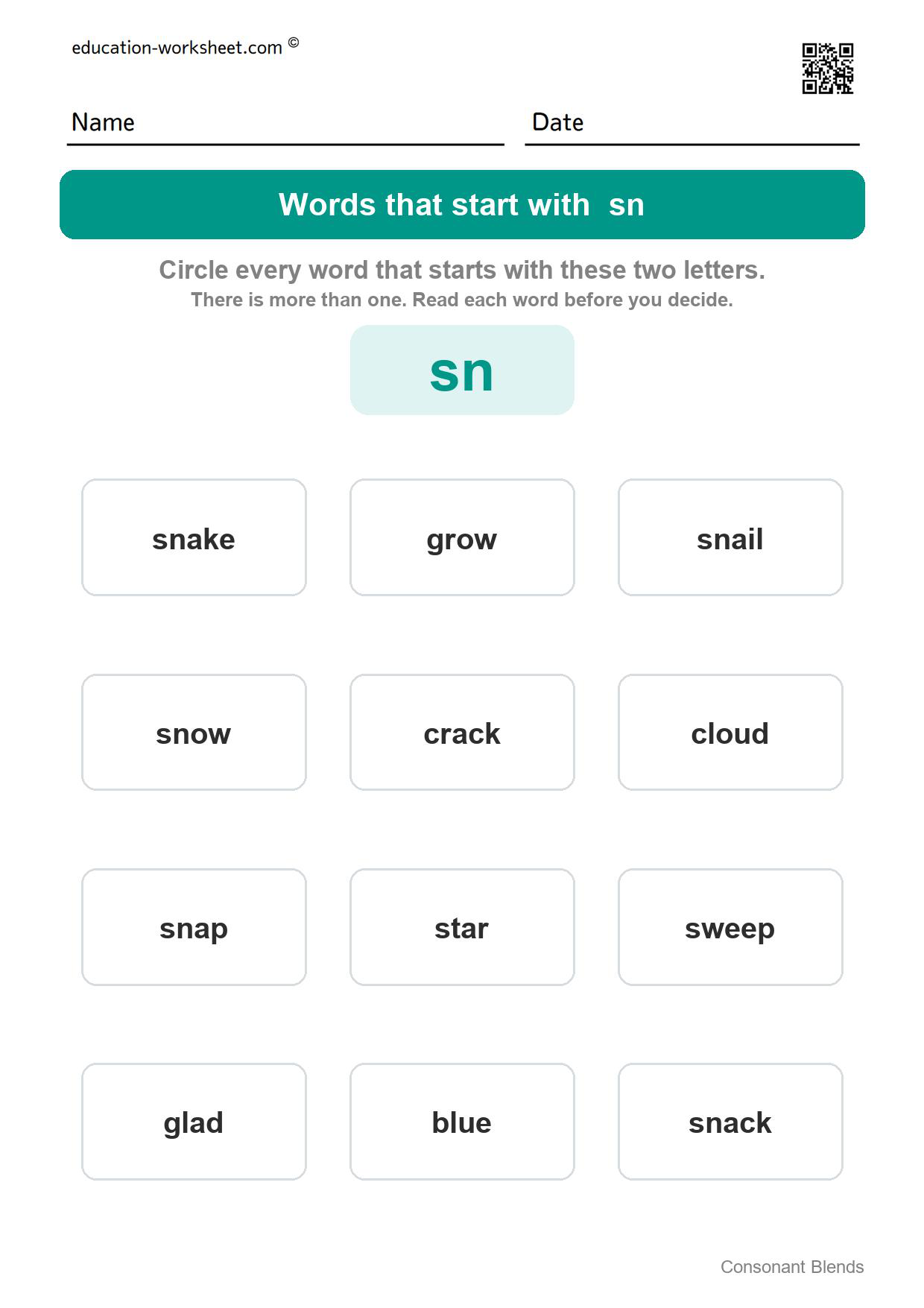
Words that start with st
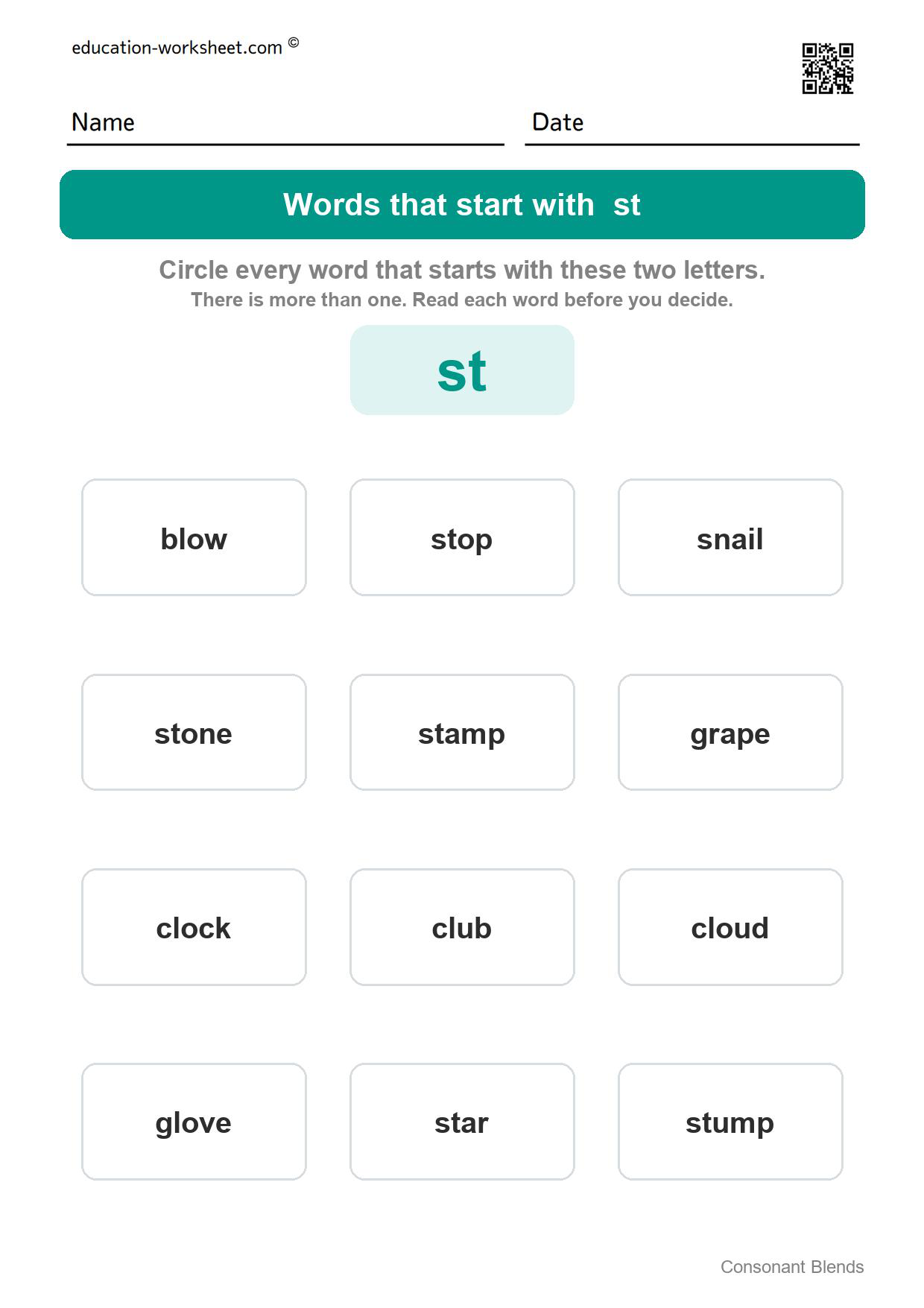
Answer key – all 10 pages
Teaching consonant blends: hearing two sounds in a hurry
A blend is two or three consonants sitting together where every letter keeps its own sound. The sounds simply arrive quickly, one after another, and that is exactly what makes them hard to hear. A child who reads bue for blue has not been careless; the l genuinely is difficult to catch at speed.
What your child is actually learning
By the end of first grade children are expected to read and write words with common blends at the beginning and end of words. These pages work through the three families that appear most often. l-blends such as bl, cl, fl, gl, pl and sl are usually the hardest to hear. r-blends such as br, cr, dr, fr, gr and tr come next. s-blends such as sc, sk, sm, sn, sp and st are often the easiest place to start, because the s hisses on its own for long enough to notice.
How to work through these pages
Stretch the word out slowly, then speed it up: “ssss-top, sstop, stop.” That slow-then-fast move is the single most useful thing you can do, because it lets the child hear the hidden letter before it disappears into normal speech. When your child writes a blend word and leaves a letter out, resist correcting it straight away. Say the word slowly and ask what they can hear in the middle. Most children find the missing letter themselves, and finding it is what makes it stick.
The mistakes to expect
- Dropping the second letter: bue for blue, fog for frog. Almost every child does this, and it fades with slow stretching practice.
- Inserting a vowel that is not there: buh-lue, guh-rass. This usually comes from sounding letters out one at a time in isolation.
- Missing blends at the end of words. Hand, jump and fast are harder than starting blends, and are often taught later for that reason.
- Turning a blend into a digraph. Some children read st as though it were one new sound. Saying both letters clearly and slowly fixes it.
What to teach next
If digraphs have not been covered yet, do them next and name the difference plainly: in a blend you hear both letters, in a digraph you do not. After that, silent e is the usual step, because it is the first rule that changes a vowel rather than adding a consonant sound.
Questions parents ask
Should my child learn blends as whole units or letter by letter?
Letter by letter, but said quickly. Memorising blends as single chunks works in the short term and then breaks down, because there are far too many combinations. A child who can hear both letters can decode a blend they have never seen before.
Why does my child manage blends when reading but not when spelling?
Reading gives you the letters and asks for the sounds. Spelling takes the letters away and asks the child to hear a sound that lasts a fraction of a second. Spelling blends correctly usually lags behind reading them by several months.
Are three-letter blends like str and spl too early for first grade?
They are usually met towards the end of first grade or in second. If two-letter blends are secure, try a few; if they are not, wait, because three-letter blends magnify exactly the same difficulty.