- Free Plural Nouns Worksheets for Kindergarten – Add s or es to Make More Than One
- Write the plural word (Set 1)
- Write the plural word (Set 2)
- Write the plural word (Set 3)
- Write the plural word (Set 4)
- Write the plural word (Set 5)
- Write the plural word (Set 6)
- Write the plural word (Set 7)
- Write the plural word (Set 8)
- Write the plural word (Set 9)
- Write the plural word (Set 10)
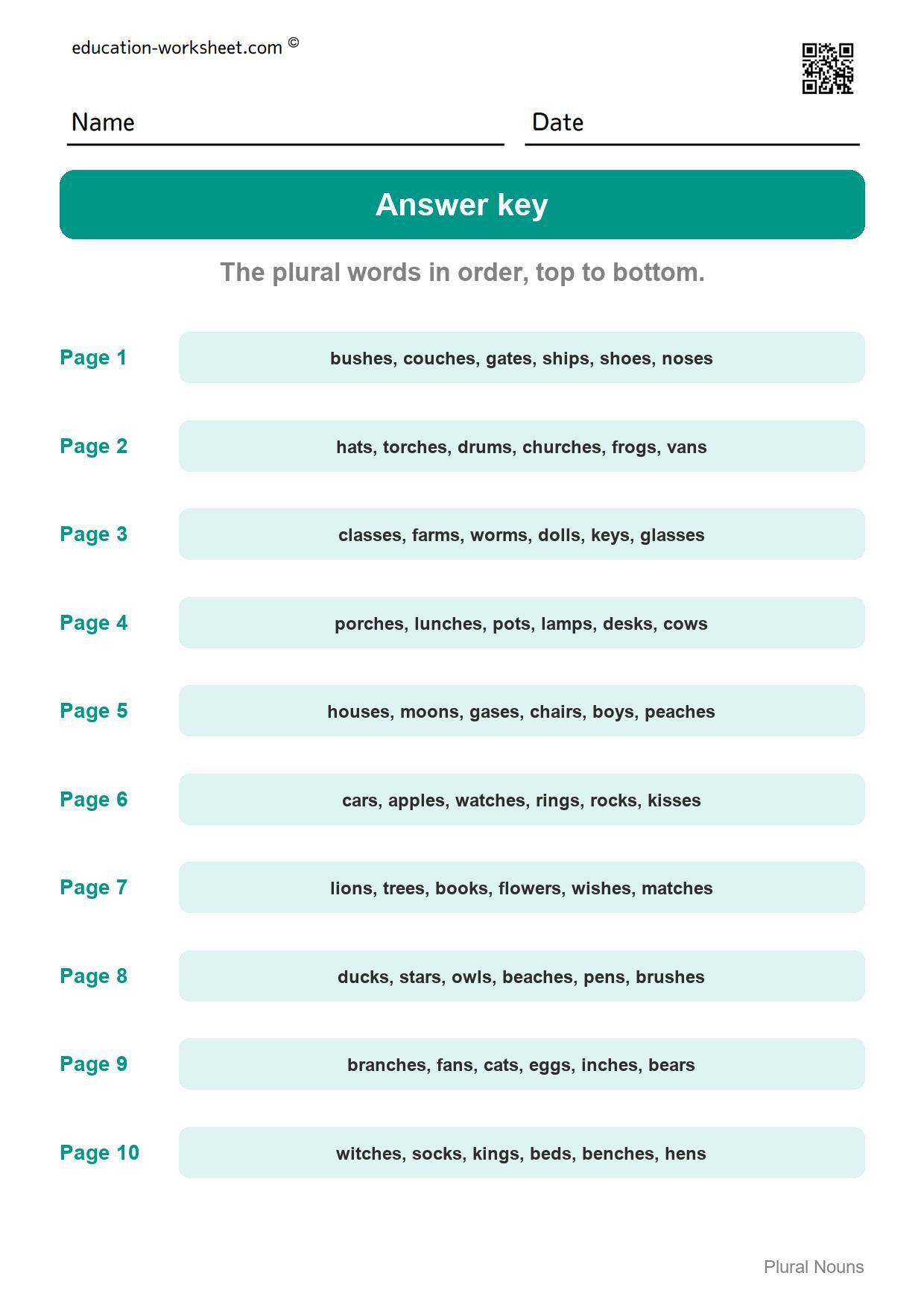
- Answer key – all 10 pages
- Plural nouns in first grade: when s is enough and when you need es
Free Plural Nouns Worksheets for Kindergarten – Add s or es to Make More Than One
These free printable plural nouns worksheets help kindergarten and first grade children write the word for more than one. Every page starts with a short rule box, then gives six singular words in a one and more than one table, and children write the plural on the line. Most words just take an s, but words that end in s, x, ch or sh need es, and each page mixes both so children have to look at the end of the word before they write. Learning this one spelling rule early makes a real difference to how children write sentences. There are sixty different words across the ten pages, all nouns children already know, and the final page is an answer key. Just download, print, and write!
Write the plural word (Set 1)
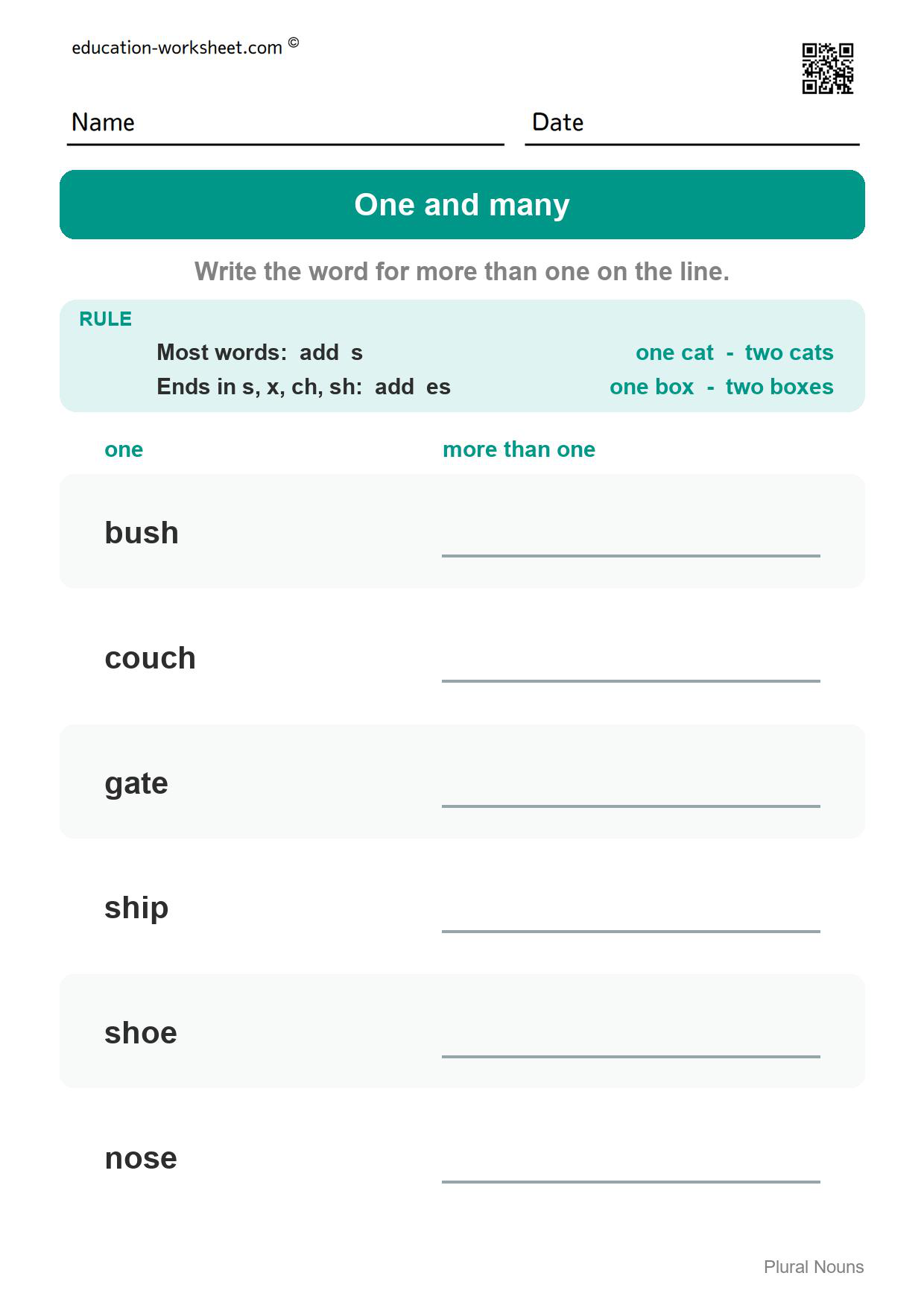
Write the plural word (Set 2)
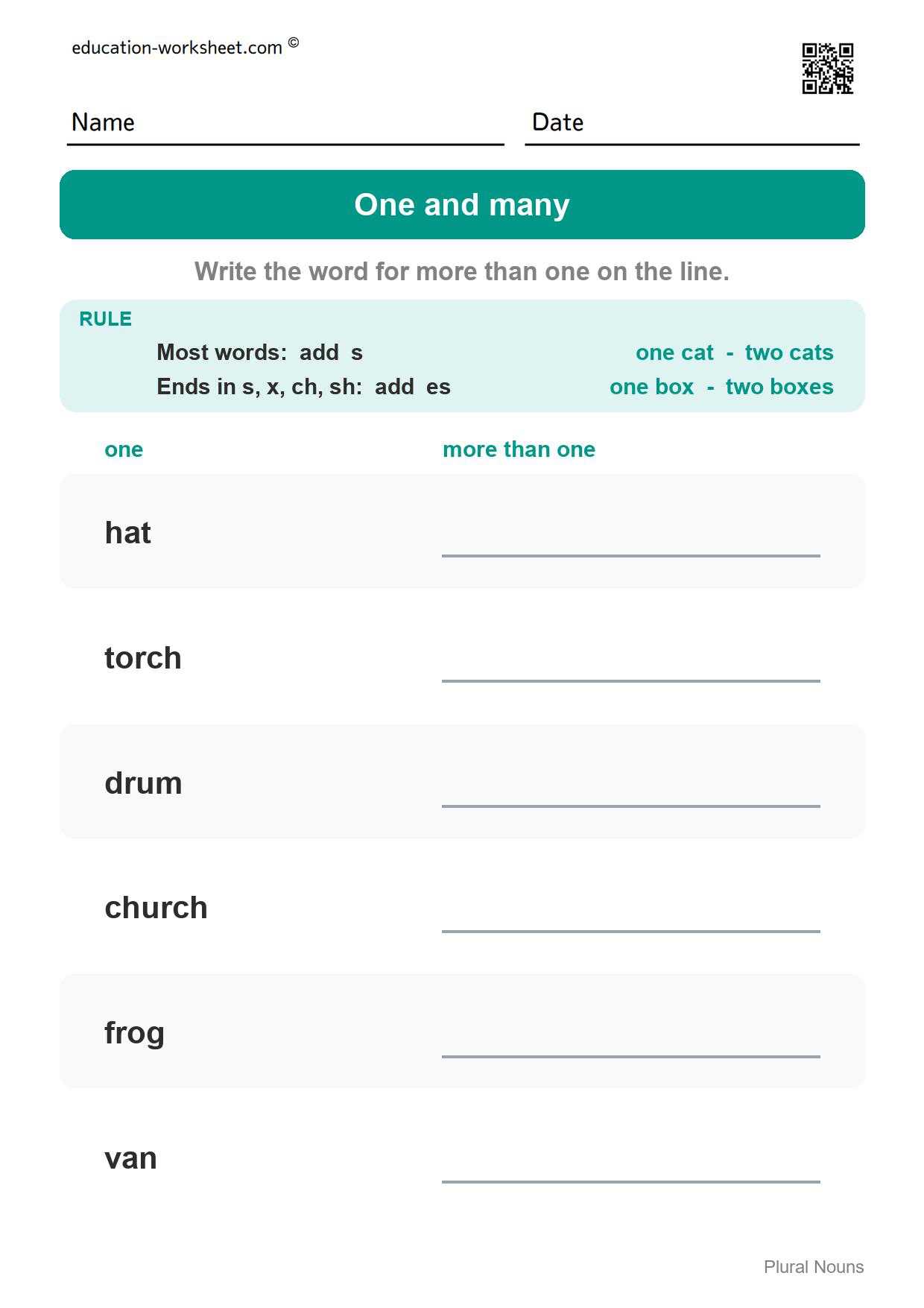
Write the plural word (Set 3)
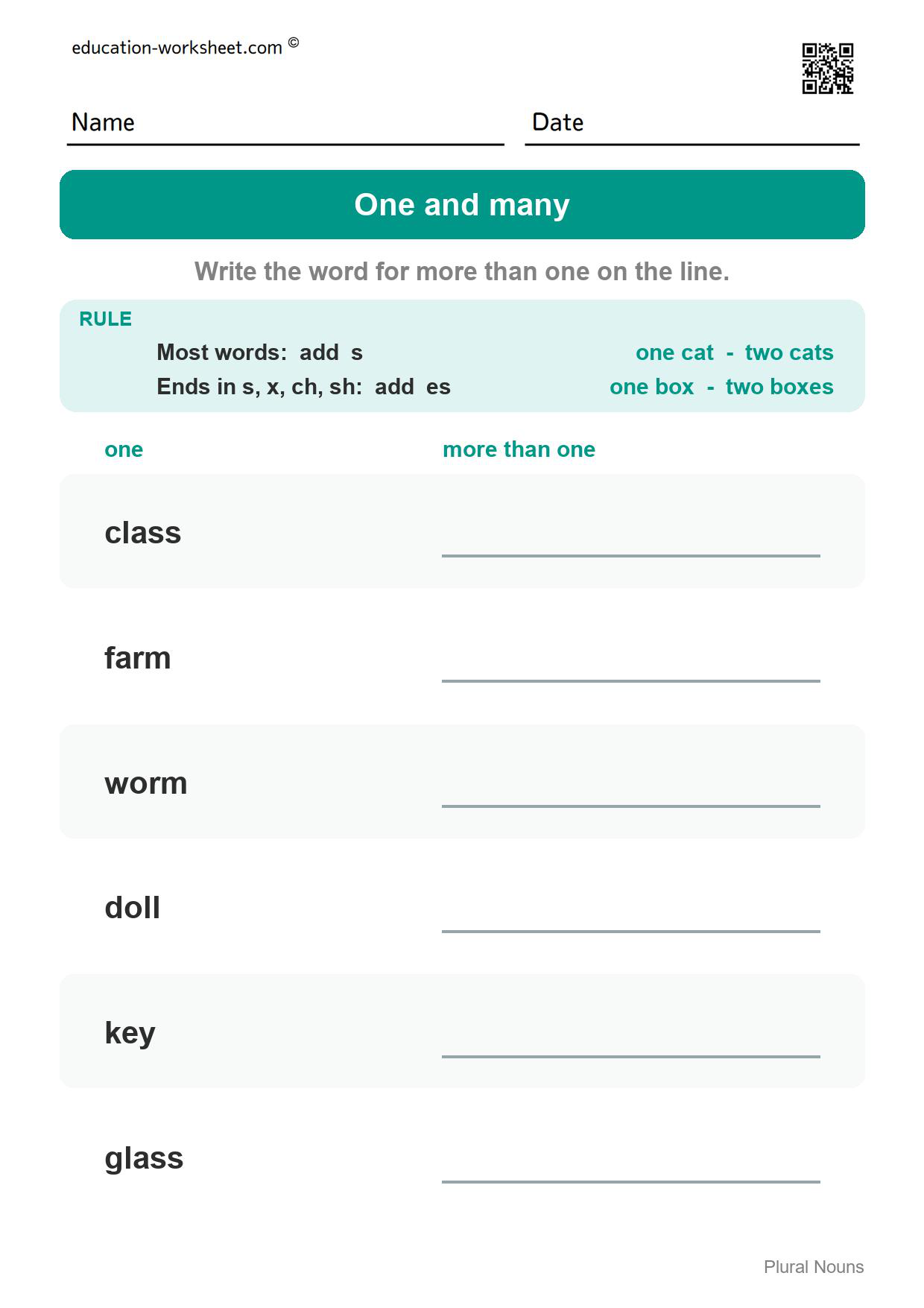
Write the plural word (Set 4)
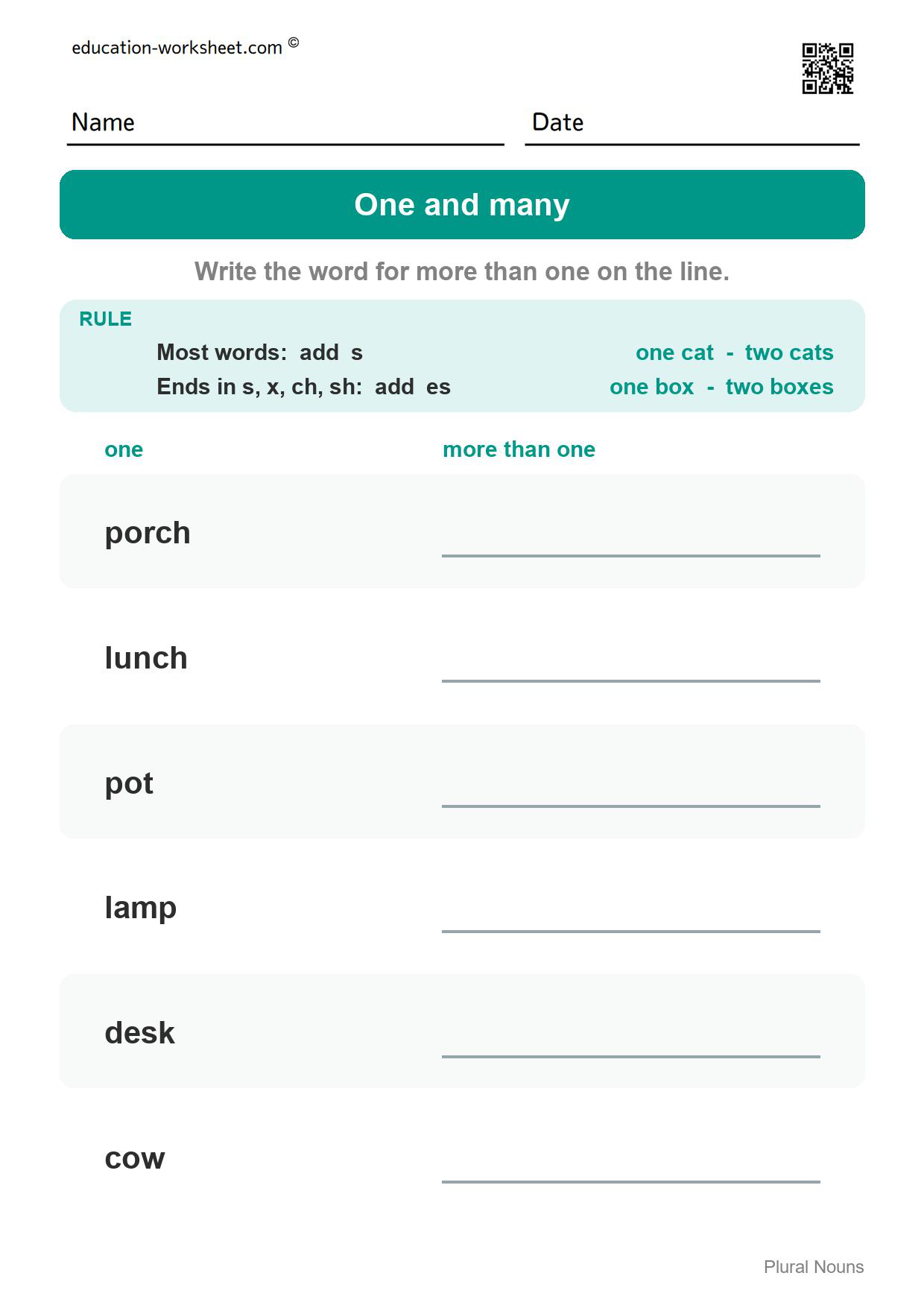
Write the plural word (Set 5)
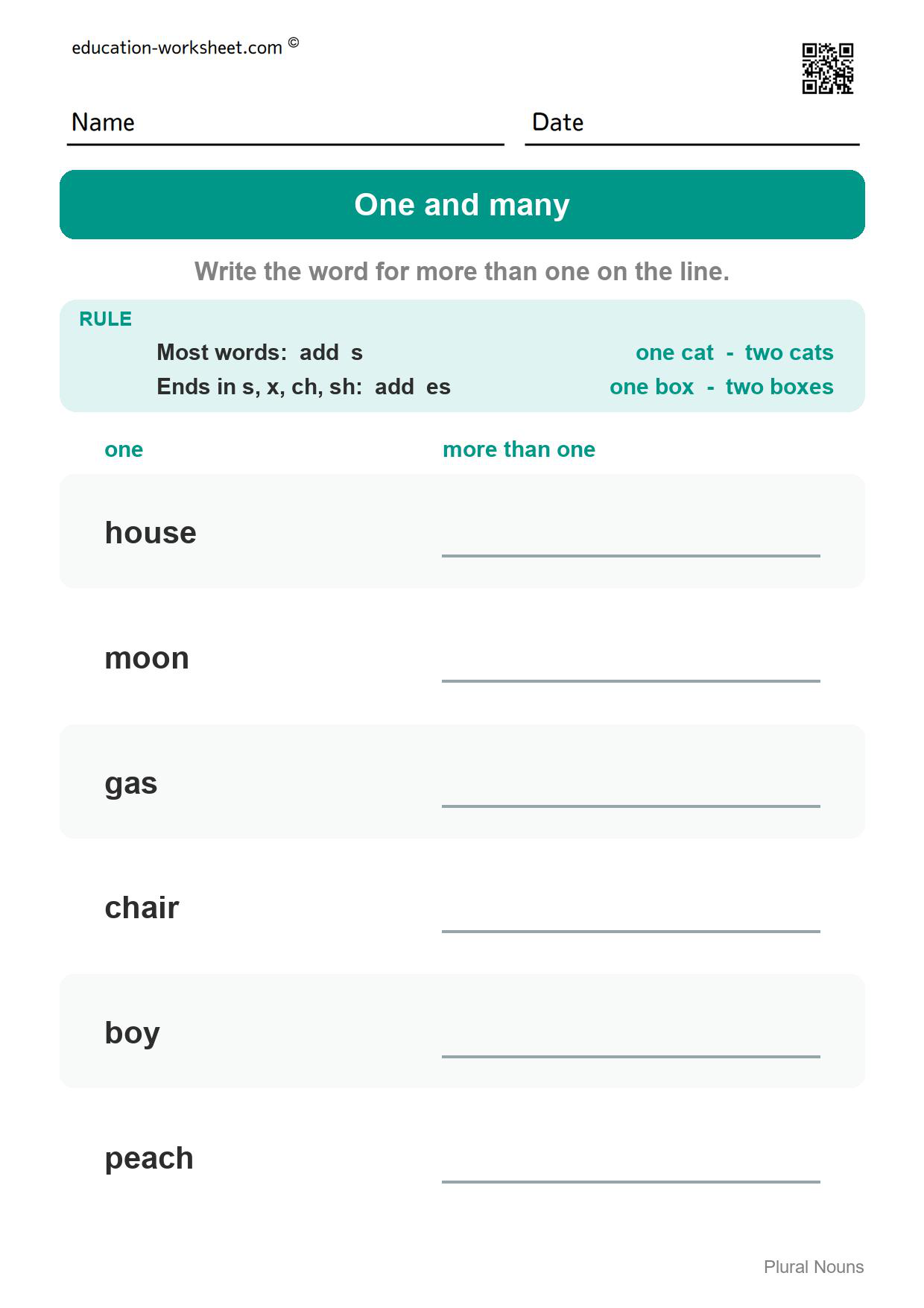
Write the plural word (Set 6)
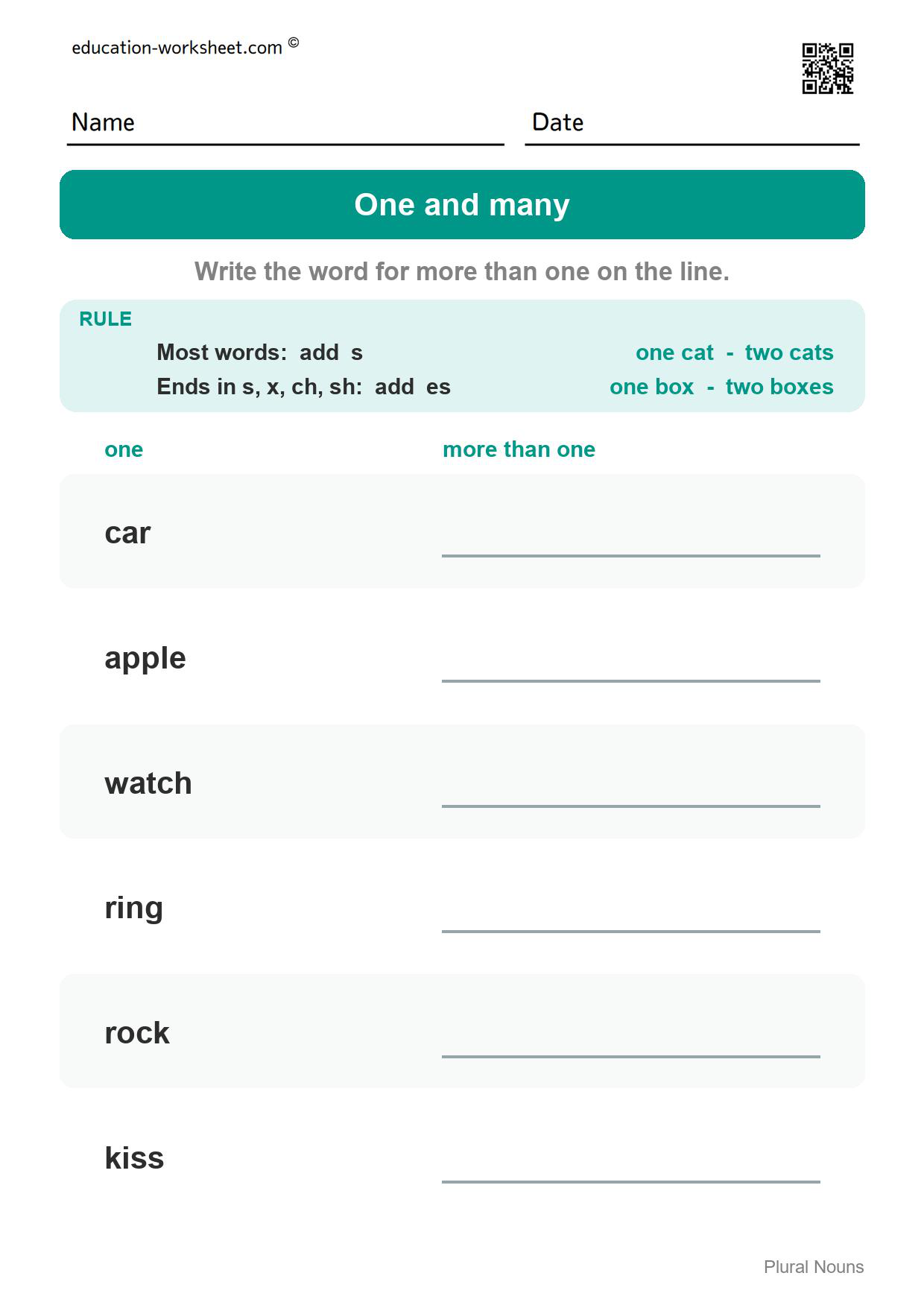
Write the plural word (Set 7)
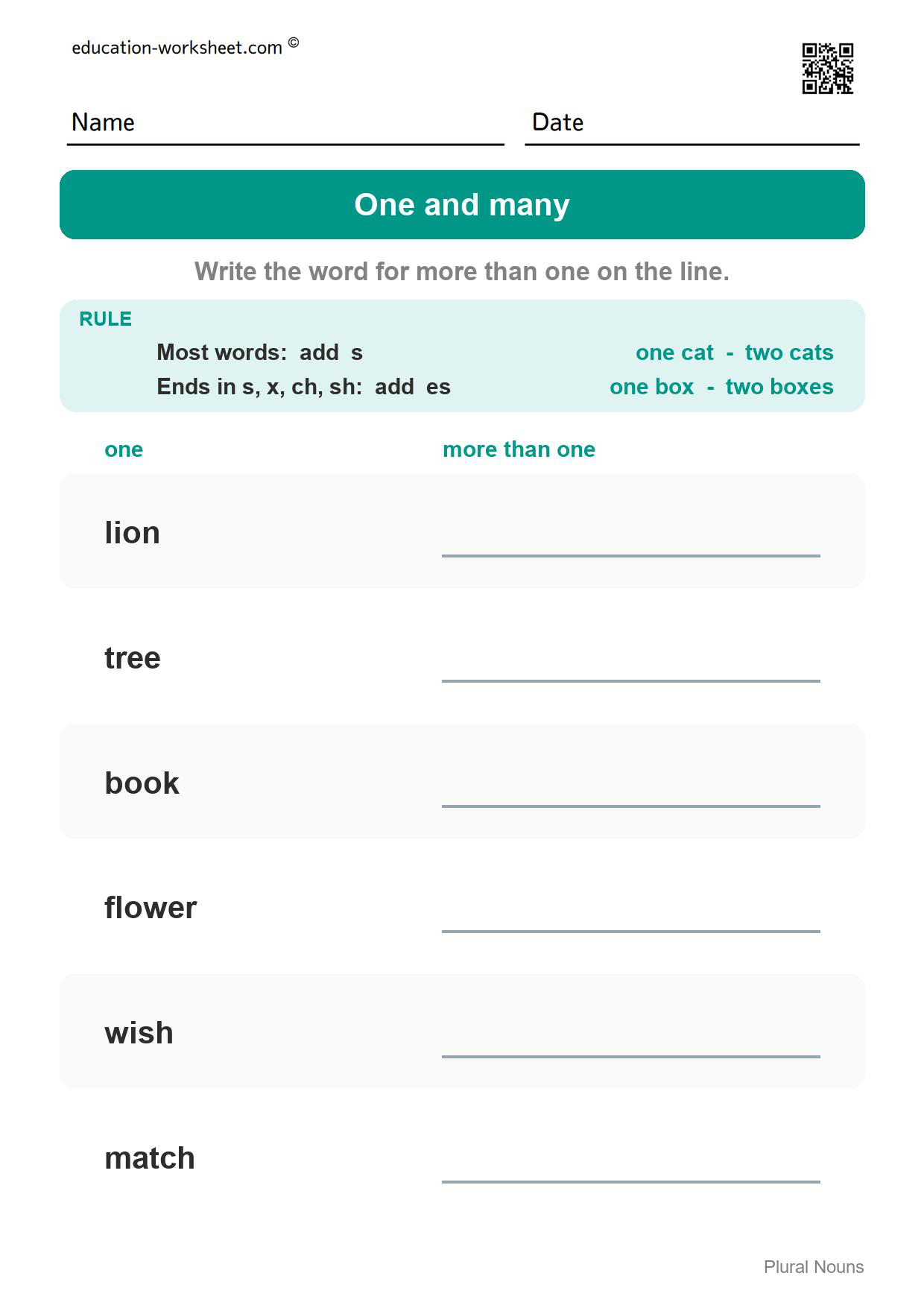
Write the plural word (Set 8)
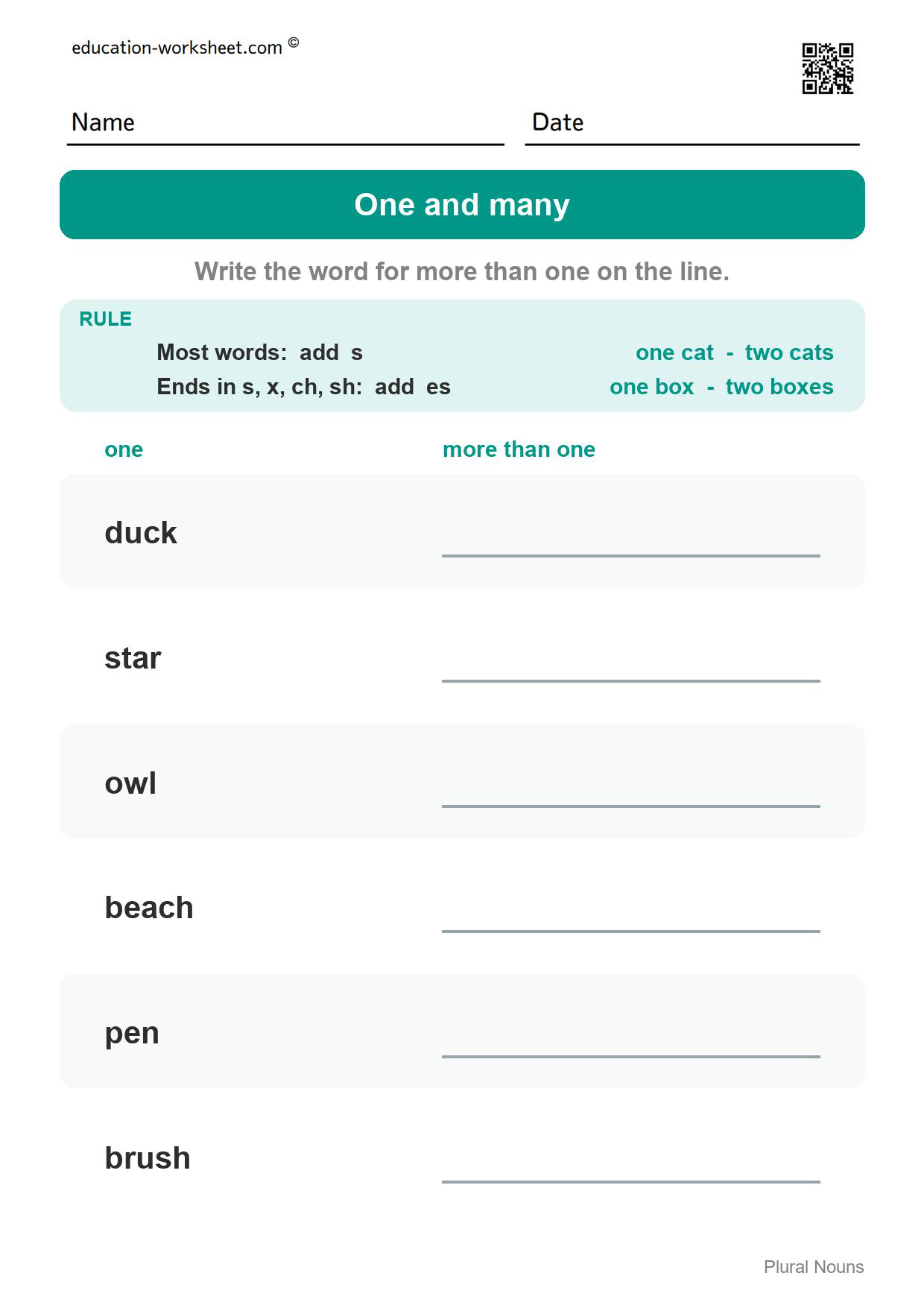
Write the plural word (Set 9)
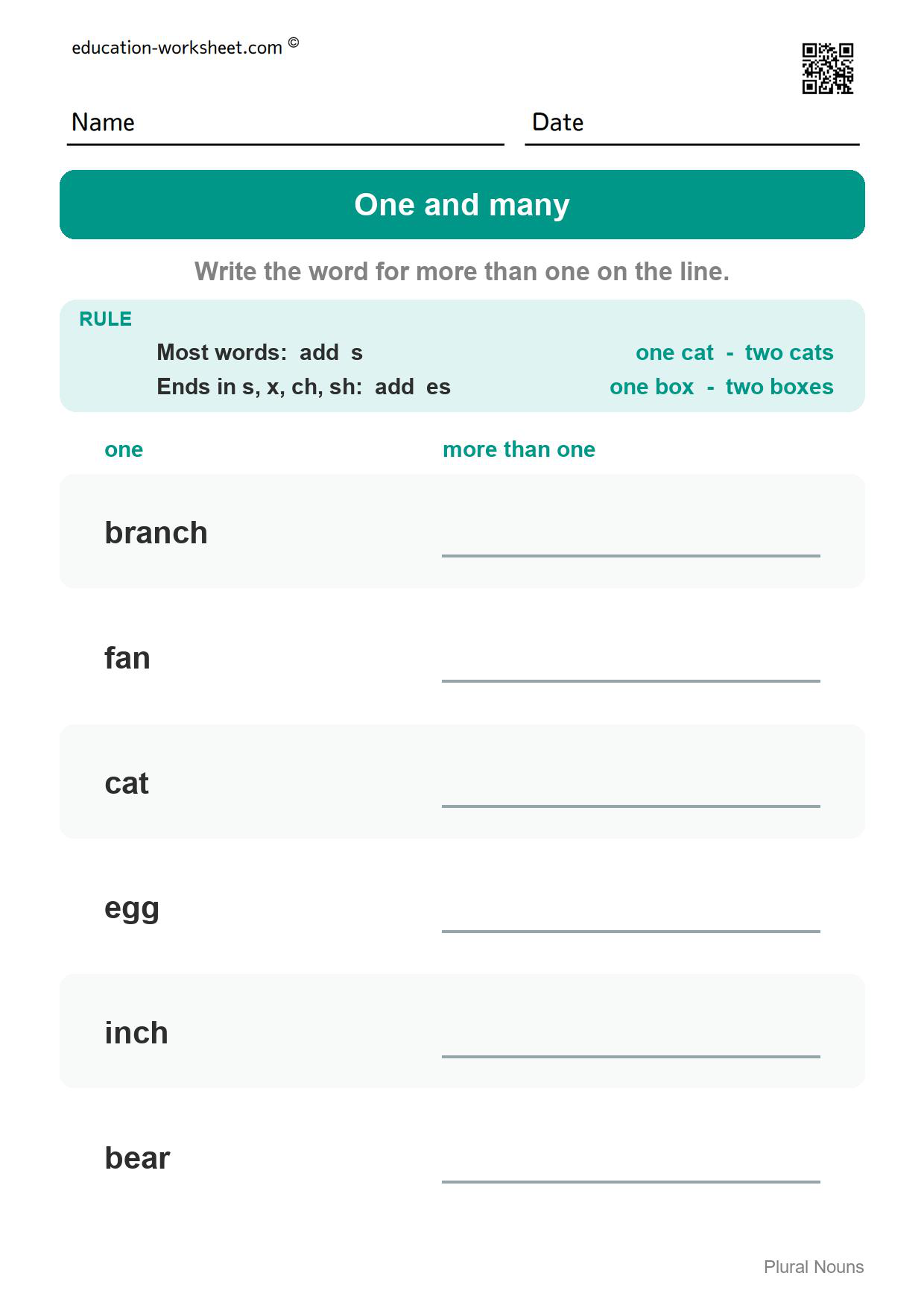
Write the plural word (Set 10)
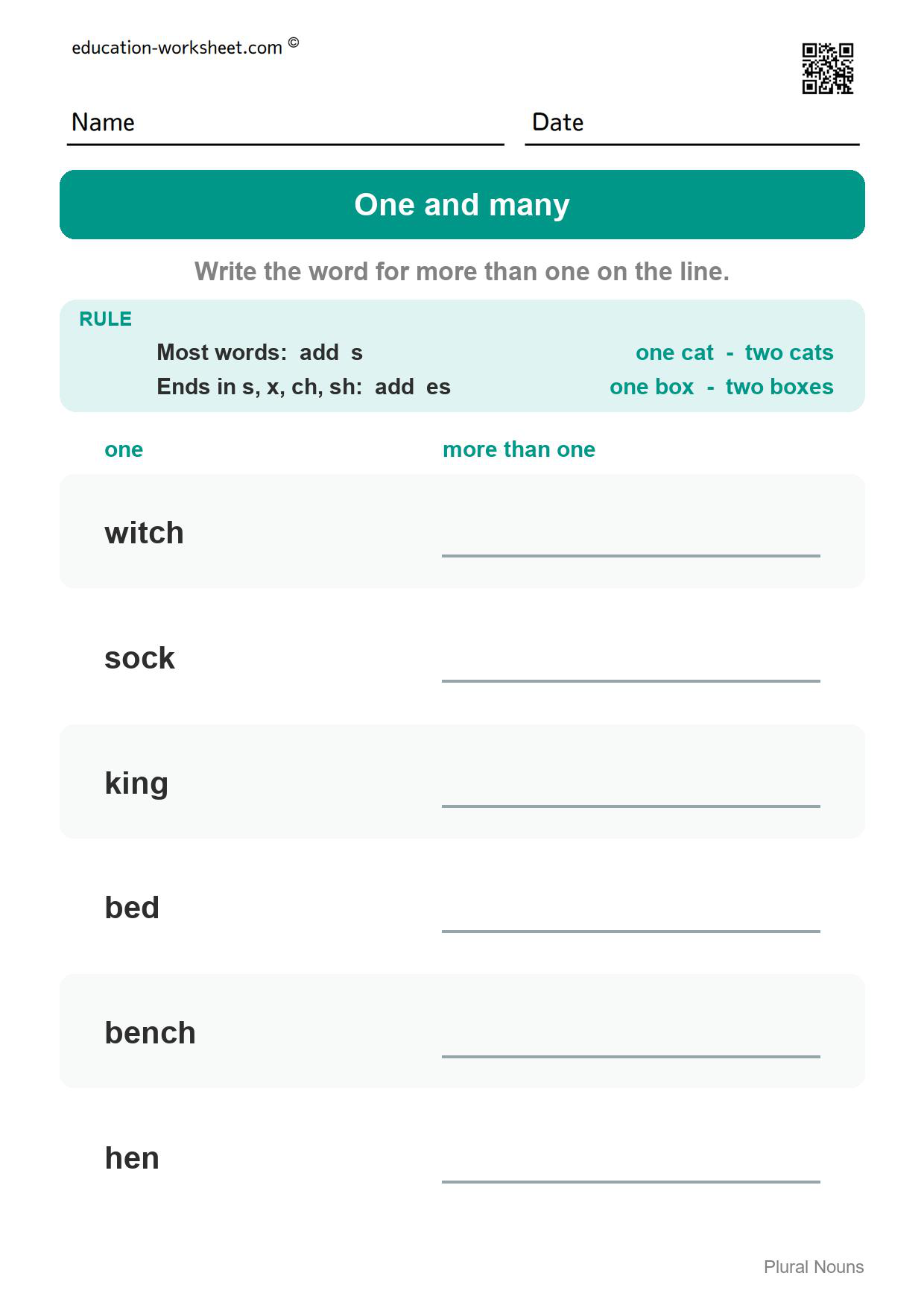
Answer key – all 10 pages
Plural nouns in first grade: when s is enough and when you need es
Most plurals in English are made by adding s, and children pick that up quickly. The part that needs teaching is the exception: some words need es instead, and the reason is not grammar but sound. Try saying boxs out loud. You cannot, not without adding a small vowel between the x and the s, and that extra vowel is exactly what the e is there to write down.
What your child is actually learning
First grade language standards ask children to use singular and plural nouns correctly. The workable rule is this: add es after a word ending in s, x, z, ch or sh, and add plain s everywhere else. Those five endings are all hissing or buzzing sounds that collide with the s, which is why they need the extra syllable. Teaching the reason rather than the list is worth the extra minute, because a child who understands it can handle a word they have never seen.
How to work through these pages
Say both versions out loud and let your child choose the one that is sayable. Dishs against dishes, catz against cats. Children are surprisingly good at this test once they understand they are allowed to use their ears rather than trying to remember a rule. Listen for whether the plural adds a whole extra beat to the word: if it does, it is almost always es.
The mistakes to expect
- Writing boxs, dishs or benchs. This is the error the unit exists to fix, and the say-it-out-loud test handles it.
- Adding es everywhere once the rule is learned, giving cates and doges. This usually appears a week after the rule lands and settles by itself.
- Meeting irregular plurals and assuming the rule failed: foots, mouses, childs. Say plainly that a small number of very old words change shape instead, and that they have to be learned one at a time.
- Words ending in y, which change to ies. That rule is usually taught separately and slightly later, so do not force it in here.
What to teach next
Compound words are a good follow-up, because they also involve looking at a whole word rather than a single sound, and contractions come naturally after that: both plurals and contractions use an s, and children benefit from seeing early that the apostrophe belongs to one and not the other.
Questions parents ask
Does a plural ever take an apostrophe?
No. Cats is plural, cat’s is possessive. Getting this straight in first grade prevents a very persistent habit later on.
What about words like sheep and fish?
They do not change at all in the plural. There are only a handful, and they are learned as individual words rather than through any rule.
Why is it knives and not knifes?
A group of words ending in f swap it for v before adding es, giving knives, leaves and wolves. This is second grade material, so it is fine to answer the question if your child asks and otherwise leave it.