- Free Compound Words Worksheets for Kindergarten – Join Two Words into One
- Make a compound word (Set 1)
- Make a compound word (Set 2)
- Make a compound word (Set 3)
- Make a compound word (Set 4)
- Make a compound word (Set 5)
- Make a compound word (Set 6)
- Make a compound word (Set 7)
- Make a compound word (Set 8)
- Make a compound word (Set 9)
- Make a compound word (Set 10)
- Answer key – all 10 pages
- Compound words: two words that move in together
- What your child is actually learning
- How to work through these pages
- The mistakes to expect
- What to teach next
- Questions parents ask
- Are compound words always written as one word?
- Does this actually help my child read?
- My child reads sunflower as sun-flower with a pause. Is that a problem?
- More free worksheets
Free Compound Words Worksheets for Kindergarten – Join Two Words into One
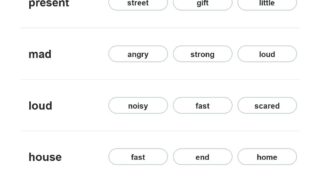
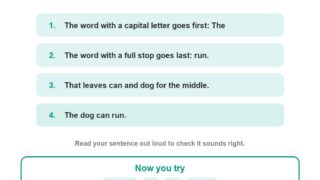
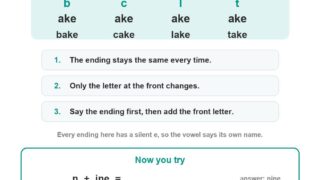
These free printable compound words worksheets help kindergarten and first grade children see how two small words join to make one longer word. Each line gives both parts, like sun and flower, and children write the new word on the line next to them. Because both small words are shown, there is only one right answer, so kids can work through the page on their own. Compound words are one of the easiest ways for early readers to tackle long words, because they can read each part and put the meaning together. There are eighty different compound words across the ten pages, all made from words children already know, and the final page is an answer key. Just download, print, and write!
Make a compound word (Set 1)
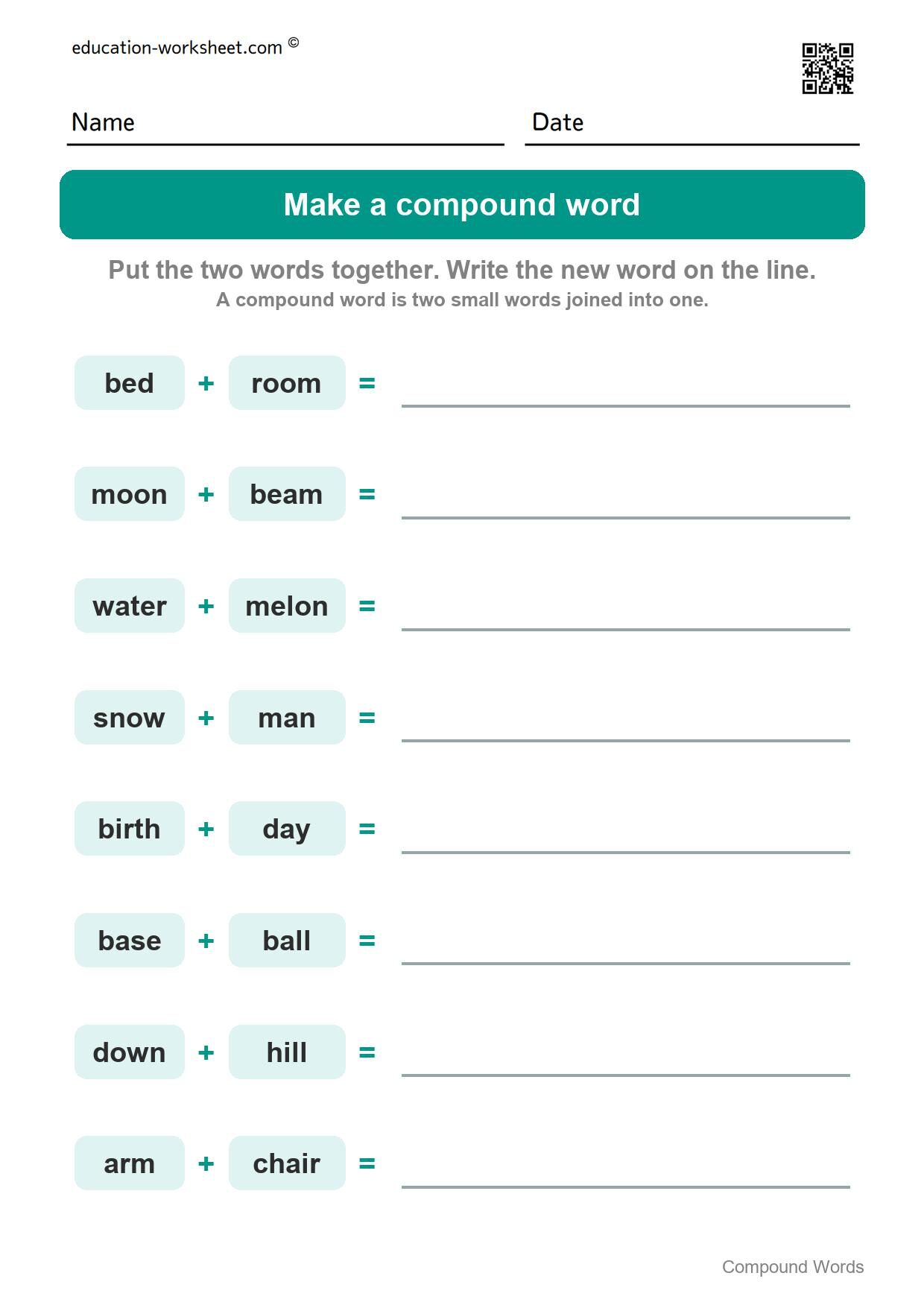
Make a compound word (Set 2)
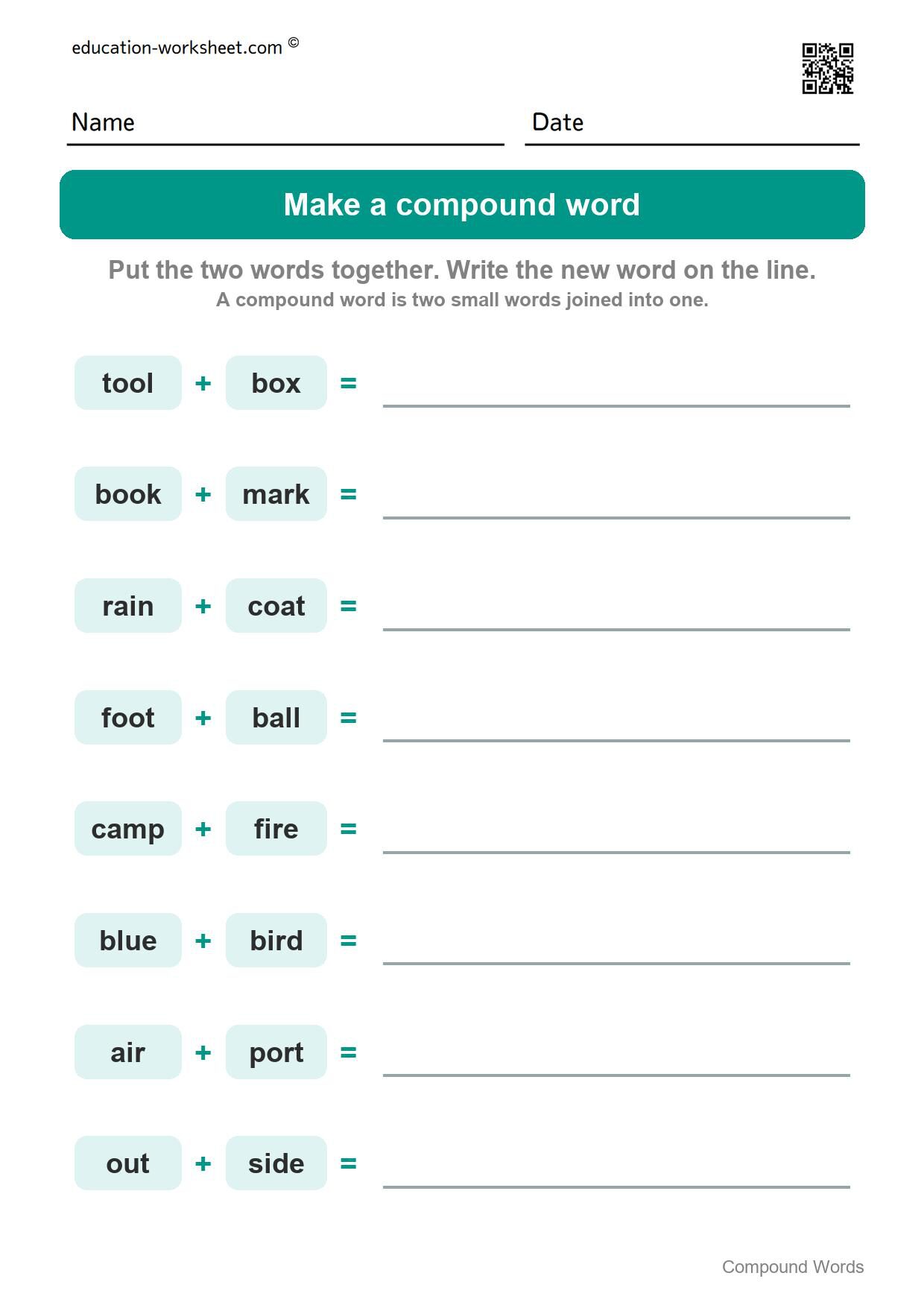
Make a compound word (Set 3)
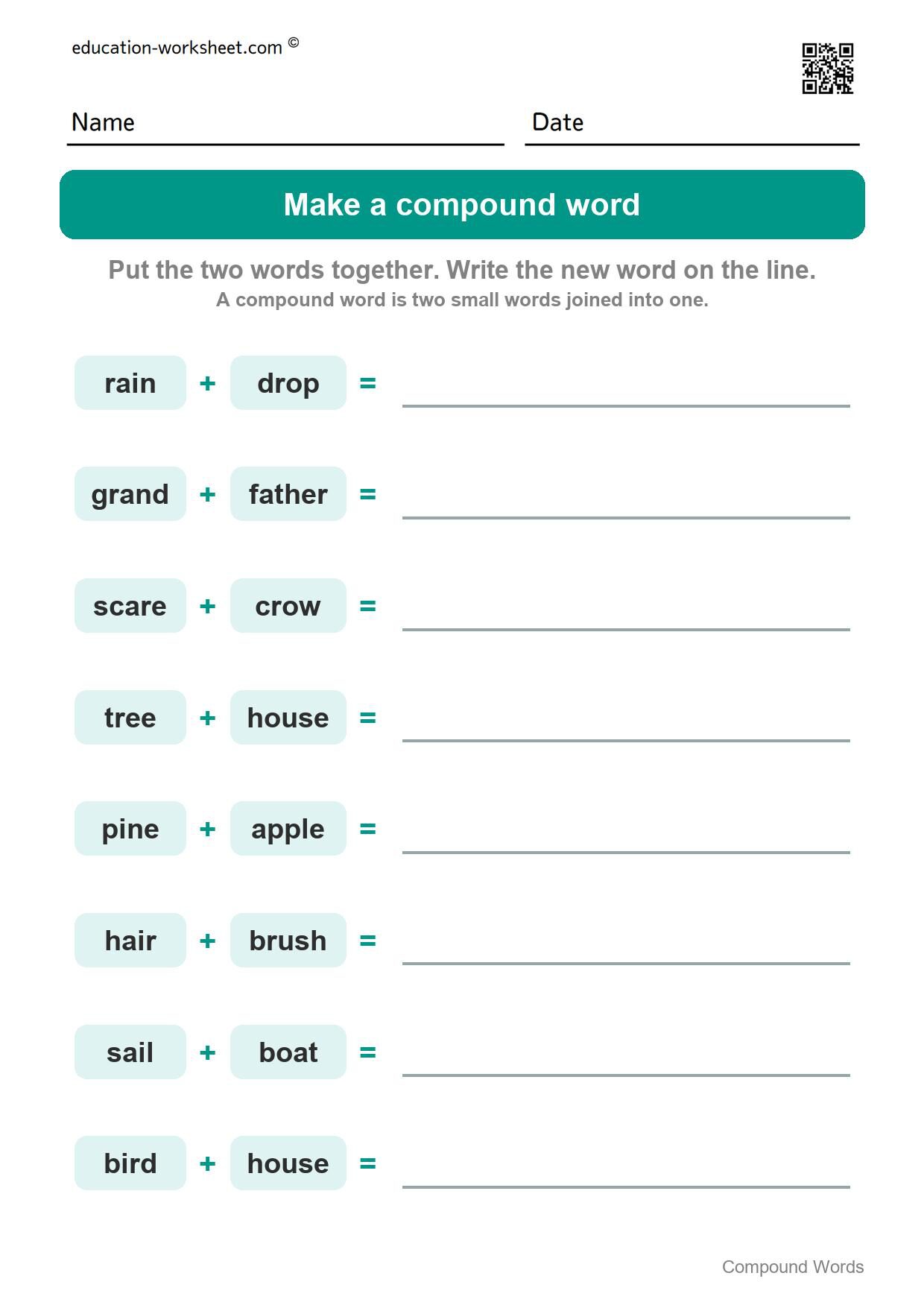
Make a compound word (Set 4)
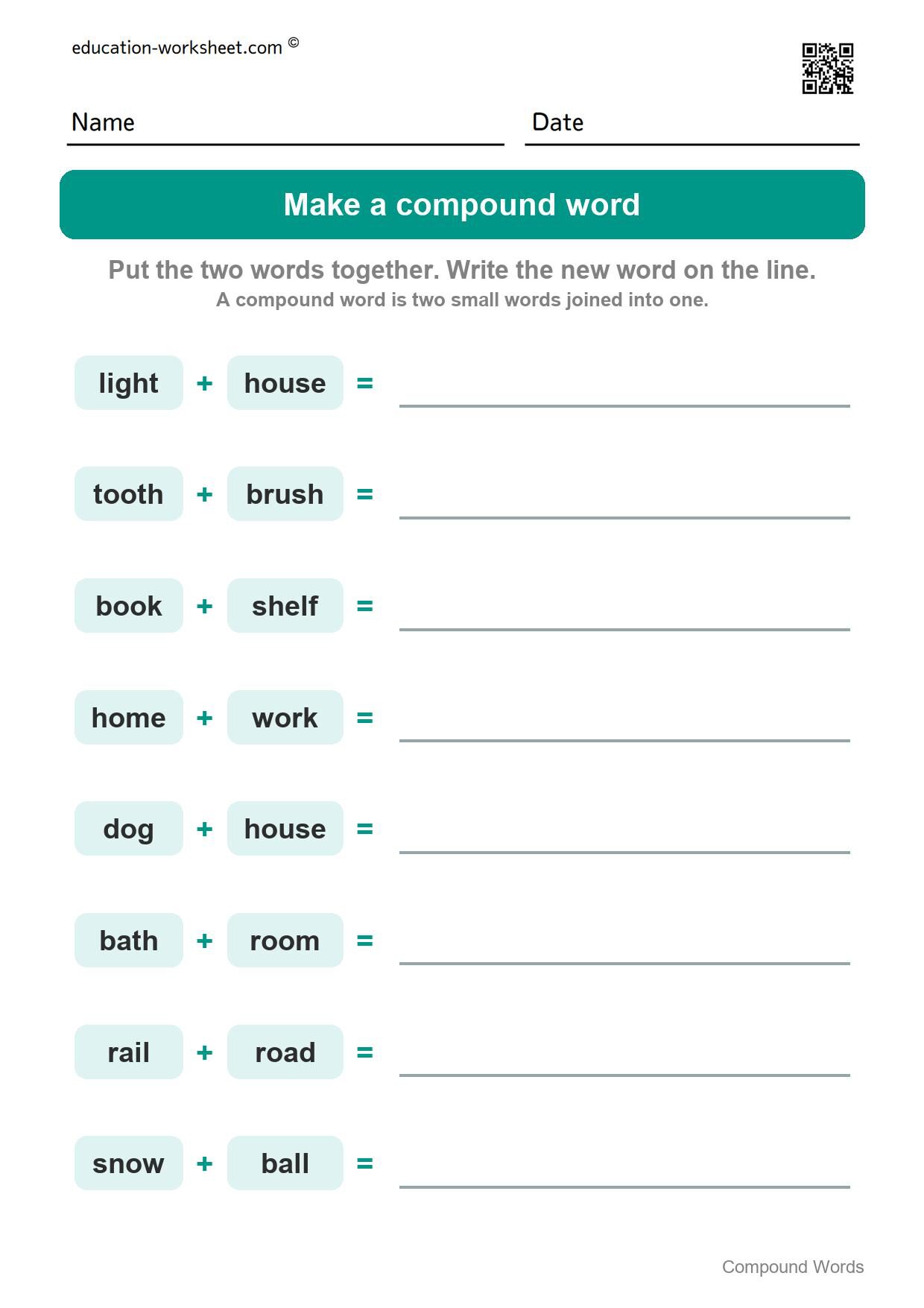
Make a compound word (Set 5)
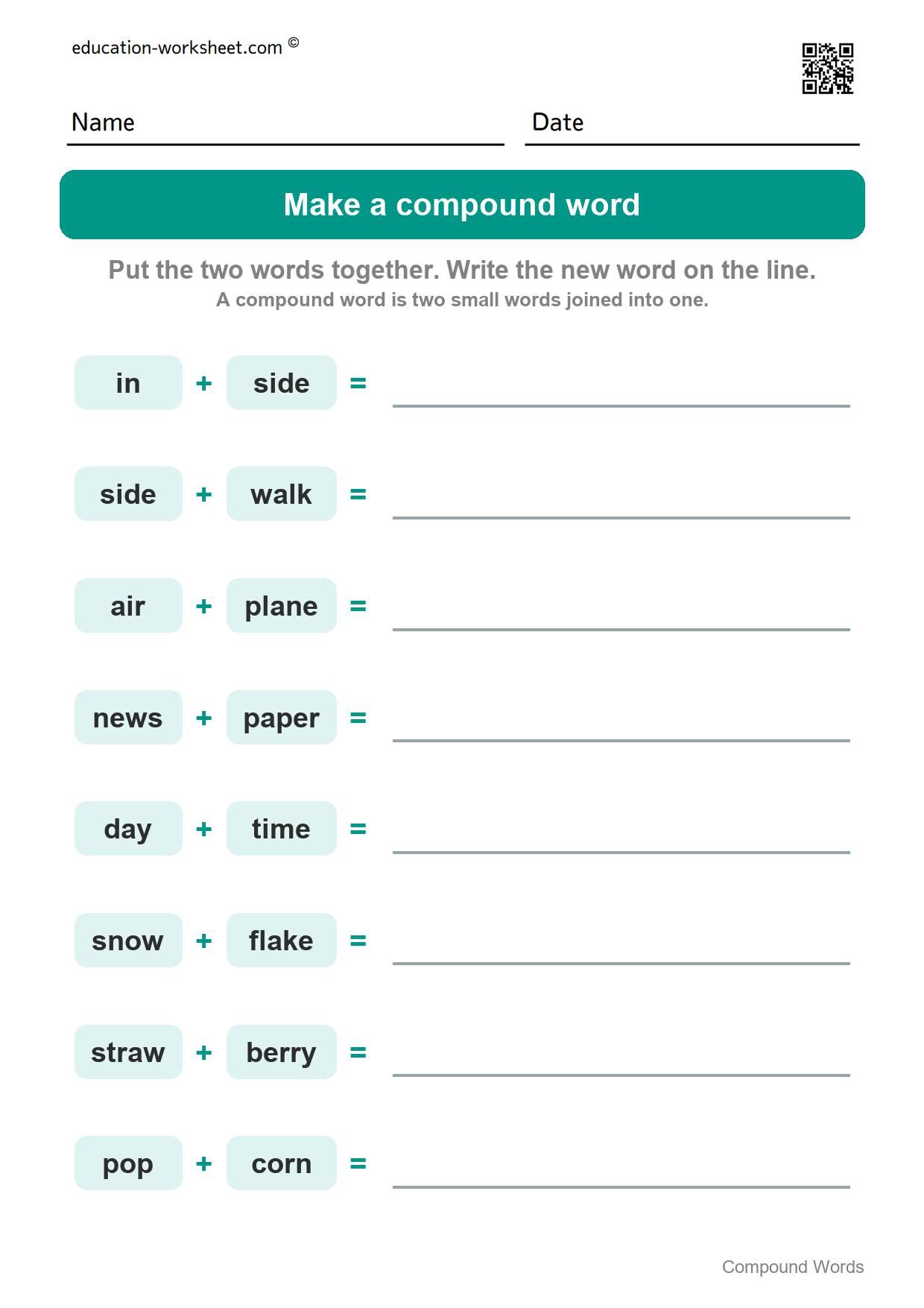
Make a compound word (Set 6)
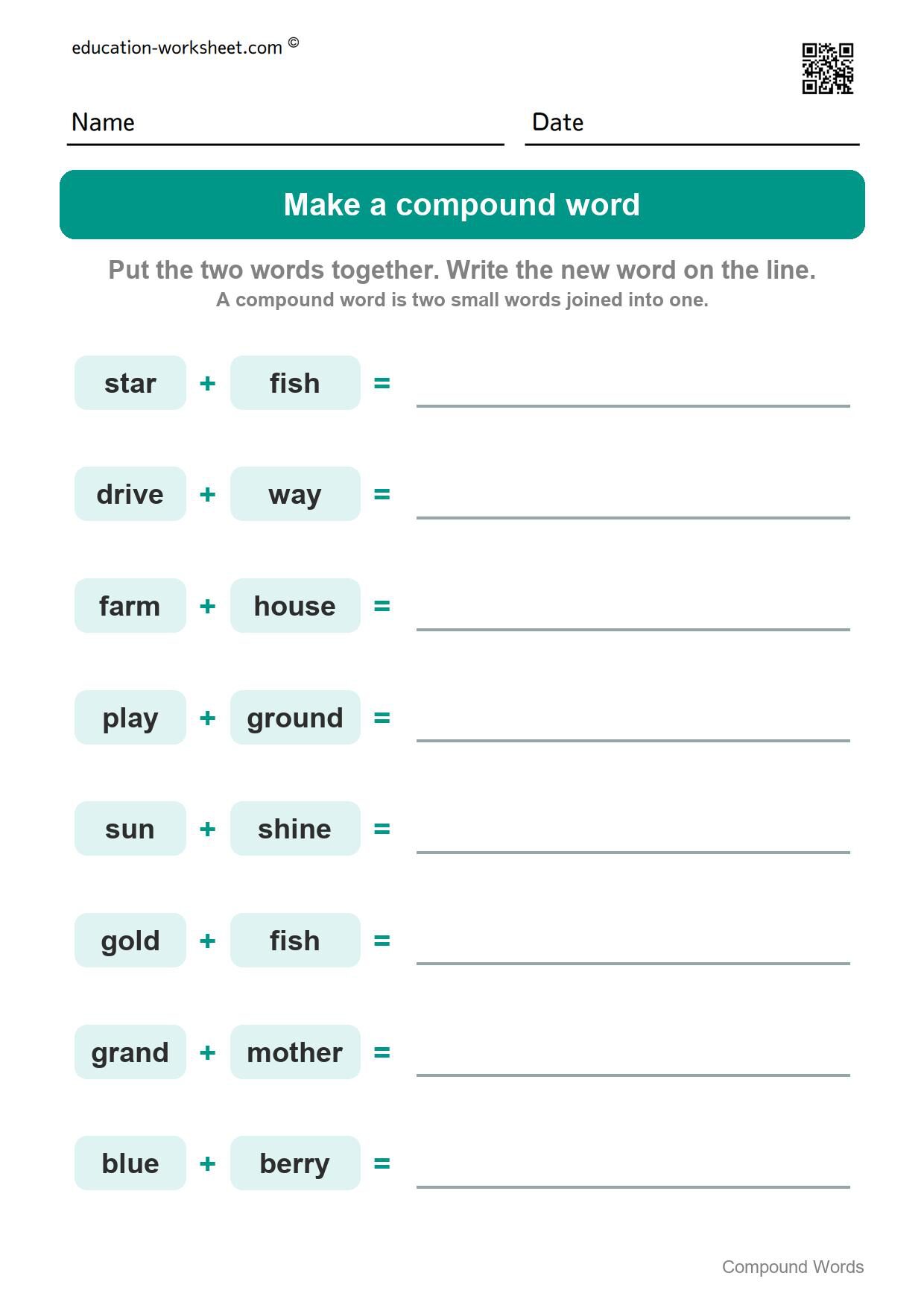
Make a compound word (Set 7)
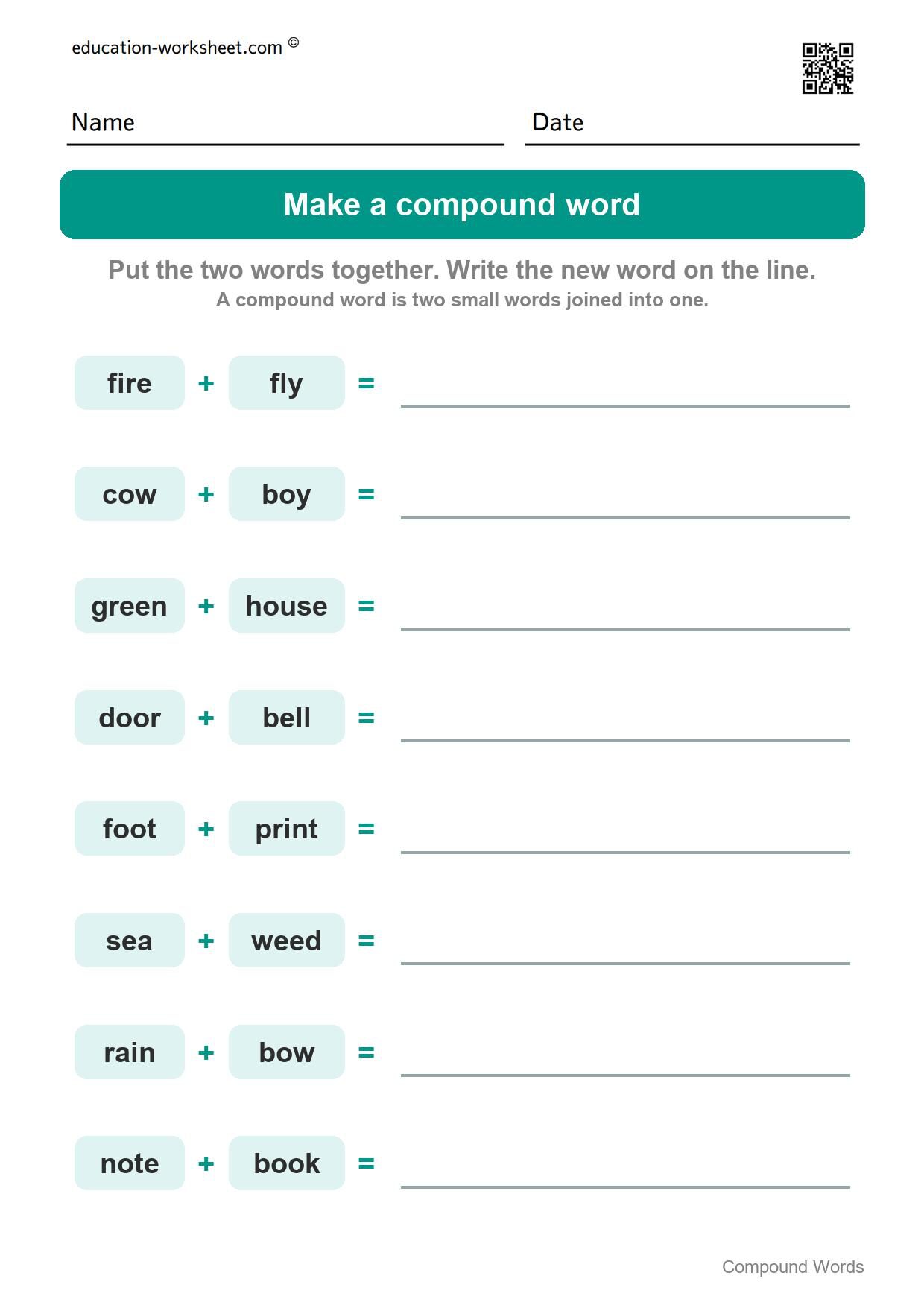
Make a compound word (Set 8)
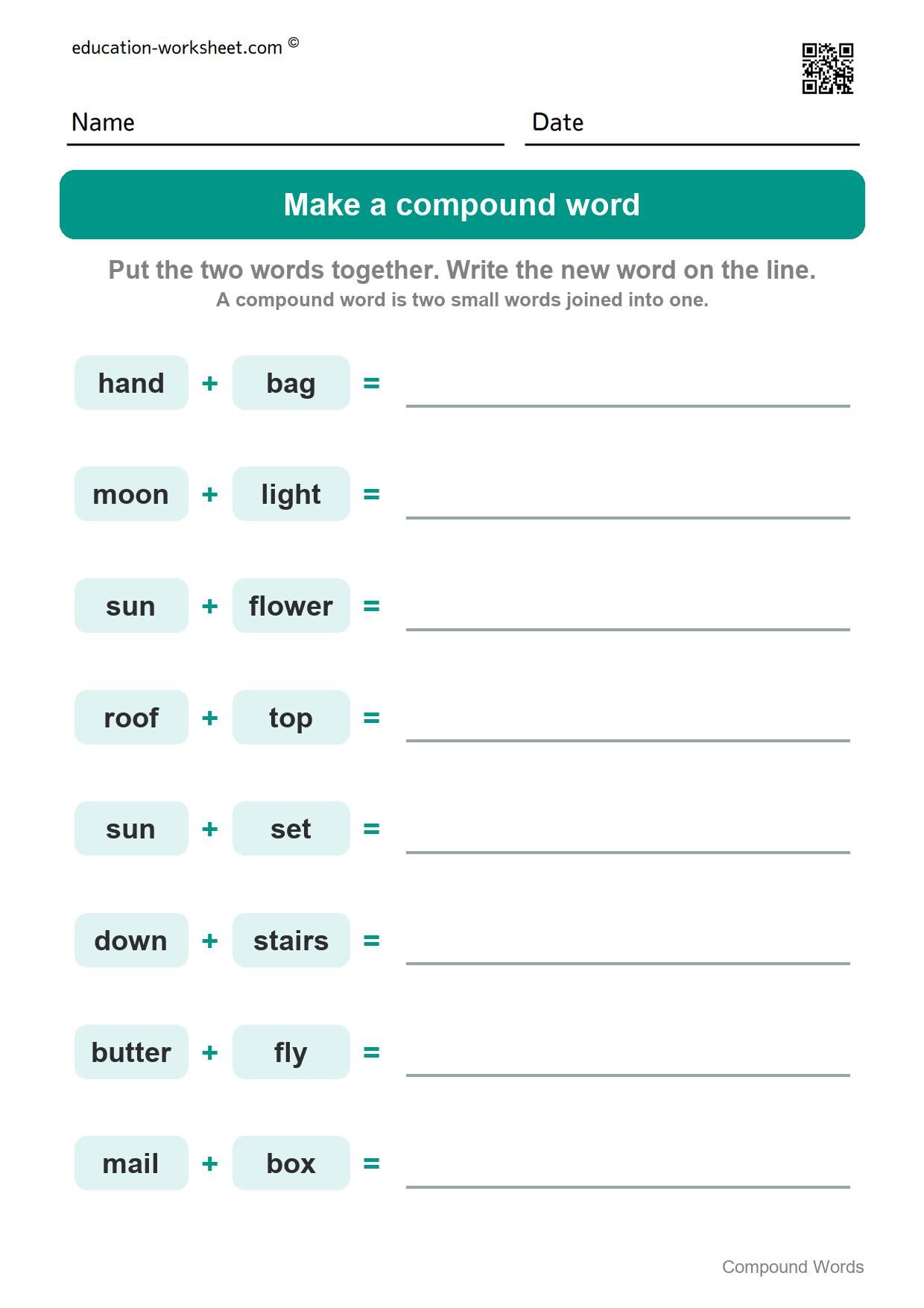
Make a compound word (Set 9)
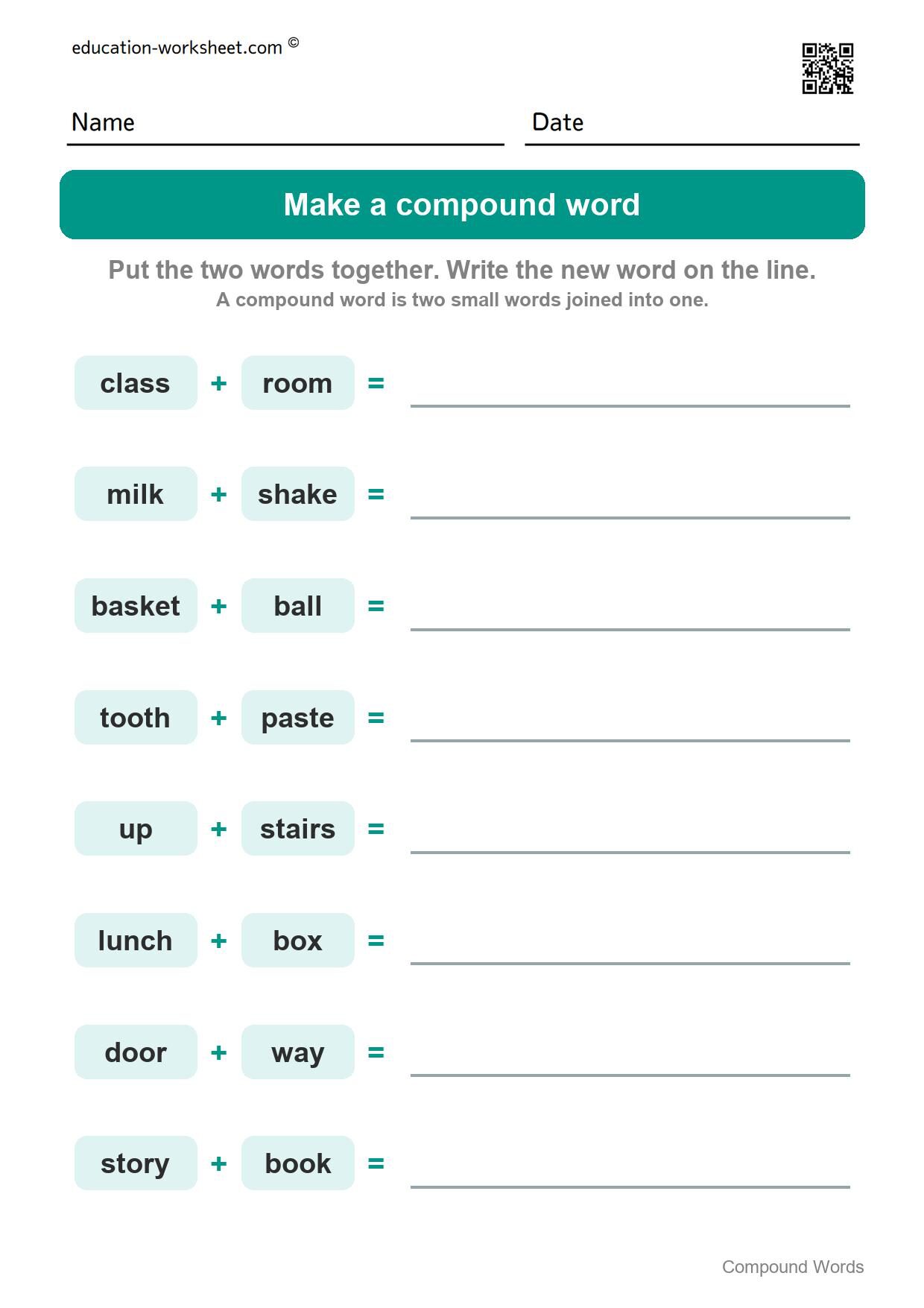
Make a compound word (Set 10)
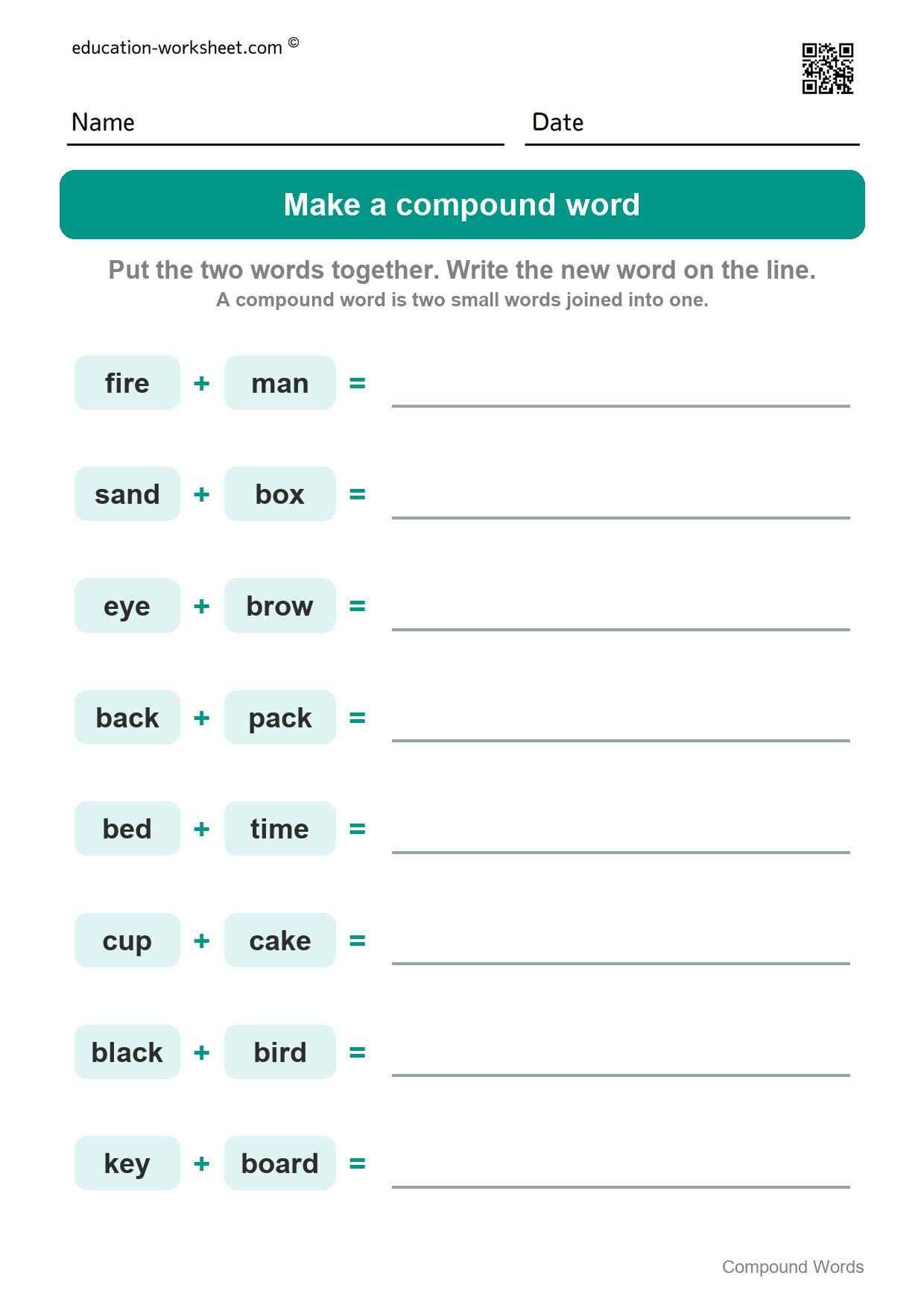
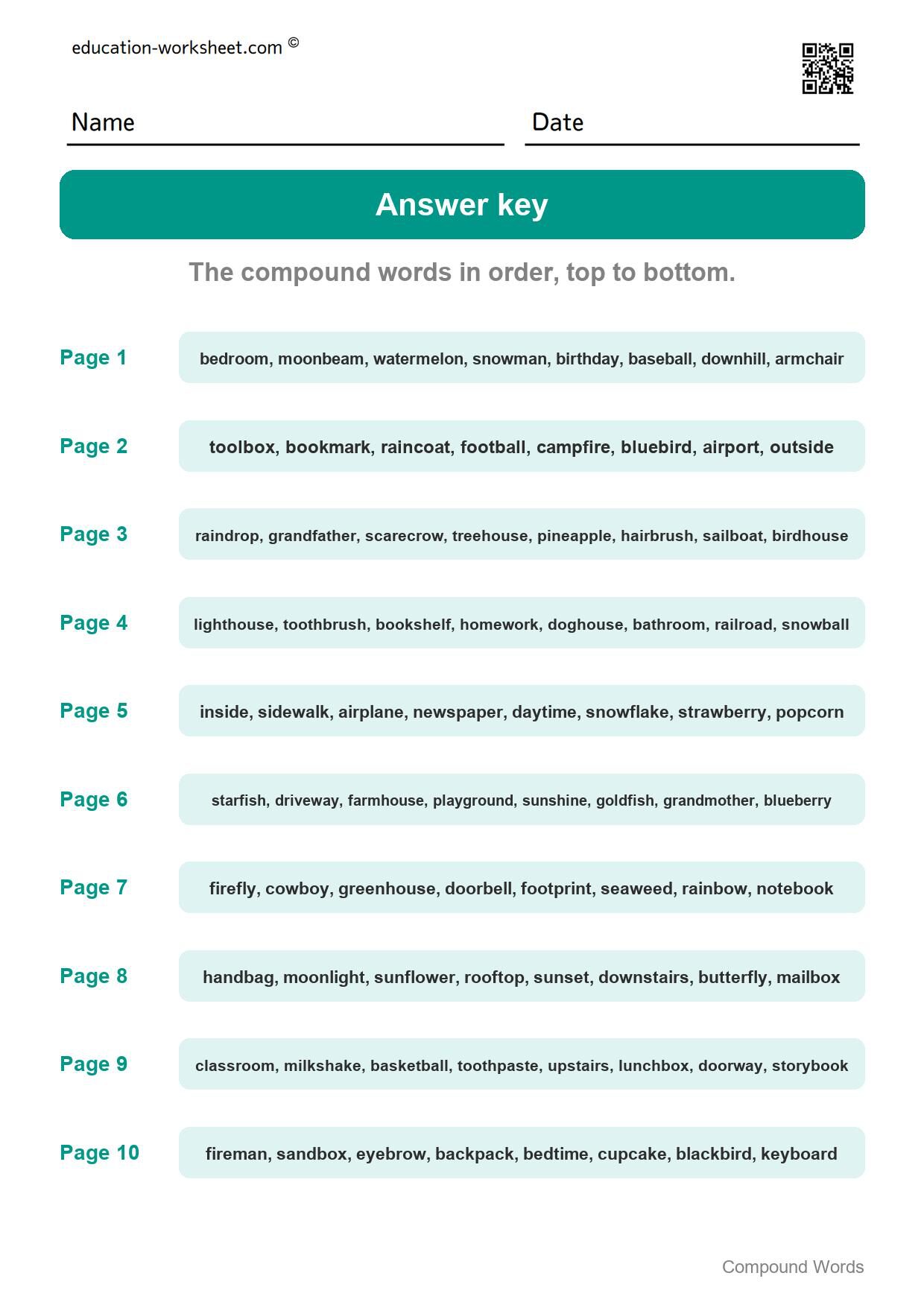
Answer key – all 10 pages
Compound words: two words that move in together
A compound word is two complete words joined into one, such as sun and flower making sunflower. For a child who is still decoding letter by letter, this is a genuinely useful discovery: a long, frightening word turns out to be two short words they can already read. Covering half of a compound with your thumb is often the difference between a child stopping and a child carrying on.
What your child is actually learning
Two things at once. The first is a decoding strategy: break a long word into parts you know. The second is about meaning, because in most compounds the two halves add up. A bedroom is a room with a bed, a raincoat is a coat for rain. Noticing that the parts explain the whole is early work on how words are built, and it feeds directly into prefixes and suffixes later on.
How to work through these pages
Cover one half, read the other, then put them together. Then ask the meaning question out loud: what is a bookshelf? A shelf for books. That second step is the one adults skip and it is where most of the value is. When your child meets a compound where the meaning does not add up, stop and enjoy it rather than glossing over it, because those are the interesting ones.
The mistakes to expect
- Splitting in the wrong place, so cupcake becomes cu-pcake. Ask which two real words are hiding, rather than where the syllables are.
- Assuming the meaning always adds up. A butterfly is not a fly made of butter, and a hotdog is neither hot nor a dog. These are worth pointing out on purpose.
- Treating any long word as a compound, so garden gets read as gar plus den. The test is whether both halves are real words that make sense together.
- Writing compounds as two separate words. Reading them correctly comes well before writing them as one.
What to teach next
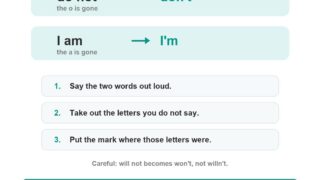
Contractions pair well with compounds, because both are about two words becoming one, and the contrast is instructive: a compound keeps every letter and simply joins them, while a contraction throws letters away and marks the gap with an apostrophe. Syllable work is the other natural direction, since children are already breaking long words into parts.
Questions parents ask
Are compound words always written as one word?
In English, not always. Some are joined (football), some are hyphenated (well-known) and some stay apart (ice cream). First grade sticks to the joined ones, which is the right place to start.
Does this actually help my child read?
Yes, and it is one of the most transferable strategies at this age. A child who habitually looks for smaller words inside longer ones has a way to attack unfamiliar words instead of stopping.
My child reads sunflower as sun-flower with a pause. Is that a problem?
Not at this stage. The pause shows the strategy working. Fluency comes with repetition, so read the same words again a few days later and the join will smooth out.