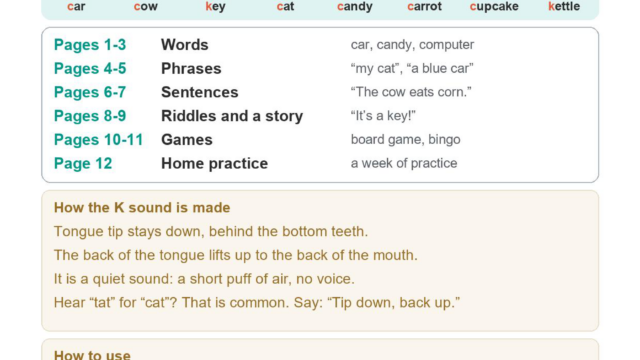
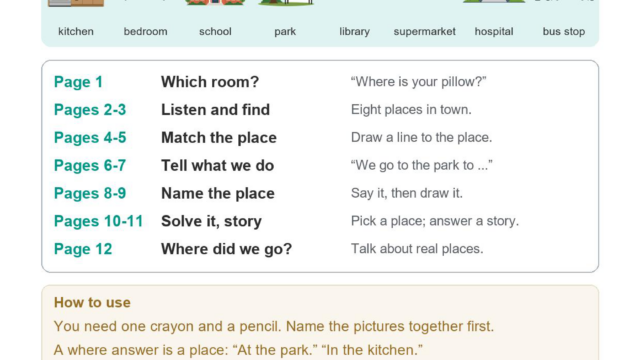
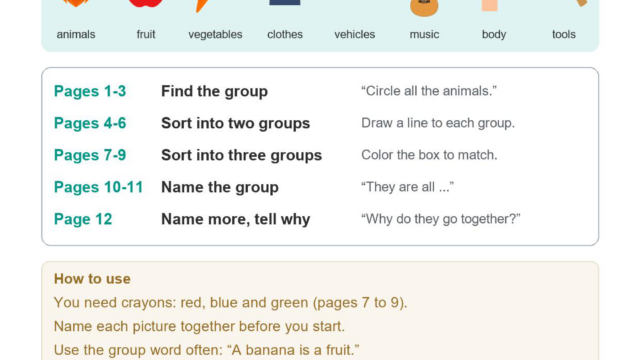
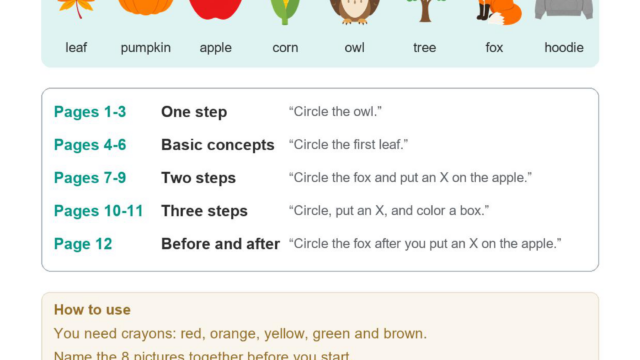
These free S blends worksheets are for children who are learning to say words that start with S and another consonant, such as star, spoon, skirt and snail. The pack covers the four S blends that are easiest to picture: SP, ST, SK and SN. It begins with single words, builds up through phrases and sentences, and finishes with riddles, a short story, a board game and bingo.
The pack was designed by a speech-language-hearing therapist for parents, teachers and speech therapists. It is practice material, not an assessment. It cannot tell you whether a child’s speech is on track or whether a child needs therapy, and it is not meant to take the place of a speech-language pathologist.
S blends deserve their own pack because a child can say S well, and T well, and still say “tar” for star. Putting two consonants together at the start of a word is a separate skill from saying each one alone. The usual pattern is to keep the second sound and leave out the S. Twelve picture words and six levels of practice give that skill room to grow.
- What Is in This Free S Blends Pack
- The 12 S Blends Worksheets
- Start Here – Tips for S Blends and How to Use the Pack
- Page 1 – Short Words: star, spoon, snail, skirt, stairs, steak
- Page 2 – Longer Words: spider, snowman, stapler, skyscraper, snowflake, stop sign
- Page 3 – All the Words
- Page 4 – Two-Word Phrases with My
- Page 5 – Three-Word Phrases
- Page 6 – Sentences with the S Blend Word at the End
- Page 7 – Two S Blend Words in One Sentence
- Page 8 – S Blend Riddles
- Page 9 – Story Time: Stan’s Snowy Day
- Page 10 – S Blends Board Game
- Page 11 – S Blends Bingo with Calling Cards
- Page 12 – Home Practice for One Week
- Progress Record
- Why the Pack Uses Only SP, ST, SK and SN
- How the Pages Were Checked
- Helping a Child Who Drops the S
- When It Is Time to Ask for Help
- Who These Worksheets Are For
- Speech Practice Versus Reading Practice
- How to Use These Worksheets
- Three Things to Watch For
- Ideas for More Practice
- Printing Tips
- Frequently Asked Questions
- What age are these S blends worksheets for?
- Why are there no SL, SM or SW words?
- My child can say snail but says tar for star. Why?
- Should I correct every time the S drops out in conversation?
- Can these worksheets tell me if my child has a speech problem?
- Do I need to sign up or pay?
- Can I use these with my class or speech therapy caseload?
- More Free Speech and Language Worksheets
What Is in This Free S Blends Pack
- 14 pages: one page of tips for the adult, twelve pages of practice and one page for recording progress.
- 12 picture words: five with ST (star, stairs, steak, stapler, stop sign), two with SP (spoon, spider), two with SK (skirt, skyscraper) and three with SN (snail, snowman, snowflake).
- The blend in every word is printed in color, so the adult always knows where to listen.
- Words, phrases, sentences, riddles, a story, two games and a home practice chart, in that order.
- Upside-down scripts on the riddle and story pages, for an adult sitting across the table.
- Every page also comes as its own PDF, so you can print only the level the child is working on.
The 12 S Blends Worksheets
Work from the top of the list down, but move at the child’s pace rather than one page per day. A child who says every word on page 1 clearly can jump to the phrases. A child who keeps dropping the S on page 6 can step back to page 4 for a while. The games on pages 10 and 11 are fun at any level as long as the child can say most of the words.
Start Here – Tips for S Blends and How to Use the Pack
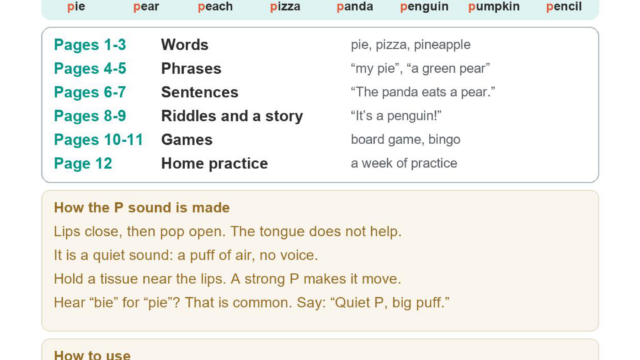
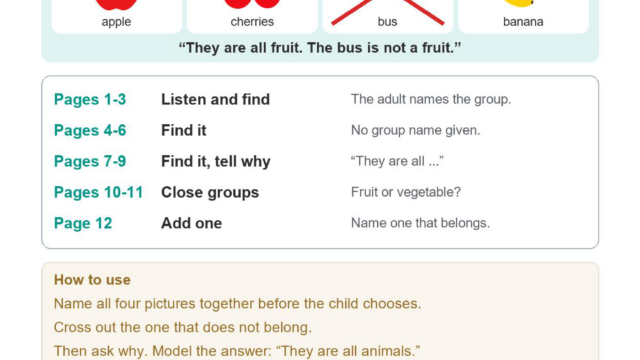
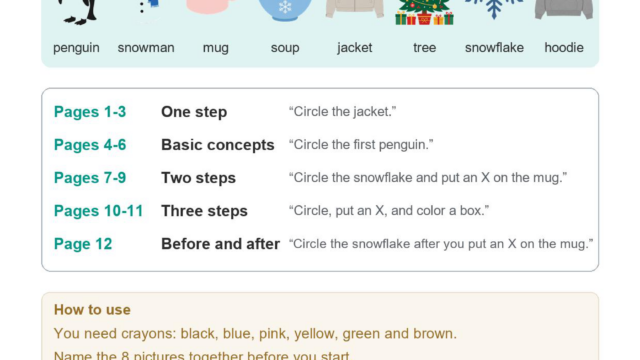
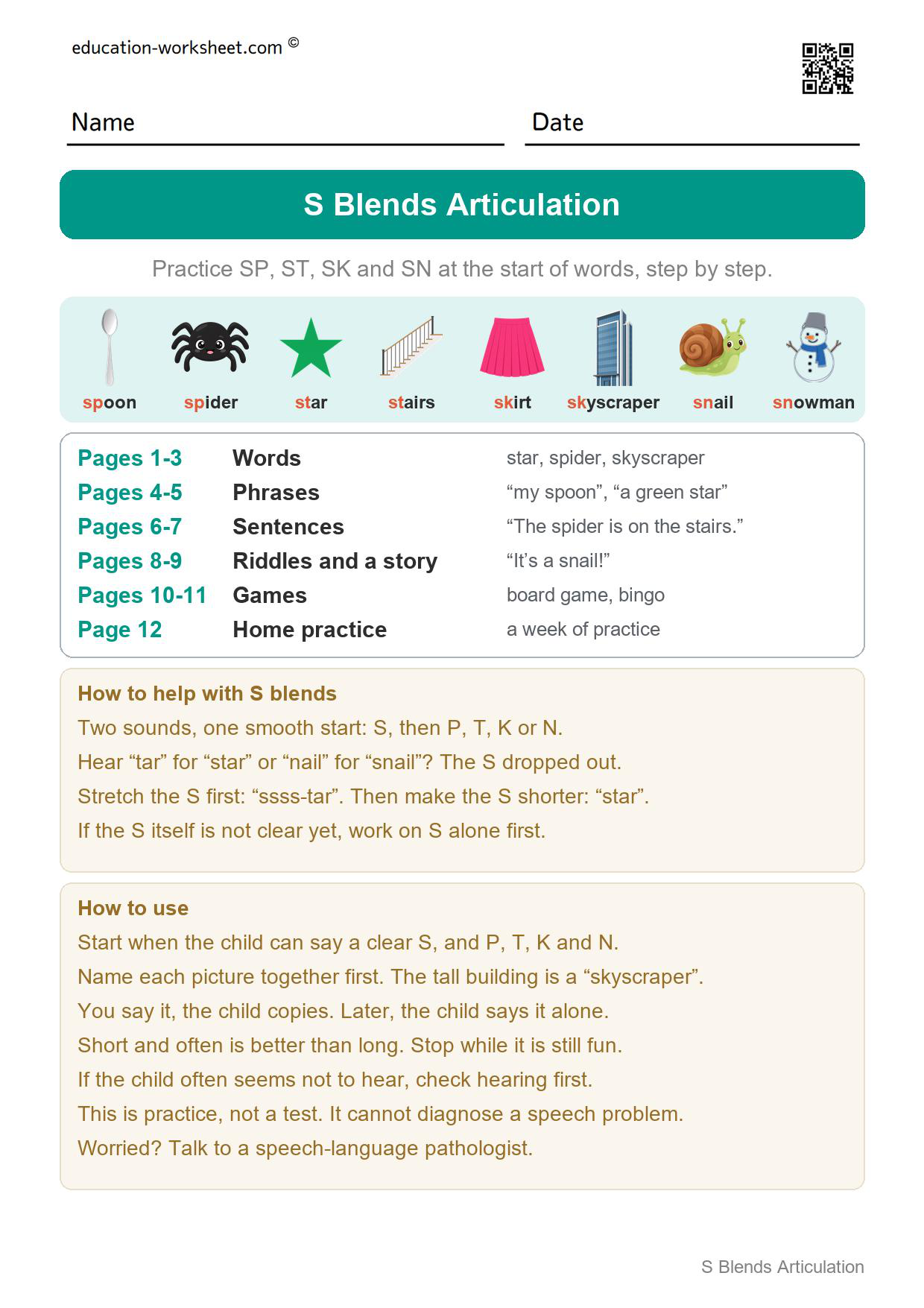
The first page is for the adult. It shows eight of the picture words, lists the six levels with an example of each, and gives four short tips: an S blend is two sounds with one smooth start, a dropped S turns star into “tar,” stretching the S helps, and a child whose S is not yet clear should work on S by itself first.
Page 1 – Short Words: star, spoon, snail, skirt, stairs, steak
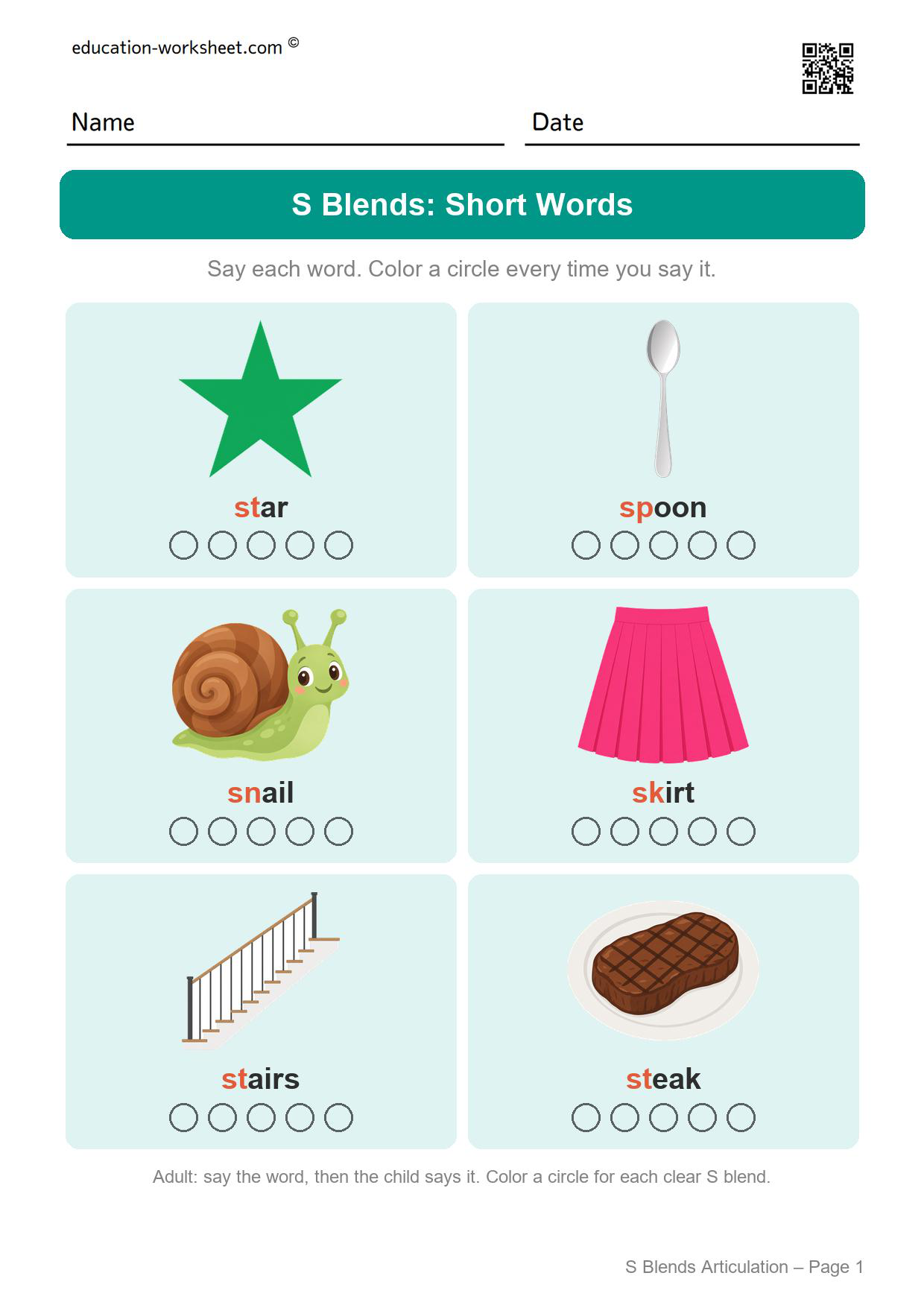
Six one-syllable words with five circles under each: star, spoon, snail, skirt, stairs and steak. All four blends appear on this first page (st, sp, sn and sk), so you find out straight away which ones come easily and which need more time.
The first two letters of every word are printed in a different color. That small detail lets a child who is starting to read see that the word begins with two letters, and it reminds the adult where to listen.
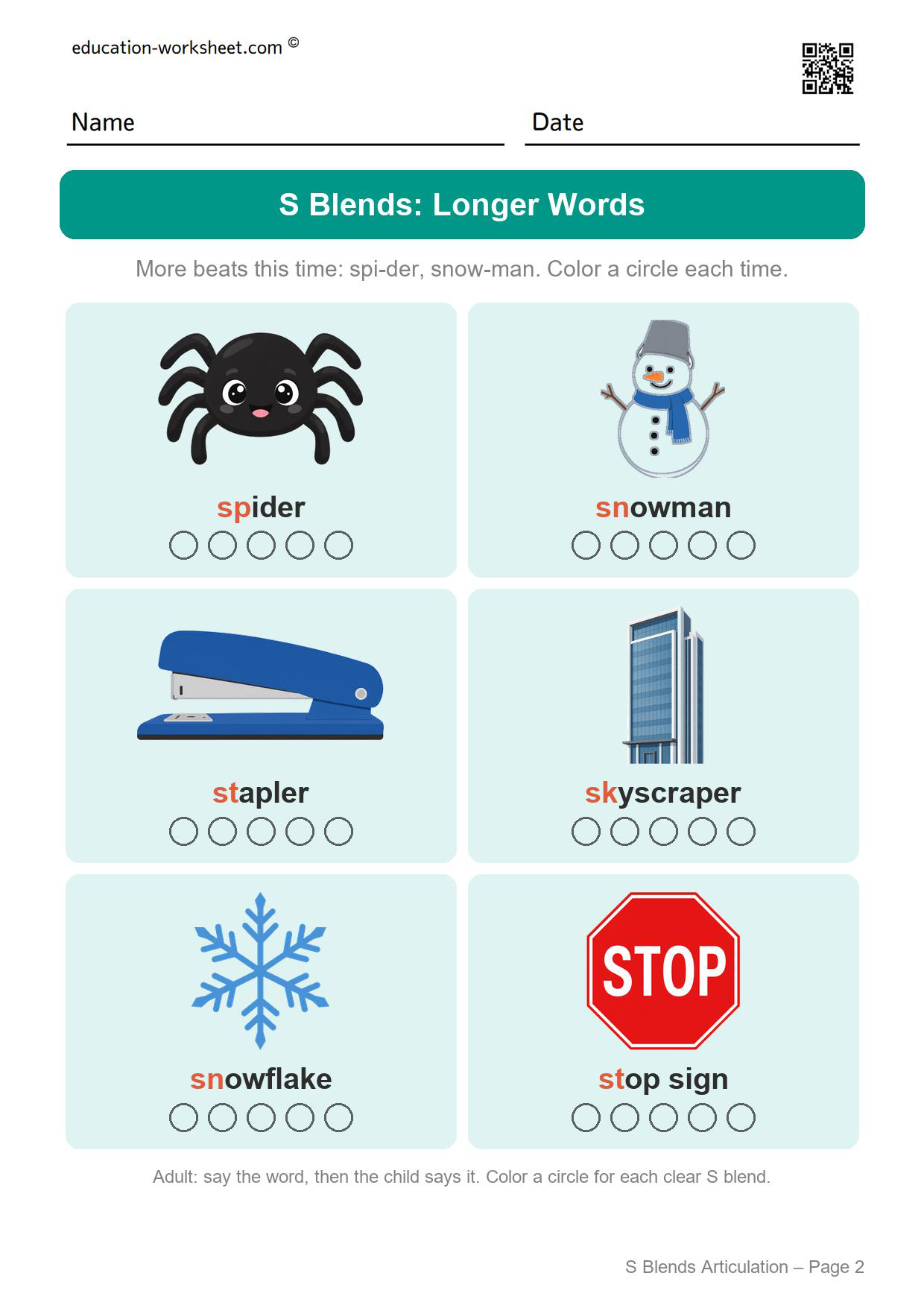
Page 2 – Longer Words: spider, snowman, stapler, skyscraper, snowflake, stop sign
The same layout with longer words: spider, snowman, stapler, snowflake and stop sign have two beats, and skyscraper has three. Many children call a skyscraper “a building,” so teach the name before you practice it. Snowflake is worth a careful listen, because it has a second blend (fl) in the middle.
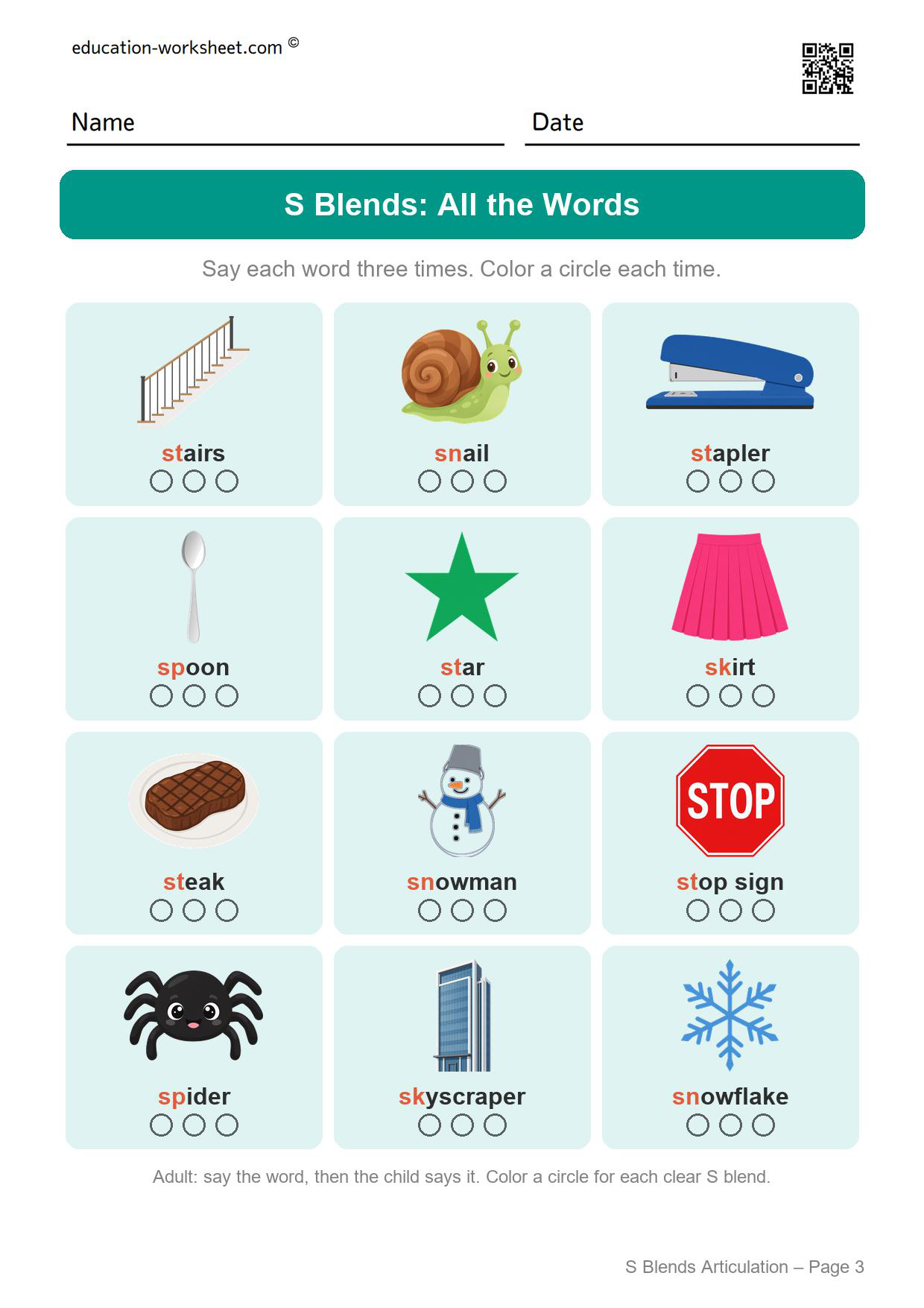
Page 3 – All the Words
All twelve words together, three circles each. The order is mixed so that no two neighbors share a blend: after a st word comes sn, sp or sk, never another st. That makes the child change the second sound every time, which is closer to real talk than saying five st words in a row.
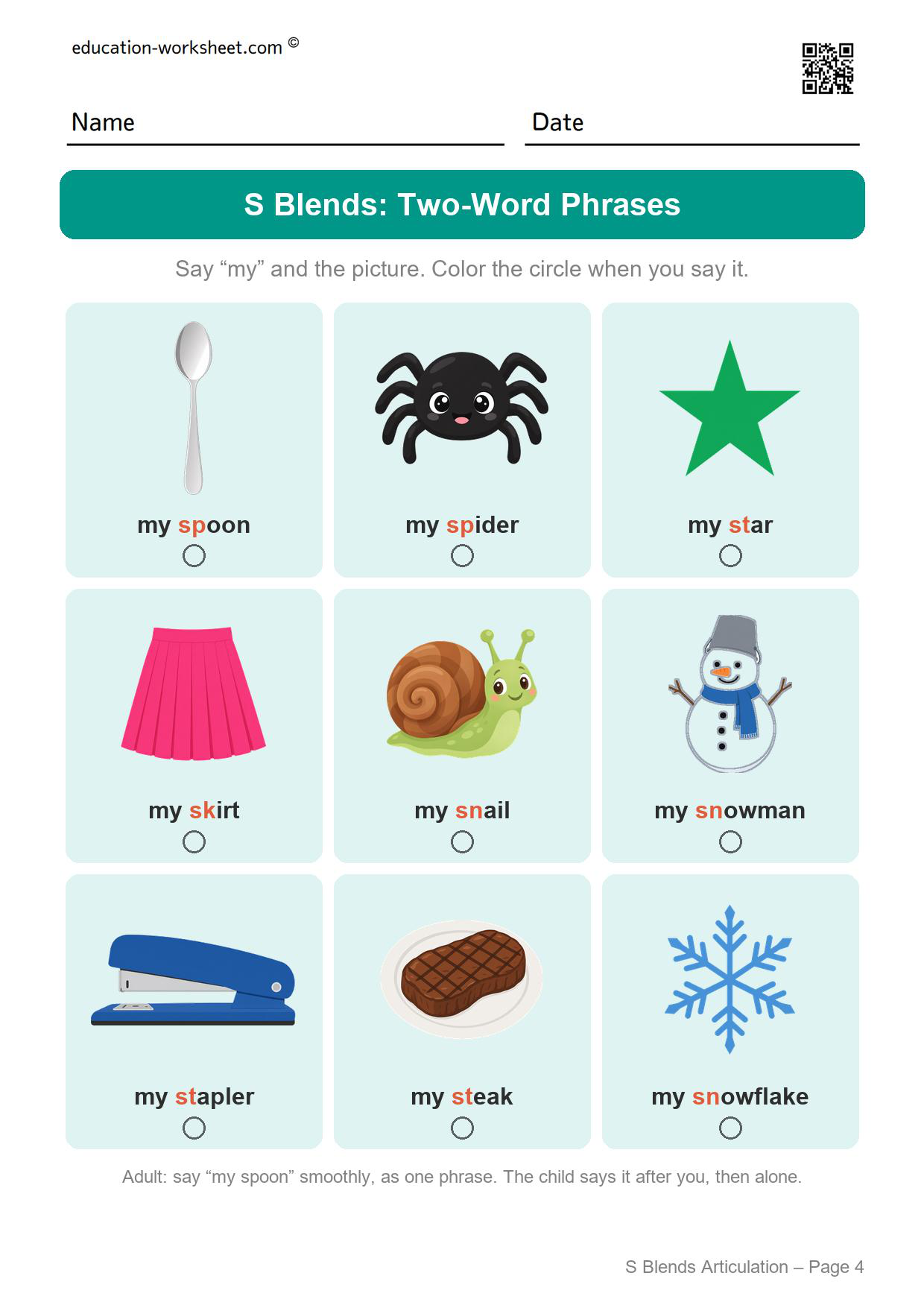
Page 4 – Two-Word Phrases with My
Nine pictures with the word my in front: my spoon, my spider, my star, my skirt, my snail, my snowman, my stapler, my steak and my snowflake. The S blend now comes in the middle of a phrase. Listen for the little word and the S joining smoothly, “my-spoon,” rather than a pause and a fresh start.
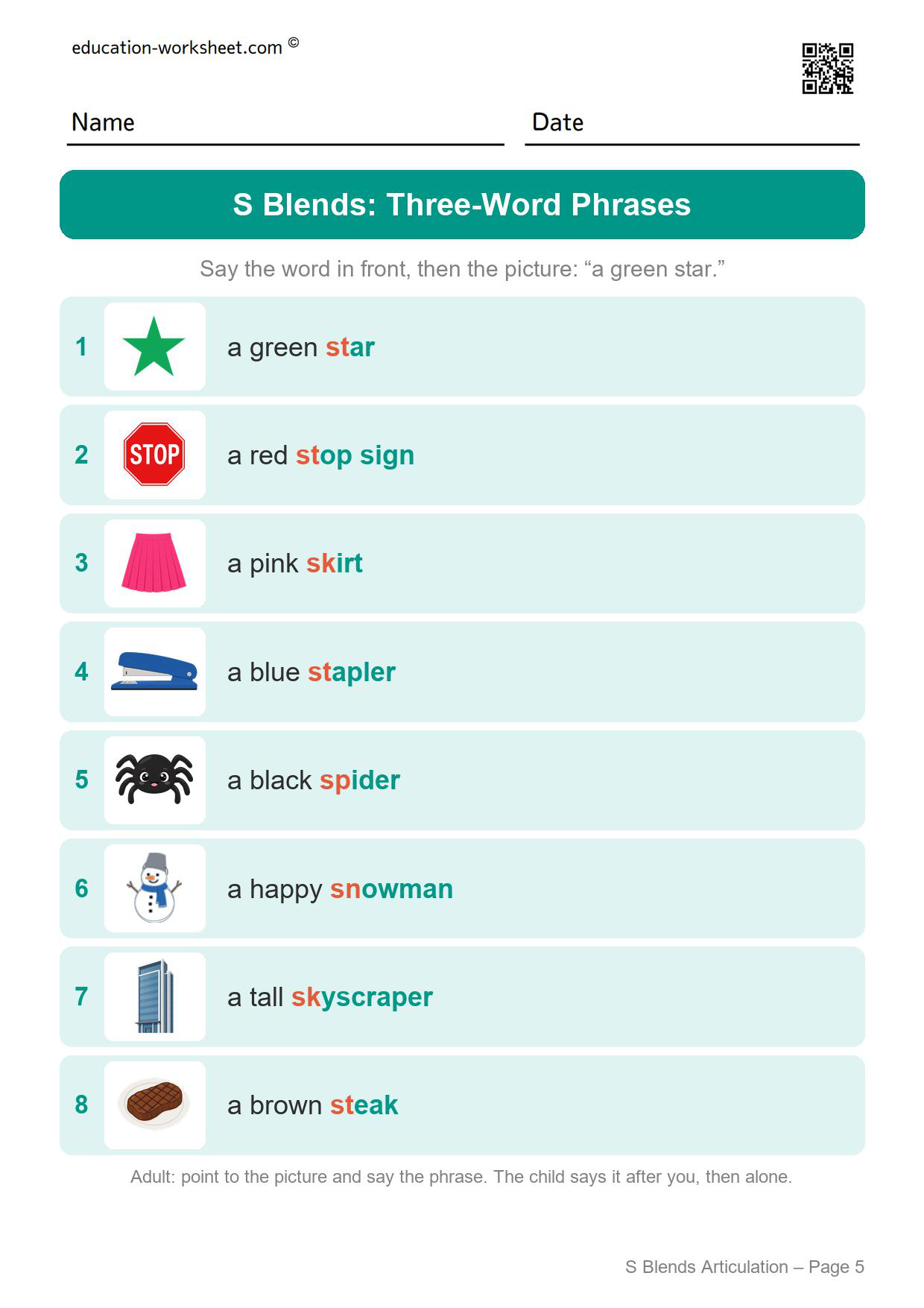
Page 5 – Three-Word Phrases
Eight phrases with a describing word: a green star, a red stop sign, a pink skirt, a blue stapler, a black spider, a happy snowman, a tall skyscraper and a brown steak. Each word matches its picture, so the child can find it by looking. The describing word ends right before the blend, and in “a pink skirt” the K at the end of pink sits right next to the SK at the start of skirt, a good test of careful speech.
Page 6 – Sentences with the S Blend Word at the End
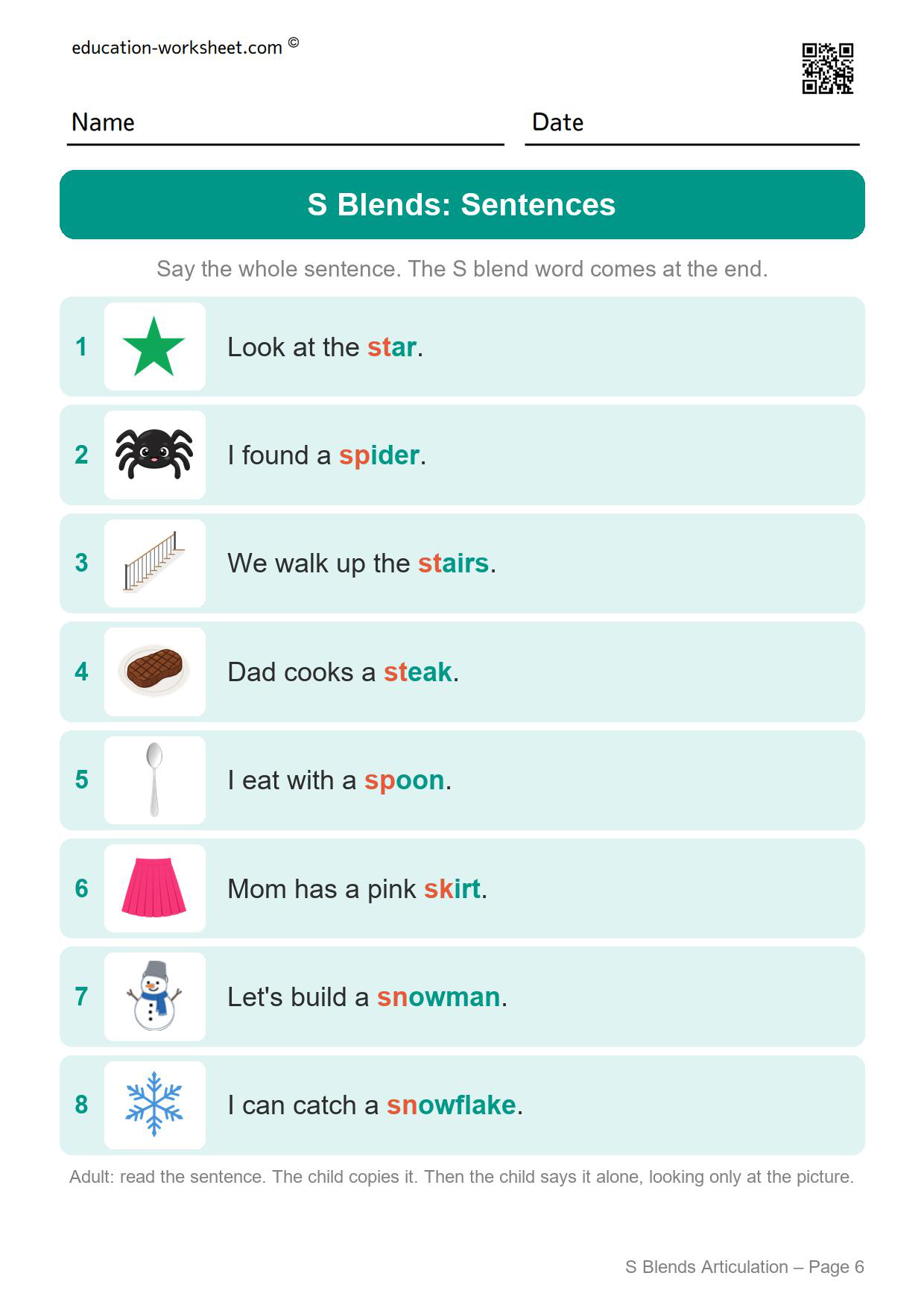
Eight short sentences, each ending with the S blend word: “Look at the star,” “I found a spider,” “We walk up the stairs,” “Dad cooks a steak,” “I eat with a spoon,” “Mom has a pink skirt,” “Let’s build a snowman” and “I can catch a snowflake.”
No other word in these sentences starts with S, so the target is the only S blend you need to listen for. Once a child can copy a sentence, cover the text and ask for it from the picture alone.
Page 7 – Two S Blend Words in One Sentence
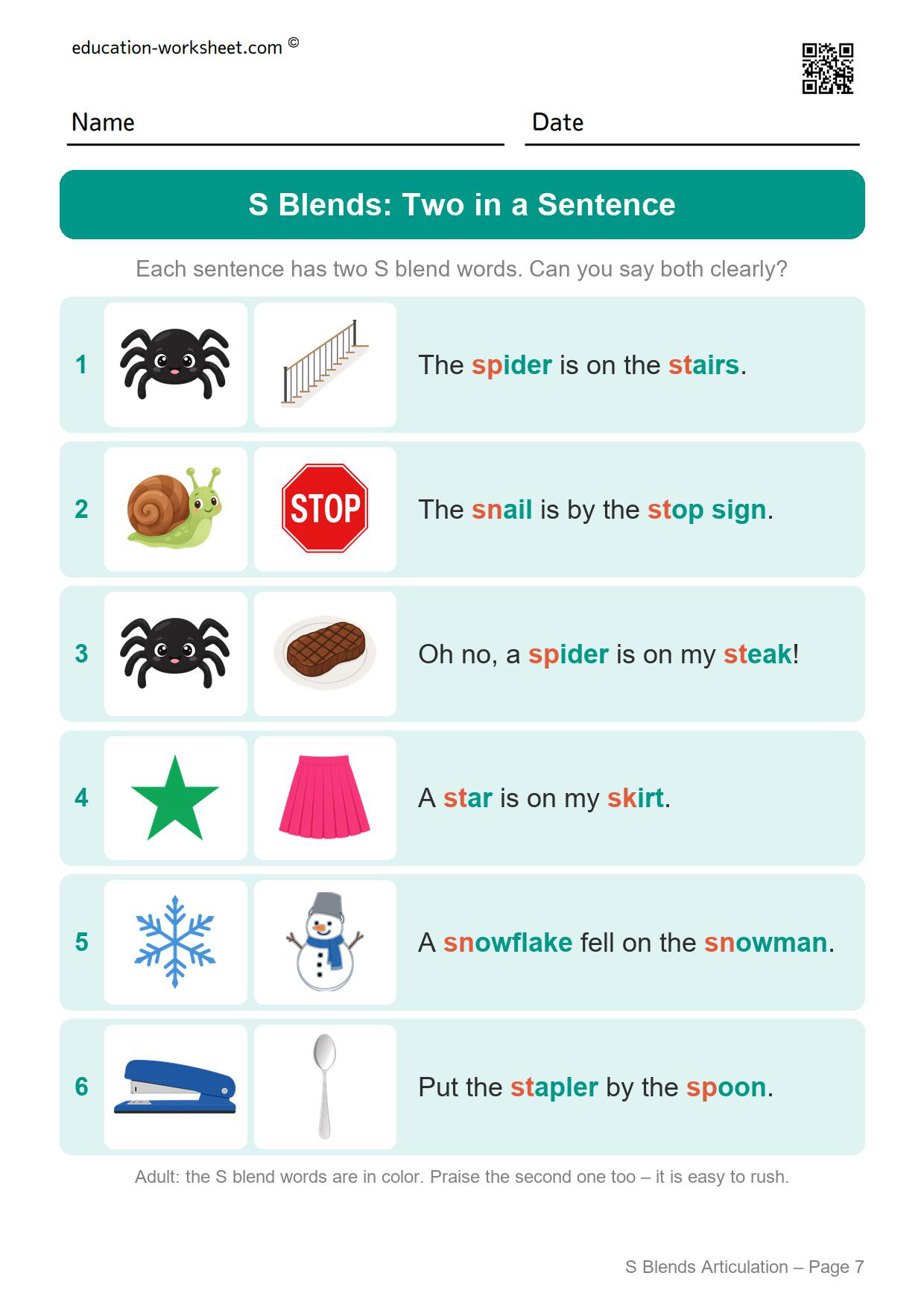
Six sentences with two S blend words each, shown as two pictures: “The spider is on the stairs,” “The snail is by the stop sign,” “Oh no, a spider is on my steak!”, “A star is on my skirt,” “A snowflake fell on the snowman” and “Put the stapler by the spoon.”
Some pairs mix two different blends (sn and st, st and sk), which asks the child to switch quickly. Children often get the first word and drop the S on the second, so listen to the end of the sentence too.
Page 8 – S Blend Riddles
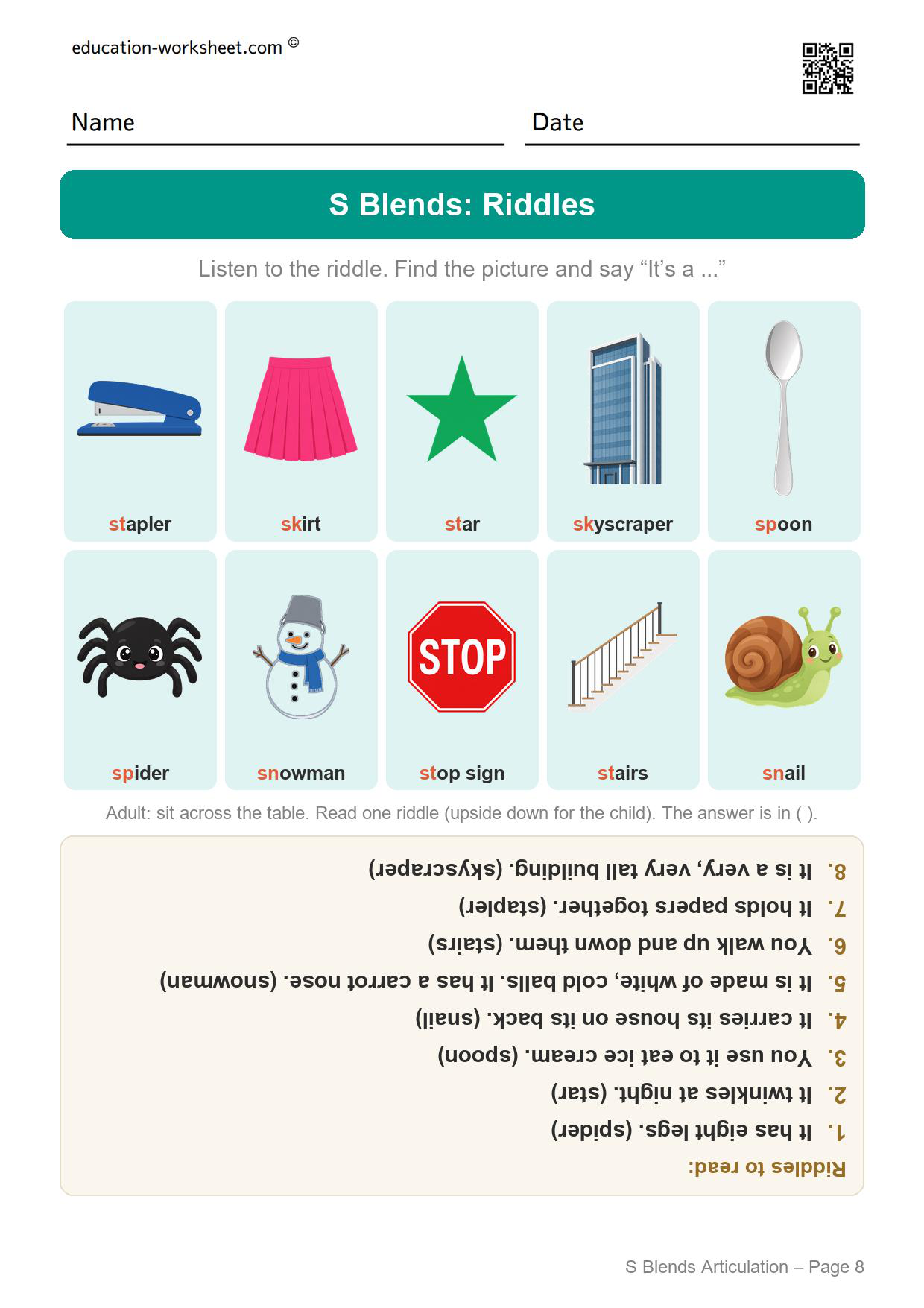
Ten pictures and eight riddles. The riddles are printed upside down so that an adult sitting across the table can read them while the child looks at the pictures. “It has eight legs” is a spider, “It carries its house on its back” is a snail, and “It is a very, very tall building” is the skyscraper. The child answers with “It’s a …” so the blend is said inside a sentence.
The skirt and the stop sign are not answers to any riddle. With two extra pictures on the page, the last riddles cannot be solved just by picking whatever is left.
Page 9 – Story Time: Stan’s Snowy Day
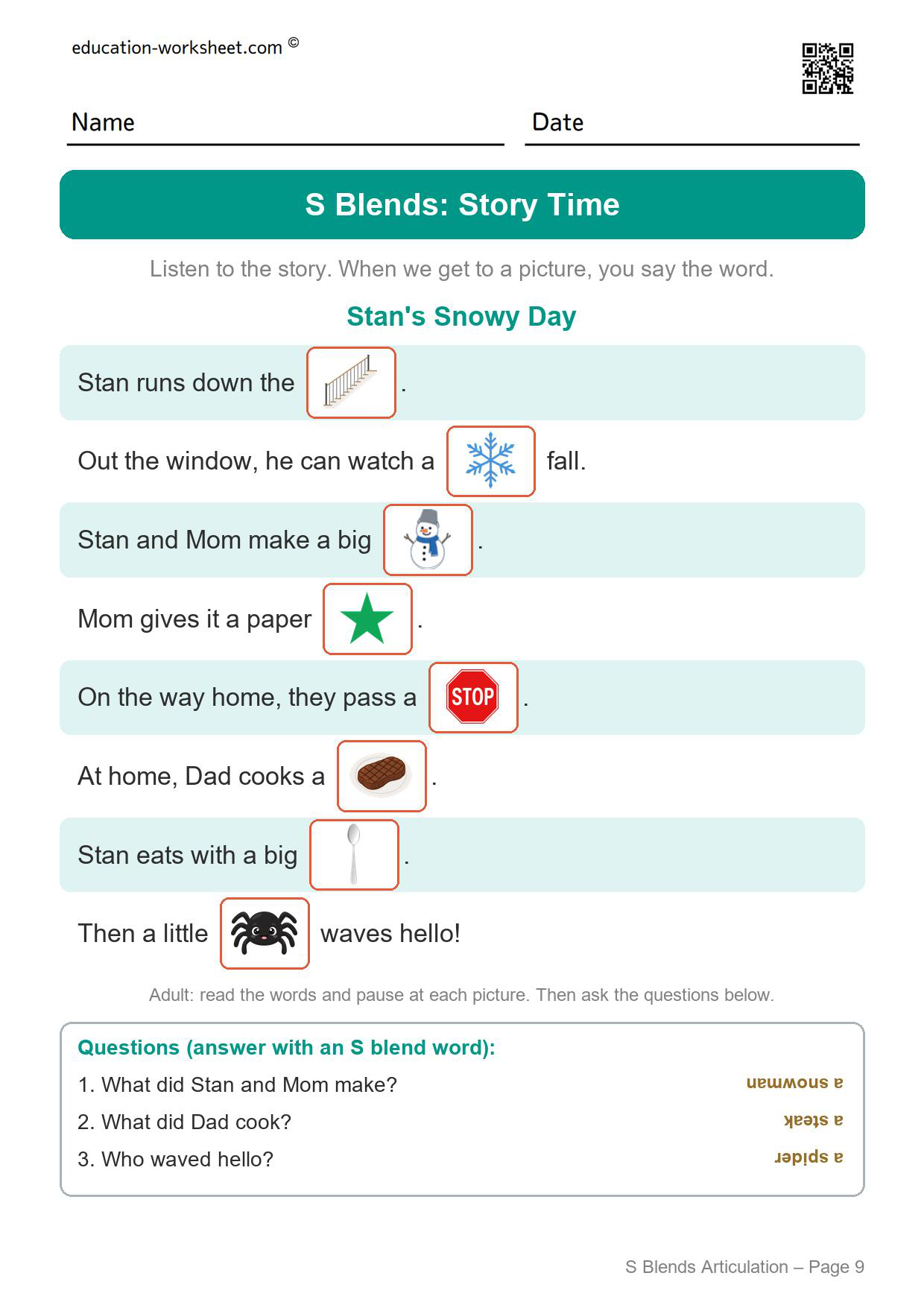
A short winter story in eight lines. You read, and the child says the word at each picture: Stan runs down the stairs, watches a snowflake fall, makes a snowman with Mom, who gives it a paper star, passes a stop sign, comes home to Dad cooking a steak, eats with a big spoon, and then a little spider waves hello. Even the boy’s name and the title start with S blends.
Three questions close the page: what Stan and Mom made, what Dad cooked and who waved hello. The answers (a snowman, a steak and a spider) are printed upside down for the adult.
Page 10 – S Blends Board Game
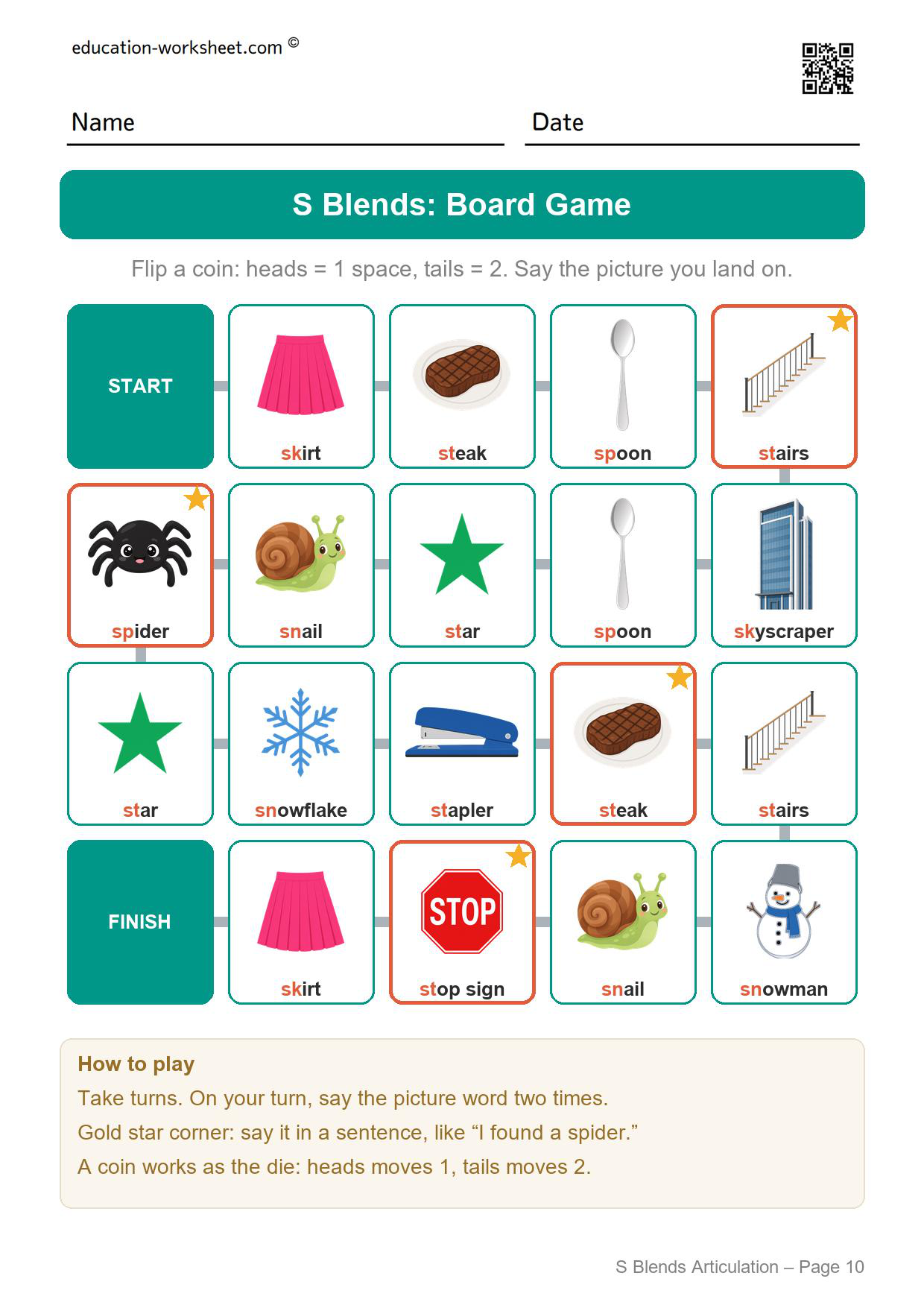
A winding path of eighteen picture squares from START to FINISH. Flip a coin to move: heads is one space and tails is two. The player says the picture word twice on every square. Four squares have a gold star in the corner, and there the player makes a whole sentence instead. A picture never comes back until at least two other squares have passed, so each turn brings a new word.
Page 11 – S Blends Bingo with Calling Cards
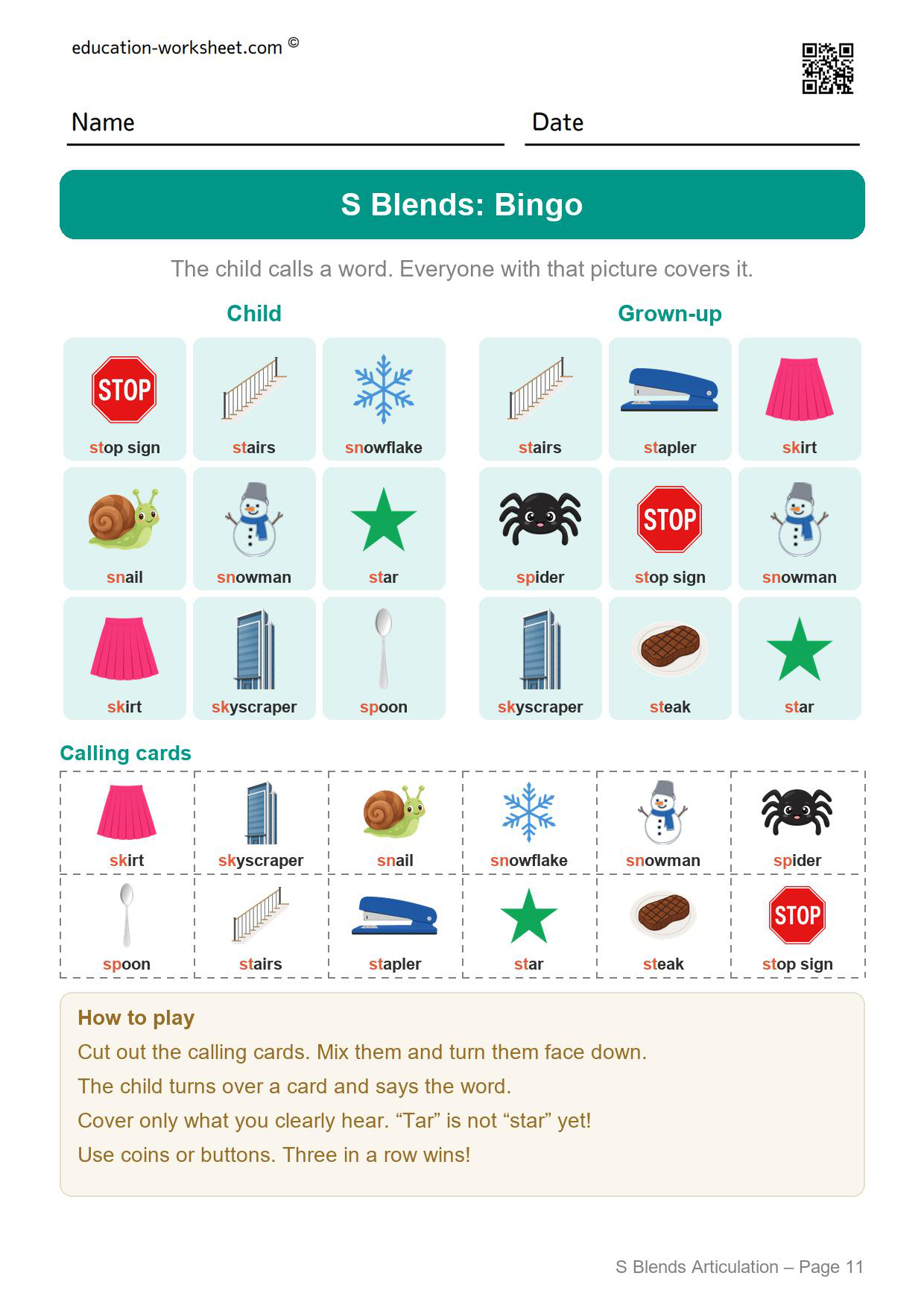
A bingo board for the child, another for the grown-up, and twelve calling cards to cut apart. The child turns over every card and calls the word, and players cover a picture only if they clearly heard it. If the child calls “tar,” nobody has a tar to cover, and the child gets a natural, friendly reason to try “star” again.
Page 12 – Home Practice for One Week
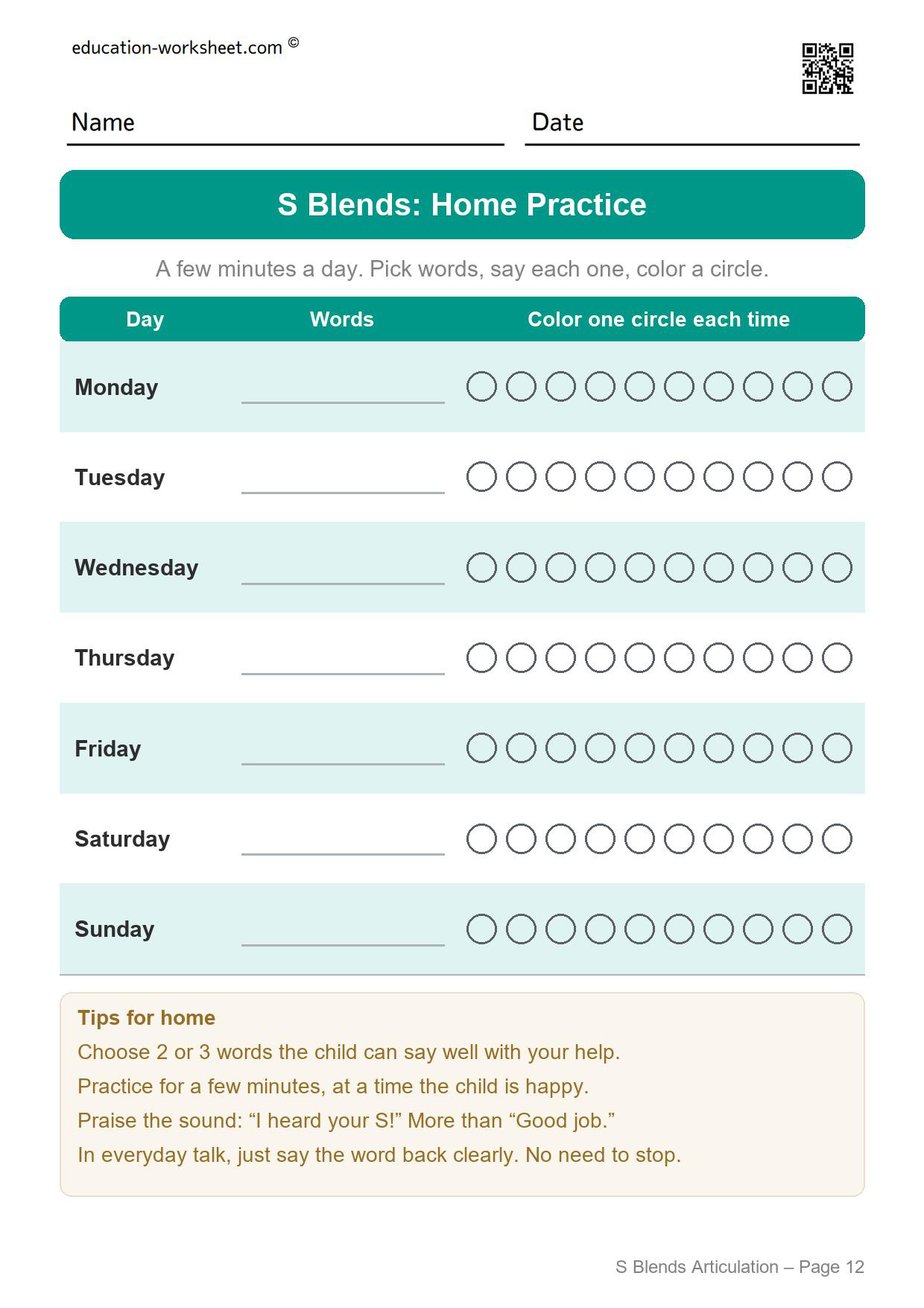
A seven-day chart with a line to write the day’s words and ten circles to color, plus four tips for families. Two or three words a day is enough. Pick ones the child can already say well with a little help, so home practice builds confidence rather than frustration.
Progress Record
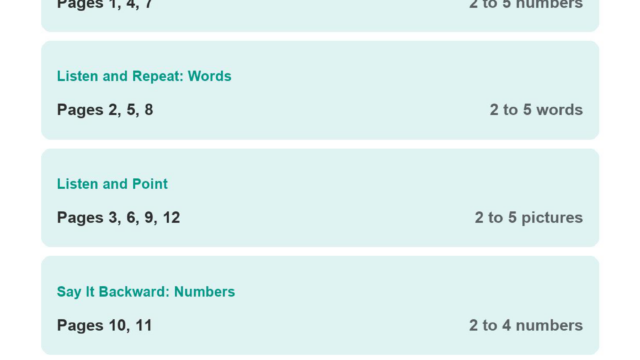
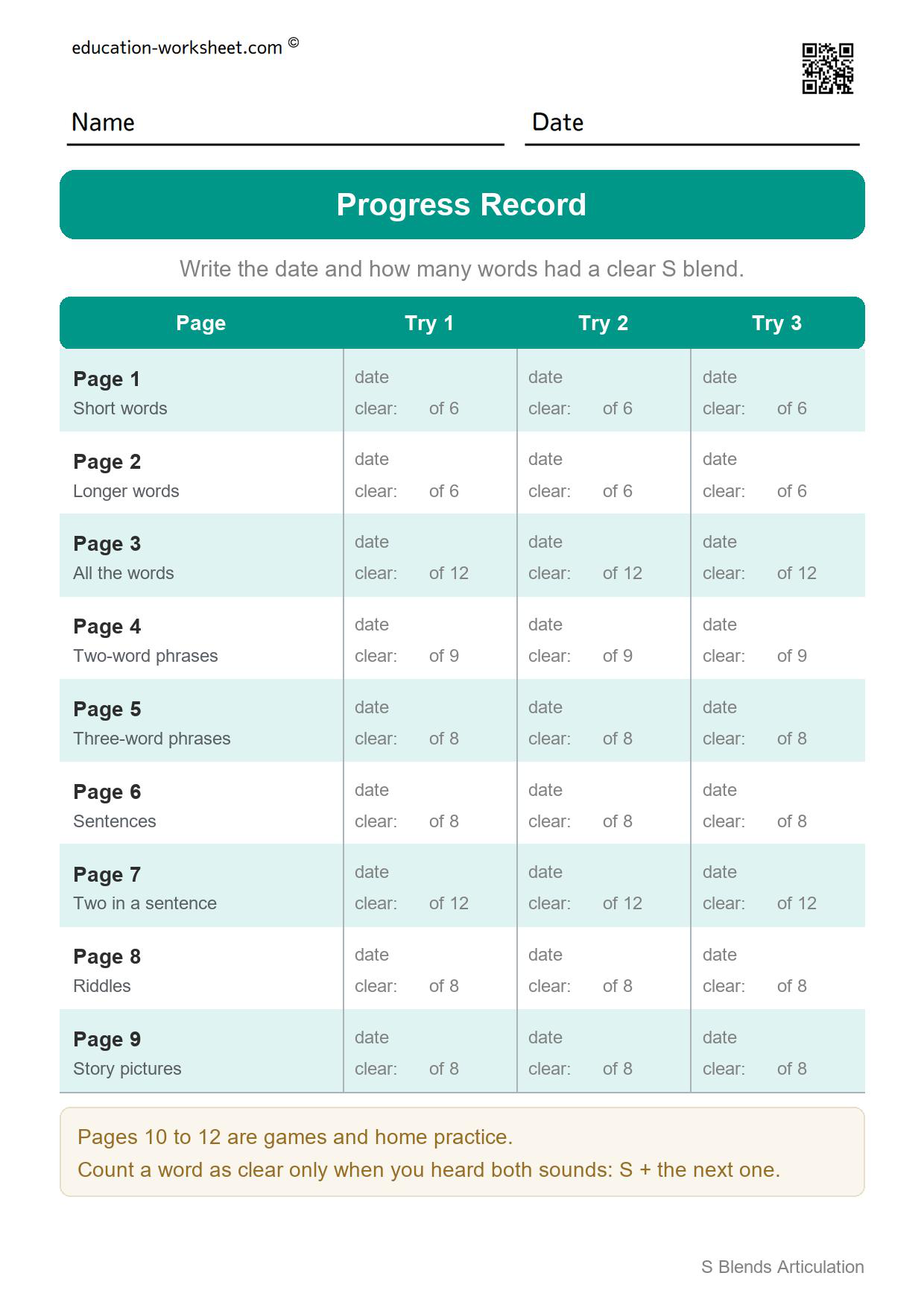
Rows for pages 1 to 9, with room to fill in three sessions. The number printed on each row is the total to count from: 9 on page 4, for instance, or 12 on page 7, where every sentence holds two targets. Count a word only when you heard both sounds of the blend.
Why the Pack Uses Only SP, ST, SK and SN
English has more S blends than these four. SL, SM and SW are blends too, and words like string, spring and scrape begin with three consonants in a row. They were left out on purpose. SL pairs the S with L, a sound many young children are still working on, and three-consonant blends are harder again. SM and SW were saved for later so that the pack stays small and every picture is easy to name. Keeping to four blends means a child practicing with this pack is working on one skill: joining S to a following P, T, K or N.
The same rule applies to every other word on the pages. No word in the phrases, sentences, riddles or story starts with a single S, such as see, sun or sit, and none starts with a C that sounds like S, such as city. A single S next to a blend can blur what you are listening for, so those words were kept out. The only exception is the word sign in “stop sign,” because that is simply what the picture is called.
You may notice that ST has more words than the other blends. That reflects the pictures that are clear and easy to name. The SK group is the smallest, with skirt and skyscraper. If SK is the blend a child finds hardest, add real objects from home, such as a skateboard or a scarf, to the practice.
How the Pages Were Checked
A short computer program drew every page and checked it against a list of rules before saving it. If any rule failed, nothing was saved and the page was fixed.
- Every target word starts with SP, ST, SK or SN, and page 1 has at least one word for each of the four.
- Short words come first. Page 1 holds only one-syllable words, and the longest word, skyscraper, first appears on page 2.
- Exactly one target on page 6, exactly two on page 7. On page 6 the target is always the last word.
- No neighbors with the same blend on page 3, so the child keeps switching between blends.
- One answer per riddle. The answer word never appears in the riddle, and two pictures on the page are not answers at all.
- Describing words that match the pictures. The star on the page is green, the stapler is blue and the snowman really is smiling.
Helping a Child Who Drops the S
When a child says “tar” for star or “nail” for snail, the S is usually there in the child’s mind but gets squeezed out when the mouth has to move quickly to the next sound. The most useful trick is to make the S longer for a while. Say “ssss” like a snake, then add the rest of the word: “ssss-tar.” When that works, shorten the S little by little until it becomes “star.”
Another approach is to point out that the word changes. Show the snail picture and ask, “Is this a nail or a snail?” Children often find it funny that one small sound turns a snail into a nail, and the joke helps them notice the S. Gentle touches like this tend to work better than repeating “Say it again” many times.
Some children add a little vowel instead, so star becomes “suh-tar.” That is a step in the right direction: both sounds are there. Model the word smoothly, a little faster, and let the extra vowel fade with practice.
When It Is Time to Ask for Help
Many young children simplify blends while their speech is still developing, and they master them at different times. These pages can give a child who is close to the goal plenty of practice, but they cannot tell you whether a particular child’s speech is on track.
If the S sound itself does not sound clear, for example if it sounds slushy, comes out between the teeth, or is replaced by T on its own, start with the single S sound rather than with blends, and consider asking a speech-language pathologist. A child who often misses what you say should have a hearing check before anything else. Any time you feel unsure about a child’s speech, for instance when people outside the family struggle to understand the child, a pediatrician or a speech-language pathologist is the person to ask. They can look at all of the child’s sounds, not just S blends.
Who These Worksheets Are For
- Children: preschool and early elementary children working on S blends at home, at school or in speech therapy.
- Ready to start when: the child can say a clear S, P, T, K and N on their own, and knows most of the picture names.
- Adults: parents, teachers, speech-language pathologists and assistants. You need crayons, scissors, one coin and a few small tokens.
- SL.K.6 – speak audibly and express thoughts, feelings and ideas clearly. A dropped S can change a word, so clear blends matter for being understood.
- RF.1.2b – orally produce single-syllable words by blending sounds, including consonant blends. Saying star with both sounds at the start is exactly this skill.
Speech Practice Versus Reading Practice
This site also has consonant blends worksheets for reading, where children look at printed words and circle the ones that start with a blend such as bl, cr or st. That pack is about seeing the two letters on paper. This pack is about saying the two sounds out loud. A child can be strong in one and still need practice in the other, and the two packs work well side by side.
How to Use These Worksheets
- Read the guide page, then try a long, smooth S together: “ssss.”
- Go through the pictures and name each one, especially the skyscraper and the snowflake.
- On the word pages, model the word, let the child copy it, and later let the child say it from the picture alone.
- Color a circle only for a word where you heard both sounds of the blend.
- Stop after a few minutes, while the child is still enjoying it, on a word the child says well.
- Fill in the progress record every so often to see how the counts change over the weeks.
Three Things to Watch For
1. The S drops out. “Poon” for spoon and “kirt” for skirt. Stretch the S (“ssss-poon”), then shorten it step by step.
2. An extra vowel sneaks in. “Suh-nail” for snail. Both sounds are there, so praise that, then model the word smoothly and a bit faster.
3. The blend is right but the S is not. If the S itself sounds unclear even when said alone, practicing blends will not fix it. Work on S by itself first, ideally with a speech-language pathologist’s advice.
Ideas for More Practice
- Snail race. Two snail pictures, one sentence per move: every clear blend moves your snail a step.
- Stop and go. Use the stop sign card in a movement game: the child says “stop!” clearly and everyone freezes.
- Spot the spider. Hide the spider calling card somewhere in the room. The child must say “I found the spider!” to win.
Printing Tips
- Choose 100 percent (actual size) when printing. The layout works on A4 as well as US Letter.
- Color helps on page 5, where the phrases name colors such as a green star and a blue stapler.
- Print the bingo page on card stock if you want calling cards that last, and print page 12 fresh each week.
Frequently Asked Questions
What age are these S blends worksheets for?
The pack suits preschool and early elementary children who are practicing S blends. There is no single right age for blends, so start from what the child can already say. A speech-language pathologist can tell you whether S blends are the right target for a particular child.
Why are there no SL, SM or SW words?
To keep the practice focused. SL pairs the S with L, which many young children are still learning, so it is usually easier later. SM and SW were left out to keep the pack to four blends with clear pictures. Once SP, ST, SK and SN are steady, the same steps work for the others.
My child can say snail but says tar for star. Why?
Each blend asks the mouth to do something a little different right after the S, so it is common for one blend to come before another. That is why page 1 has all four blends: you can see which ones are already there and spend more time on the others.
Should I correct every time the S drops out in conversation?
No. In everyday talk, simply repeat the word back clearly, such as “Yes, a star!”, and carry on. Save the focused practice for short sessions with these pages.
Can these worksheets tell me if my child has a speech problem?
No. The pages only give practice; nothing on them is scored or compared with other children. For questions about a child’s speech, start with a hearing check and a speech-language pathologist.
Do I need to sign up or pay?
No. Every page has a Download link under it, and the PDF is free with no account or email.
Can I use these with my class or speech therapy caseload?
Yes. Make all the copies your own family, class or caseload needs. The only limits: the PDFs are not for resale, and please link to this page instead of uploading the files elsewhere.
More Free Speech and Language Worksheets
- Free K Sound Articulation Worksheets – Initial /k/ Words
- Free Final Consonant Deletion Worksheets – Minimal Pairs PDF
- Free Final Consonant Deletion Minimal Pairs Set 2 – S, Z and CH
- Free Consonant Blends Worksheets for Grade 1 – bl, cr, st
- Free Auditory Memory Worksheets for Kids – Listen and Repeat
- Free Category Sorting Worksheets for Speech Therapy and Preschool